Akita Jomon Sites: Visiting the Oyu Stone Circles and Isedotai
This guide is translated from the Japanese edition. Read the Japanese edition
Akita's Jomon sites, Oyu Stone Circles and Isedotai: what the World Heritage stone rings were for, clay figurines, winter closures and how to get there.
River stones, from fist-sized to ones you would need both arms to carry, run in gentle arcs across the grass. In the north of Akita Prefecture, two sets of stone circles laid out by Jomon people about 4,000 years ago survive, and both belong to the World Cultural Heritage property "Jomon Prehistoric Sites in Northern Japan": the Oyu Stone Circles in Kazuno City and the Isedotai site in Kitaakita City. What the rings were made for, what to look at, and when you can walk among the stones differ from one site to the other.
The Jomon World Heritage Property and Akita's Two Sites
The Jomon Prehistoric Sites in Northern Japan were inscribed on the World Heritage List in July 2021. The property is made up of 17 sites: six in Hokkaido, eight in Aomori, one in Iwate and two in Akita. It includes large village sites such as Sannai-Maruyama in Aomori City, but both of Akita's sites are places of ritual and burial built from stones.
Both date to the Late Jomon period, about 4,000 years ago. Oyu is known for two large, regularly shaped rings, and Isedotai for four rings lying side by side, so seeing them one after the other shows how differently the stones were arranged. The official Jomon sites website lists all the component sites with visitor information.
Oyu Stone Circles: Double Rings About 50 Meters Across
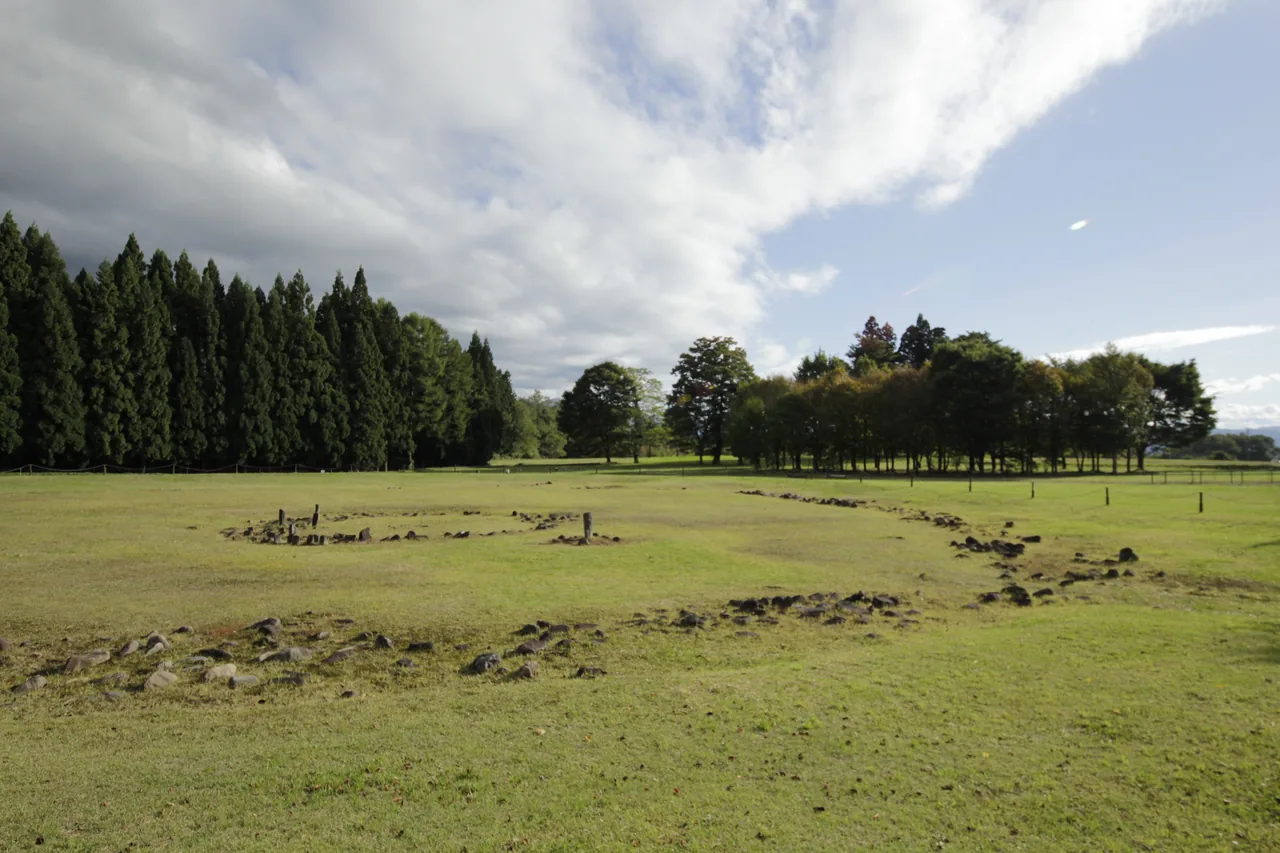
The Oyu Stone Circles sit on a plateau near Oyu Onsen in Kazuno City. At their center are two circles, Manza and Nonakado; according to Kazuno City, the largest diameter of Manza is 52 m and of Nonakado 44 m. Each is a double ring with an inner and an outer band, and the site was designated a national Special Historic Site in 1956.
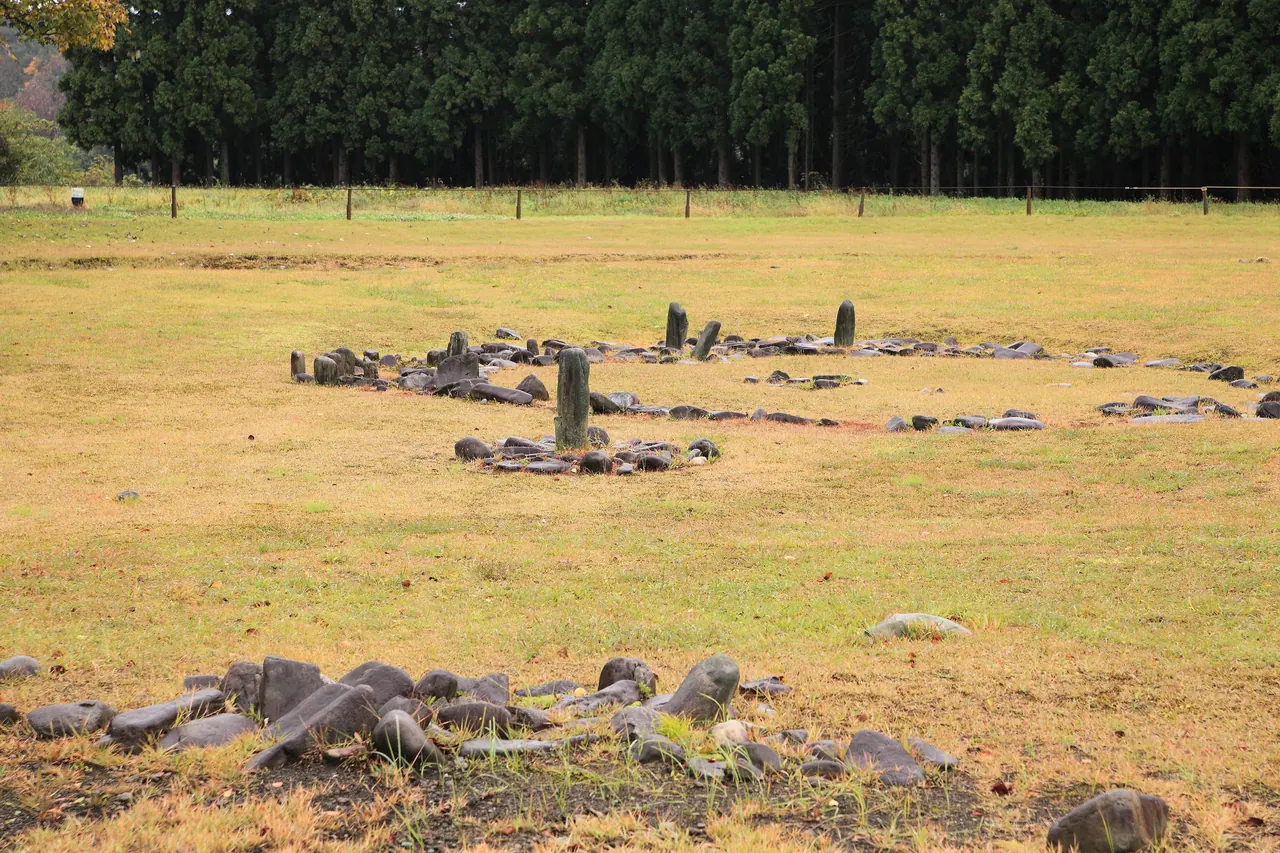
Photo: Akita Prefecture
Up close, the rings turn out to be strings of small clusters, each with a long stone standing in the middle and flat stones set around it. Excavation suggests these clusters are graves, and the circles were most likely a communal cemetery. Northwest of the center of each ring is a neatly arranged group of stones called the "sundial-shaped stone arrangement," and one theory holds that the line from the ring's center through it points roughly toward sunset on the summer solstice.
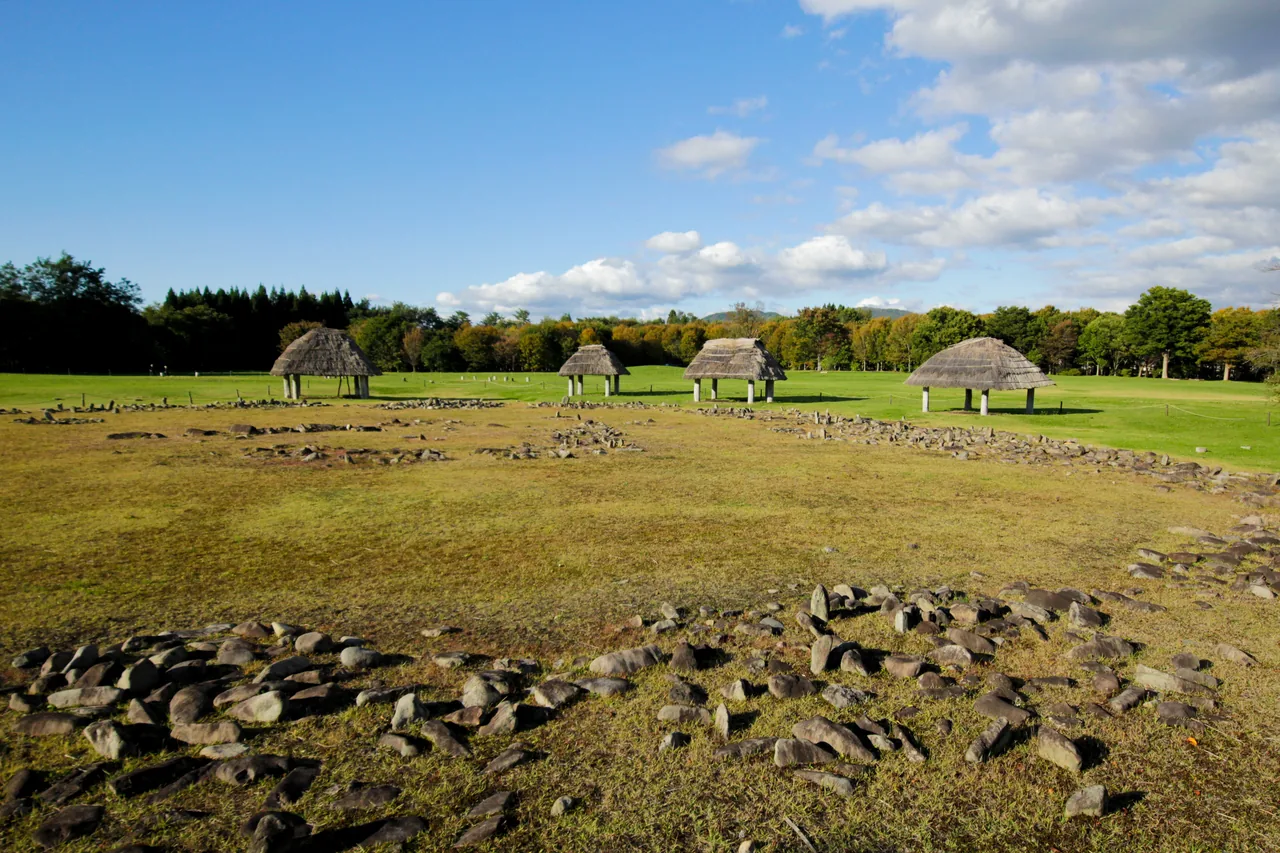
Outside Manza, traces of post-built structures that once encircled the stones have also been found. Several have been reconstructed with thatched roofs, so you can see on the lawn how the rings of graves and the buildings were laid out in concentric circles.
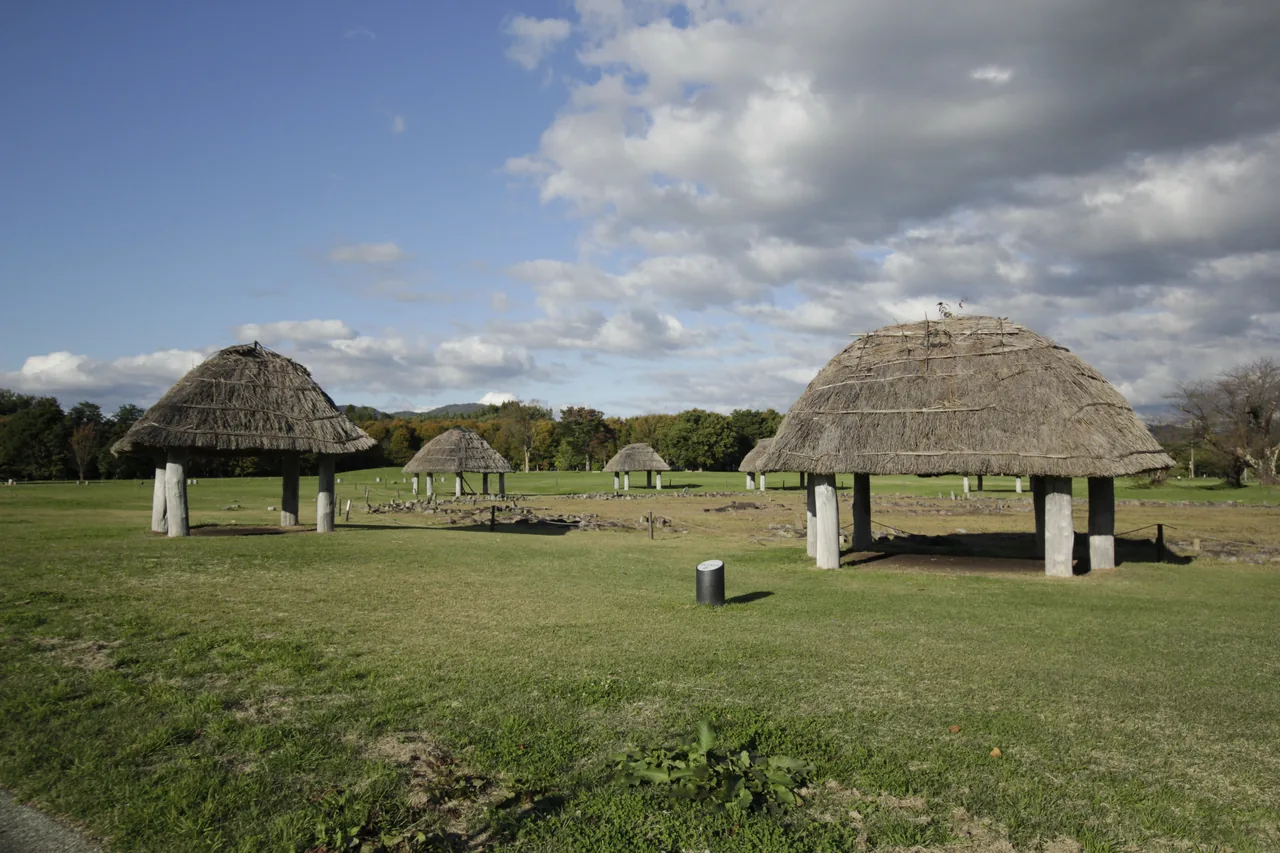
Photo: Akita Prefecture
What to See First at the Oyu Stone Circle Museum
There are hardly any signboards on the site itself. Looking at the finds and explanations in the Oyu Stone Circle Museum next door first makes the layout of the stones much easier to read. The best-known item on display is the clay tablet (doban). About the size of a palm, it has holes pressed into the front and back to show eyes and a mouth, and it is described as representing the numbers one to six.
The paid exhibition hall also has a video display that shows pottery and clay tablets as holograms, revealing the bottoms and insides of vessels that are normally out of sight. Handmade activities such as magatama (curved bead) pendants are also offered, so if you have time, check the museum's information for what is available.
Isedotai: Four Stone Circles and a Slab-Shaped Clay Figurine
The Isedotai site in Kitaakita City lies on a terrace between two rivers. Its four stone circles lie side by side, an unusual layout. The visitor center at the entrance to the site is the Isedotai Jomon Museum.
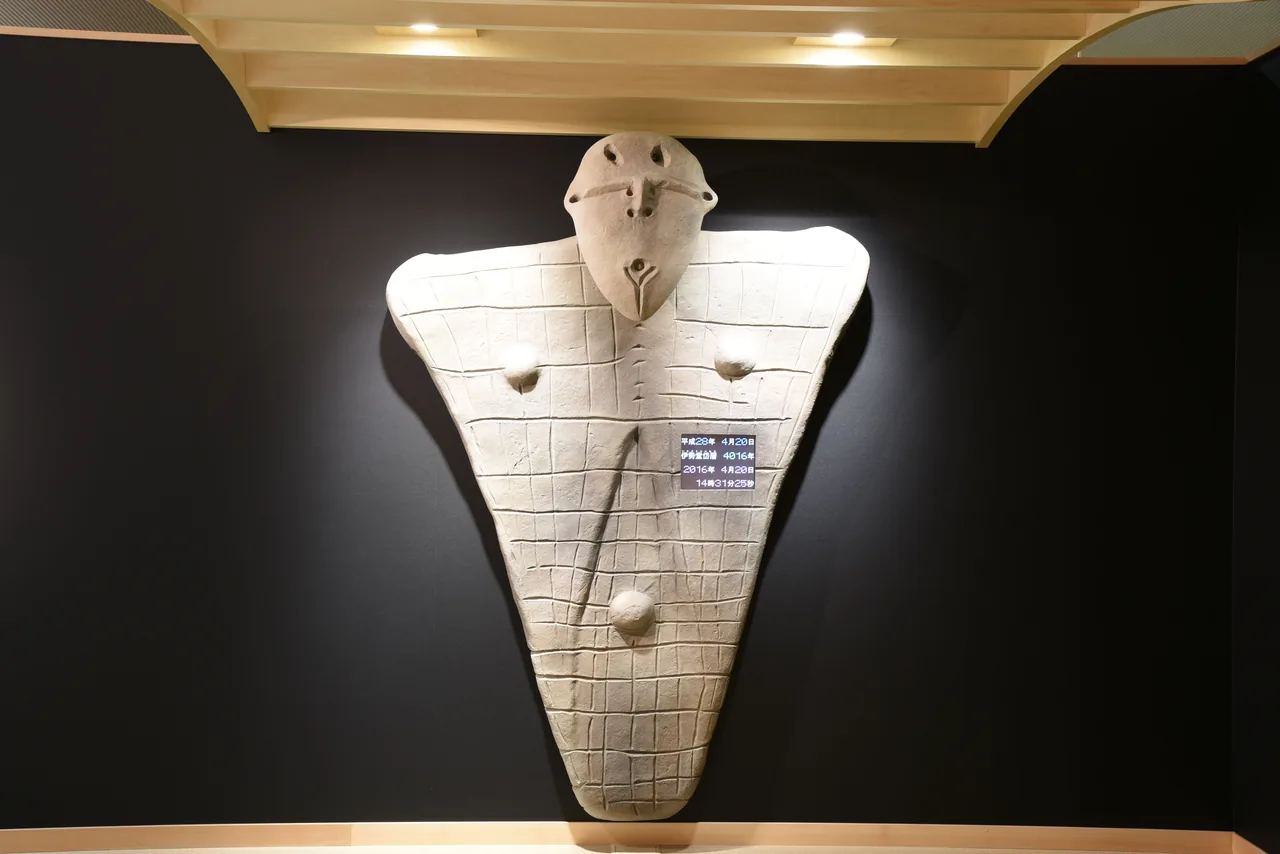
The first thing you notice inside is a large slab-shaped clay figurine hanging on the wall. Nearly 200 clay figurines (dogu) have been excavated at Isedotai, but only one could be restored to its complete form: a slab-shaped figurine found in a grave in Stone Circle B. The museum has a replica of it enlarged to 2 m tall, and figurines excavated in the city are displayed clockwise in chronological order.
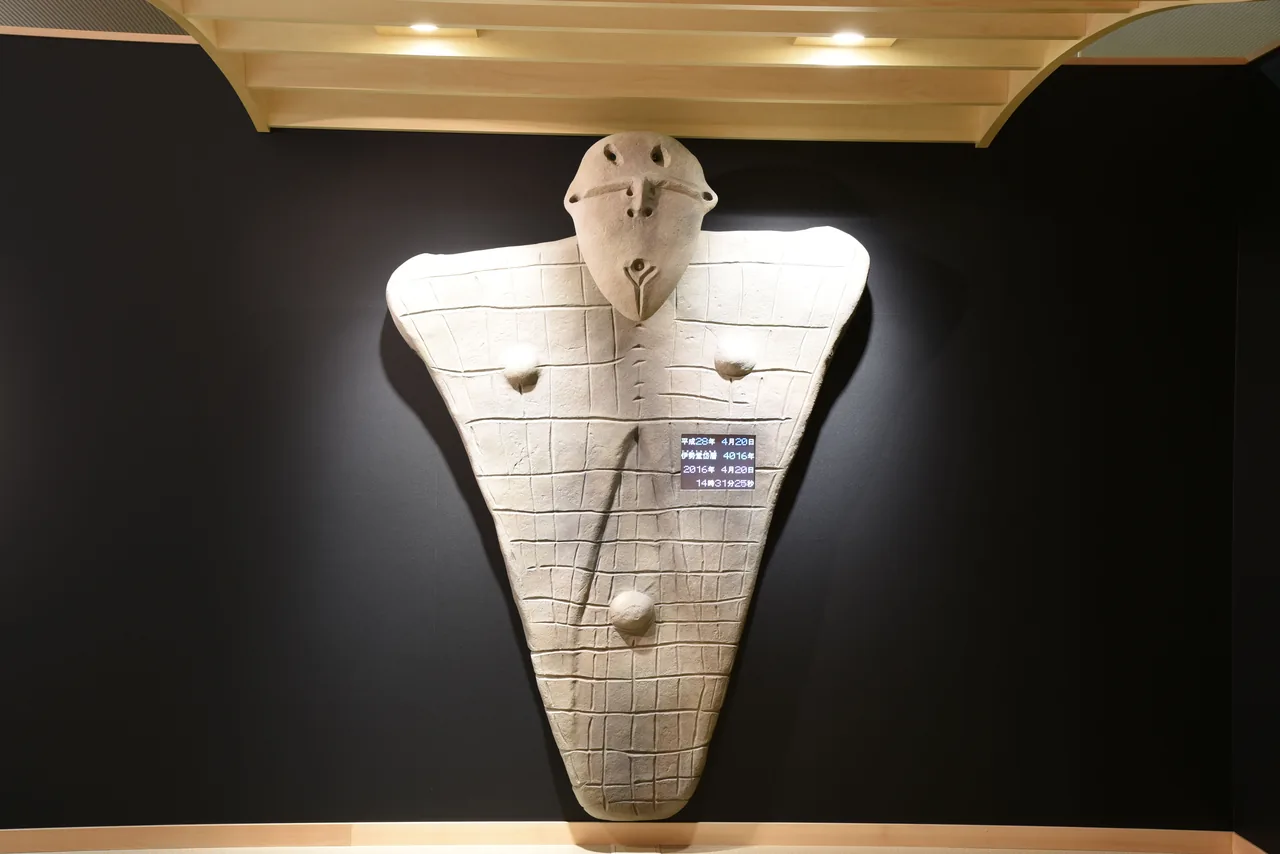
Photo: Akita Prefecture
A model in the museum shows at a glance how the stone rings are arranged on the plateau. After that, walk the viewing path on the site to see the real stone circles.
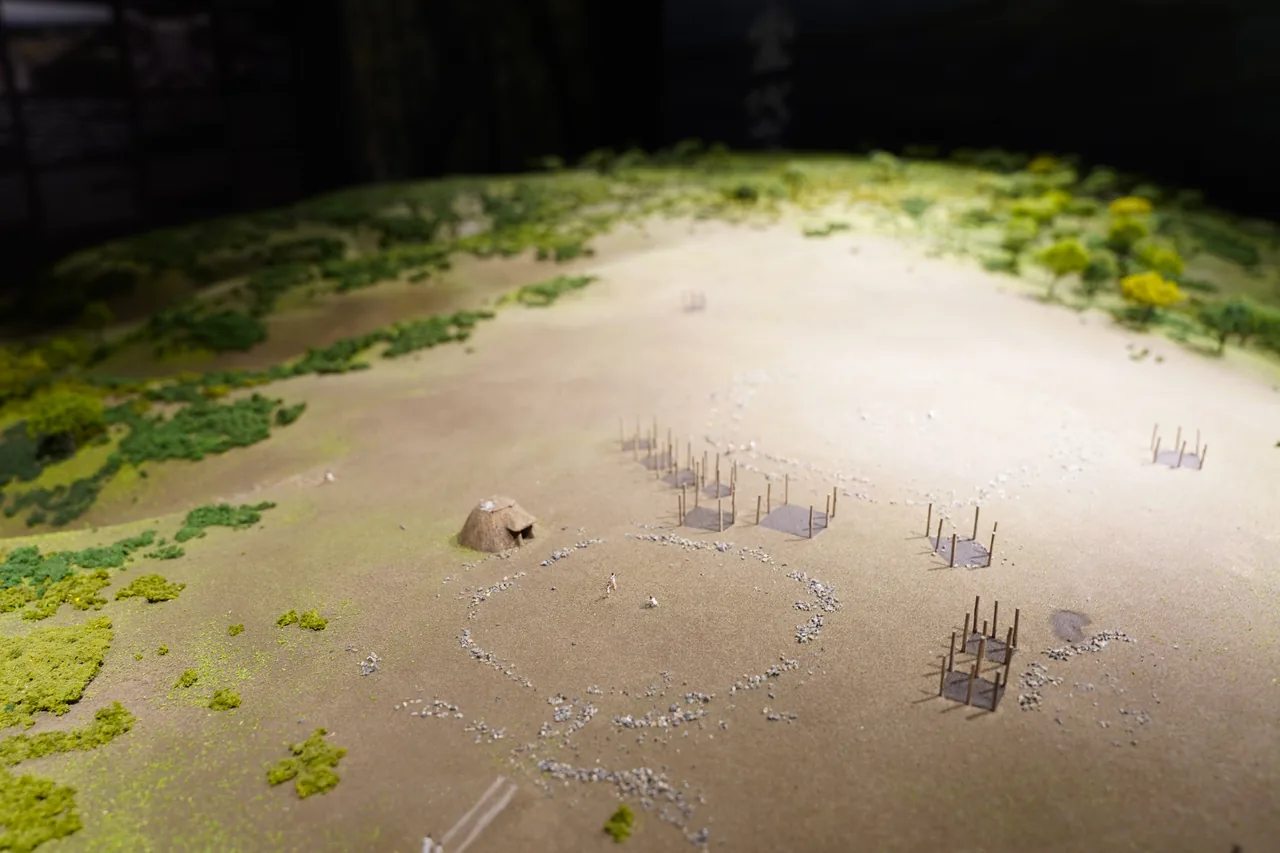
Photo: Akita Prefecture
Volunteer guides are available at the site (in Japanese, free, around 60 minutes). Whatever the day, book with the Isedotai Jomon Museum at least 14 days ahead.
When You Can Walk the Sites: No Stone Circles in Winter
Neither site can be walked while there is snow.
- Oyu Stone Circles: the site is usually open from mid-April to around mid-November, shifting with the snow.
- Isedotai: to protect the stones, the site is closed for winter from November to mid-April. On days the museum is closed, the site is closed too.
In winter, the indoor exhibits are the main draw. If you are going in late autumn or early spring, check the opening period and hours on Kazuno City's Oyu Stone Circles page and Kitaakita City's Isedotai Jomon Museum page before you set out. In autumn the woods around the sites change color, and at Oyu red and orange join the faded lawn and gray stones.
Getting There: Bus and Taxi to Oyu, the Akita Nairiku Line to Isedotai
For the Oyu Stone Circles, take a local bus from Kazuno-Hanawa Station on the JR Hanawa Line, about 35 minutes, and get off at Oyu Kanjo Resseki-mae. Since October 1, 2026, the bus does not run on Saturdays, Sundays or public holidays; check weekday times with Shuhoku Bus. On weekends, or if the bus times don't work for you, a taxi from Kazuno-Hanawa Station takes about 25 minutes. There is no bus to the site from Towada-Minami Station, so take a taxi, about 15 minutes.
The Isedotai site is about a 10-minute walk from Jomon-Ogata Station on the Akita Nairiku Railway (Akita Nairiku Line). By car, it is about 15 minutes from JR Takanosu Station and about 5 minutes from Odate-Noshiro Airport. The Akita Nairiku Line is a local railway between Kakunodate and Takanosu, and the sights along it are covered in our Akita train journey feature.
The two sites are both in northern Akita, but in different cities, with different stations and lines. Allow half a day for each to see the museum and walk the site without rushing. Check each museum's official information for opening hours and admission.