
Furano and Biei Day Trip from Sapporo: Lavender and the Blue Pond
This guide is translated from the Japanese edition. Read the Japanese edition
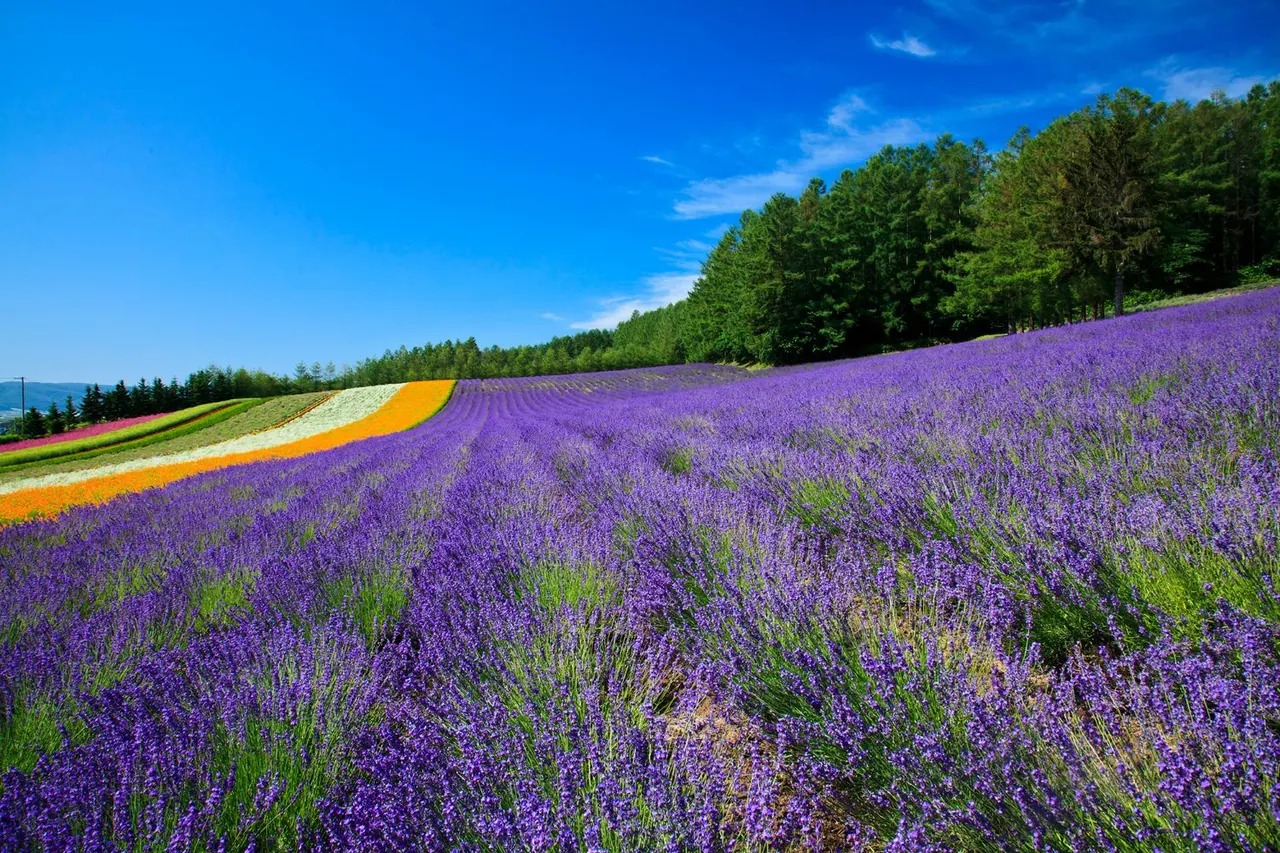
Plan a Furano and Biei day trip from Sapporo: lavender peaks late July to early August, the Shirogane Blue Pond and its winter lights, JR, bus or car, and farm rules.
In late July, the hillsides around Nakafurano and Kamifurano are striped with long bands of purple. Biei and the Furano district sit in the middle of Hokkaido, south of Asahikawa, and are known for lavender fields and rolling farmland that runs from one hill to the next. Biei also has the Shirogane Blue Pond, where dead trees stand in strikingly blue water. You can make it a day trip from Sapporo, but the sights are spread over a wide area, and how you travel decides how much you can see.
Where are Furano and Biei? Day trip or overnight?
The JR Furano Line runs from Asahikawa through Biei, Kamifurano and Nakafurano to Furano. A simple way to picture the area: Biei in the north has the hill farms and the Shirogane Blue Pond, while Kamifurano, Nakafurano and Furano in the south have the lavender fields.
On a day trip from Sapporo, the round trip itself takes a long time, and you still need a way to get from the station to the fields and the pond. If you want to see both the lavender and the Blue Pond in one day, a sightseeing bus, a tour or a rental car is the realistic choice. If you are going by train and local bus, staying a night in Asahikawa, Furano or Biei gives you time to spare in the morning and evening.
Getting there from Sapporo: JR, highway bus, sightseeing bus or rental car
| Option | Route | Best for |
|---|---|---|
| JR (via Asahikawa) | Limited express to Asahikawa, then the Furano Line to Biei and Furano | Travelers who also want to see the Blue Pond in Biei or Asahikawa |
| JR (via Takikawa) | Limited express to Takikawa, then the Nemuro Line to Furano | Travelers focusing on Furano |
| Highway bus | Hokkaido Chuo Bus "Kosoku Furano" from Sapporo Station to Furano Station | Travelers who want to reach Furano without changing |
| Sightseeing bus or tour | Day trips from Sapporo that cover the lavender fields and the Blue Pond | Travelers who want the main sights without driving |
| Rental car | Pick up in Sapporo or Asahikawa and drive the hill roads at your own pace | Travelers who want to stop wherever and whenever they like |
All JR Hokkaido limited express trains within Hokkaido are now fully reserved. You need a reserved-seat limited express ticket on top of the basic fare, so it is worth booking a seat in advance at a station ticket machine or online. If you are traveling on a JR pass for overseas visitors, check how seat reservations work with it as well. In summer, the seasonal Furano Lavender Express links Sapporo and Furano without a change on set days.
The Furano-Biei Norokko, a sightseeing train that ran between Asahikawa and Furano, made its final run on September 23, 2026. It was also the train that stopped at Lavender Batake, a temporary station open only in summer. Older guidebooks and blogs may still suggest routes using the Norokko, but it no longer runs. For any successor sightseeing train, check JR Hokkaido's announcements.
Hokkaido Chuo Bus runs seasonal sightseeing bus courses around Furano and Biei. The courses and operating days change from year to year. Some courses come with audio guides in English, Chinese and Korean as well as Japanese. Travel agencies also run many tours from central Sapporo.
A rental car lets you link the scattered fields and viewpoints freely. Keep in mind, though, that the roads through Biei's hills are working roads that farmers use every day. If you pull over to take photos, choose a spot where you will not block farm vehicles. In winter you will be driving on snow and ice, so if you are not used to that, a sightseeing bus or tour is the safer choice. For travel between Hokkaido's cities, see our Hokkaido transportation guide.
- Furano Lavender Express (JR Hokkaido, Japanese)
- All limited express trains in Hokkaido are fully reserved (JR Hokkaido, Japanese)
- Recommended tickets for Furano and Biei (JR Hokkaido, Japanese)
- Thank you, Furano-Biei Norokko (JR Hokkaido Asahikawa Branch, PDF, Japanese)
- Kosoku Furano highway bus (Hokkaido Chuo Bus, Japanese)
- Sightseeing buses (Hokkaido Chuo Bus)
When is lavender season? Lavender fields around Furano
According to the town of Nakafurano, its lavender is usually at its peak from around July 20 to early August, though the weather can push this earlier or later. Different varieties bloom at slightly different times, and the fields are harvested one after another once they pass their peak. Nakafurano publishes a "bloom index" showing how far the lavender has opened, so checking it the week before you go makes it easier to catch the flowers at their best.
- Hokuseiyama Lavender Park (Nakafurano): A town-run park where lavender and other flowers cover the slopes of Mt. Hokusei, which becomes a ski area in winter. It is about a 10-minute walk from JR Nakafurano Station. In summer, a sightseeing chairlift carries you up toward the summit. Check the town's announcements for the months the lift runs.
- Farm Tomita: A farm in Nakafurano known for its lavender fields. It is also included in Hokkaido Chuo Bus sightseeing bus courses.
- Hinode Park (Kamifurano): A town park in Kamifurano with a lavender garden on a hillside. Lavender is also Kamifurano's town flower; check the town's announcements for when it is at its best.
On weekends at peak bloom, the parking lots and the roads around the fields get crowded. Arriving early in the morning lets you walk the fields before most people arrive.
- Lavender bloom index (Town of Nakafurano, Japanese)
- Hokuseiyama Lavender Park (Town of Nakafurano, Japanese)
- Farm Tomita (Town of Nakafurano, Japanese)
- Lavender bloom information (Kamifurano Tokachidake Tourism Association, Japanese)
Shirogane Blue Pond in Biei: why it looks blue, and the winter illumination
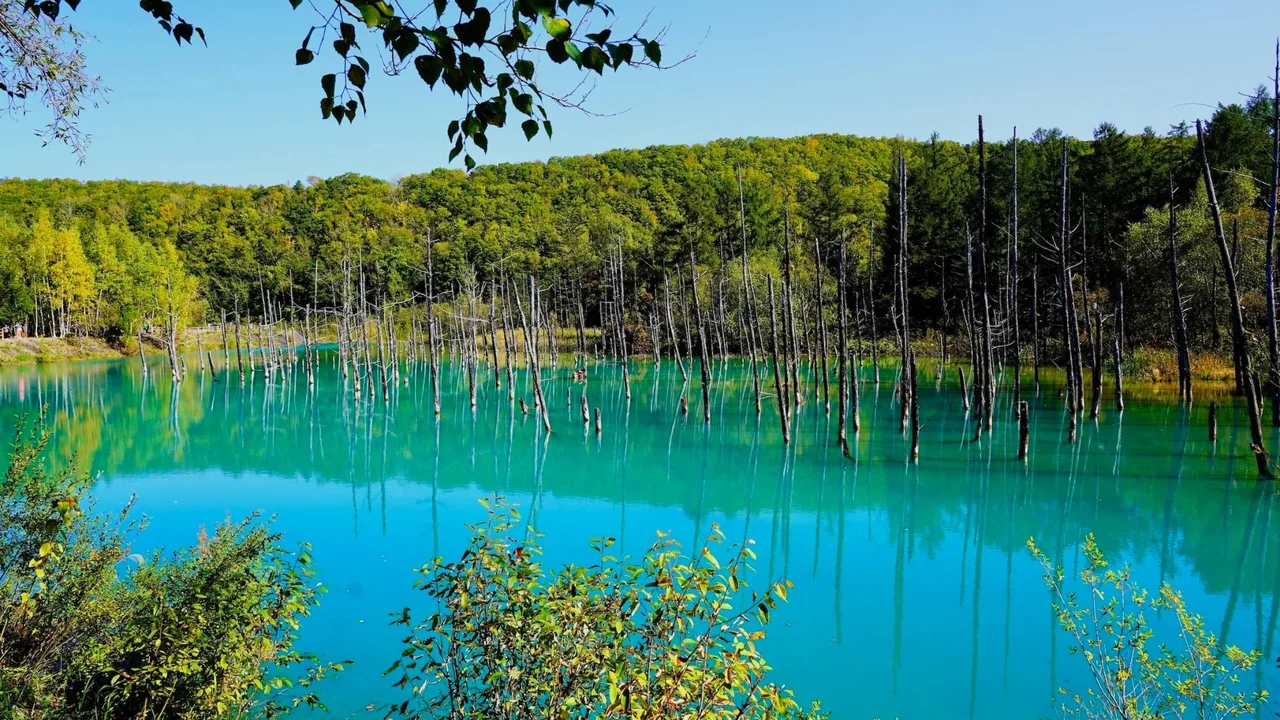
Photo: Hokkaido Love! Photo Library
The Shirogane Blue Pond lies near Shirogane Onsen in the town of Biei. According to the Asahikawa Development and Construction Department of the Ministry of Land, Infrastructure, Transport and Tourism, it formed after the 1988 eruption of Mt. Tokachi, when water from the Biei River collected behind an erosion-control dam built in a hurry to hold back volcanic mudflows. The water looks blue because water containing aluminum, which springs up around Shirogane Onsen upstream, mixes with the river water; the tiny particles that form in the water scatter the light. In spring during the snowmelt or after heavy rain, the minerals are diluted and the water can turn murky and lose its blue color.
In winter the pond freezes and is covered with snow, so you cannot see the blue water. Instead, Biei usually lights up the pond after sunset from late autumn into early spring. Check the Biei Tourism Association's announcement for that season's dates, lighting hours and cancellations in bad weather. The walkways get slippery with snow in winter, so wear shoes with deep treads.
To reach the pond, take the Dohoku Bus local bus that runs from Asahikawa Station via Biei Station to Shirogane Onsen, and get off at Aoiike Iriguchi (Blue Pond entrance). Seasonal sightseeing buses that tour the pond and the hills from Biei Station may also run.
Mt. Tokachi is an active volcano. When its volcanic alert level is raised, the climbing trails and nearby roads can be closed. Before heading toward Shirogane Onsen or Mt. Tokachi, check the Japan Meteorological Agency's volcano information and announcements from the towns of Biei and Kamifurano.
- Shirogane Blue Pond (Biei Tourism Association, Japanese)
- How the Blue Pond formed (MLIT Asahikawa Development and Construction Department, PDF, Japanese)
- Dohoku Bus (Japanese)
- Volcanic activity: Mt. Tokachi (Japan Meteorological Agency, Japanese)
Rules for Biei's hills: stay out of the fields
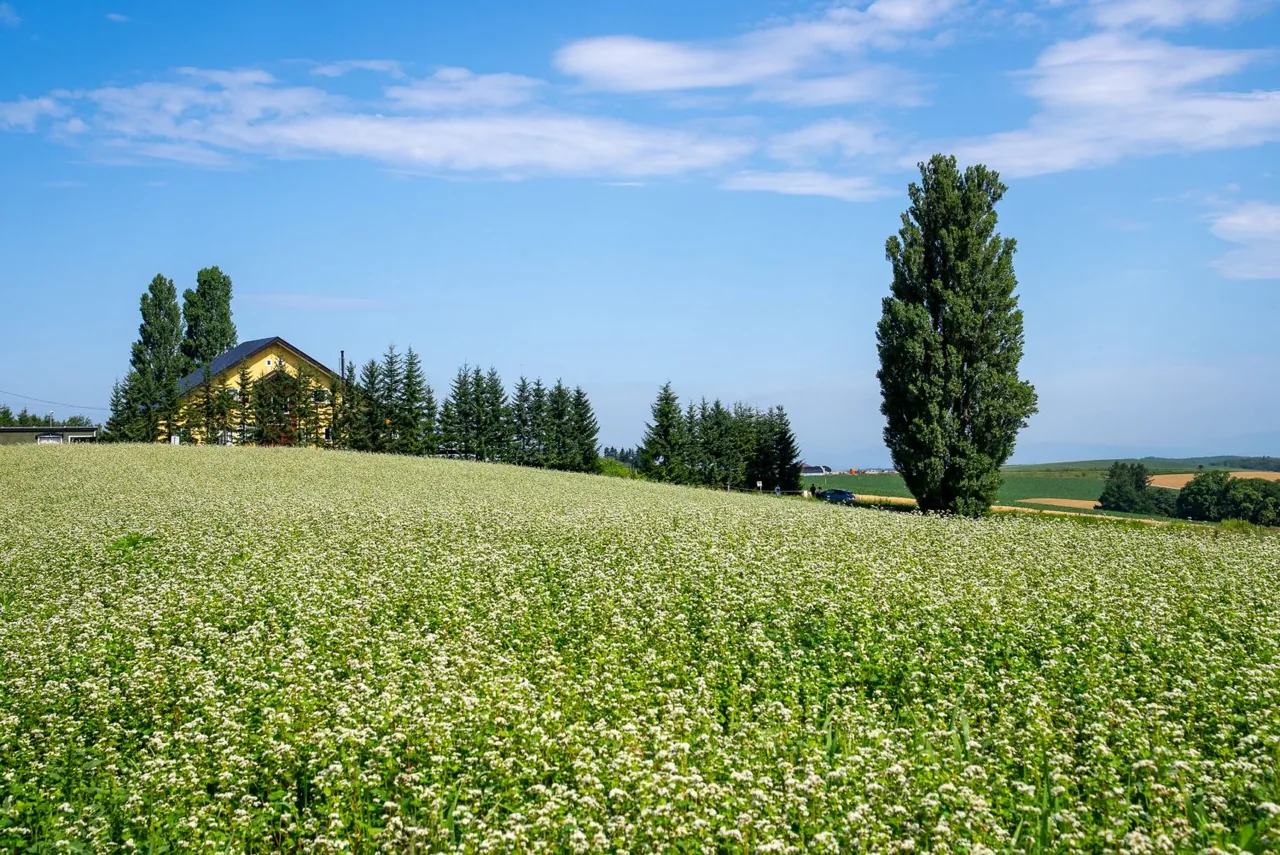
Photo: Hokkaido Love! Photo Library
Almost all of the scenery on Biei's hills is farmland where farmers grow their crops. The town of Biei repeatedly asks visitors to follow these rules.
- Do not enter the fields: The fields are private land. If soil or germs carried on the soles of your shoes spread a crop disease, the field may be unusable for that crop for a long time.
- Take photos from paved roads: Dirt farm tracks are part of the fields, so neither people nor cars should go on them. The same applies to fields in bloom.
- Do not touch the straw rolls left after harvest: The rolls of straw left in the fields are heavy and can cause serious injury if they fall.
- In winter, too, stay on cleared roads: Wheat and other crops are growing under the snow.
- Do not stop in the road: Even the roads in front of the famous photogenic trees are everyday roads for local residents. When a car comes, stop shooting and get out of the way.
The same goes for lavender fields: at farms with paths, stay on the paths. Do not pick the flowers or walk into the rows for photos.
What to see in each season, and what to wear
- Summer (mainly July): Lavender season, when the number of visitors is especially high. Many days are sunny and there is little shade on the hills and in the fields, so bring a hat and something to drink.
- Autumn: As the harvest goes on, the colors of the hill fields change from those of summer. Mornings and evenings get cold, so bring an extra layer.
- Winter: The hills turn into snowfields, and the Shirogane Blue Pond is illuminated. Snow can delay or stop trains and buses, so plan on an earlier return and check service information before heading to the station or bus stop.
If you plan to stay overnight during the summer flower season, start looking for accommodation as soon as your dates are set, while there are still plenty of places to choose from.
A sample day
Here is one way to see both Biei and Furano by train and local bus.
- Morning: Take a limited express from Sapporo to Asahikawa, then change to the Furano Line for Biei
- Late morning: Take the Dohoku Bus from Biei Station to the Shirogane Blue Pond, then ride back to Biei Station
- Afternoon: Continue on the Furano Line toward Nakafurano and Furano to see the lavender fields (summer)
- Evening: From Furano, take the Nemuro Line to Takikawa and change to a limited express, or take the highway bus back to Sapporo
Trains and buses do not run often. Look up your connections in advance and decide which stop you will skip if something runs late, so you do not miss the last service back.
For getting around Sapporo itself, see First time in Sapporo. You can find more places to visit in Hokkaido in our list of Hokkaido spots.