
Kawagoe Day Trip from Tokyo: Trains, Old Town and Kashiya Yokocho
This guide is translated from the Japanese edition. Read the Japanese edition
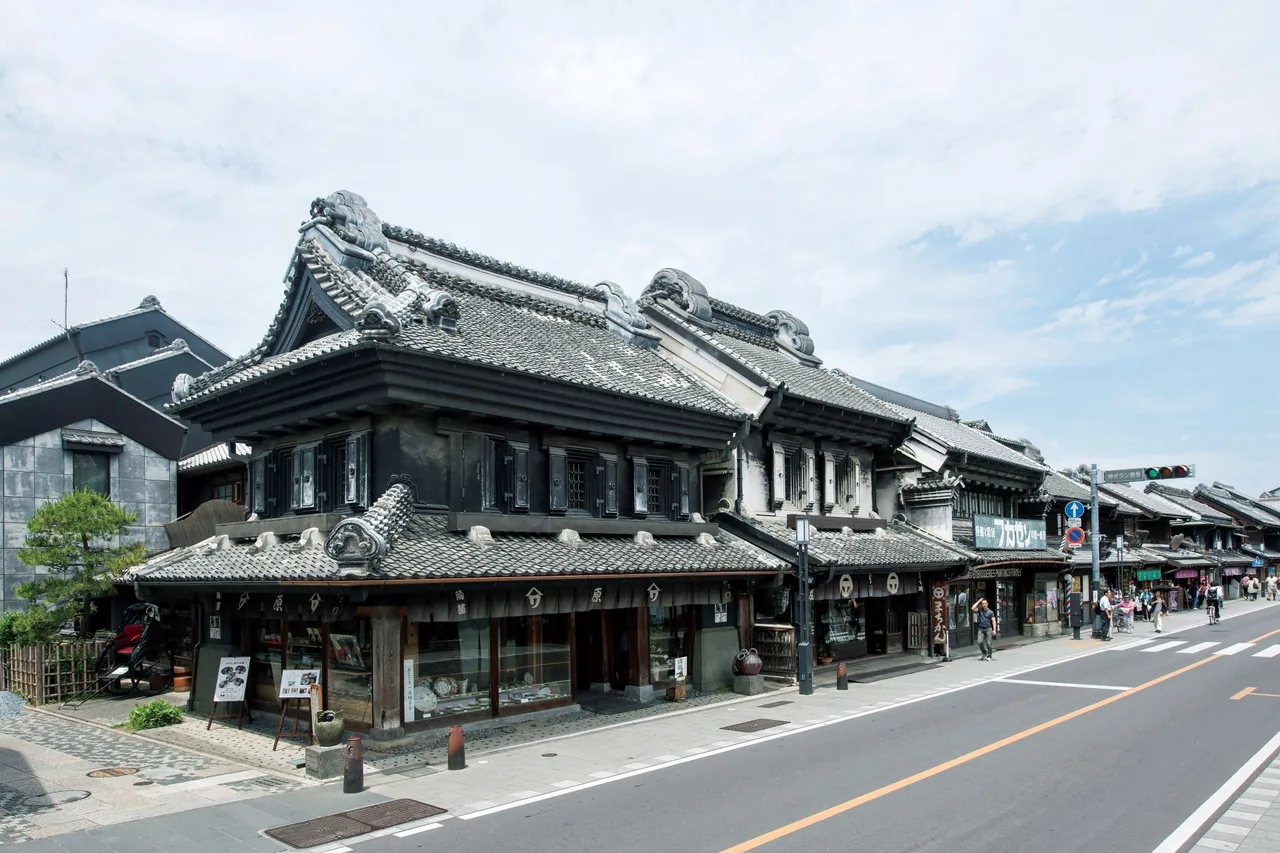
Take the Tobu Tojo, JR or Seibu Shinjuku Line to Kawagoe, walk Ichibangai before the weekend crowds, then Toki no Kane, Kashiya Yokocho and Kitain in the afternoon.
Clay-walled warehouses with black plaster and heavy ridge tiles line the street, and behind them a wooden bell tower rises above the rooftops. Kawagoe, in Saitama Prefecture, is an old castle town known as "Koedo" (Little Edo), and a single train from Ikebukuro or Shinjuku gets you there. If you are based in Tokyo and want a feel for an Edo-period townscape, it makes an easy day trip. On weekends, though, the warehouse street gets busy, especially from early afternoon. Arrive at Kawagoe Station in the morning and you can take the loop bus into the old town and walk Ichibangai before it fills up.
How to get from Tokyo to Kawagoe
Kawagoe has three stations that work as gateways for sightseeing: Kawagoe Station (JR and Tobu Tojo Line), Kawagoe-shi Station (Tobu Tojo Line) and Hon-Kawagoe Station (Seibu Shinjuku Line). The quickest way to choose a line is to start from the station nearest your hotel.
| Line | Main boarding stations in Tokyo | Get off at | Good to know |
|---|---|---|---|
| Tobu Tojo Line | Ikebukuro Station | Kawagoe Station or Kawagoe-shi Station | Runs through services with the Tokyo Metro Fukutoshin Line and Tokyu Toyoko Line, so some trains come direct from the Shibuya and Yokohama areas |
| JR Kawagoe Line (through services with the Saikyo Line) | Shinjuku Station, Omiya Station | Kawagoe Station | Runs through services with the Saikyo Line. Before boarding, check that the train is bound for Kawagoe |
| Seibu Shinjuku Line | Seibu-Shinjuku Station, Takadanobaba Station | Hon-Kawagoe Station | The all-reserved Limited Express "Koedo" needs a limited express ticket on top of the regular fare |
Staying in Ikebukuro? Take the Tobu Tojo Line. Near the west side of Shinjuku or Takadanobaba? The Seibu Shinjuku Line. Closer to a JR station? Use JR. You can also mix lines, arriving at Kawagoe Station and heading home from Hon-Kawagoe Station, for example.
Tobu Railway and others sell discount tickets that bundle the train ride with buses around Kawagoe. What they include and what they cost can change, so check each company's website. Look up current journey times, fares and timetables on the operators' official sites too.
- Access to Kawagoe (Kawagoe City, Japanese)
- Access (Koedo Kawagoe Tourist Association, Japanese)
- Limited Express Red Arrow (Seibu Railway, Japanese)
From the station to the old town: walk or take the loop bus
From Kawagoe Station you can walk to the warehouse district or take a sightseeing loop bus. Two loop buses leave from Kawagoe Station, and both pass near the warehouse district, Toki no Kane, Kashiya Yokocho, Kitain Temple and other sights.
- Koedo Loop Bus (Eagle Bus): departs from the West Exit of Kawagoe Station
- Koedo Meisho Meguri Bus (Tobu Bus): departs from the East Exit of Kawagoe Station. With a one-day pass you can get on and off as you like
One option is to ride the bus to the old town and walk back to the station afterwards, browsing on the way. Check times and fares with the bus operators and on Kawagoe City's page before you ride. Kawagoe Station and Hon-Kawagoe Station both have tourist information centers, so you can ask about the town as soon as you arrive.
- Sightseeing loop buses (Kawagoe City, Japanese)
- Koedo Meisho Meguri Bus (Tobu Bus On-Line, Japanese)
- Kawagoe Station Tourist Information Center (Kawagoe City, Japanese)
The warehouse district and Toki no Kane
The heart of a Kawagoe visit is the row of kurazukuri (clay-walled warehouse-style) buildings along the street known as Ichibangai. Think big ridge tiles, black plaster walls and thick double doors. Many of these buildings went up after the Great Kawagoe Fire of the Meiji era and still stand today; the area is designated a national Important Preservation District for Groups of Traditional Buildings. The Osawa House, which predates the fire, is a national Important Cultural Property.
Toki no Kane (the Bell of Time) is a bell tower standing among the warehouses and the symbol of Kawagoe. It is said to have been built in the early Edo period by Sakai Tadakatsu, lord of the Kawagoe domain, to tell the castle town the time. The present tower was rebuilt after the Great Kawagoe Fire, and its three-tiered wooden frame rises above the warehouse roofs. The bell still rings at set times, and its sound was chosen by the Ministry of the Environment as one of the "100 Soundscapes of Japan." The tourist association's page lists when it rings.
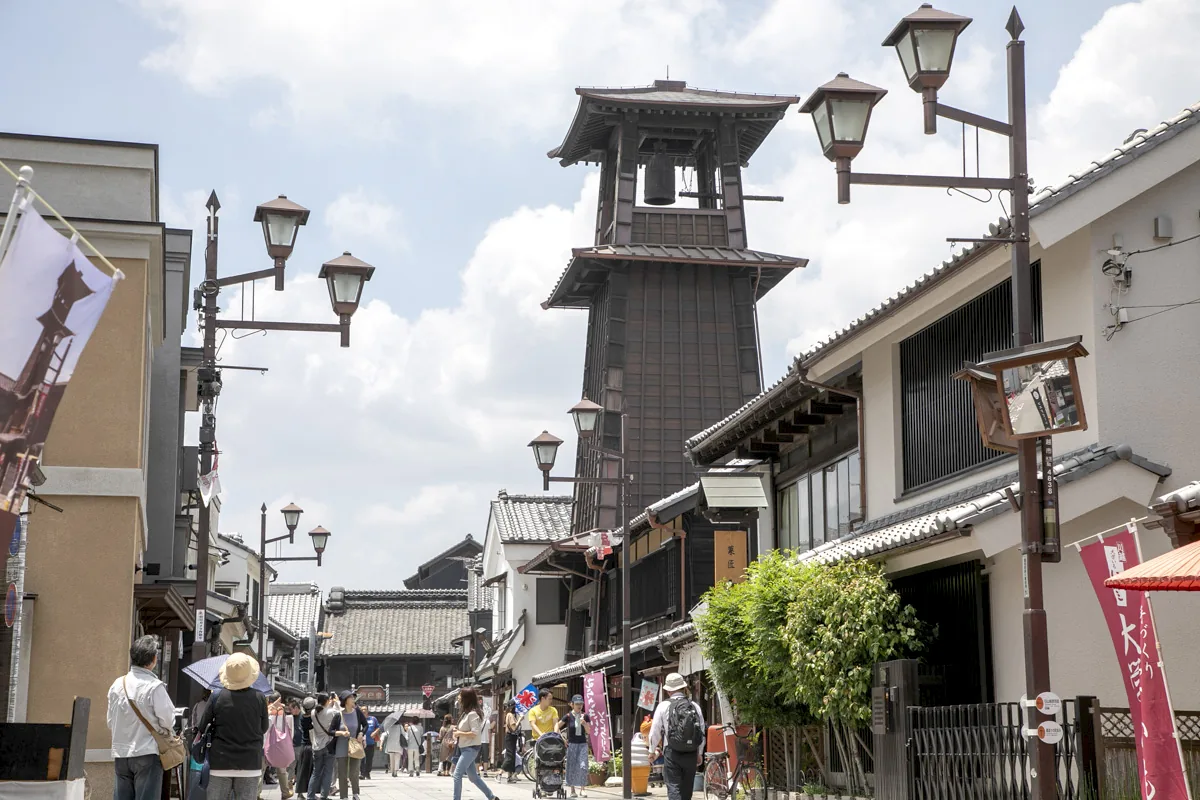
Photo: Saitama Prefecture Products & Tourism Association / Reproduction/Reprint prohibited
Ichibangai is normally open to cars. Kawagoe City has been trialling pedestrian-only days on the street, but these are limited, so on ordinary days take care not to step into the roadway.
- Ichibangai (Koedo Kawagoe Web, Japanese)
- Toki no Kane (Koedo Kawagoe Web, Japanese)
- Pedestrian-only days on Ichibangai (Kawagoe City, Japanese)
Kashiya Yokocho and Kitain Temple
Kashiya Yokocho (Candy Alley) is a stone-paved lane set with colored glass. It began in the Meiji era when shops started making simple sweets, and after the Great Kanto Earthquake hit Tokyo's confectionery wholesalers it grew into a center for making and wholesaling sweets. Sweet shops still line the lane, and some still make candy the traditional way. The sugary scent drifting through the alley was selected as one of Japan's "100 Fragrant Landscapes."
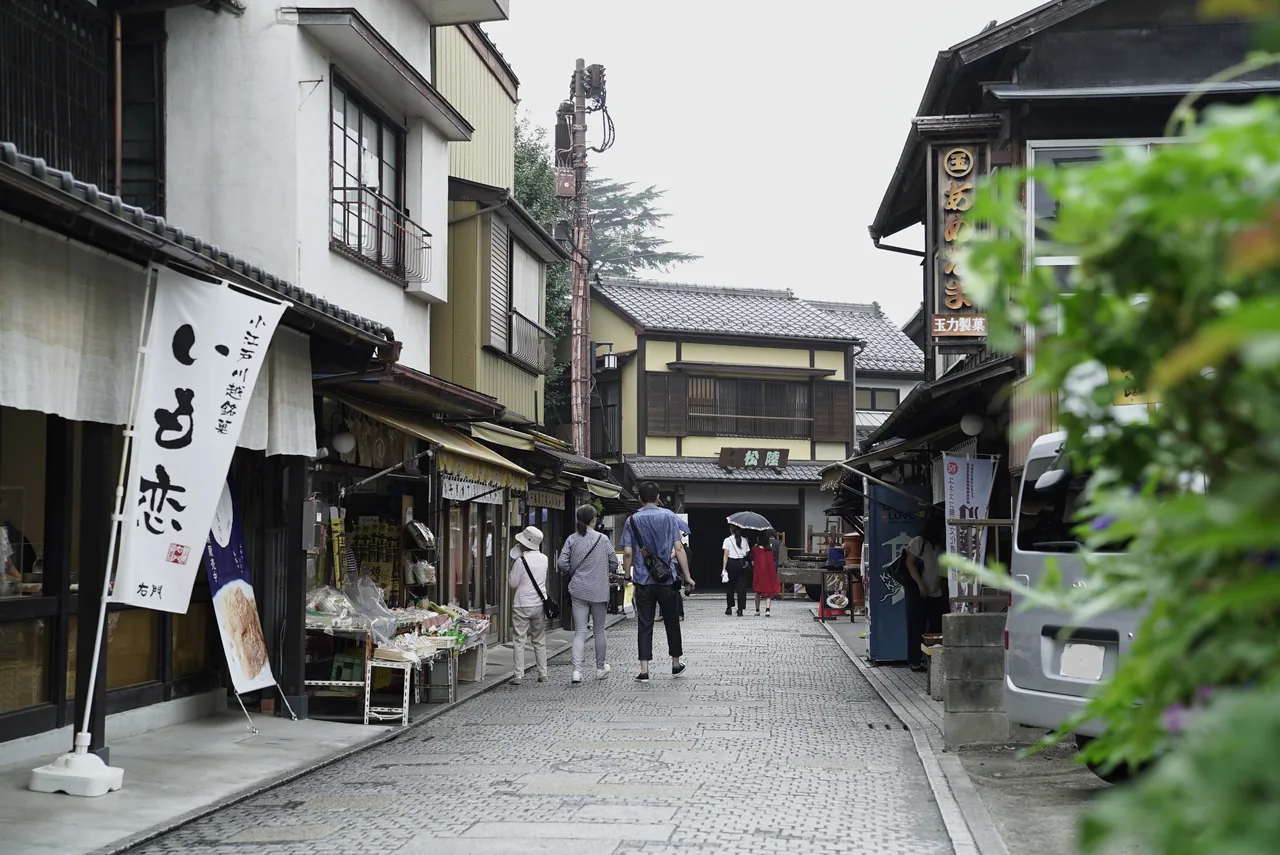
Photo: Saitama Prefecture Products & Tourism Association / Reproduction/Reprint prohibited
Kitain Temple, also called "Kawagoe Daishi," is a temple of the Tendai school. Buildings moved here from Edo Castle survive, and the guest hall and study contain rooms said to be the "room where Tokugawa Iemitsu was born" and the "dressing room of Kasuga no Tsubone." The guest hall, the study, the main gate and other structures are national Important Cultural Properties. The grounds also hold the Gohyaku Rakan, a crowd of stone arhat statues packed closely together.
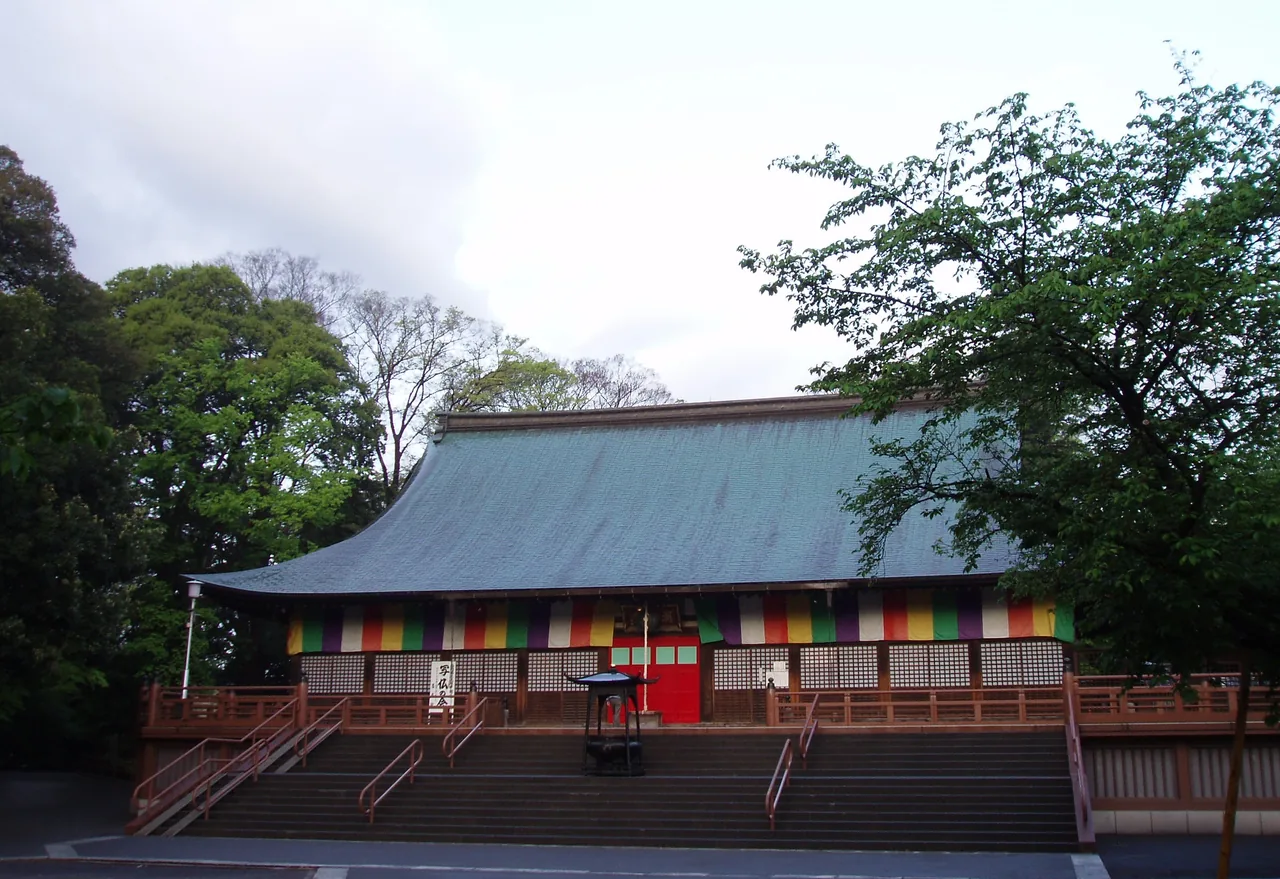
Photo: Saitama Prefecture Products & Tourism Association / Reproduction/Reprint prohibited
Kitain may close to visitors over the New Year period and on days with temple events. Opening hours and admission vary by season, so check the official website before you go.
A day itinerary and how to avoid the crowds
Kawagoe City publishes a monthly crowd forecast for visitors. It says both the Ichibangai area and the area around Kitain get busy, mainly on Saturdays and Sundays. During long holiday periods Ichibangai gets very crowded, and the city asks visitors to avoid the peak from around midday into the afternoon. Once you have a date, a look at that month's forecast makes it easier to decide when to set off.
For a calmer look at the old town, get to Ichibangai before the crowds build. The tourist association's "Classic Koedo Kawagoe Walk" goes from Kawagoe Station to Ichibangai, Toki no Kane, Kashiya Yokocho and then Kitain. On days when you want to dodge the crowds, putting the old town first makes for easier walking:
- Arrive at Kawagoe Station in the morning and take a loop bus to the warehouse district
- Walk along Ichibangai and see Toki no Kane
- Pick out candy and old-fashioned sweets in Kashiya Yokocho
- After lunch, head to Kitain to see the guest hall, the study and the Gohyaku Rakan
- Return to Tokyo from Kawagoe Station or Hon-Kawagoe Station
Even if a weekend is your only option, finishing the old town by late morning and spending the busy hours in the Kitain grounds keeps you out of step with the crowds. The streets in the sightseeing area are narrow and prone to traffic jams, so Kawagoe City asks visitors to come by public transport rather than by car.
Street food etiquette
Along the warehouse street and in Kashiya Yokocho, shops sell sweets and snacks at the counter. It is tempting to grab something and keep walking, but the Koedo Kawagoe Tourist Association asks visitors to follow these manners:
- Eat and drink in designated places
- Put rubbish in bins
- Smoke only in designated smoking areas
When you stop for a photo, stay out of the road and don't block the middle of the street. If you cannot find a bin, carrying your rubbish home keeps the town clean. Payment methods differ from shop to shop, so it helps to carry some cash.
Another day out in Tokyo
After Kawagoe's warehouse town, spend a day in Tokyo's old downtown. Asakusa and Ueno in one day walks you through a day around Senso-ji Temple and Ueno Park. You can also find more places to go in Tokyo spots.