
Gion Matsuri Tips: Yoiyama, the Float Procession and Summer Heat
This guide is translated from the Japanese edition. Read the Japanese edition
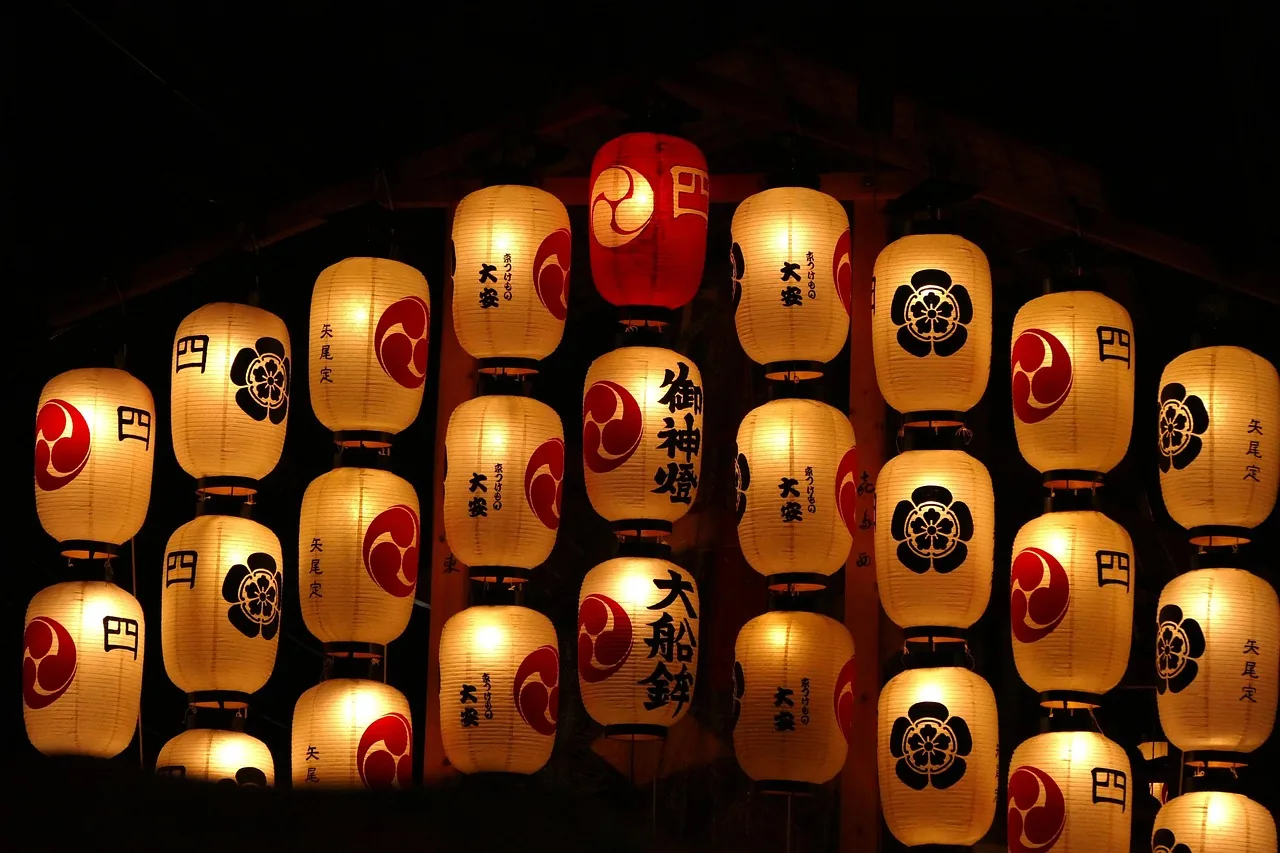
Gion Matsuri for first-timers: Yoiyama vs the float procession, where to check crowds, road closures and paid seats, and how to handle Kyoto's summer heat.
As evening falls, the komagata lanterns light up along the streets just off Shijo-dori and the sound of Gion-bayashi festival music drifts through the neighborhood. July in Kyoto is Gion Matsuri season. Standing for a long time on a crowded street in the Kyoto summer, though, wears you out fast. Yoiyama means wandering the float neighborhoods from evening into the night; the float procession means standing at the roadside to watch. Which one you choose decides when you head out and how you prepare for the heat.
What is Gion Matsuri? Yasaka Shrine's festival, a month of events
Gion Matsuri is the festival of Yasaka Shrine in Higashiyama. Throughout July, Shinto rites such as the Shinkosai and Kankosai, when the mikoshi portable shrines are carried through the city, run alongside the events of the yamahoko floats. The Yamahoko Junko (float procession) and Yoiyama that travelers often hear about belong to the float events.
The festival is divided into the Saki Matsuri (Early Festival) and the Ato Matsuri (Latter Festival), and each has its own Yoiyama and float procession. On the evening of the Early Festival procession, the Shinkosai ceremony takes place: the deities of Yasaka Shrine are transferred to mikoshi portable shrines and carried to the otabisho (temporary shrine) at Shijo-Teramachi. On the day of the Latter Festival procession, the Kankosai ceremony returns the mikoshi from the otabisho to Yasaka Shrine.
The "Yamahoko float event of the Kyoto Gion festival" is also inscribed on UNESCO's Intangible Cultural Heritage list. Dates and times for each event need to be checked every year, so confirm them on the official Yasaka Shrine and Kyoto City sites.
- Gion Matsuri (Yasaka Shrine official website)
- Gion Matsuri: What kind of festival is it? (Kyoto City Official Travel Guide)
Yoiyama or the float procession: which should you see?
| Event | What it is | How to watch |
|---|---|---|
| Yoiyama | The few days before the float procession, when you can walk around the neighborhoods and see the yama and hoko floats where they stand. From the evening the komagata lanterns are lit and Gion-bayashi music plays | Walk around the float neighborhoods in the evening and at night |
| Yamahoko Junko (float procession) | The floats of the Early and Latter Festivals parade along Shijo-dori, Kawaramachi-dori and Oike-dori | Watch from the roadside. Paid viewing seats are set up on Oike-dori |
On Yoiyama nights, the float neighborhoods' meeting halls display the floats' figures, textiles and metal ornaments, and some townhouses remove their latticework to show folding screens and other treasures. For the most festive atmosphere, Yoiyama is the time to go. Some floats can be boarded or viewed inside during Yoiyama, but this may require receiving a chimaki charm or buying an admission ticket. Conditions differ from float to float.
The highlight of the procession is the tsuji-mawashi, when the huge hoko and yama floats turn at intersections. The Kyoto City Official Travel Guide says these turns take place at the Kawaramachi-Shijo, Kawaramachi-Oike and Oike-Shinmachi intersections.
Where to check crowds, road closures and viewing seats
On Yoiyama nights and on procession days, crowds concentrate around the float neighborhoods. Kyoto City works with the Kyoto Prefectural Police to station staff at intersections expected to be crowded, guiding people through one-way and entry restrictions. Follow the directions of police and security staff on site. Live cameras are installed in the busiest areas and stream crowd conditions.
Road closures are in place during Gion Matsuri, and city buses that normally run along Shijo-dori are rerouted to Gojo-dori, Oike-dori and other streets. Bus routes and stops may differ from usual, so combining the subway and trains makes it easier to plan your trips.
Kyoto Navi Plus introduces a Yoiyama guide that shows crowded areas, one-way pedestrian sections and the locations of rubbish bins. Look through it before you set out so you can move with the flow of people.
Paid viewing seats for the float procession are set up on Oike-dori. Sales periods and methods, seat locations and rules for spectators are announced each year, so check the viewing-seat page on the Kyoto City Official Travel Guide.
- Gion Matsuri: Let's go! (Kyoto City Official Travel Guide)
- Gion Matsuri: Paid viewing seats (Kyoto City Official Travel Guide)
- Gion Matsuri: FAQ (Kyoto City Official Travel Guide)
- Measures with the Kyoto Prefectural Police to improve Gion Matsuri viewing (Kyoto City)
- How to enjoy Yoiyama (Kyoto City Official Kyoto Navi Plus)
Beating the heat at Gion Matsuri: check heatstroke information first
Watching Gion Matsuri means spending long hours outdoors among crowds. Kyoto City's tourism information also asks visitors to bring a hat, drink water often and take breaks.
On the morning of your outing, check the forecast Heat Index (WBGT) for Kyoto on the Ministry of the Environment's heatstroke prevention site; it will help you decide how to spend the day. When the risk of heatstroke is forecast to be extremely high, the Ministry of the Environment and the Japan Meteorological Agency issue a Heatstroke Alert, and when serious harm to health is feared, a Special Heatstroke Alert. On alert days, consider rearranging your plans, for example by keeping daytime outings short and saving Yoiyama for the evening.
- Hat and drinks: sip a little at a time before you feel thirsty
- Places to rest: think ahead about where you can cool off on the way, such as air-conditioned stations or shops
- Changes in how you feel: if anything feels off, leave the crowd and rest without pushing yourself
Kyoto City designates Cooling Shelters (designated heat refuge facilities) that open when a Special Heatstroke Alert is issued. The list of facilities is on the Kyoto City website.
- Ministry of the Environment heatstroke prevention site: Heat Index for Kyoto
- Watch out for heatstroke (Kyoto City)
- List of Cooling Shelters (Kyoto City)
Staying cool in summer Kyoto: Kamogawa Noryo-yuka and Kibune kawadoko
A summer tradition in Kyoto is dining on platforms built over or beside a river. The Kamogawa Noryo-yuka, the kawadoko of Kibune and the kawadoko of Takao each have their own character.
At the Kamogawa Noryo-yuka, ryotei restaurants, inns, restaurants and cafes on the west bank of the Kamo River between Nijo and Gojo build platforms over the riverbank. According to Kyoto tourism information, midsummer daytimes are hot, so some places do not open for lunch, or do so only in certain periods.
The kawadoko of Kibune let you eat just above the Kibune River, which runs through the mountains north of Kyoto City, in air that is cooler than in the city center. For both, the season is set each year and whether you need a reservation varies by restaurant. Check the Kyoto City Official Travel Guide and each restaurant's information before you go.
- Noryo-yuka riverside dining (Kyoto City Official Travel Guide)
- Kamogawa Noryo-yuka (Kyoto City Official Travel Guide)
Beyond riverside dining, summer Kyoto is easier to walk if you spend the hottest part of the day indoors and go out in the morning and evening. For ideas on making use of the morning, see our Arashiyama day trip guide.
Where to check festival events, road closures and heat alerts
- Gion Matsuri events (Yasaka Shrine official website)
- Are there road closures during Gion Matsuri? (Kyoto Online Tourist Information Center)
- Heatstroke prevention using Heatstroke Alerts (Kyoto Prefecture)
For places to stop by between festival events, browse the list of spots in Kyoto.