
Nishiki Market Etiquette: Where to Eat, Kyoto Foods and Access
This guide is translated from the Japanese edition. Read the Japanese edition
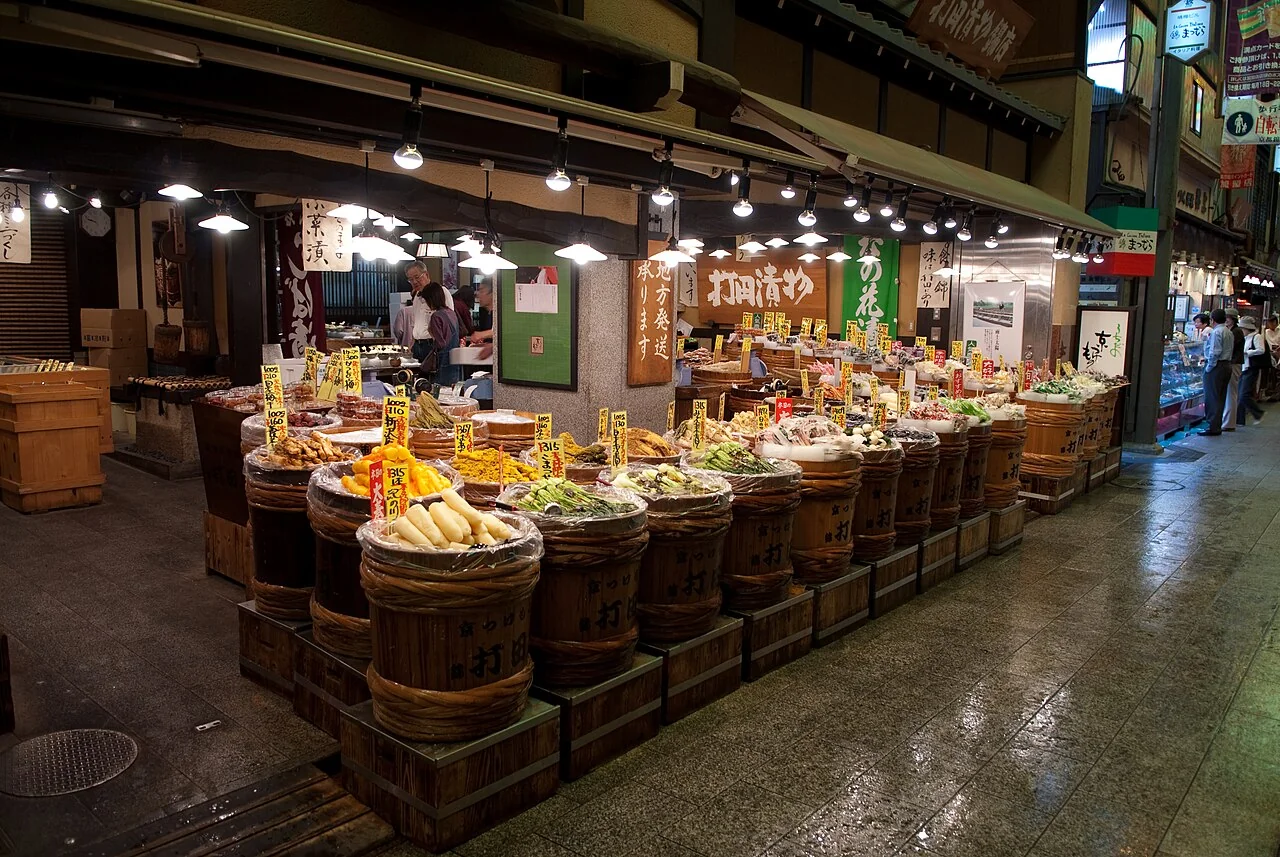
Nishiki Market asks visitors not to eat while walking, so you eat in front of the shop. Photo etiquette, Kyoto pickles, yuba and dashimaki, and the walk from Shijo.
Step into the covered arcade of Nishiki Market and shops selling dashimaki omelets, pickles and yuba line both sides of a narrow street. It is tempting to buy something and eat it as you stroll, but the market's shopping street association asks visitors not to eat while walking. Here, you eat what you buy in front of the shop that sold it. The street runs from Teramachi-dori in the east to Takakura-dori in the west, and it is so narrow that at busy times, stopping in the middle is enough to hold up everyone behind you.
Where is Nishiki Market? Getting there from Shijo, Karasuma and Kawaramachi
Nishiki Market lies along Nishikikoji-dori, the street running east to west one block north of Shijo-dori. Its east end is at Teramachi-dori and its west end at Takakura-dori, with shops lining both sides of the narrow street in between. These are the three main nearby stations, all within walking distance.
| Line | Station | From the station |
|---|---|---|
| Kyoto Municipal Subway Karasuma Line | Shijo Station | Go up to street level and walk east along Shijo-dori. Turn north onto Takakura-dori at the Daimaru Kyoto department store; the next street, Nishikikoji-dori, is the west entrance |
| Hankyu Kyoto Line | Karasuma Station | Walk to the west entrance on the Takakura-dori side |
| Hankyu Kyoto Line | Kyoto-kawaramachi Station | From the Shijo-Kawaramachi intersection, walk west along Shijo-dori and turn right into Shinkyogoku Shopping Street. One block north is Nishiki Tenmangu Shrine, where the market begins and runs west |
From Kyoto Station, the simplest way is the Karasuma Line subway to Shijo Station. Kyoto City's official tourism site advises against taking city buses into central Kyoto, since bus stops, buses and roads all get crowded, and recommends rail instead. Check the official sites for walking times and fares.
- Access (Kyoto Nishiki Market official site)
- Comfortable access to central Kyoto (Nishiki Market) (Kyoto City Official Travel Guide)
How it became "Kyoto's Kitchen"
According to the market's official site, Nishiki Market traces its start to the early Edo period, when the shogunate officially recognized fish wholesalers in Kyoto. A market is thought to have existed in the area even earlier, back in the Heian period.
One reason is water. Good-quality groundwater that stays cold all year runs beneath Nishikikoji, and in the days before refrigerators it helped keep fish and fowl fresh. Known as "Nishiki no mizu" (Nishiki water), it supported the market for centuries. Over time the market moved beyond fish to handle all kinds of food, and came to be called "Kyoto's Kitchen."
The History page on the market's official site goes into more detail.
Kyoto foods you will see: pickles, yuba, nama-fu and dashimaki
Today the market gathers specialty shops selling fresh fish, dried and salted fish, river fish, fruit and vegetables, beans and grains, yuba, fu, tofu, pickles and ready-made dishes, along with places to eat.
Kyoto pickles (kyo-tsukemono): Kyoto has traditional pickles made from local vegetables, such as senmaizuke, suguki and shibazuke. Several pickle shops in the market let you compare what each one offers.
Yuba and nama-fu: Yuba is the skin skimmed from heated soy milk, and nama-fu is made from wheat protein (gluten). Both are common sights in the market. Several shops carry yuba, fu and tofu, some alongside dried goods.
Dashimaki: A rolled omelet cooked with dashi stock. The market has shops that specialize in it.
How well pickles, nama-fu and yuba travel, and how long they keep, varies by product. If you plan to take some back to your hotel, ask the shop how to store it when you buy. The official site lets you browse shops by type.
- Shops (Kyoto Nishiki Market official site)
- Pickle shops (Kyoto Nishiki Market official site)
- Dashimaki shops (Kyoto Nishiki Market official site)
No eating while walking: eat in front of the shop
The shopping street association asks visitors not to eat while walking through the market. In a crowded street, eating on the move risks staining other people's clothes or bumping into them.
Eat what you buy in front of the shop or in its eat-in space. Kyoto City also asks visitors to throw their trash into the bin at the shop where they bought the food. Finish eating before you move on, and you will not be carrying skewers and paper plates down the street.
Each shop displays signs asking people not to eat while walking. Even if you cannot read them, staying at the shop front while you eat follows the request. In Japanese, "tabearuki" can simply mean hopping from shop to shop to sample food; at Nishiki Market, think of it as "eat at the shop, then move on to the next."
Walking and taking photos in a crowded street
The market street is narrow and can get very crowded at certain times of day. Kyoto City's guide to visitor etiquette asks people in busy places like Nishiki Market not to block others by stopping to chat or getting absorbed in taking photos.
- When taking photos, step to the side rather than stopping in the middle of the street
- If you want to photograph a shop's goods or interior, it is reassuring to ask the staff first
- Take care not to bump into people eating at shop fronts as you pass behind them
To avoid the crowds, check the Kyoto Tourism Comfort Map, which shows hourly crowd forecasts for central Kyoto, before deciding when to go.
- Kyoto travel etiquette: Kiyomizu-dera, Arashiyama, Nishiki Market and Gion (Kyoto City Official Travel Guide)
- Kyoto Tourism Comfort Map: central Kyoto (Kyoto City Official Travel Guide)
Closed days and hours differ by shop
Nishiki Market has no market-wide closing day. Each shop sets its own days off and hours, so on any given day some shops are open and others are not. The official site notes that many shops close on a particular weekday, but closing days vary from shop to shop.
If there is a shop you want to visit, check its days off and hours on its page on the official site before you go, so you do not arrive to find it shut.
After Nishiki Market
The market's east end meets Teramachi-dori, and Shinkyogoku Shopping Street, home to Nishiki Tenmangu Shrine, is right nearby, so you can keep shopping in the arcades. For more places to visit in Kyoto, browse Kyoto spots. To compare with Osaka's markets, see Osaka street food: Dotonbori and Kuromon Market.