Musashi Ranzan Day Trip: Ranzan Valley, Flowers and Ancient Tombs
This guide is translated from the Japanese edition. Read the Japanese edition
An hour from Ikebukuro on the Tobu Tojo Line, Musashi Ranzan was named for its likeness to Kyoto's Arashiyama. See Ranzan Valley, cherries, lavender and Yoshimi Hyakuana.
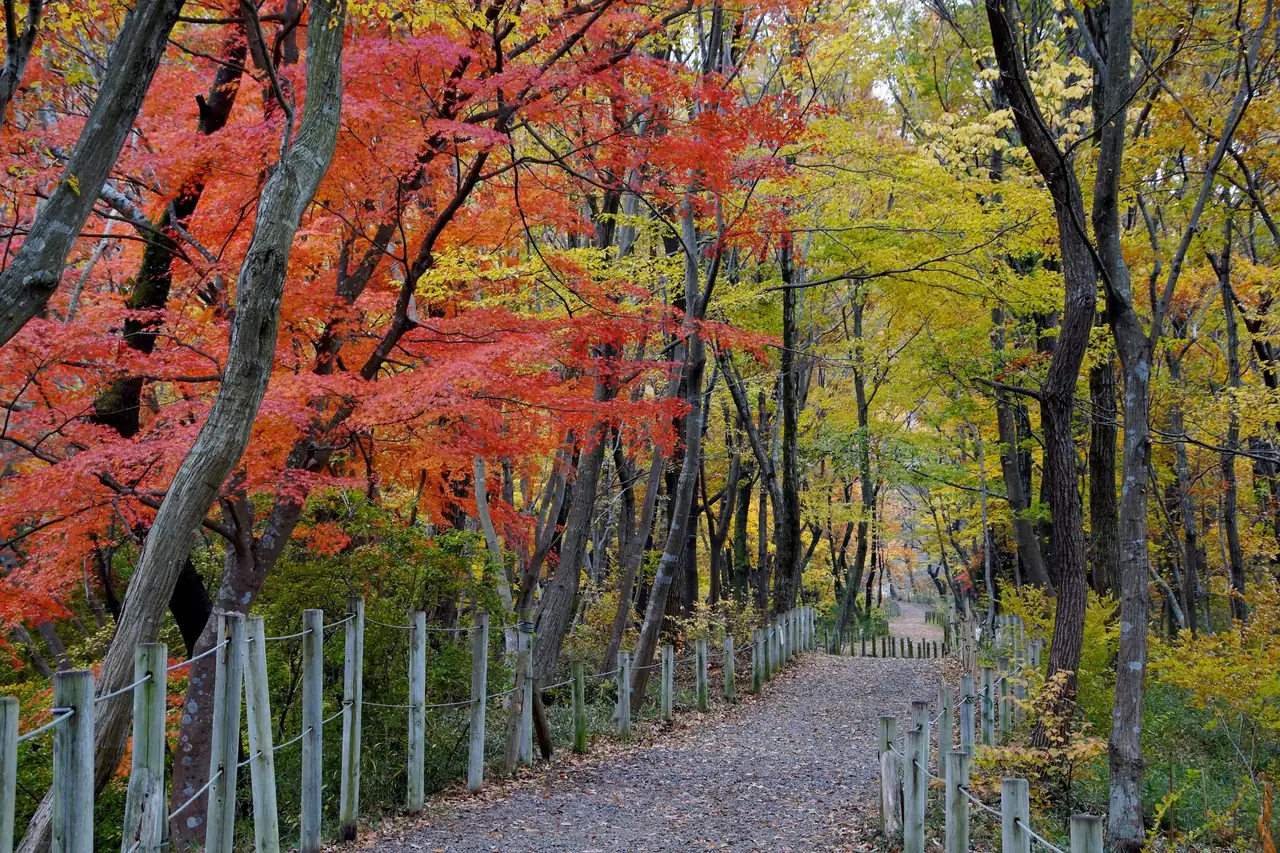
A shallow river slides over the rocks between stands of red pine. In Ranzan, a town in the Hiki area near the middle of Saitama Prefecture, there is a valley named after Kyoto's Arashiyama. It is about an hour from Ikebukuro by train. The places worth walking change with the seasons: cherry and peach blossoms in spring, lavender in early summer, autumn leaves in fall. Yoshimi Hyakuana, a hillside of tombs from the Kofun period, is on the same rail line. It is another "Arashiyama," without Kyoto's crowds.
Where the name "Musashi Ranzan" comes from
According to Ranzan Town, in 1928 Honda Seiroku, regarded as Japan's first doctor of forestry, visited the area. The view of the Tsuki River valley and its red pine forest looked so much like Kyoto's Arashiyama that he called it "the Arashiyama of Musashi Province," or Musashi Ranzan. The name was later adopted for the town itself, today's Ranzan-machi.
Watch the reading. Kyoto's 嵐山 is read "Arashiyama," but the Saitama town written with the same characters is "Ranzan." The station on the Tobu Tojo Line is Musashi-Ranzan. Type "Ranzan" when searching in map or route apps. If you are heading to the Kyoto original, see our Arashiyama day trip guide.
Getting from Ikebukuro to Musashi-Ranzan
Musashi-Ranzan Station is about an hour from Ikebukuro on the Tobu Tojo Line. Some of the reserved-seat TJ Liner trains that leave Ikebukuro from the evening onward also stop here. Higashi-Matsuyama Station, nearest to Yoshimi Hyakuana, and Ogawamachi Station, where buses leave for Hanamomo no Sato, are on the same line, so you can hop off along the way.
For Ranzan Valley and the lavender garden, the nearest bus stop is Kyuyochi-iriguchi, about 10 minutes by local bus from the west exit of Musashi-Ranzan Station. Walking from the station takes over 30 minutes. Buses are not frequent, so check the return times first.
Ranzan Valley and its submersible bridge
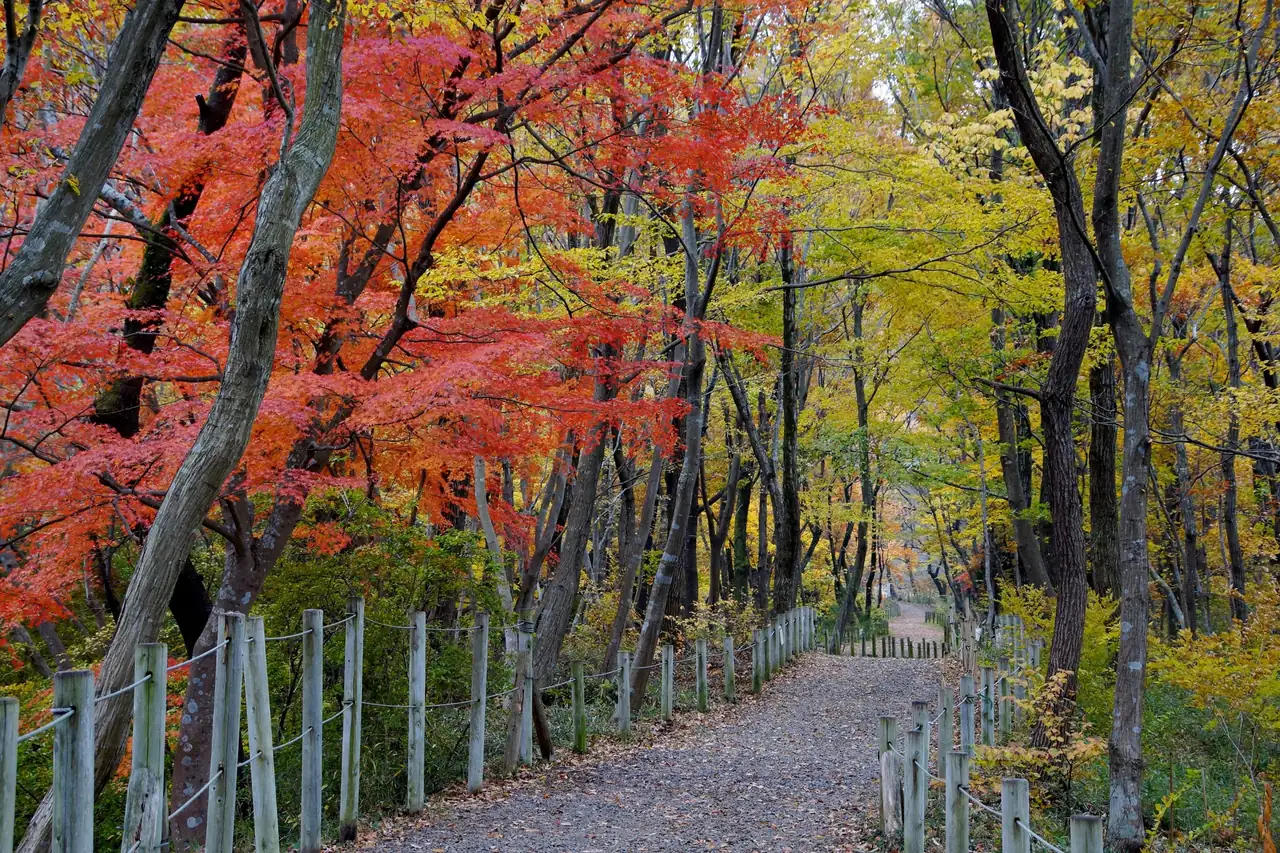
Ranzan Valley is where the Tsuki River flows out of the hills onto the plain. Walk upstream from the Tsukigawa Bridge on the prefectural road and you reach a line of stepping stones across the river, then the Shiozawa submersible bridge further up. A submersible bridge (kansuibashi) is a low bridge designed to go under water in a flood so it is less likely to be washed away, and it has no railings. Crossing just above the surface, you see the current and the woods on both banks up close.
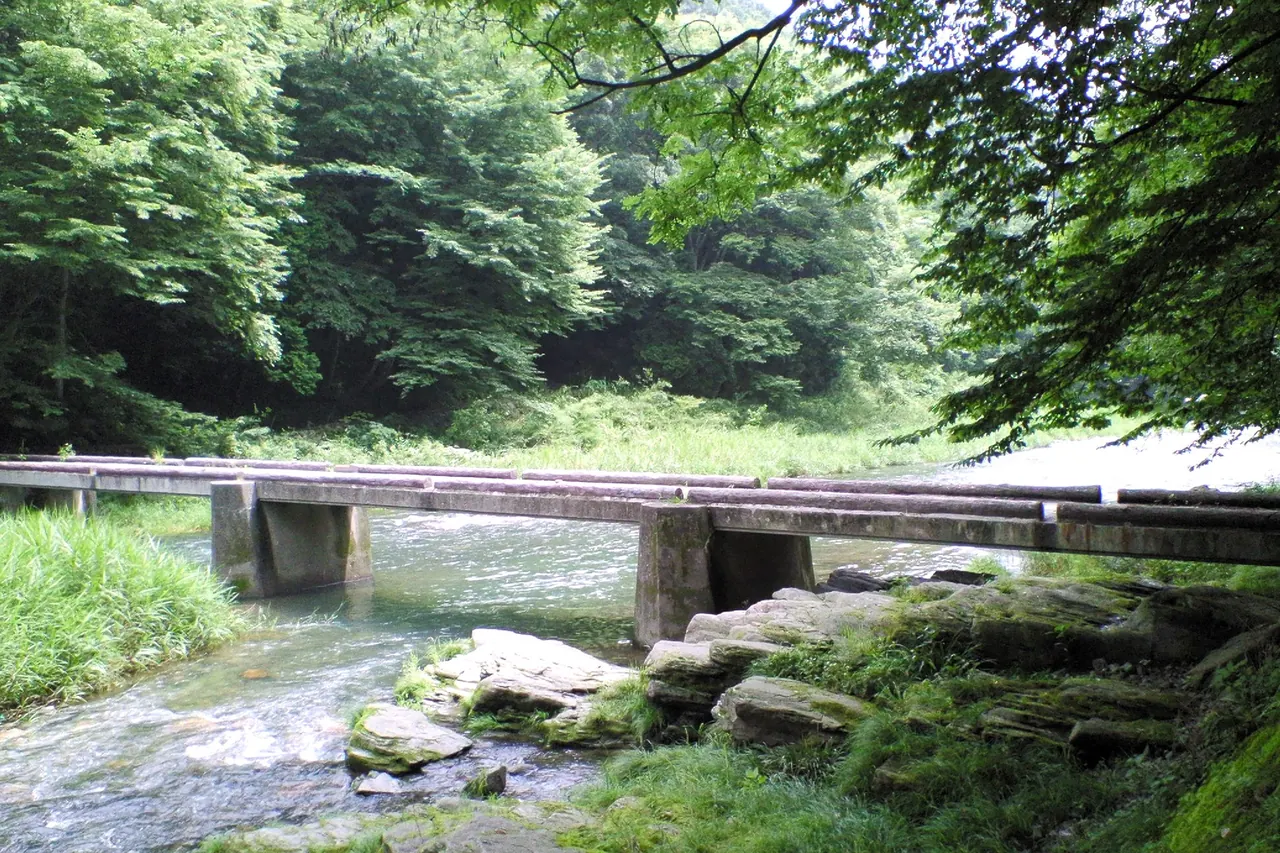
Photo: Saitama Prefecture Products & Tourism Association / Reproduction/Reprint prohibited
With no railings, do not cross when the water is up after rain. Rocks and riverbanks are slippery, so wear shoes that grip. Ranzan Valley Barbecue Area near the Tsukigawa Bridge fills with families playing in the river in summer. In autumn the trees in the valley turn color, and Ranzan Town posts information for the foliage season.
Spring cherry blossoms and June lavender
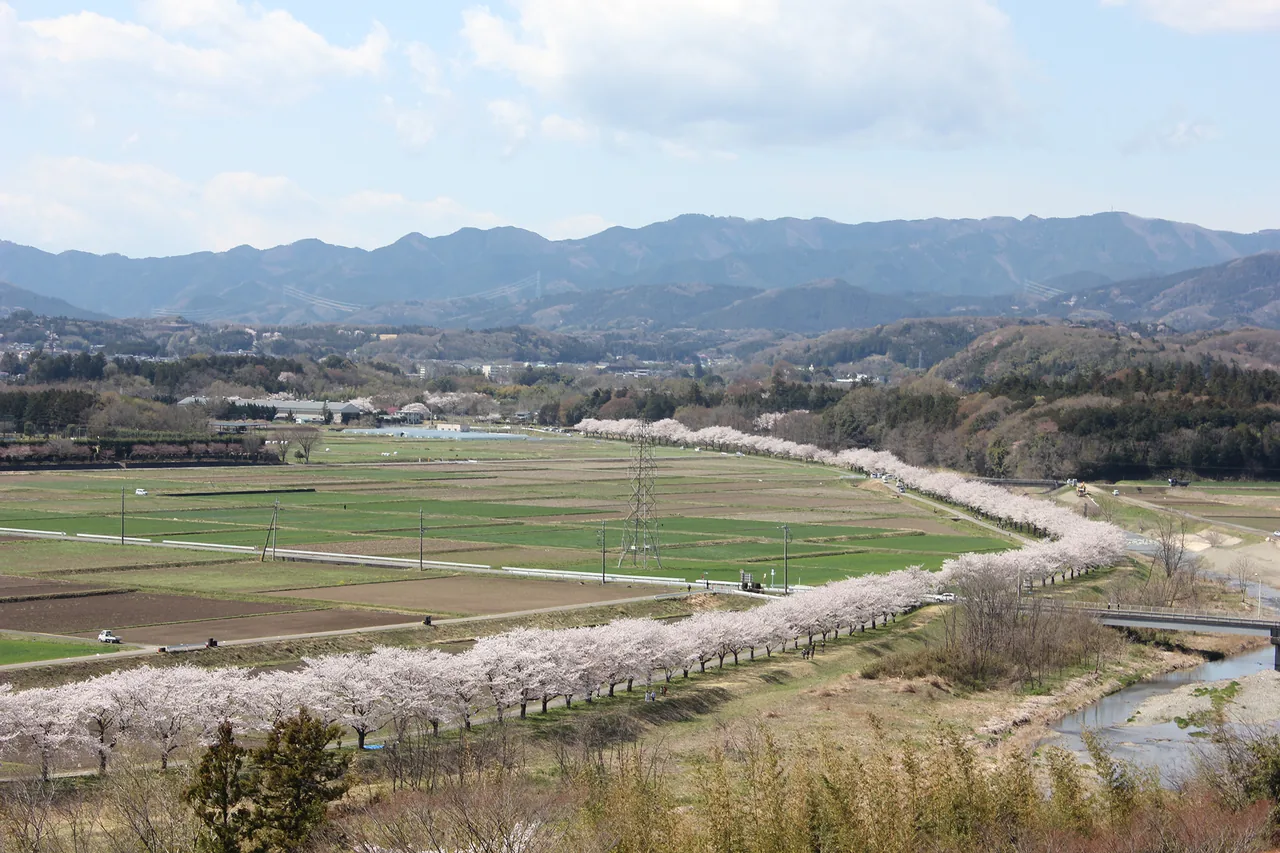
About 20 minutes on foot from Musashi-Ranzan Station, the Tokigawa Sakura Embankment is lined with about 250 Somei-Yoshino cherry trees for around 2 km along the Toki River levee. The trees were planted in 1986 and the following year, and usually bloom from late March to early April, when the Ranzan Sakura Festival is held. They look good both from the top of the levee and from the riverbank below, across the water.
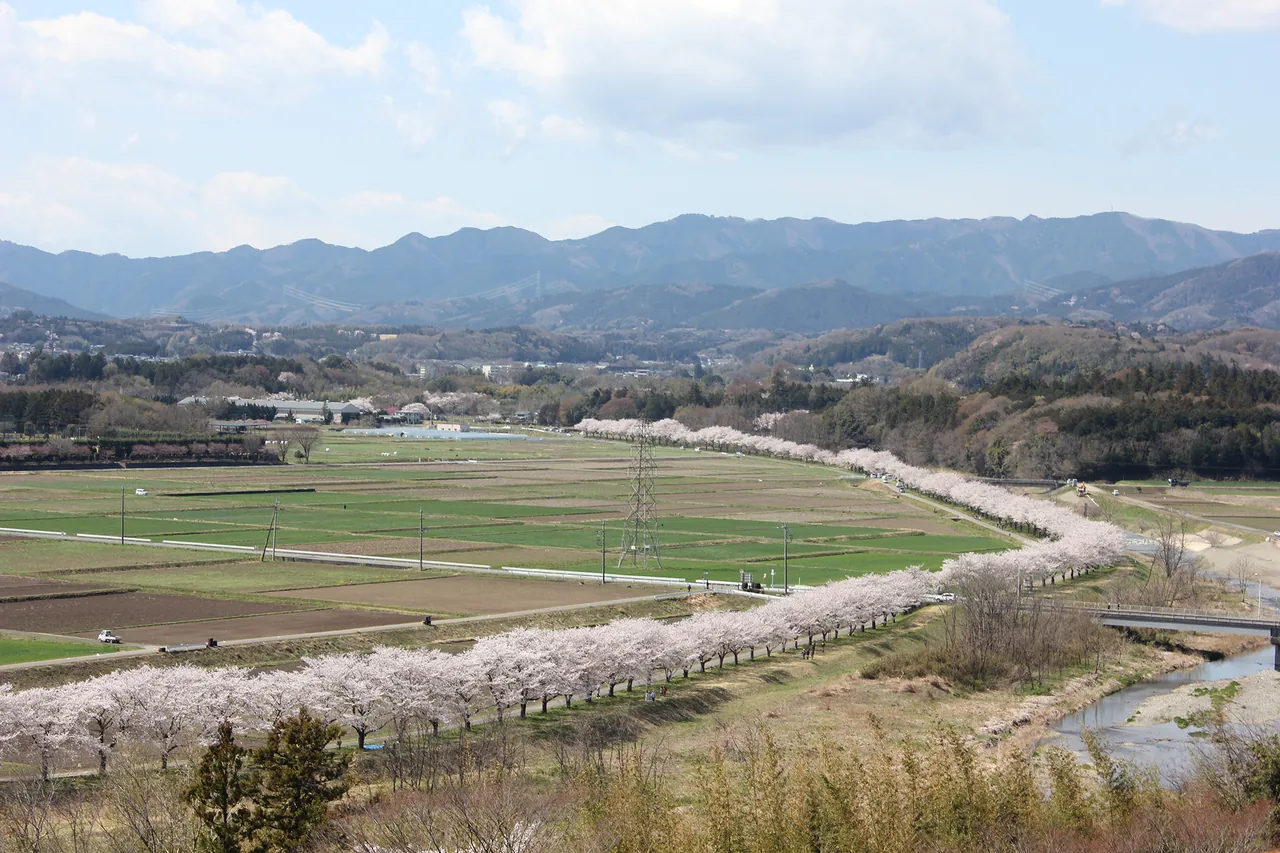
Photo: Saitama Prefecture Products & Tourism Association / Reproduction/Reprint prohibited
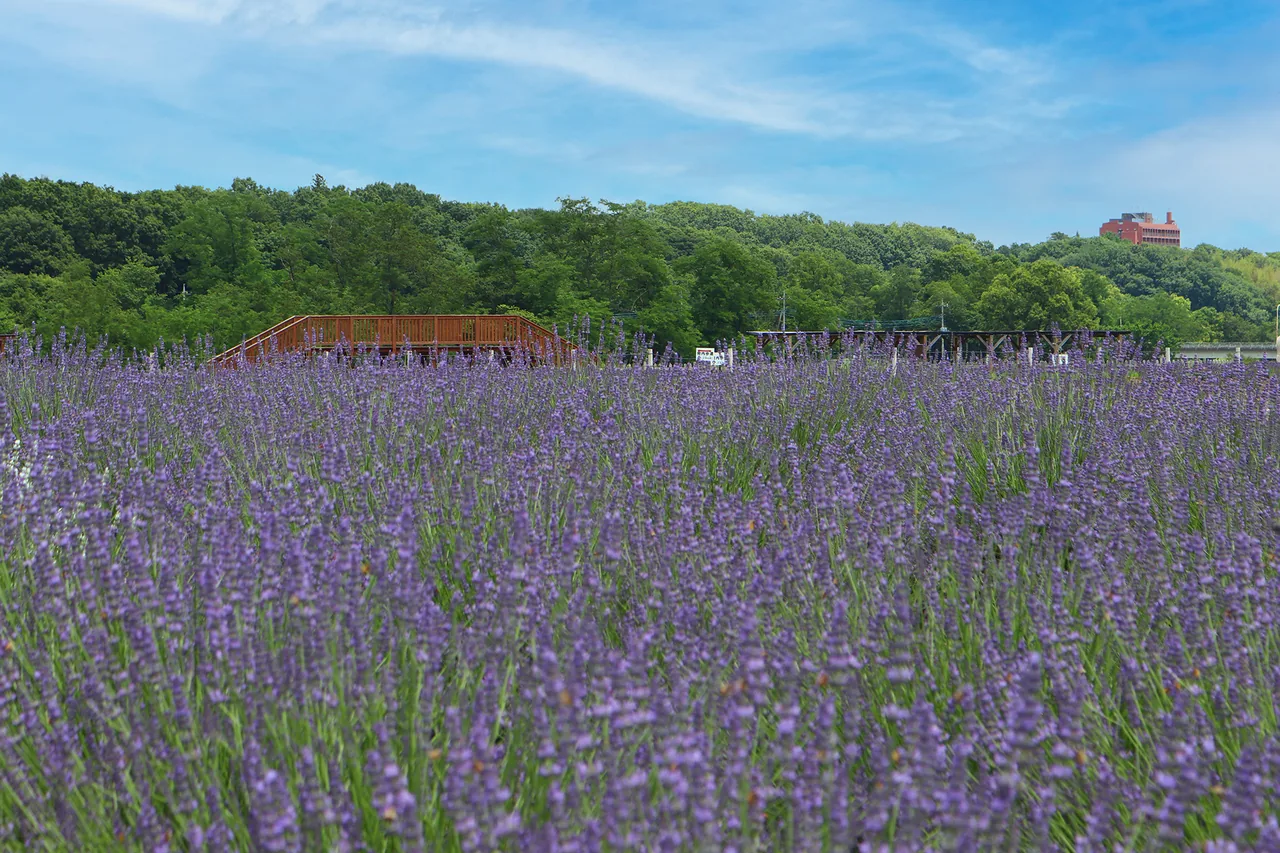
In June, the Sennen no Sono Lavender Garden near Ranzan Valley turns purple, with about 13,000 plants on roughly 3.6 hectares. The Ranzan Lavender Festival is timed to the bloom; in 2026 it ran from June 13 to 28. All the flowers are cut once the festival ends, so you will only see them during the festival. Shuttle buses sometimes run from Musashi-Ranzan Station on festival weekends; check Ranzan Town's information before you go.
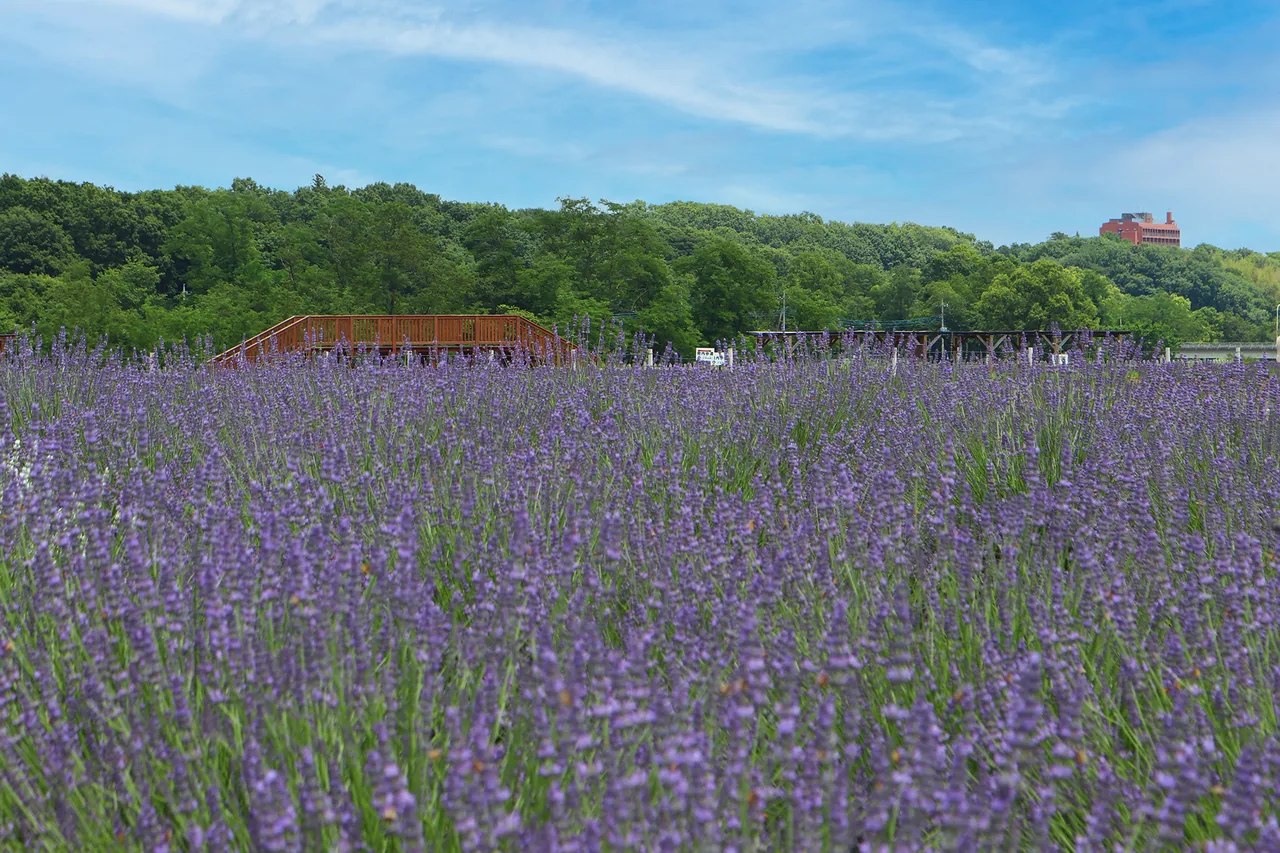
Photo: Saitama Prefecture Products & Tourism Association / Reproduction/Reprint prohibited
Yoshimi Hyakuana: a stop at Higashi-Matsuyama
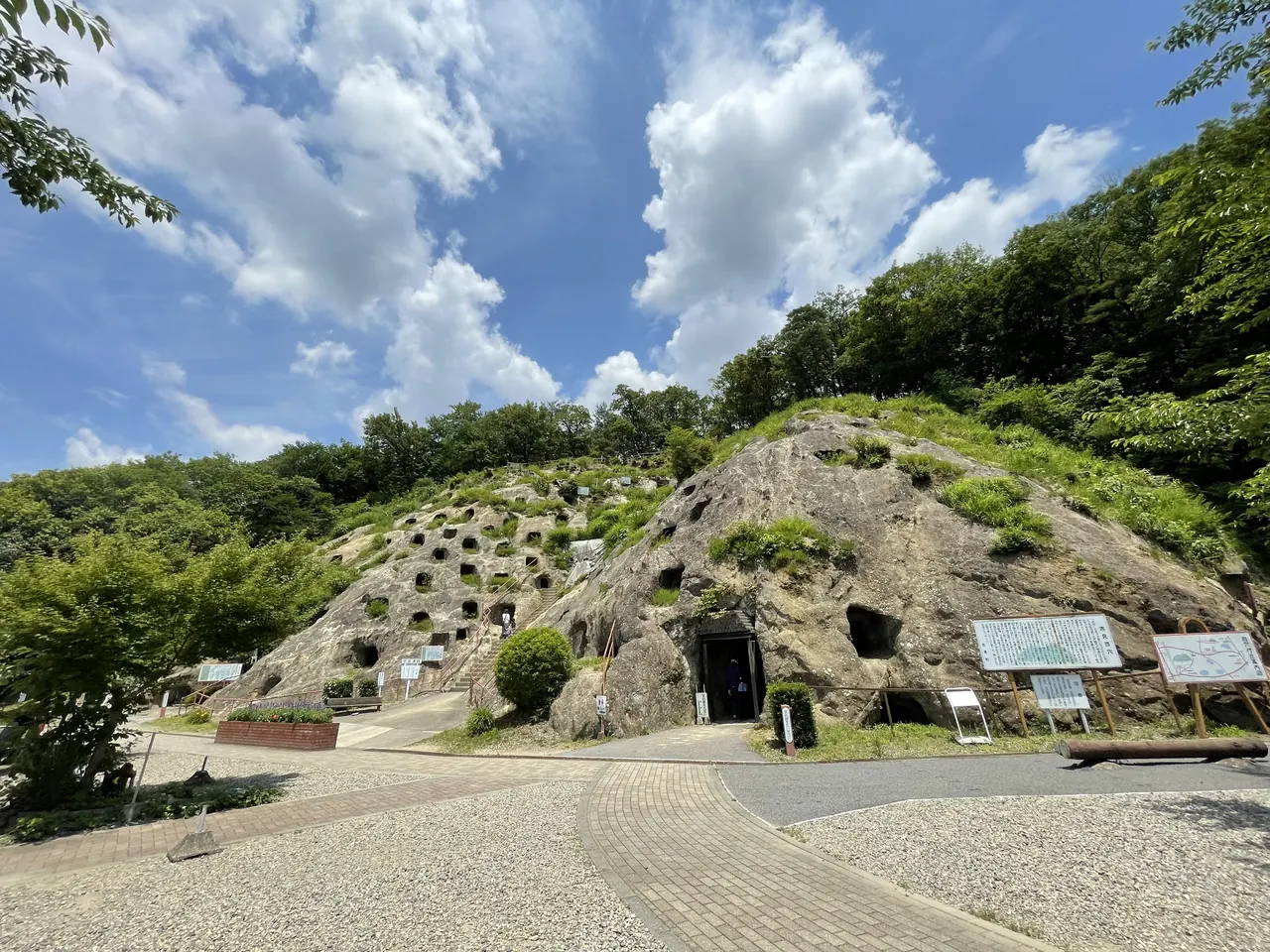
A few stations before Musashi-Ranzan, about 5 minutes by bus from Higashi-Matsuyama Station in the town of Yoshimi, Yoshimi Hyakuana is a hillside pocked with small openings. These are yokoana-bo, tombs cut into the rock at the end of the Kofun period (late 6th to late 7th century), and 219 of them can still be seen. The site was designated a National Historic Site in 1923.
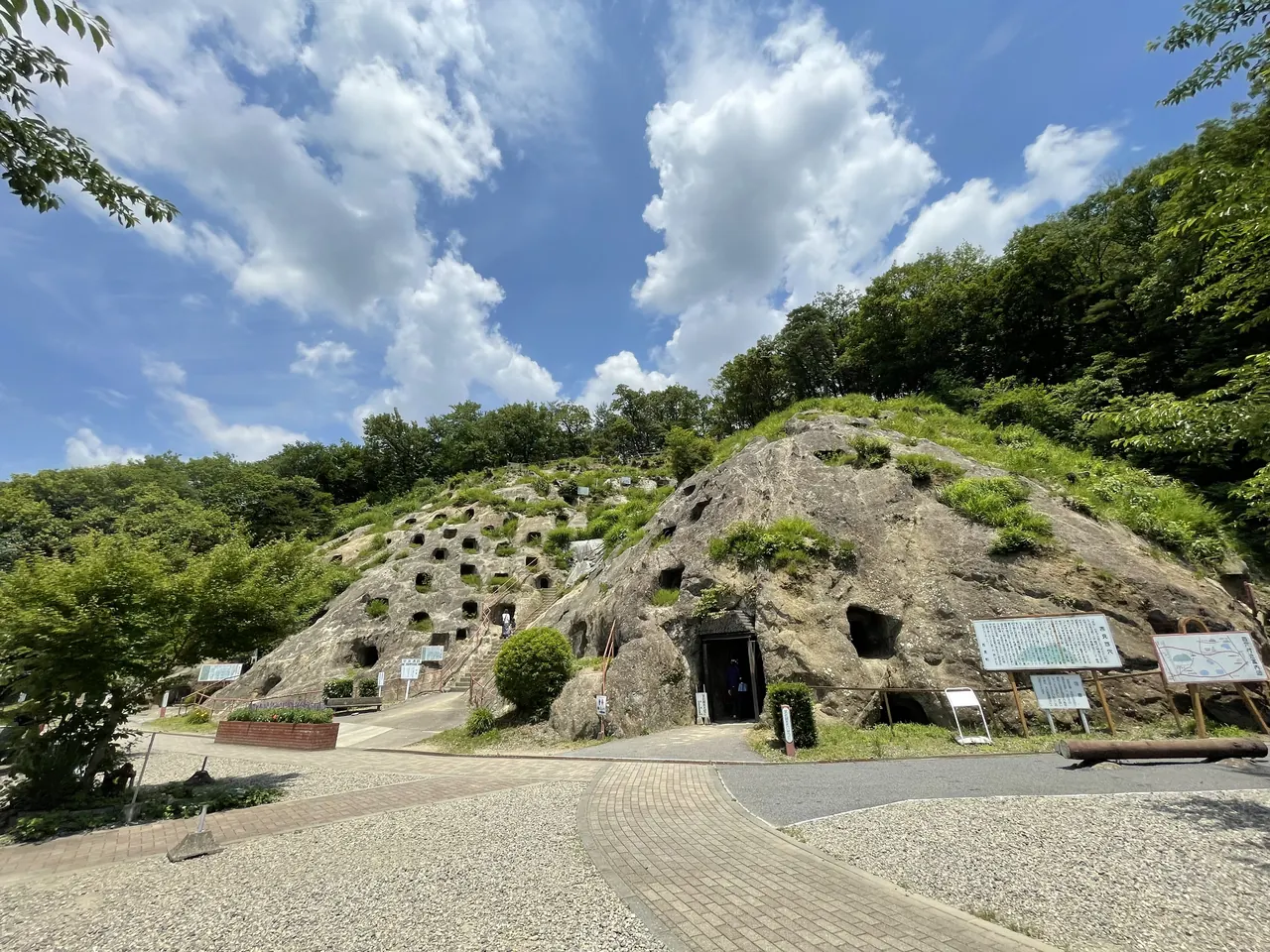
Photo: Saitama Prefecture Products & Tourism Association / Reproduction/Reprint prohibited
Inside some of the holes grows luminous moss (hikarigoke), which seems to glow yellow-green when light hits it; the spot is a National Natural Monument. From Higashi-Matsuyama Station, take a Kawagoe Kanko Bus to the Hyakuana-iriguchi stop and walk about 5 minutes. Admission is charged and the site closes in the late afternoon, so go in early if you stop by in the afternoon.
Hanamomo no Sato in Higashichichibu Village
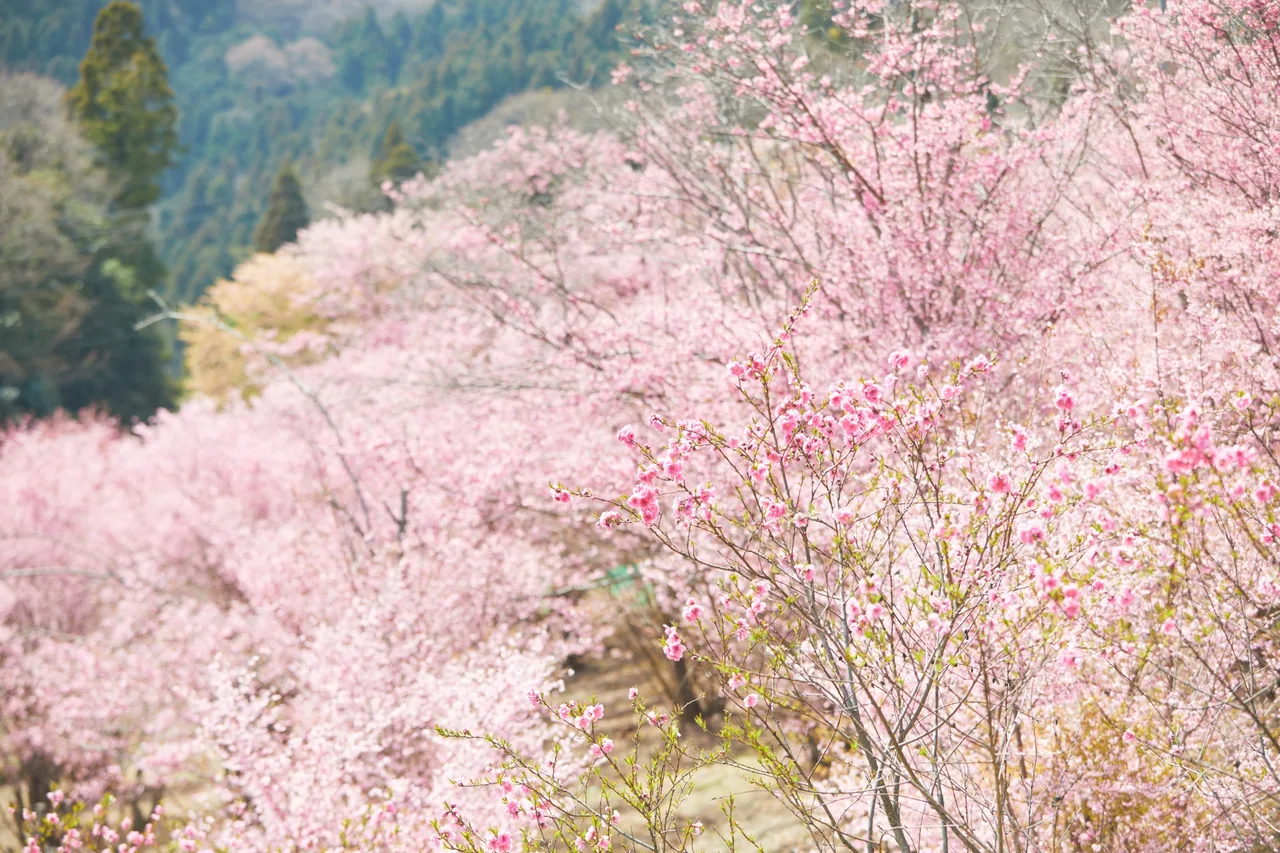
Beyond Musashi-Ranzan, by bus from Ogawamachi Station, lies Hanamomo no Sato in the Ouchisawa area of Higashichichibu Village, where about 7,000 flowering trees, mostly ornamental peach (hanamomo), color the mountainside. According to the village, the flowers usually bloom from late March to early April, filling the terraced fields with red, white and pink.
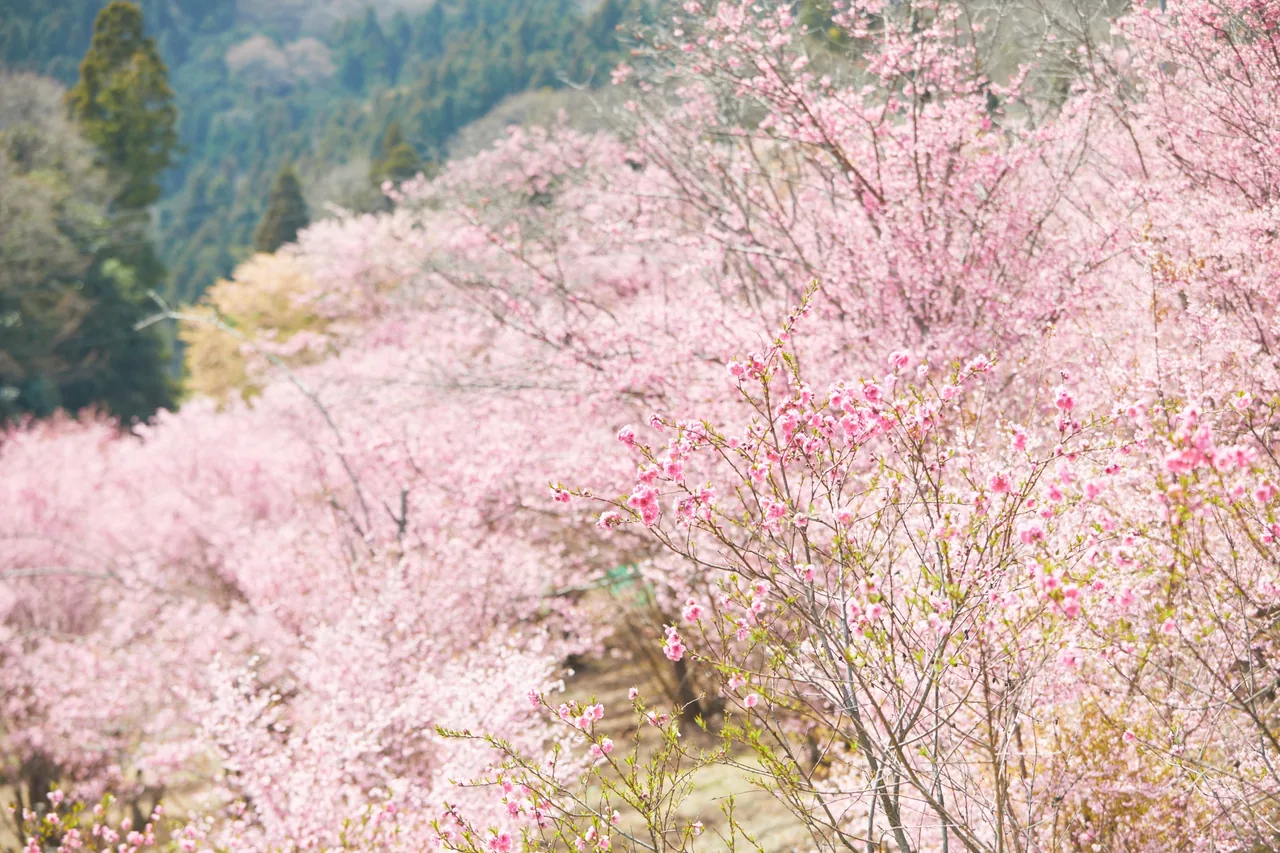
Photo: Saitama Prefecture Products & Tourism Association / Reproduction/Reprint prohibited
To get there, take a bus from Ogawamachi Station to Washi no Sato, change to the village bus, get off at Daiho and walk about 10 minutes. The connections take time, so rather than combining it with Ranzan Valley, you will enjoy it more as the focus of its own day.
Planning by season
In Hiki, the trick is to pick where to go by season.
| Season | Suggested combination |
|---|---|
| Late March to early April | Tokigawa cherry trees and Ranzan Valley; Hanamomo no Sato on another day |
| Mid to late June | Sennen no Sono Lavender Garden and Ranzan Valley |
| Summer | Ranzan Valley riverside and Yoshimi Hyakuana |
| Autumn | Ranzan Valley foliage and Yoshimi Hyakuana |
Yoshimi Hyakuana is worth seeing in any season, so getting off at Higashi-Matsuyama on the way out, seeing the tombs and then continuing to Musashi-Ranzan makes good use of the day. Find more places in Saitama spots.