Noto Kiriko Festivals: Abare Matsuri, Issaki Hoto and More
This guide is translated from the Japanese edition. Read the Japanese edition
Noto's summer Kiriko lantern festivals: Japan Heritage, Abare Matsuri, Koiji, Matsunami, Issaki Hoto Matsuri and Seihakusai, with dates and status as of November 2026.
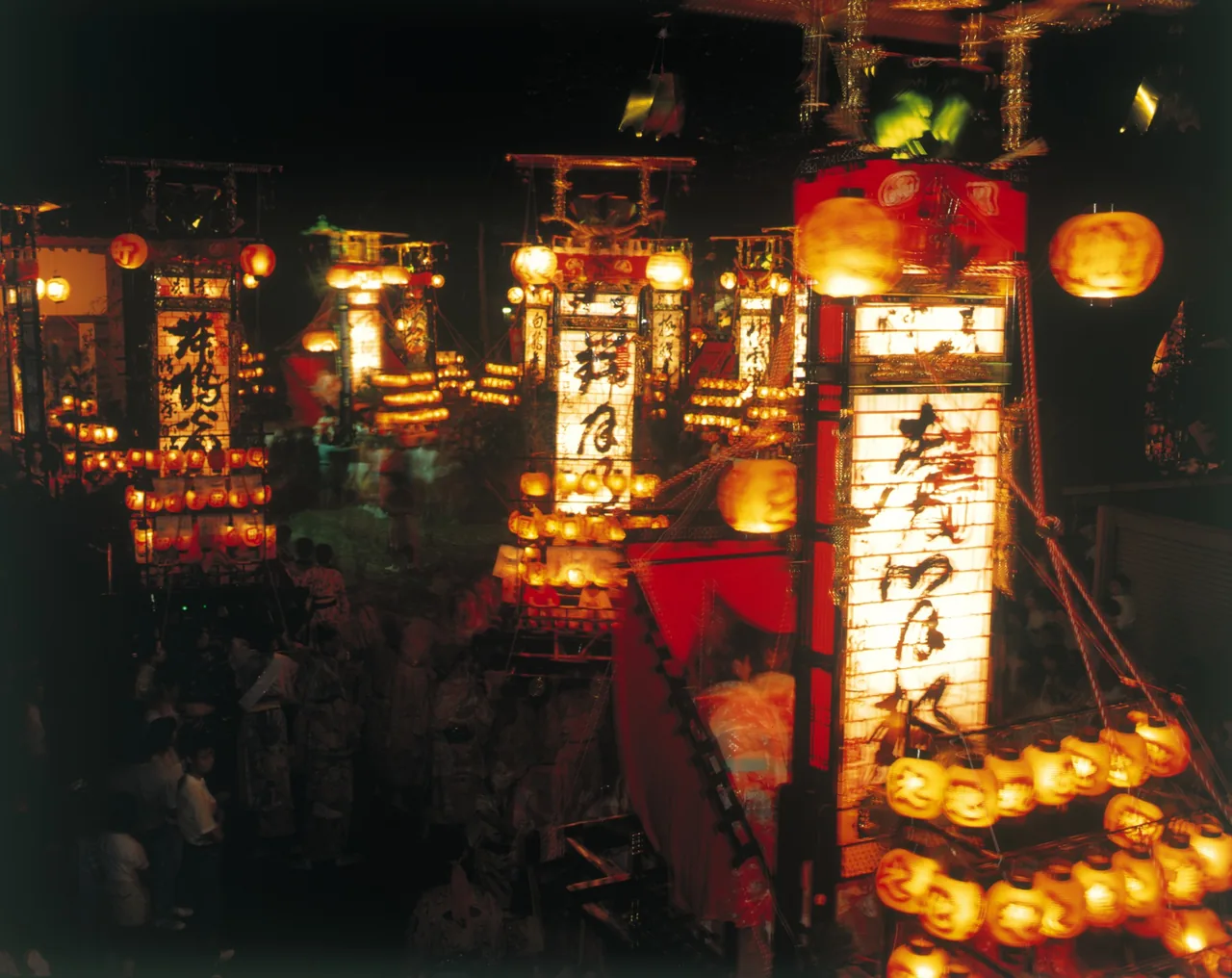
On summer nights in the towns of the Noto Peninsula, huge lanterns painted with characters and warrior pictures are lit up and carried through the streets to the shouts of their bearers. These lanterns are called kiriko. Kiriko festivals take place across Noto, mostly in summer, and each town has its own way of carrying them and its own highlights. Since the Noto Peninsula earthquake of January 2024, some towns have kept their festivals going. In 2026, the Abare Matsuri, Koiji Fire Festival and Matsunami Doll Kiriko Festival in Noto Town and the Issaki Hoto Matsuri and Seihakusai in Nanao all went ahead.
What is a Kiriko festival? Noto's lanterns as Japan Heritage
Kiriko is short for kiriko-doro, and it means a large, box-shaped lantern. In summer, Kiriko festivals are said to be held in about 200 districts of Noto. The kiriko are carried along with mikoshi portable shrines as they make their way around town.
The Japan Heritage story 灯り舞う半島 能登 〜熱狂のキリコ祭り〜 (roughly "Noto, the peninsula of dancing lights: the passion of the Kiriko festivals"), proposed by Ishikawa Prefecture, was recognized by the Agency for Cultural Affairs as Japan Heritage in 2015. It covers six cities and towns: Nanao, Wajima, Suzu, Shika, Anamizu and Noto Town.
Suzu is also home to the Takojima Kiriko Festival (usually September 10 and 11) and the Jike Kiriko Festival (usually the second Saturday of September). As of November 2026, no official announcement could be found on whether they have been held since the earthquake, so if you want to visit, check with Suzu City before you go.
Festival dates differ: some fall on the same date every year, others on a set day of the week, such as "the first Saturday." For any festival, check that year's dates and transport information with the organizers or the city or town before you go.
Abare Matsuri (Ushitsu, Noto Town, July)
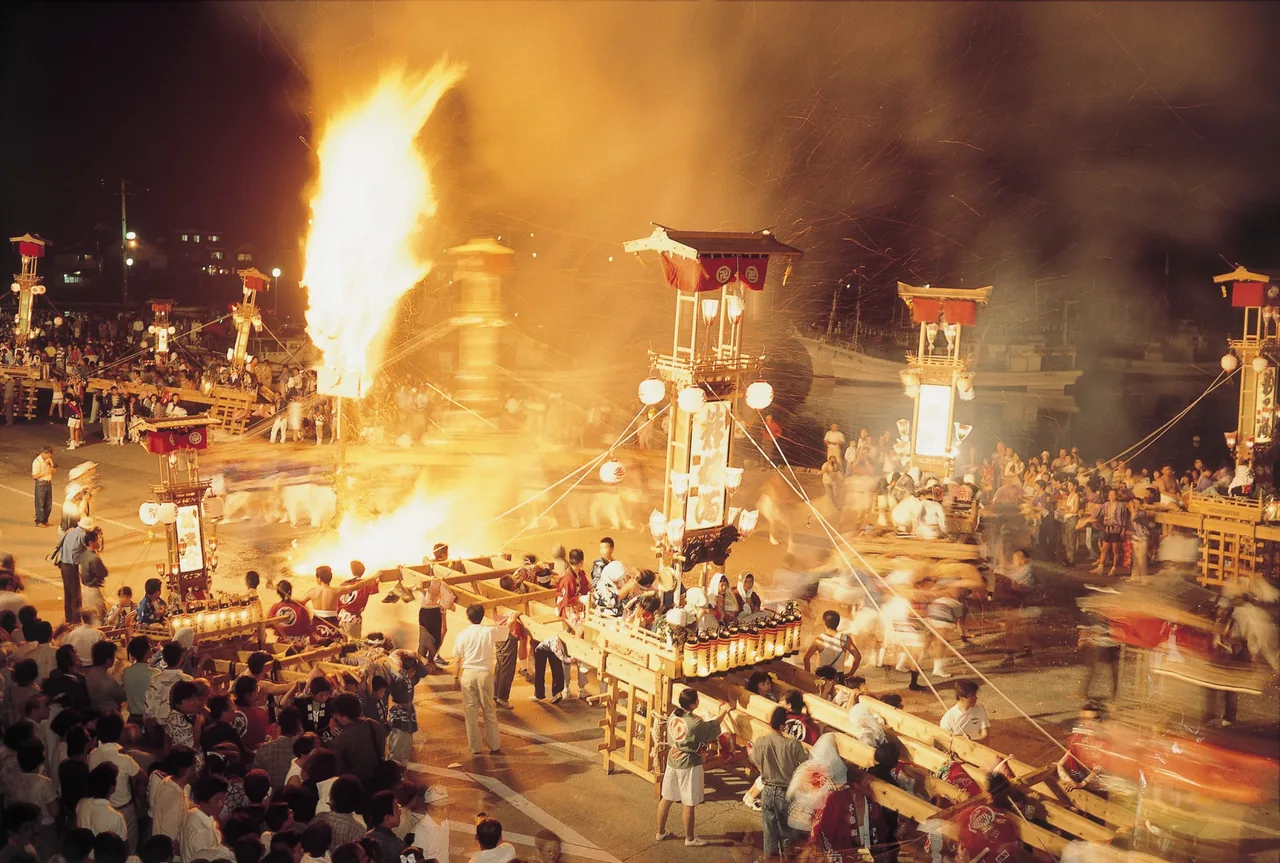
The Abare Matsuri is the festival of Yasaka Shrine in Ushitsu, Noto Town, held every year on the first Friday and Saturday of July. On the first night, each neighborhood's kiriko gather at Iyasaka Hiroba, the square in front of the town office, and are paraded around blazing giant torches. There are about 40 kiriko, large and small. The stars of the second day are two mikoshi, which the bearers throw into the sea and the river and toss into fire as they make their way through town. It is designated an Intangible Folk Cultural Property of Ishikawa Prefecture.
The festival went ahead in 2024, after the earthquake, with about 30 kiriko. In 2026 it was held on July 3 and 4, and for the first time since the earthquake a temporary parking lot was set up for visitors. Sparks rain down around the giant torches, so don't get too close, and watch from a spot where you won't block the bearers' path.
Koiji Fire Festival and Matsunami Doll Kiriko Festival (Noto Town, July)
Noto Town has more July festivals with kiriko besides the Abare Matsuri.
The Koiji Fire Festival is held in Koiji, Noto Town. In 2026 it took place on July 19, but without the giant torches or fireworks. Check Noto Town's tourist information for the program and dates in future years.
The Matsunami Doll Kiriko Festival is held every year on the fourth Saturday of July in Matsunami, Noto Town. As its name suggests, the kiriko are decorated with dolls; in 2026 it was held on July 25. Though it is in the same town, its appeal is different from the fierce fire and water of the Abare Matsuri.
Issaki Hoto Matsuri (Nanao, August)
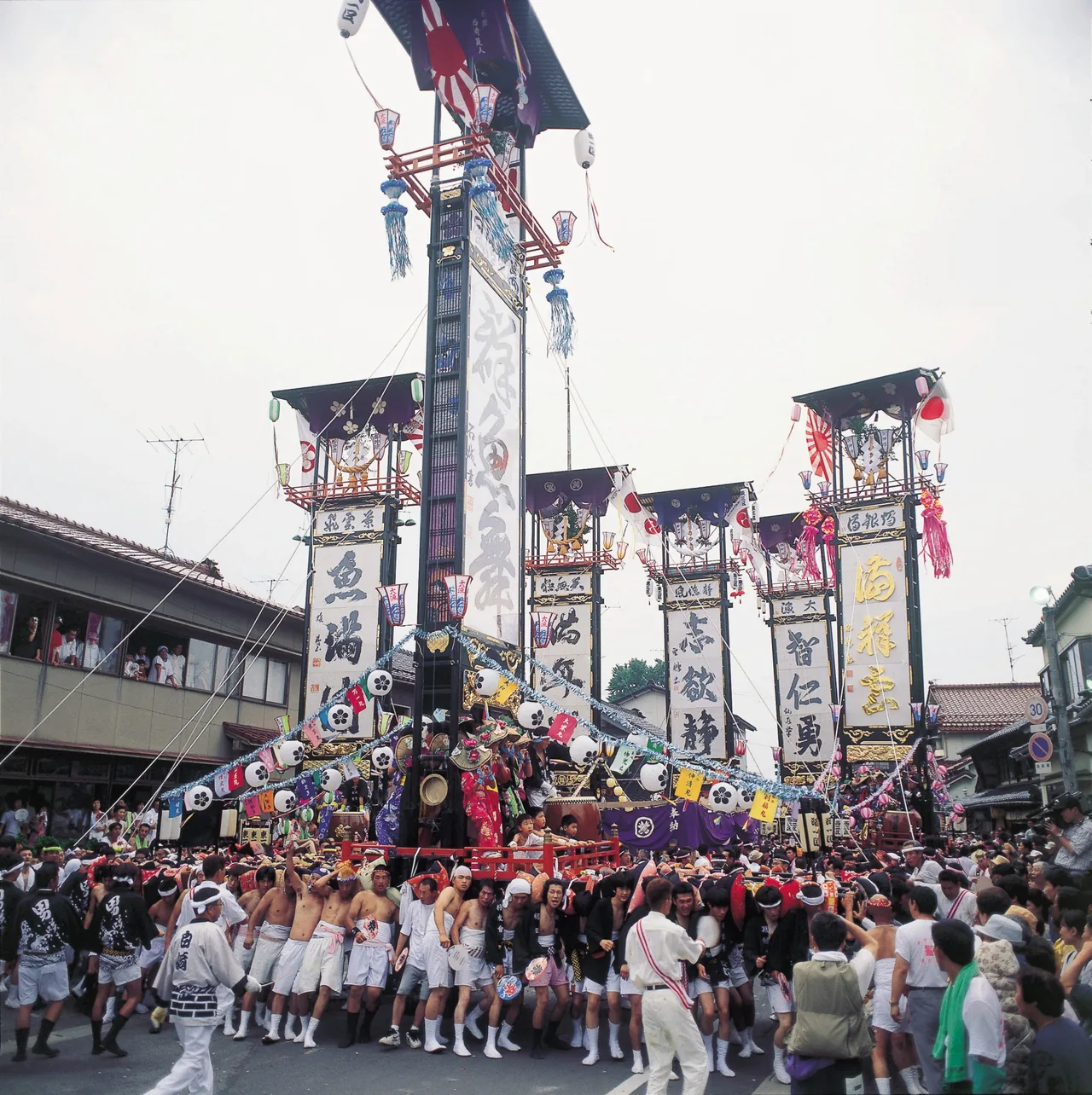
The Issaki Hoto Matsuri is the summer festival of Hachiman Shrine in Issaki, Nanao, held every year on the first Saturday of August. Six hoto lantern towers (a type of kiriko) more than 10 m tall are paraded through the streets of this fishing town, each carried on the shoulders of about 100 bearers. After dark, the six lit-up hoto gather in the 堂前広場 square and dance wildly together, the festival's highlight.
In 2025, all six hoto came together for the first time in two years, and in 2026 the festival was held on August 1. Issaki lies right next to Wakura Onsen, about a 10-minute walk from Wakura-Onsen Station on the JR Nanao Line. You can stay in Wakura Onsen and walk over to see the hoto at night.
Seihakusai's dekayama (Nanao, May): floats, not kiriko
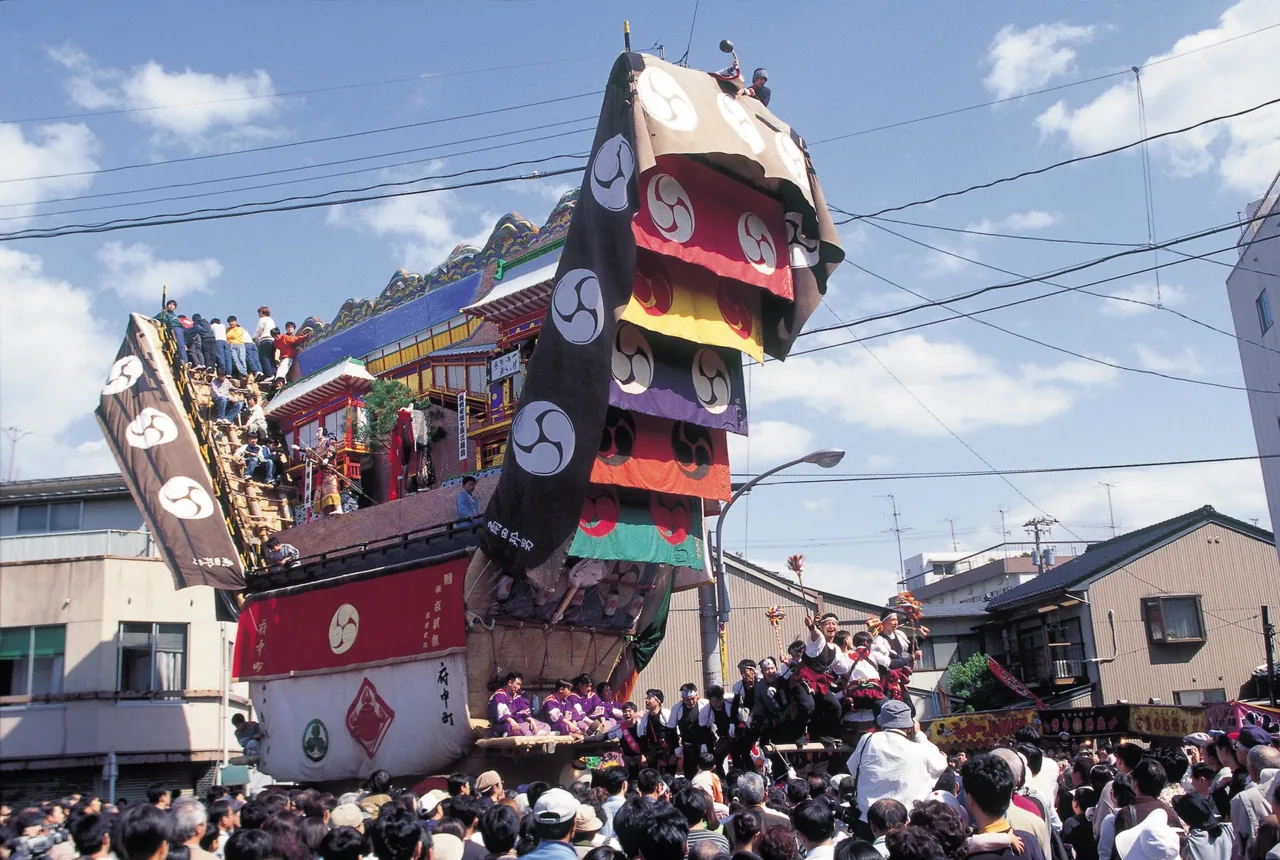
Also in Noto, but the star of the Seihakusai Festival in Nanao is not kiriko. Instead of being carried, its floats are hauled by hand: hikiyama floats called dekayama, 12 m tall and weighing 20 tonnes. This spring festival of Otokonushi Shrine (also called Sanno Shrine) is held every year from May 3 to 5.
The dekayama are put out by three neighborhoods, Kajimachi, Fuchumachi and Uomachi, and the highlight is the tsujimawashi, when crowds of pullers work together to turn a float at a corner. The float procession of Seihakusai was designated an Important Intangible Folk Cultural Property of Japan in 1983, and in 2016 it was inscribed on UNESCO's Intangible Cultural Heritage list as one of the Yama, Hoko, Yatai float festivals. In 2024 there was no procession because of the earthquake; it resumed in 2025 for the first time in two years, and in 2026 all three floats came out again. Together with the summer Kiriko festivals, it shows how varied Noto's festivals are.
Before you go: dates, transport and how to watch
At some festivals, such as the Abare Matsuri, roads around the venue are closed on festival days. Roads and public transport in Noto can change as recovery from the earthquake continues, so treat information as of November 2026 as a guide only. Before you set out, check the following.
- That year's dates and times (as of November 2026, none of these festivals has announced its 2027 dates)
- Traffic restrictions and temporary parking, and the times of buses or trains back
- Where you will stay, and how you will get from there to the venue
When watching, never stand in the path of the kiriko or mikoshi, and keep an eye out for sparks and the movements of the bearers. When taking photos, choose a spot where you won't get in the way of the bearers or local people. For details on the Abare Matsuri, Issaki Hoto Matsuri and Seihakusai, see each festival's page. Find more places in Ishikawa with sights in Ishikawa.