
Shinsekai Kushikatsu: No Double Dipping and Tsutenkaku Walks
This guide is translated from the Japanese edition. Read the Japanese edition
Why Shinsekai kushikatsu gets one dip in the shared sauce, which exits to use at Ebisucho, Dobutsuen-mae and Shin-Imamiya, and Osaka's citywide street-smoking ban.
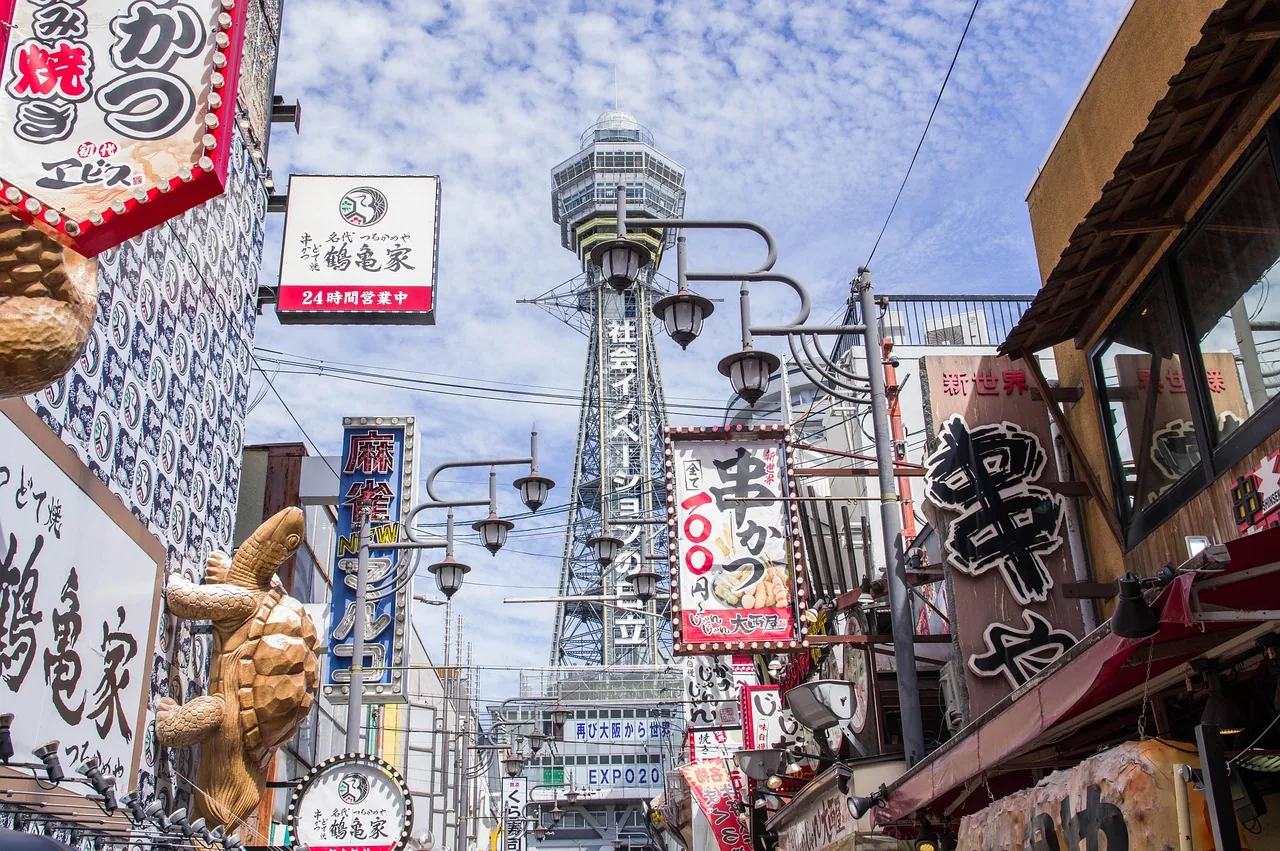
On the streets below Tsutenkaku Tower, kushikatsu signs hang side by side with a giant pufferfish lantern. Shinsekai in Osaka is known as the town of kushikatsu, and a few of the long-running shops near the tower opened shortly after the war. Faced with a shared tray of sauce on the counter, though, many first-time visitors aren't sure how to eat it. The answer hangs on shopfronts all along Jan Jan Yokocho: signs saying no double dipping in the sauce.
Where is Shinsekai? The three nearest stations
Shinsekai is an old downtown neighborhood in the south of central Osaka, spread around Tsutenkaku Tower. It grew up on the site of an exposition held in the Meiji era, and Tennoji Park lies just to the east. By train, get off at Ebisucho, Dobutsuen-mae or Shin-Imamiya Station. Each one drops you in a different part of the neighborhood.
| Station | Lines | Exit | Where your walk starts |
|---|---|---|---|
| Ebisucho Station | Osaka Metro Sakaisuji Line, Hankai Tramway Hankai Line | Exit 3 for Osaka Metro | Walk up Tsutenkaku Hondori shopping street with the tower straight ahead |
| Dobutsuen-mae Station | Osaka Metro Midosuji and Sakaisuji lines | Exit 1 for the Midosuji Line | Close to Jan Jan Yokocho, good if you want to start with kushikatsu |
| Shin-Imamiya Station | JR Osaka Loop Line, Nankai Main Line | Tsutenkaku Exit (East Exit) for JR, West Exit for Nankai | Handy if you are coming on JR or Nankai from Kansai Airport or Namba |
Tsutenkaku's official website lists directions from each of these stations, exit by exit. It also gives walking times and notes for drivers (the tower has no parking of its own), so it's worth a look before you set out. Check fares and timetables on each rail operator's website.
- Access (Tsutenkaku official website)
- Ebisucho Station (Osaka Metro)
- Dobutsuen-mae Station (Osaka Metro)
- Shin-Imamiya Station (JR Odekake Net)
- Shin-Imamiya Station (Nankai Electric Railway)
Tsutenkaku Tower and the streets of Shinsekai
Tsutenkaku is the tower at the heart of Shinsekai. Its name carries the meaning "a tall building that reaches to heaven." Today's tower is the second one: after the original was lost, it was rebuilt thanks to the efforts of local residents. It is also a Registered Tangible Cultural Property of Japan.
The observation deck looks out over the city and is home to Billiken, a statue loved as a god of good fortune. Rubbing the soles of his feet is said to bring luck. The tower also has hands-on attractions besides the observation deck. Admission, hours and attractions can change, so check Tsutenkaku's visitor information before you go.
Two shopping streets with very different characters sit at the foot of the tower.
- Tsutenkaku Hondori: the street running from Exit 3 of Ebisucho Station to the tower. It dates back to the early days of Shinsekai and took its current name when the second Tsutenkaku was built.
- Jan Jan Yokocho (Nanyo-dori Shopping Street): a long, narrow arcade on the southeastern side of Shinsekai, near Dobutsuen-mae and Shin-Imamiya stations. It is lined with kushikatsu shops, standing bars and go and shogi clubs. The name is said to come from the "jan jan" of shamisen and drums that shops played to draw in customers after the war.
Retro signs, shogi parlors and smart-ball game shops still dot the neighborhood, giving the walk a distinctly Showa-era feel.
How to eat kushikatsu: no double dipping
Kushikatsu is an Osaka specialty of meat and vegetables on skewers, coated in a flour-and-water batter and breadcrumbs, then deep-fried. Fillings run from beef and shrimp to asparagus, egg and cheese.
At many shops, a container of sauce sits on the counter or table and is shared with other customers. That is where the famous rule comes in: no double dipping.
- Dip each freshly fried skewer into the shared sauce once.
- Once you have taken a bite, the skewer does not go back in the sauce.
Even if you want more sauce, don't put a bitten skewer back in. Everyone uses the same sauce, which is why the rule exists, and along Jan Jan Yokocho you will see shops displaying signs that say no double dipping. How the sauce is served can vary from shop to shop, so if you are unsure, follow the signs or ask the staff.
You will often find raw cabbage next to the sauce. The Osaka Convention & Tourism Bureau's kushikatsu guide describes it as something you can eat as much of as you like. A few leaves between skewers freshen your palate before the next one.
If you are also planning to graze around Dotonbori and Kuromon Market in Minami, see our Osaka street food guide to Dotonbori and Kuromon Market.
Before you walk into a kushikatsu shop
Shinsekai has plenty of kushikatsu shops, from tiny counter-only places to large restaurants with lots of tables. How you order and pay differs from shop to shop, so a quick look at the menu and signs out front saves confusion.
- Payment: whether cashless payment is accepted depends on the shop. In case you end up at a small shop, carry some cash as well.
- Crowds: popular shops have lines at mealtimes and on weekends. With so many kushikatsu shops on the same streets, trying another one nearby is an easy way around a long wait.
- Ordering: check the menu to see how to order. Start with a few skewers and add more if you are still hungry, so you don't over-order.
- Opening days and hours: these vary by shop. If you have a particular place in mind, check its own information directly.
Things to keep in mind when walking around Shinsekai
The streets of Shinsekai are not very wide, and they get crowded with visitors on weekends and in the evening. If you want a photo of Tsutenkaku or the signs, step to the side of the street before stopping so you don't block the flow. Ask first before photographing inside a shop, or the staff and other customers.
Smoking on the street is banned throughout the City of Osaka. The ban also covers heated tobacco, so use a designated smoking area.
- Comfortable shoes: getting from the station to the tower, the shopping streets and around Tennoji Park is almost all on foot.
- Trash: there are not many public bins. Return packaging to the shop where you bought the food, or be ready to carry it with you.
- Getting back at night: Shinsekai stays lively until late. Decide in advance which line and station you will use to get back.
If you have time, an easy route is to start at Ebisucho Station, walk up Tsutenkaku Hondori, go up the tower, eat kushikatsu on Jan Jan Yokocho, and finish at Dobutsuen-mae or Shin-Imamiya Station.
Osaka's official kushikatsu and Shinsekai guides, and the city's smoking rules
- Complete guide to kushikatsu in Osaka (Osaka Convention & Tourism Bureau, OSAKA-INFO)
- Shinsekai sightseeing guide (Osaka Convention & Tourism Bureau, OSAKA-INFO)
- Jan Jan Yokocho (Osaka Convention & Tourism Bureau, OSAKA-INFO)
- Tsutenkaku Hondori shopping street (Osaka Convention & Tourism Bureau, OSAKA-INFO)
- Street smoking ban expanded to all of Osaka City (City of Osaka, Japanese)
To find more places to visit in Osaka beyond Shinsekai, browse our list of spots in Osaka.