
Otaru Day Trip from Sapporo: Otaru Canal and Sakaimachi Street
This guide is translated from the Japanese edition. Read the Japanese edition
JR from Sapporo to Otaru with no change, down to the canal, along Sakaimachi Street to Marchen Crossing, and home from Minami-Otaru without retracing your steps.
Walk out of Otaru Station and down Chuo-dori toward the sea, and the canal and its stone warehouses come into view at the bottom of the slope. Otaru is a port town you can reach from Sapporo by JR without changing trains. From the Meiji era to the early Showa era it thrived as Hokkaido's hub for shipping and finance, and that period still shows in the warehouses along the canal and the old merchant houses on Sakaimachi Street. Central Otaru is a town of slopes running down to the sea, so which station you get off at, and which way you walk, decides how easy the way back will be.
Sapporo to Otaru: the JR Hakodate Line and which station to use
From Sapporo Station, take the JR Hakodate Main Line to Otaru. Both rapid and local trains run, and neither needs a change. Some Rapid Airport trains run through from New Chitose Airport via Sapporo to Otaru, so you can also go straight from the airport. Check timetables and fares on the JR Hokkaido website.
Two stations are useful for sightseeing in Otaru.
| Station | What's nearby | When to use it |
|---|---|---|
| Otaru Station | Otaru Canal (around Chuo Bridge and Asakusa Bridge) | Get off here to start at the canal |
| Minami-Otaru Station | Marchen Crossing, the south end of Sakaimachi Street | One stop before Otaru when coming from Sapporo; use it to head back from Sakaimachi |
From Otaru Station, walk down Chuo-dori, the street running toward the sea, and you reach Chuo Bridge over the canal. From Minami-Otaru Station, walk down the slope outside the station to Marchen Crossing.
- Airport trains between Sapporo and New Chitose Airport (JR Hokkaido)
- JR Minami-Otaru Station (Otaru Tourism Association)
Otaru Canal: Chuo Bridge to Asakusa Bridge, and the gas lamps at dusk
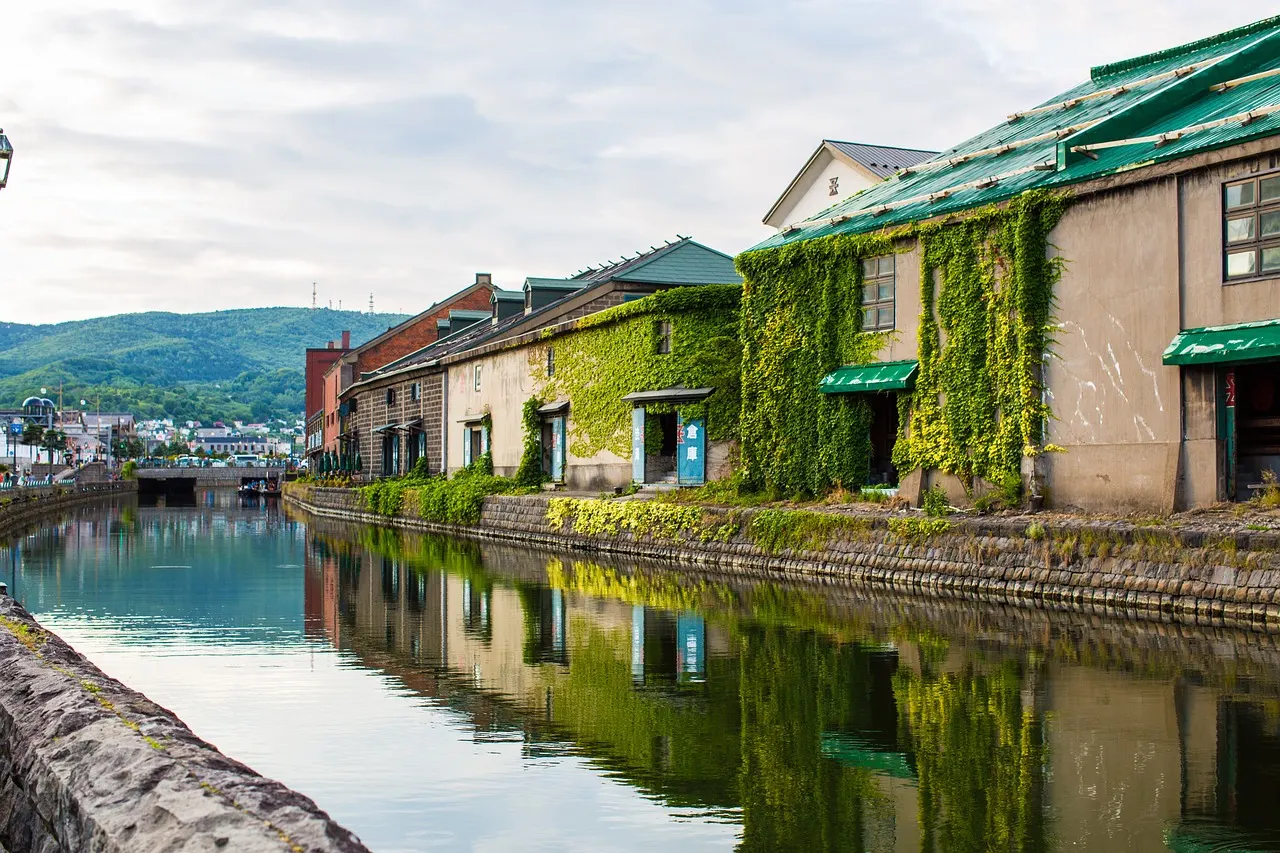
Otaru Canal was completed in 1923. It was built by reclaiming land along the shore, which is why it curves gently. A stone-paved walkway runs beside it, lined with 63 gas lamps.
The view you see in so many photos, with warehouses and water stretching straight into the distance, is around Chuo Bridge and Asakusa Bridge. At the foot of Asakusa Bridge is a small landscaped plaza, busy with people taking photos with the canal behind them.
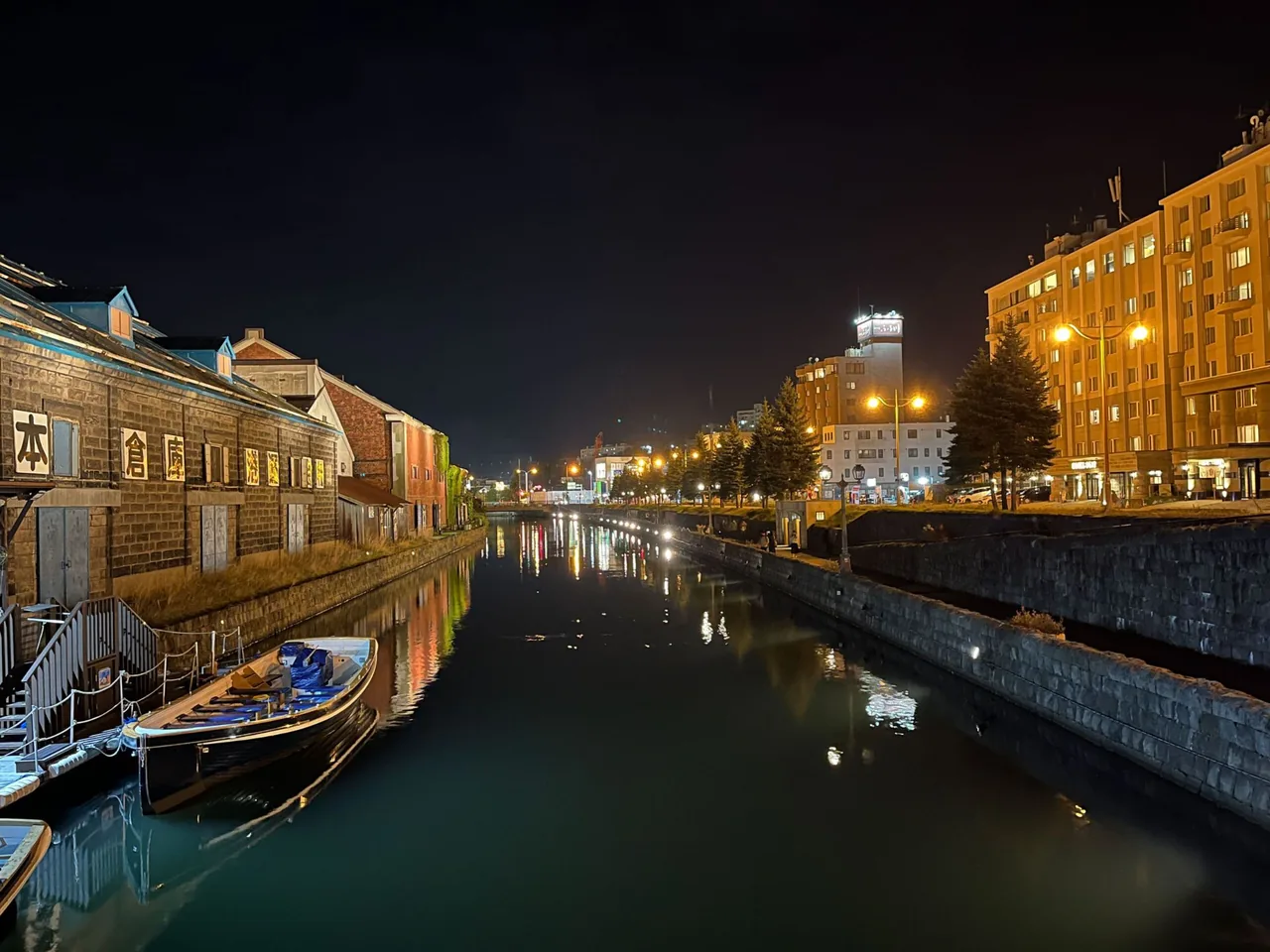
After dark the gas lamps come on and the stone warehouses are lit up. One option is to see the canal by day, move on to Sakaimachi Street, and come back to the canal once more before you leave.
- Otaru Canal (HOKKAIDO LOVE!, official Hokkaido tourism site)
- Asakusabashi Plaza (HOKKAIDO LOVE!, official Hokkaido tourism site)
Sakaimachi Street and Marchen Crossing: glass and music boxes
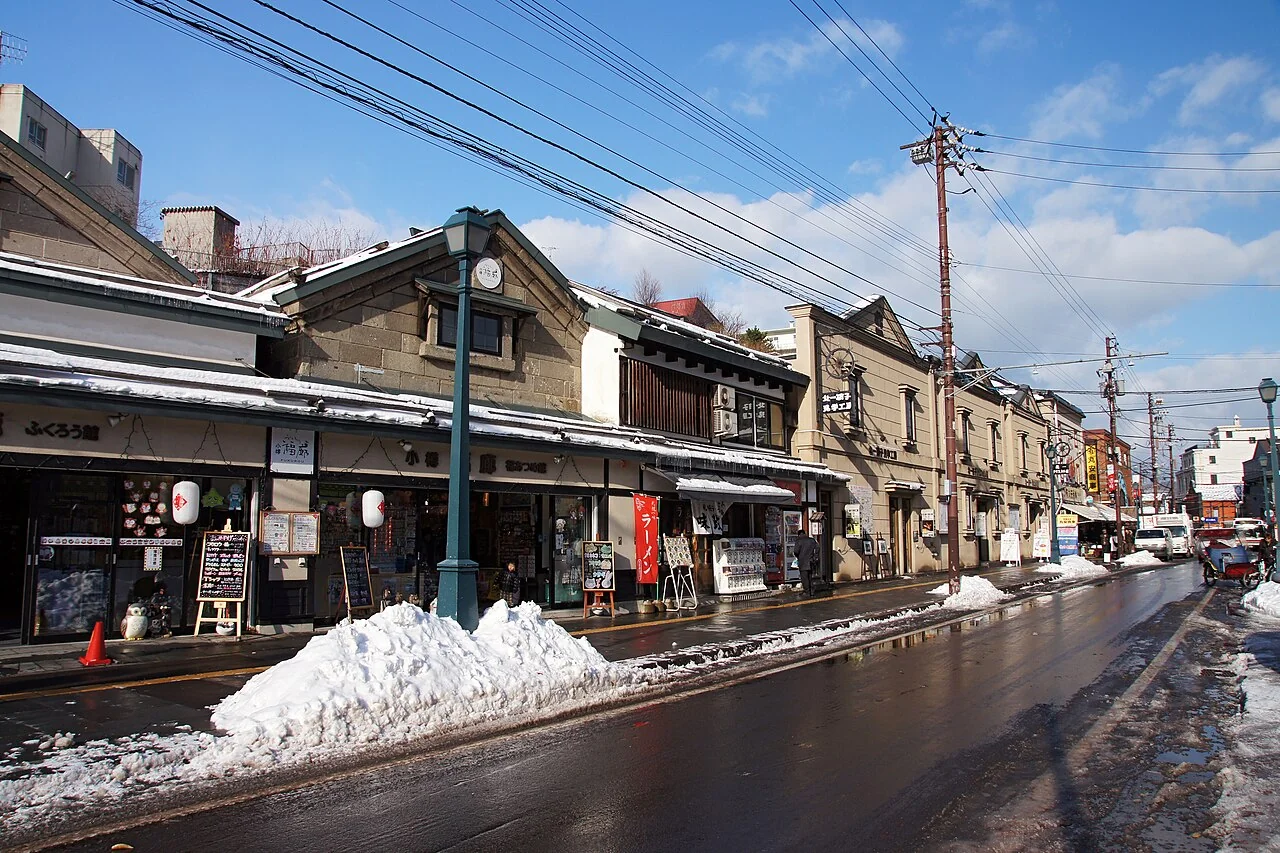
One street inland from the canal is Sakaimachi Street. Shops occupy stone merchant houses and warehouses from the Meiji to early Showa eras, selling glassware, glass beads, music boxes, Western-style sweets and kamaboko fish cakes. The pleasure here is to wander south, looking into shops as you go.
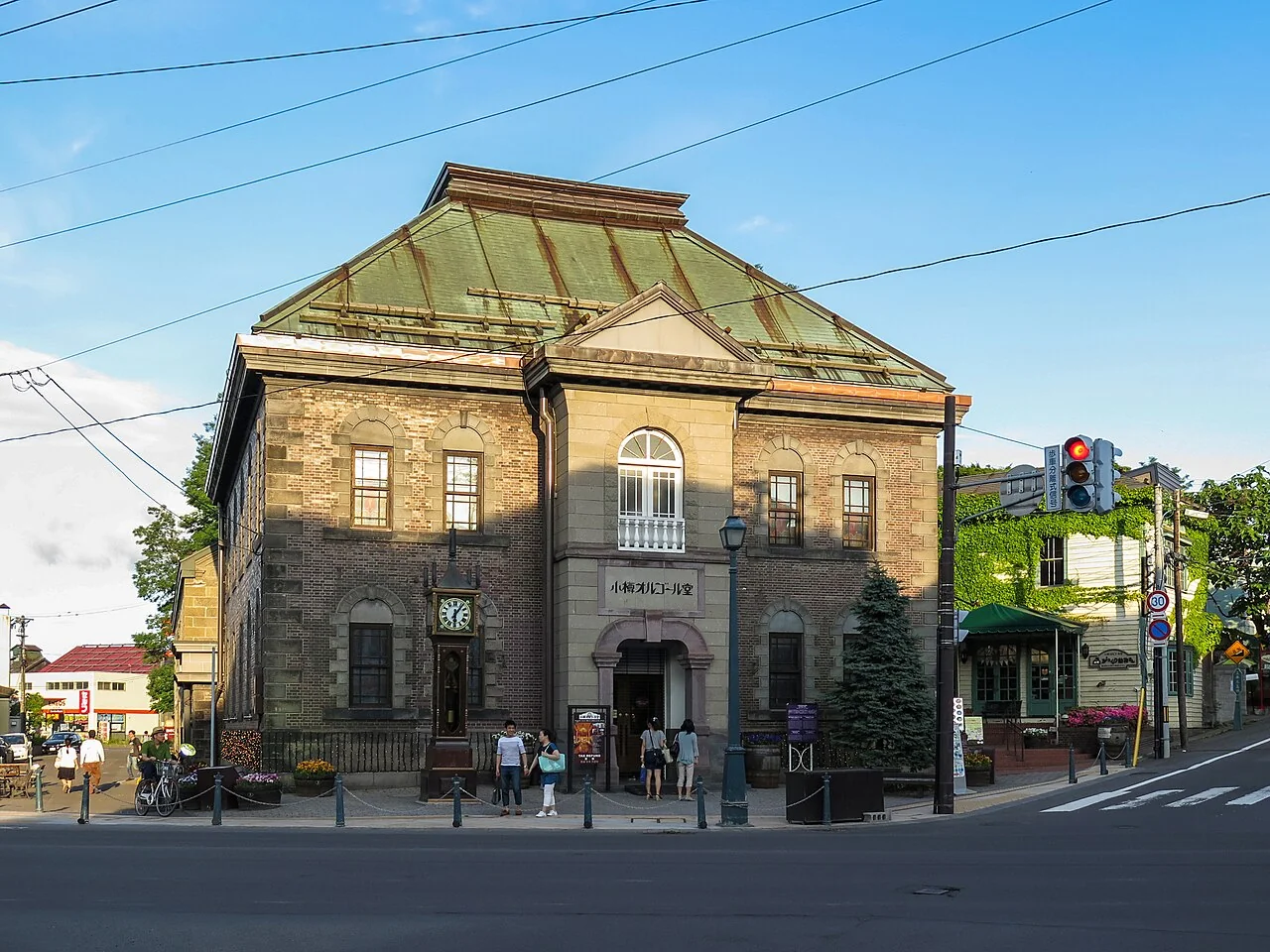
The south end of the street is Marchen Crossing, where seven roads meet. Facing the crossing is the Otaru Music Box Museum Main Building, housed in a brick building.
Glassware breaks easily, so before you buy, ask whether the shop can pack it for travel or ship it to your home or hotel.
Where to eat in Otaru: sushi and seafood bowls
As a port town, Otaru has plenty of places serving sushi and kaisendon (seafood rice bowls). They are scattered around the canal, near Otaru Station and along Sakaimachi Street, and many post their toppings and prices outside, so you can compare before you go in. Popular places have lines at lunchtime; eating a little earlier or later makes it easier to get a table.
On Sakaimachi Street you will also find snacks to buy one at a time, such as fried kamaboko, soft-serve ice cream and baked sweets. The street gets crowded, so step aside or stop by the shop front when you eat.
A route that doesn't retrace your steps
Get off at Otaru Station, walk down to the canal, and leave from Minami-Otaru Station, and you won't cover the same ground twice. It is downhill from Otaru Station to the canal, and the only climb on the way back is the slope from Marchen Crossing up to Minami-Otaru Station.
- Take JR from Sapporo Station to Otaru Station
- Walk down Chuo-dori to Chuo Bridge, then along the canal to Asakusa Bridge
- Turn into Sakaimachi Street from the canal and walk south, browsing the shops
- Have lunch around the canal or on Sakaimachi Street
- Stop at the Otaru Music Box Museum Main Building at Marchen Crossing
- Take JR back to Sapporo from Minami-Otaru Station
If you want to stay for the gas lamps in the evening, go back to the canal after step 5 and catch your train at Otaru Station instead. The walk from the canal to Otaru Station is uphill, so allow time for it.
Otaru in winter, and checking your train home
In winter Otaru is under snow, and the slopes and paving stones get slippery. Wear shoes with deep treads and watch your step even on the canal walkway. In February, the Otaru Snow Light Path festival lights candles along the canal and around town. The Otaru Tourism Association has posted the plans for 2027.
On days with heavy snow, trains between Sapporo and Otaru can be delayed or suspended. If you stay in Otaru into the evening, check the time of your train back and the service status on the JR Hokkaido website before heading to the station.
For more on the area, see the Otaru page; for central Sapporo, see Sapporo for first-timers. Back in Sapporo, head to Susukino for dinner.
Places in this guide
Hotels nearbyPR
See prices and availability for hotels in Sapporo and book on our partner Trip.com.
See hotels in Sapporo on Trip.com