
Sanuki Udon Guide: How to Order and What to Try
This guide is translated from the Japanese edition. Read the Japanese edition
New to Sanuki udon? How regular, self-service and noodle-factory shops differ, how to order at a self-service shop, and kake, kamatama, bukkake and more.
In Kagawa you often see people dropping into an udon shop for a bowl before work or on their lunch break. Sanuki udon is known for its firm, chewy noodles, and Kagawa is so attached to them that it calls itself "Udon Prefecture." There are a great many shops, and the way you order varies from one to the next, so on your first visit you may hesitate at the door. Once you know the types of shop, how to order and the classic ways of eating it, you can enjoy udon the way locals do.
Three types of shop
Sanuki udon shops fall into three broad types.
- Regular shops: you sit down, order, and your udon is brought to the table. It works like any restaurant, so it is the easiest place to start
- Self-service shops: you collect your noodles at the counter, help yourself to tempura and other sides, then pay. This is the most common style in Kagawa
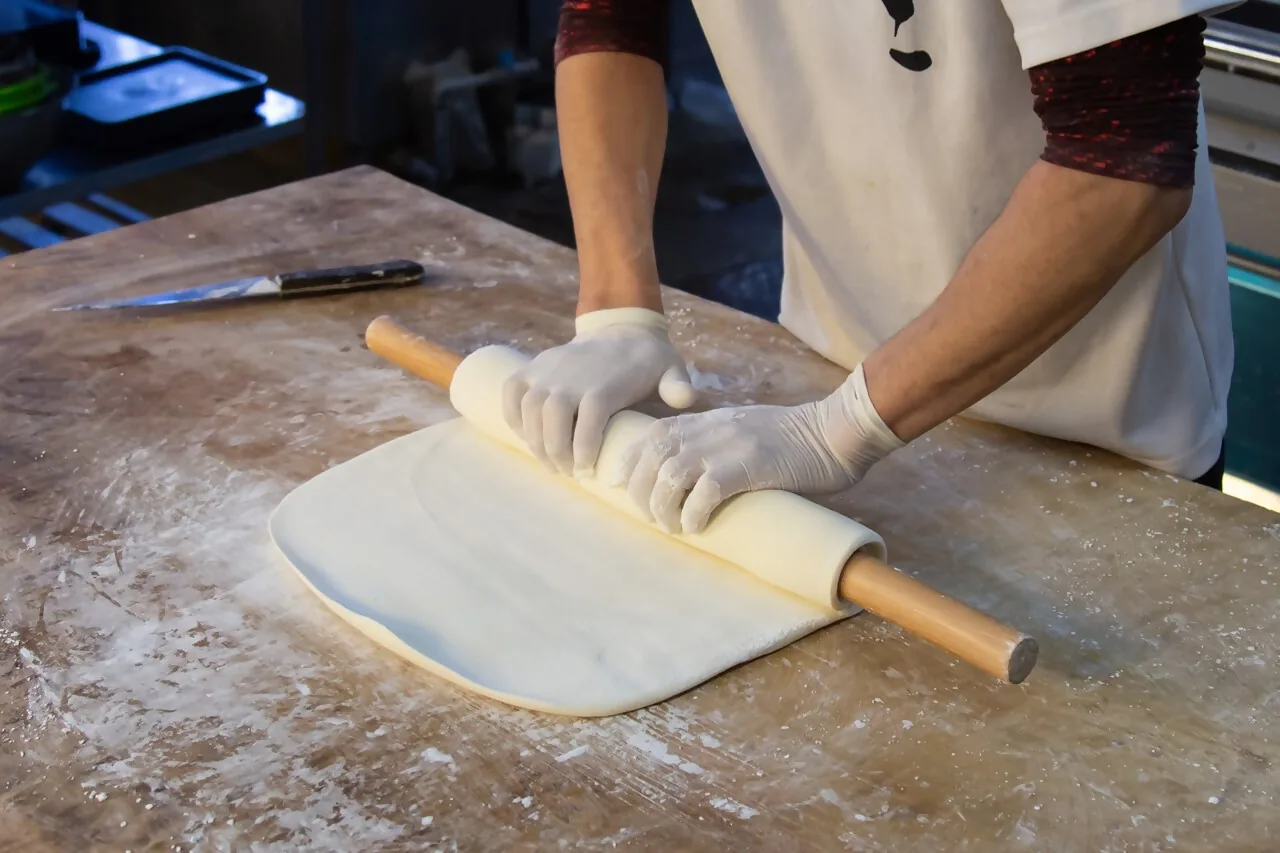
- Noodle factories (seimenjo): you eat in a corner of a noodle-making factory. Many open only for short hours, but they have the most authentic atmosphere
Whichever type you choose, check the signs at the entrance or on the wall for how ordering works there, and you won't be caught out.
Ordering at a self-service shop
At a self-service shop, things usually go in this order.
- At the counter, say which udon you want (kake, bukkake and so on) and the size (small, large and so on)
- Once you have your noodles, put as much tempura, rice balls and so on as you like on your tray
- Pay at the register
- Top your bowl with green onion, ginger, tempura crumbs or other condiments as you like, and sit down to eat
At some shops you reheat the noodles yourself or pour on the broth yourself. When you finish, it is usual to take your dishes back to the return counter. If you are unsure, just ask the staff.
Courtesy of the Kagawa Prefecture Tourism Association
Hot and cold combinations
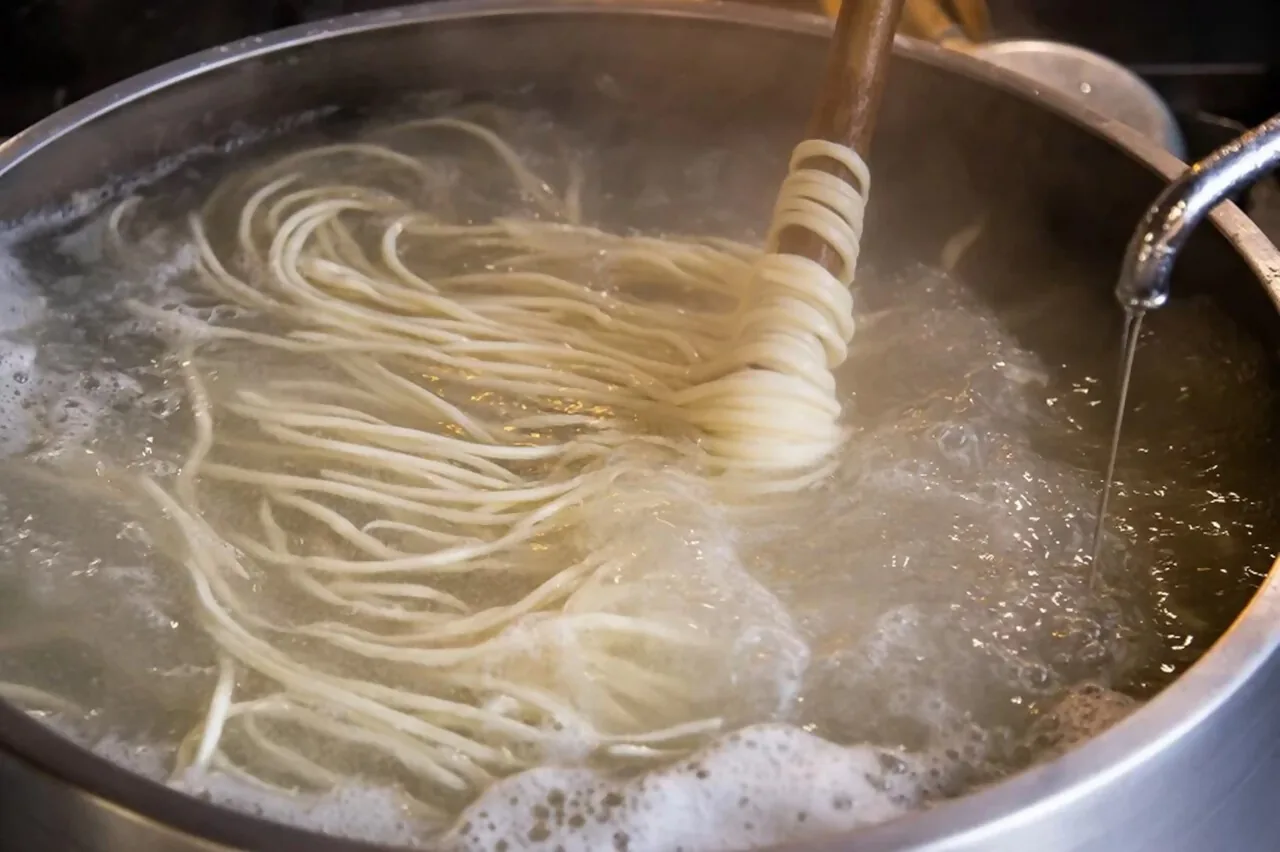
With Sanuki udon, the name can change depending on the temperature of the noodles and the broth. "Atsu-atsu" is hot noodles in hot broth, "hiya-atsu" is noodles chilled in cold water with hot broth, and "hiya-hiya" means both are cold. The more the noodles are chilled, the more you feel their firmness, and "hiya-hiya" is popular in summer.
Courtesy of the Kagawa Prefecture Tourism Association
Classic ways to eat it
Kake udon
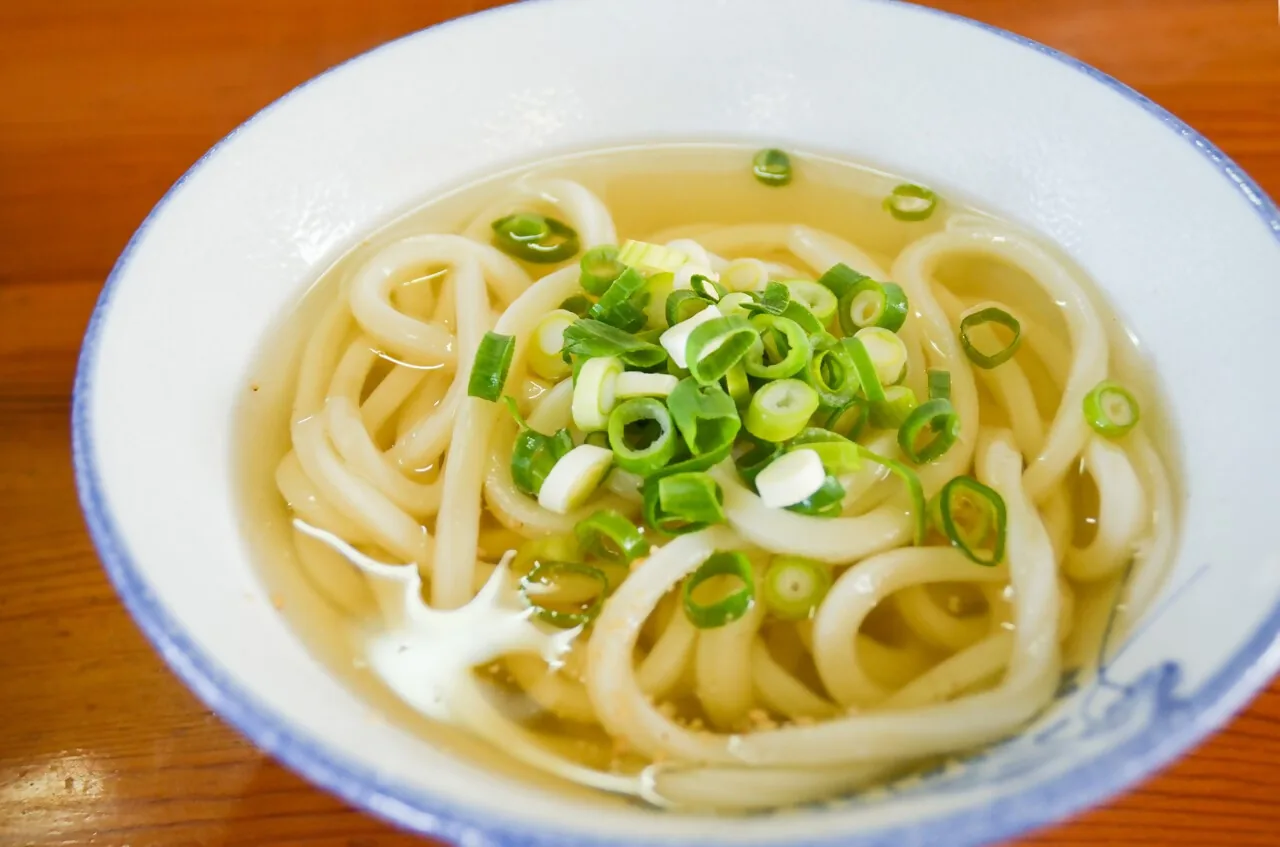
The most basic style: broth made from iriko (dried sardines) and other ingredients poured over the noodles. As in the photo at the top, it is a simple bowl topped with just green onion, which lets you taste the noodles and broth clearly.
Kamaage udon
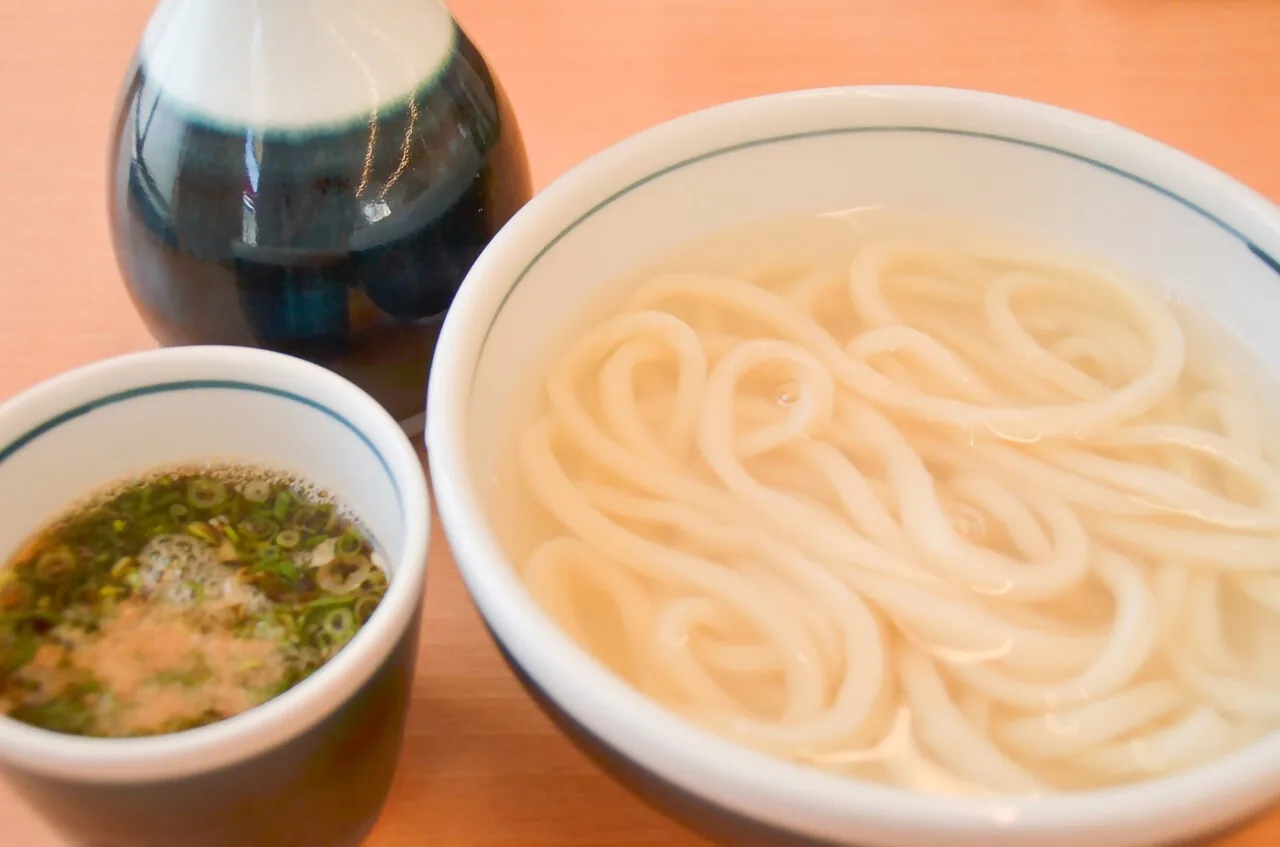
Freshly boiled noodles are served in their cooking water and dipped into a separate dipping broth. Because they are not rinsed in cold water, the noodles are soft and springy.
Courtesy of the Kagawa Prefecture Tourism Association
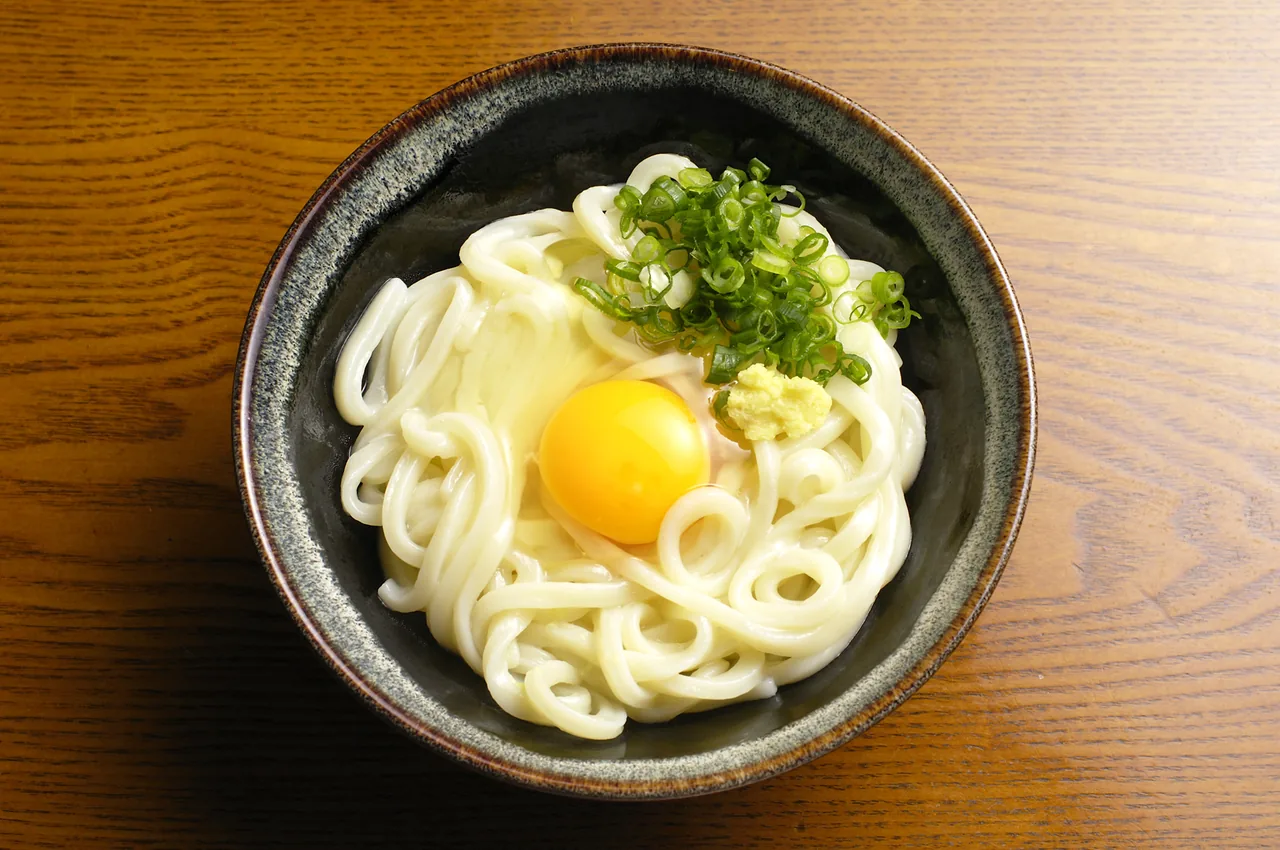
Kamatama udon
Hot, freshly boiled noodles are tossed with a raw egg and seasoned with soy-based sauce. The heat sets the egg slightly, so it coats the noodles in a silky layer.
Courtesy of the Kagawa Prefecture Tourism Association
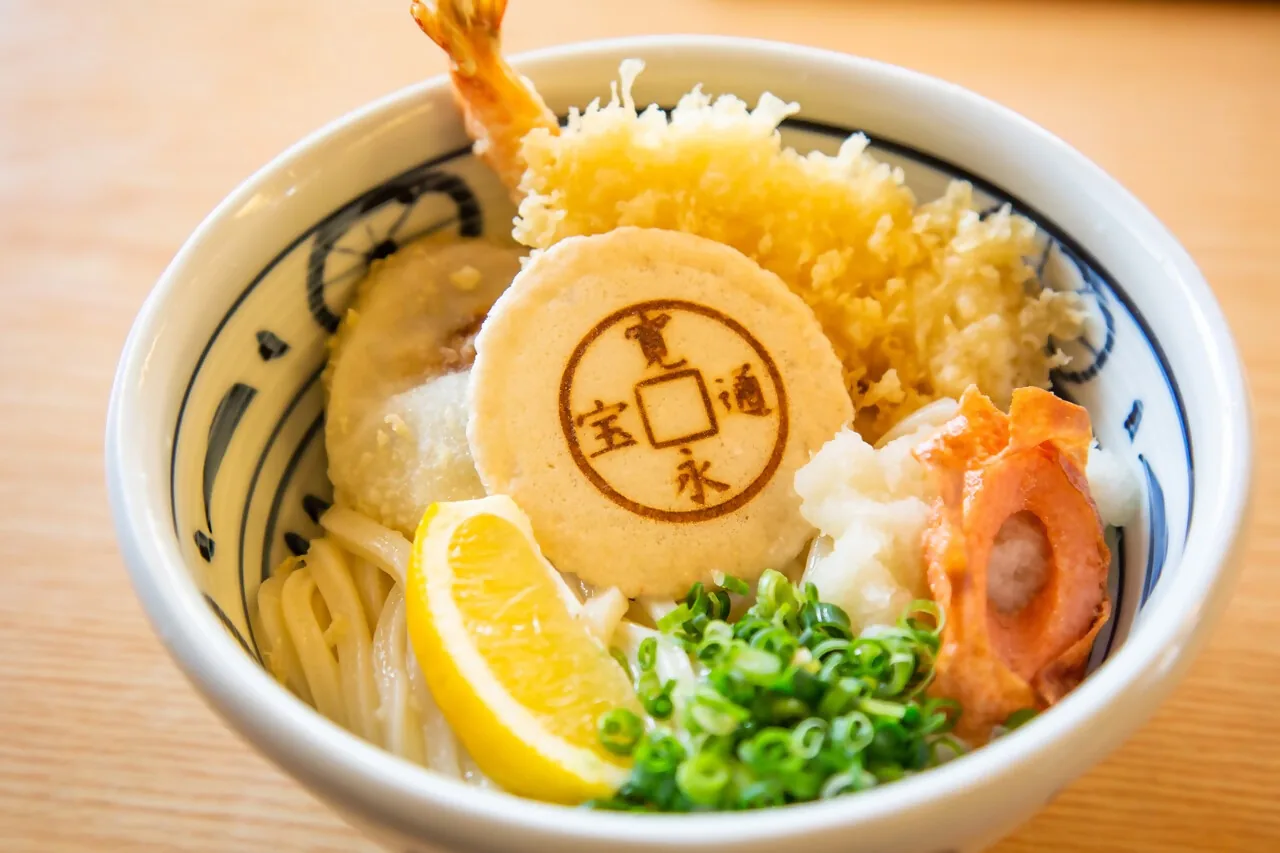
Bukkake udon
A small amount of strong broth is poured over the noodles. Many shops add tempura, lemon or grated daikon radish, and cold bukkake is a summer staple.
Courtesy of the Kagawa Prefecture Tourism Association
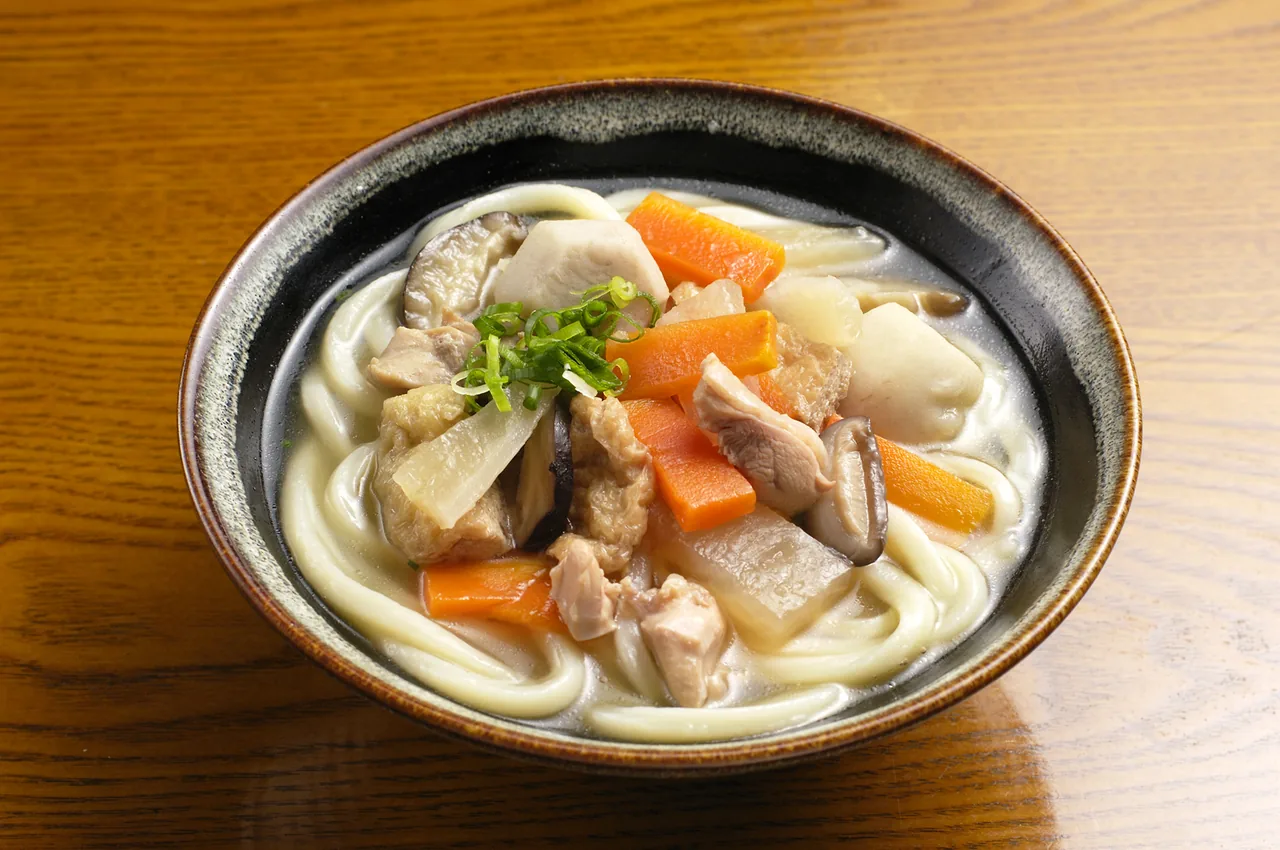
Shippoku udon
A winter local dish of udon covered with a broth of simmered vegetables such as daikon, carrot and taro. Some shops only serve it in the cold months, so if you visit Kagawa in winter, look for it on the menu.
Courtesy of the Kagawa Prefecture Tourism Association
Before you head to an udon shop
Popular shops can have a line at lunchtime. Noodle-factory shops often close in the early afternoon, so going in the morning or before noon gives you more choice. Opening hours and closing days differ from shop to shop and can change, so check each shop's information before you go.
If you plan to visit several shops in a day, order the small size. There are plenty of udon shops near sights such as Ritsurin Garden in Takamatsu and Marugame Castle in Marugame. Slipping in a bowl between sights is one of the pleasures of traveling in Kagawa.