Shirakami-Sanchi in Akita: Takedai Beech Woods and a Scenic Train
This guide is translated from the Japanese edition. Read the Japanese edition
Shirakami-Sanchi from Akita: an hour in Takedai's virgin beech forest, the Fujisato visitor center, entry rules, best seasons and the Resort Shirakami train.
Spread across the border of Akita and Aomori, Shirakami-Sanchi was inscribed in December 1993, together with Yakushima, as one of Japan's first World Natural Heritage sites. It was recognized for natural beech forest, barely touched by people, that survives on one of the largest scales in the world. The Aomori side is better known as a base for hiking, but the Akita side also has a beech forest you can walk easily and a center where you can learn about the whole mountain range. Both are based in the town of Fujisato.
Entry Rules to Know on the Akita Side of Shirakami-Sanchi
The World Heritage area covers 16,971 ha, of which 4,344 ha is on the Akita side. The heart of the area, called the "core zone," is under especially strict protection.
The first thing travelers should know is that the Akita side of the core zone has no designated hiking routes, and in principle no one may enter it without a special reason such as academic research. On the Aomori side, you can enter on 27 designated routes only, after filing a notification. Check the procedures and latest rules on the Ministry of the Environment's page on entering Shirakami-Sanchi.
On the Akita side, the forests travelers can walk lie outside the core zone. The best known is the Takedai Nature Observation Forest in Fujisato.
Takedai Nature Observation Forest: An Hour in Virgin Beech Woods
The Takedai Nature Observation Forest is about 12 hectares of virgin beech forest in the hills of Fujisato Town. It lies outside the registered World Heritage area, but is known as a place where anyone can walk in a Shirakami beech forest. A loop trail of about 1.7 km runs through the woods and takes about an hour.
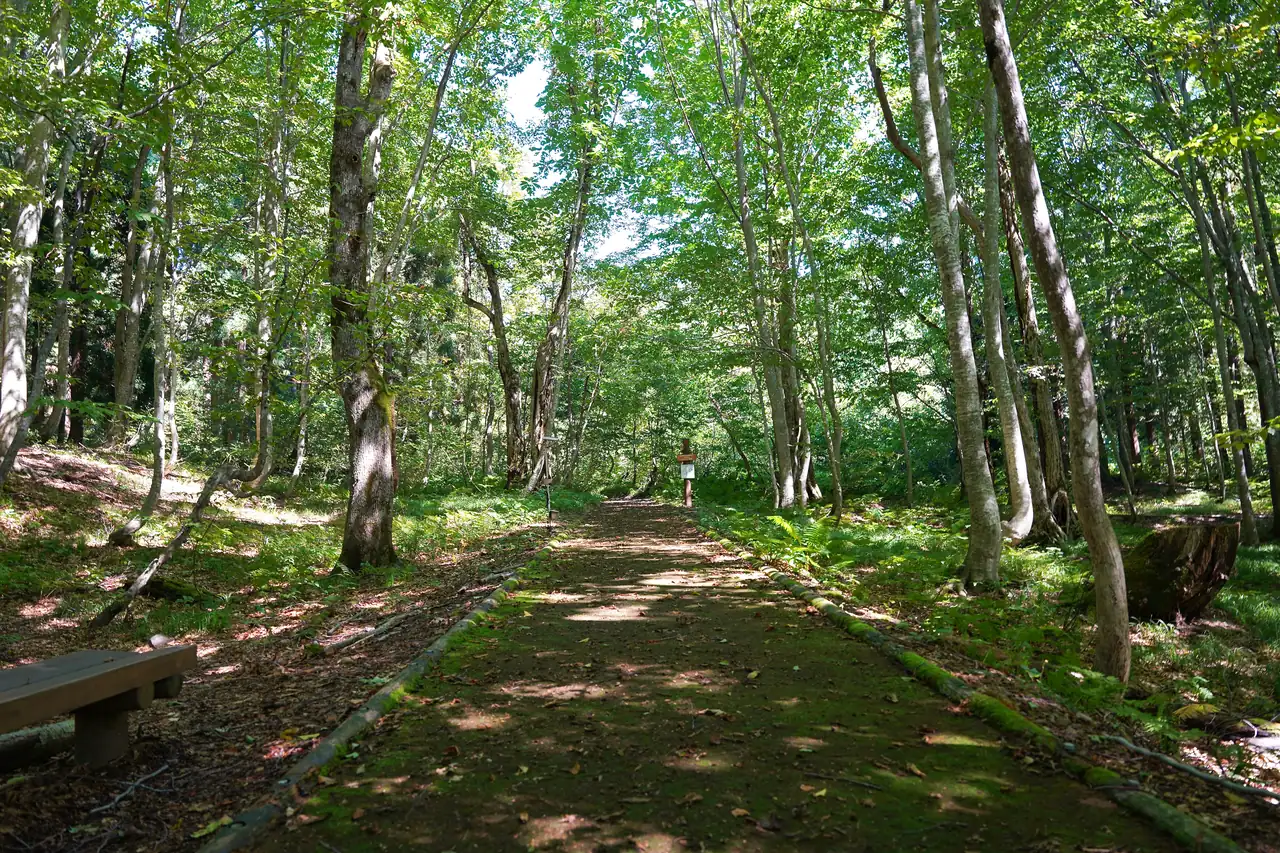
Photo: Akita Prefecture
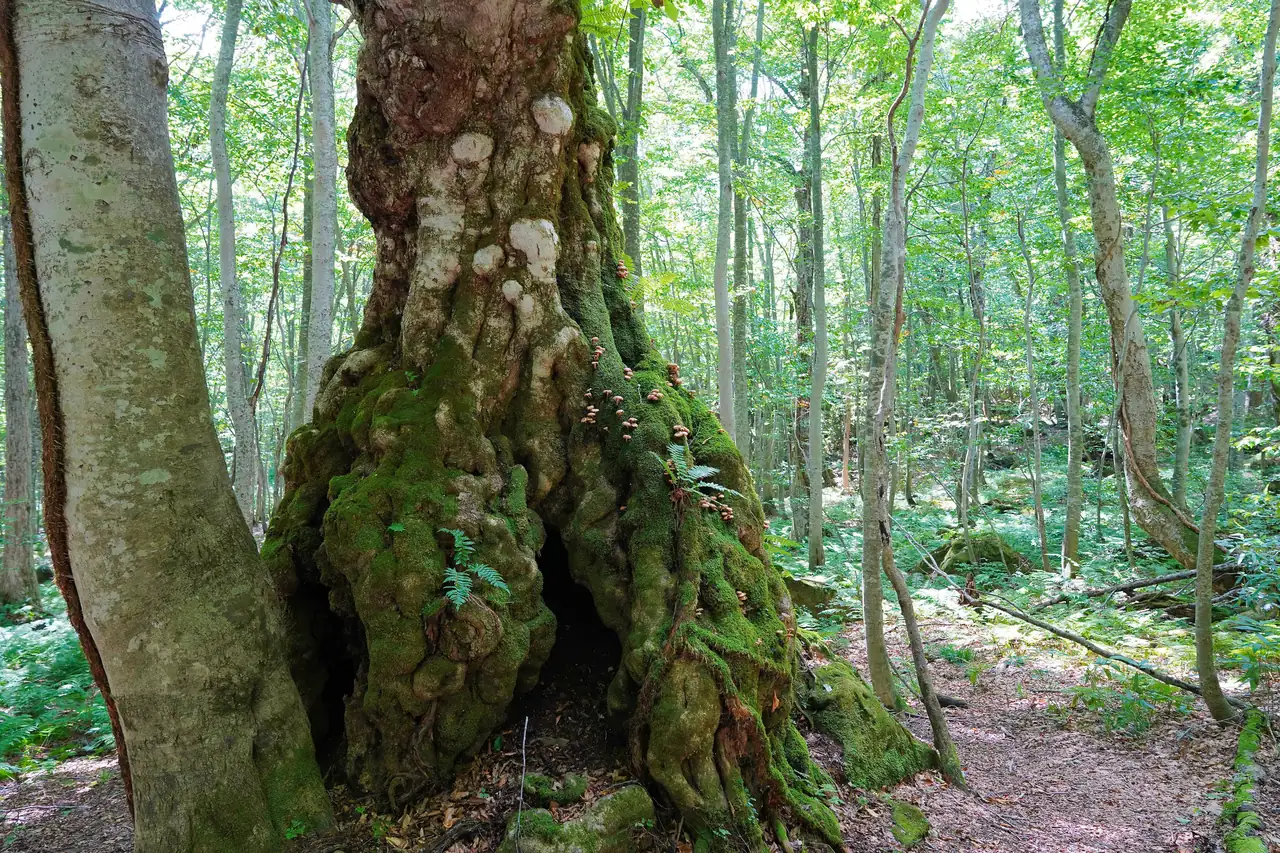
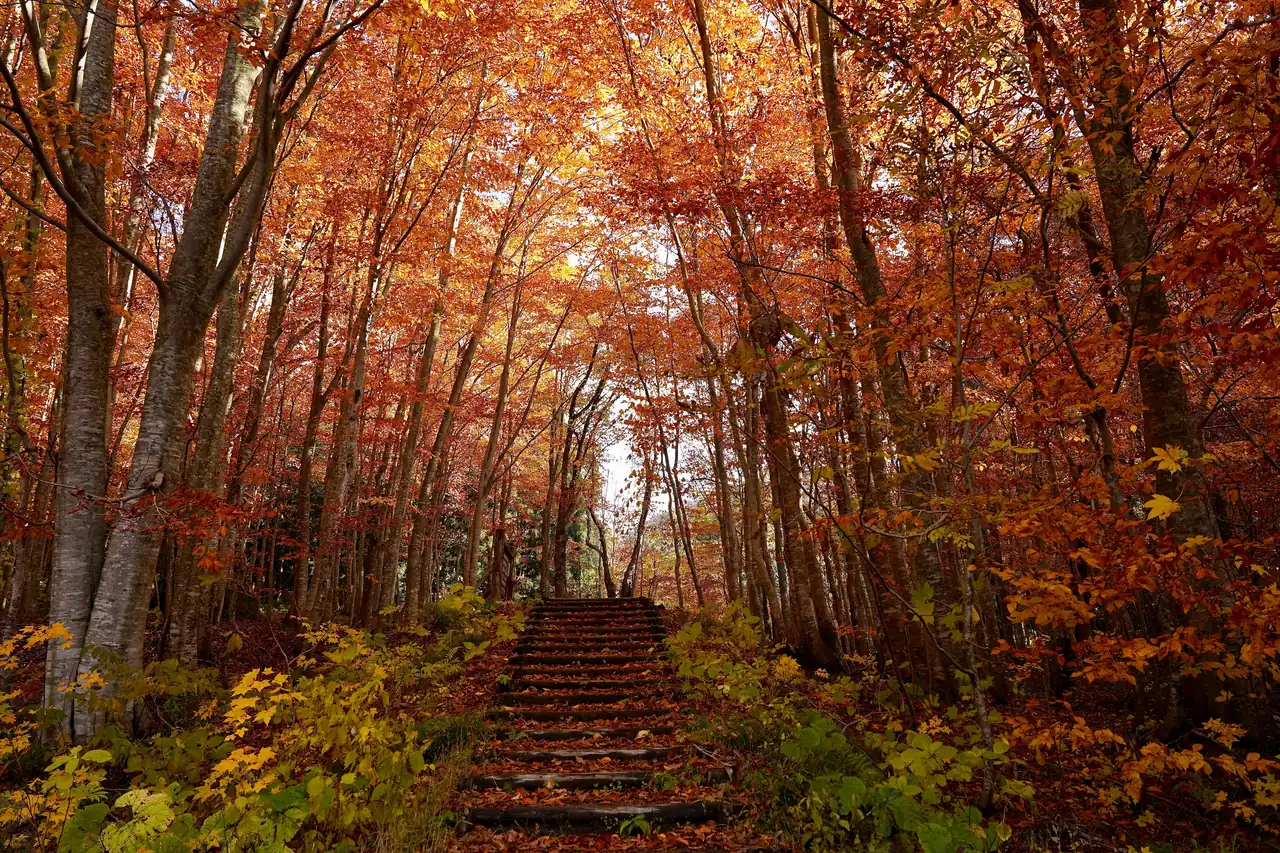
Underfoot the trail is soil and fallen leaves, with patches of moss and some steps. Look up and straight gray beech trunks stand in rows, and in summer light filters down between the leaves. In autumn the whole forest turns yellow, orange and red, and the steps fill with fallen leaves. Thick beeches with moss-covered trunks also stand among the trees.
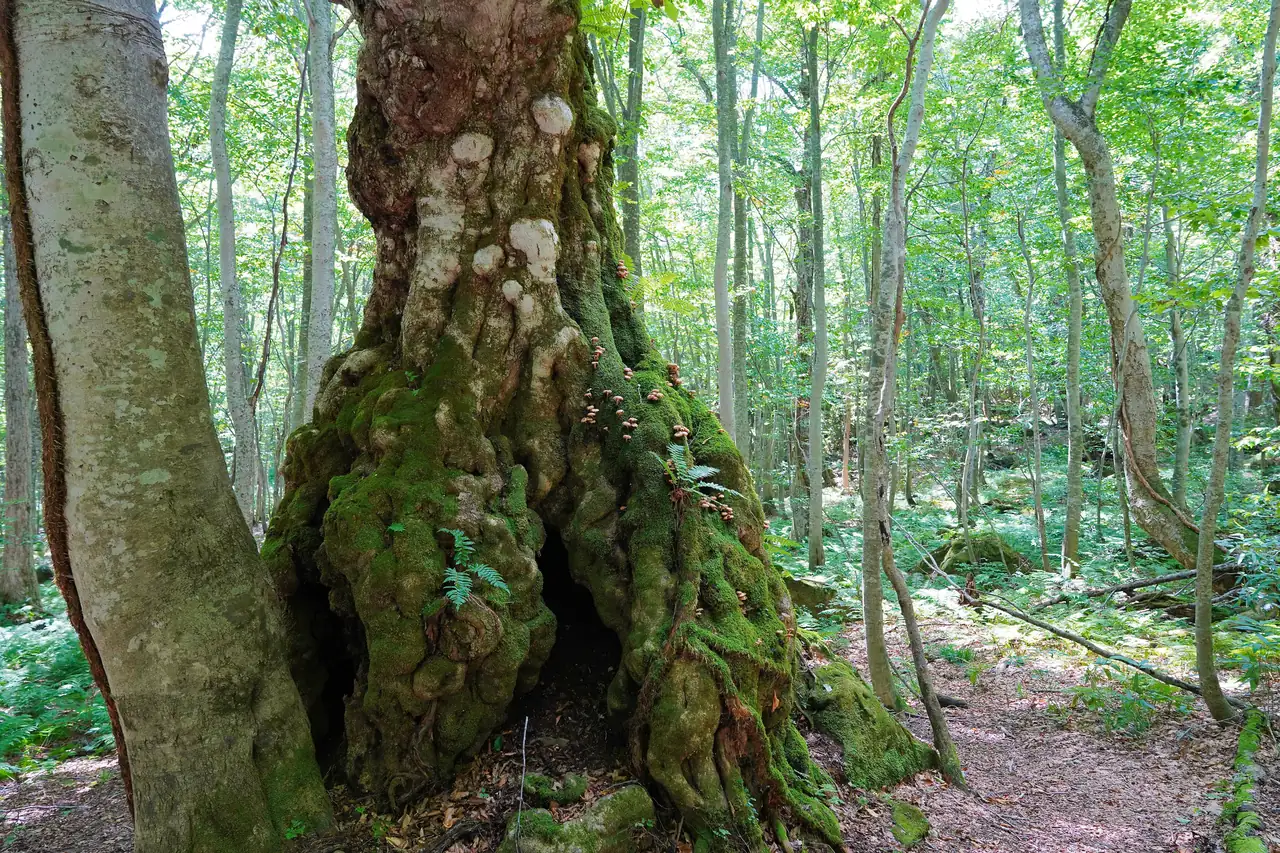
Photo: Akita Prefecture
Takedai was once home to a beech said to be 400 years old and regarded as a symbol of Shirakami. It fell after heavy snow in the winter of 2022 (Reiwa 4), but rather than being removed it was left in place, and the forest is being watched to see how it regrows in the gap the fallen tree opened up.
When to Walk Takedai and What to Bring
The trail can be walked from April to November. In winter, snow puts it out of season and road conditions change, so if you go in early spring or late autumn, check Fujisato Town's Takedai information before you set out.
- Shoes: the trail is soil and steps, so wear comfortable shoes with a good grip.
- Rain gear: mountain weather changes quickly, so bring it even on a sunny day.
- Time: the walk takes about an hour, but getting there from the station takes over an hour each way. Autumn days are short, so start early.
Get the Big Picture at the Fujisato Visitor Center
In Fujikoto, Fujisato Town, about 20 minutes by car from Futatsui Station, stands the Ministry of the Environment's Shirakami-Sanchi World Heritage Conservation Center Fujisato Facility. Its exhibits, in Japanese and English, introduce the landforms, animals and plants of Shirakami-Sanchi and help you grasp the whole range before you head into the forest.
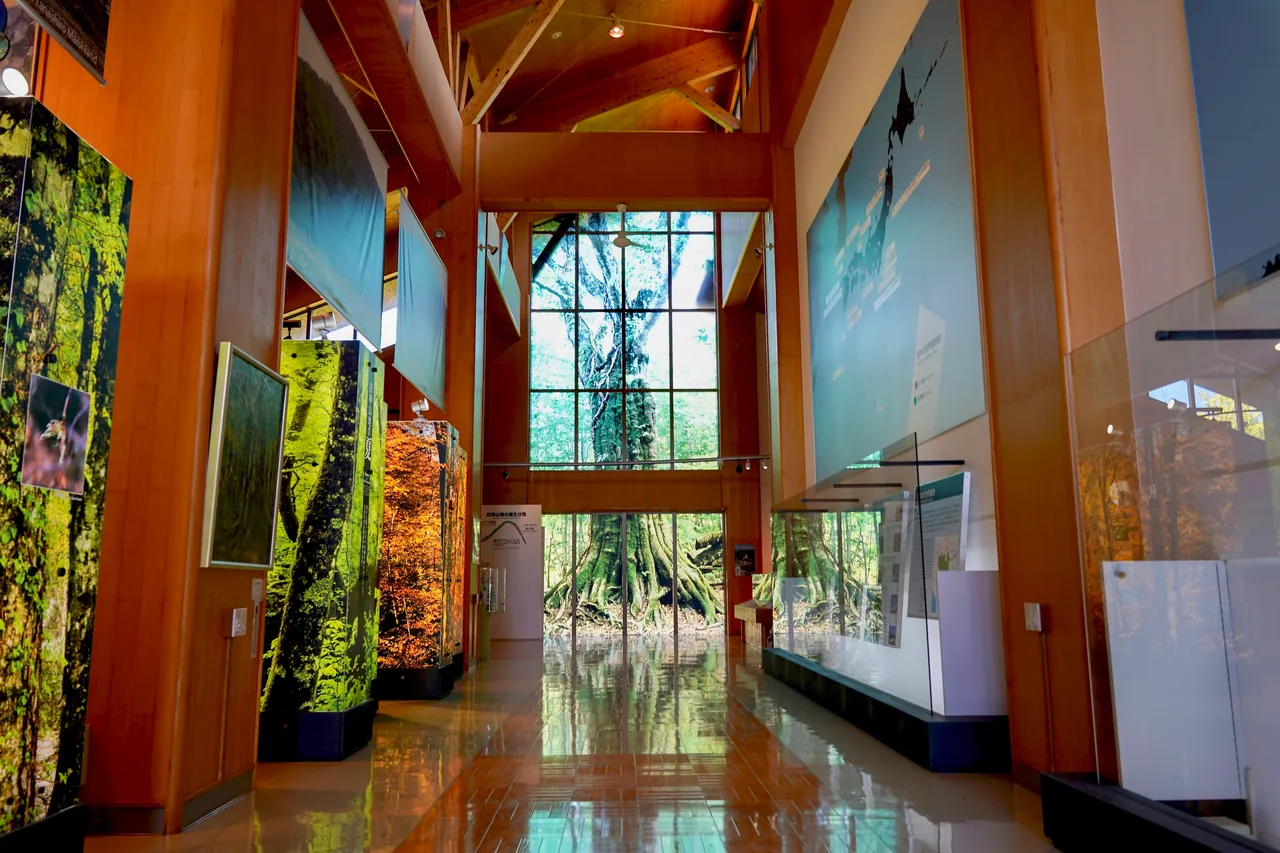
Photo: Akita Prefecture
It lies along the way to Takedai, so stopping on the way in lets you walk the forest already knowing how a beech forest grows. Opening hours and closing days change with the seasons, so check the official information.
Resort Shirakami: The Seaward Side of Shirakami-Sanchi
To see Shirakami-Sanchi from outside the mountains, take JR East's sightseeing train, the Resort Shirakami. It links Akita Station with Aomori and Hirosaki stations, running along the Sea of Japan with views of the Shirakami mountains, sunsets over the sea, and Mount Iwaki with its apple orchards.
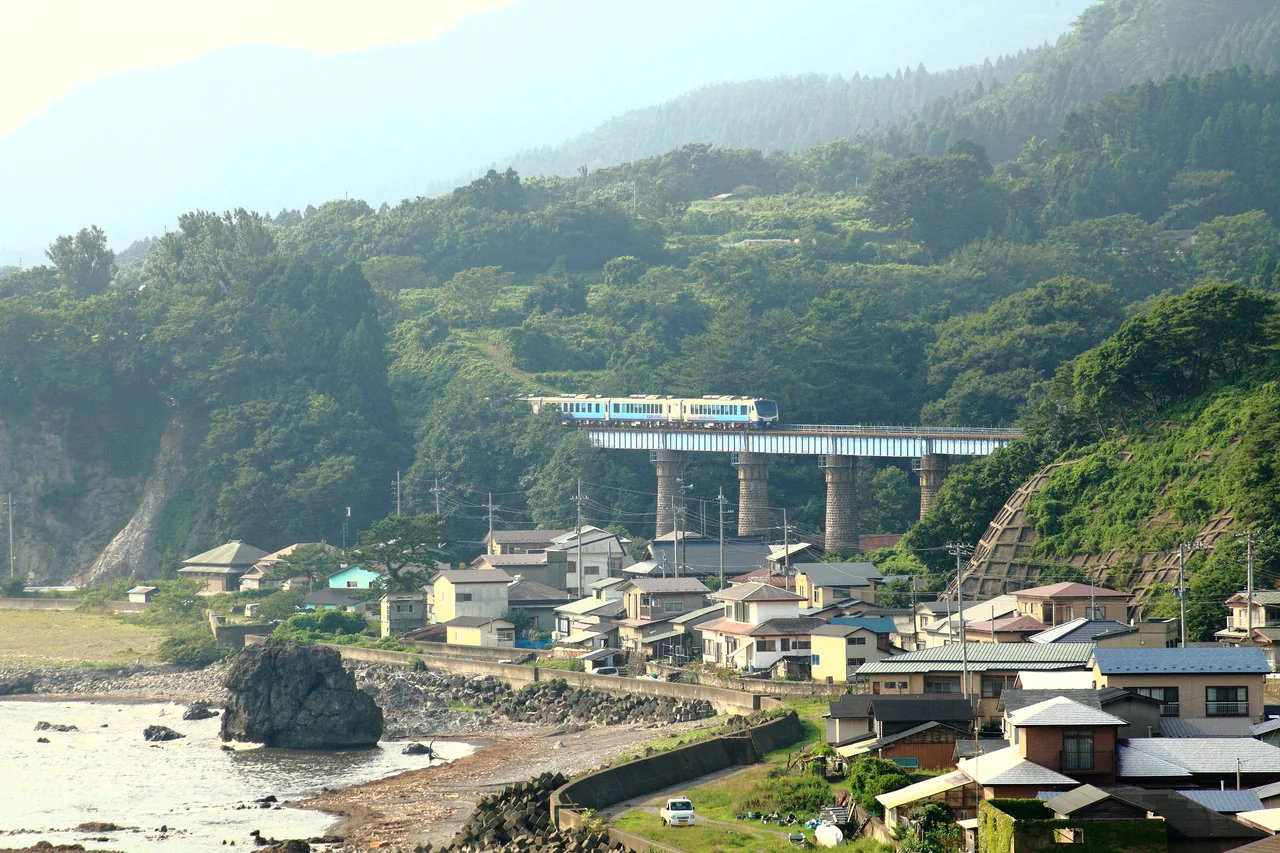
Photo: Akita Prefecture
There are three trainsets, Aoike, Buna and Kumagera, and which one runs varies by day. All seats are reserved, so get a reserved-seat ticket before you board. Operation has been announced for fiscal 2026, but there are some days without service in October and November, so check JR East's operating days and timetables before planning. Other sightseeing trains and local lines in Akita are covered in our Akita train journey feature.
Getting There: By Car from Futatsui Station
The starting point for Takedai is Futatsui Station on the JR Ou Line. From the station it is about 65 minutes (about 39 km) by car to Takedai via the Nishimeya-Futatsui prefectural road. The Fujisato Facility is about 20 minutes from the station, and the mountain road beyond it leads to Takedai.
Takedai is a forest deep in the mountains, so it is a good idea to bring drinks and snacks. The fallen tree and the forest's regrowth are also explained on the Tohoku Regional Forest Office's Fujisato District Forest Office page.