
Tokyo Japanese Gardens: Rikugien, Hama-rikyu and More by Season
This guide is translated from the Japanese edition. Read the Japanese edition
Tokyo's best Japanese gardens by area, from Rikugien and Hama-rikyu to the Imperial Palace East Gardens, with bloom seasons, light-ups, teahouses and garden rules.
You stand by a pond surrounded by high-rises, looking at the water through the branches of a pine. Gardens built by the shoguns and feudal lords at their Edo-period residences still survive all over central Tokyo. Most are about a 10-minute walk from a station, and an hour between other sights is enough to see one. Several of them sit close together, so pairing two in the same area keeps travel time down.
What is a daimyo garden? How to walk a stroll garden
The daimyo, Edo-period feudal lords, built large gardens with ponds and tsukiyama (artificial hills) at their residences. Most of the gardens left in Tokyo are kaiyu-shiki, or stroll gardens: paths circle a central pond, and as you walk, the bridges, islands, stone lanterns and distant trees shift into new views.
Enjoying one is simple. Take the garden map from the official website and plan to walk all the way around the pond. Named views and stone monuments are dotted along the way; stop and look across the water, and you'll see the composition the designers wanted you to see. In gardens with a teahouse, you can take a break over matcha and a Japanese sweet while looking out over the pond.
North: Rikugien and Koishikawa Korakuen
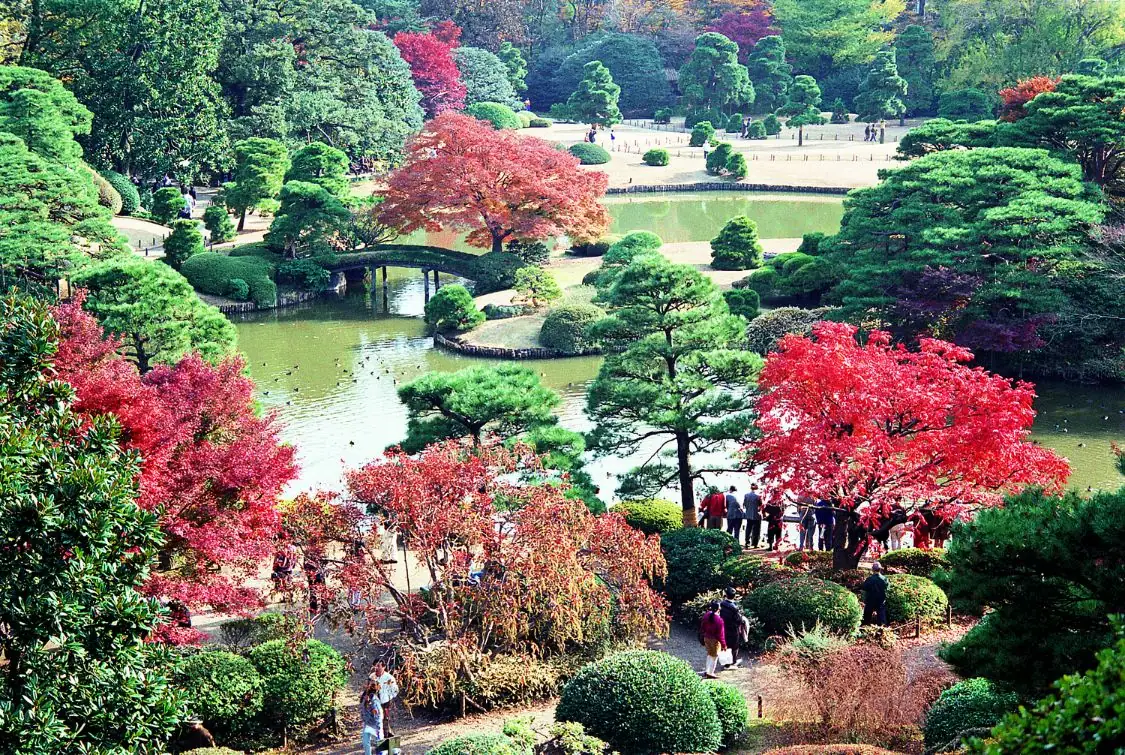
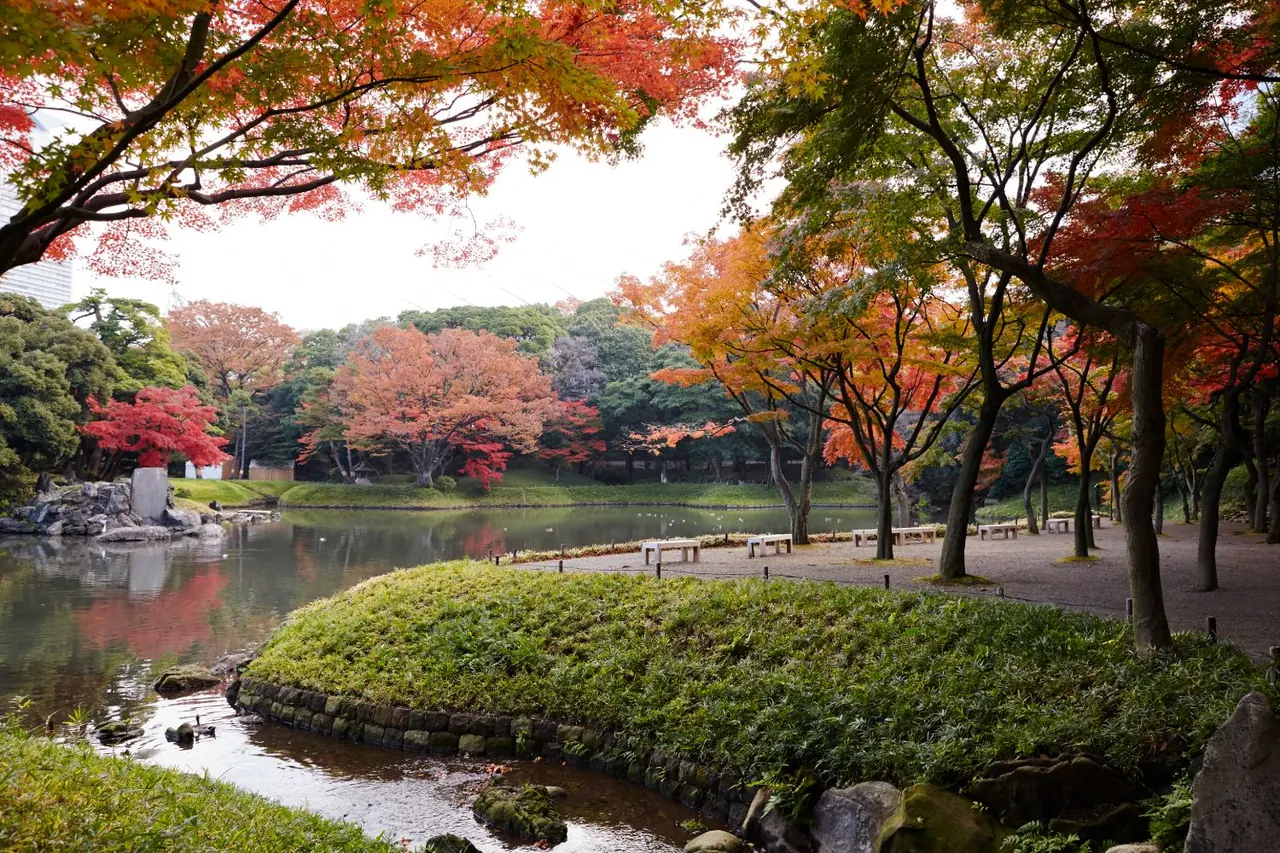
Rikugien Gardens (Honkomagome, Bunkyo Ward) is a strolling hill-and-pond garden built by Yanagisawa Yoshiyasu, chamberlain to the fifth shogun, Tokugawa Tsunayoshi, and is a national Special Place of Scenic Beauty. It is said to express the world of waka poetry, and in the Meiji era it became a villa of Mitsubishi founder Iwasaki Yataro. Highlights are the large weeping cherry just past the main gate in spring, azaleas around mid-April and the autumn leaves. At the Fukiage Chaya teahouse in the garden you can have matcha and a Japanese sweet. The nearest station is Komagome on the JR Yamanote Line and Tokyo Metro Namboku Line.
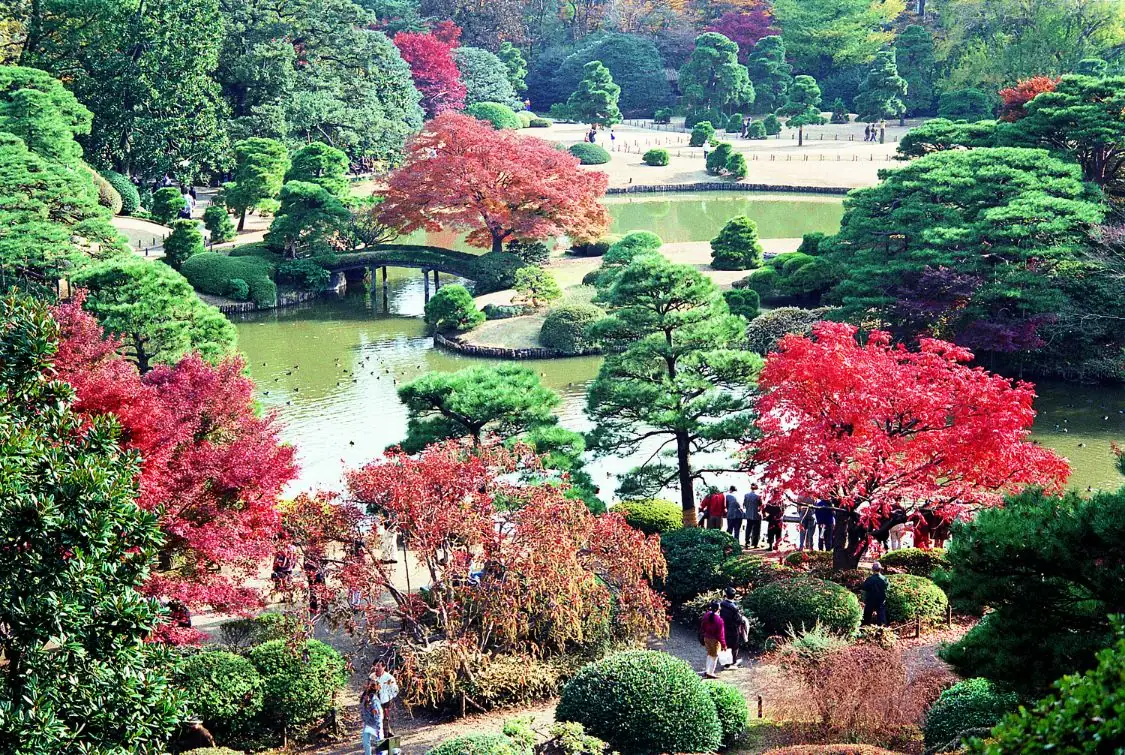
Photo: © TCVB
Koishikawa Korakuen Garden (Koraku, Bunkyo Ward) was begun in 1629 by Tokugawa Yorifusa, first lord of the Mito Tokugawa clan, and completed under his son Mitsukuni. It is designated both a Special Historic Site and a Special Place of Scenic Beauty. Its best-known feature is the stone Engetsukyo Bridge, which looks like a full moon together with its reflection. The plum grove, a nod to Mitsukuni's love of plum blossoms, flowers around February. In autumn, Japanese maples and ginkgo trees turn color, making it hard to believe Tokyo Dome is right next door.
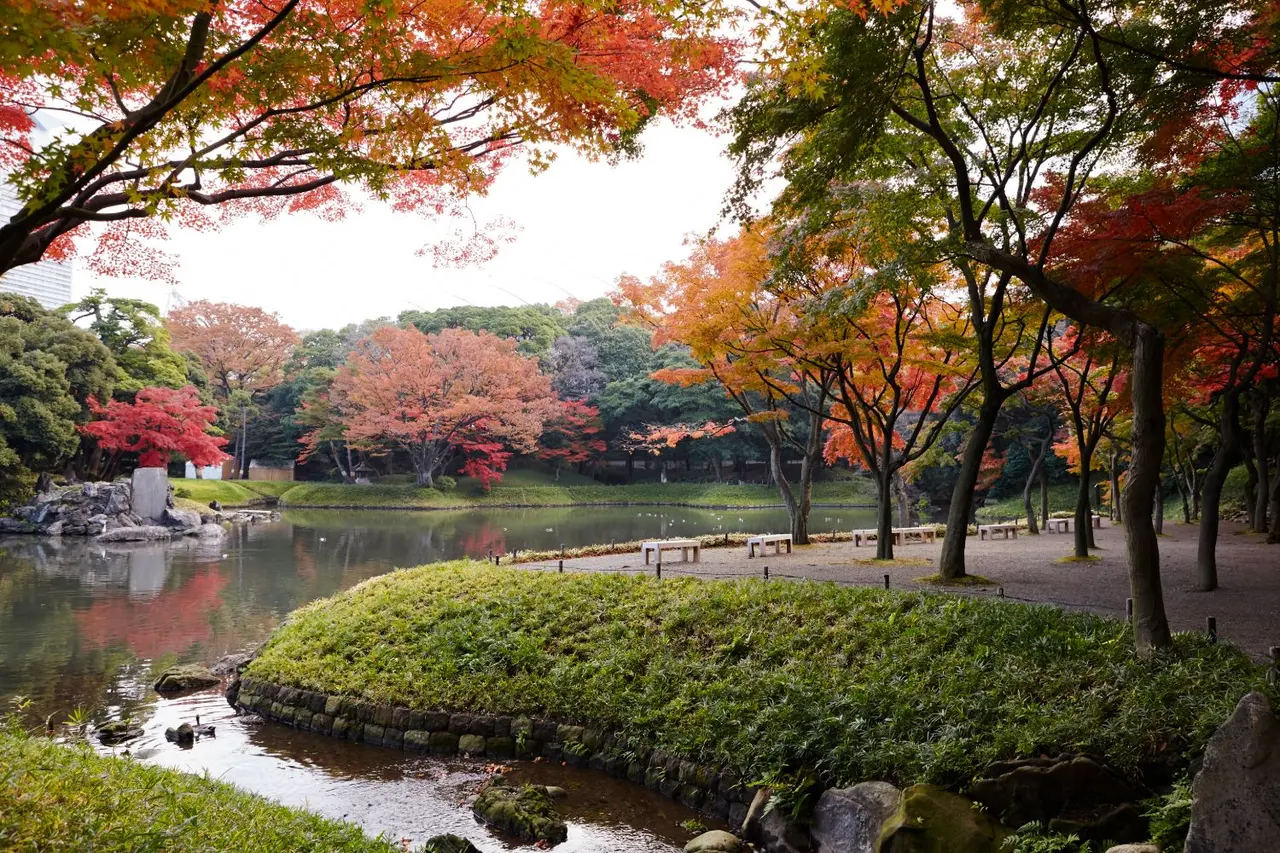
Photo: © TCVB
Komagome Station and Korakuen Station are linked by the Tokyo Metro Namboku Line, so you can visit both gardens on the same day.
Central Tokyo: the East Gardens of the Imperial Palace and Hama-rikyu
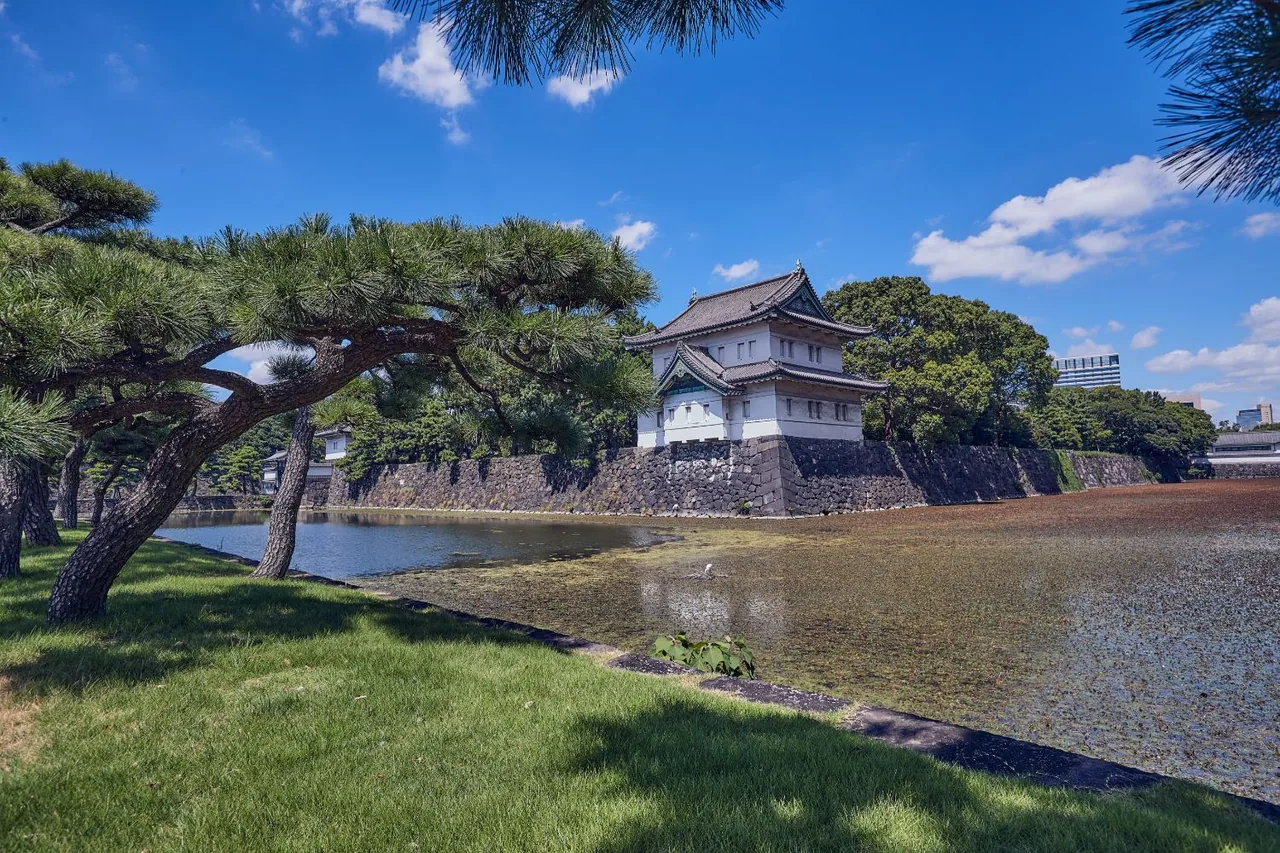
The East Gardens of the Imperial Palace were laid out on part of the Honmaru, Ninomaru and Sannomaru areas of Edo Castle and have been open to the public since 1968. Entry is free and needs no reservation. Apart from the lawn of the Honmaru, where the stone base of the castle keep remains, the Ninomaru area has a stroll garden created with reference to a mid-18th-century plan. In the Ninomaru Garden, azaleas peak around April and the irises in the iris field from late May to mid-June. The gardens are normally closed on Mondays and Fridays, so check the opening days with the Imperial Household Agency before you go.
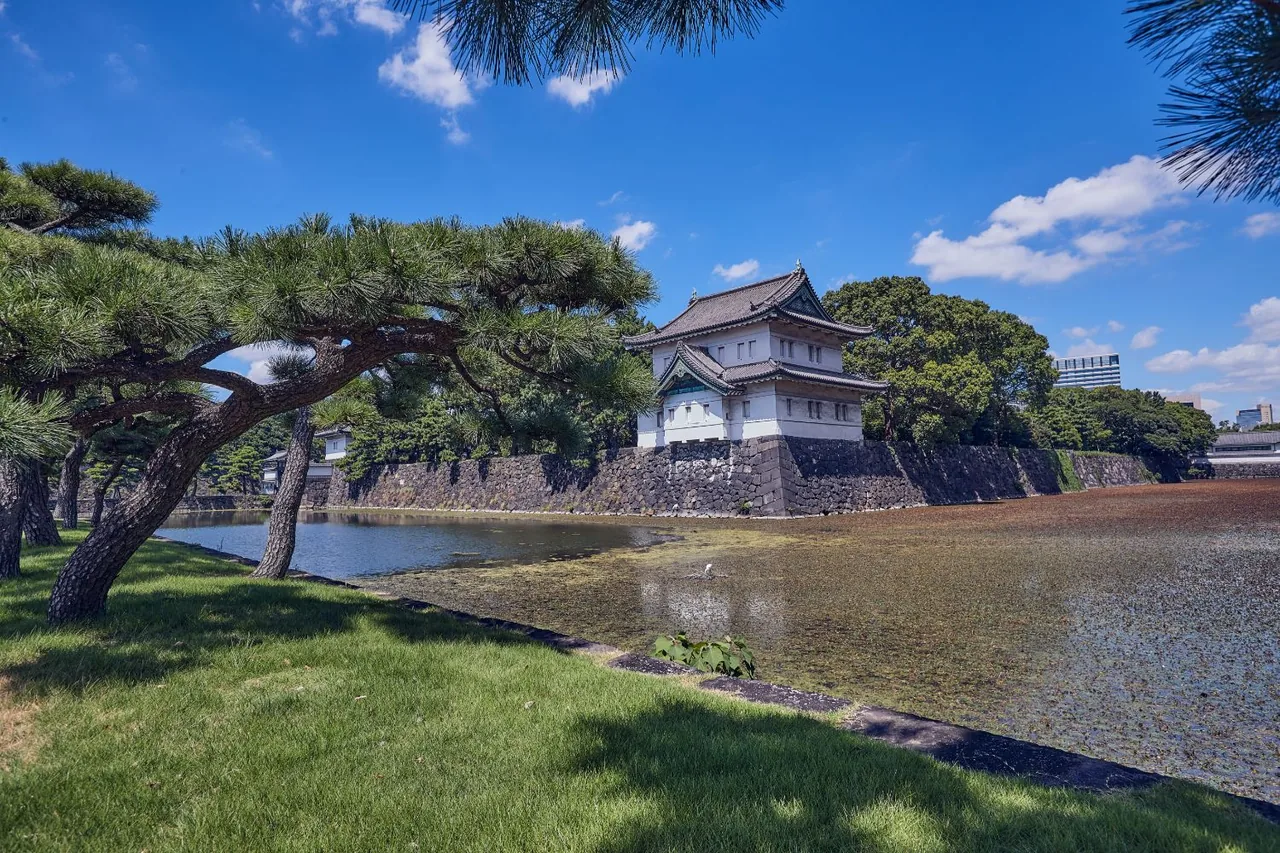
Photo: © TCVB
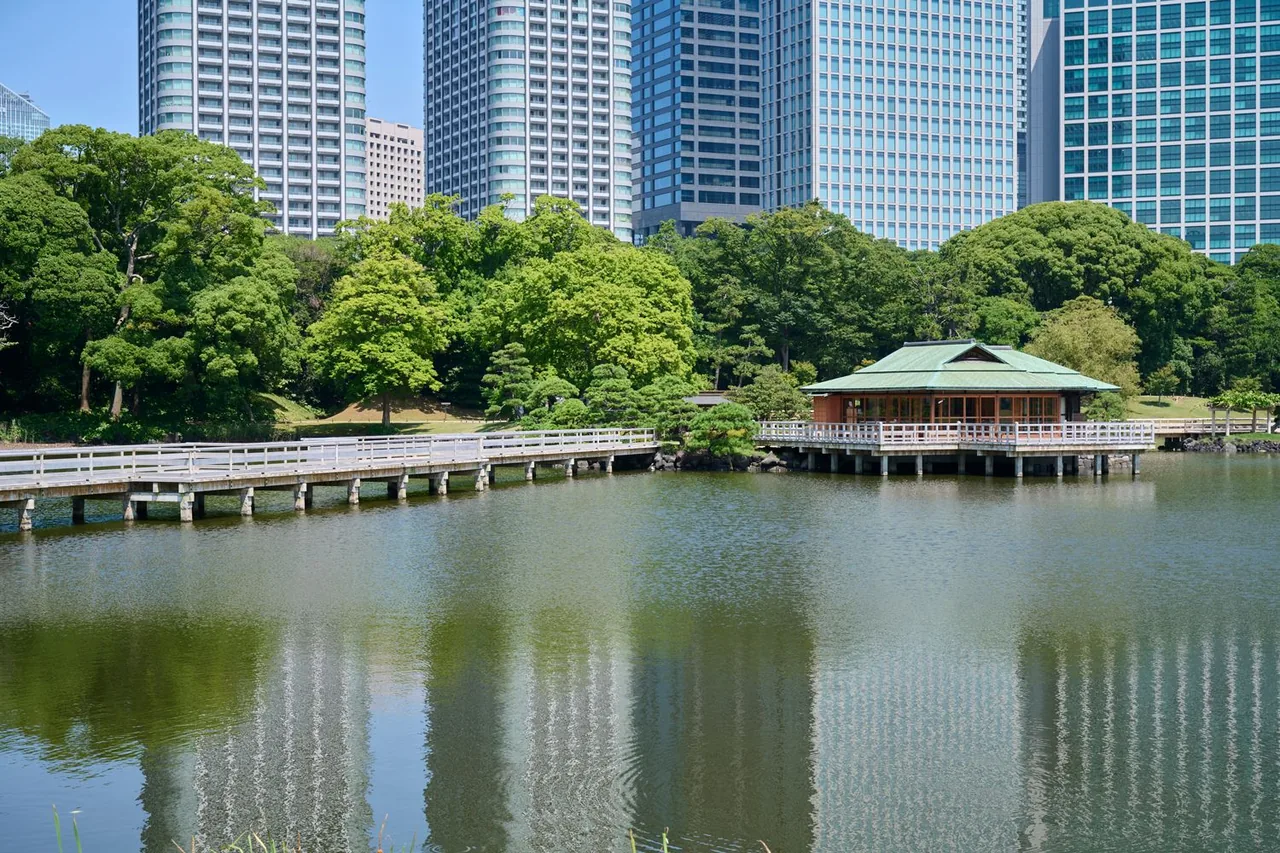
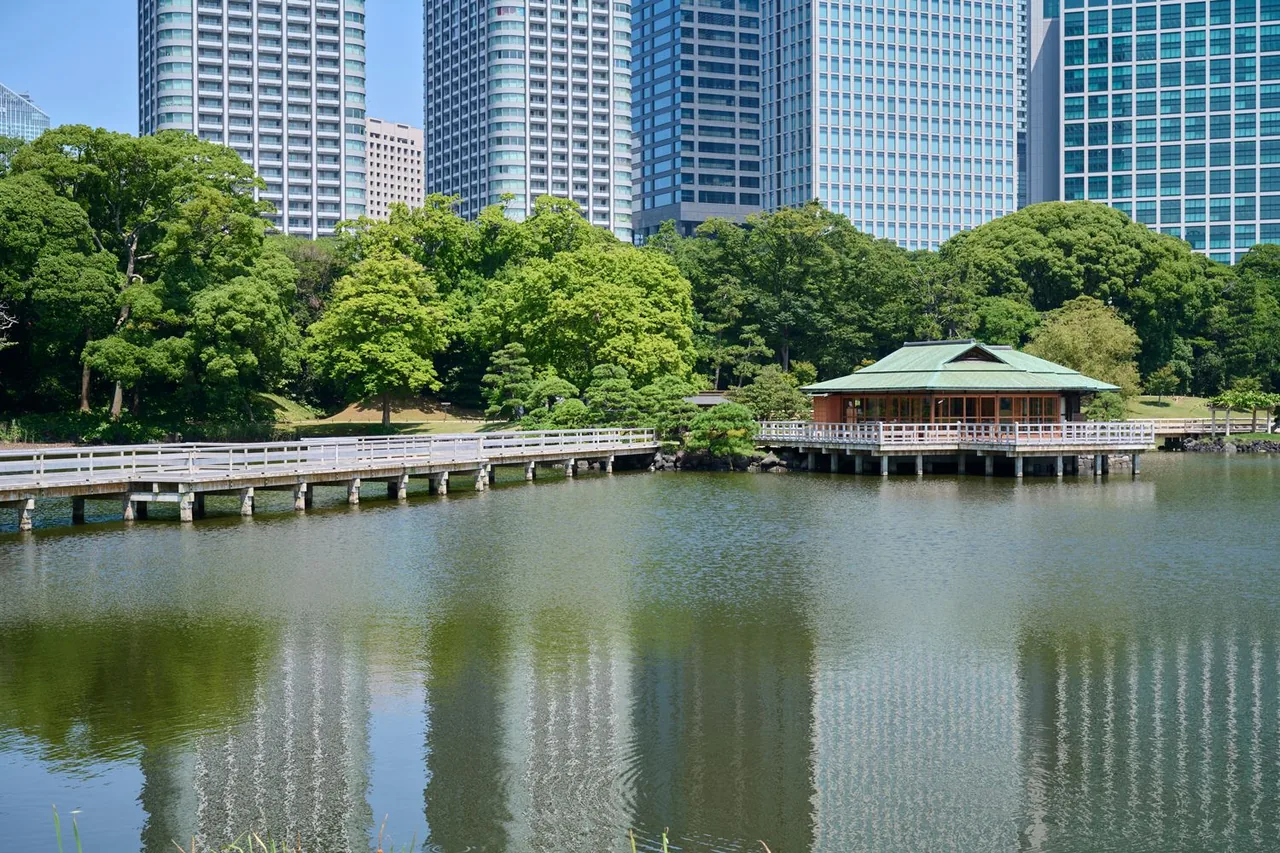
Hama-rikyu Gardens sits on Tokyo Bay, just south of the Shiodome high-rises. It began as a villa of Matsudaira Tsunashige, lord of the Kofu domain, and later became Hama Goten, a villa of the shogun's family. The Shioiri Pond is fed with seawater, with sluice gates adjusting the level as the tide rises and falls. At Nakajima-no-Ochaya, the teahouse on an island in the pond, you can have a set of matcha and a Japanese sweet, and the walk over the bridge to reach it is part of the experience. The flower fields bloom with rapeseed blossoms in early spring and with yellow cosmos and cosmos from summer to autumn, and there is also a plum grove and the "300-year-old pine." A water bus pier inside the garden serves boats down the Sumida River, but it is for disembarking only; check the operator's information for current service.
East of the Sumida River: Kiyosumi Teien and Mukojima-Hyakkaen
If you're combining gardens with Asakusa or Tokyo Skytree, the two gardens on the east side of the Sumida River are convenient.
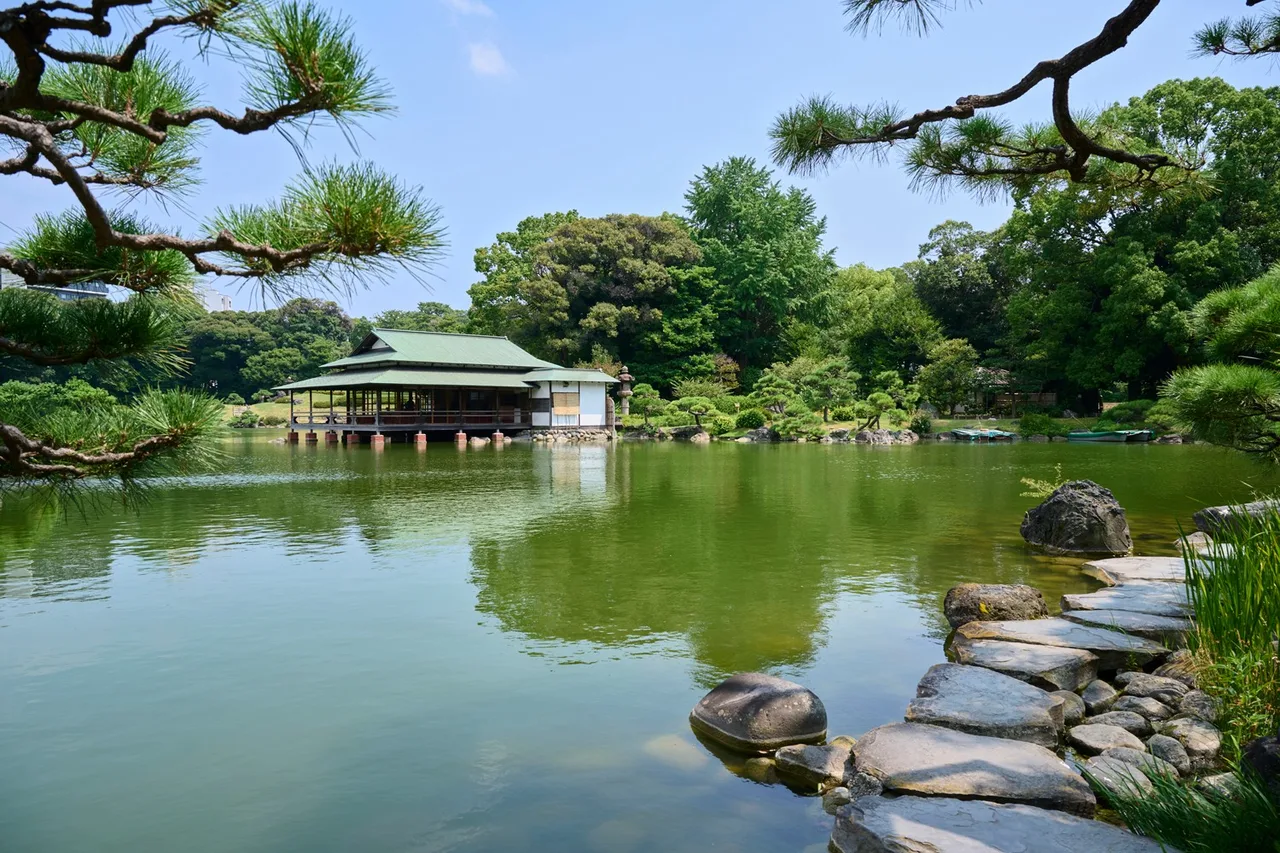
Photo: © TCVB
Kiyosumi Teien (Kiyosumi, Koto Ward) is a stroll garden laid out by Iwasaki Yataro in the Meiji era and designated a Place of Scenic Beauty by the Tokyo Metropolitan Government. Prized stones that the Iwasaki family gathered from across Japan line the pond, and when you cross the iso-watari, stepping stones set along the pond's edge, the view across the water changes with each step. The Ryotei, a sukiya-style pavilion jutting out over the pond, was built to welcome Britain's Field Marshal Kitchener on his visit to Japan in 1909. It is about a three-minute walk from Exit A3 of Kiyosumi-shirakawa Station.
Mukojima-Hyakkaen (Higashimukojima, Sumida Ward) was opened in the Bunka–Bunsei era (1804–1830) by Sahara Kikuu, a former antiques dealer, as a privately run flower garden, which sets it apart from the daimyo gardens. It was known for its plum trees when it opened, and a plum festival is still held. In autumn the garden is famous for its "bush clover tunnel," about 30 m long; the 2026 Bush Clover Festival ran from September 19 to October 12. It is about an eight-minute walk from Higashi-mukojima Station on the Tobu Skytree Line. For more on the Skytree area, see our Oshiage and Tokyo Skytree guide.
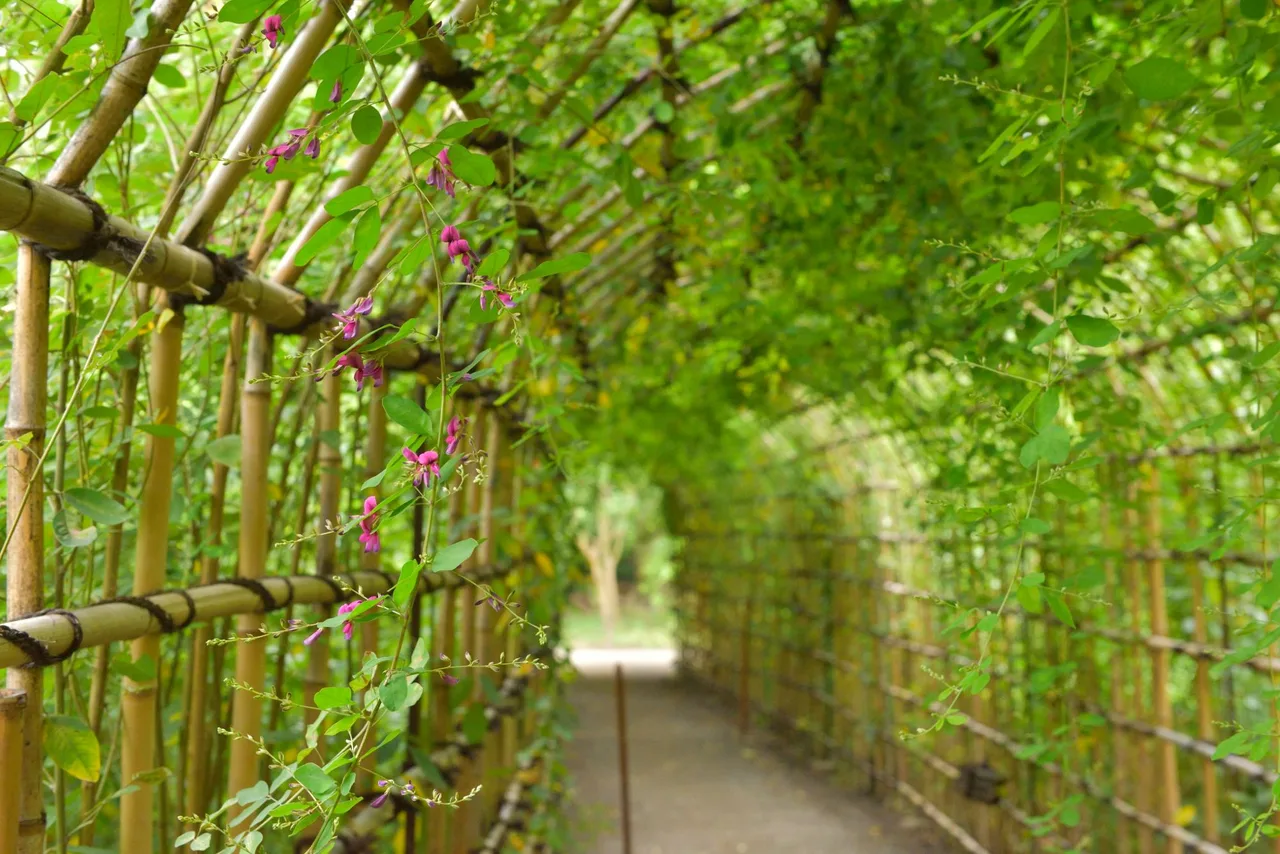
Photo: © TCVB
Shinjuku: the Japanese garden at Shinjuku Gyoen
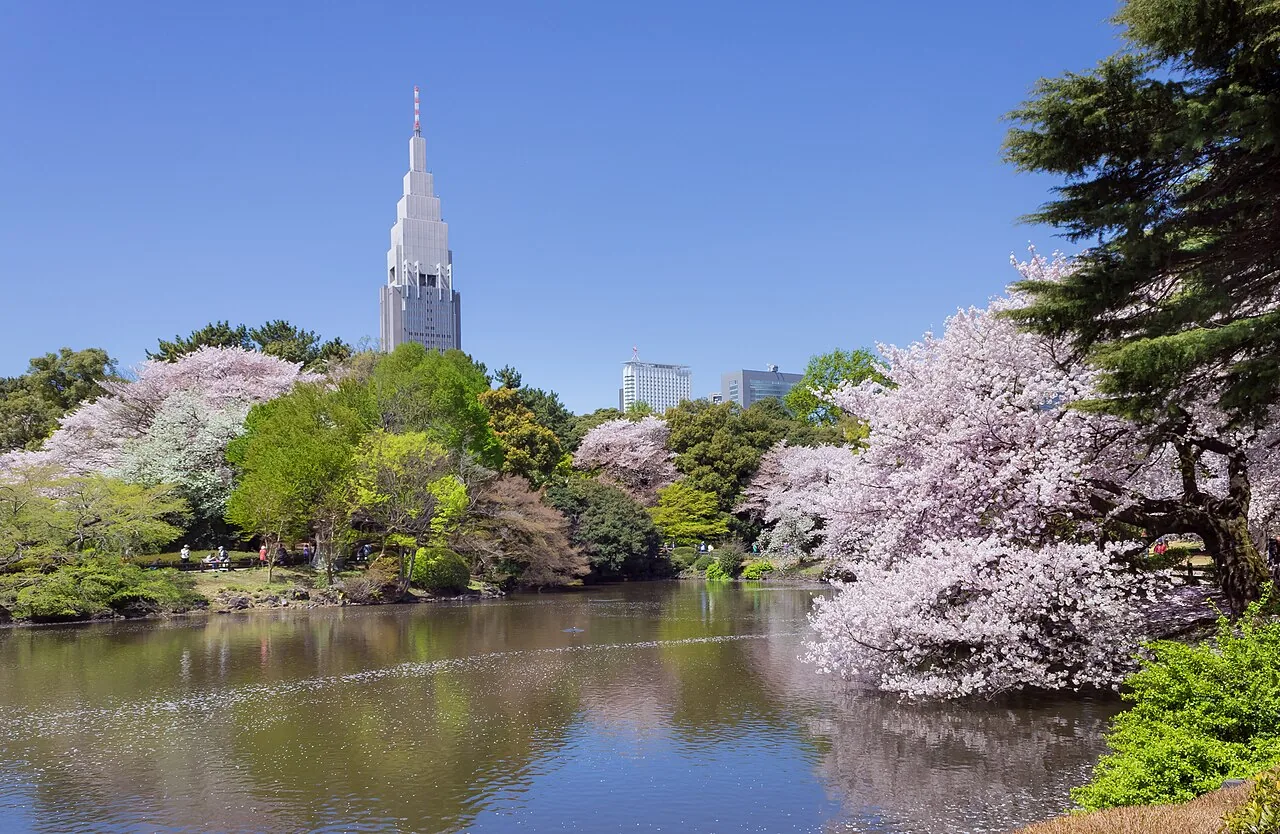
Shinjuku Gyoen National Garden has a Japanese garden for strolling along its ponds, alongside a French-style formal garden and an English-style landscape garden. Originally built as a duck-hunting ground, it took its present form in 1903. By the pond stands the Kyu-Goryotei, a Chinese-style building from 1927. There are two teahouses serving matcha: Rakuutei, in a plum grove, and Shotentei, which looks out over the Japanese garden. In autumn the maples turn color, and every year from November 1 to 15 the Chrysanthemum Exhibition is held in the Japanese garden. The Shinjuku Gate is about a 10-minute walk from the South Exit of Shinjuku Station.
Seasonal highlights
- Plum blossoms (around February): the plum groves at Koishikawa Korakuen and Hama-rikyu, and Mukojima-Hyakkaen
- Cherry blossoms (around late March to early April): Rikugien's weeping cherry, Hama-rikyu, Shinjuku Gyoen
- Azaleas and irises (April to June): azaleas at Rikugien; azaleas and irises in the Ninomaru area of the East Gardens; irises at Kiyosumi Teien
- Bush clover and autumn flowers (September): Mukojima-Hyakkaen
- Autumn leaves (around late November to early December): Rikugien, Koishikawa Korakuen, the Japanese garden at Shinjuku Gyoen
Bloom times shift from year to year. Each garden's official website posts flower and foliage updates, so a quick check before you go saves a wasted trip.
Night illuminations
Rikugien has held special evening openings with illuminations: "Spring Night at Rikugien" during the weeping cherry season and "Rikugien Autumn Foliage" in the autumn leaf season. The 2026 autumn evening viewing is scheduled from November 25 to December 6. The evening needs its own ticket, separate from daytime admission, and the garden closes once before the evening session begins. Check the Tokyo Metropolitan Park Association's announcement for tickets and times.
Before you go in
- Tickets: The metropolitan gardens charge admission, and date-specific tickets are also sold online. Check each garden's official page for how to buy.
- Annual pass: The "Tokyo Metropolitan 9 Gardens Annual Pass" covers a year of entry to Hama-rikyu, Kyu-Shiba-rikyu, Koishikawa Korakuen, Rikugien, Kyu-Iwasaki-tei, Mukojima-Hyakkaen, Kyu-Furukawa, Tonogayato and Kiyosumi Teien. It suits visitors staying in Tokyo for a long time.
- Pets: Pets are not allowed in the metropolitan gardens, except assistance dogs such as guide dogs.
- Photography: During busy periods such as the cherry blossom and autumn leaf seasons, tripods, monopods and selfie sticks may be banned.
- Alcohol and play: Hama-rikyu and some other gardens prohibit bringing in alcohol, feeding animals, ball games and drones.
These gardens are also national or metropolitan cultural properties. Rules vary a little from garden to garden, so read the notices at the entrance or the "Rules and Regulations" page on the official website before your visit.
Official information
- Tokyo Metropolitan Park Association (bloom updates and events for the metropolitan gardens)
- East Gardens of the Imperial Palace (Imperial Household Agency)
- Shinjuku Gyoen (Ministry of the Environment)
Find more places to visit in Tokyo in the Tokyo spot list.
Places in this guide
Hotels nearbyPR
See prices and availability for hotels in Tokyo and book on our partner Trip.com.
See hotels in Tokyo on Trip.com