Atomic Bomb Dome
About
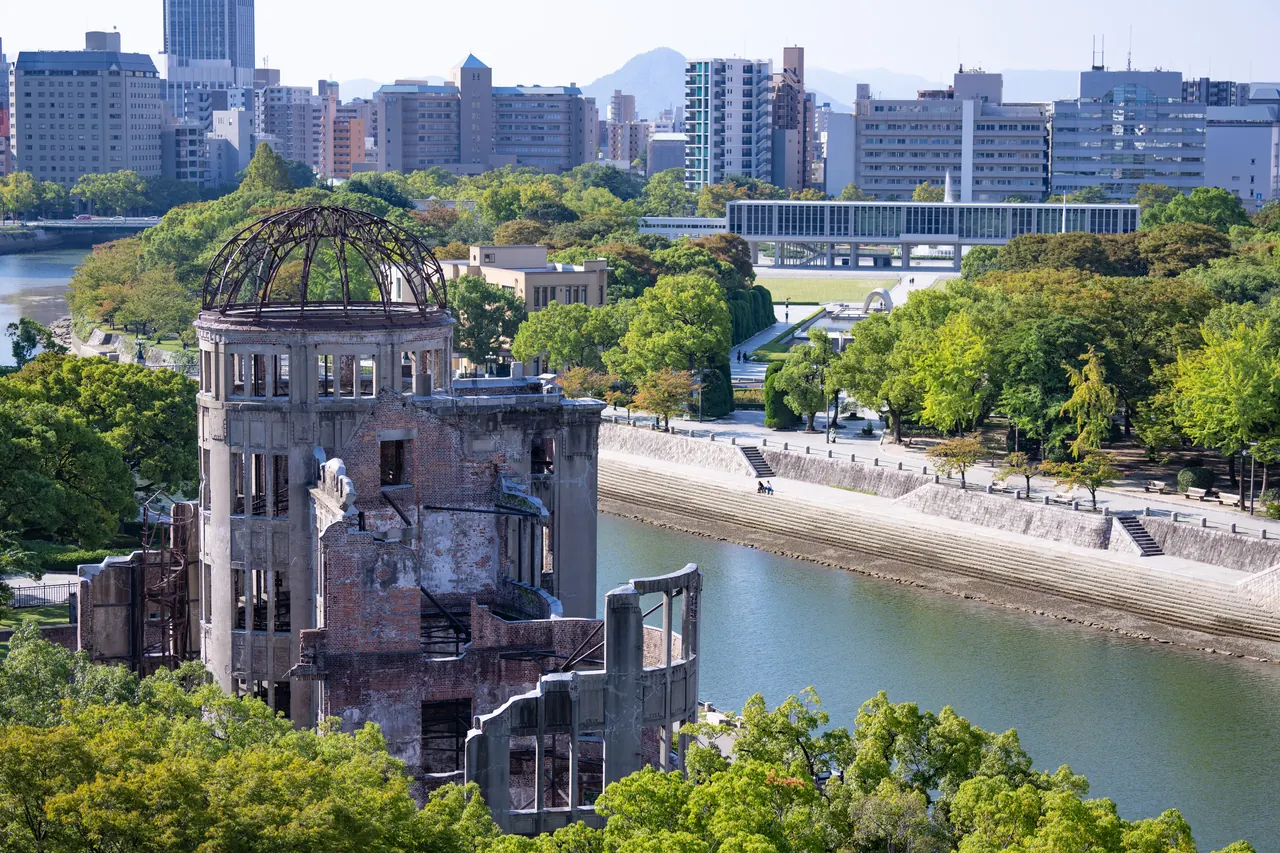
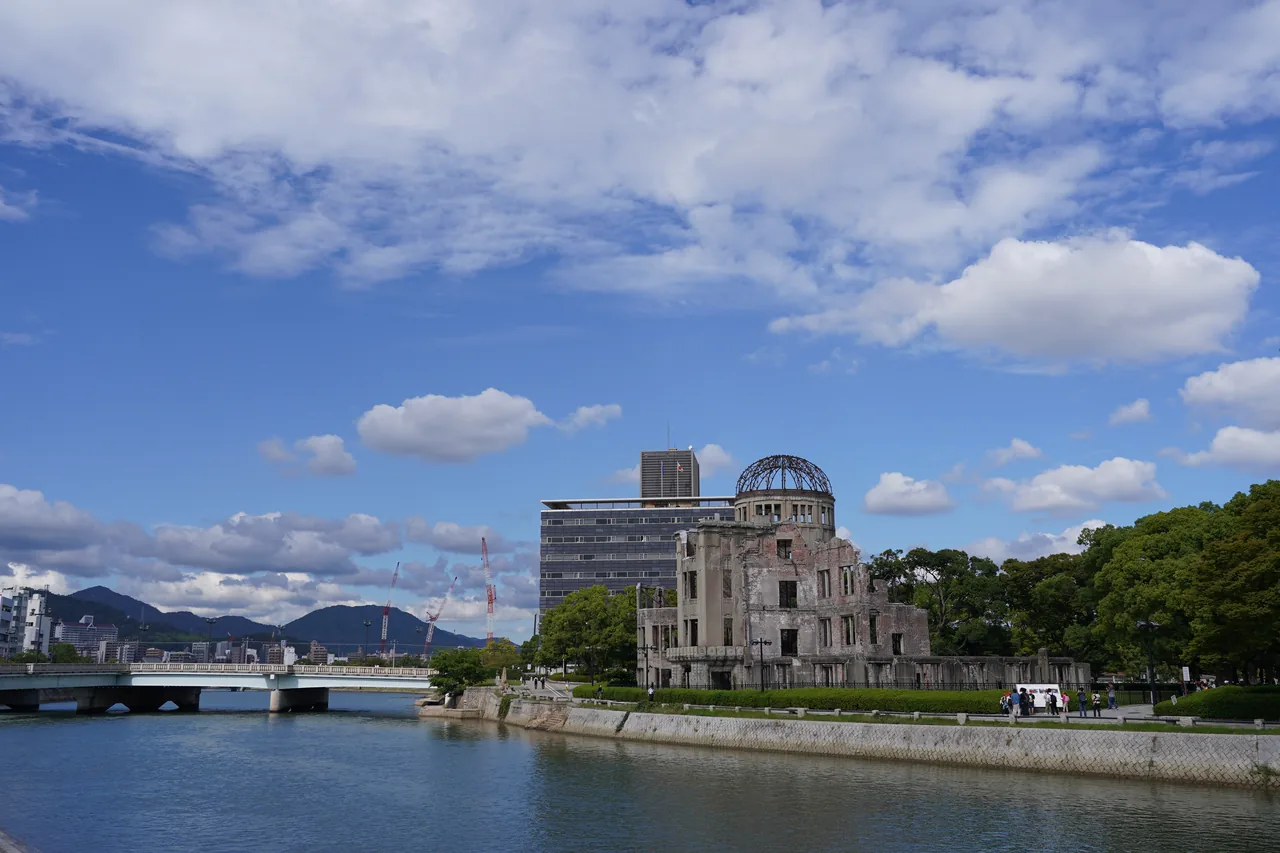
On the bank of the Motoyasu River stands a ruined building topped by the bare steel frame of its dome. It survived the atomic bombing of August 6, 1945, without collapsing, and in December 1996 it was inscribed on the World Heritage List as a building that conveys the devastation of nuclear weapons. Visitors cannot go inside; it is viewed from outside the surrounding fence. Together with Peace Memorial Park across the river, it is a place to visit quietly and without hurry.
This text was translated automatically and may contain errors.
A bombed building by the river
Designed by the Czech architect Jan Letzel, the building was completed in 1915 as the Hiroshima Prefectural Commercial Exhibition Hall. It later became the Hiroshima Prefectural Industrial Promotion Hall, and after the bombing people came to call it the "Atomic Bomb Dome" because of the steel skeleton of its dome. From the opposite bank and from the bridges, the broken walls and the dome's frame are clearly visible. The area is also a place of mourning, so be mindful of others when taking photos.
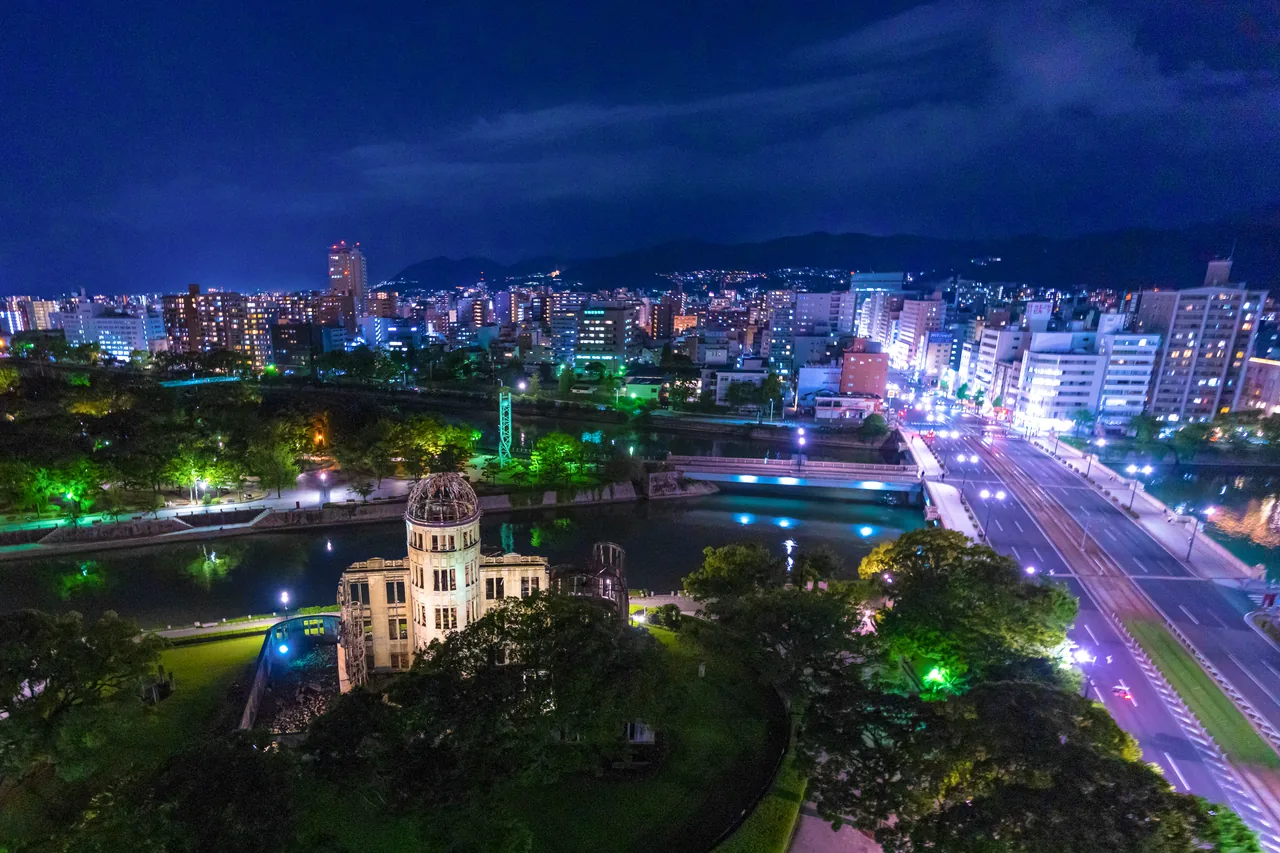
The dome at night
After dark the dome is lit up, standing out among the riverside trees and city lights. With fewer people around in the evening, you can take time to watch its reflection on the river. The City of Hiroshima's official website explains how the dome has been preserved and how it came to be listed as a World Heritage site.
- Access
- Take a Hiroden streetcar to the Genbaku Dome-mae stop; the dome is right there.