Fujisan Hongu Sengen Taisha Shrine
About
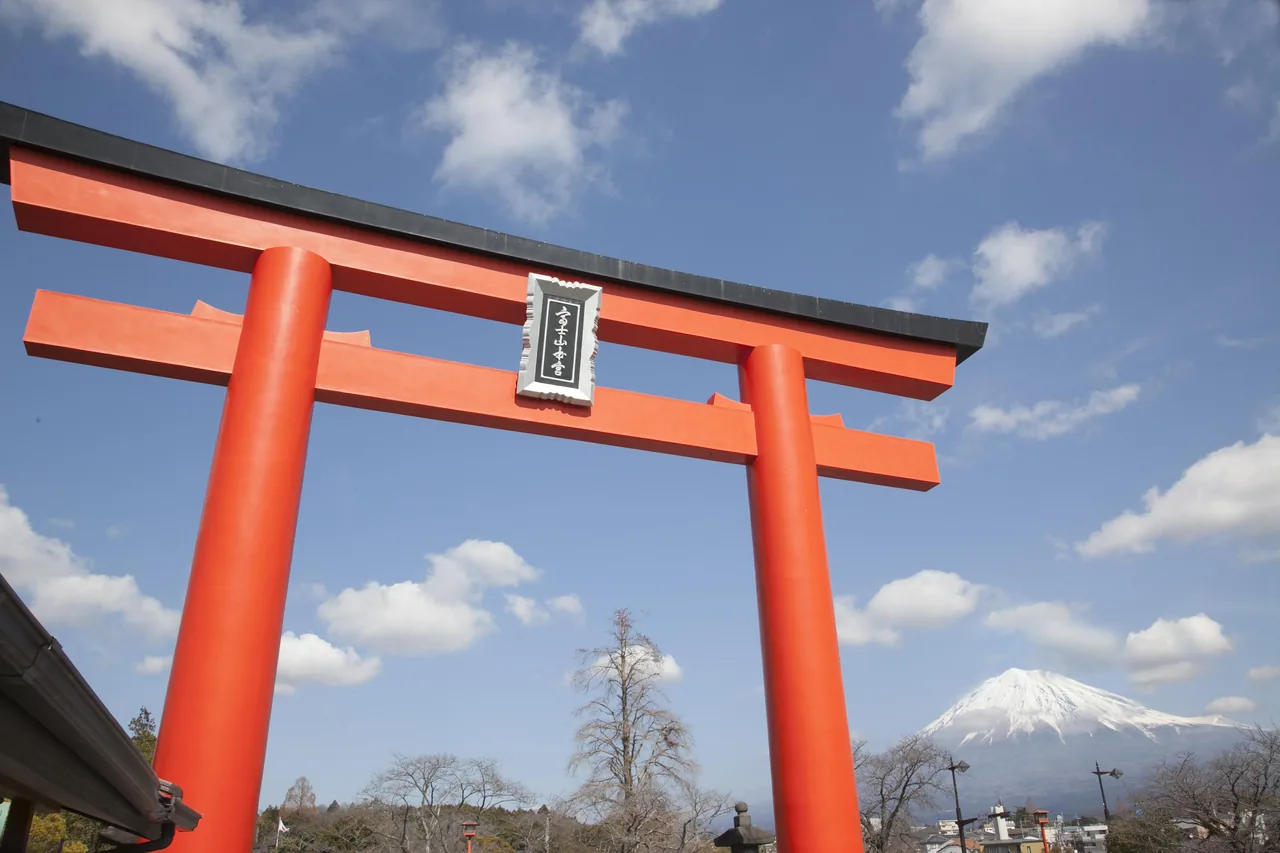
A shrine in central Fujinomiya that venerates Mt. Fuji itself. It is the head shrine of around 1,300 Sengen shrines across Japan and was the leading shrine of the old Suruga Province. The main deity is Konohanasakuya-hime. According to shrine tradition it began as a place to calm the volcano's eruptions and moved to its present site in 806. Together with Wakutama Pond in its grounds, it is a component of the Mt. Fuji World Heritage Site.
This text was translated automatically and may contain errors.
Vermilion halls built by Tokugawa Ieyasu
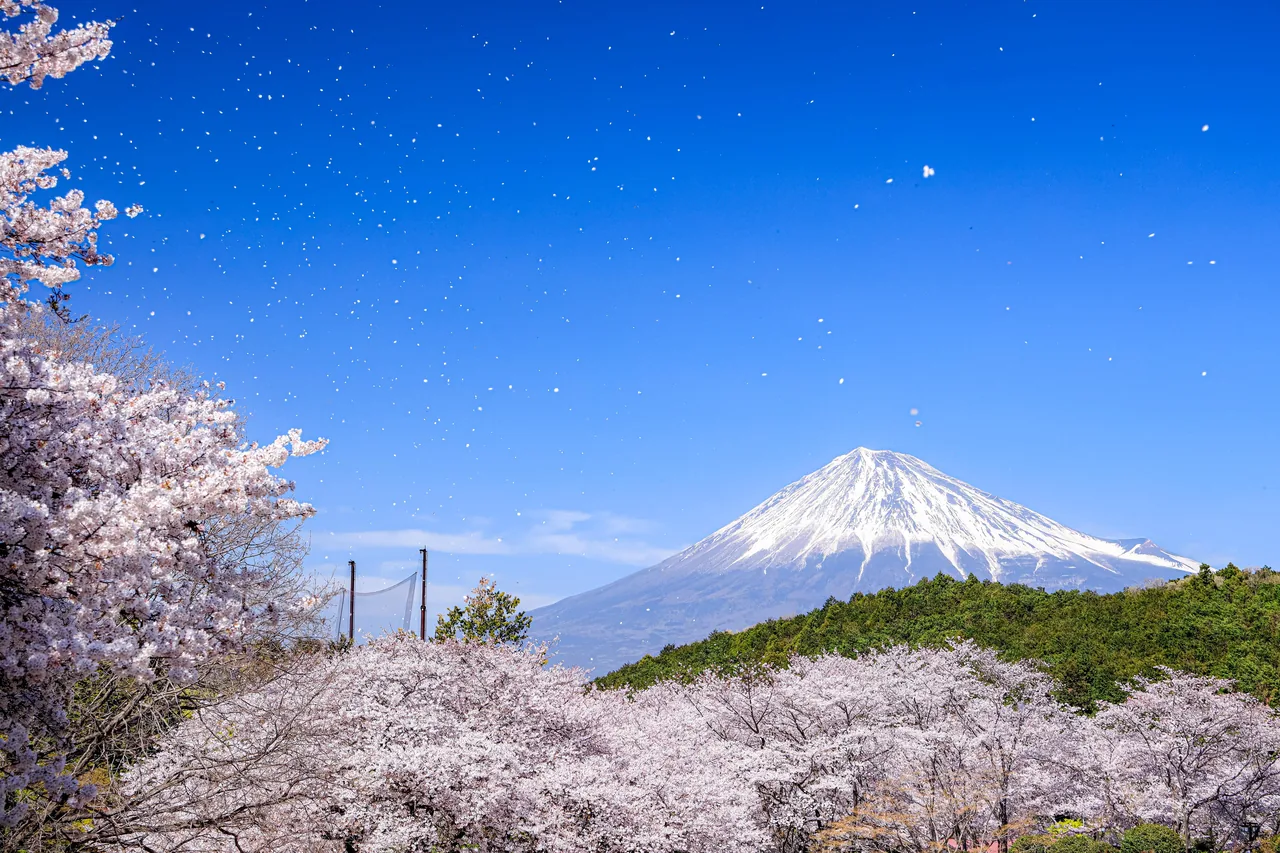
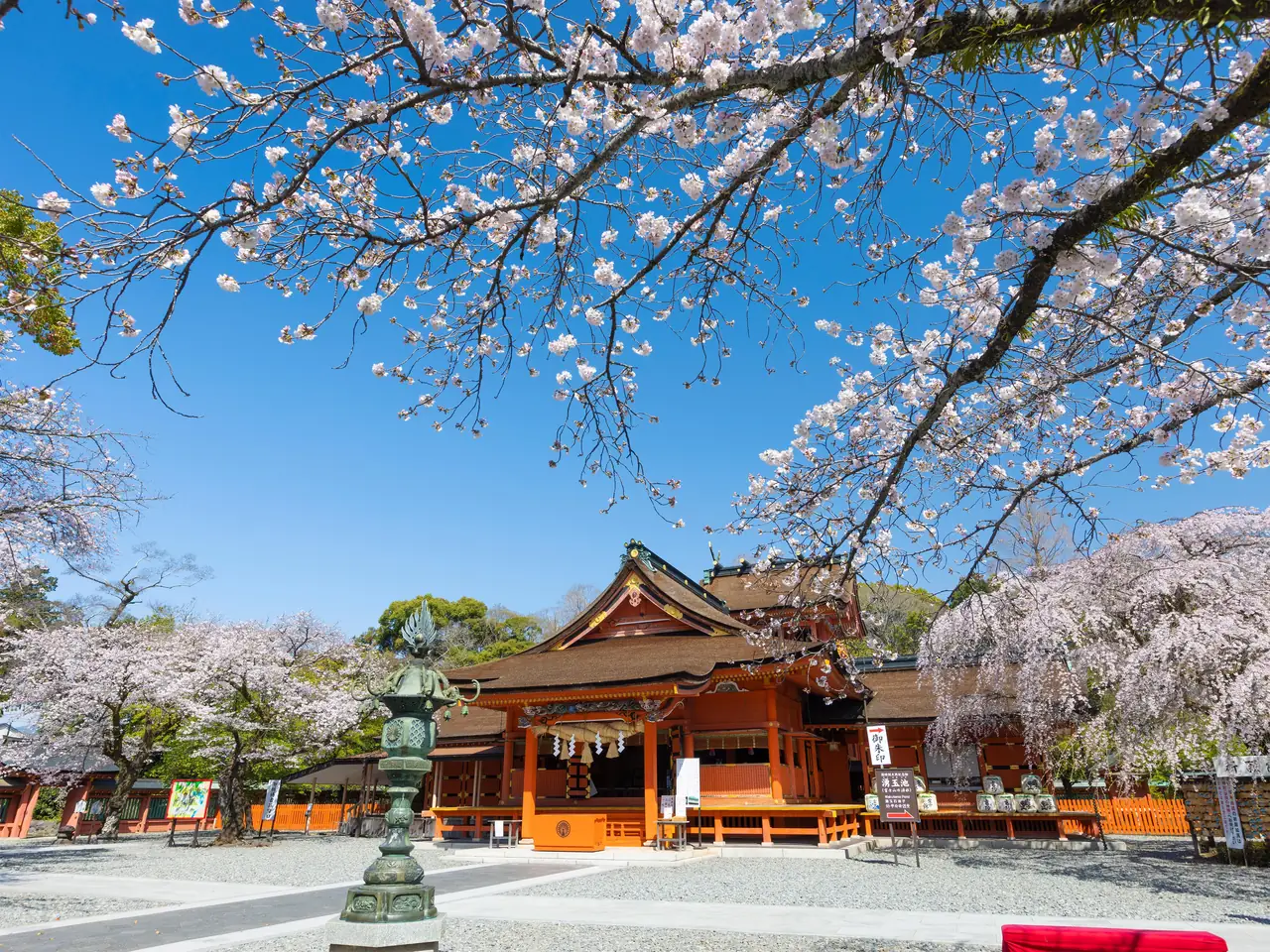
The present buildings were commissioned by Tokugawa Ieyasu as thanks for his victory at Sekigahara; work began in 1604 and finished in 1606. The two-storey main hall, with a hipped roof below and a flowing gabled roof above, is a rare style called Sengen-zukuri and is an Important Cultural Property. The worship hall and gate are designated by Shizuoka Prefecture. In cherry-blossom season the vermilion halls are framed by flowers.
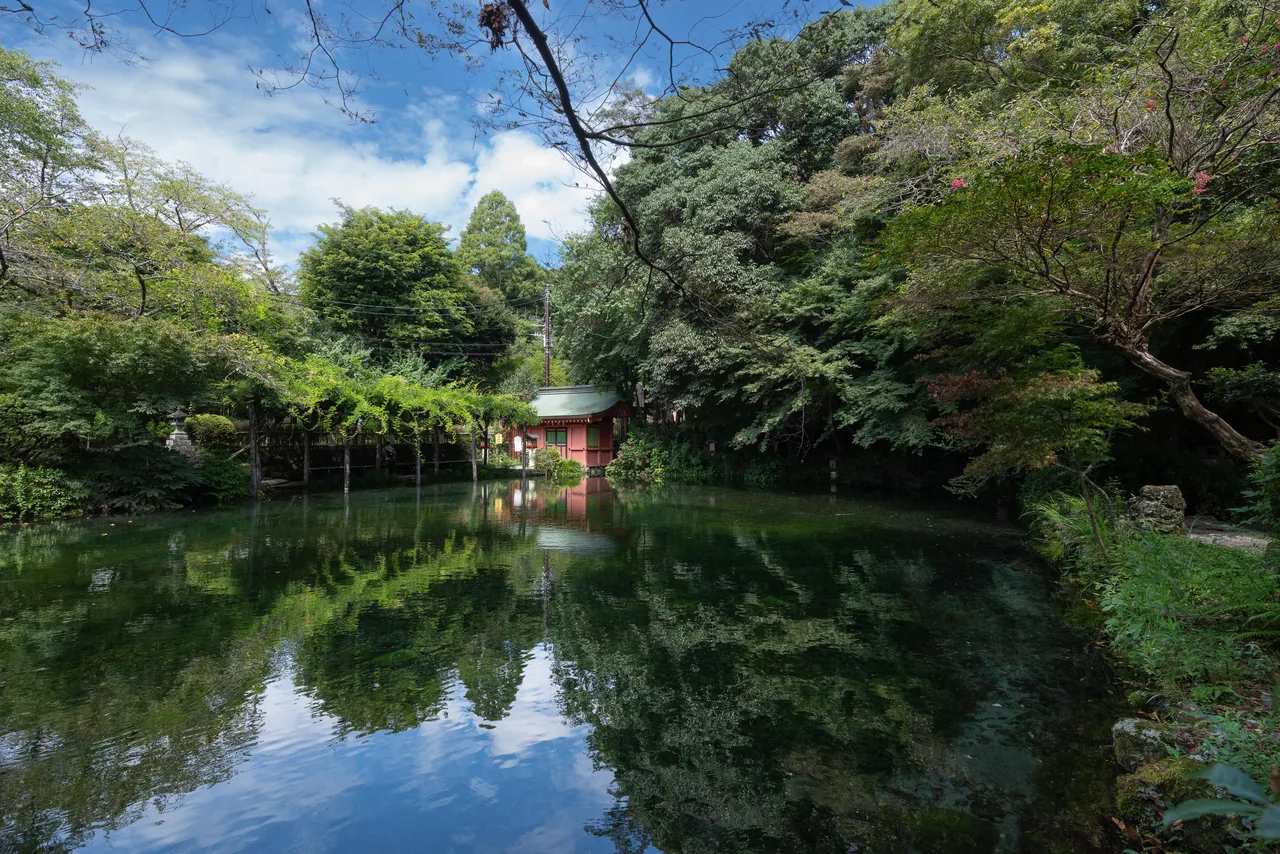
Wakutama Pond, fed by Mt. Fuji's water
Wakutama Pond is a spring where rain and snow that fell on Mt. Fuji rise up through the lava, and it is a Special Natural Monument. The water stays around 13°C all year and flows south as the Kanda River. You may not enter the pond without permission, but you can walk along its edge and look into the clear water.
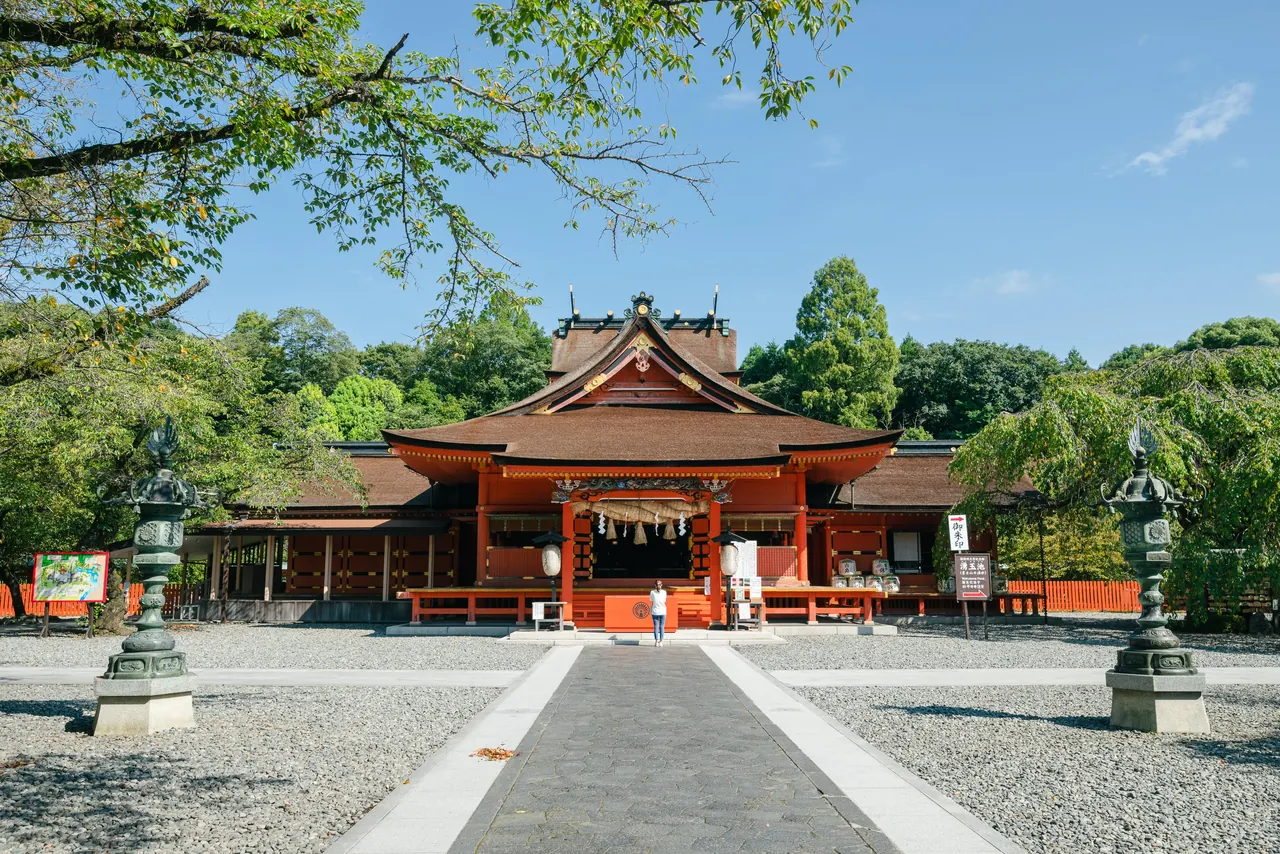
The grounds in early summer
Beyond the gate, a wide gravel courtyard leads to the worship hall. In early summer the trees around it are thick with green leaves, which makes the vermilion buildings stand out even more. The shrine is within walking distance of the station, so many visitors combine it with a stroll along the Kanda River and the nearby Mt. Fuji World Heritage Centre, Shizuoka.
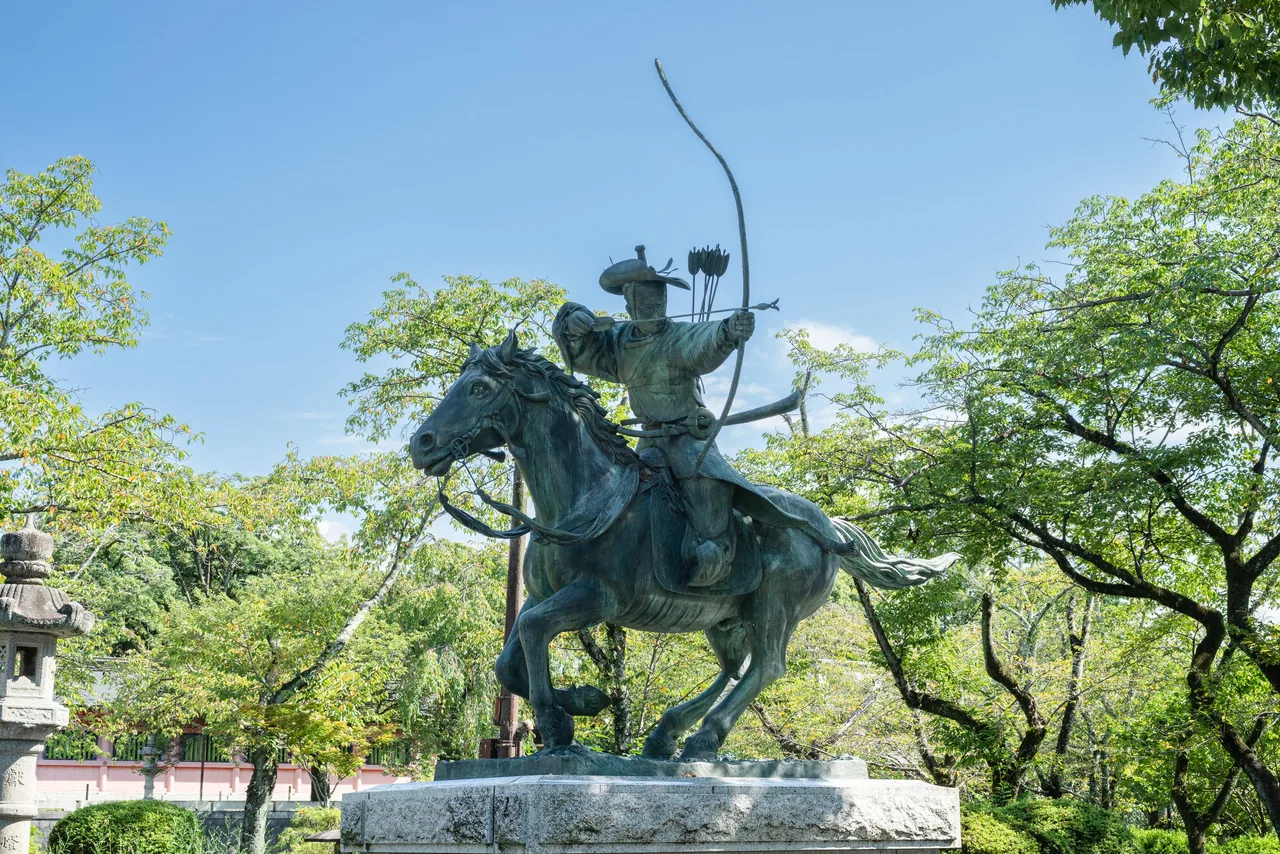
Horseback archery in May
The Yabusame Festival is held every year from 4 to 6 May. On the main day, the 5th, a procession winds through town, then archers in the hunting dress of Kamakura-era samurai shoot from galloping horses on the shrine's riding ground in the Ogasawara style. The photo shows a statue of a mounted archer. Roads get crowded and some car parks close during the festival, so come by train or bus.
- Access
- About 10 minutes on foot from Fujinomiya Station on the JR Minobu Line. From Shin-Fuji Station on the shinkansen, it is about 30 minutes by taxi, or take a bus to Fuji Station and change to the Minobu Line.