Fukushimagata Lagoon
About
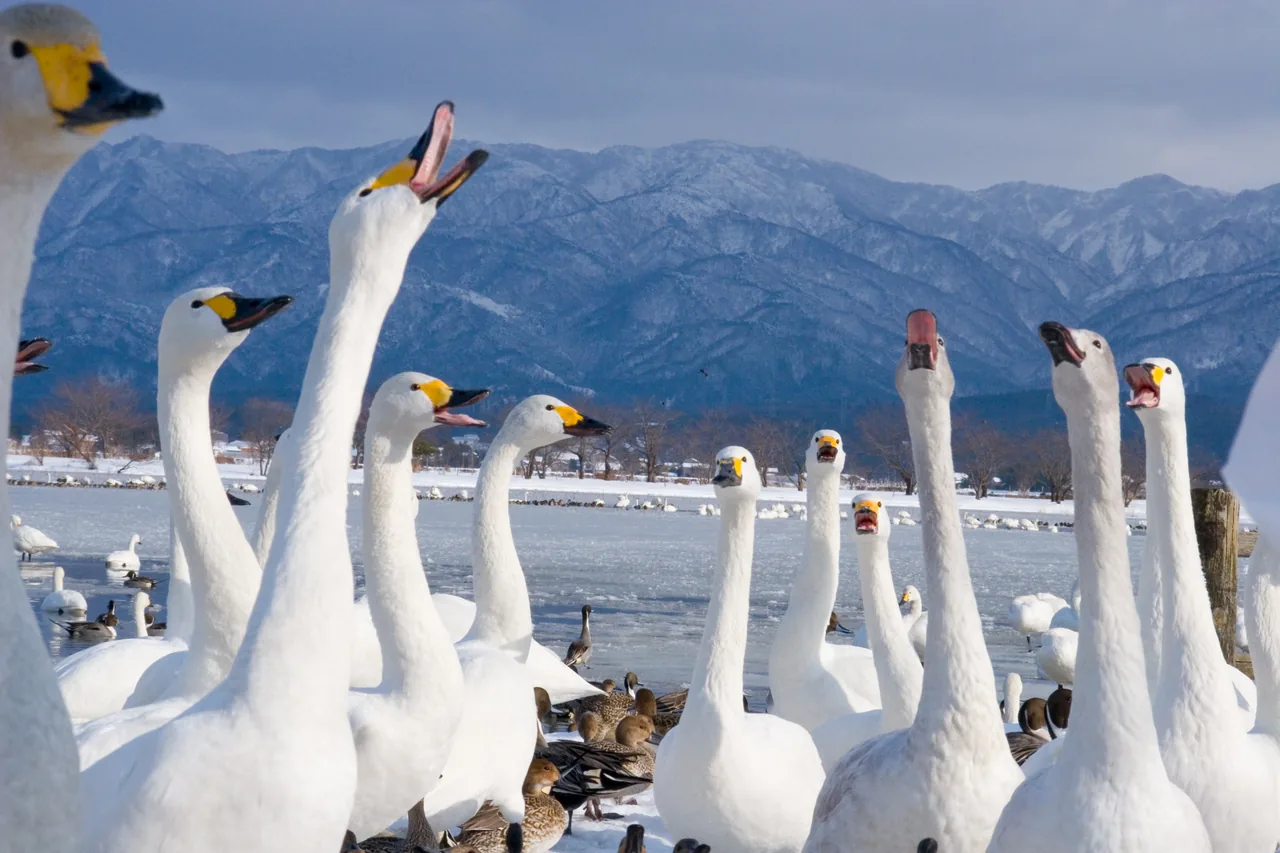
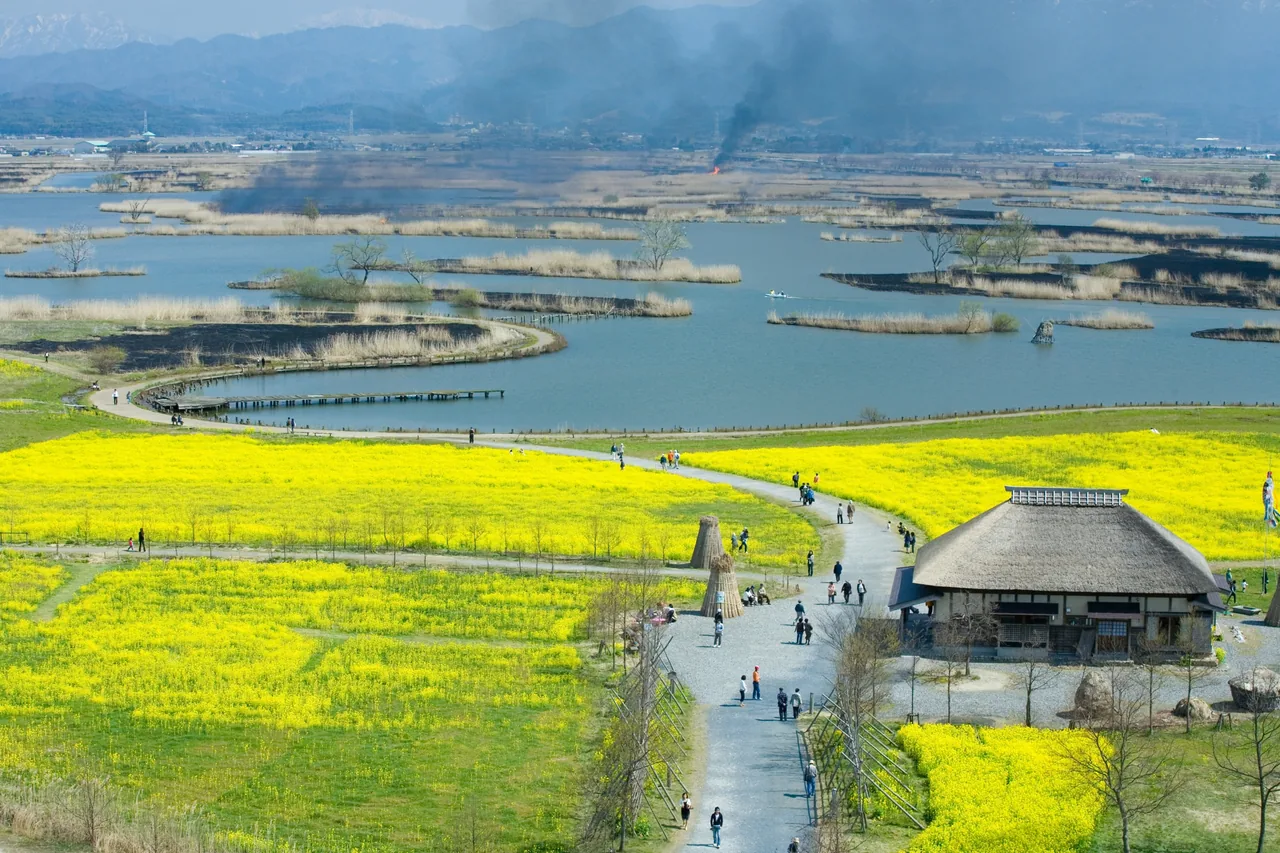
Fukushimagata is a shallow lagoon in Kita Ward, Niigata City, where the scenery around its reed beds and open water changes with the seasons. In spring, rape blossoms bloom all around the lagoon; from summer into early autumn the prickly water lily, which reaches its northernmost wild habitat here, comes into flower. From autumn through winter it becomes Japan's largest wintering ground for the taiga bean goose, a national Natural Monument, and tundra swans and other migrants gather too. The View Fukushimagata visitor center has a rooftop view and exhibits on the lagoon.
This text was translated automatically and may contain errors.
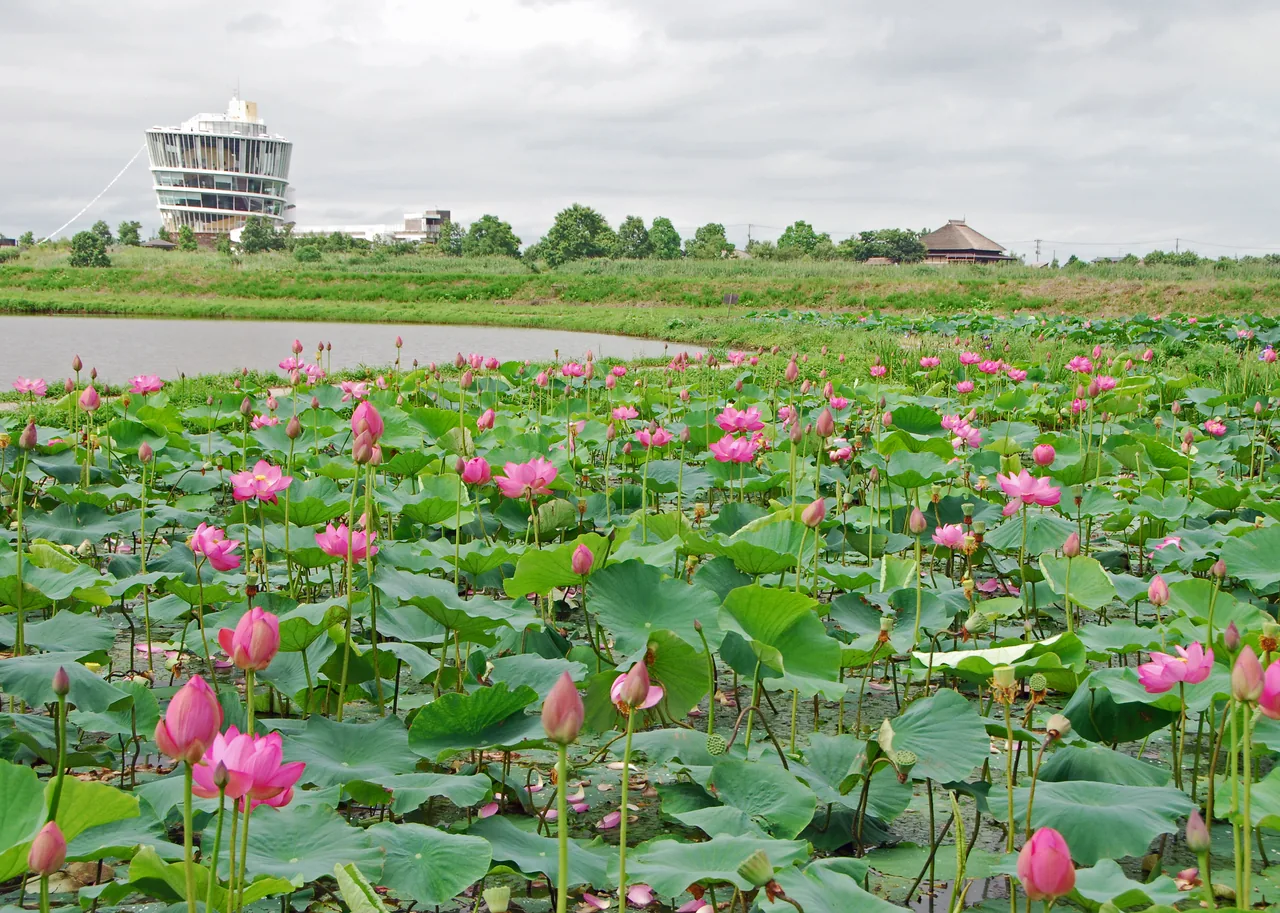
Summer flowers on the water
In summer, lotus leaves and flowers spread across the water. Around August and September the prickly water lily, with enormous thorny leaves, also opens its purple flowers. The plant is listed in the Ministry of the Environment's Red Data Book, and Fukushimagata is its northernmost wild habitat in Japan.
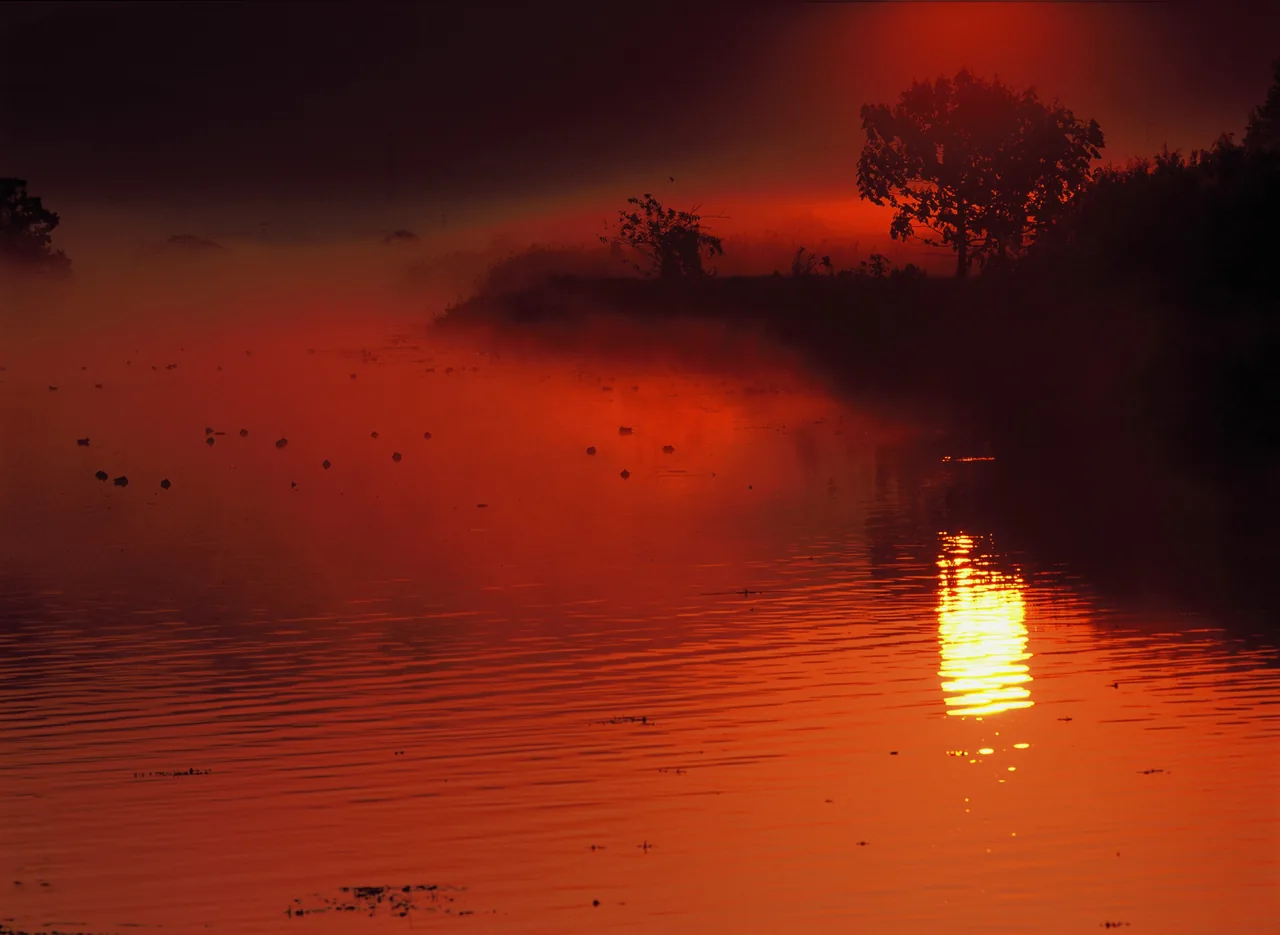
The lagoon at sunrise
On still autumn mornings the rising sun is reflected on the water and the reed beds stand out in silhouette. This is when migrating birds arrive one after another from the north, and at dawn you may see flocks lifting off from their roost.
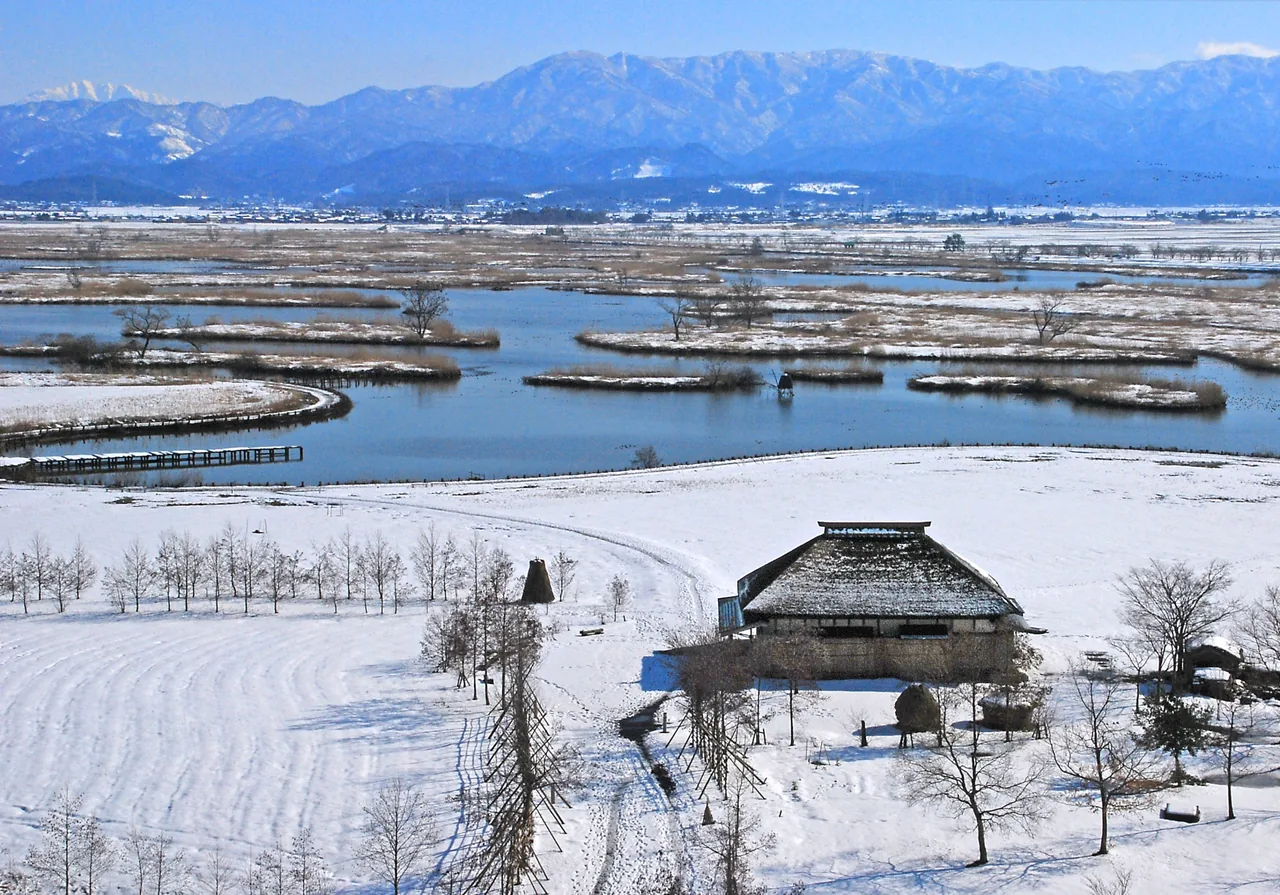
The lagoon under snow
In winter snow covers everything around the lagoon, leaving only water and reeds in a quiet scene. Taiga bean geese winter here from October to March, sometimes more than 5,000 at once. Inside View Fukushimagata you can also watch live video from out on the lagoon.
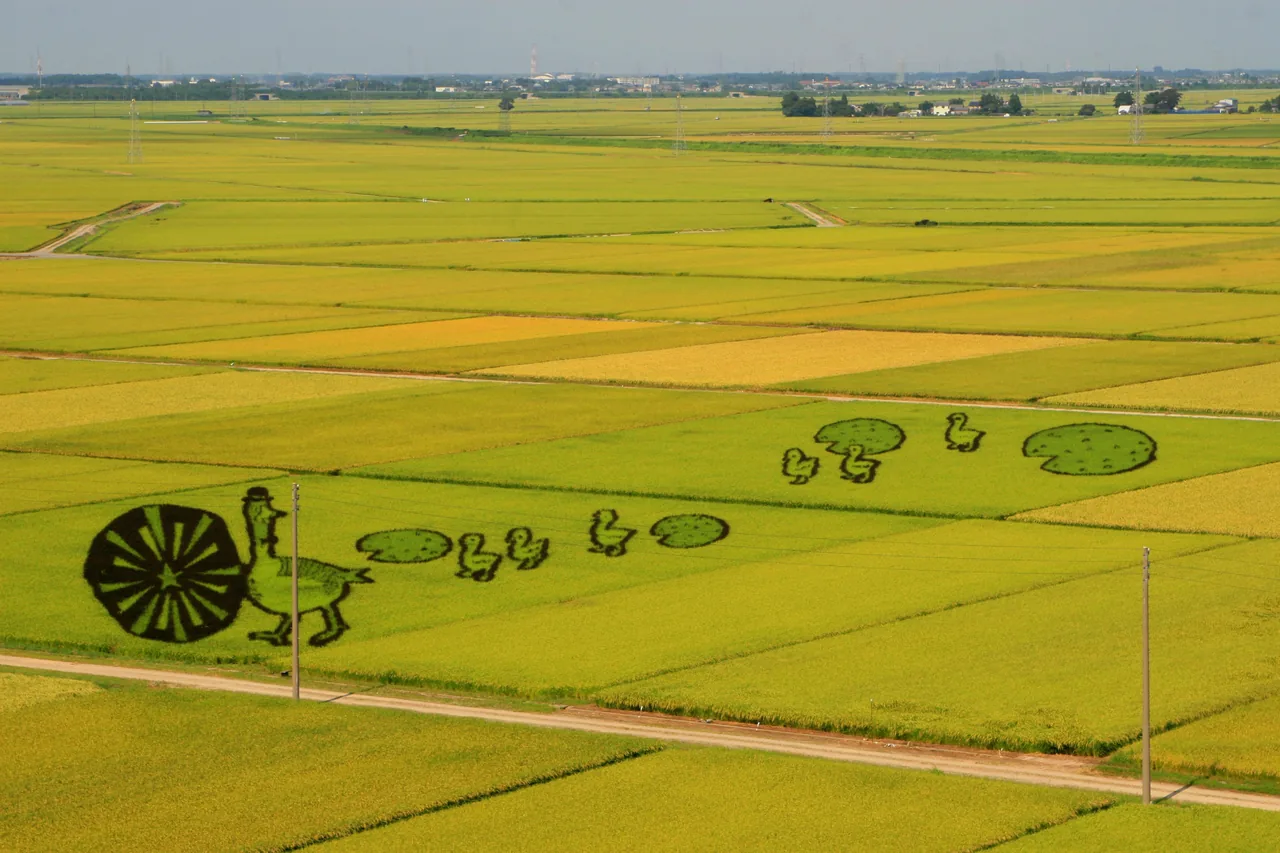
Rice fields at harvest time
The rice fields of the Echigo Plain surround the lagoon, turning gold in autumn. From the rooftop of View Fukushimagata you can see clearly how water and paddies meet in this lagoon landscape.
- Access
- About 5 minutes by taxi or a 40-minute walk from Toyosaka Station on the JR Hakushin Line. There is parking at View Fukushimagata.