Tenjinhama Beach (Lake Inawashiro)
About
Lake Inawashiro covers about 103 km², making it the fourth-largest lake in Japan, with Mt. Bandai rising to the north. Because the mountain is reflected in its surface, it is also called Tenkyo-ko, the "Lake of the Heavenly Mirror". Tenjinhama Beach on the north shore looks straight across the water at the mountain. In the depths of winter, west winds throw lake water onto the trees along the shore at Tenjinhama, where it freezes into shibuki-gori (spray ice); it is usually best from late January to early February. Swans winter on the lake and can be seen at Shidahama and Nagahama.
This text was translated automatically and may contain errors.
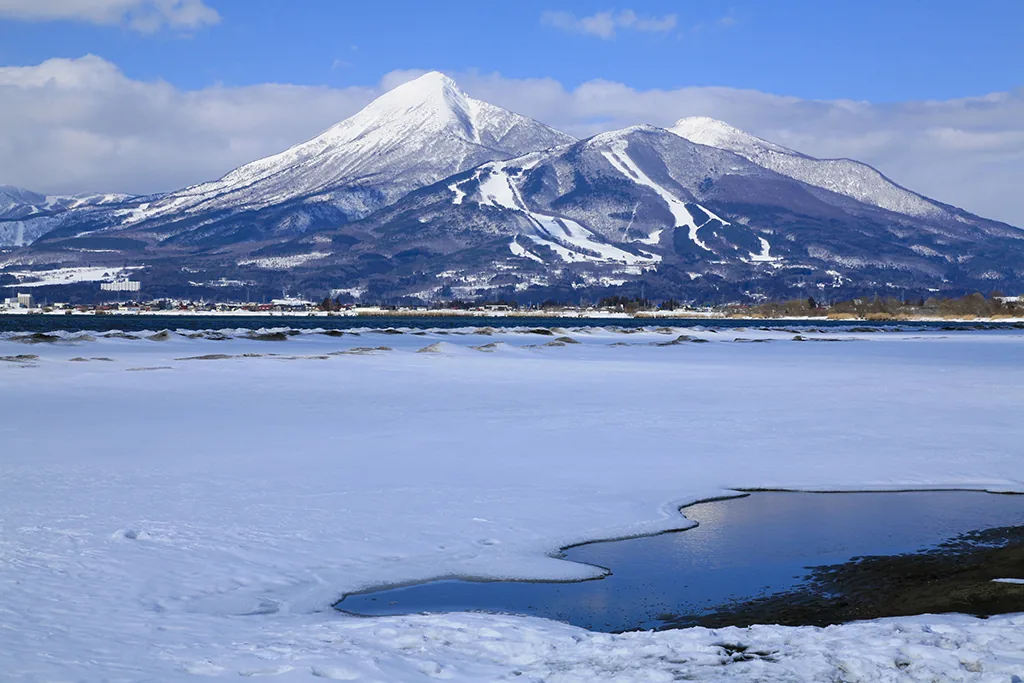
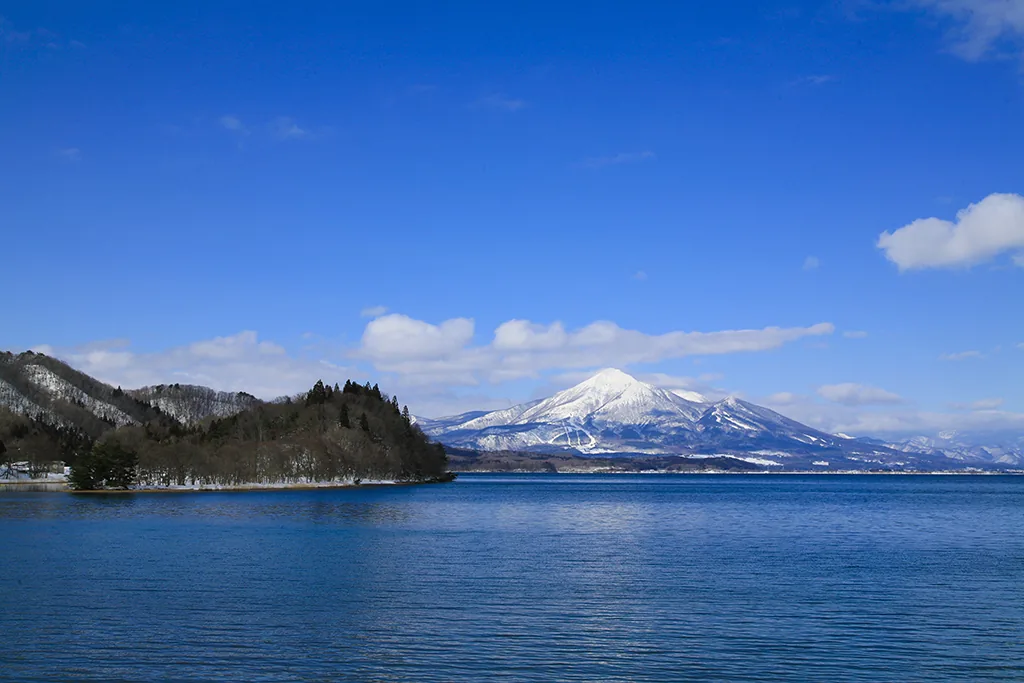
Snow-capped Mt. Bandai across blue water
On a clear winter day, Mt. Bandai stands sharp and white beyond the deep-blue lake. There are several beaches along the shore, and the view of the mountain shifts a little from one to the next. When the wind drops, the mountain is reflected in the water.
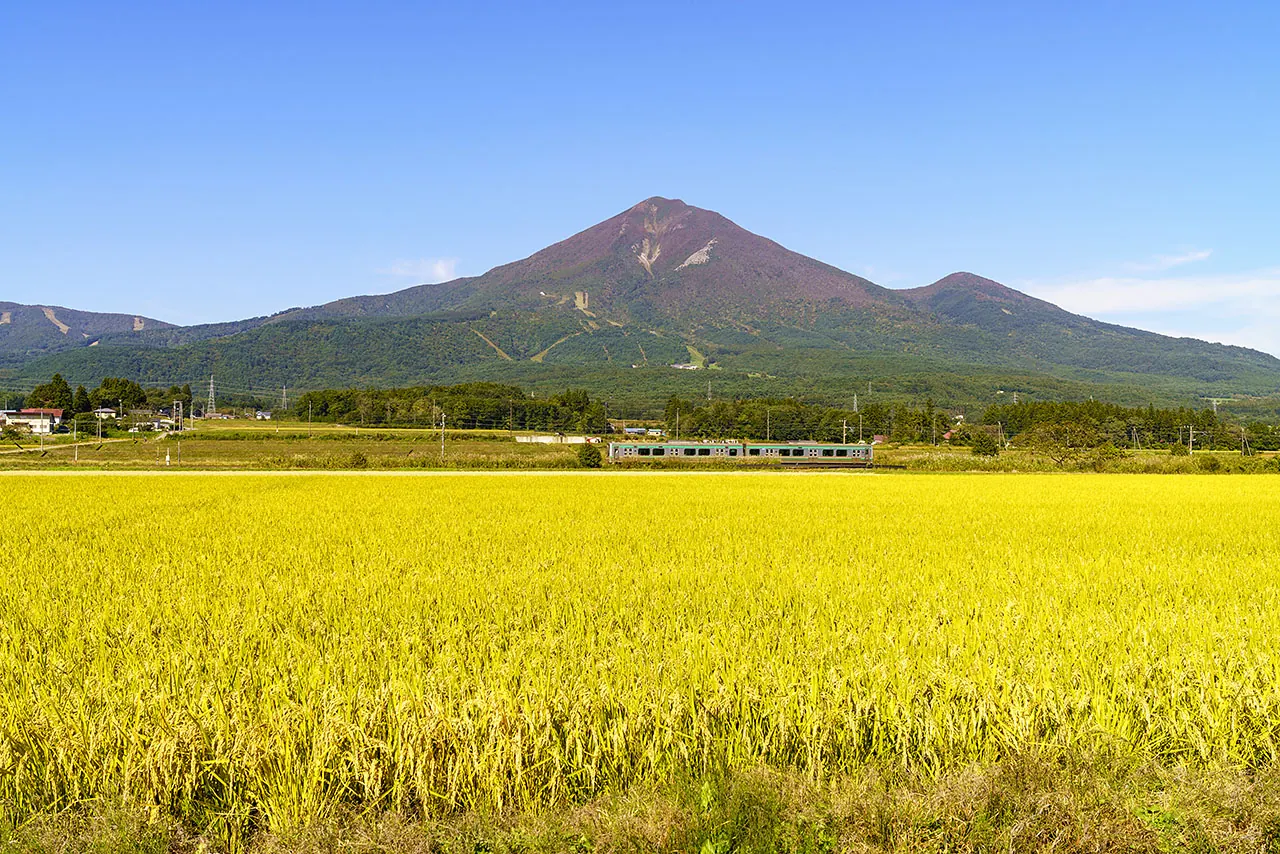
Golden rice fields below the mountain
Rice fields spread across the land north of the lake, and in autumn Mt. Bandai rises beyond the ripened crop. The volcano centres on its main peak, Obandai (1,816 m), and is also known as Aizu Fuji. In the 1888 eruption part of the mountain collapsed, sending a debris avalanche down its northern side and creating the lakes and ponds of Ura-Bandai, including Goshikinuma and Lake Hibara. Mt. Bandai is still an active volcano, so check volcanic activity information before climbing.
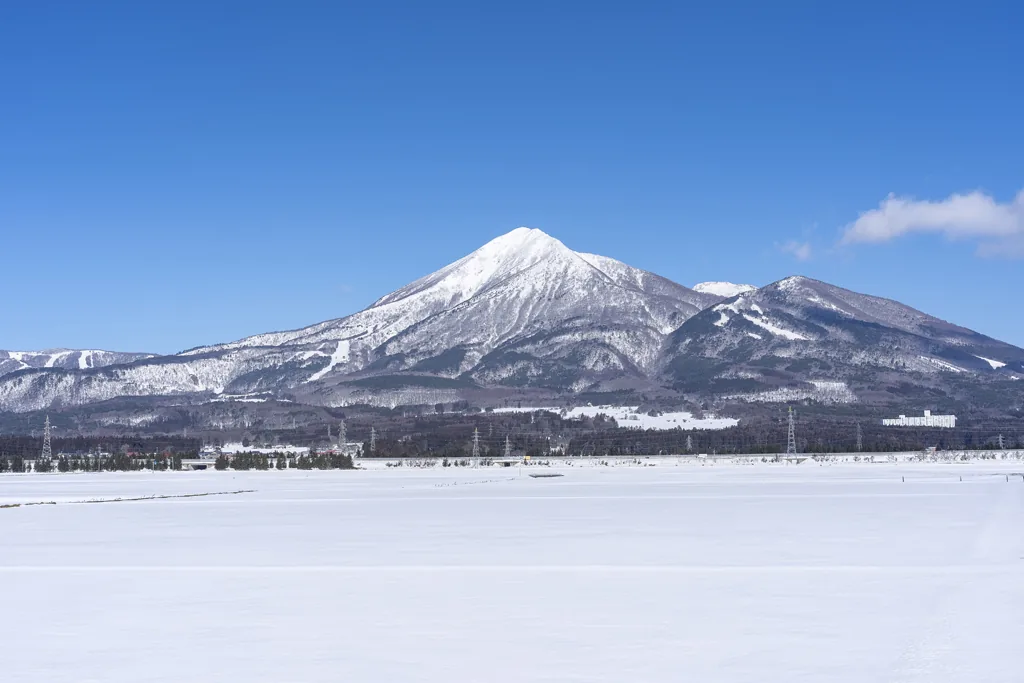
The mountain beyond the snowfields
Snow lies deep around Inawashiro in winter, and Mt. Bandai rises beyond wide white fields. With spray ice and swans, winter is a rewarding season around the lake. The shore is windy and cold, so bring warm clothing and shoes with good grip.
- Access
- Tenjinhama is about 10 minutes by car from Inawashiro Station on the JR Ban'etsu West Line, or about 6 minutes from the Inawashiro-Bandaikogen IC on the Ban'etsu Expressway.