Makinohara Park and the Makinohara Tea Plantation
About
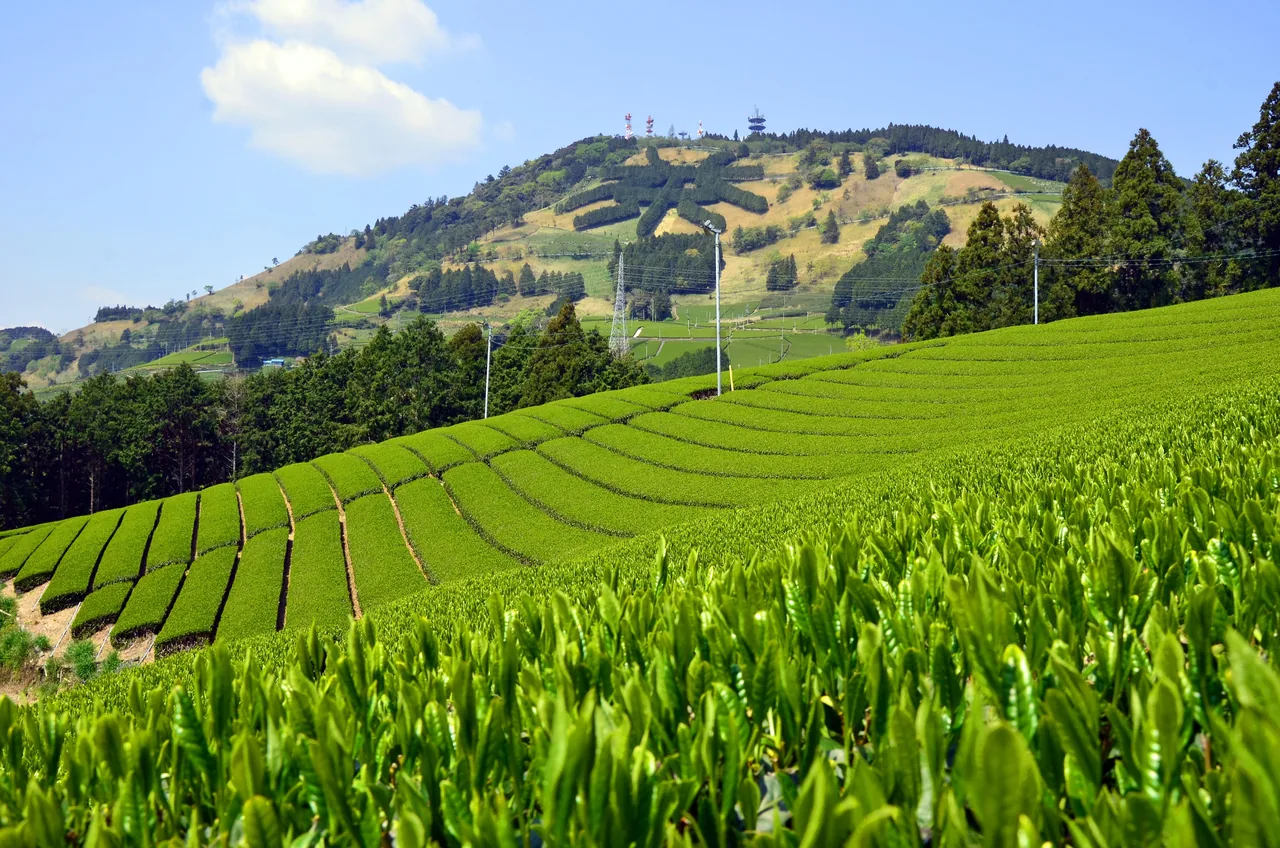
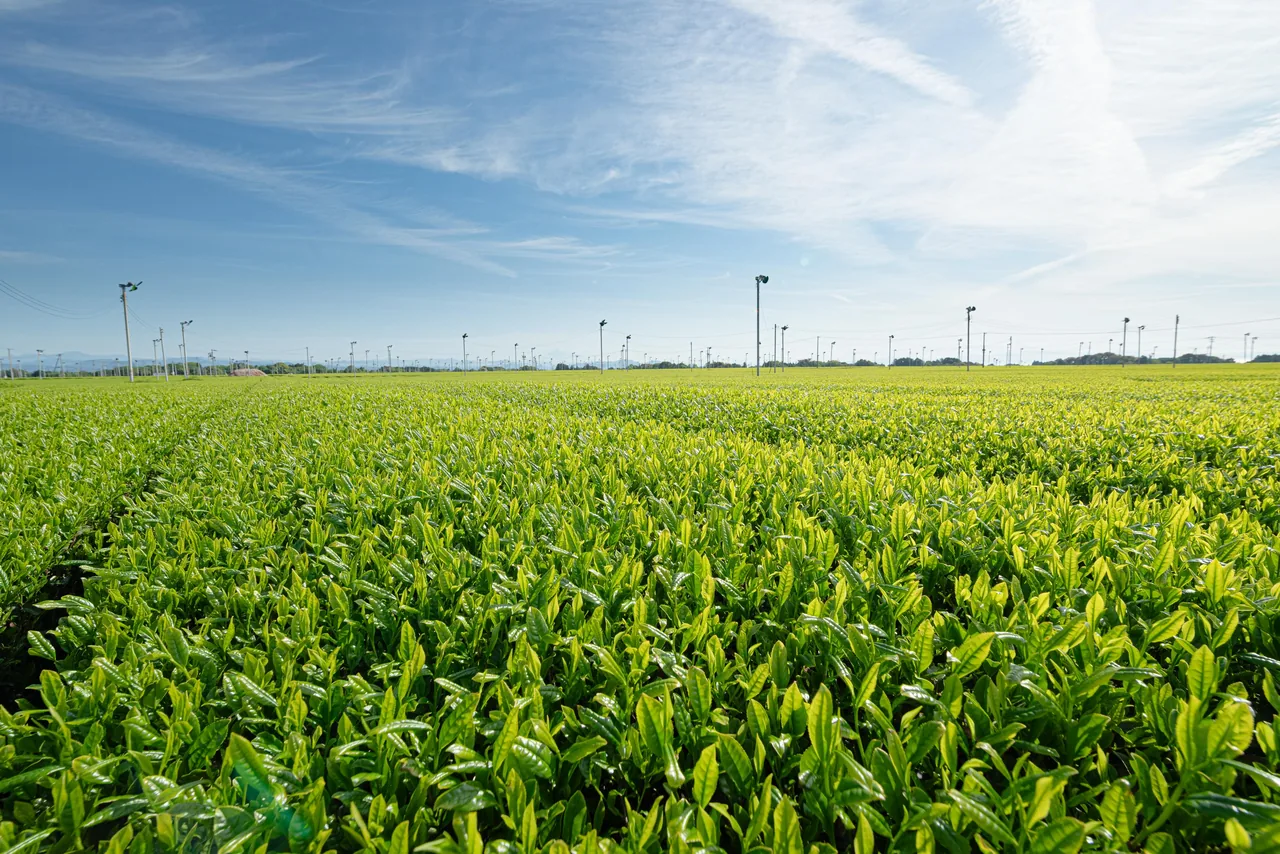
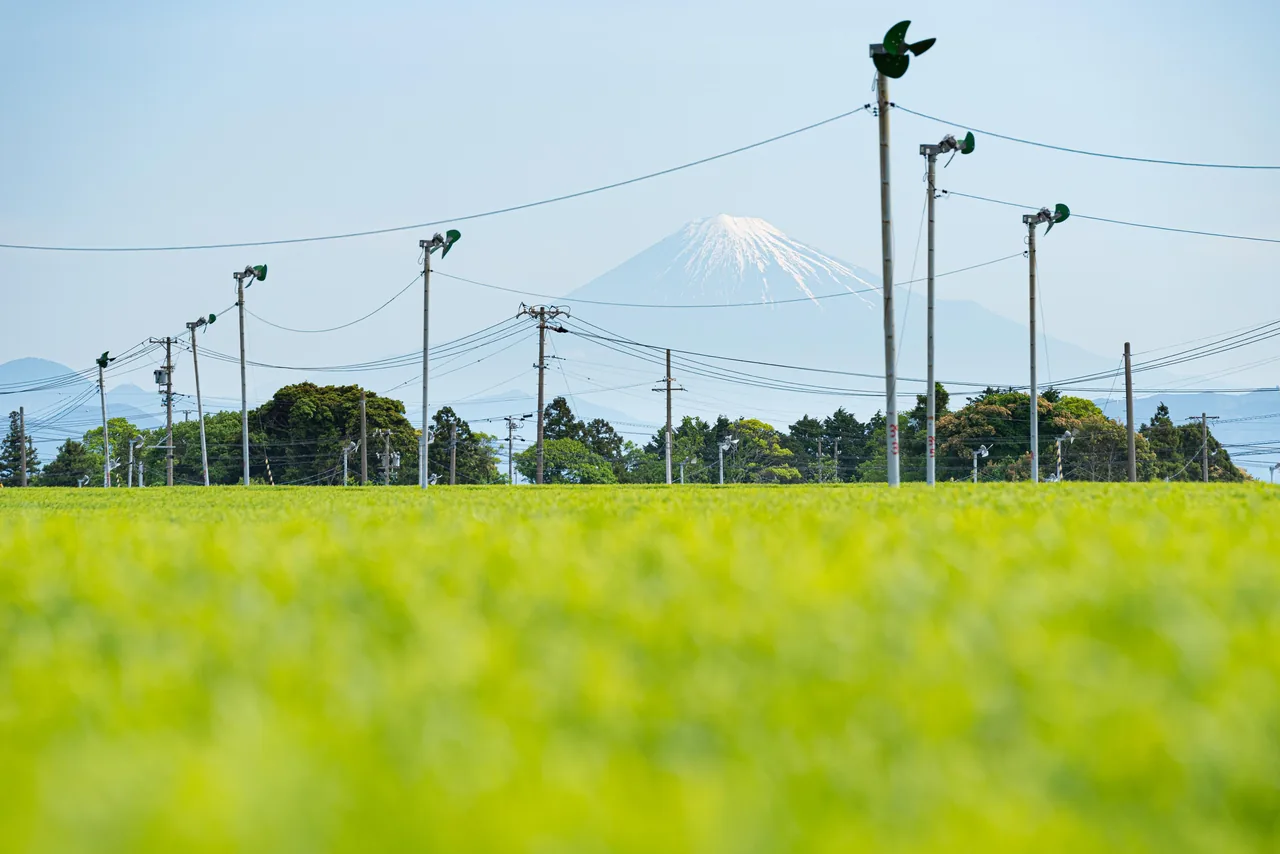
The Makinohara Plateau, west of the Oi River, is one of Japan's great tea-growing areas, with tea fields stretching as far as the eye can see. The plantation is said to have begun in the early Meiji era, when samurai of the former shogunate, left without work, moved onto the plateau and cleared it for farming. Frost-protection fans standing over the bushes give the landscape its distinctive look. In spring, the shincha (first flush) season, the fields turn a bright yellow-green.
This text was translated automatically and may contain errors.
Rows to the horizon
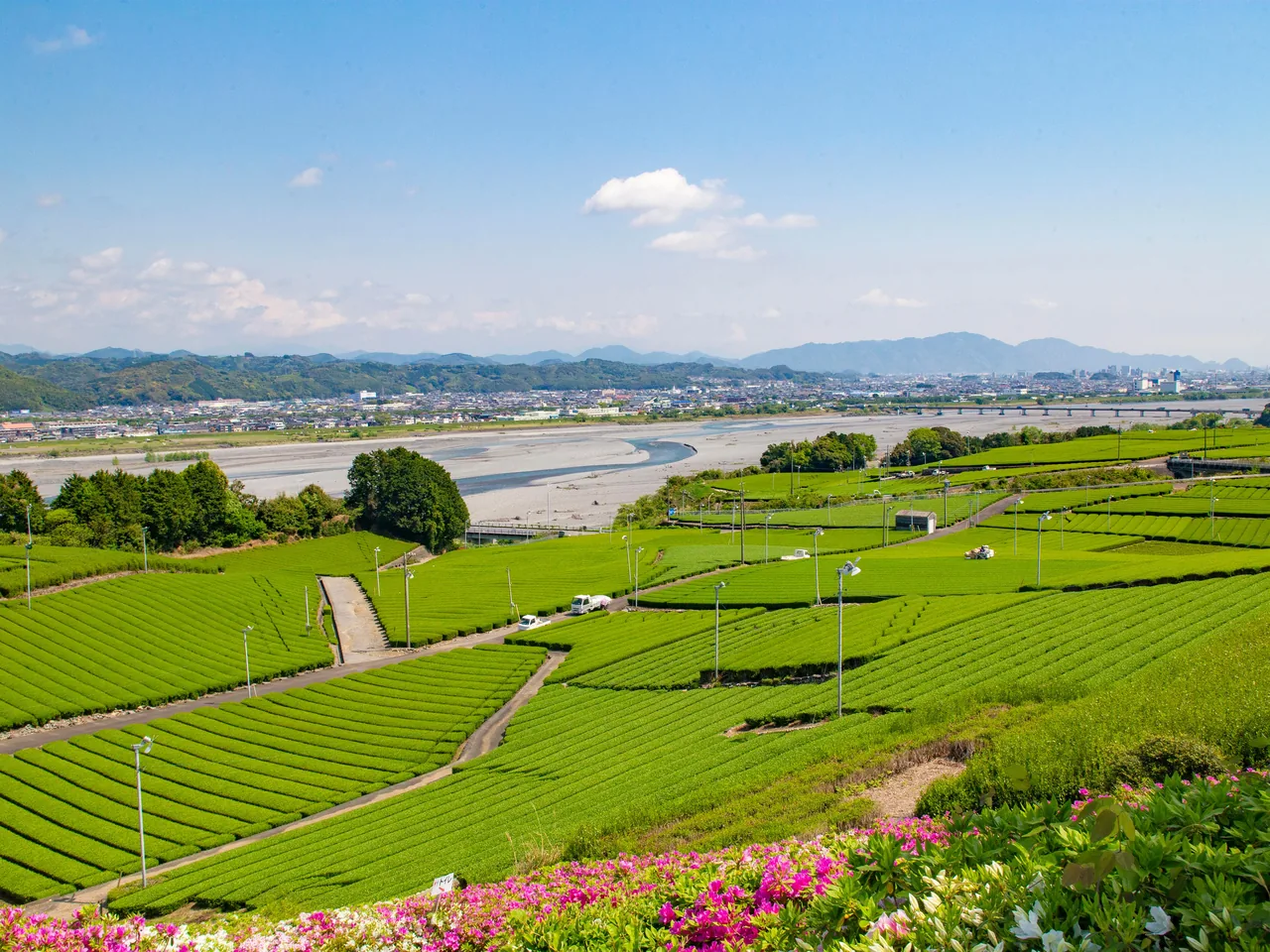
The plateau is flat, and the rows of tea run straight into the distance. The narrow gaps between them are paths for picking and tending the bushes, and from above they line up like stripes.

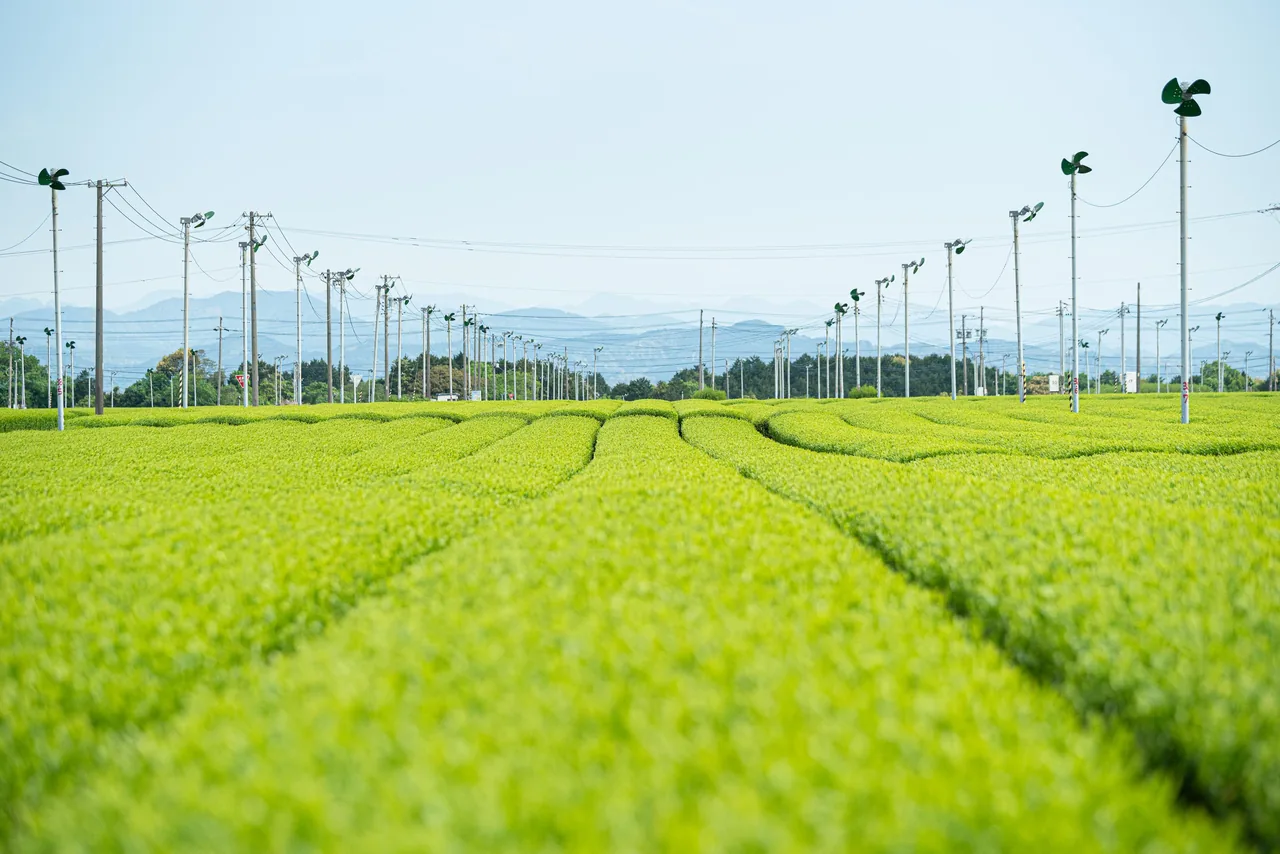
Frost fans over the tea
The fans perched on poles across the fields are frost-protection fans. On cold early-spring nights they blow warmer air from above down onto the bushes, keeping frost off the new leaves.
Mt. Fuji beyond the tea
On clear days you can see Mt. Fuji beyond the fields. The mountain is often clearest in the morning, and in the shincha season you can take in the yellow-green fields and the snow-capped peak together.
The Oi River from the plateau's edge
Makinohara Park, on the eastern edge of the plateau, has a statue of the Zen monk Eisai, credited with spreading tea in Japan, and views down over the Oi River and the town of Shimada, with Mt. Fuji beyond on clear days. A statue of Chujo Kageaki, who led the clearing, stands in another park nearby.
- Access
- The easiest way up to the plateau is by car from Kanaya Station on the JR Tokaido Line and the Oigawa Railway. The fields belong to farmers, so stay on the roads and in the park rather than walking between the rows.