Masuda Historic Townscape
About
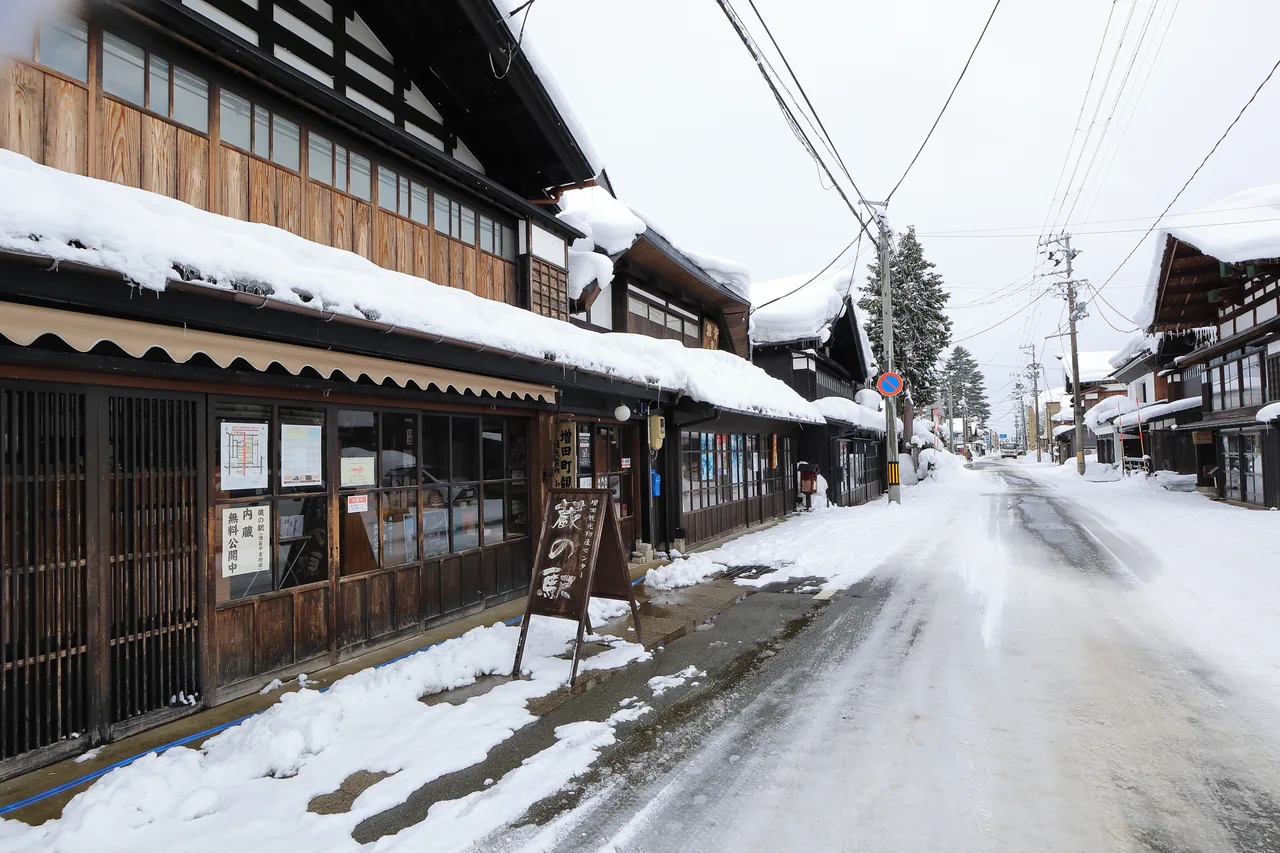
In the center of Masuda, in Yokote City, a street of old merchant houses still stands. The main houses sit on narrow, deep plots with their gabled ends facing the street, and behind them are hidden storehouses known as uchigura ("inner storehouses"). The area was selected in 2013 as a national Important Preservation District for Groups of Traditional Buildings, as a well-preserved example of a rural trading town that prospered into the modern era. Some uchigura are open to visitors; check the local tourist information for what is open.
This text was translated automatically and may contain errors.
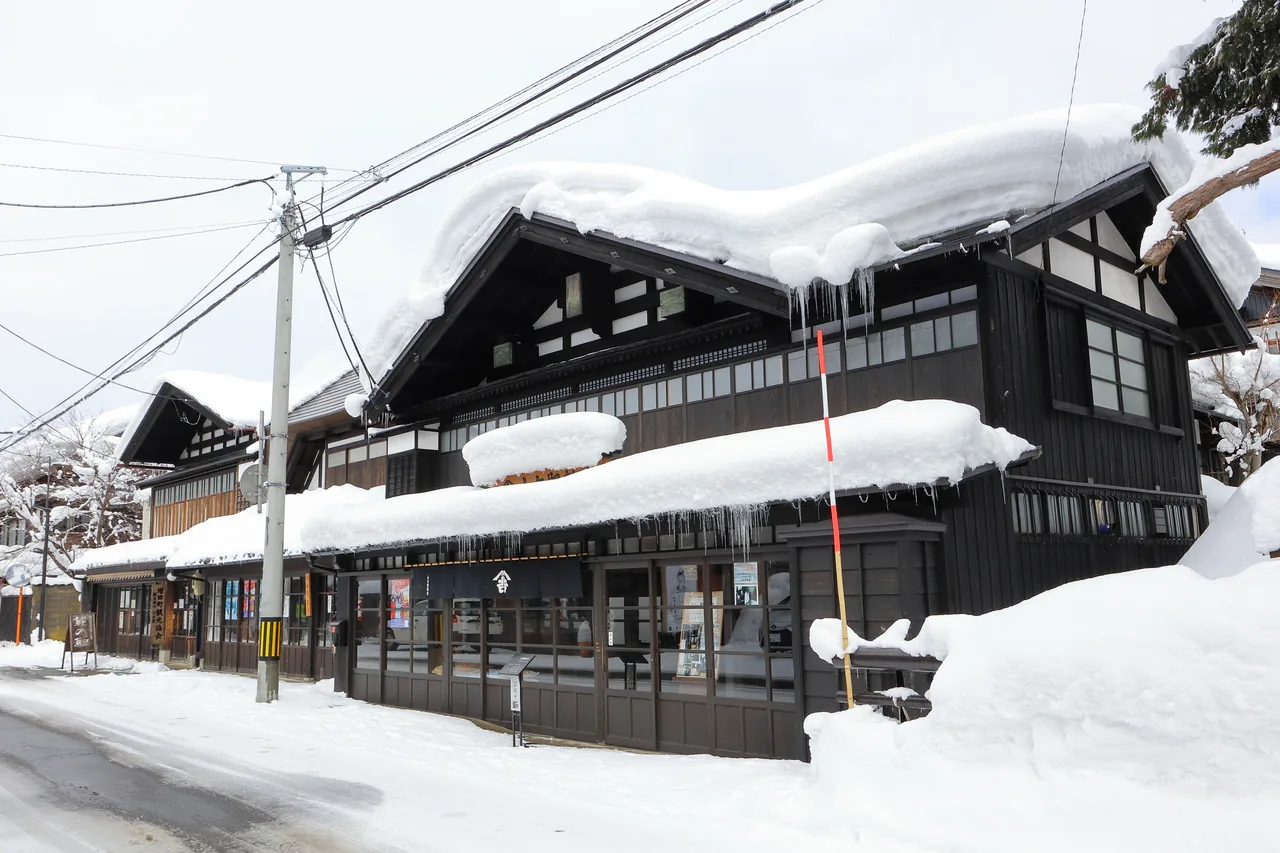
Townhouses with gables facing the street
From the street you see the main houses, each showing the triangular end of its gabled roof. In winter, snow piles high on the roofs and long icicles hang from the eaves, as in the photo. The old lot divisions and waterways also remain, and the preservation district covers about 10.6 hectares.
Uchigura, the storehouses hidden behind the houses
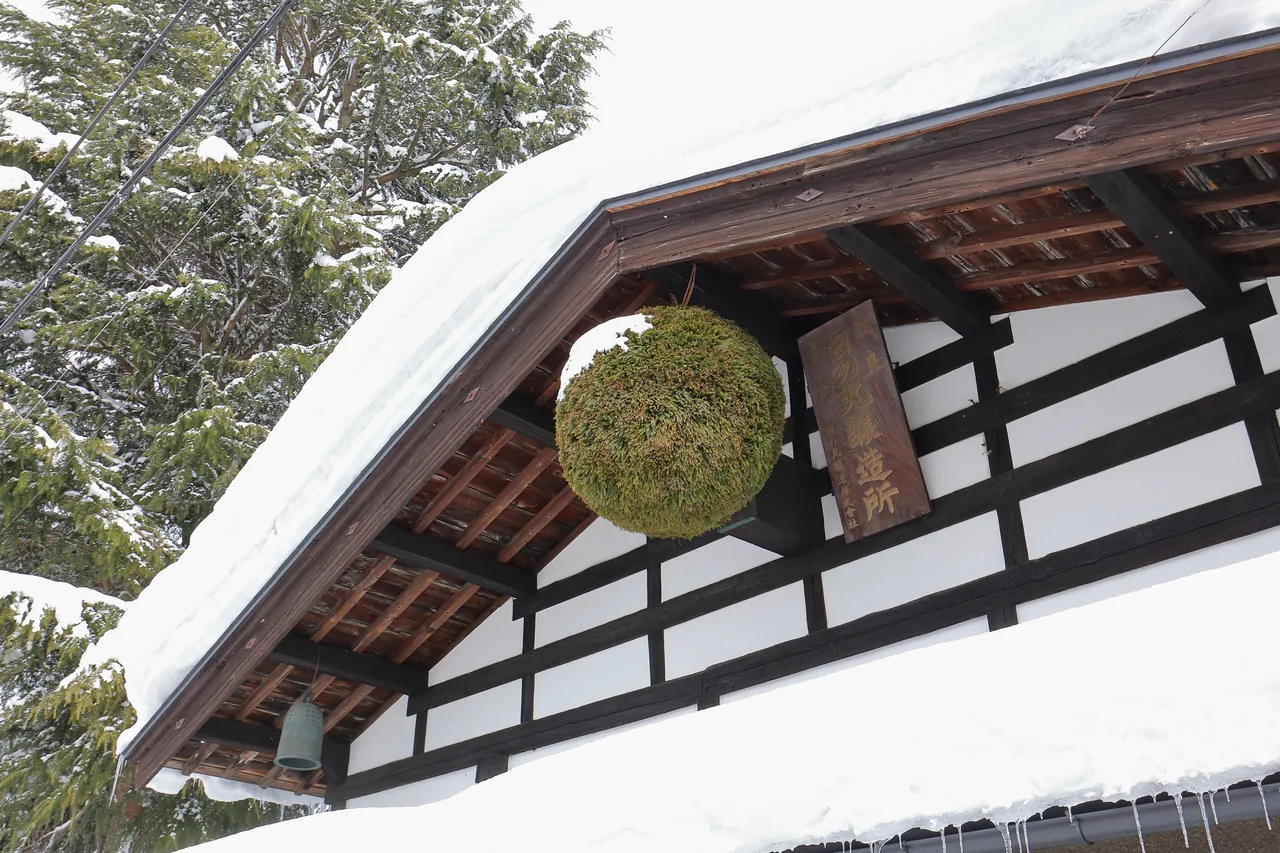
Masuda's storehouses are almost invisible from the street. Each earthen storehouse behind the main house is completely enclosed by a large roof and outer walls called a saya ("sheath"), so the family could walk between house and storehouse without stepping into the snow. They were used not only for storage but also as living space. Walking along the street you will also notice buildings with a sugidama, a ball of cedar leaves, hanging from the eaves.
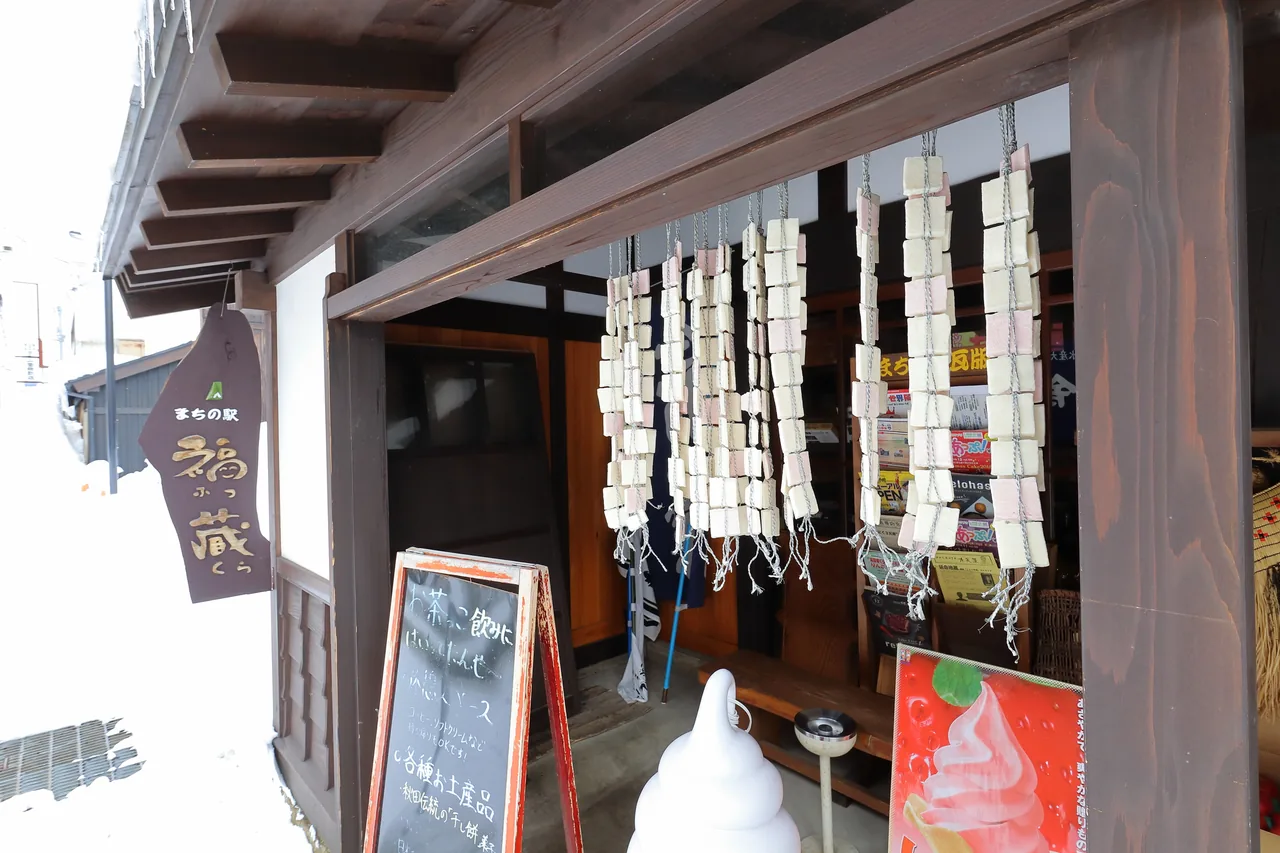
Shops along the street
Some of the old buildings along the street now house shops and rest spots. The photo shows the front of Machi no Eki Fukukura, with dried rice cakes hanging under the eaves in winter.
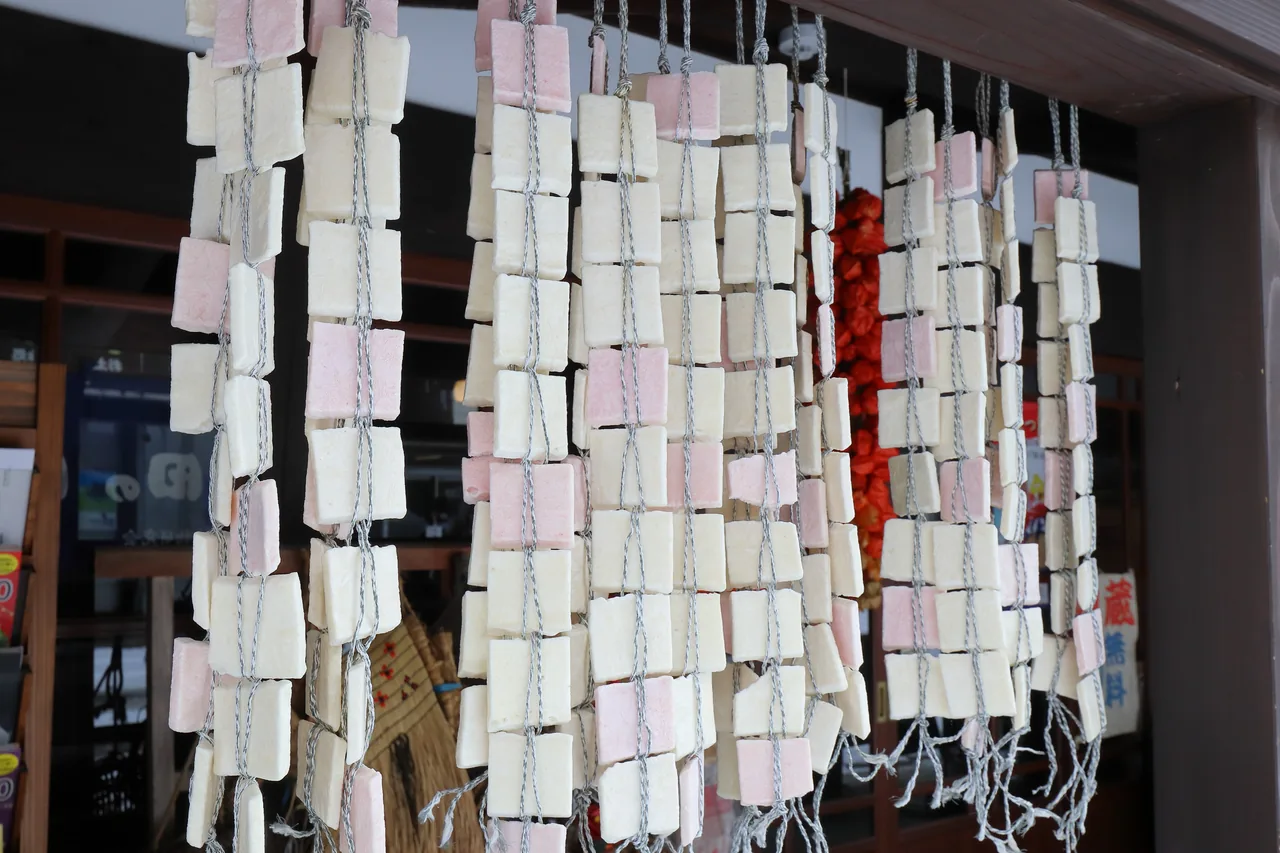
A snow-country winter scene
Strings of white and pink rice cakes hung under the eaves to dry in the cold are a common winter sight in Akita. The streets can be icy in the snow season, so wear shoes with a good grip.
- Access
- From Jumonji Station on the JR Ou Line, take an Ugo Kotsu bus bound for Masuda (about 10 minutes).