Miho no Matsubara
About
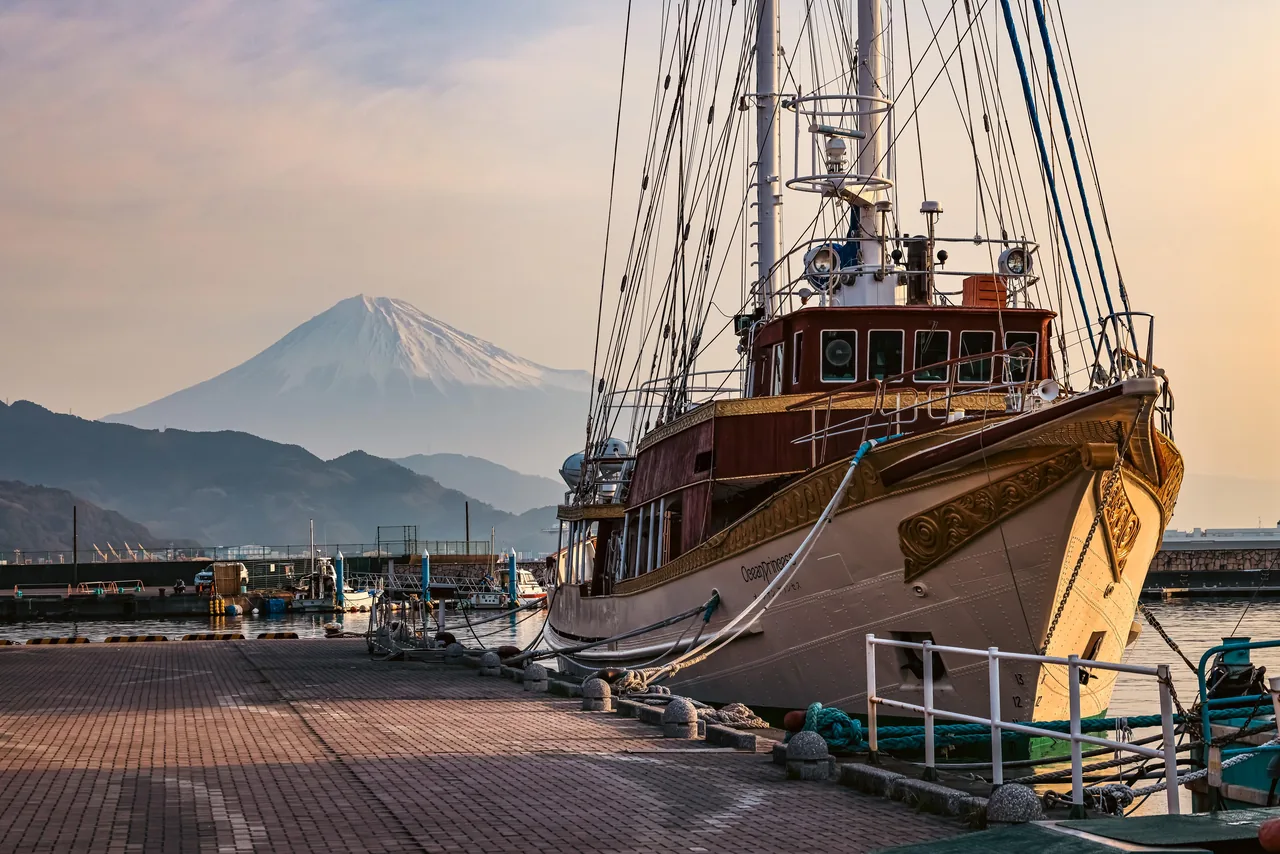
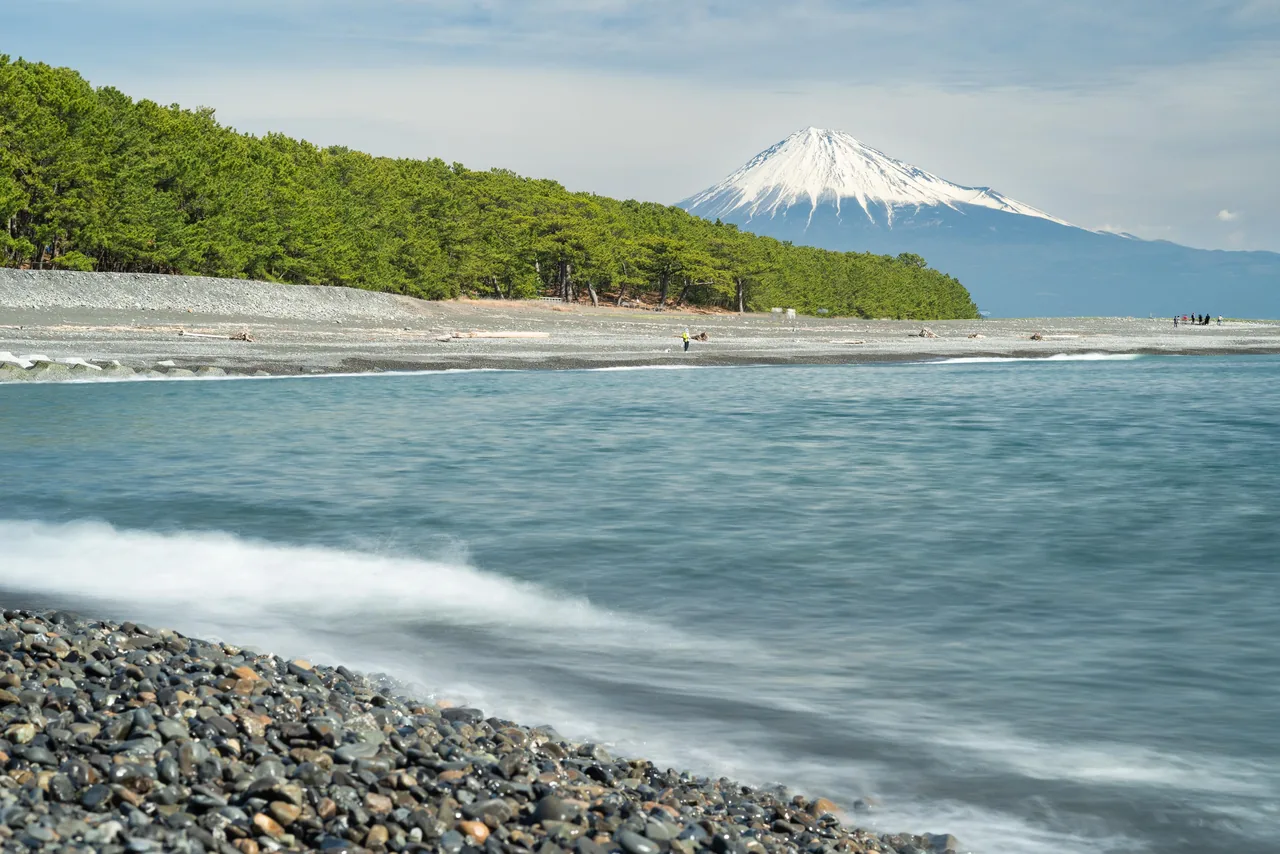
A pine forest stretching along the shore of the Miho Peninsula, which juts into Suruga Bay. It is known for the view of Mt. Fuji across the pines from the beach, and although it lies about 45 km south-west of the summit, it was registered in 2013 as part of the Mt. Fuji World Heritage Site. It is also the setting of the Hagoromo legend, in which a celestial maiden hangs her feathered robe on a pine. The Hagoromo Pine, the Kami no Michi avenue of pines leading to Miho Shrine and the Mihoshirube visitor centre are all close together. Walking in the forest is free and open at all hours.
This text was translated automatically and may contain errors.
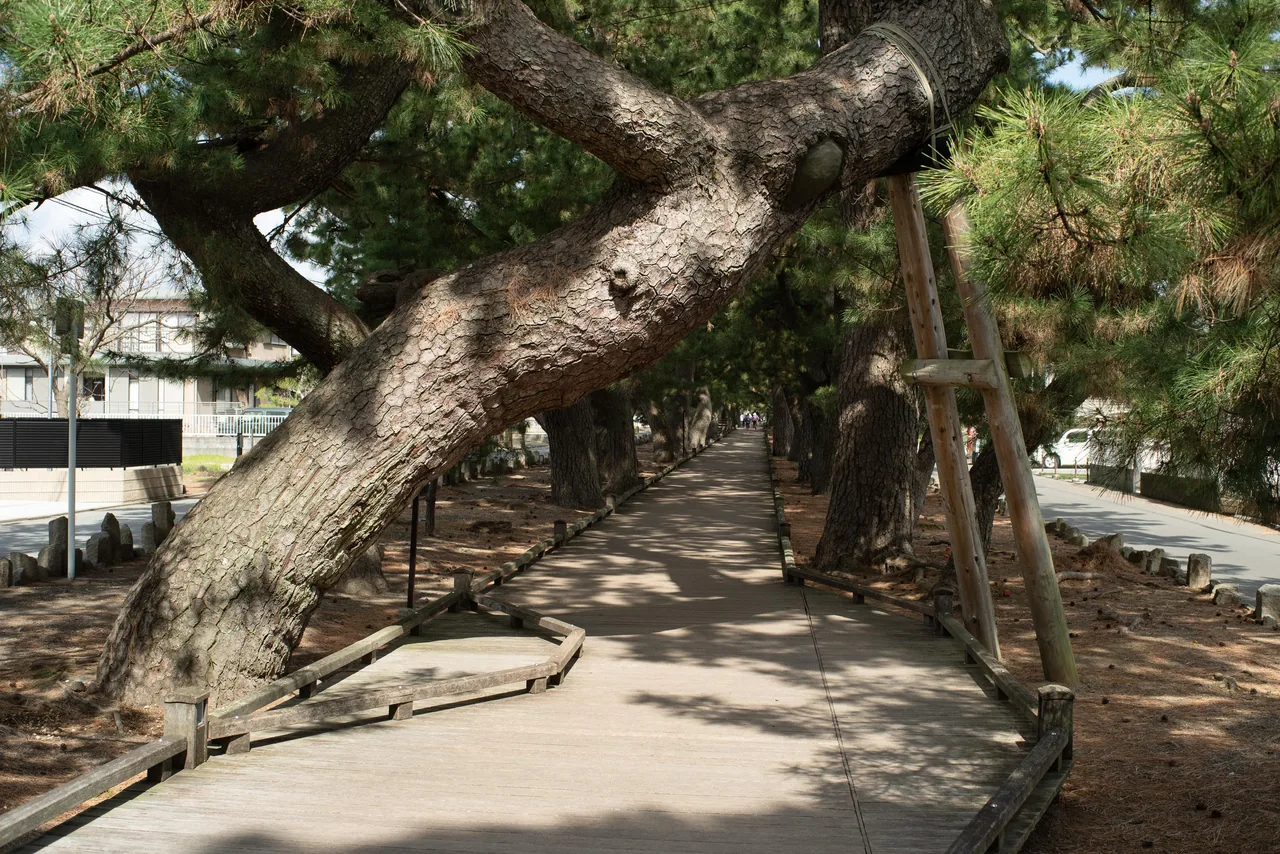
Kami no Michi, the path to Miho Shrine
The roughly 500 m from the Hagoromo Pine to Miho Shrine is called Kami no Michi, the Path of the Gods, lined on both sides by pines more than 200 years old. Tradition says gods arriving from the sea come down at the Hagoromo Pine and follow this path to the shrine. The path is a wooden boardwalk to protect the roots of the trees.
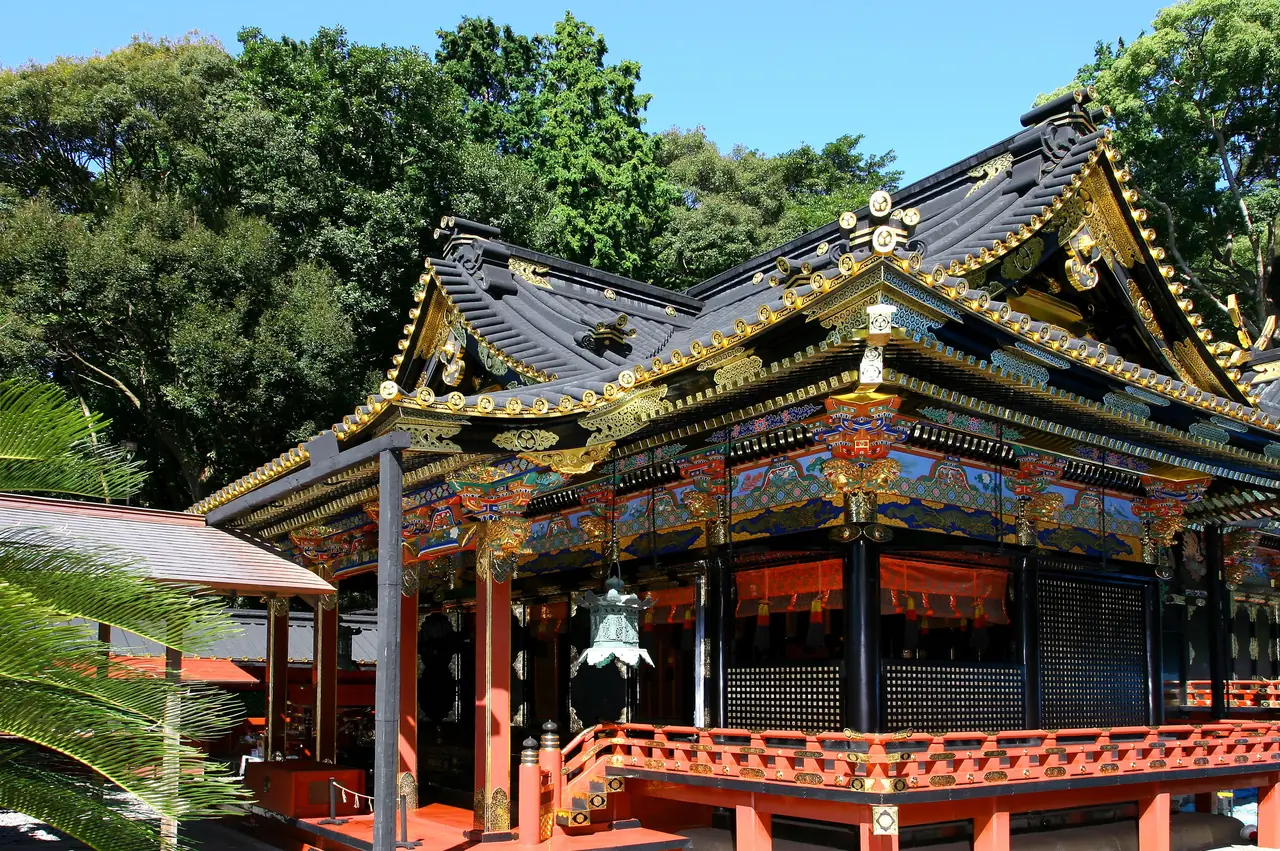
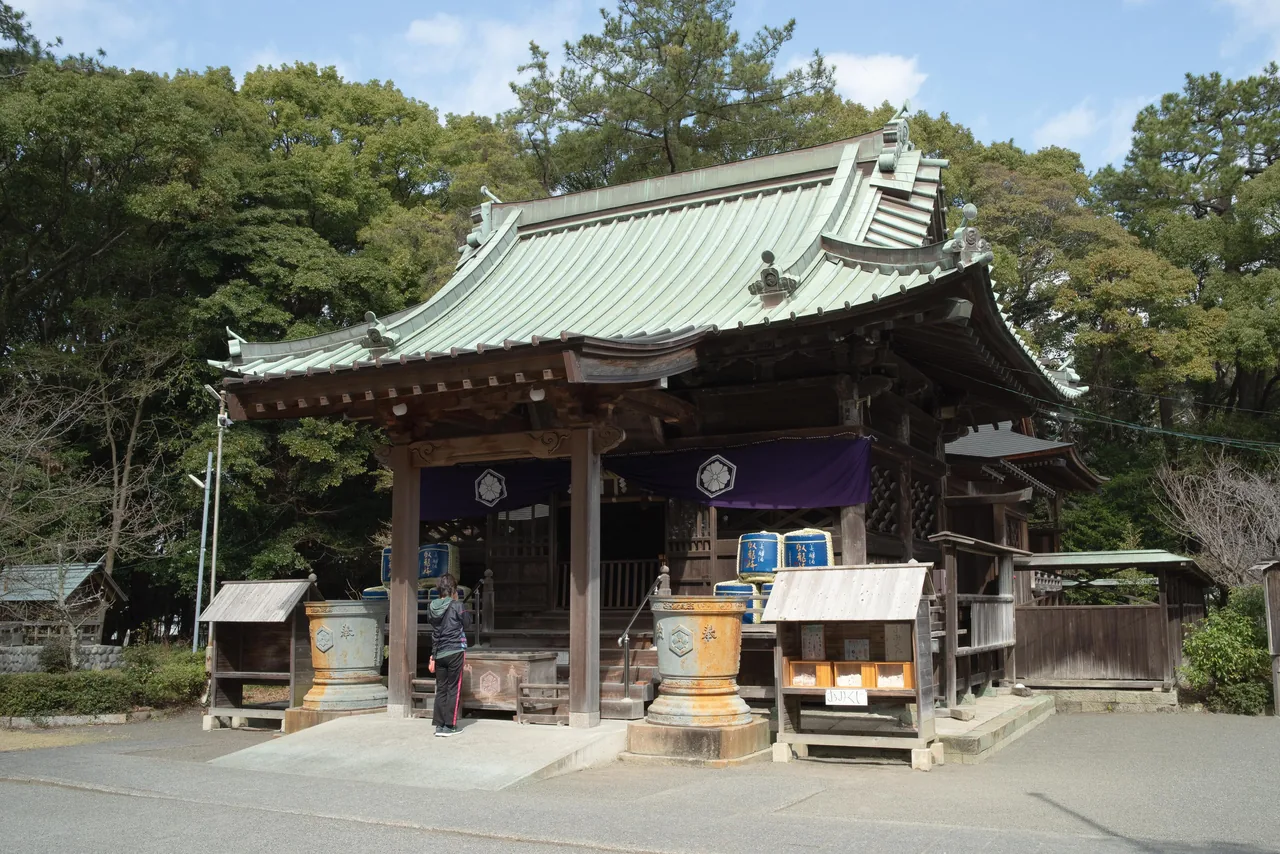
Miho Shrine
At the end of the path, Miho Shrine is old enough that no one knows exactly when it was founded; records go back to the Heian period. Toyotomi Hideyoshi and Tokugawa Ieyasu both rebuilt its halls, but lightning burned them in the Edo period, and the present hall dates from the mid-Edo period. Walking out along the path and back is the classic way to see the forest.
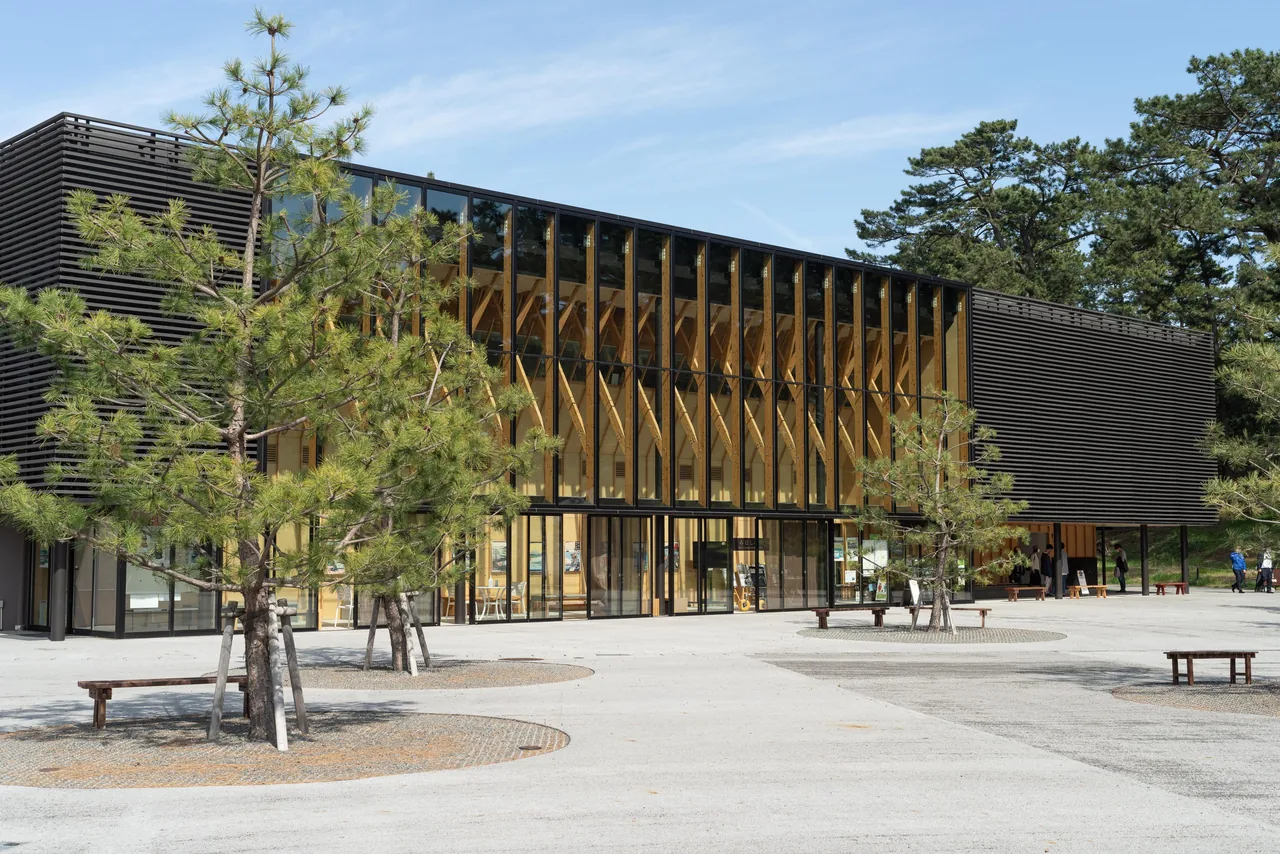
Mihoshirube visitor centre
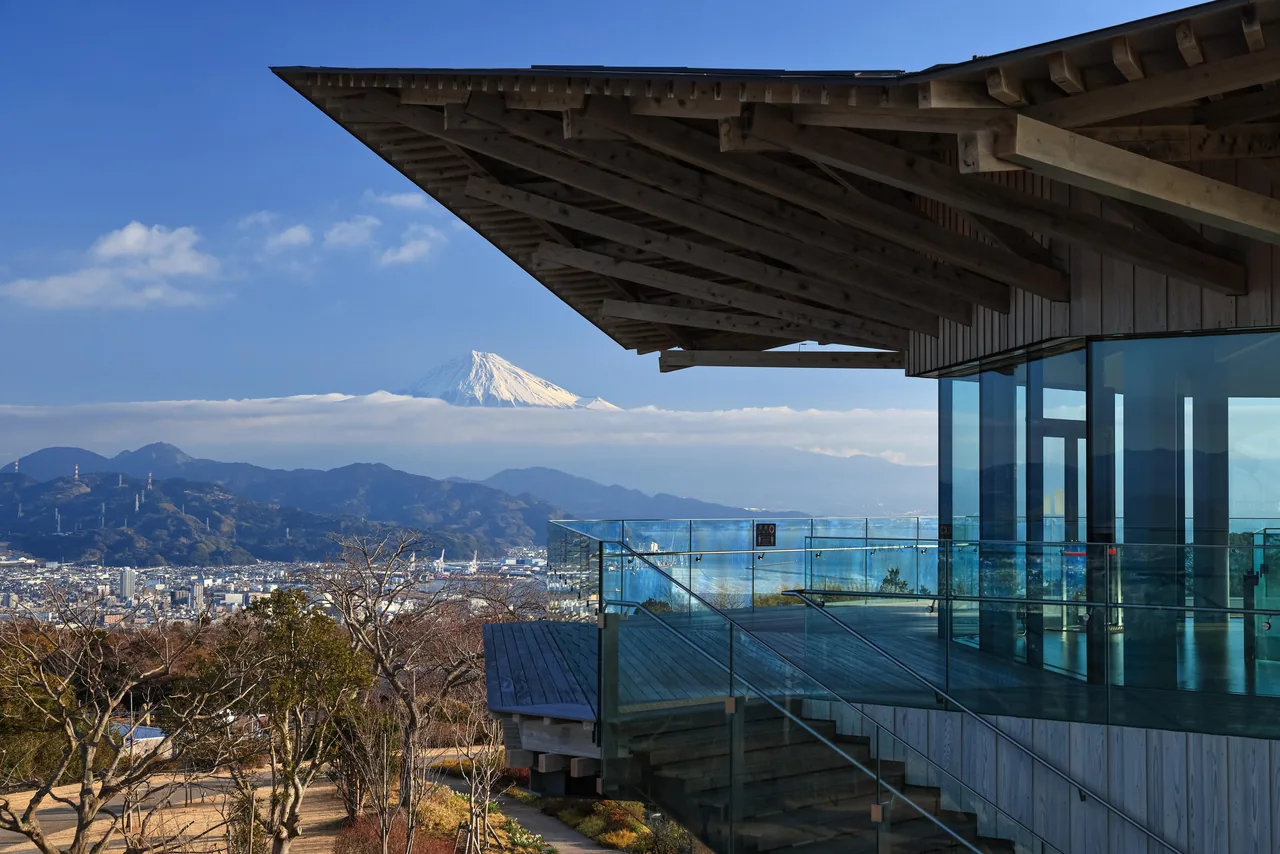
Opened in 2019 near the Hagoromo Pine, the Shizuoka City Miho no Matsubara Cultural Creation Centre, known as Mihoshirube, introduces the history and culture of the pine forest. The current Hagoromo Pine is the third tree to carry the name, taking over from its predecessor in 2010. A visit here first changes how you see the forest.
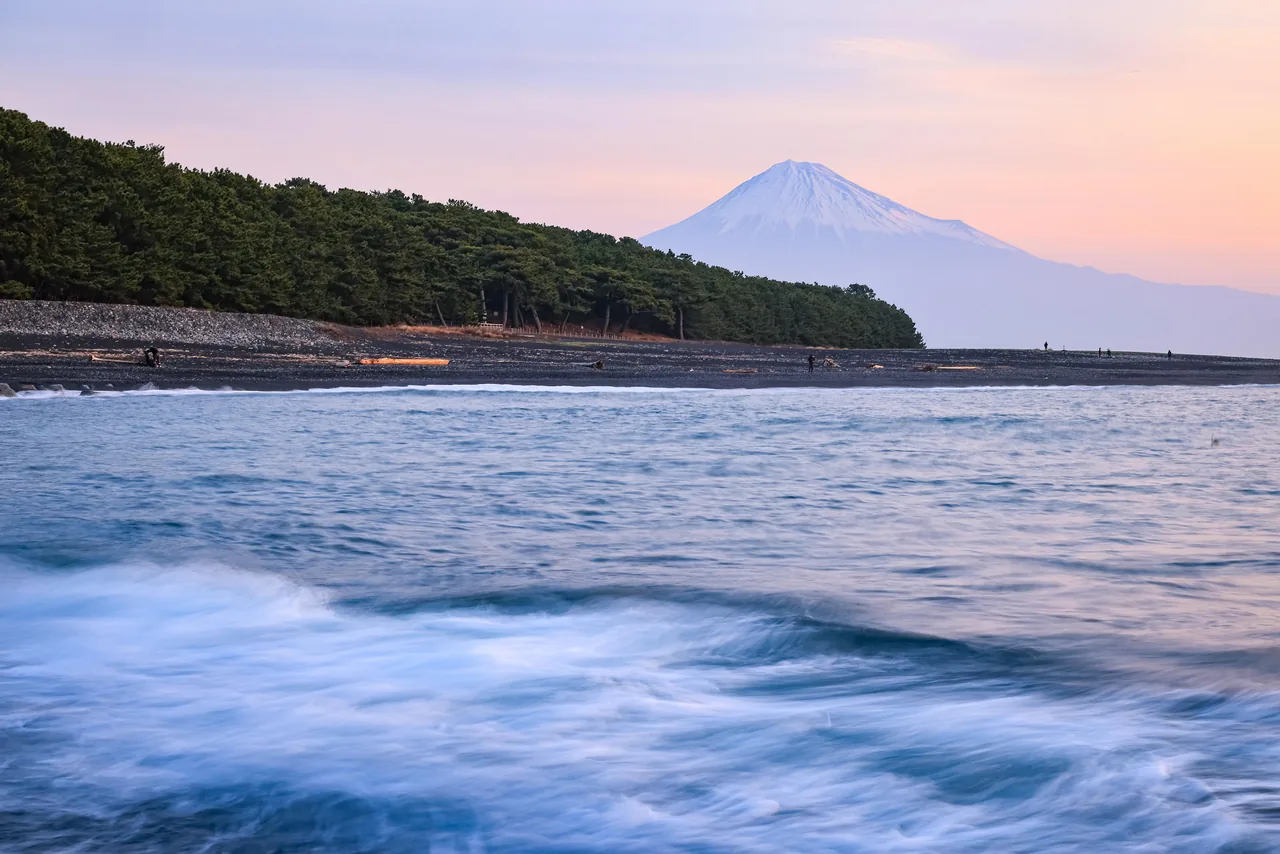
The beach at dusk
As the sun goes down the sky takes on soft colours, and the pines and Mt. Fuji fade into the dusk beyond the waves. Fuji shows most clearly on crisp, clear days from autumn to spring.
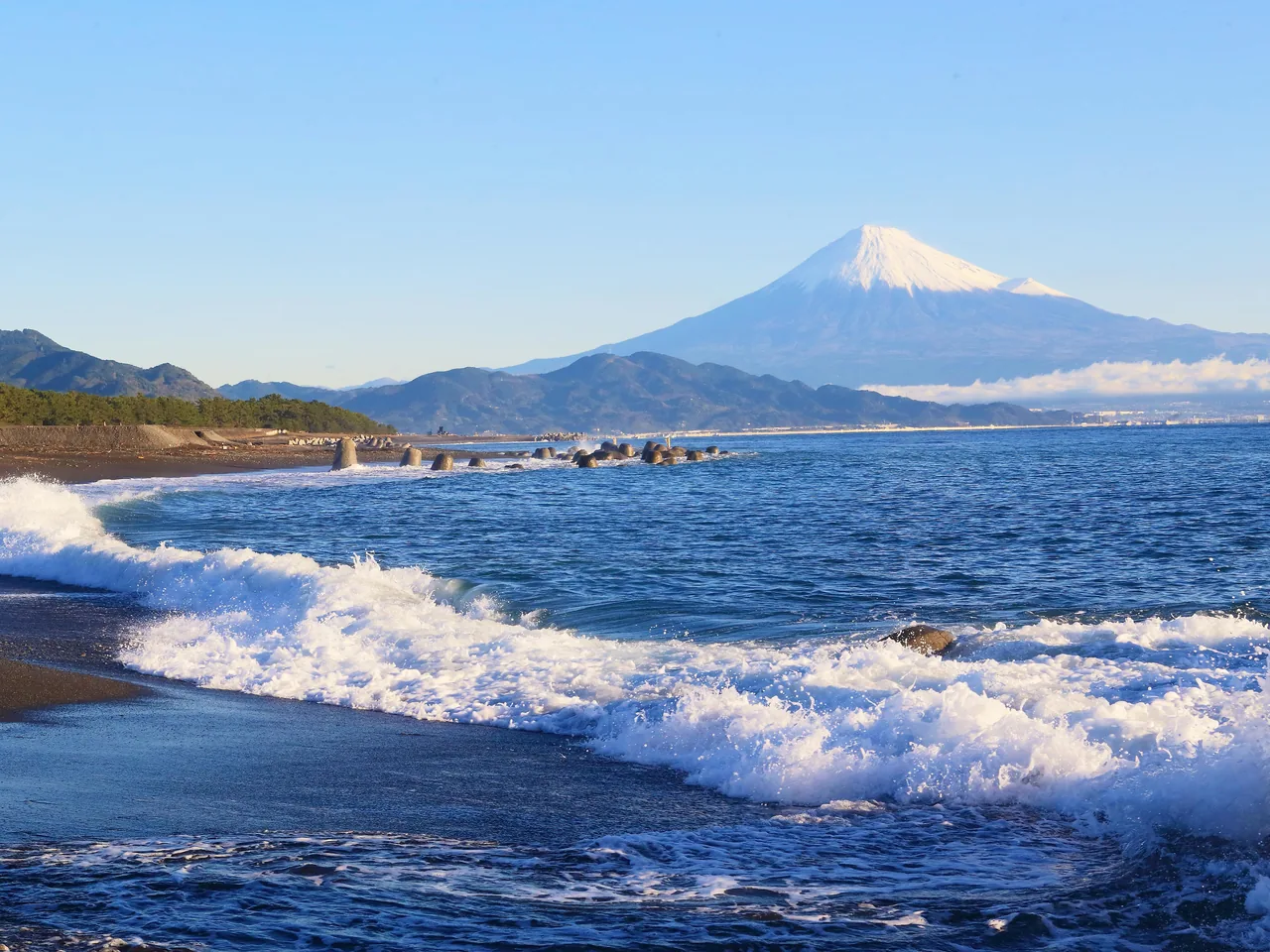
Pebbles and waves
The beach at Miho is made of rounded pebbles rather than sand, and you can hear them rattle as each wave draws back. On clear days Fuji stands sharp beyond the pines. Waves can run high, so don't stand too close to the water's edge.
- Access
- From JR Shimizu Station, take a Shizutetsu Justline bus on the Miho Yamanote Line to Miho-no-Matsubara Iriguchi (about 25 minutes), then walk about 15 minutes. On weekends and holidays some buses continue to the Sekai Isan Miho-no-Matsubara stop, about 5 minutes on foot from the Hagoromo Pine. There is a free car park near the pine.