Akita City Folk Performing Arts Center (Neburi Nagashi Kan)
About
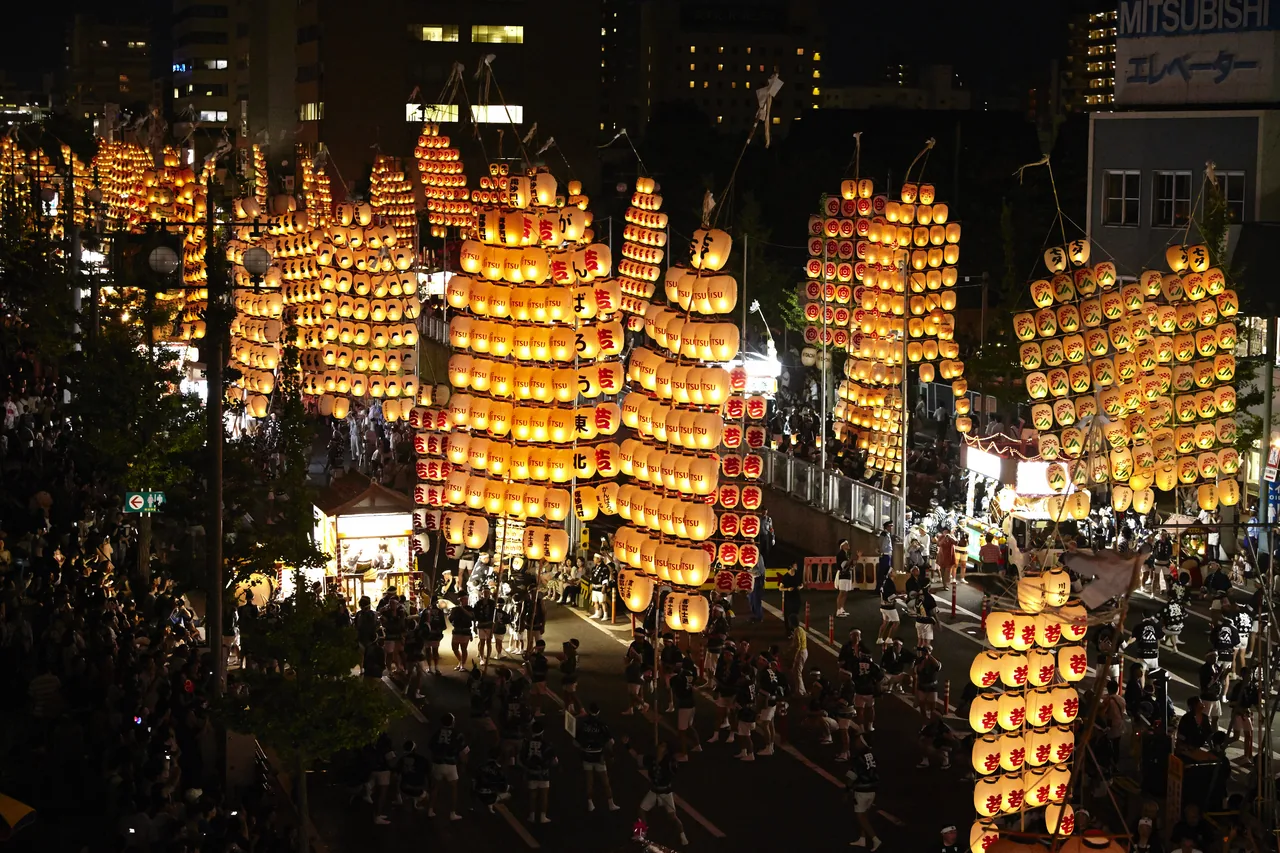
A city-run center where you can see kanto, the lantern poles raised at the Akita Kanto Festival each August, up close all year. The ground-floor hall shows real kanto and material on other Akita City festivals, such as panels on the Tsuchizaki hikiyama floats and bonten, the decorated poles carried to shrines. You can try holding a kanto, and on weekends and holidays from spring to autumn, kanto performers give demonstrations. The former Kaneko residence, a city cultural property, is next door and entered from the center.
This text was translated automatically and may contain errors.
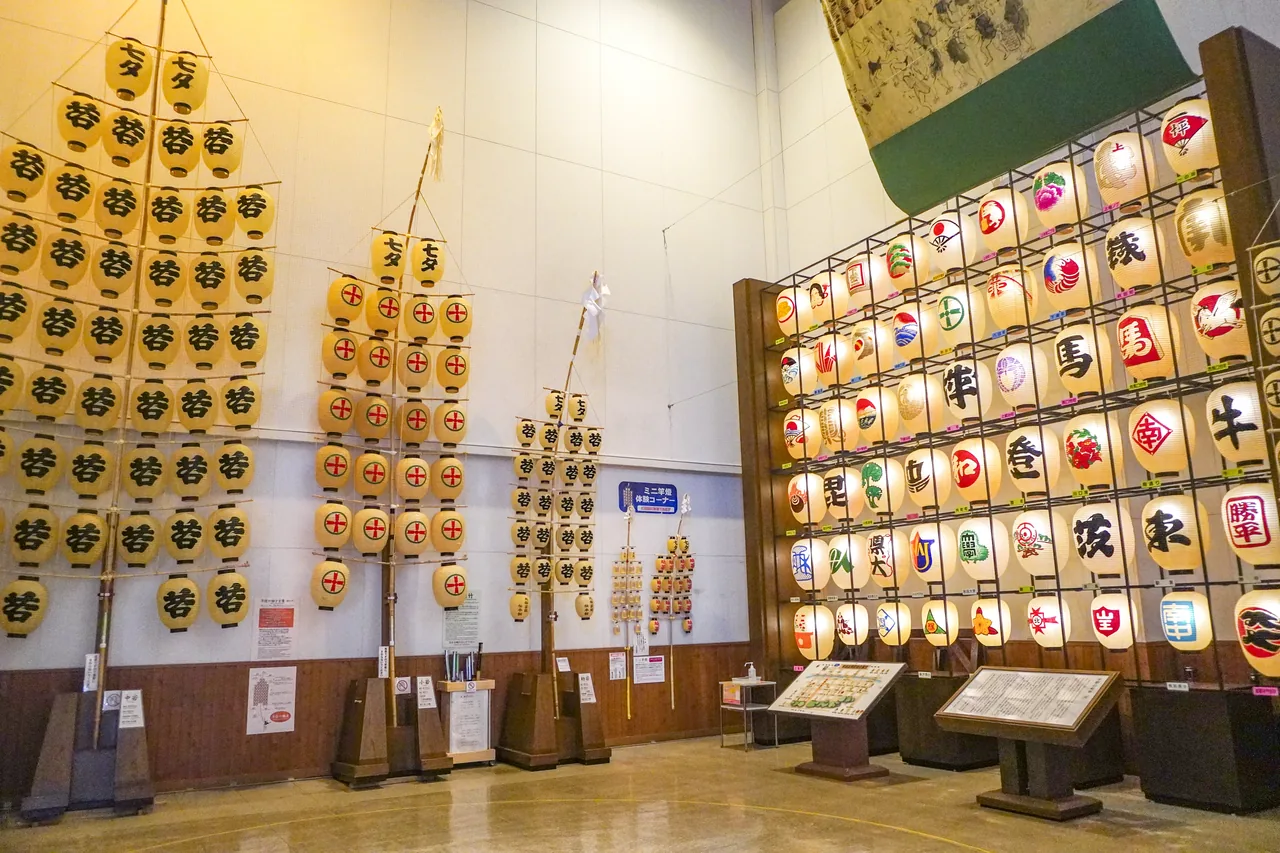
Full-size kanto in a high-ceilinged hall
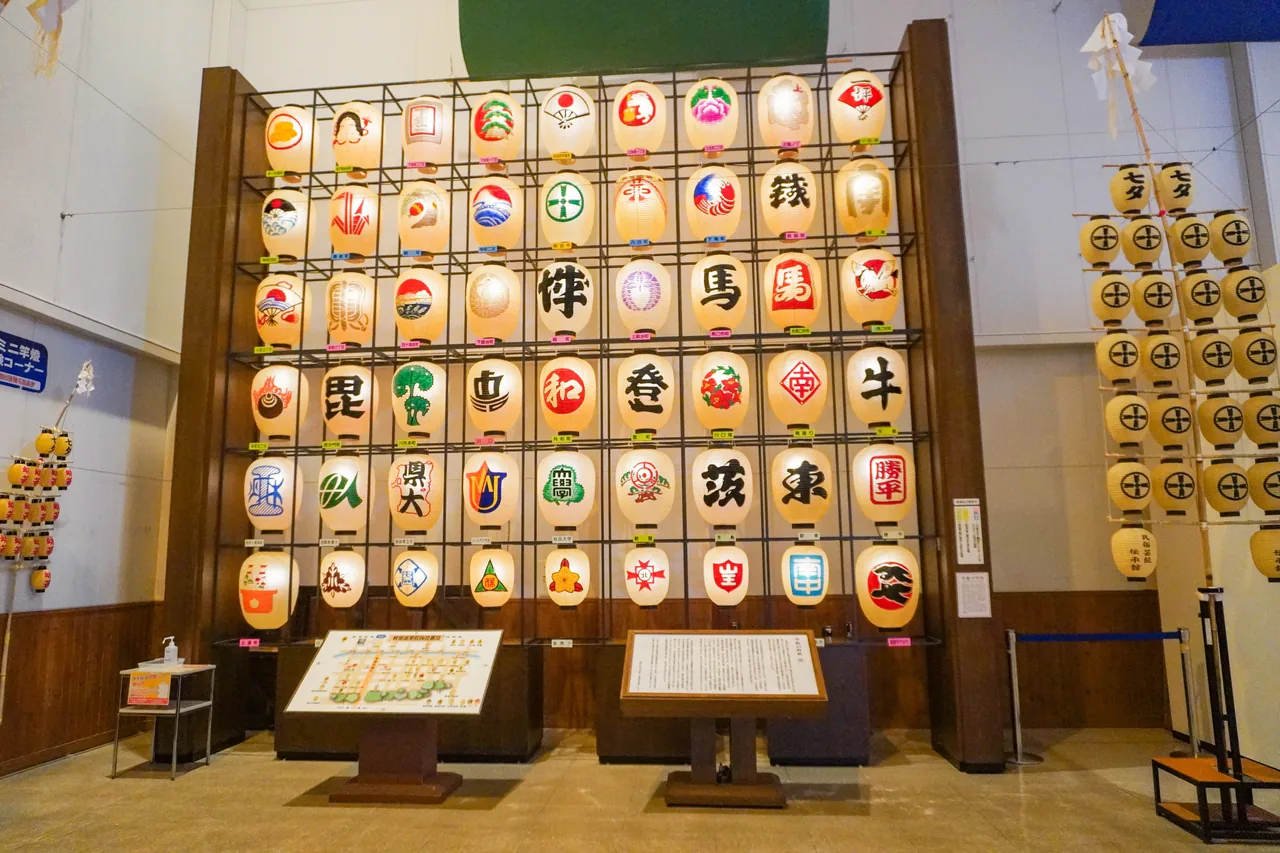
A kanto is a bamboo pole hung with lanterns that stand for bales of rice, the whole shaped like an ear of ripening grain. It is said to have grown out of neburi nagashi, an Edo-period Obon custom for driving away drowsiness, which also gives the center its name. Poles of different sizes stand in the hall; the largest, the owaka, is 12 m long, weighs 50 kg and carries 46 lanterns. A wall of shelves holds lanterns painted with the crests and characters of the neighborhoods and groups that raise kanto, lanterns you normally only see high overhead on festival nights.
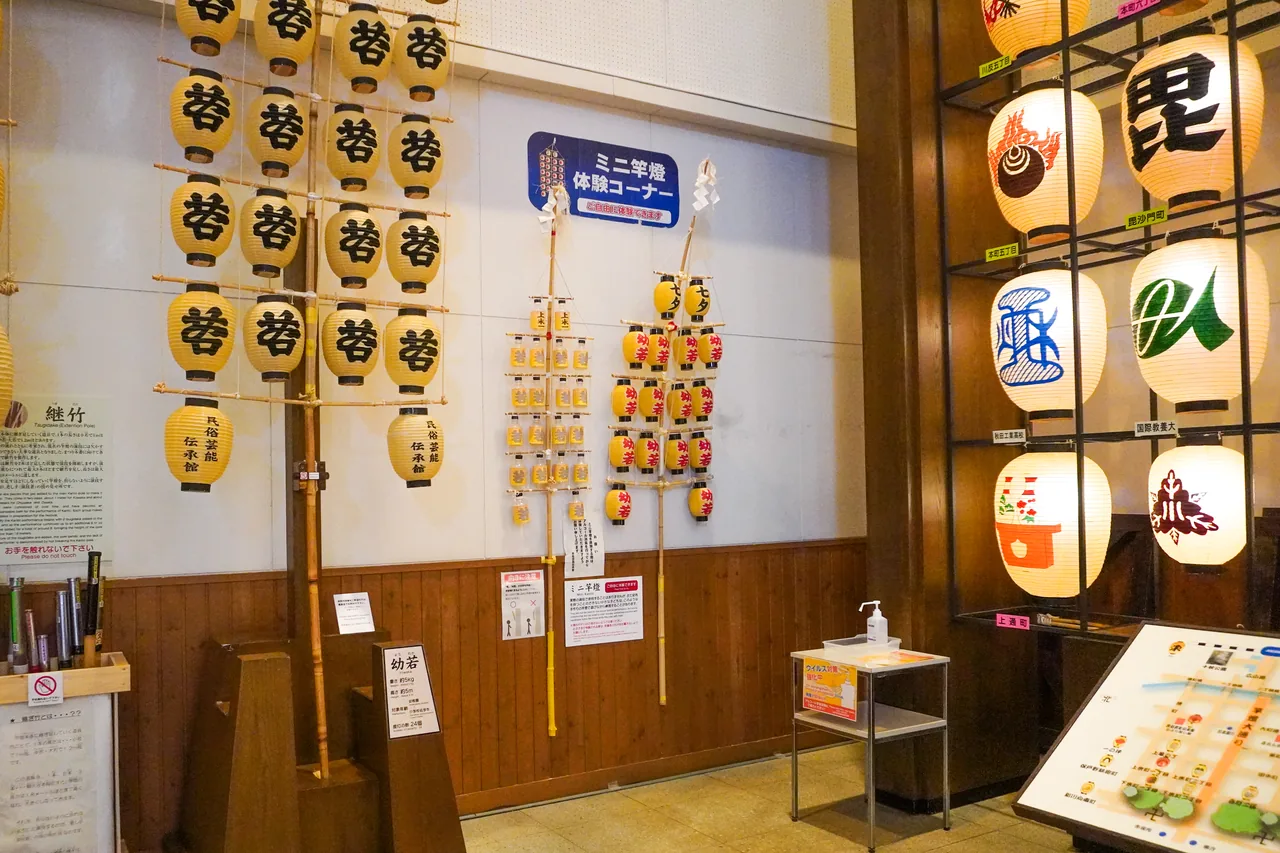
Try balancing a small kanto
Kanto come in four sizes, owaka, chuwaka, kowaka and yowaka, and even the children's yowaka is 5 m long and weighs 5 kg. In the hall you can lift and hold one, and you soon find that the top sways and keeping it upright is harder than it looks. During the festival, performers balance poles on the palm, forehead, shoulder and hip. On demonstration days you can watch them extend the pole with extra bamboo sections right in front of you. Check the official website for demonstration dates and times.
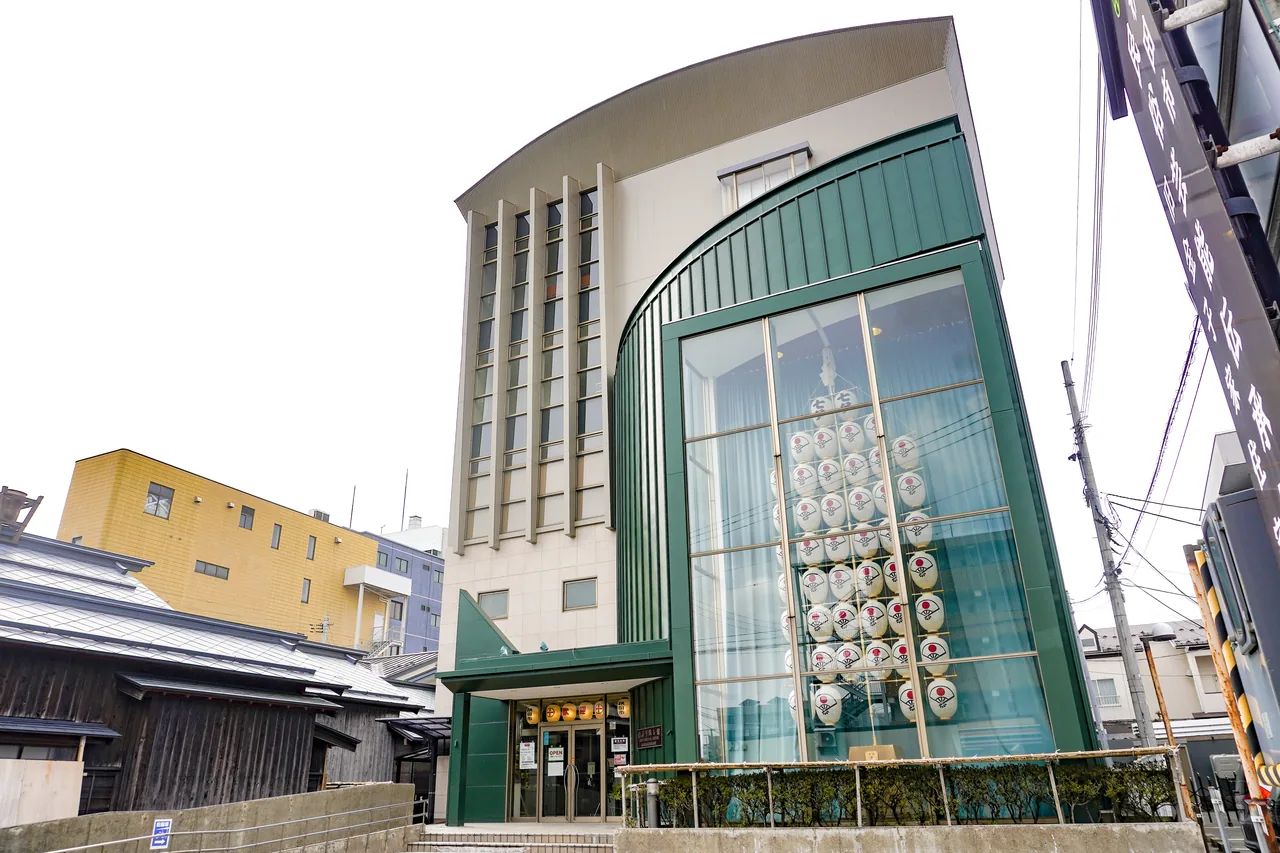
The center and the former Kaneko residence next door
The building is easy to spot by its glass front, where kanto lanterns are visible from the street. Next door is the former Kaneko residence, home of a merchant family that started out as pawnbrokers and secondhand-clothing dealers in the late Edo period and went on to wholesale kimono fabric, cotton and hemp cloth after the Meiji Restoration. The main house, rebuilt in 1887 after a fire the year before, and the storehouse that survived that fire remain, and together they are a tangible cultural property of Akita City. You can walk through from the center and get a sense of how merchants lived in the castle town.
- Access
- About a 15-minute walk from JR Akita Station. By bus, get off at Neburi Nagashi Kan-mae or Tori-machi on Akita Chuo Kotsu buses; the center is right by the stop. The Gururu city-center loop bus also stops at Neburi Nagashi Kan-mae. By car, it is about 20 minutes from Akita-Chuo Interchange on the Akita Expressway, and there is a free car park for seven cars.