Okawachiyama (Nabeshima Clan Kiln Village)
About
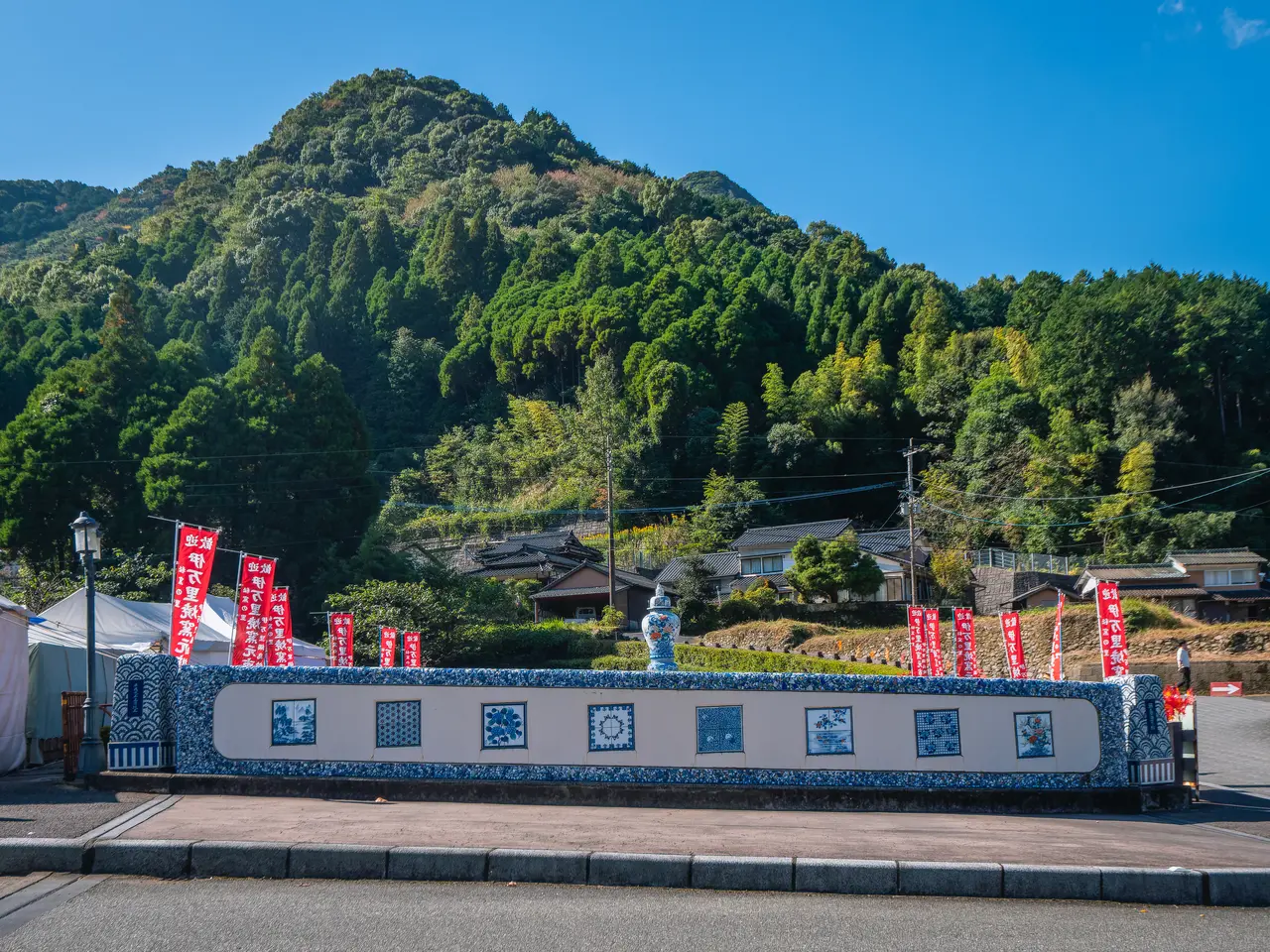
A pottery village of around 30 workshops tucked into a mountain valley south of central Imari. In the Edo period the Saga (Nabeshima) clan set up its official kilns here to make Nabeshima porcelain, presented as gifts to the shogun and other lords, and guarded the way in with a checkpoint so the techniques would not leak out. That is why it is called the "village of secret kilns," and the site of the clan kilns is a national historic site. Workshops and shops line a stone-paved slope beneath sheer, folding-screen-like rock peaks.
This text was translated automatically and may contain errors.
A valley chosen for the clan kilns
The Saga clan is said to have moved its kilns from Arita to Okawachiyama in 1675. A valley closed in by mountains on three sides made it easier to keep the techniques secret. The clan kilns went on firing porcelain for presentation until 1871. Even the bridge at the entrance has blue-and-white porcelain plaques set into its parapet, and the street of workshops begins on the other side. Near the entrance is the Imari Nabeshima-yaki Kaikan, run by the local potters' cooperative, a good first stop to get a sense of the village before visiting the kilns.
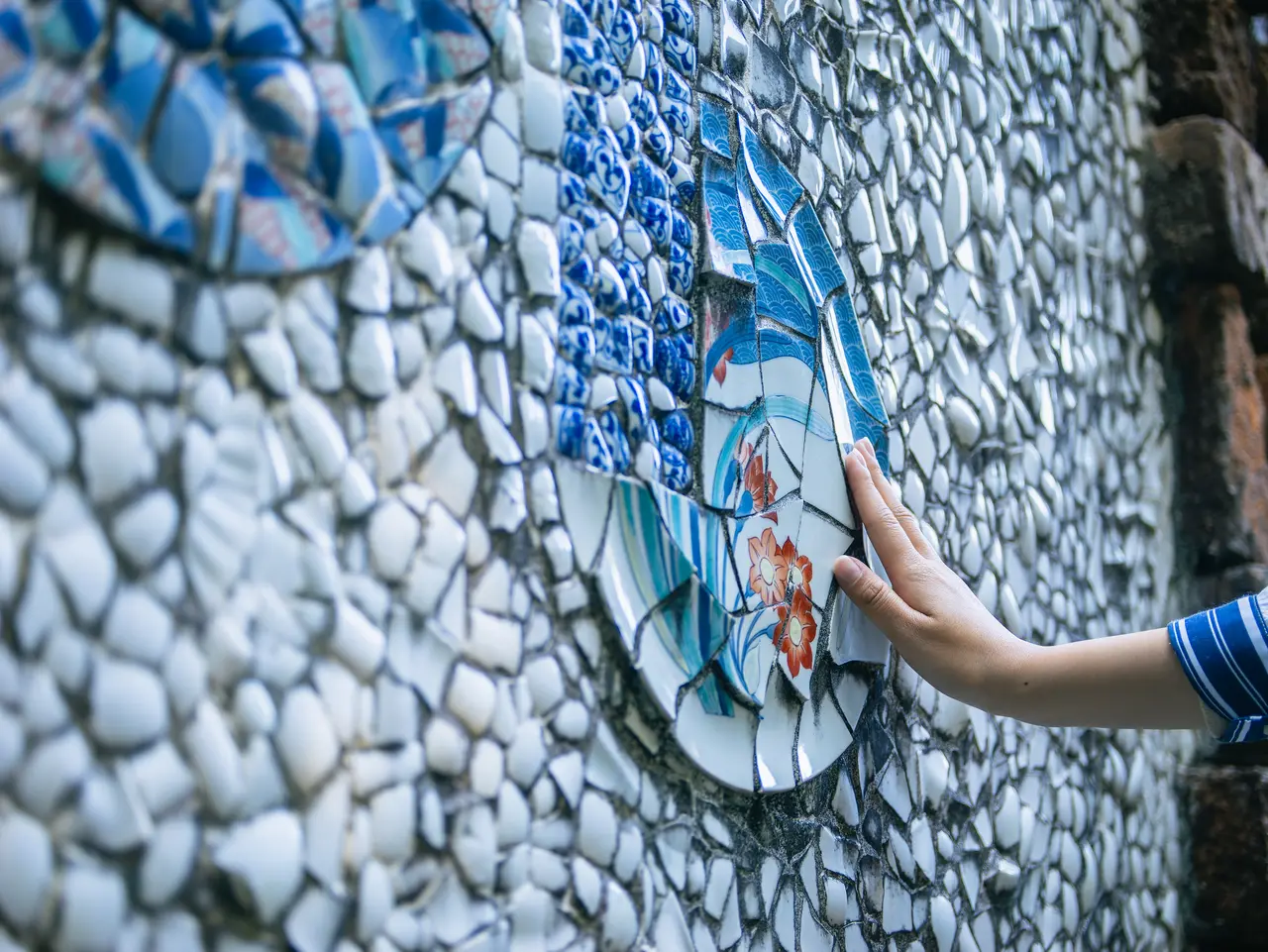
Walls and lanes decorated with shards
As you walk, you keep coming across walls inlaid with fragments of white and blue-and-white porcelain, and stone walls decorated with ceramic plaques. Look closely and you can see that each piece, with its own pattern, has been fitted in one by one.
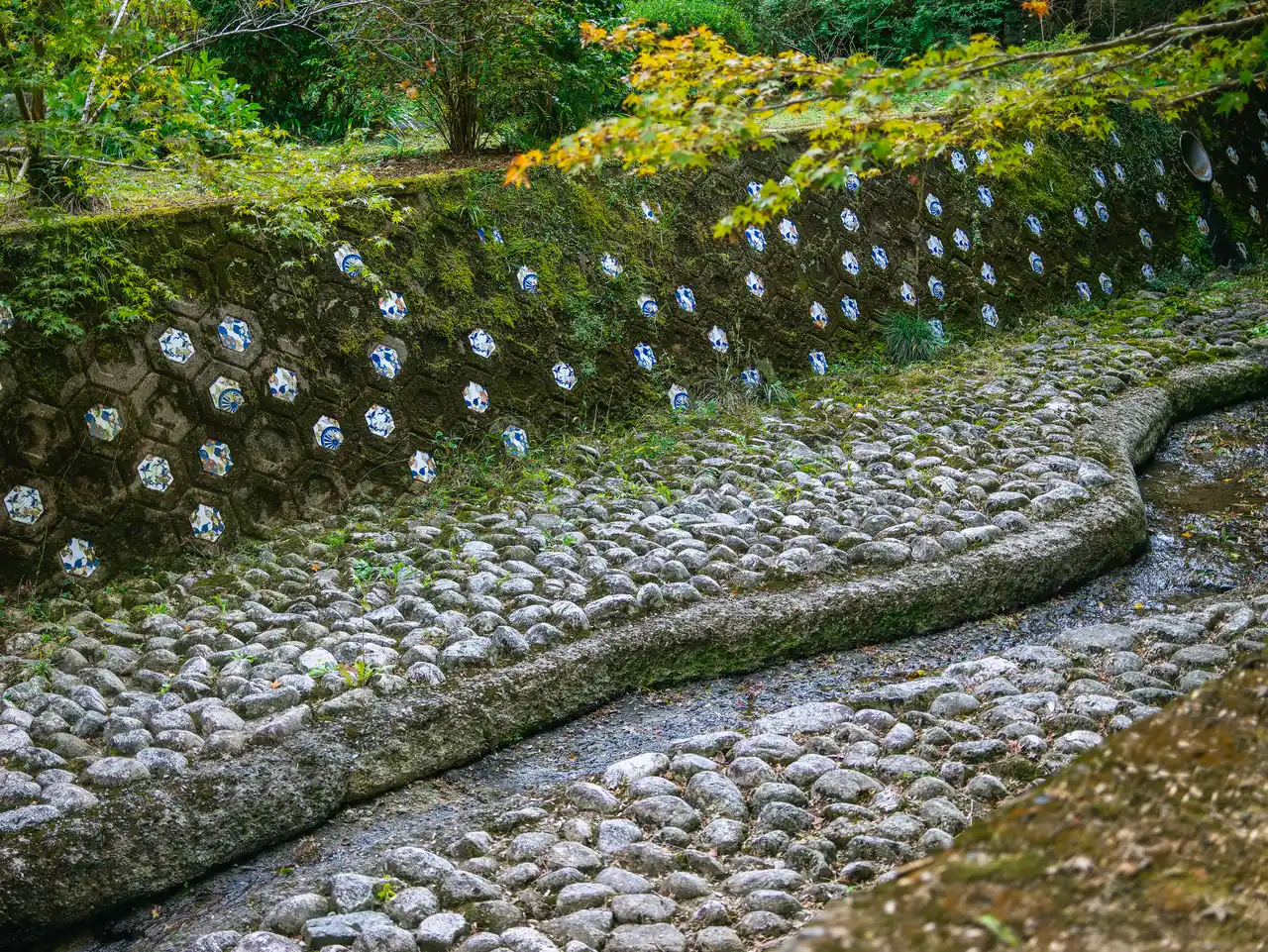
Cobbled channels and the workshops
Stream channels paved with round stones run through the village, and even the walls beside them are set with pieces of blue-and-white porcelain. Most of the workshops stand along the stone-paved slope that climbs into the village. Many let you pick up the pieces in the shop and choose for yourself, and each kiln has its own strengths, from blue-and-white to colored Iro-Nabeshima and celadon. The village is full of slopes, so wear comfortable shoes.
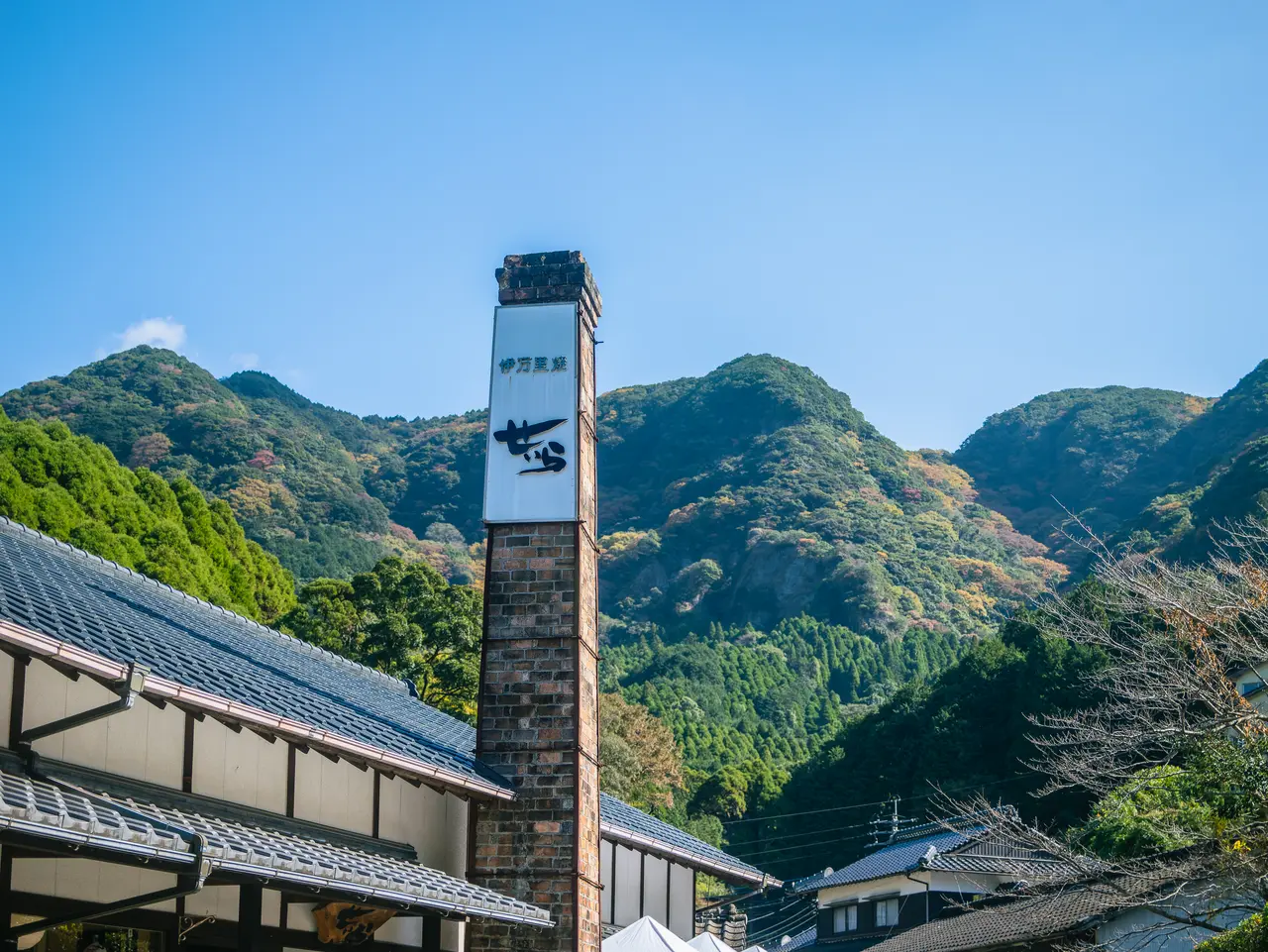
Brick chimneys and rock peaks
Brick chimneys rise above the workshop roofs, with the rock peaks of Okawachiyama towering behind them. Seeing chimneys and crags together is a view you only get in a village where the kilns are packed into the valley. The remains of the clan-era climbing kilns and the checkpoint are listed as a walking course on the official website.
- Access
- Take a bus bound for Okawachiyama from Imari Station (JR Chikuhi Line and Matsuura Railway); the ride takes about 15 minutes. Buses are not frequent, so check the timetable in advance or take a taxi from the station.