Sengan-en
About
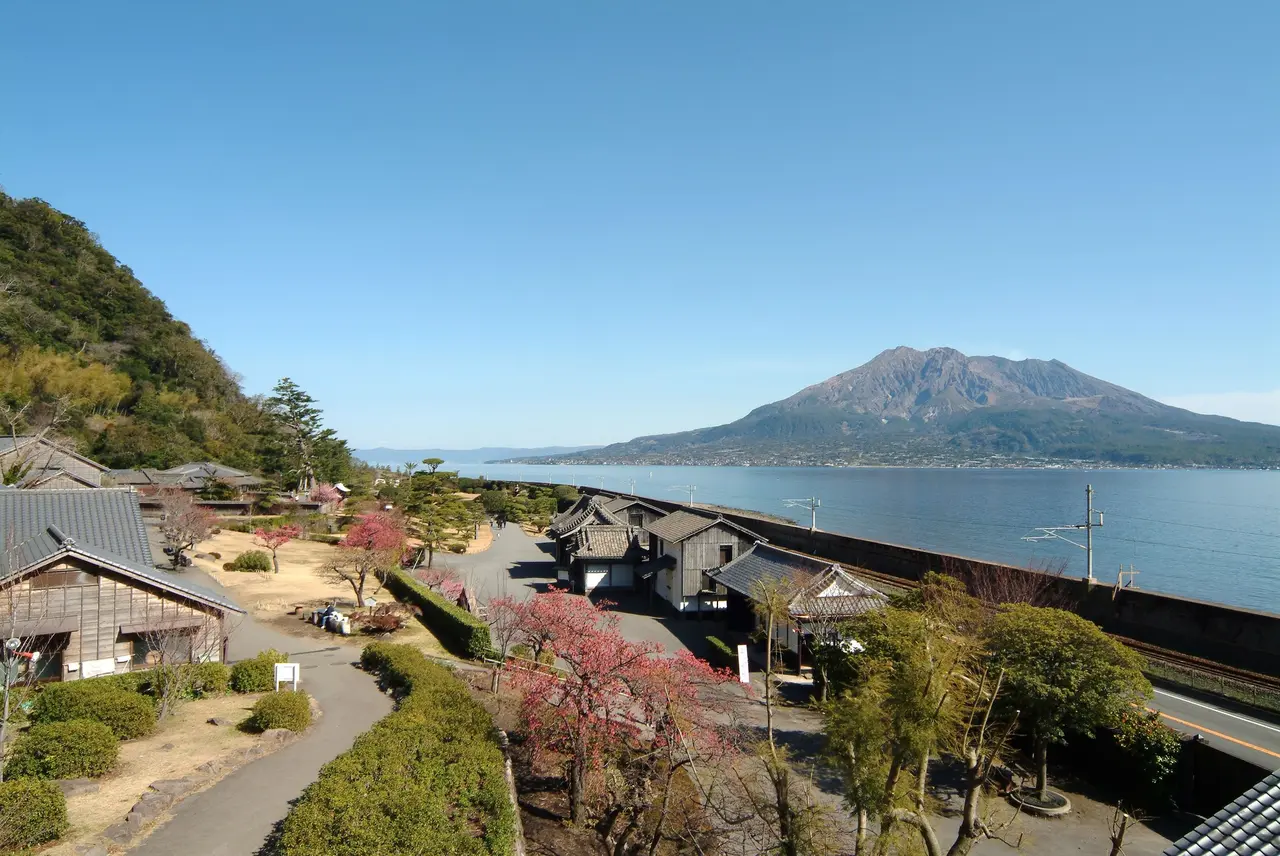
A daimyo garden laid out in 1658 by Mitsuhisa, the 19th head of the Shimadzu family, as a secondary residence for the lords of the Satsuma domain. It is famous for its sweeping borrowed scenery, using Sakurajima as an artificial hill and Kinko Bay as a pond, and is designated a national Place of Scenic Beauty. Inside the grounds are the remains of a reverberatory furnace built under Shimadzu Nariakira, and in 2015 they were inscribed as part of Shuseikan, a component of the World Heritage Site Sites of Japan's Meiji Industrial Revolution.
This text was translated automatically and may contain errors.
A garden that borrows a volcano
Sakurajima rises across the water in front of the garden, with Kinko Bay playing the part of the pond. As you walk among the residence, teahouses, plum trees and bamboo groves, you can catch views of the volcano between the trees and across the pond.
The World Heritage furnace ruins
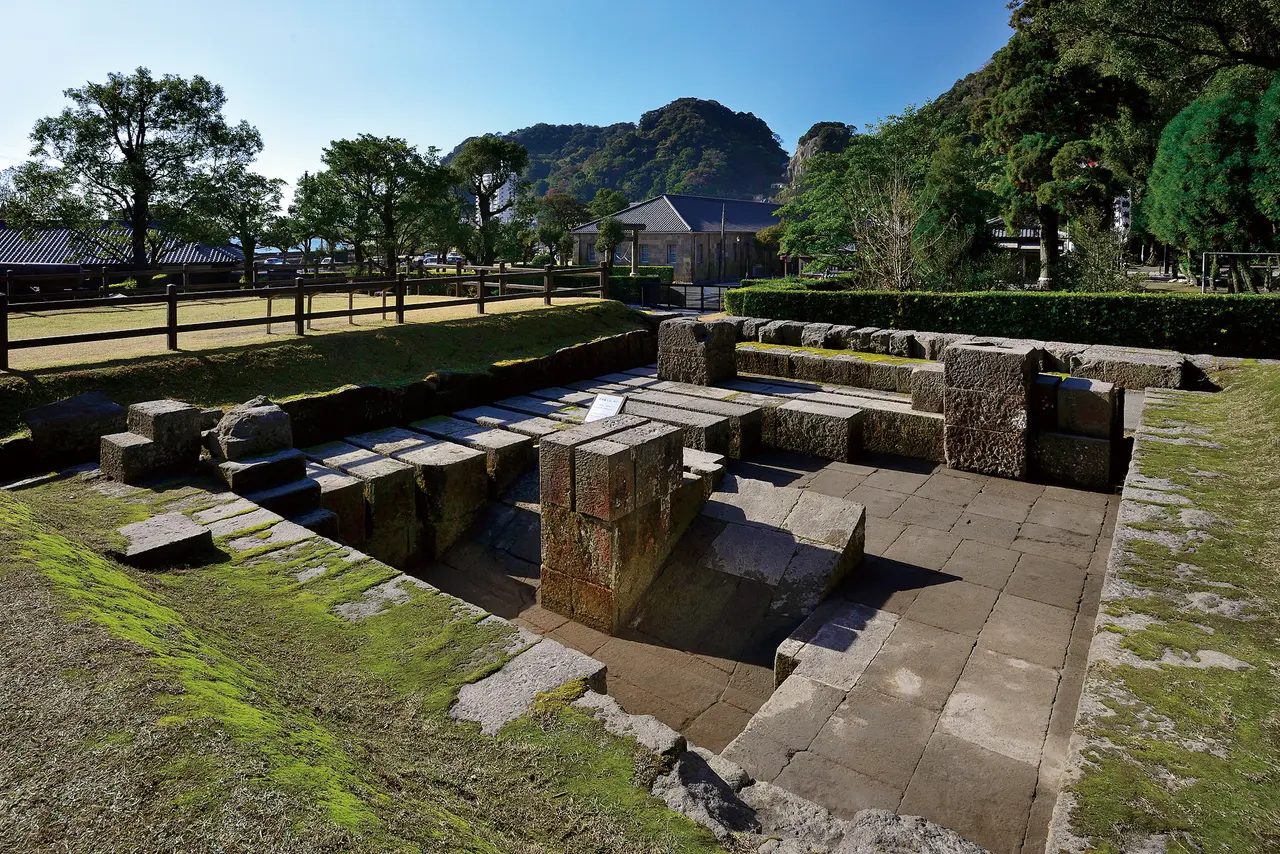
A reverberatory furnace melted iron to cast cannons. Shimadzu Nariakira, who became lord of Satsuma in 1851, studied Western technology and founded Shuseikan, a group of factories, building a reverberatory furnace next to Sengan-en. What remains today is the stone base. Together with the neighboring Shoko Shuseikan museum, housed in the former Shuseikan machine factory, it makes up Shuseikan, a component of the World Heritage Site.
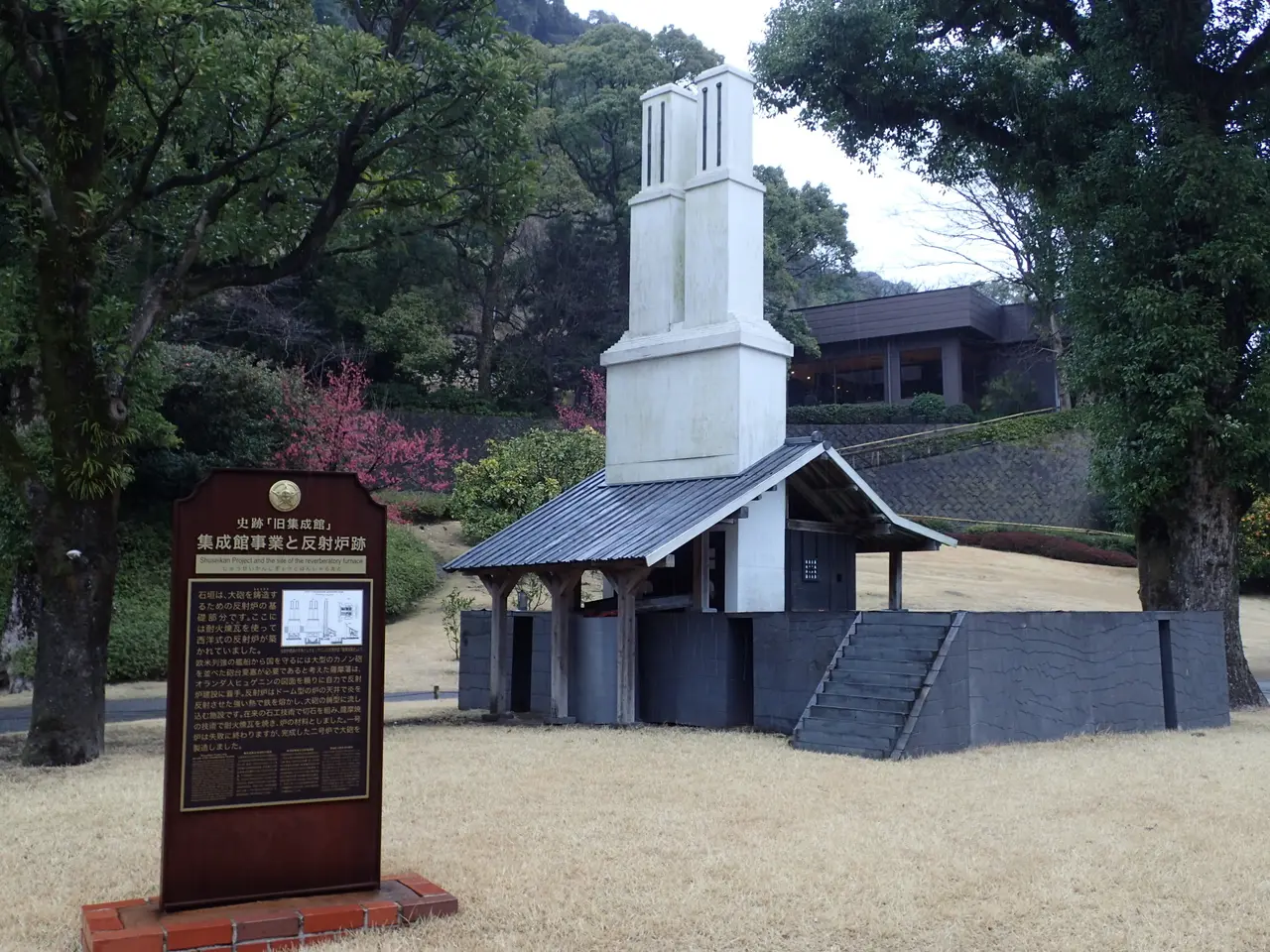
A model of the furnace
Only the base of the furnace survives, but a model shows what it looked like, complete with a tall chimney. Seeing the model first makes the stonework of the base much easier to read. The Kagoshima World Cultural Heritage Orientation Center inside the garden explains how the furnace worked and how Satsuma modernized.
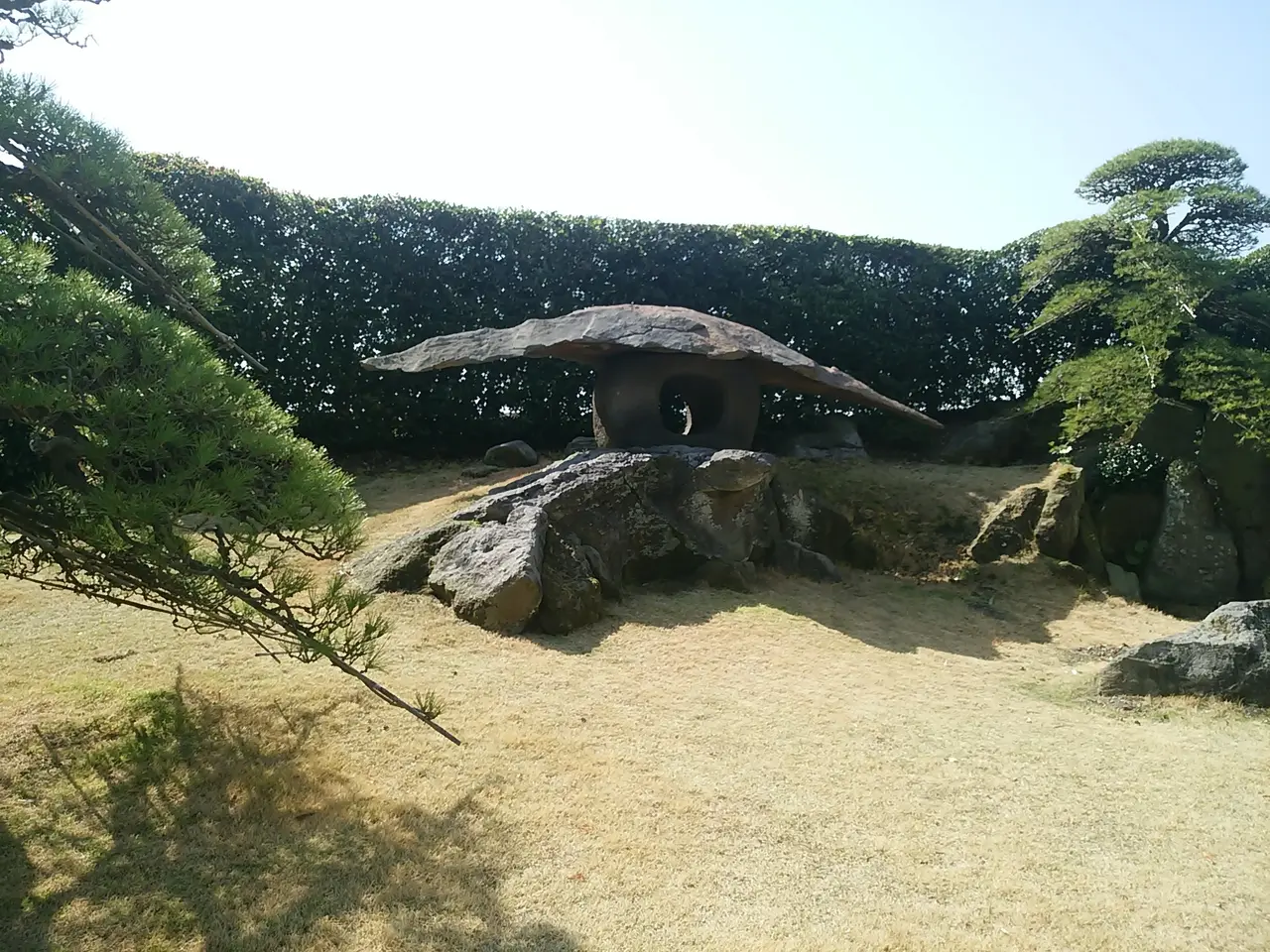
The Tsuru Toro gas-light lantern
In the garden stands the Tsuru Toro, a stone lantern shaped like a crane spreading its wings. In 1857 Nariakira ran a gas pipe to it and lit it as an experiment, before gas lamps ever lit a street in Japan.
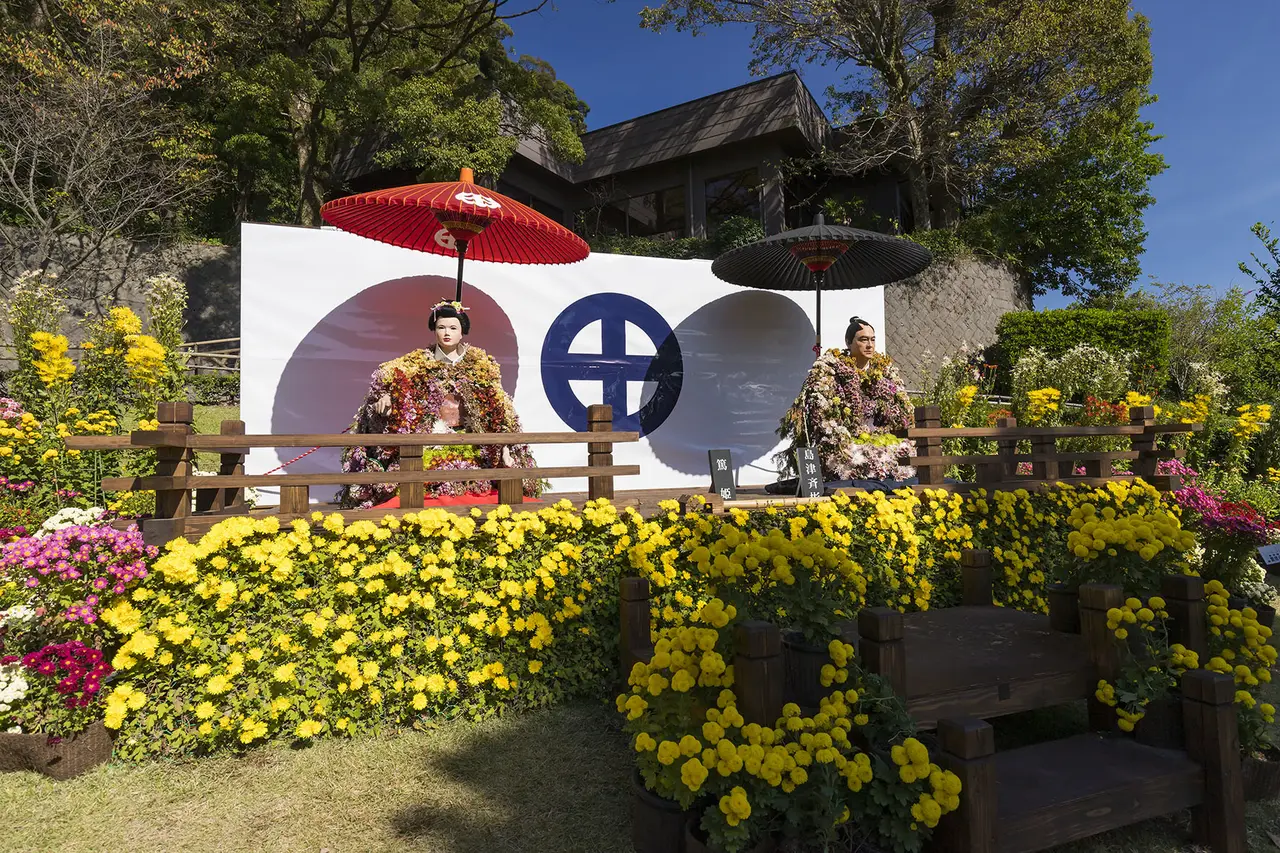
The autumn chrysanthemum festival
In November the chrysanthemum festival fills the garden with mums of every color. Parking gets crowded during the festival, especially on weekends, so the train or bus is the better way to come. Dates vary by year, so check the official website.
- Access
- Right by Senganen Station on the JR Nippo Line (opened in 2025), two stops from Kagoshima-Chuo Station. You can also take the Kagoshima City View loop bus from Kagoshima-Chuo Station and get off at Senganen (Iso Teien)-mae.