Tsunoshima Bridge
About
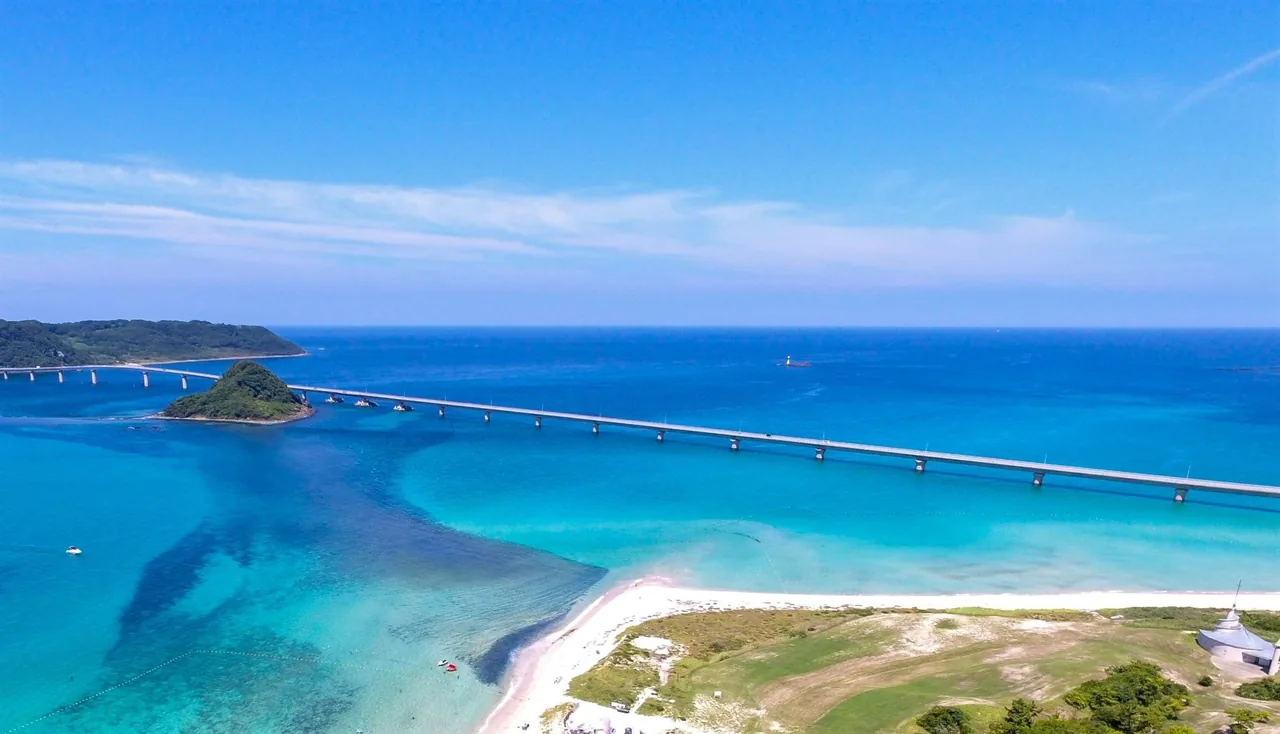
This 1,780-meter bridge links the mainland at Hohoku in Shimonoseki with Tsunoshima, an island in the Hibiki Sea. It opened in 2000 and is free to cross. On a clear day, shallow emerald-green water spreads out on both sides, and the drive feels as if you are skimming across the sea. On the island side stands Tsunoshima Lighthouse, which has guided ships since the Meiji era.
This text was translated automatically and may contain errors.
A straight run across the sea
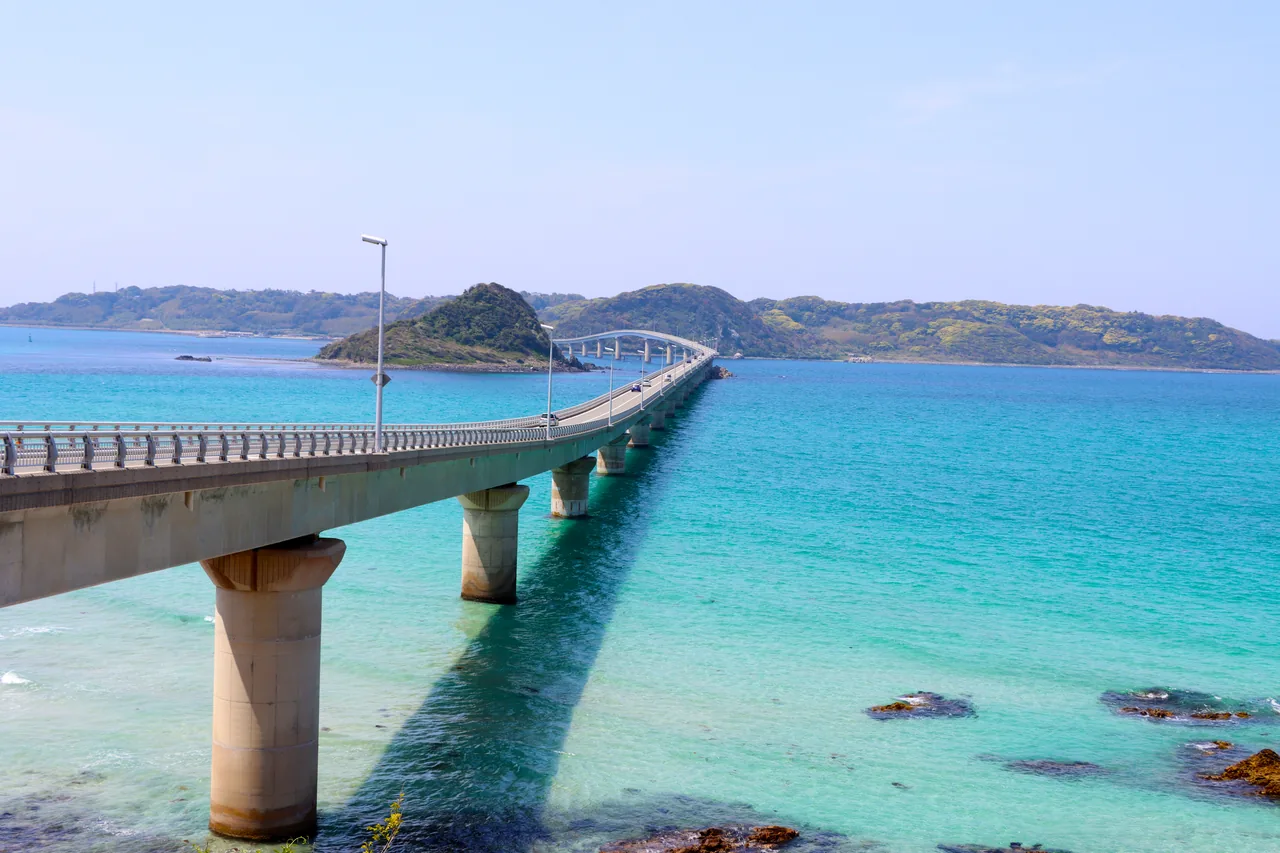
Seen from the mainland end, the bridge runs low over the water, straight toward Tsunoshima. The sea is clear enough to see down to the base of the piers, and its color is at its most vivid when the sun is high. From the deck, the green hills of Tsunoshima draw closer ahead, and there is sea on both sides until you reach the island.
The curve around Hatojima
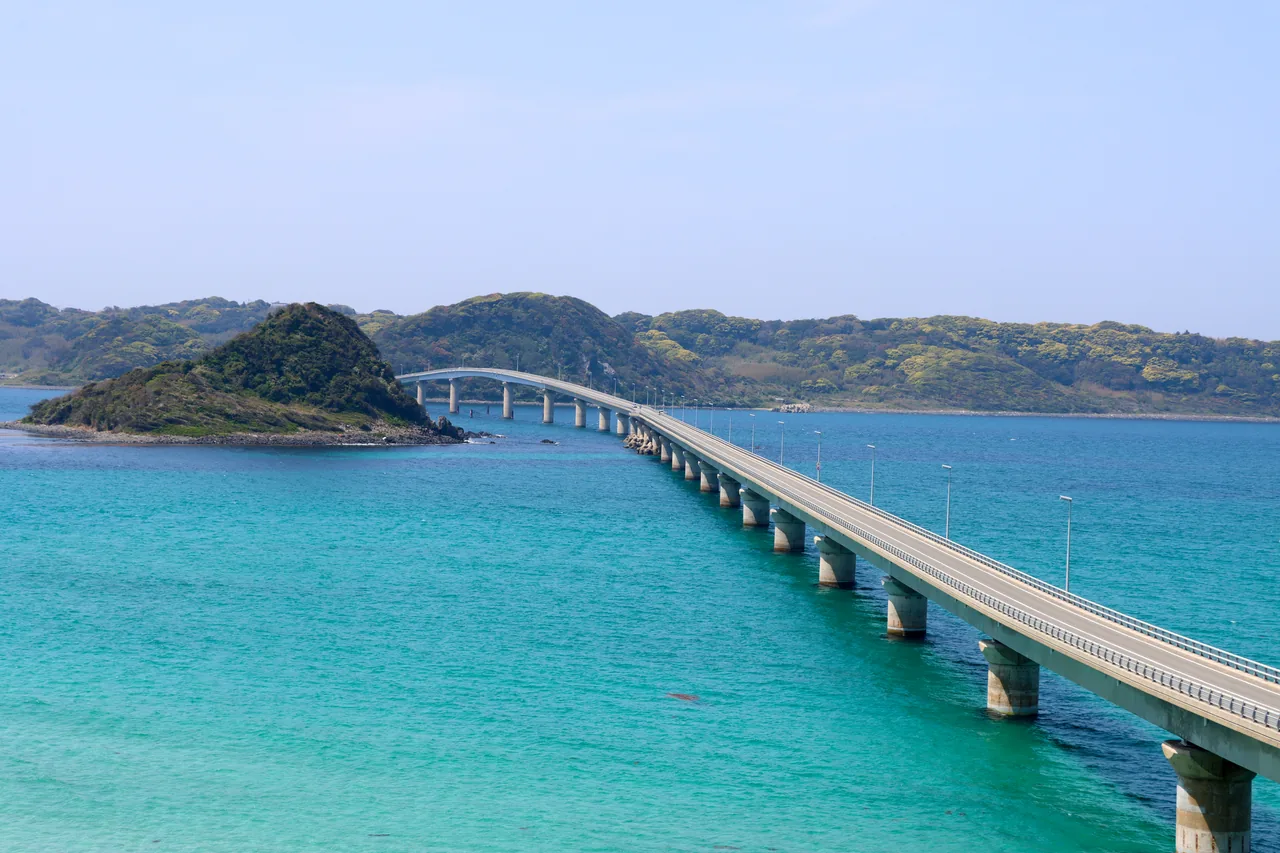
Partway across sits a small island called Hatojima, and the bridge bends gently past it. The green island, the white bridge and the blue sea in one frame make up the classic view of Tsunoshima Bridge.
Tsunoshima Lighthouse
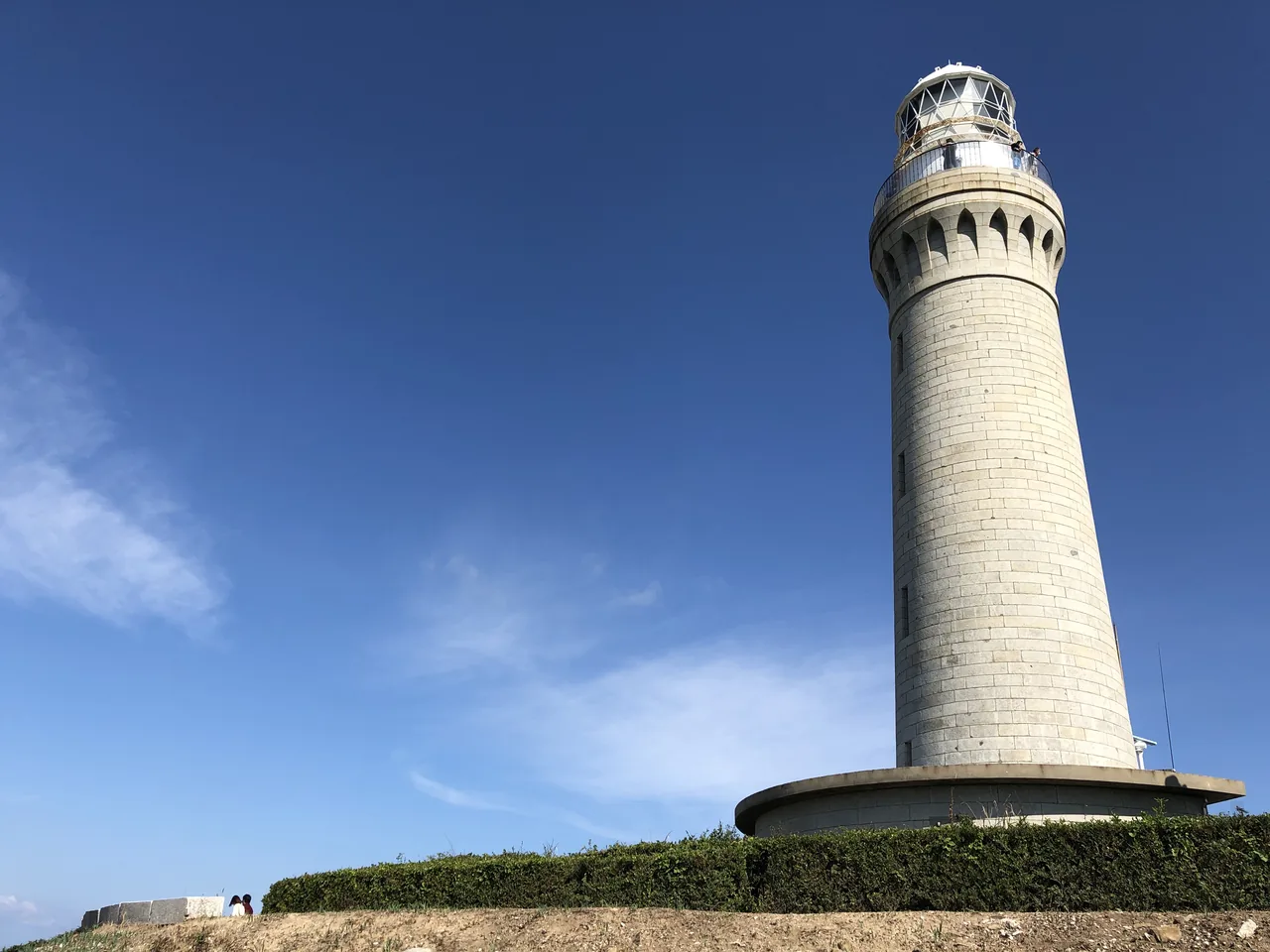
Once on the island, carry on to Tsunoshima Lighthouse. Designed by the British engineer Richard Henry Brunton, it was first lit in 1876, and its granite tower was designated an Important Cultural Property of Japan in 2020. Visitors can go inside and climb its 105-step spiral staircase for a view over the sea. Check the official website for visiting hours.
The lighthouse after dark
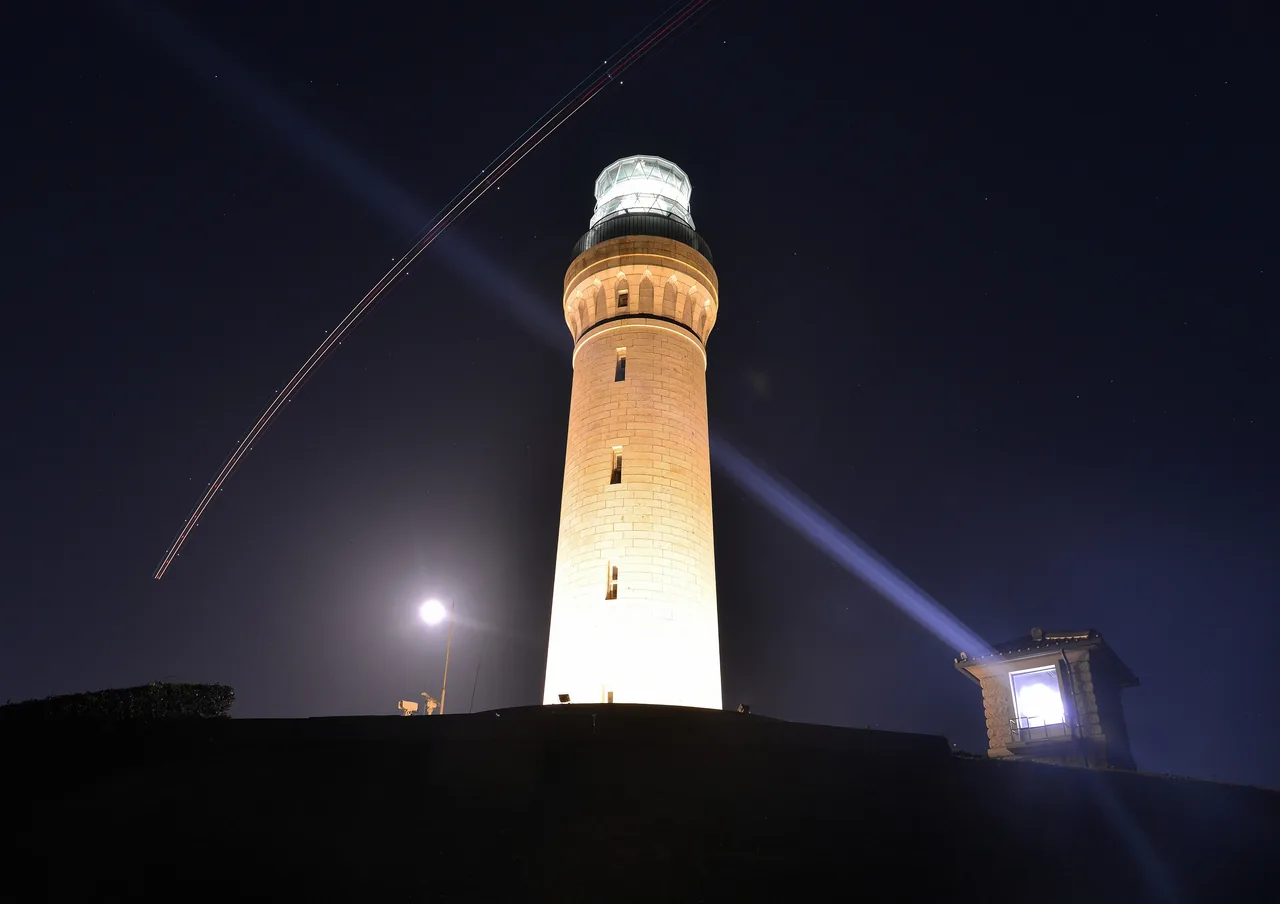
The lighthouse is still in service, so after sunset its lamp comes on and a beam sweeps across the dark sea. It is a completely different sight from the stone tower by day, seen only by those who stay on the island into the evening. If you plan to see it at night, check the time of the last bus back first.
- Access
- From Takibe Station on the JR San'in Line, take a bus bound for Tsunoshima for about 30 minutes to the Hotel Nishinagato Resort Iriguchi stop, then walk about 3 minutes. By car, it is about 70 minutes from the Shimonoseki IC on the Chugoku Expressway.