
Full day · About 6 h
Takeo and Ureshino Onsen Day Trip: Hot Springs and Yudofu
A Meiji-era bathhouse at Takeo Onsen, a giant camphor and the city library, then the shinkansen to Ureshino Onsen for a public bath, a foot bath and yudofu.
This itinerary is translated from the Japanese edition. Read the Japanese edition
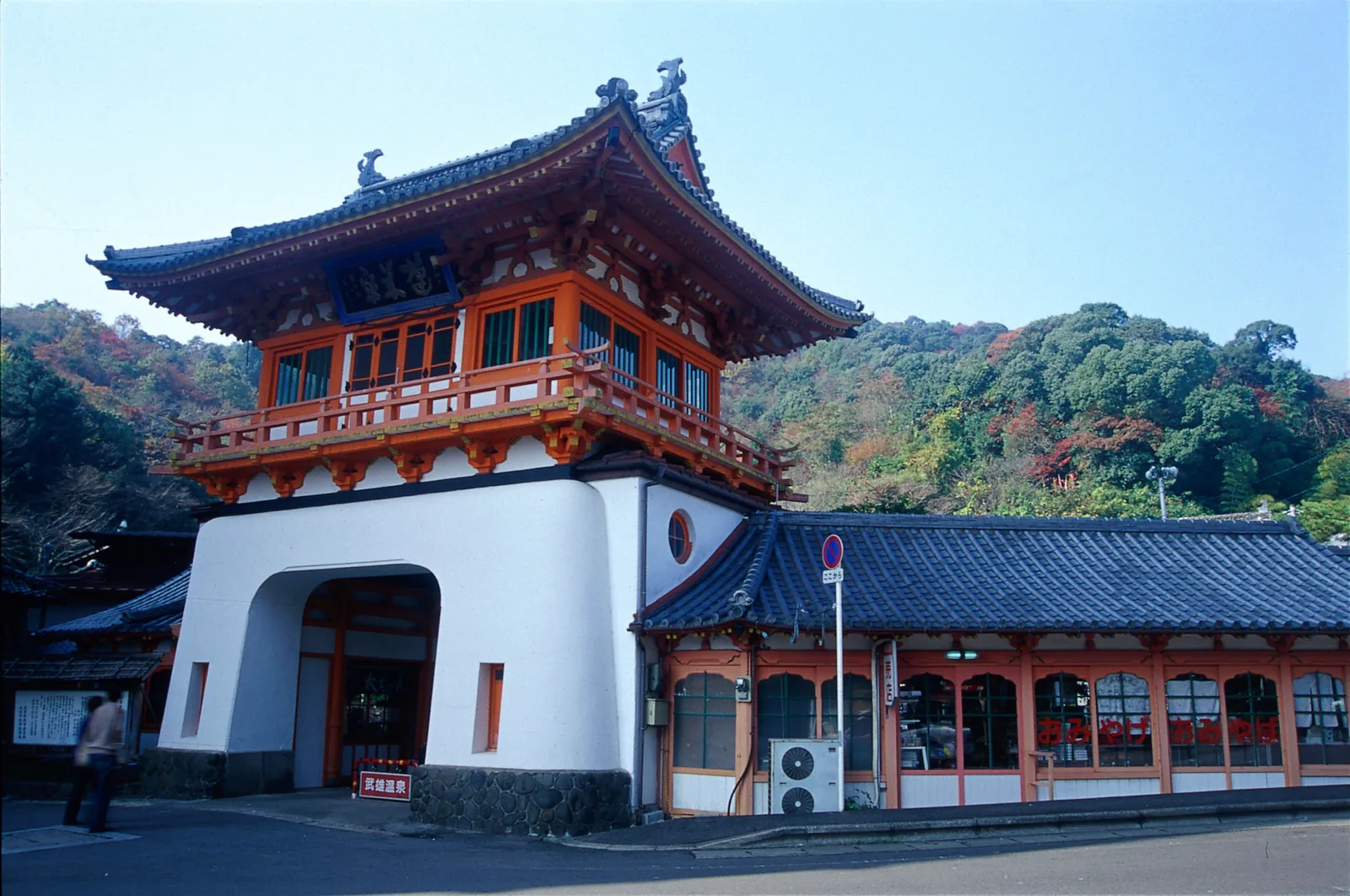
Takeo Onsen (Romon Gate and Shinkan)
Allow about 90 min
Walk from the north exit of Takeo-Onsen Station to the hot spring quarter. The vermilion Romon Gate and the Shinkan building, completed in 1915 to designs by Tatsuno Kingo, the architect of Tokyo Station, are Important Cultural Properties. Day-use baths lie beyond the gate; start the day with a soak at Motoyu, a wooden public bathhouse built in the Meiji period.
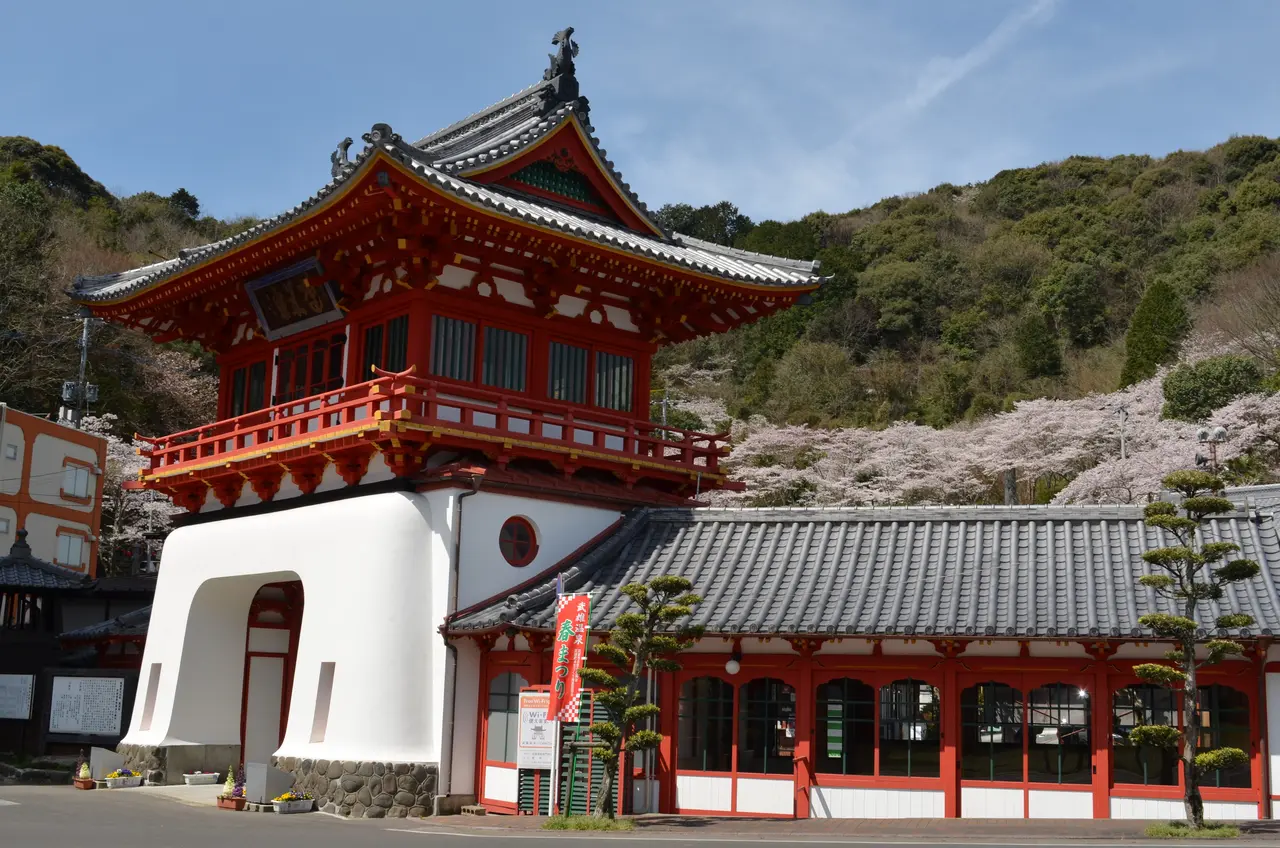
Photo: ©Saga Prefectural Cultural Tourism Federation Walk
The Great Camphor of Takeo (Takeo Shrine)
Allow about 40 min
Pray at Takeo Shrine, then follow the path through the bamboo grove behind the main hall to the sacred camphor tree, said to be 3,000 years old. It stands about 30 m tall with a trunk about 20 m around, and a Tenjin deity is enshrined in the hollow at its base.
Walk
Takeo City Library
Allow about 60 min
A short walk from Takeo Shrine, the city library houses a Tsutaya bookstore and a Starbucks, so you can browse with a coffee in hand. It also has a history museum that holds materials donated by the Nabeshima family, among others.
Train
Siebold-no-Yu Public Bath, Ureshino Onsen
Allow about 90 min
Take the Nishi-Kyushu Shinkansen from Takeo-Onsen to Ureshino-Onsen Station. The hot spring quarter is about 2 km away, so catch a bus or taxi. The city-run public bath opened in 2010; look for the Western-style building with an orange pointed roof. Ureshino Onsen is known as one of Japan's three great "beautiful skin" hot springs.
Walk
Yuyado Hiroba Foot Bath
Allow about 20 min
A free foot bath near Toyotamahime Shrine, with a steam bath for your feet as well. No towels are provided, so bring your own.
Walk
Yudofu Dinner
Allow about 60 min
End the day with Ureshino's specialty, yudofu. Simmered in hot spring water, the tofu turns meltingly soft and silky on the tongue. Restaurants and ryokan in the hot spring quarter serve it.