Takeo Onsen (Romon Gate and Shinkan)
About
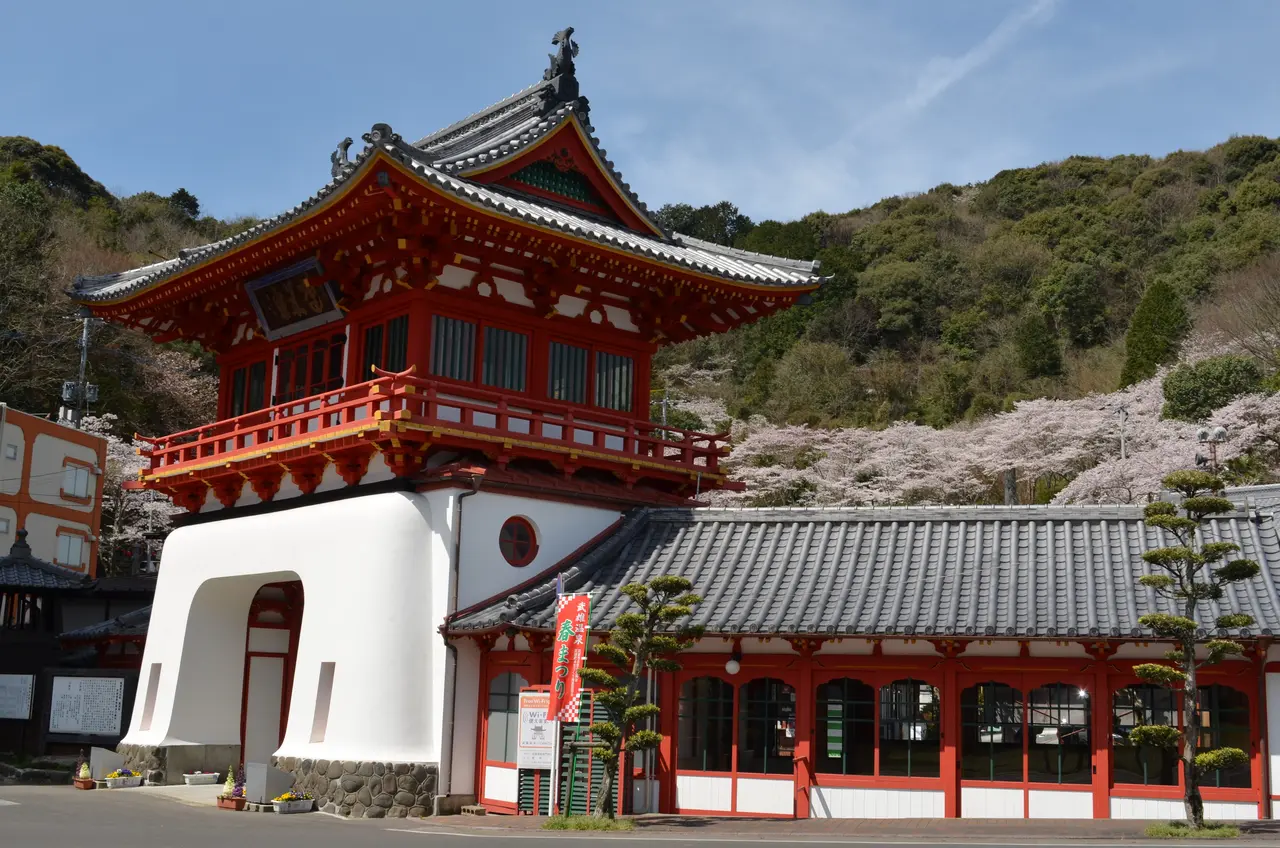
The vermilion Romon Gate at the entrance to Takeo Onsen was designed by Tatsuno Kingo, architect of Tokyo Station, and completed on April 12, 1915. Its vermilion upper story sits on a white plaster base, like the gate of a sea-god's palace, and together with the Shinkan building completed at the same time it is designated an Important Cultural Property of Japan. Day-use baths lie beyond the gate, and walking through the Romon to the hot springs is the classic way to visit Takeo. The photo at the top shows the gate in cherry blossom season.
This text was translated automatically and may contain errors.
The gate at night and the zodiac carvings
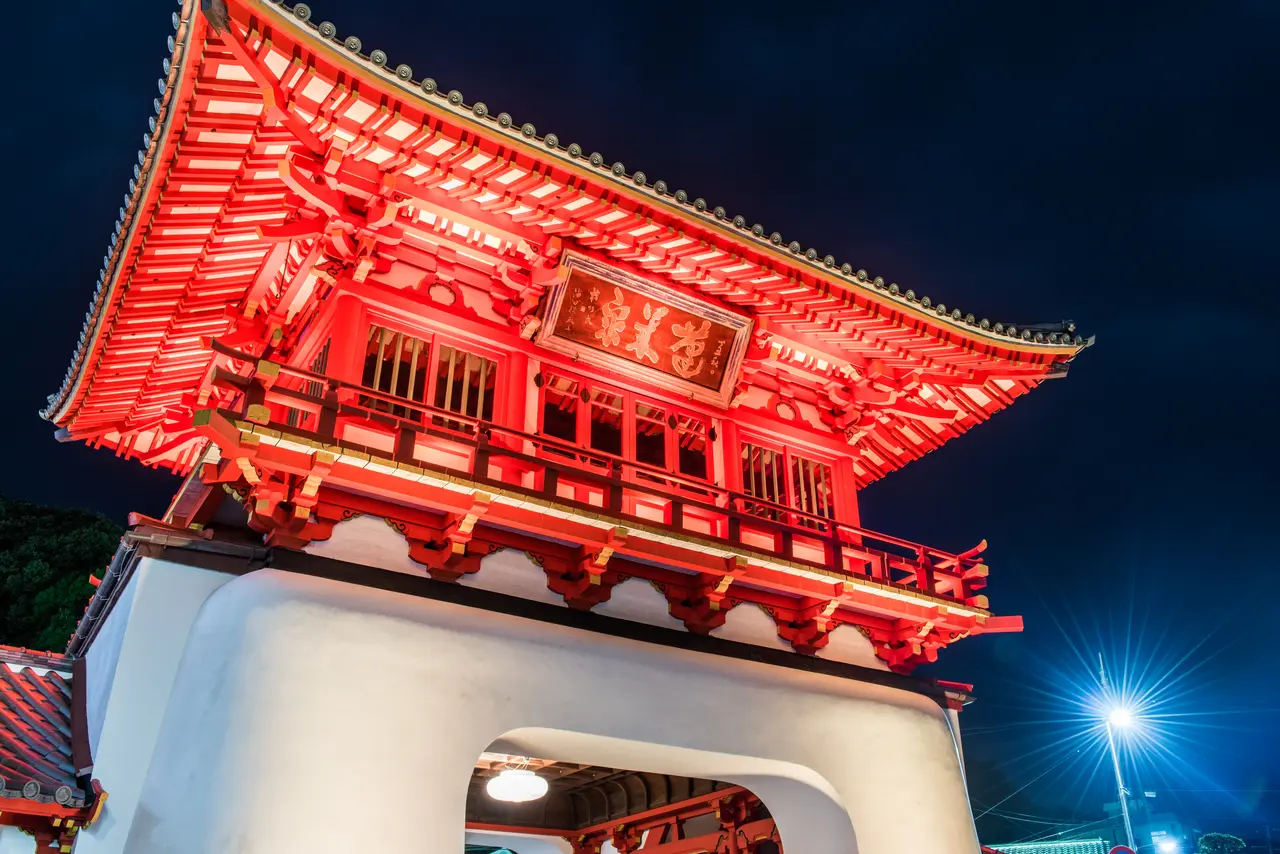
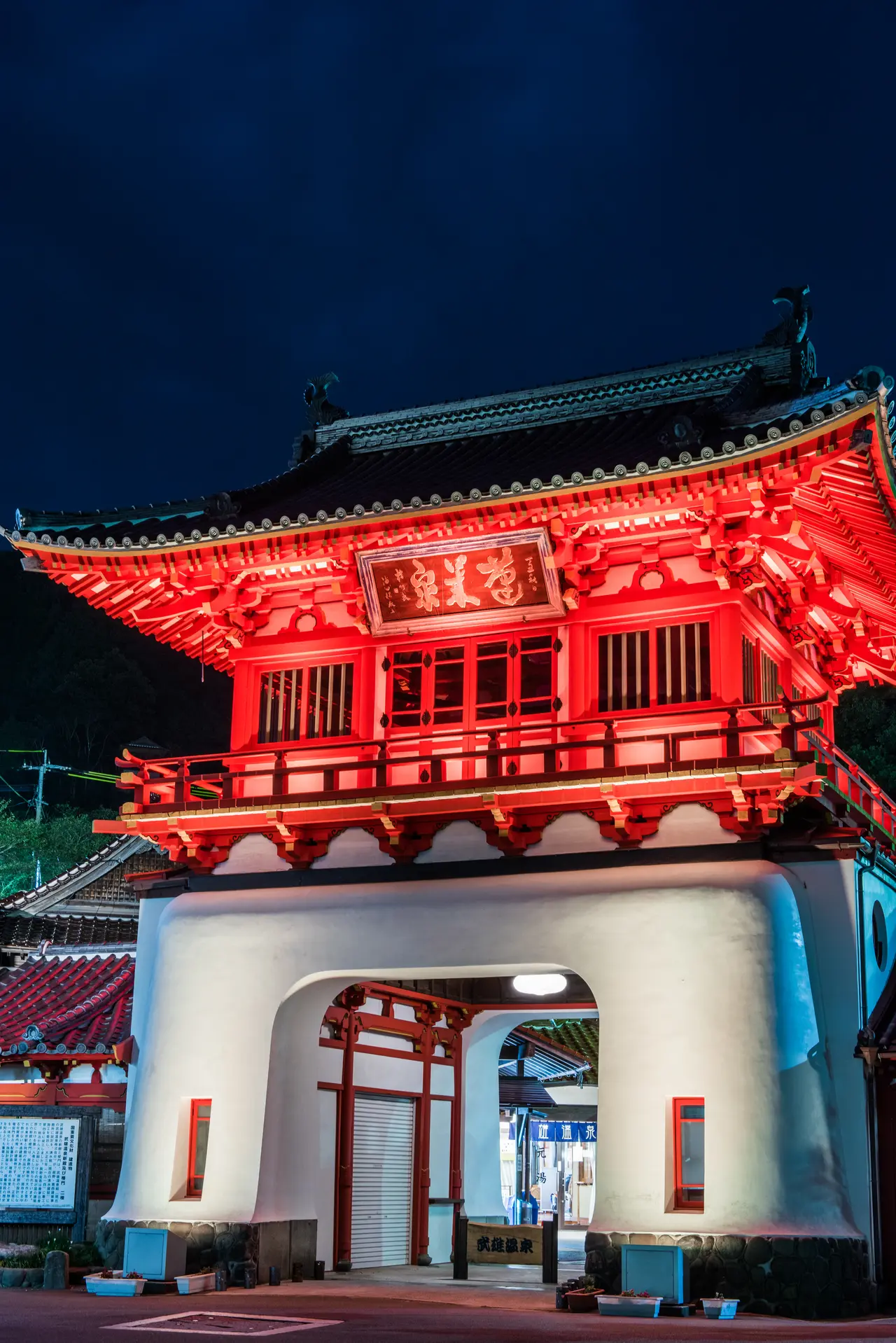
The Romon is a two-story wooden gate with a hip-and-gable roof of traditional tiles, in the style known as a ryugu-mon, or "dragon palace gate." This photo shows the gate lit up at night, its vermilion upper story glowing against the dark sky. Carved in the four corners of the upper-floor ceiling are four signs of the Chinese zodiac: the rat, rabbit, horse and rooster. They drew attention when people noticed that, together with the eight zodiac signs in the north and south domes of Tokyo Station, they complete the set of twelve. The upper floor is not usually open, but viewing tours are held from time to time, so check the dates with the Takeo City Tourism Association.
The Shinkan, restored to its Taisho-era look
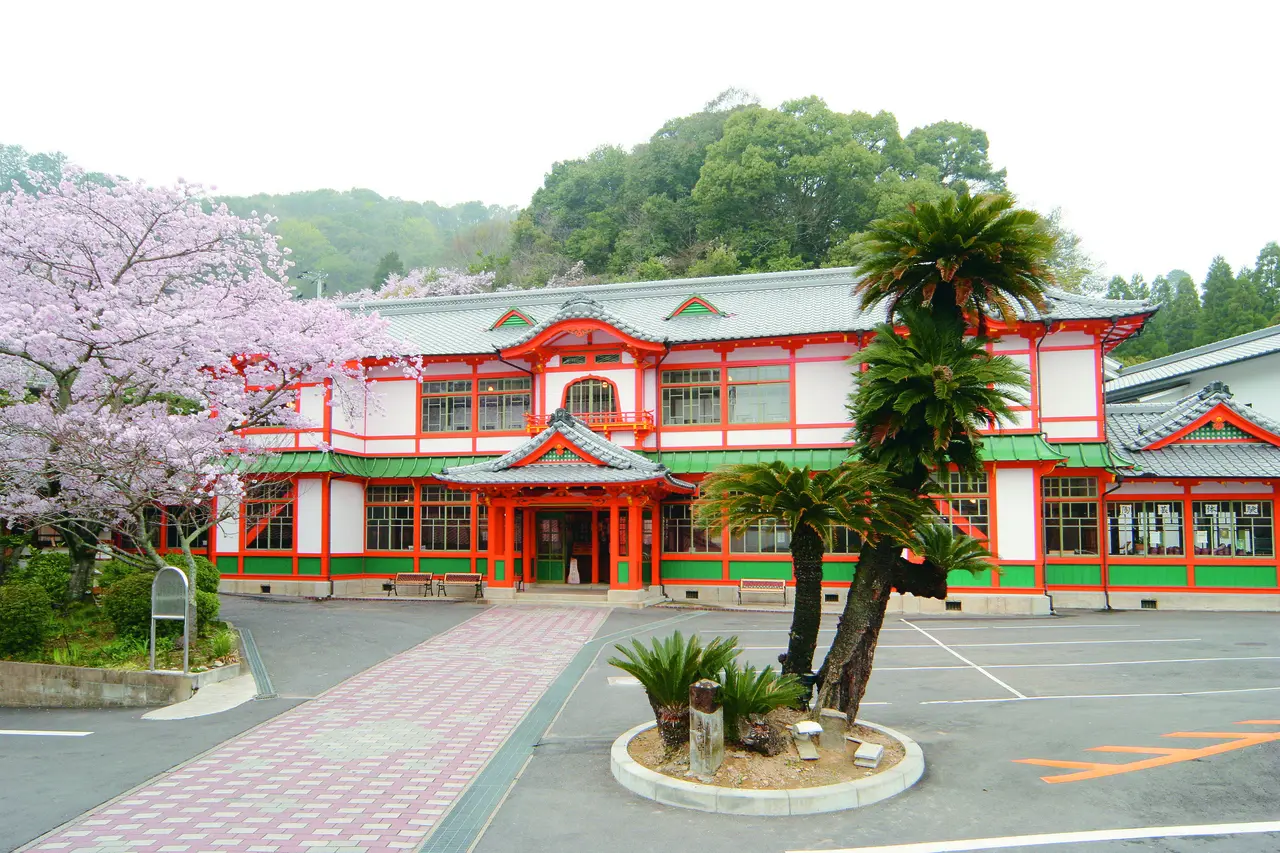
The Shinkan building behind the gate was also designed by Tatsuno Kingo and was completed in 1915, the same year as the Romon. It was once a bathhouse. After it had deteriorated, it was restored and returned to its original appearance in 2003. You cannot bathe there now; instead it is open as a building to look around, where you can see what a public bathhouse of the time was like and baths decorated with majolica tiles and ceramic design tiles, which were precious in those days. This photo shows the Shinkan in spring with the cherry trees in bloom.
Look closely at the tiles
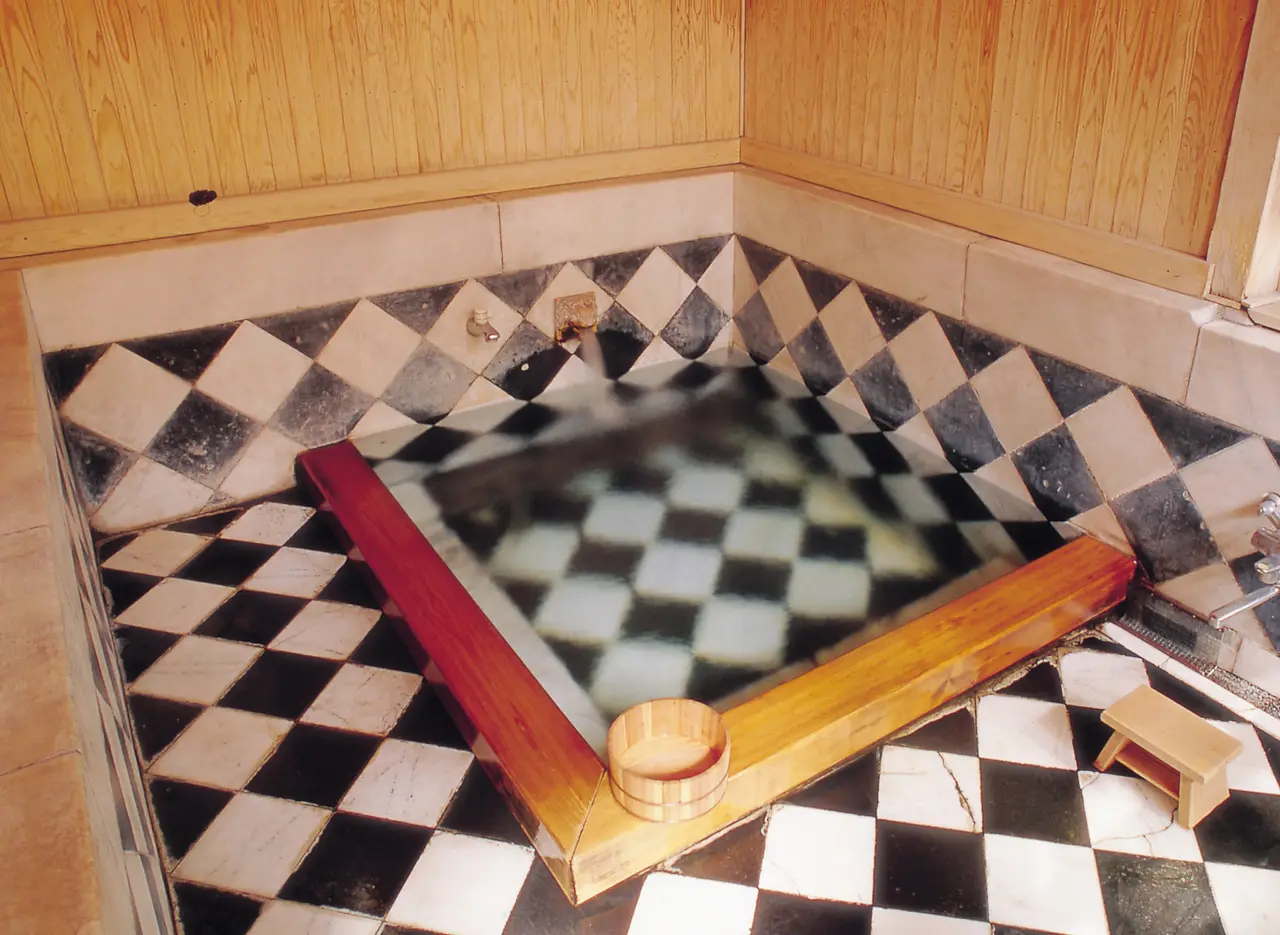
Several baths are gathered behind the gate at Takeo Onsen, including private baths you can rent and public bathhouses. This photo shows a tub tiled in a black-and-white checkered pattern, with a wooden rim and a wooden bucket, keeping the feel of an old-fashioned bathroom. Hours and prices differ from bath to bath, so check the Takeo City Tourism Association's official website before you go.
Through the gate to the baths
Pass under the gate at night and a walkway leads on to the baths. After your soak, it is worth stepping back to take in the Romon from the front. It is within walking distance of Takeo-Onsen Station, so you can also drop in while waiting for a train.
- Access
- About a 15-minute walk from the north exit of Takeo-Onsen Station on the JR Sasebo Line and the Nishi-Kyushu Shinkansen.