Sueyama Shrine
About
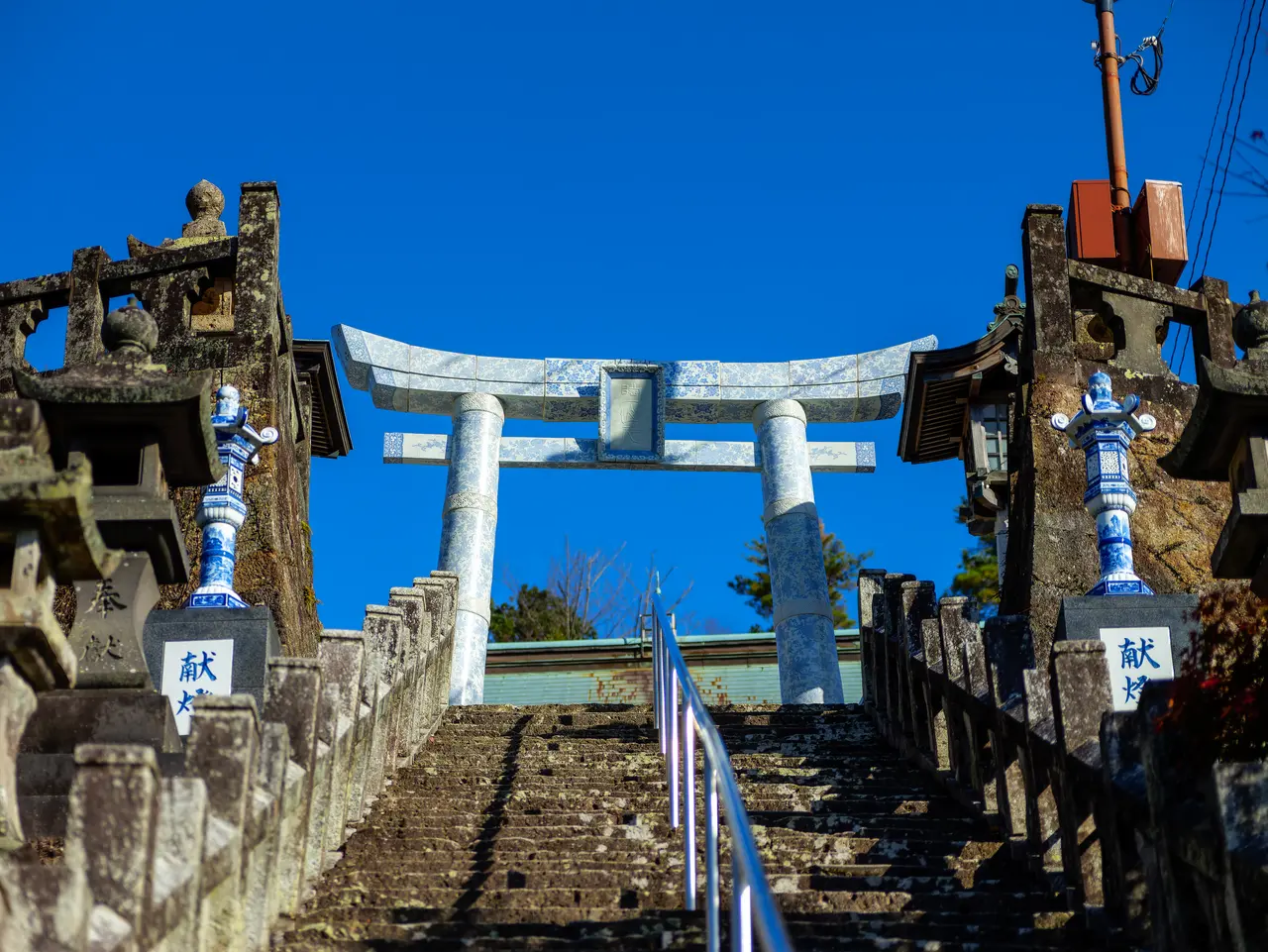
A shrine on a hillside in Arita, the town of Arita porcelain. Its torii gate, guardian lion-dogs, large water basin and fence are all made of porcelain. The great torii, white porcelain with an arabesque pattern, was donated in the Meiji era and is a Registered Tangible Cultural Property of Japan. The tracks of the JR Sasebo Line cross the approach just below the stone steps, so you walk over a railway crossing on your way in.
This text was translated automatically and may contain errors.
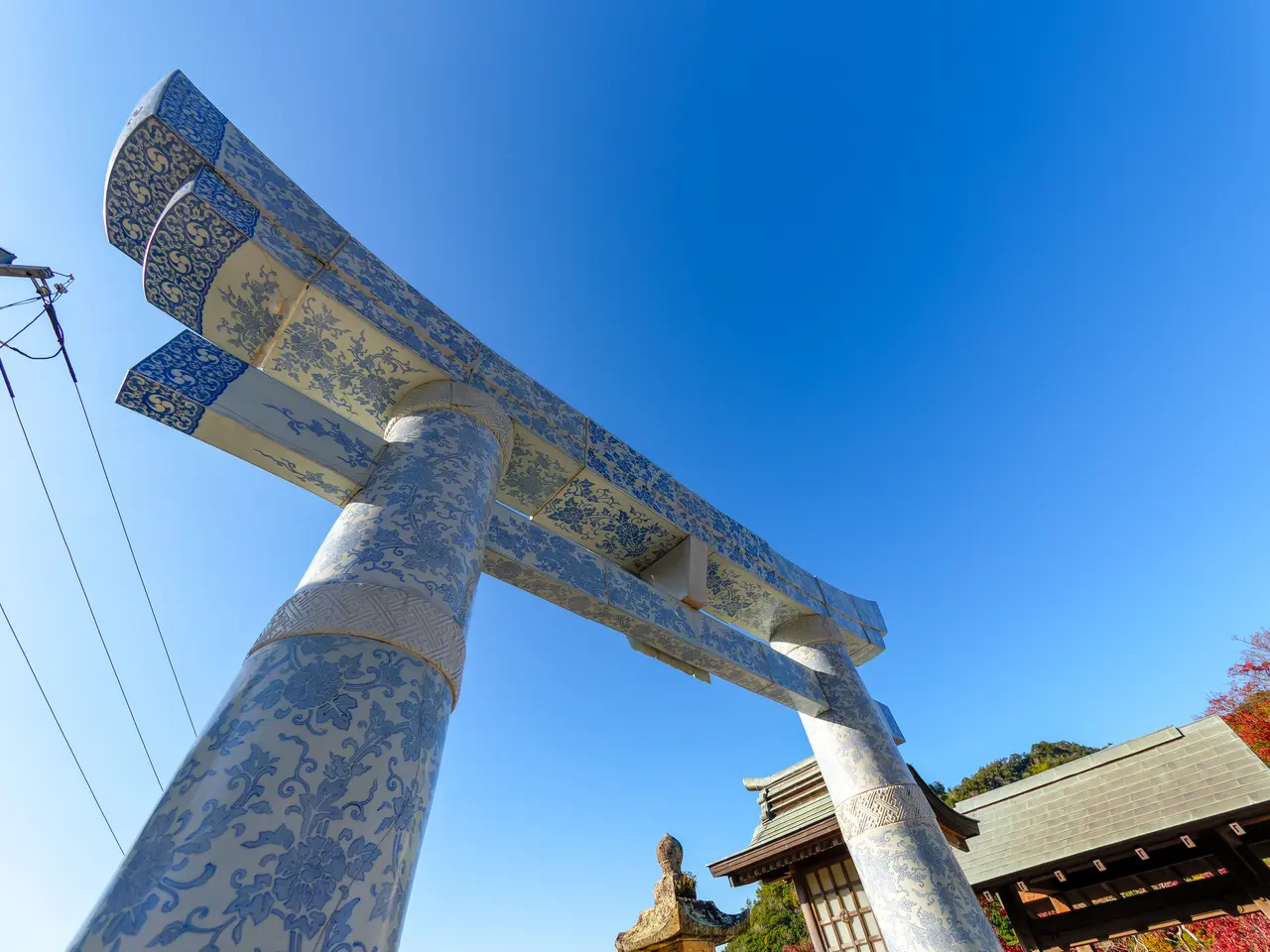
A white porcelain torii with arabesques
The great torii at the top of the steps stands about 3.7 meters tall. Its white porcelain is painted with arabesque scrolls in gosu, a cobalt-blue pigment. Most torii are stone or wood, but this pottery town made its gate from porcelain. Cracks and chips had appeared, so it was restored with local donations and returned to how it looked when it was registered. The lion-dogs, water basin and fence are porcelain too, so compare them as you climb. The lion-dogs have been removed for repairs at times, so check the Arita Tourist Association's information if you want to be sure of seeing them.
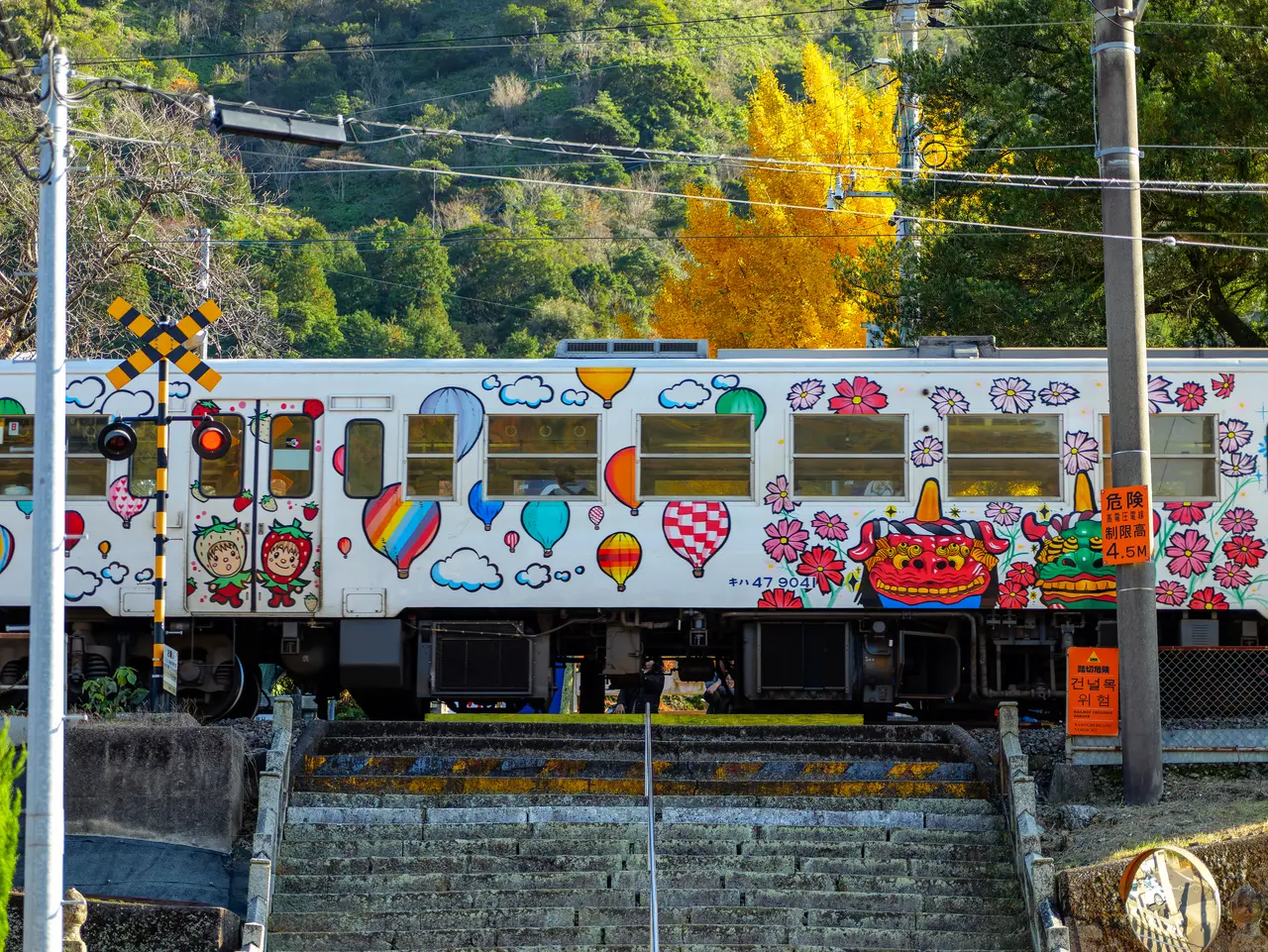
Tracks across the approach
The JR Sasebo Line runs right below the steps, so the approach crosses a railway, which is unusual for a shrine. This photo was taken in autumn, with golden ginkgo leaves on the hill behind.
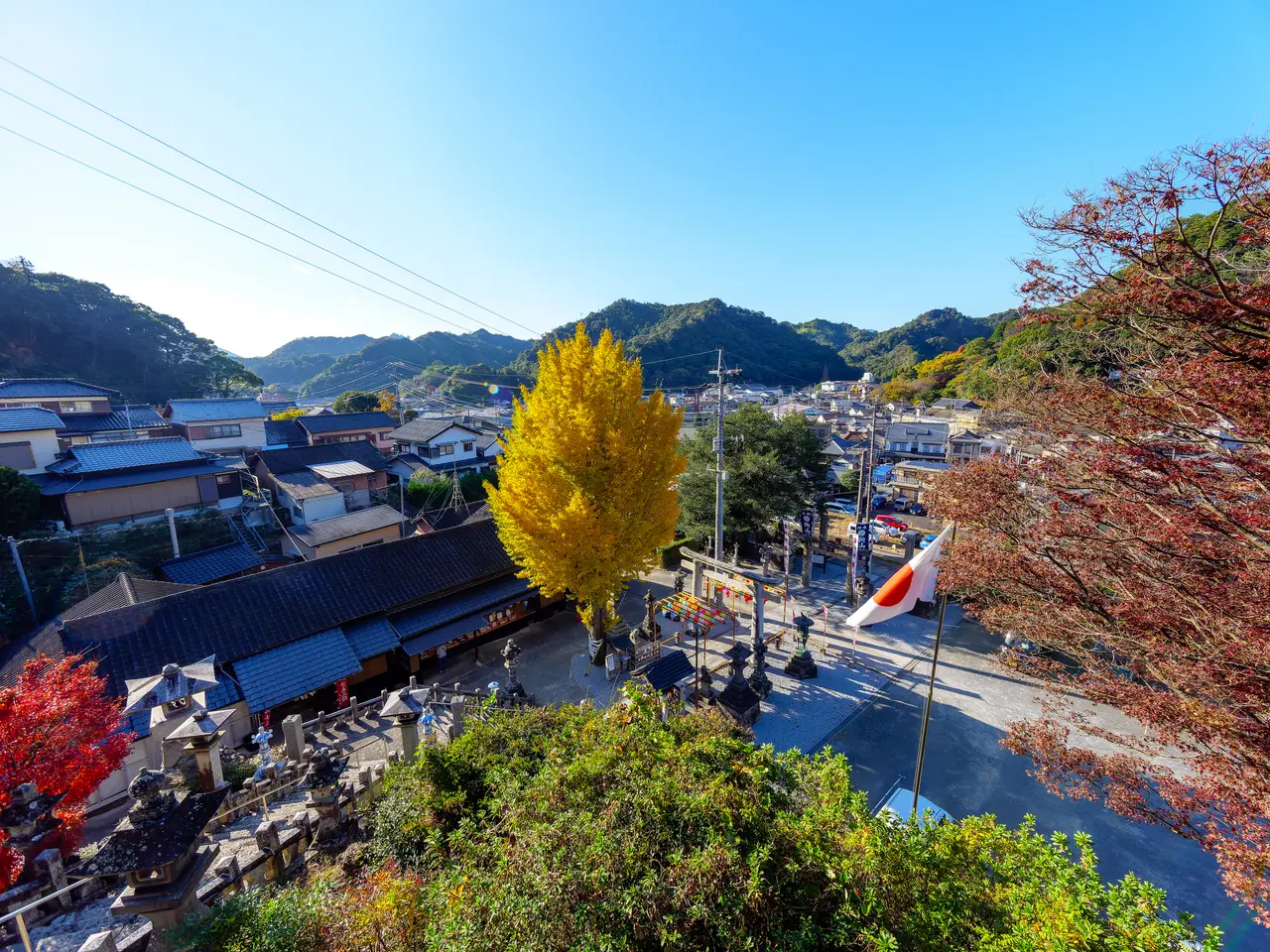
Arita from the hillside
The grounds sit on a slope, and from the upper part you can look down on the rooftops of Arita and the hills around them. This photo was taken in autumn, with the town spreading out beyond trees in fall colors.
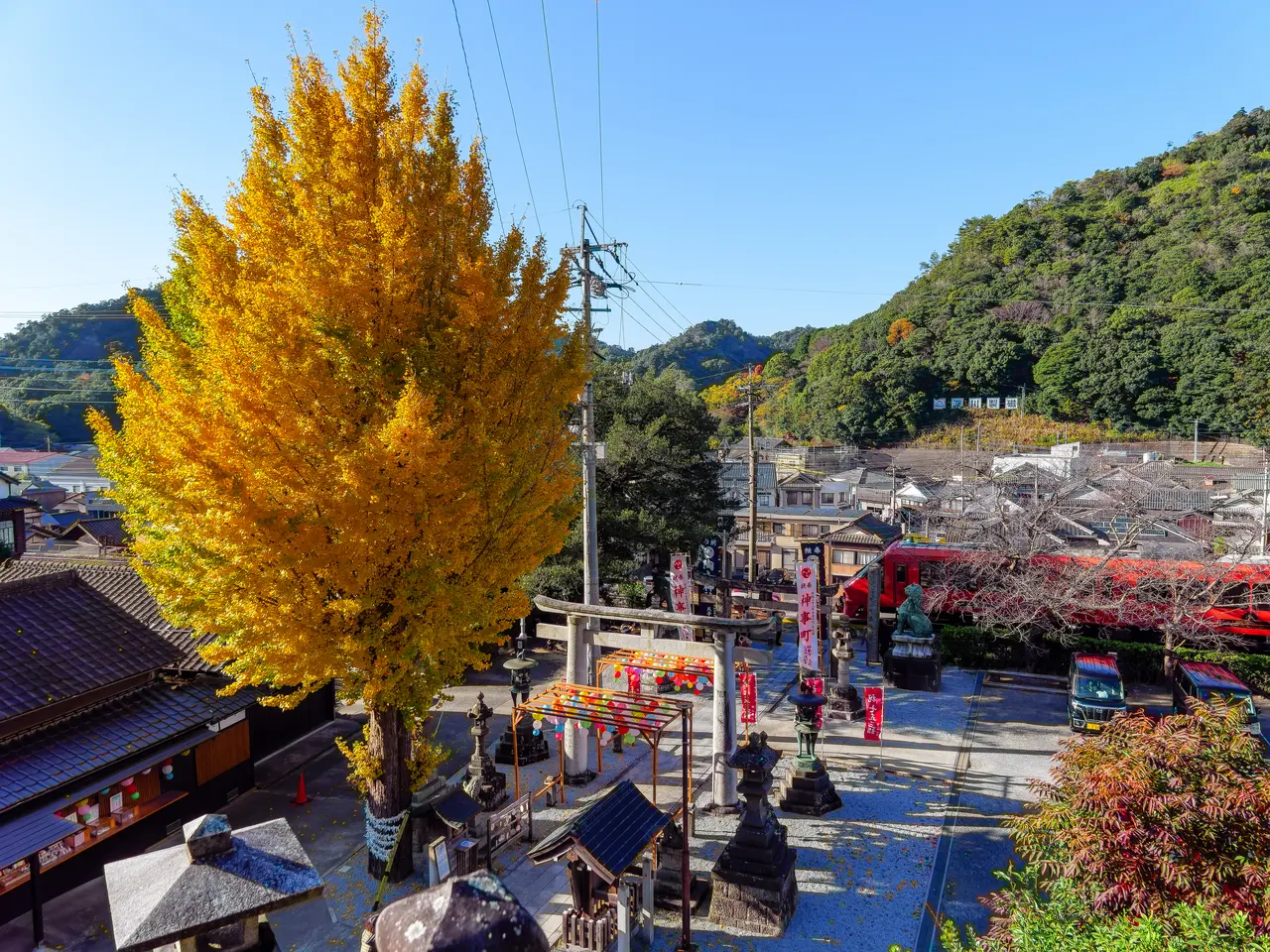
The great ginkgo in autumn
A large ginkgo stands near the entrance to the grounds, and its leaves turn yellow in autumn. The shrine's main deity is Emperor Ojin, and it also honors Yi Sam-pyeong, regarded as the founder of Arita porcelain, and a mountain path of about 15 minutes from the shrine leads up to his monument. Many people visit the shrine together with a walk through the Uchiyama district.
- Access
- About a 20-minute walk from Kami-Arita Station on the JR Sasebo Line. From the Uchiyama district streets (the Fudanotsuji intersection), turn toward the railway and you will see the shrine on the far side of the tracks. The approach crosses the line, so watch for trains at the crossing.