Akita Cherry Blossoms: Kakunodate, Senshu Park and When to Go
This guide is translated from the Japanese edition. Read the Japanese edition
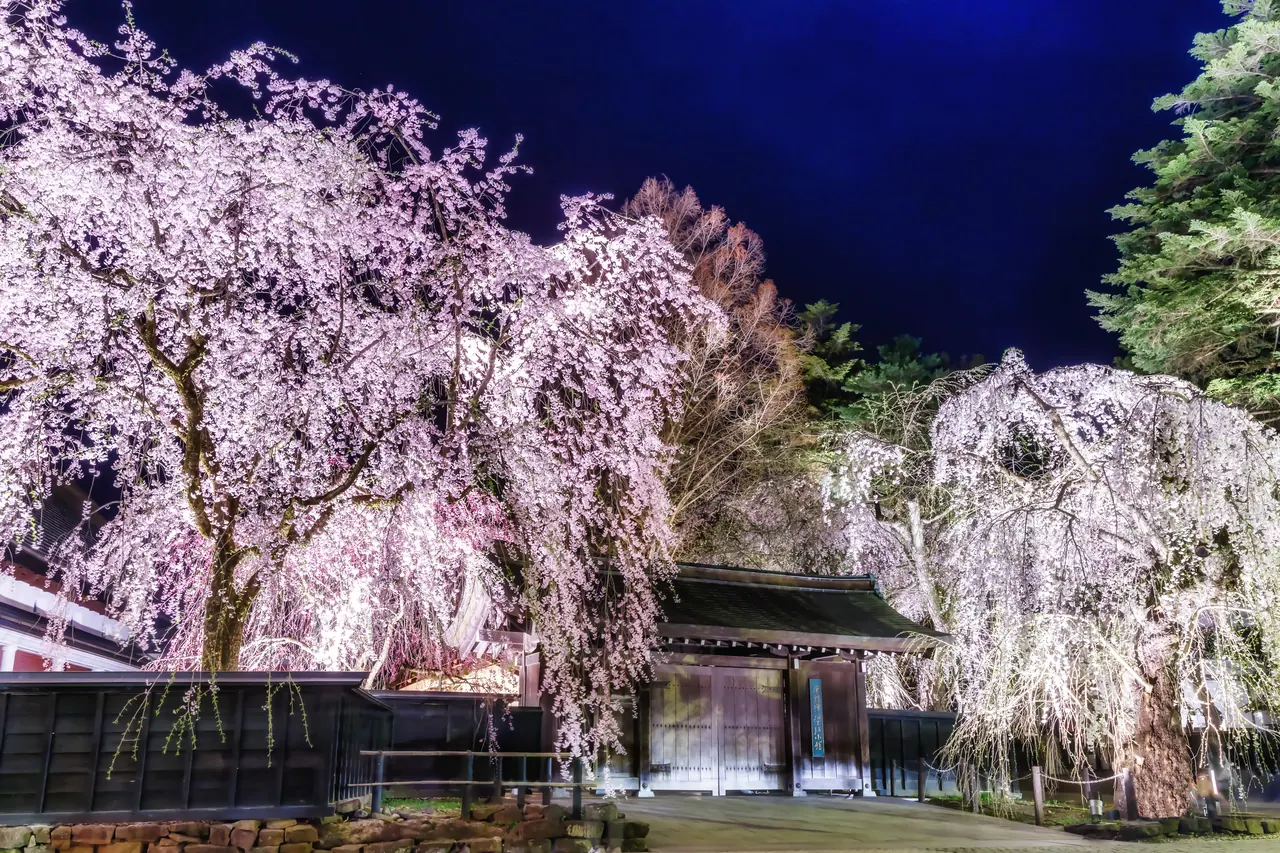
Akita cherry blossoms peak mid-April to early May: Kakunodate's weeping cherries, Senshu Park's night blossoms and Ogata's 11 km road of cherries and rapeseed.
Only after mid-April do Akita's cherry trees finally open. In Kakunodate, pale weeping cherries hang their branches over the black wooden fences of the samurai residences, and an avenue of Somei-Yoshino cherries about 2 km long runs along the river west of town. Senshu Park, the castle ruins in Akita City, has about 650 cherry trees that glow under lanterns and lights at night. At the end of April, a road lined with cherries and rapeseed blossoms comes into bloom in Ogata, a village on reclaimed land. Because blossoms arrive late in Akita, knowing the order in which each spot blooms makes it easier to plan your trip.
When Do Akita's Cherry Blossoms Bloom?
Akita's cherry blossoms usually peak from mid- to late April, and at some spots you can enjoy them into early May. Blooming shifts a lot with each year's temperatures. In Kakunodate, the weeping cherries opened on April 5 in 2023 after a warm March, but in 2013 they didn't bloom until April 29. In 2025, Kakunodate's weeping cherries opened on April 19 and reached full bloom on the 22nd, and the Somei-Yoshino opened on April 20 and reached full bloom on the 23rd (Semboku City records).
| Spot | Area | Main trees | Peak / festival (typical) |
|---|---|---|---|
| Kakunodate Samurai District | Semboku City | Weeping cherries | Mid to late April |
| Hinokinai River embankment | Semboku City | Somei-Yoshino | Mid to late April |
| Senshu Park | Akita City | About 650 trees incl. Somei-Yoshino | Mid to late April (2026 festival: April 11–22) |
| Cherry Blossom and Rapeseed Road | Ogata Village | Cherries and rapeseed | Mid-April to early May |
Semboku City's "Akita Hana Kiko" page posts each year's bloom forecast and daily updates on the trees.
Kakunodate Samurai District: Weeping Cherries over Black Fences
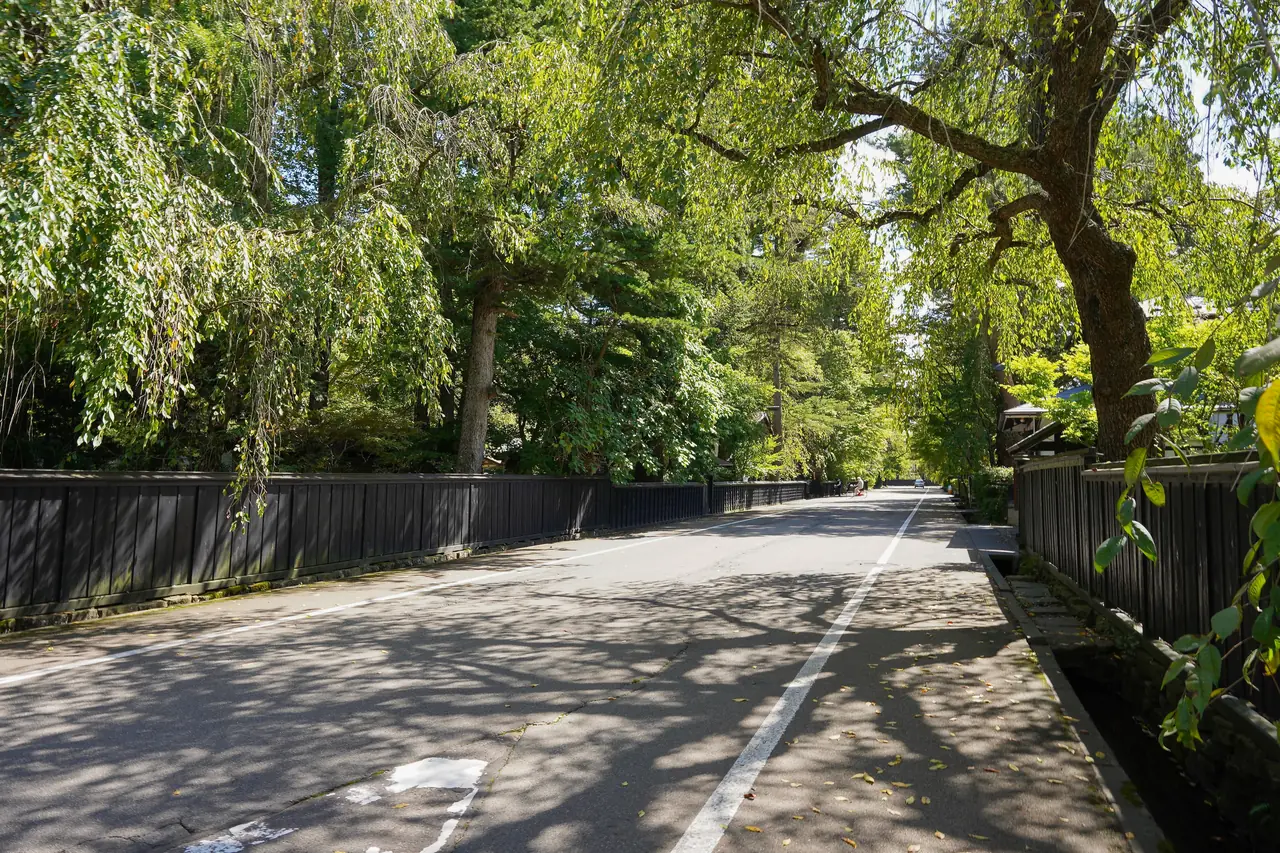
Kakunodate Samurai District is the street that remains in Uchimachi, where samurai lived in the castle town of Kakunodate, founded in the early Edo period. Black wooden fences line both sides of the wide road, and weeping cherries reach their branches over the street from the residences' gardens. According to Semboku City, there are about 400 weeping cherries along the street, of which 162 are designated a national Natural Monument as "the Weeping Cherry Trees of Kakunodate." Tradition says they grew from saplings that the wife of Yoshiaki, second head of the Satake-Kita family, brought from Kyoto in her trousseau about 350 years ago, in memory of her hometown.
The weeping cherries often bloom slightly earlier than the Somei-Yoshino along the river, and in some years almost at the same time. Some samurai residences, such as the Ishiguro and Aoyagi houses, are open inside, so you can see how samurai lived while you take in the blossoms. It's about a 20-minute walk from JR Kakunodate Station.
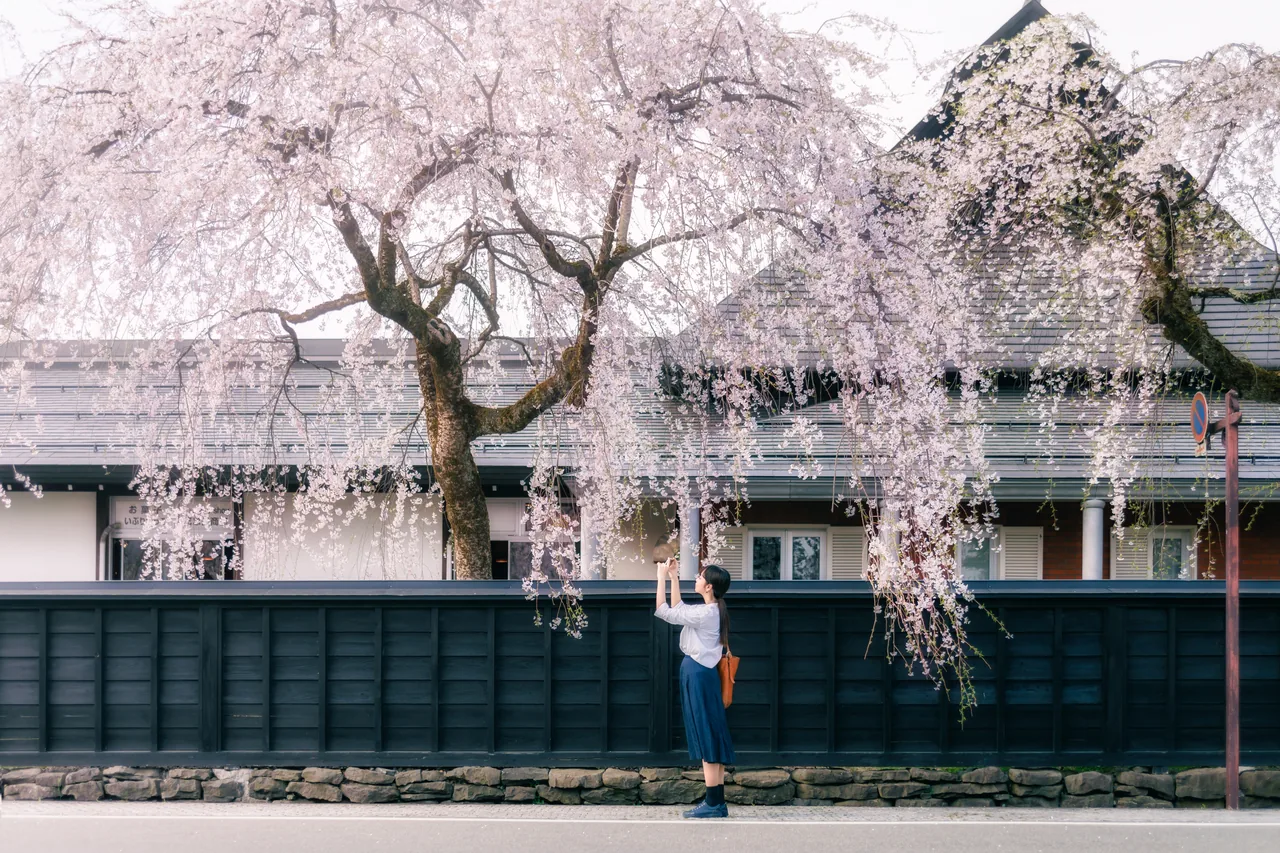
Photo: Akita Prefecture
Hinokinai River Embankment: A 2 km Avenue of Somei-Yoshino
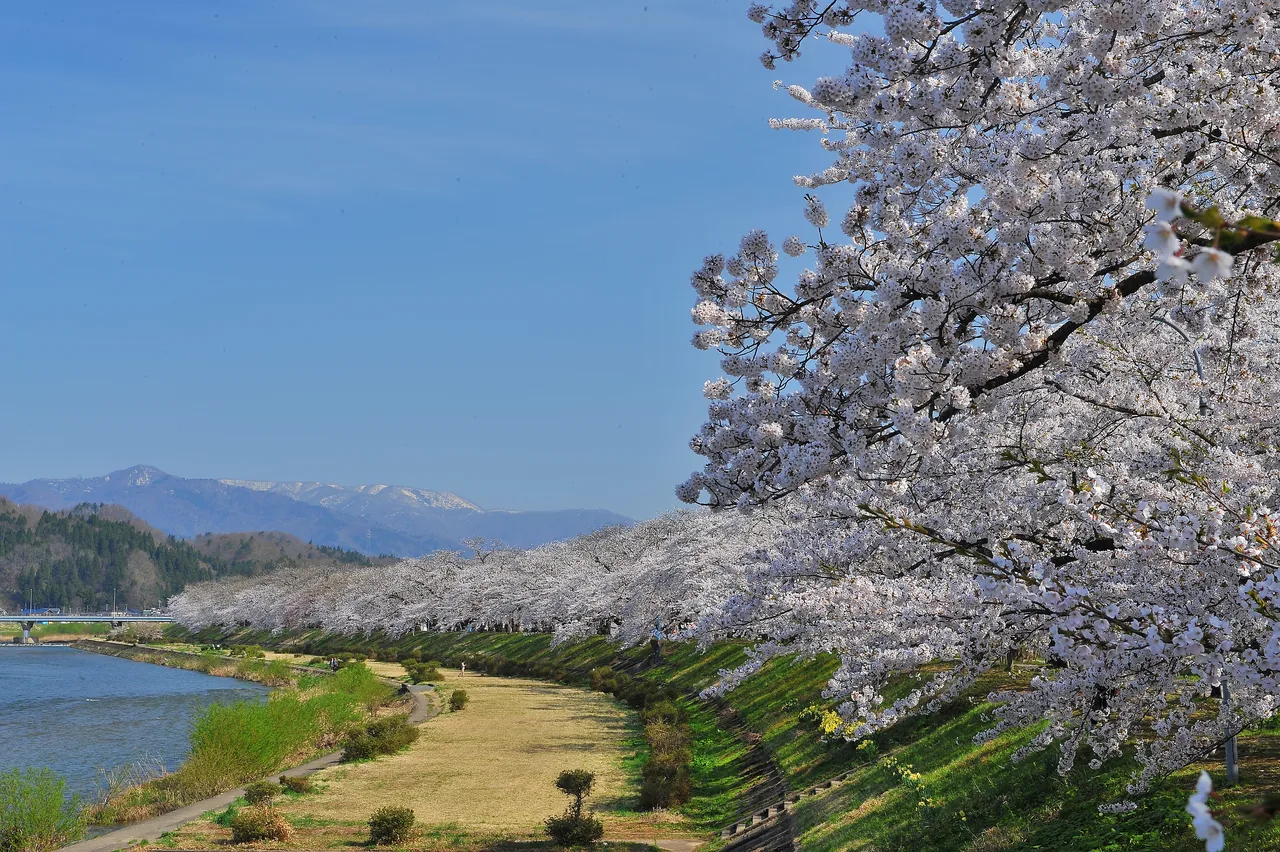
Walk west from the samurai district and you reach the Hinokinai River cherry trees. Over 400 Somei-Yoshino line the riverbank for about 2 km. They were planted in 1934 to celebrate the birth of the then Crown Prince (later the Emperor Emeritus), and the avenue was designated a national Place of Scenic Beauty in 1975.
From the riverbed you can see mountains still capped with snow beyond the trees in full bloom. Since you can walk between the weeping cherries of the samurai district and this avenue, the classic route in Kakunodate is to walk the street of black fences and then the riverside trees. It's about a 15-minute walk from JR Kakunodate Station. Because the avenue is a national Place of Scenic Beauty, flying drones over it is prohibited.
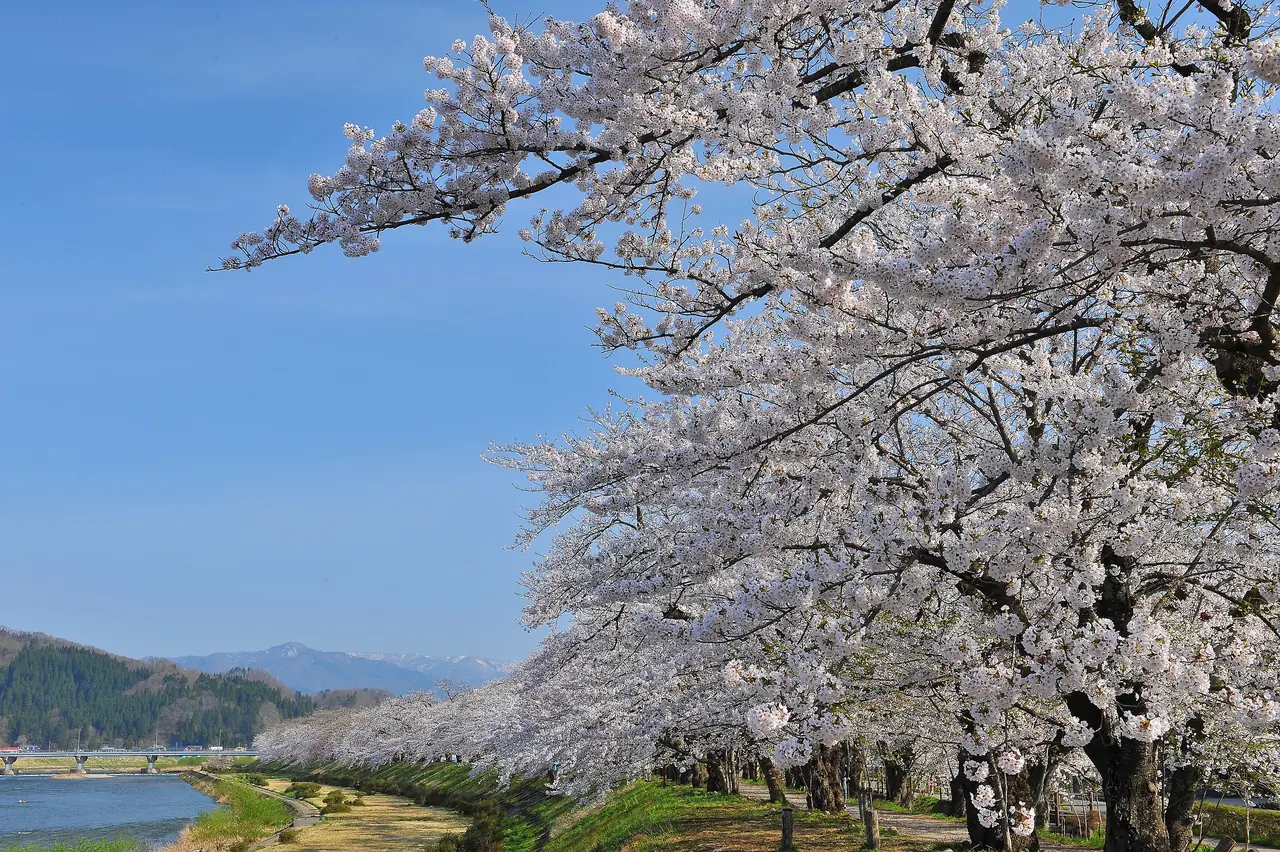
Photo: Akita Prefecture
Kakunodate Cherry Blossom Festival, Night Blossoms and Avoiding the Crowds
The Kakunodate Cherry Blossom Festival is held during the blooming season. In 2026 it ran from April 15 to May 5 (with a preliminary period from April 11). During the festival, both the samurai district and the Hinokinai River embankment are lit up at night, and the weeping cherries float white against the darkness.
- Walk in the morning: During the day the samurai district gets so crowded it can be hard to walk. Early morning is best for photos.
- Go by train: Roads around town get congested during the festival. Walking from Kakunodate Station, a stop on the Akita Shinkansen Komachi, is more reliable.
- Book early: Travelers converge during cherry season, so secure your accommodation early. You can also stay in Akita City or around Lake Tazawa and come in by train.
- Nights are cold: Temperatures drop at night in April in Akita, so bring a jacket if you want to see the blossoms after dark.
Semboku City announces the dates and hours of the illuminations each year.
Senshu Park: Castle-Ruin Cherries and Evening Lanterns
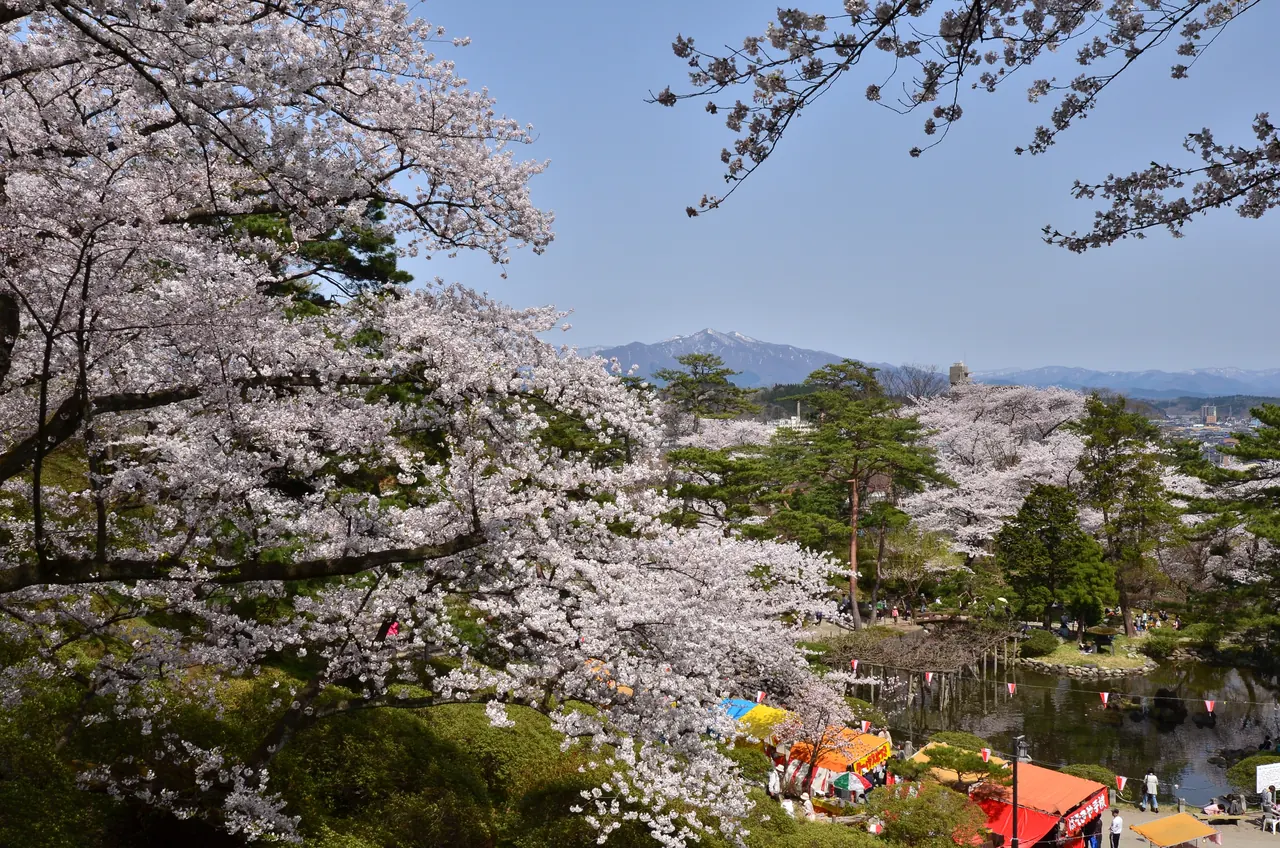
If you want to see cherry blossoms near Akita Station, head to Senshu Park. It is the site of Kubota Castle, home of the Satake family who ruled the Akita domain from 1602 to 1869, and has about 650 cherry trees. The 2026 Senshu Park Cherry Blossom Festival ran from April 11 to 22, with illuminated trees and lantern light for evening viewing.
Because the park sits on a hill a level above the city, the trees bloom later than the Akita bloom date announced by the Japan Meteorological Agency: about one to two days later around the Ninomaru and four to five days later around the Honmaru. The top floor of the white-walled Osumi Yagura turret, reconstructed in 1989, is an observation deck where you can look out over the city and distant mountains through the cherry branches. It's about a 15-minute walk from the west exit of JR Akita Station, so you can stop by on the evening you arrive or the morning you leave.
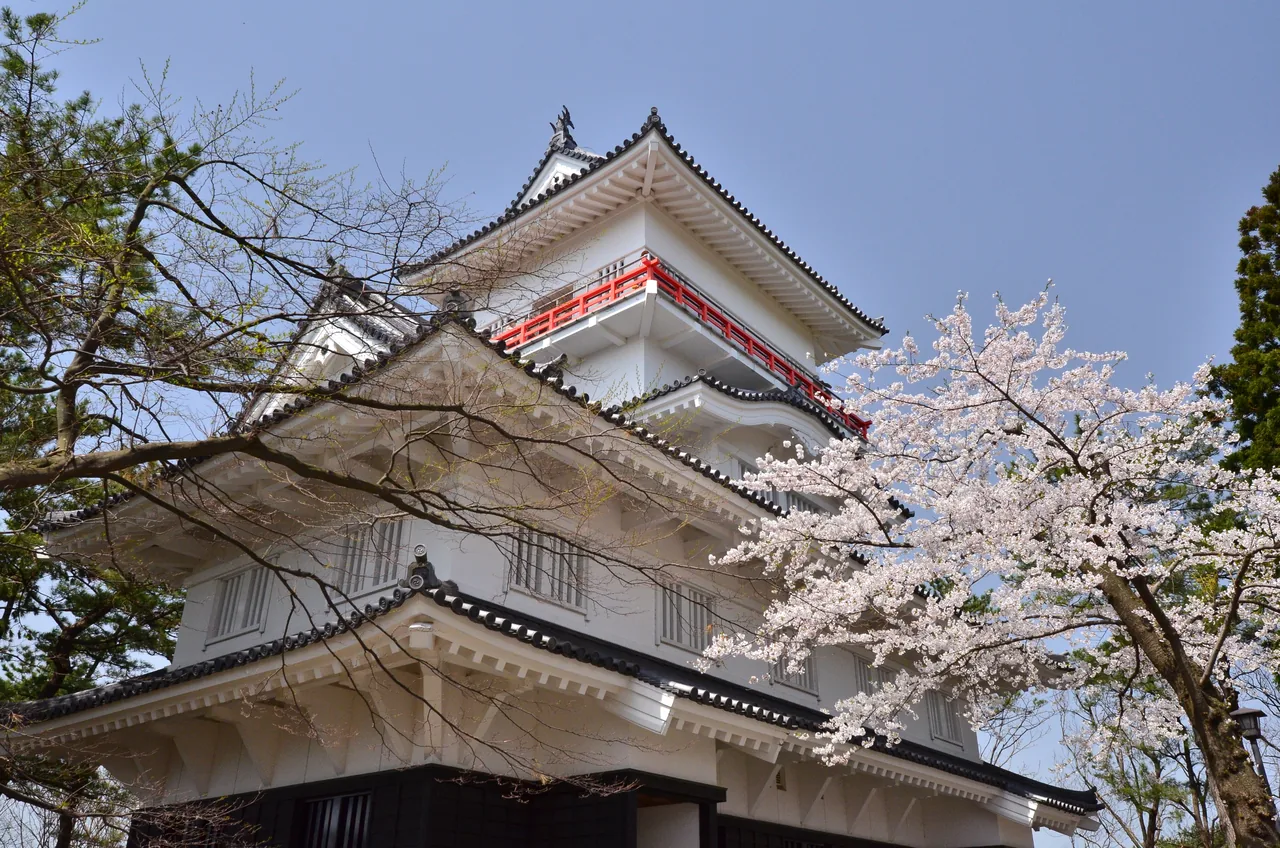
Photo: Akita Prefecture
Ogata's Cherry Blossom and Rapeseed Road: 11 km of Yellow and Pink
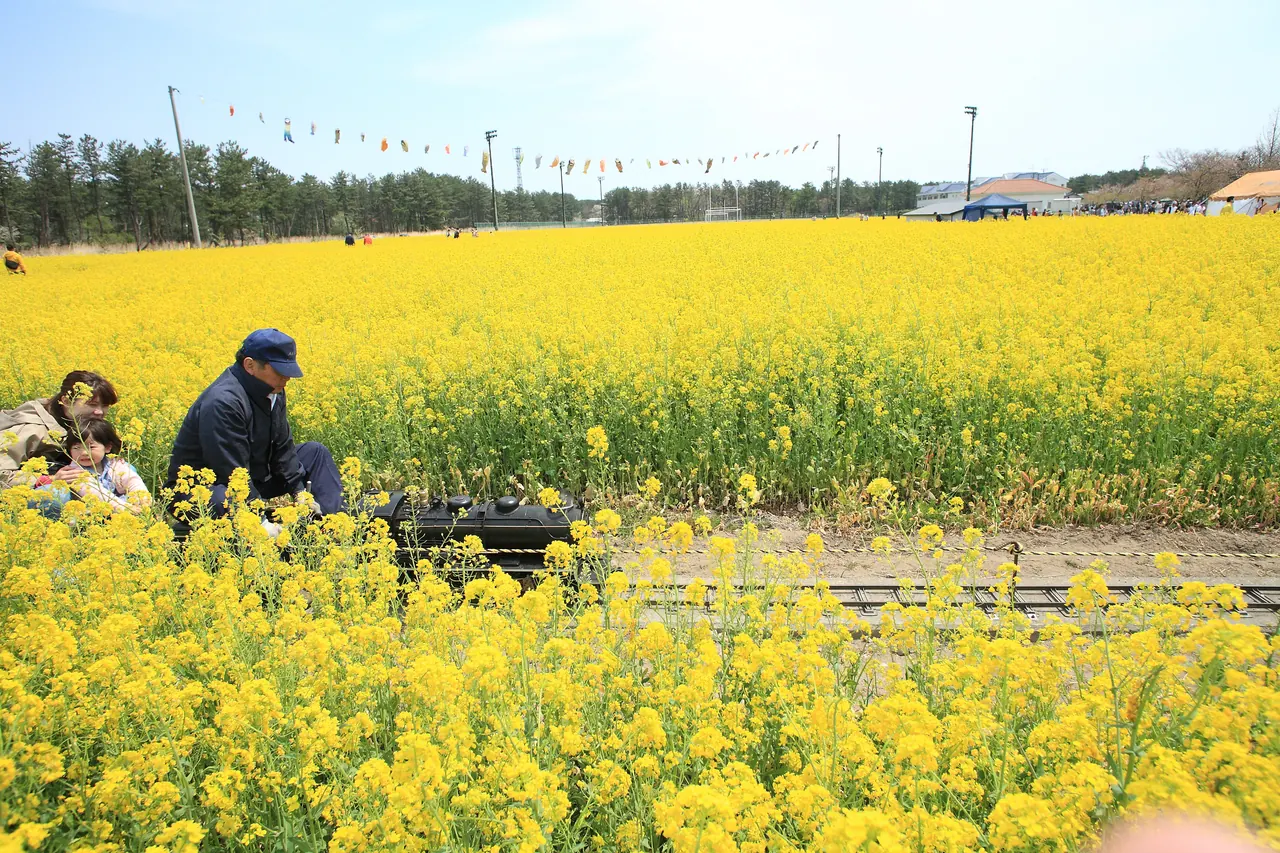
North of Akita City, Ogata Village was created in 1964 by reclaiming the former Hachirogata lagoon, once Japan's second-largest lake after Lake Biwa. Along a prefectural road crossing the flat reclaimed land, the "Cherry Blossom and Rapeseed Road" lines cherry trees and bands of rapeseed blossoms for about 11 km, usually at their best from mid-April to early May.
The Cherry Blossom and Rapeseed Festival is held every spring; in 2026 it ran from April 18 to May 5. North of Hotel Sun Rural Ogata, the venue for the second half, rapeseed fields stretch almost to the horizon, with carp streamers strung overhead. There is no railway in the village, but the Nanshu Area My Town Bus runs from Hachirogata Station on the JR Ou Line. By car, it's about 20 minutes from the station. During the 2026 festival there were also services between Hachirogata Station and the venue. Check Ogata Village's official website each year for the schedule.
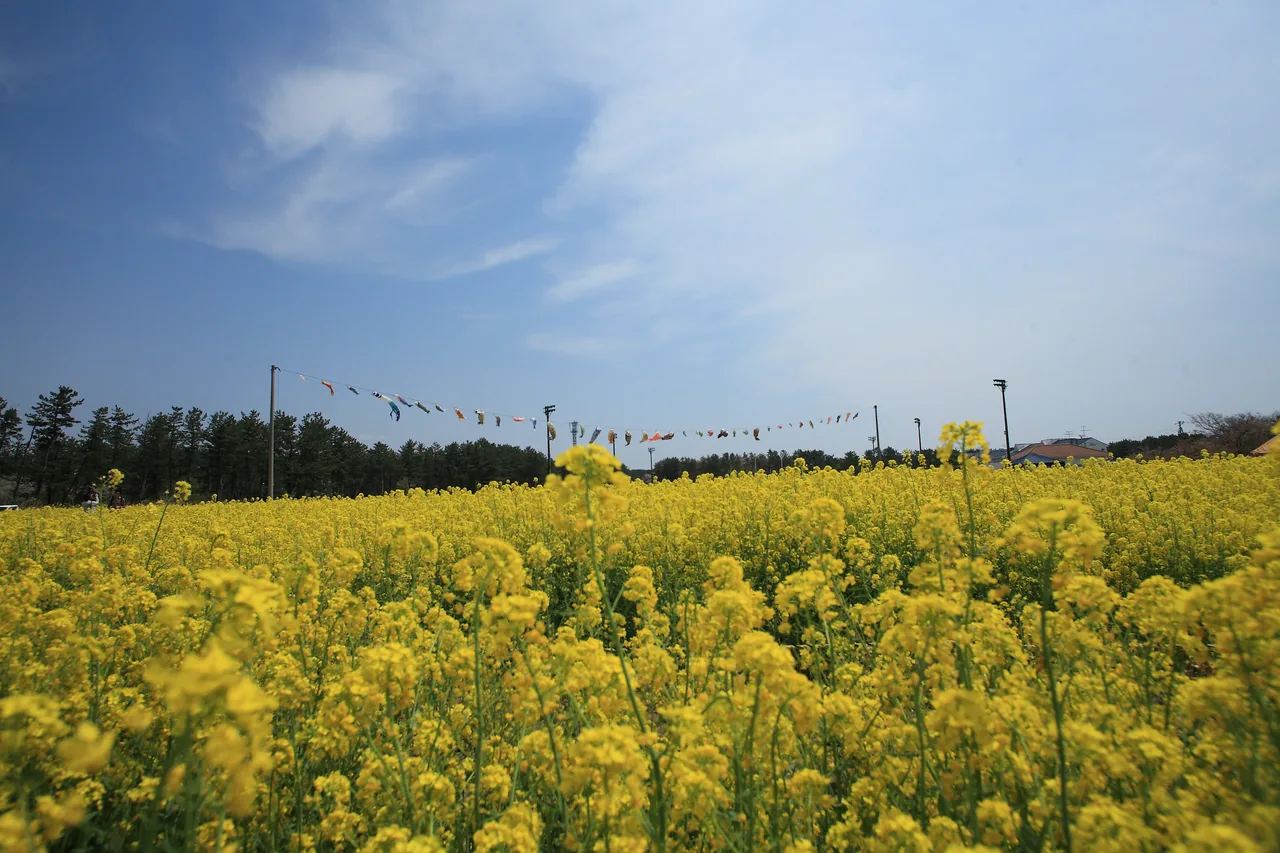
Photo: Akita Prefecture
How to Plan an Akita Cherry Blossom Trip
Kakunodate and Akita City are linked by the Akita Shinkansen, so an easy plan is to walk the samurai district and riverside avenue in Kakunodate on day one and visit Senshu Park in Akita City on day two. If you want to add Ogata Village, a rental car from Akita City makes it easier.
Festival dates change every year, and the 2027 dates have not been announced. Before you go, check the official websites of Semboku City, Akita City and Ogata Village. Find more places to visit in Akita on the Akita search page.