Mount Aso Volcano and Grasslands: Nakadake, Kusasenri, Daikanbo
This guide is translated from the Japanese edition. Read the Japanese edition
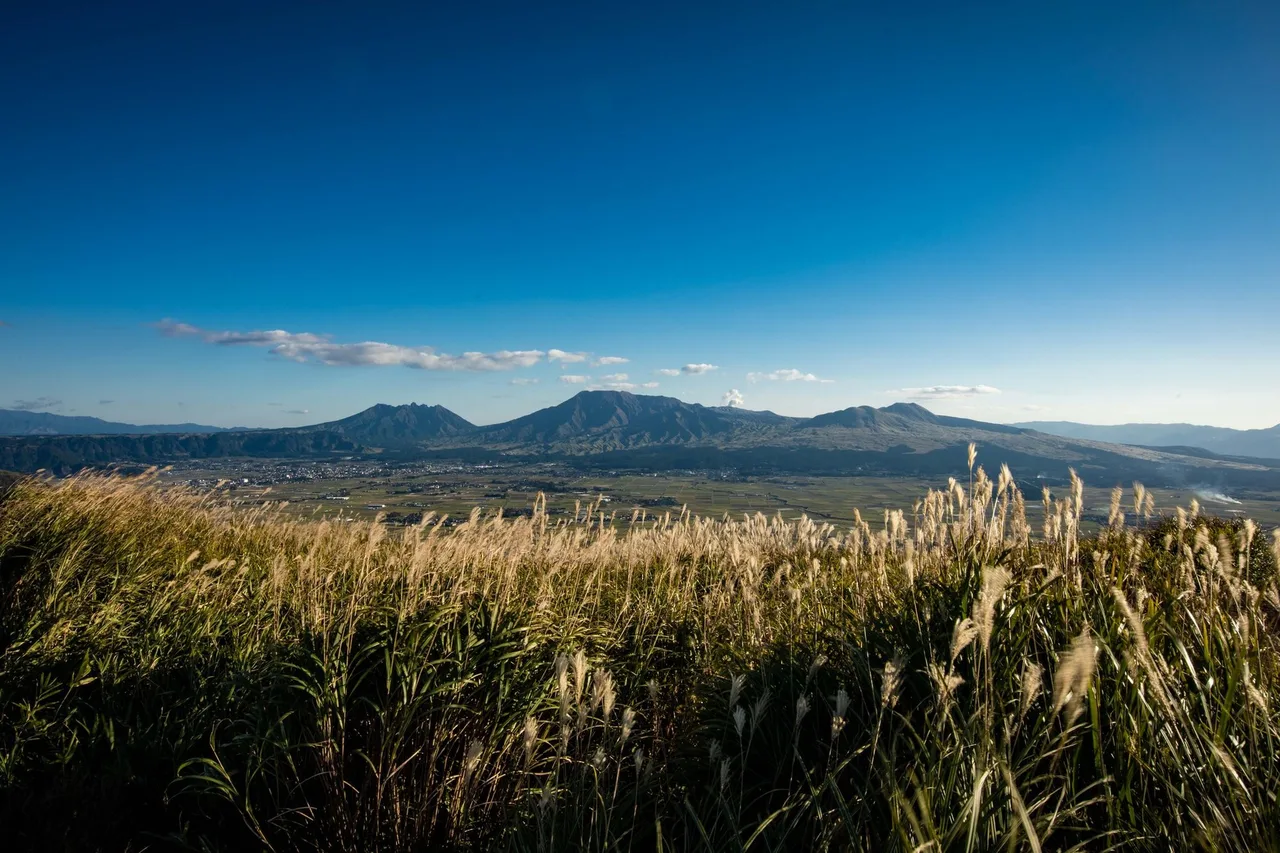
Mount Aso's volcanic and grassland views, from Nakadake Crater and Kusasenri to Daikanbo, with how to check crater restrictions and get around from Aso Station.
In Aso, in the northeast of Kumamoto Prefecture, a ring of mountains called the outer rim encircles the towns below, and the Five Peaks of Aso rise in the middle. According to Aso Geopark, the caldera measures about 18 km east to west and about 25 km north to south, one of the largest in the world. A crater that still sends up plumes of steam, grasslands spreading over old craters, and the caldera towns seen from the top of the outer rim: here are six places to take in Aso's landscapes, along with what to check before heading to the crater and how to get around from Aso Station.
The Aso caldera and the Five Peaks: what can you see?
There are two main ways to see Aso. One is to go up close to the Five Peaks of Aso (Nekodake, Takadake, Nakadake, Kishimadake and Eboshidake) in the middle of the caldera and see the crater and grasslands at close range. The other is to look out from viewpoints on the outer rim, taking in the basin of farmland and towns and the five peaks all at once.
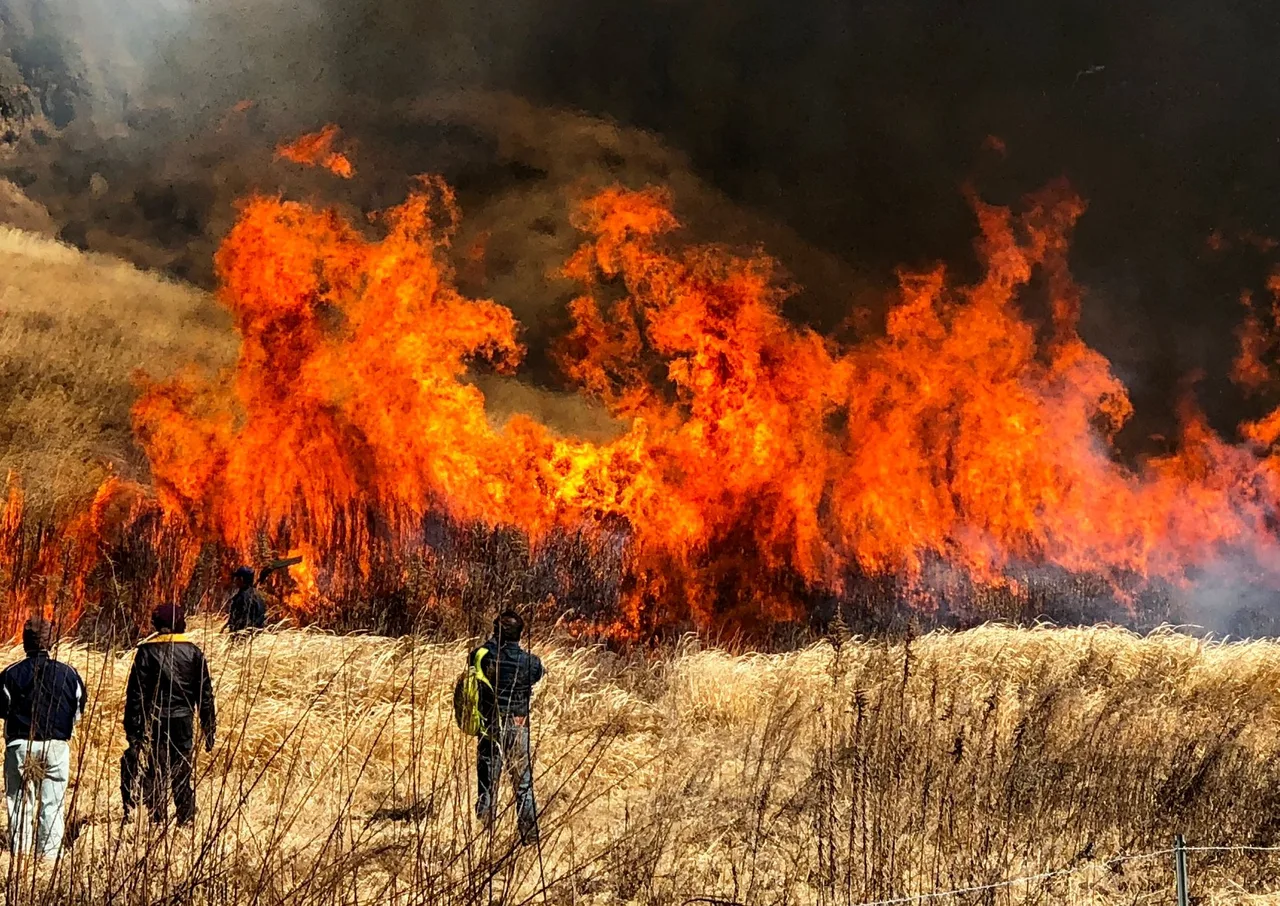
The whole area is part of Aso-Kuju National Park. Much of the grassland has been kept open by people, through grazing cattle and horses, cutting grass and controlled burning in early spring. In autumn, silver grass covers the slopes, and the ridgeline of the five peaks floats beyond the golden grass.
Nakadake Crater on Mount Aso: check the restrictions before you go
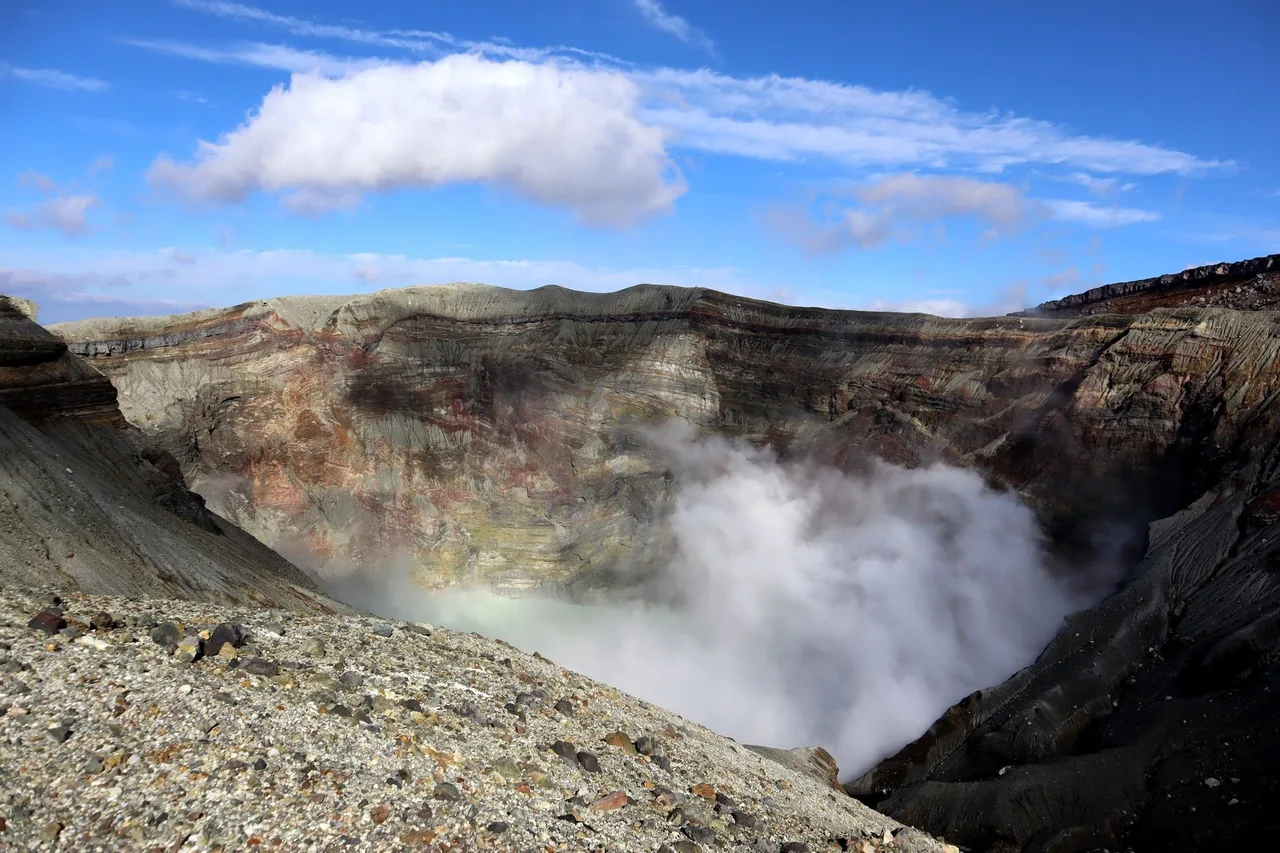
Photo: © Kumamoto Prefecture Tourist Federation.
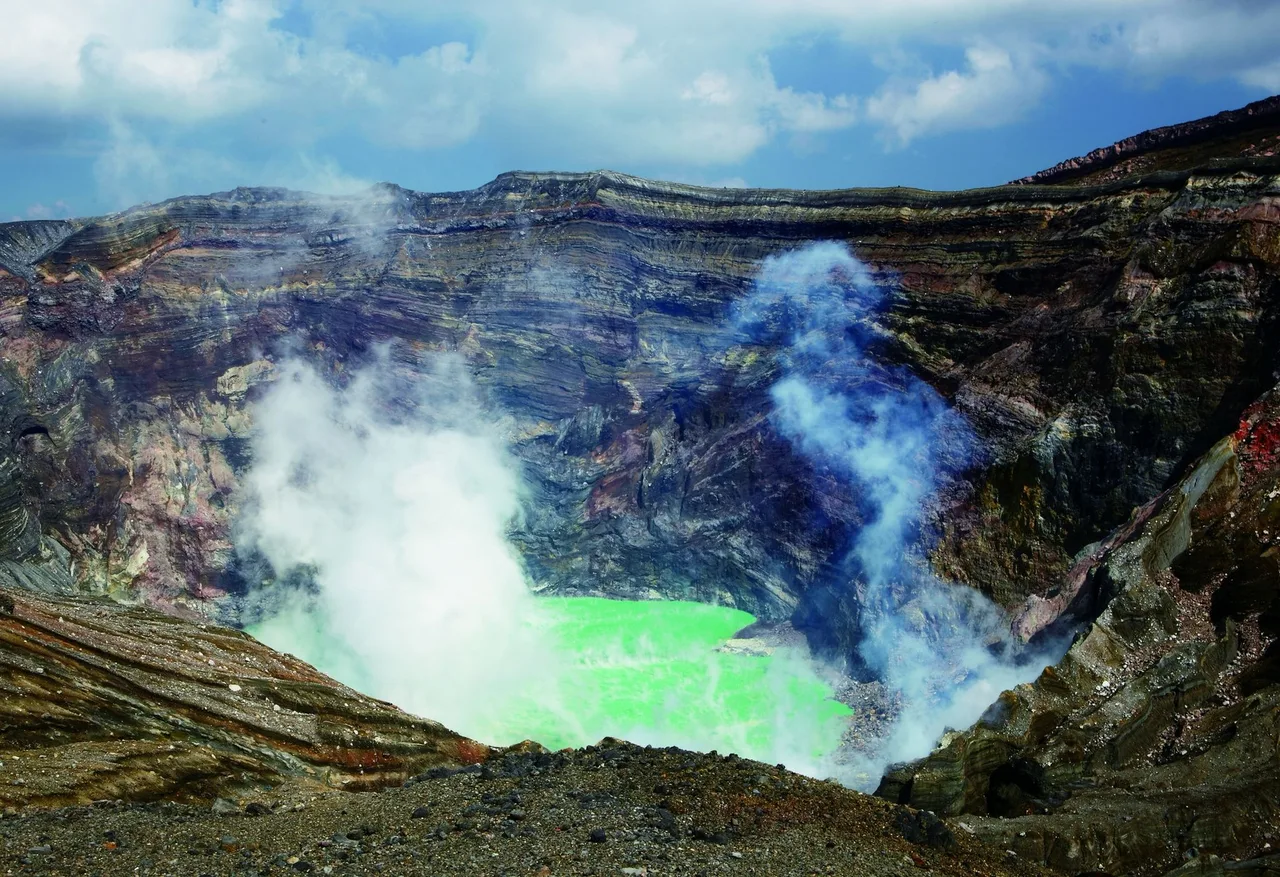
Nakadake Crater is the still-active crater of Nakadake, one of the Five Peaks of Aso. On a good day, you can look over the rim at the sheer rock walls and the steam rising from below.
How close you can get, however, changes from day to day with volcanic activity and the concentration of volcanic gas. When the volcanic alert level is raised, the area around the crater is closed. Since September 2026, the area within about 1 km of the crater has been closed, the Aso-san Park Road shut and the Aso Crater Shuttle suspended, so for now you cannot get near the crater. Before you set out and again on the morning of your visit, check the Aso Volcano Crater Restriction Information from the Aso Volcano Disaster Prevention Council and the announcements of the Japan Meteorological Agency. Aso City asks people with asthma, bronchial or heart conditions, people with pacemakers and anyone feeling unwell not to visit the crater.
Kusasenri-ga-hama: grassland and a pond in an old crater
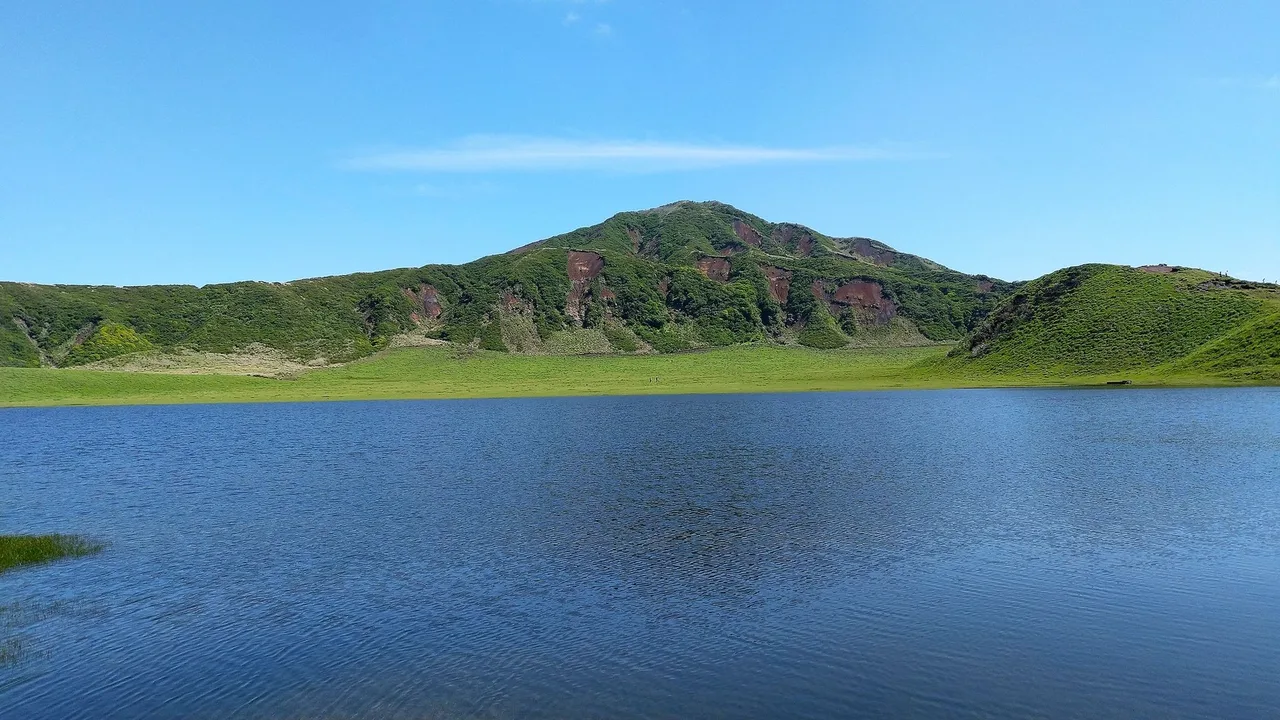
Photo: © Kumamoto Prefecture Tourist Federation.
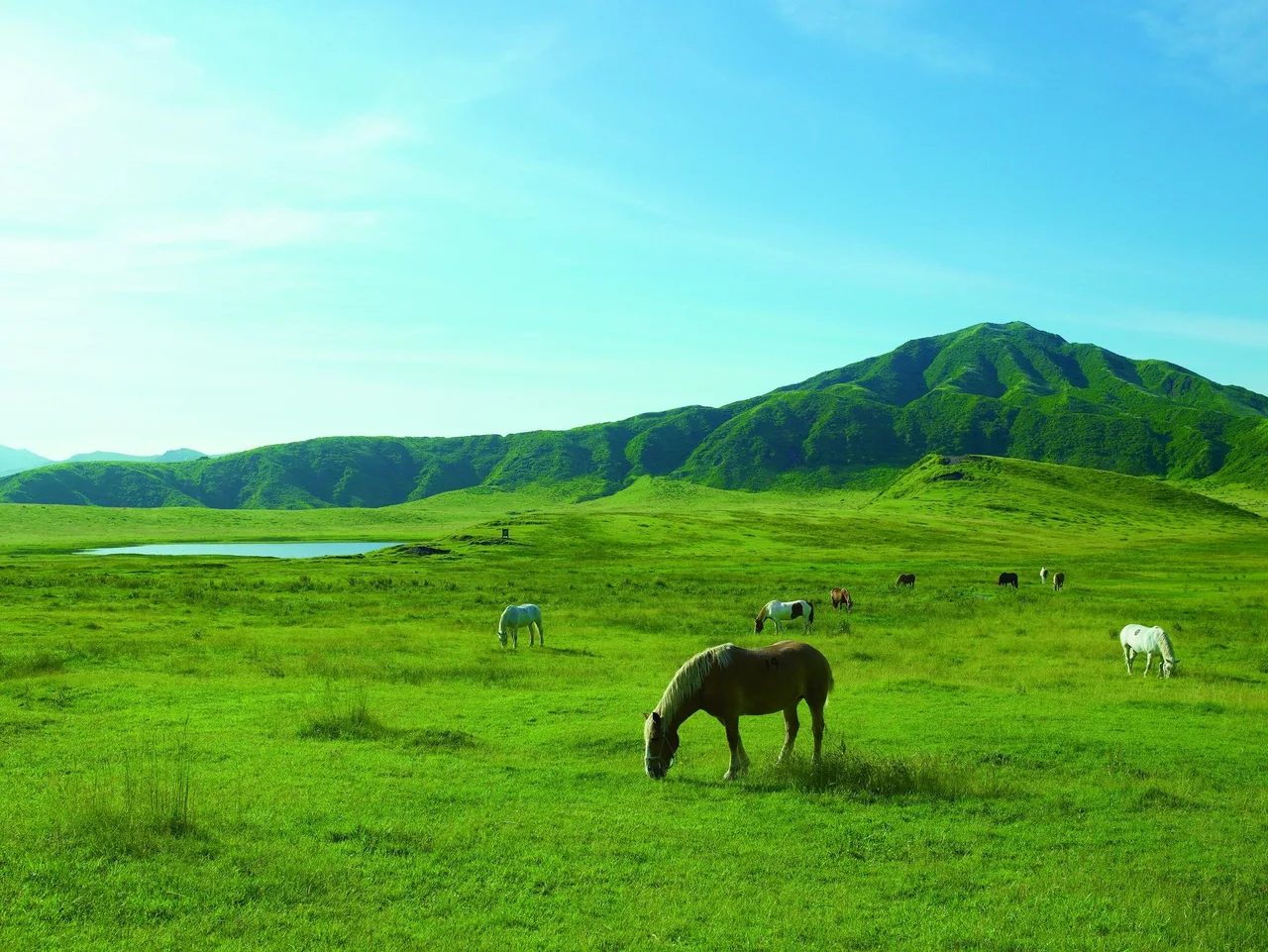
Kusasenri-ga-hama is a grassland high on Mt. Aso. Rainwater collects in a pond on the flat, bowl-shaped grassland, and the slopes of Eboshidake rise close behind it. Horseback riding is offered on the grassland, and the line of slowly walking horses is a classic Aso scene.
The Aso Volcano Museum stands beside the Kusasenri parking area, and buses from Aso Station stop here. Even on days when restrictions at Nakadake keep you away from the summit area, you may still be able to reach Kusasenri. It is often windy, and even in summer some days are chilly, so bring an extra layer.
Daikanbo: the caldera and the "Reclining Buddha" from the outer rim
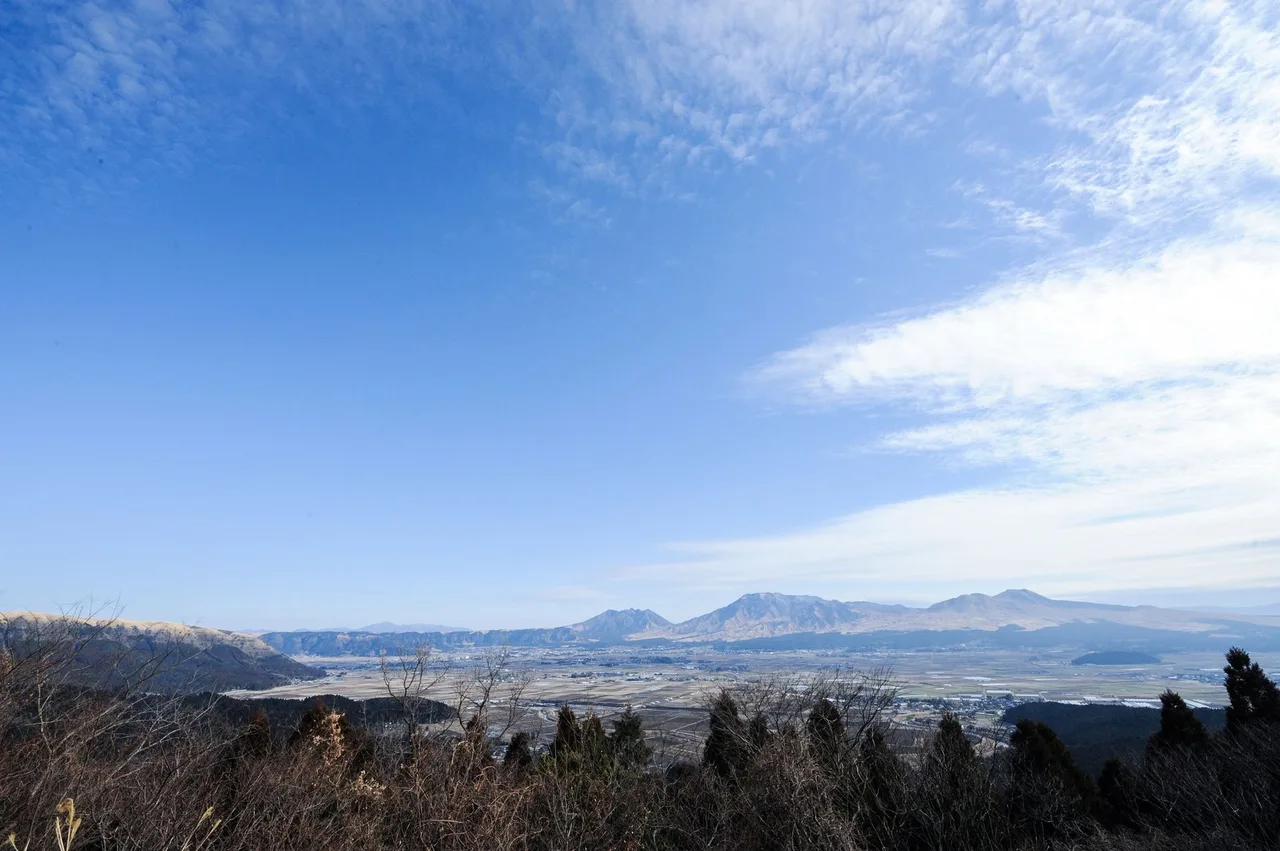
Photo: © Kumamoto Prefecture Tourist Federation.
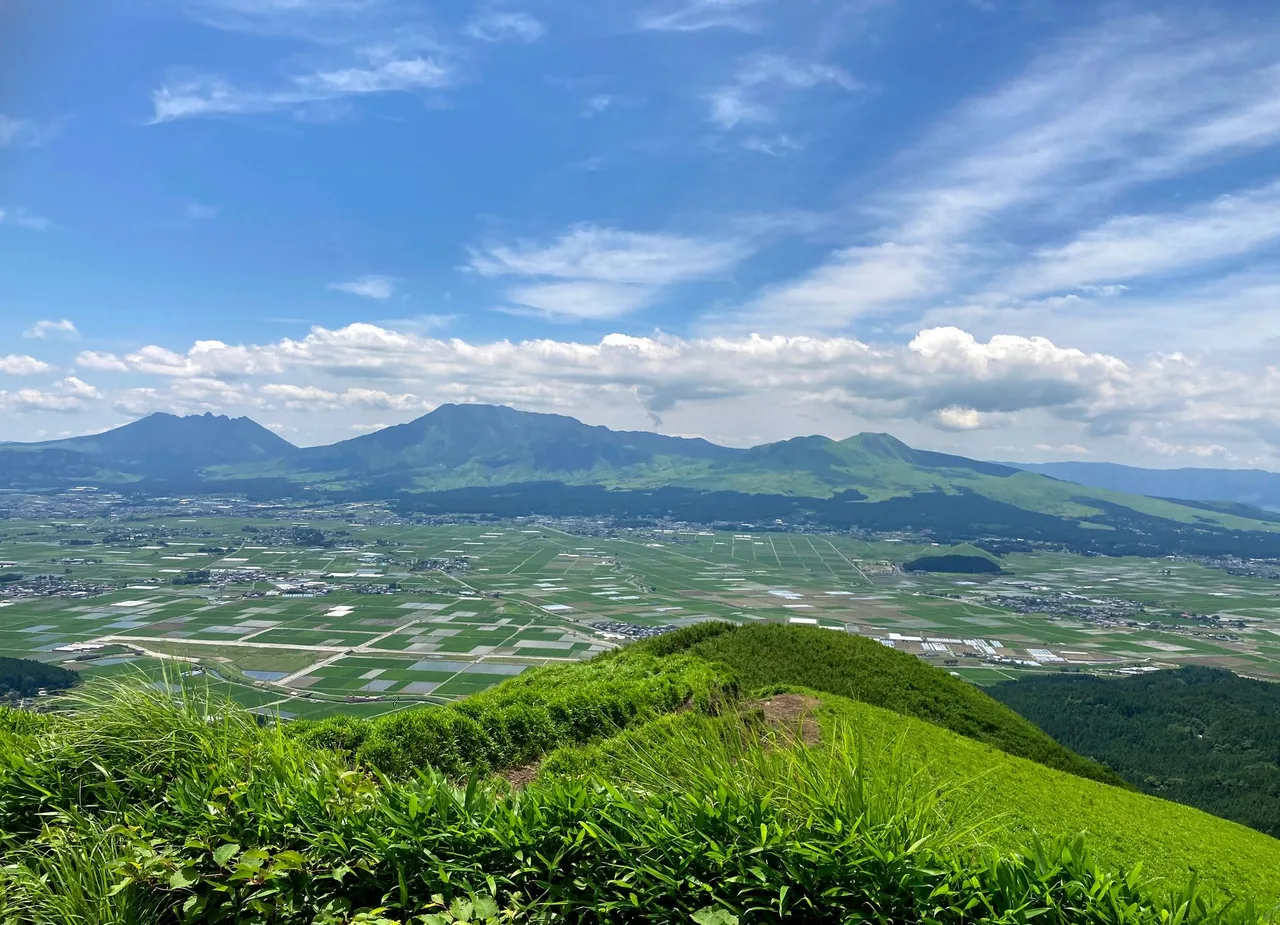
Daikanbo is a viewpoint on the northern outer rim of the caldera. Below you lies the caldera floor of farmland and towns, with the Five Peaks of Aso lined up beyond. The outline of the five peaks is likened to the Buddha lying down at the time of his passing, and is called the "Nehanzo" (Reclining Buddha). The name Daikanbo is said to have been given by Tokutomi Soho, a journalist and writer active from the Meiji to the Showa era.
On cold mornings from autumn to winter, a sea of clouds can fill the caldera floor, and the five peaks seem to float above it. The sea of clouds depends on the weather and does not appear on many days. If you plan to go at dawn, a car is the practical option.
Komezuka: a small volcano shaped like an upturned bowl
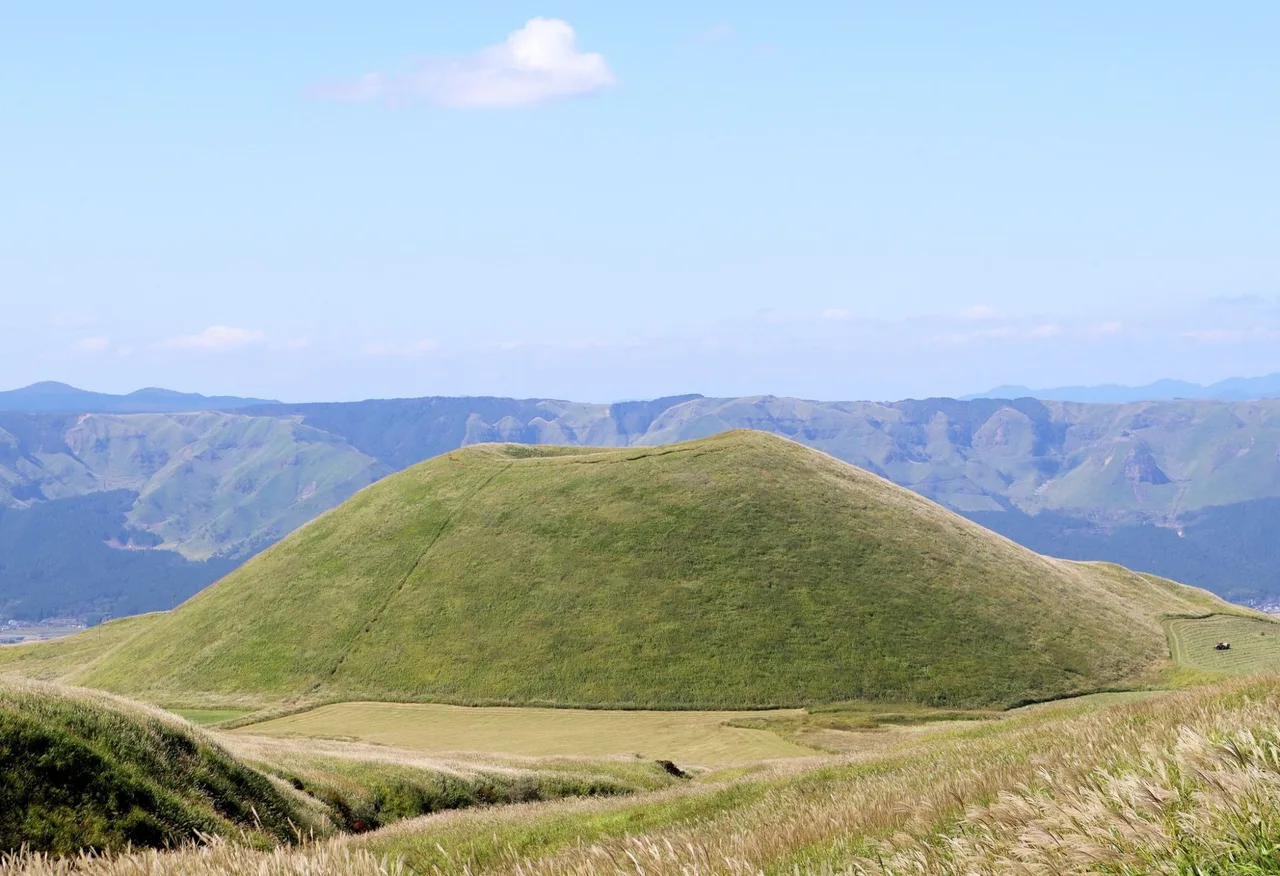
Photo: © Kumamoto Prefecture Tourist Federation.
Komezuka is a small, gently sloping cone-shaped volcano. It was formed from scoria (dark, pumice-like stones) thrown out by eruptions, and its grassy slopes change color with the seasons.
Komezuka is off-limits, so you cannot climb it. Enjoy the view from the surrounding roads.
Tawarayama Pass viewpoint: Minamiaso valley from the west of the caldera
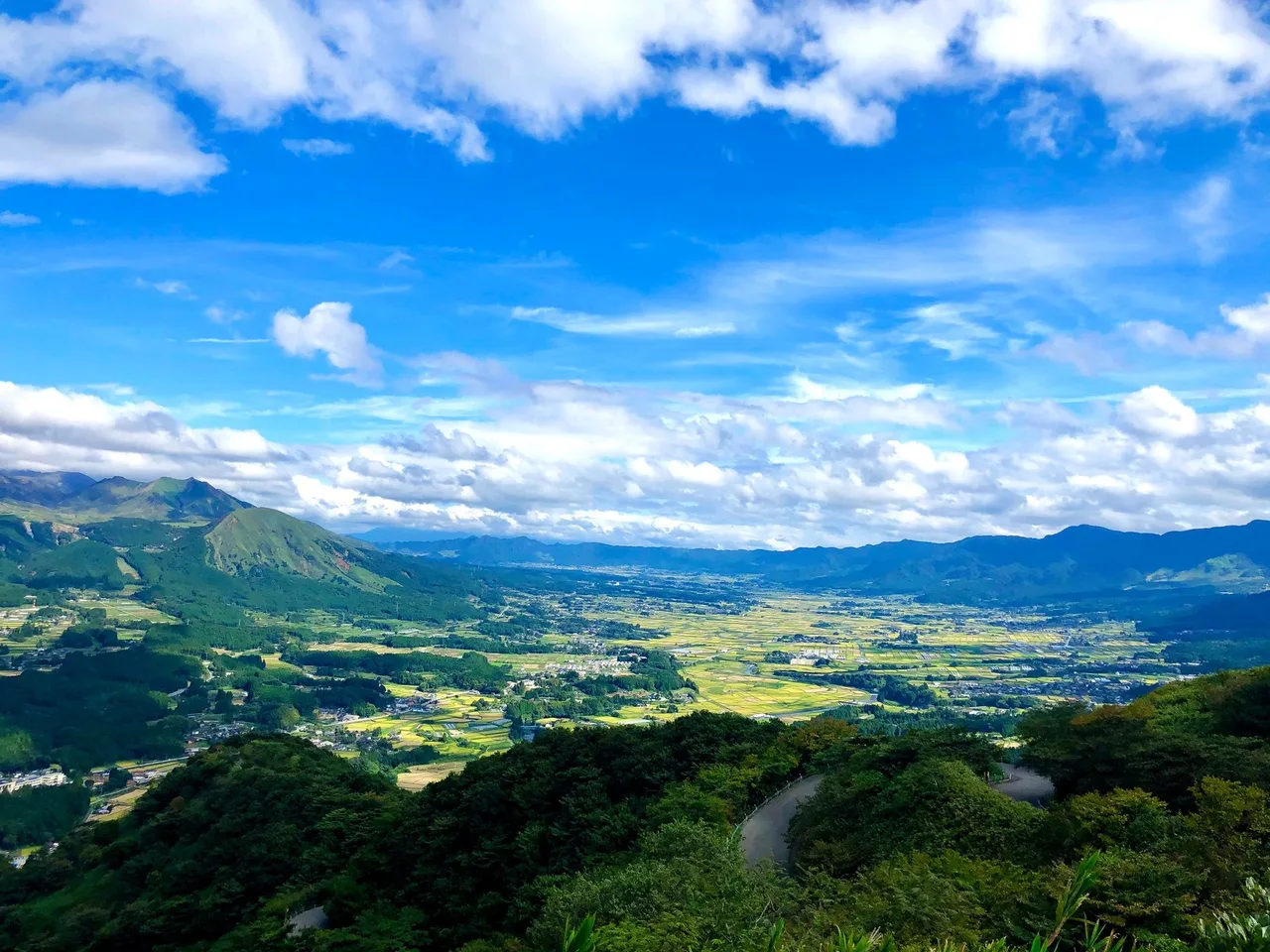
Photo: © Kumamoto Prefecture Tourist Federation.
The Tawarayama Pass viewpoint (俵山峠展望所) is on the western outer rim of the caldera, on the mountain road that enters Aso from the Kumamoto City side. From here you look down on the Minamiaso valley south of the Five Peaks, laid out like a miniature garden.
If Daikanbo shows the caldera from the north, this viewpoint shows it from the west. It is an easy stop on a drive to Aso from Kumamoto Airport or Kumamoto City, and pairs well with a tour of springs such as Shirakawa Suigen Spring in Minamiaso. For the springs of Minamiaso, see Kumamoto's springs.
Akaushi pastures: grazing and burning keep the grassland alive
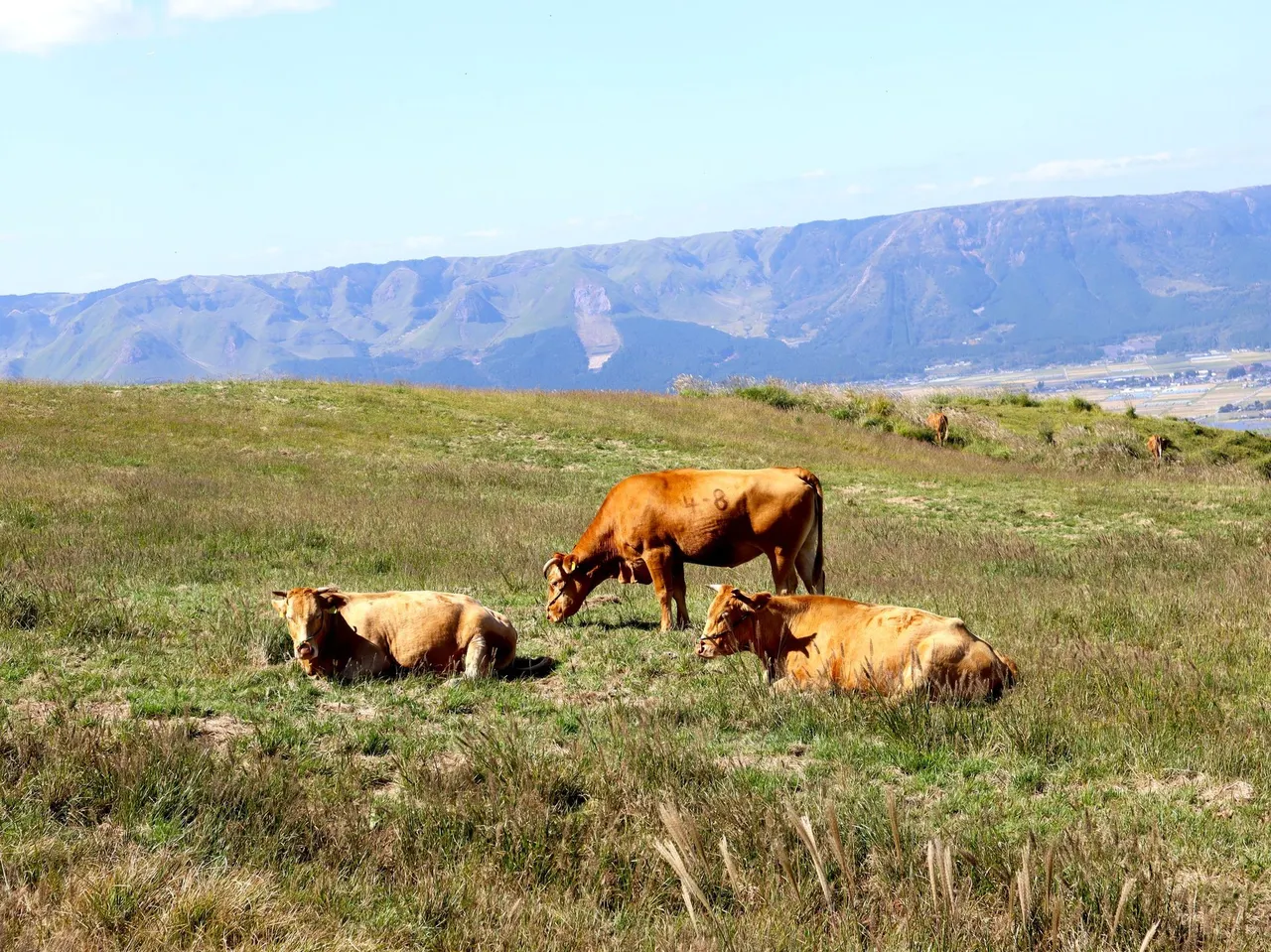
Photo: © Kumamoto Prefecture Tourist Federation.
On Aso's grasslands, reddish-brown "akaushi" cattle graze. The cattle eat the grass, people cut it, and in early spring dead grass is burned off in the Aso controlled burning (noyaki). Because this work has continued, the grasslands have stayed open instead of turning into forest.
The pastures are land looked after by local people. Even if you see cattle, do not go inside the fences, and if you stop your car by the road, choose a spot where it will not get in the way of other cars or cattle.
Getting around: bus from Aso Station, or a rental car
By rail, the gateway is Aso Station on the JR Hohi Line. From Kumamoto Station to Aso Station, some trains run through and others require a change at Higo-Ozu Station, so check the JR Kyushu timetable.
From Aso Station, Kyushu Sanko Bus route buses run to the Asosanjo (Aso summit) Terminal via the Kusasenri Aso Volcano Museum stop. While crater restrictions are in place, the destination and stops may change. For Daikanbo, some route buses stop at the "Daikanbo" bus stop on Saturdays, Sundays and holidays only. Both have few departures, so decide on your return bus before you set out.
To cover Komezuka and the Tawarayama Pass viewpoint in one day, a rental car is convenient. Weather changes quickly in the mountains, and fog can reduce visibility.