Kumamoto Springs: Shirakawa Suigen, Ikeyama and Suizenji Jojuen
This guide is translated from the Japanese edition. Read the Japanese edition
Kumamoto springs from Shirakawa Suigen and Ikeyama Suigen to Kikuchi Gorge and spring-fed Suizenji Jojuen, with access tips and water-drawing etiquette.
In a forest in Minamiaso, water wells up endlessly from a pond, stirring the sand on its bottom. In the middle of Kumamoto City, water rises from the floor of a feudal lord's garden pond too. Kumamoto Prefecture calls itself "Mizu no Kuni Kumamoto" (Kumamoto, Land of Water), and about 80 percent of the prefecture's tap water comes from groundwater. Kumamoto City goes further: all of its tap water comes from groundwater. Rain that falls on the mountains of Aso soaks into the ground and wells up again after a long time underground.
Why does Kumamoto have so many springs?
According to Kumamoto Prefecture, thick layers of pyroclastic flow deposits from eruptions of Mount Aso cover the land, forming strata that rainwater easily soaks into. Rain that falls on Aso flows underground and emerges as springs in many places at the foot of the mountains.
Many springs are also part of daily life, with local people coming to draw water. If others are waiting, take turns, and if you rinse a bottle, keep the water area clean. Whether the water is drinkable, how much you may take and any contribution requested differ from spring to spring, so follow the signs on site.
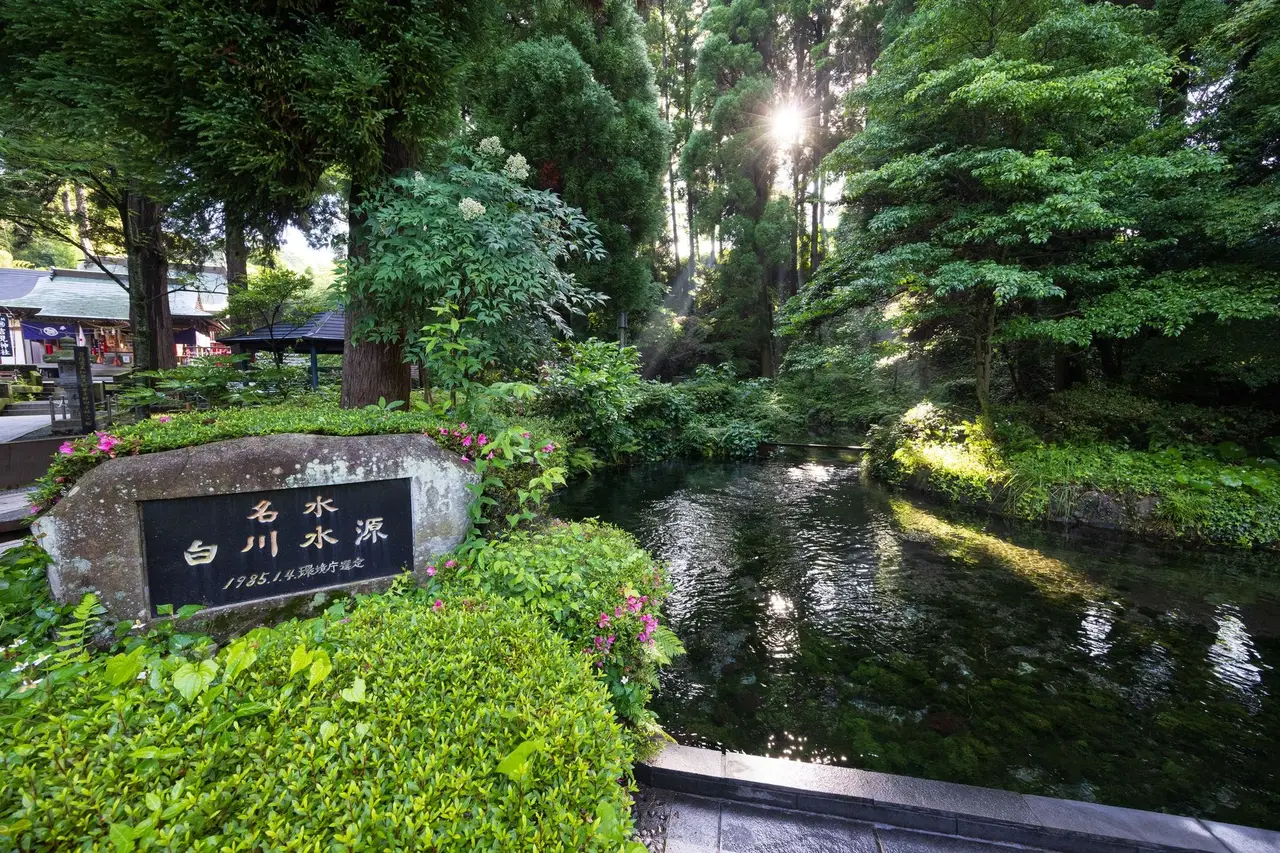
Shirakawa Suigen: the source of the Shirakawa River in the forests of Minamiaso
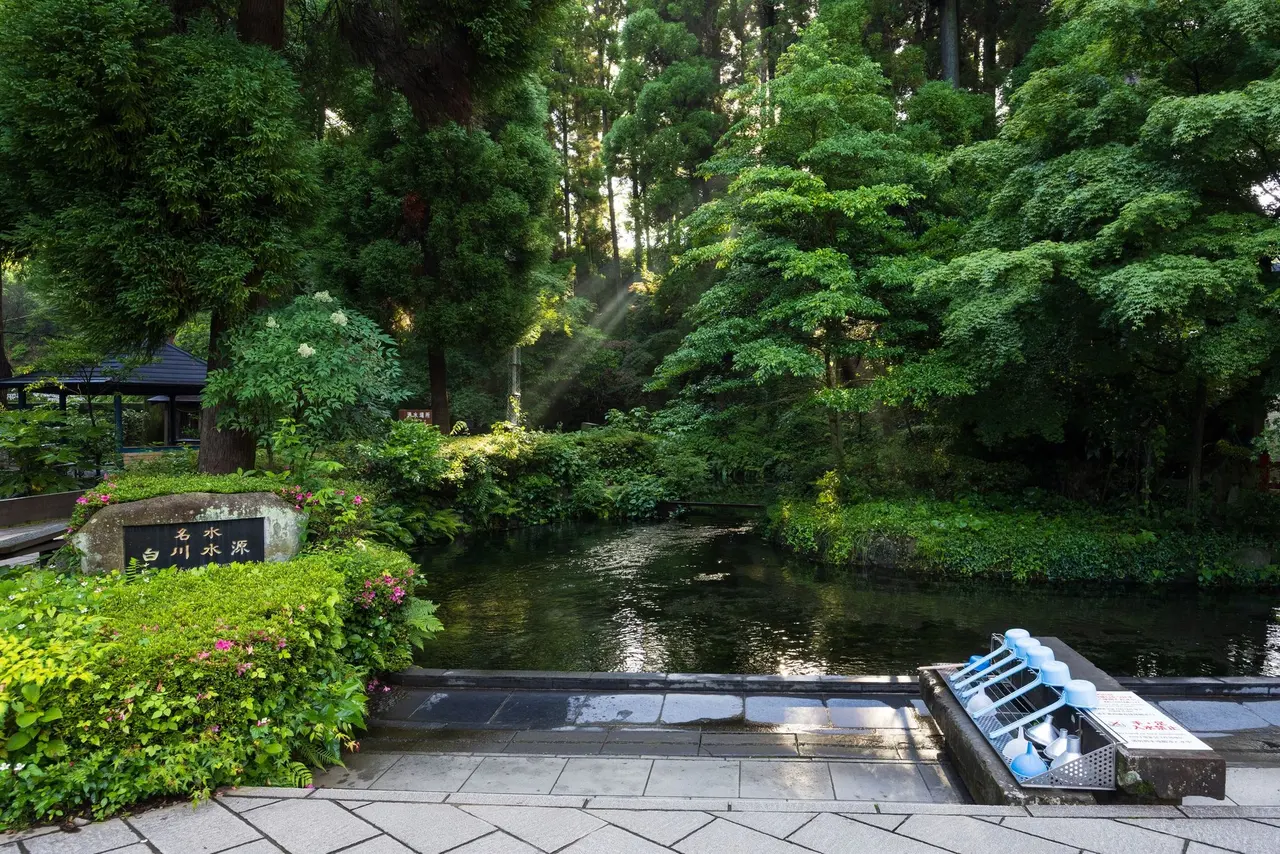
Photo: © Kumamoto Prefecture Tourist Federation.
Shirakawa Suigen, in Minamiaso Village, is the source of the Shirakawa River, which flows on to Kumamoto City. In 1985 it was selected by the Environment Agency (now the Ministry of the Environment) as one of Japan's 100 Exquisite Waters. According to Minamiaso Village, about 60 tons of water well up every minute. Look into the pond and you can see the sand on the bottom swaying where the water rises.
There is a place to draw water beside the pond. The nearest station is Minamiaso Shirakawa Suigen Station on the Minamiaso Railway, about 15 minutes away on foot.
Ikeyama Suigen: a celebrated spring among the trees of Ubuyama Village
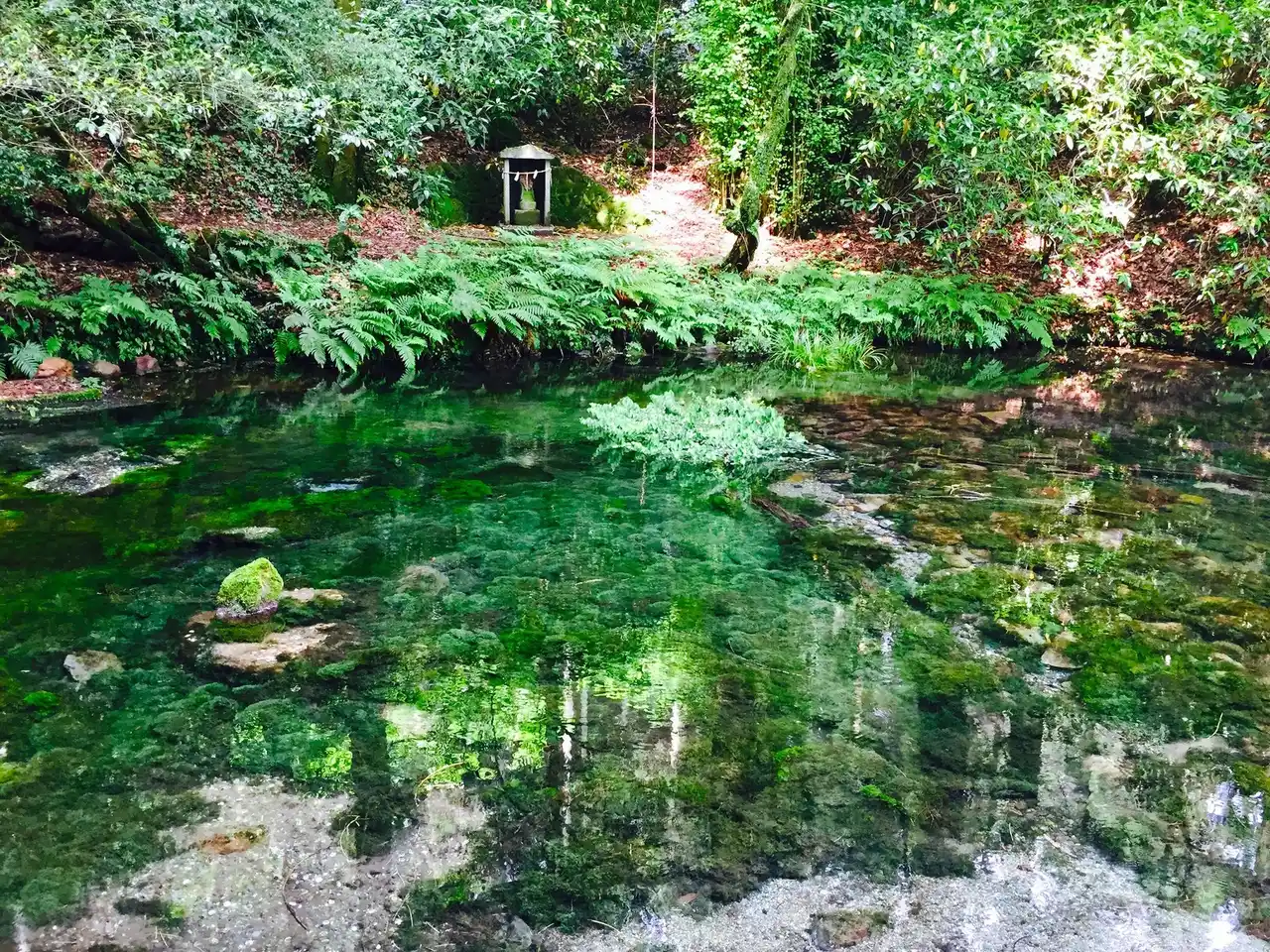
Photo: © Kumamoto Prefecture Tourist Federation.
Ikeyama Suigen is a spring in Ubuyama Village. Among the trees, water bubbles up steadily in a pond. Water overflowing from the pond runs off through the forest as a small stream.
The spring is in a mountain village that is hard to reach by public transportation. Drive from central Aso City or elsewhere, and go slowly on the roads through the village.
Ikenokawa Suigen: a small spring in a Minamiaso village
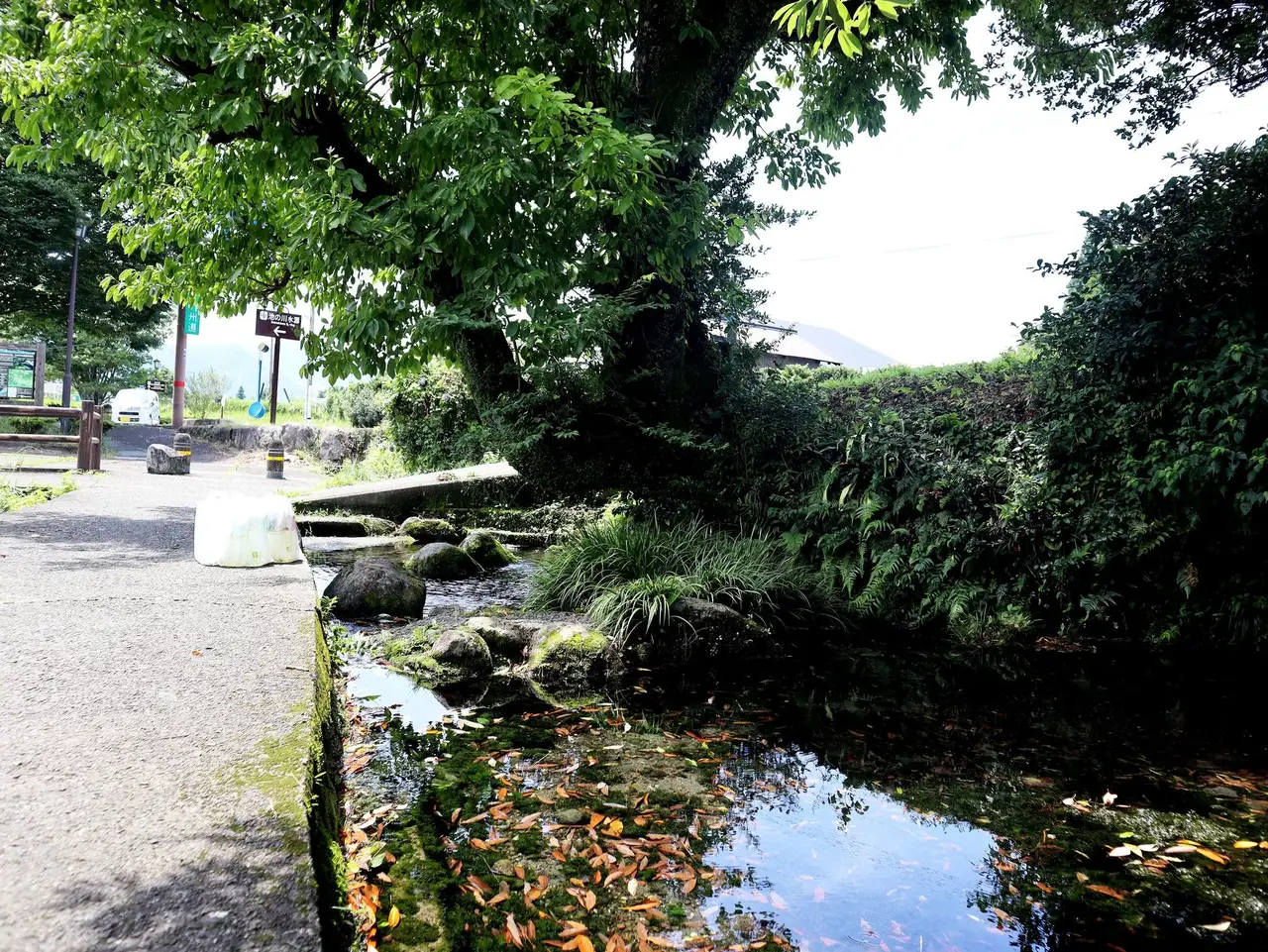
Photo: © Kumamoto Prefecture Tourist Federation.
Besides Shirakawa Suigen, Minamiaso has several other named springs, and Ikenokawa Suigen is one of them. Clear water flows through a shaded channel, so clear that you can see the stones and fallen leaves on the bottom.
The spring is in a village where people live. Park only in designated places and visit quietly. If you combine it with Shirakawa Suigen, you will see how each spring has its own scenery, even with the same Minamiaso water.
Takamori Spring Tunnel Park: a tunnel where water burst out during construction
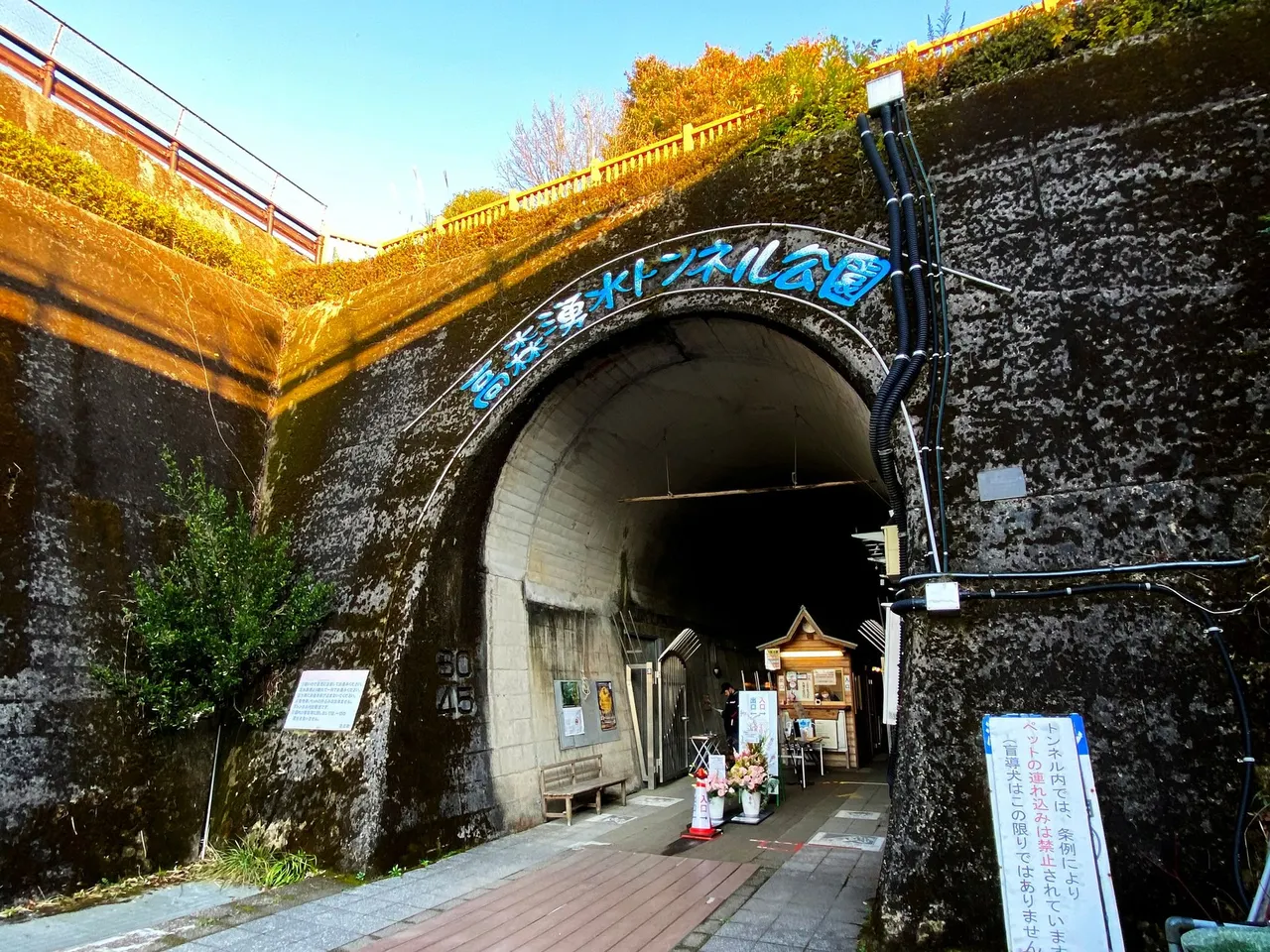
Photo: © Kumamoto Prefecture Tourist Federation.
Takamori Spring Tunnel Park in Takamori Town is what remains of a railway tunnel project. According to the Minamiaso Railway, during construction to link the former JNR Takamori Line with the Takachiho Line in Miyazaki Prefecture, a huge amount of water gushed out of the tunnel and work was halted. Today it is a park, and you can walk through the tunnel where the spring water flows.
Inside the tunnel it is cooler than outside, and the sound of running water echoes. It is within walking distance of Takamori Station, the terminus of the Minamiaso Railway.
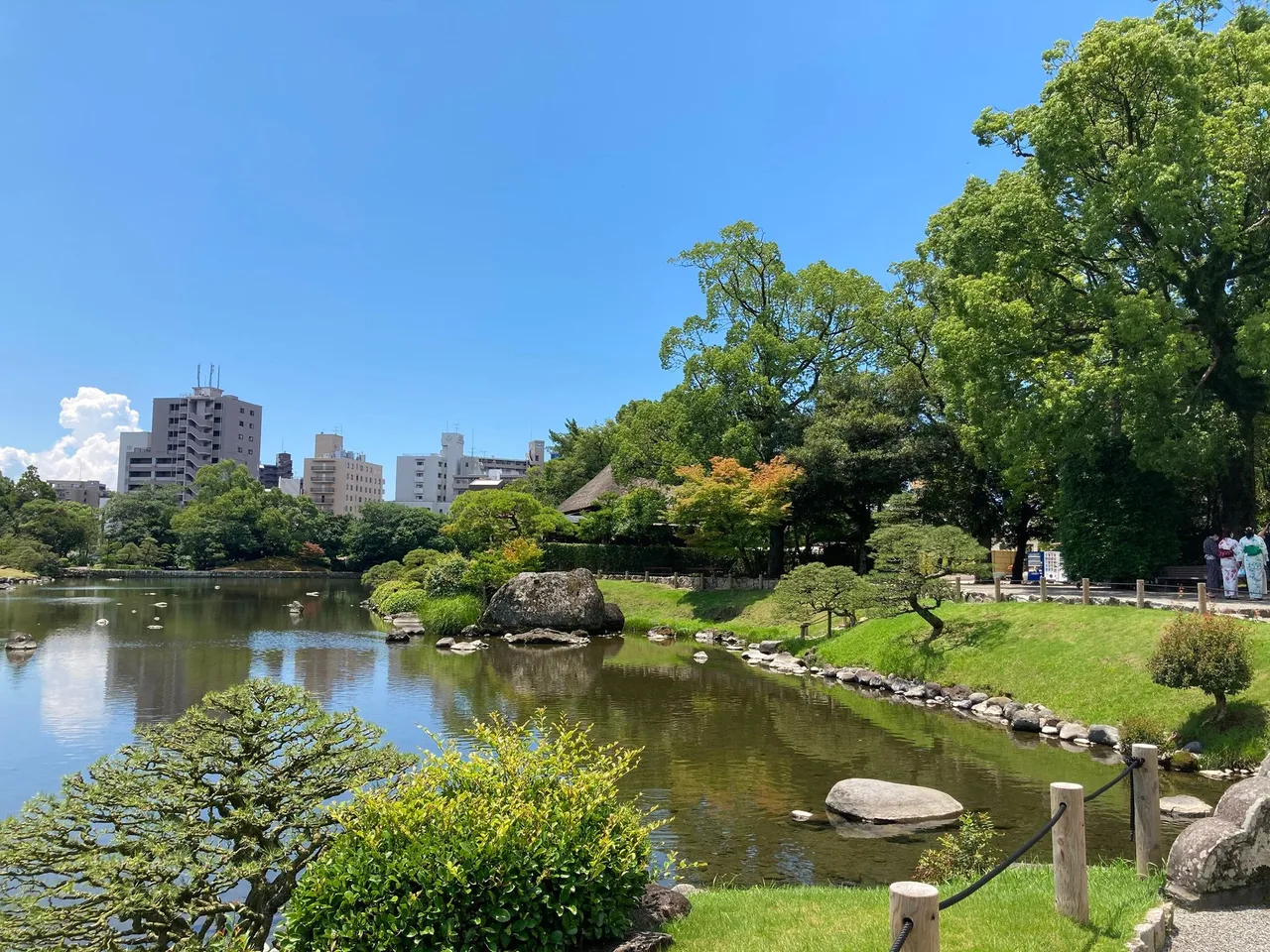
Suizenji Jojuen: the Hosokawa family's garden around a spring-fed pond
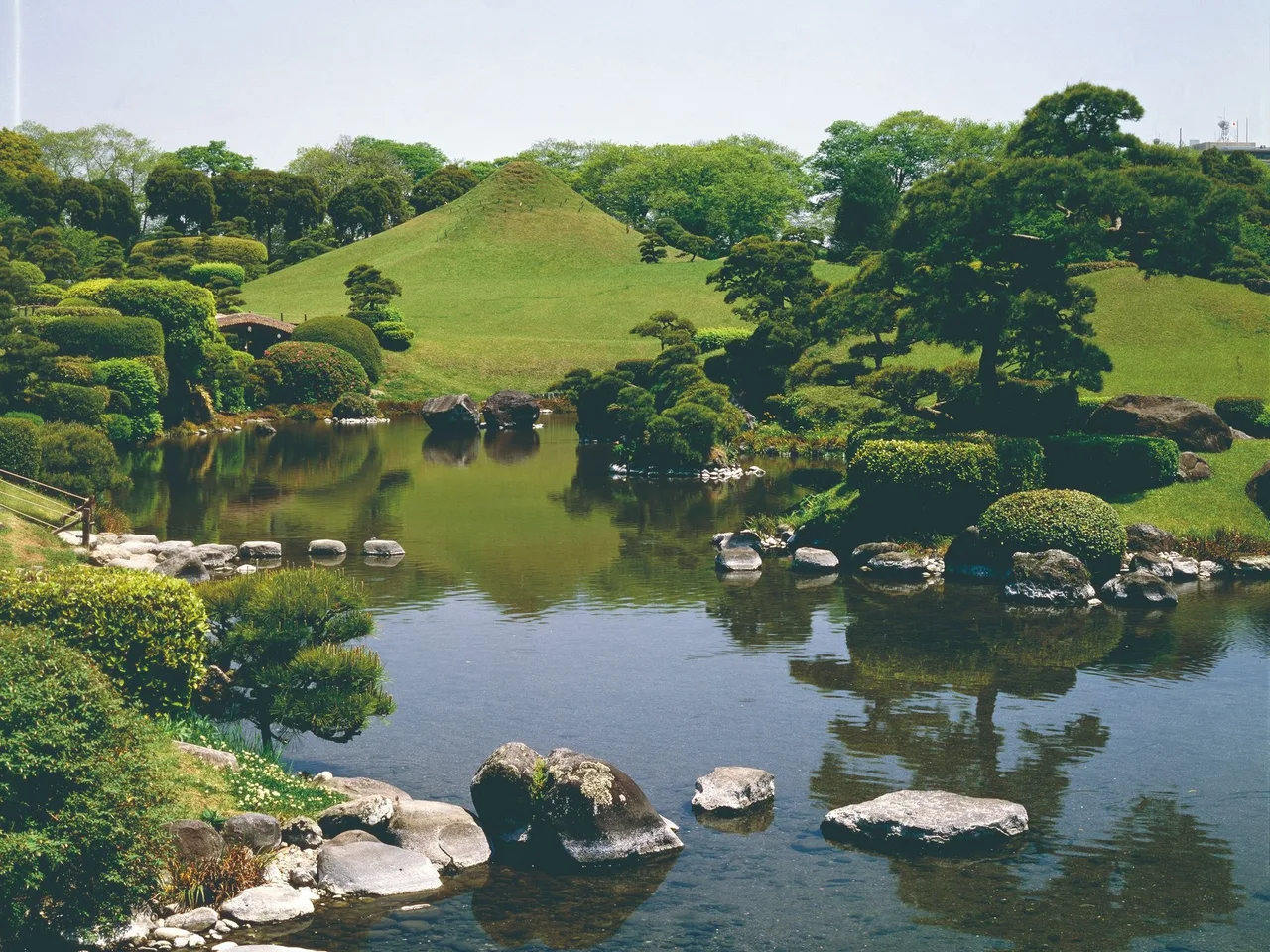
Photo: © Kumamoto Prefecture Tourist Federation.
Suizenji Jojuen is a garden built by the Hosokawa family, lords of the Kumamoto domain. It began when Hosokawa Tadatoshi, the first lord, built a teahouse here, and it was laid out as a garden in the time of Tsunatoshi, the third lord. It is a stroll garden in which the views change as you walk around the pond, and an artificial hill shaped like Mount Fuji rises beyond the water.
The large pond is filled with spring water. The Kokin Denju no Ma, a building in the garden, was restored on this site in 1912 (Taisho 1). It is a walk from the Suizenji Park stop on the Kumamoto City Tram.
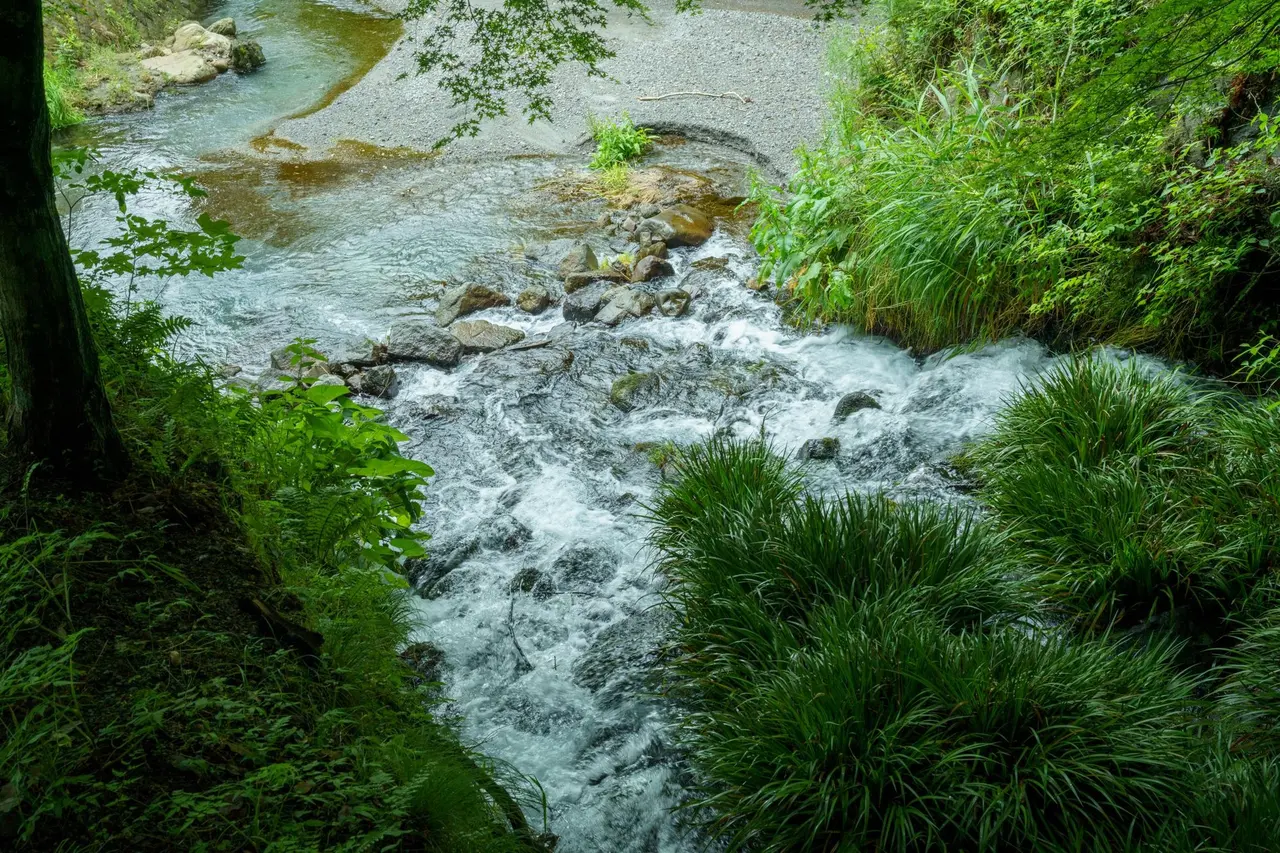
Kikuchi Gorge: forest and waterfalls of the "Kikuchi Suigen"
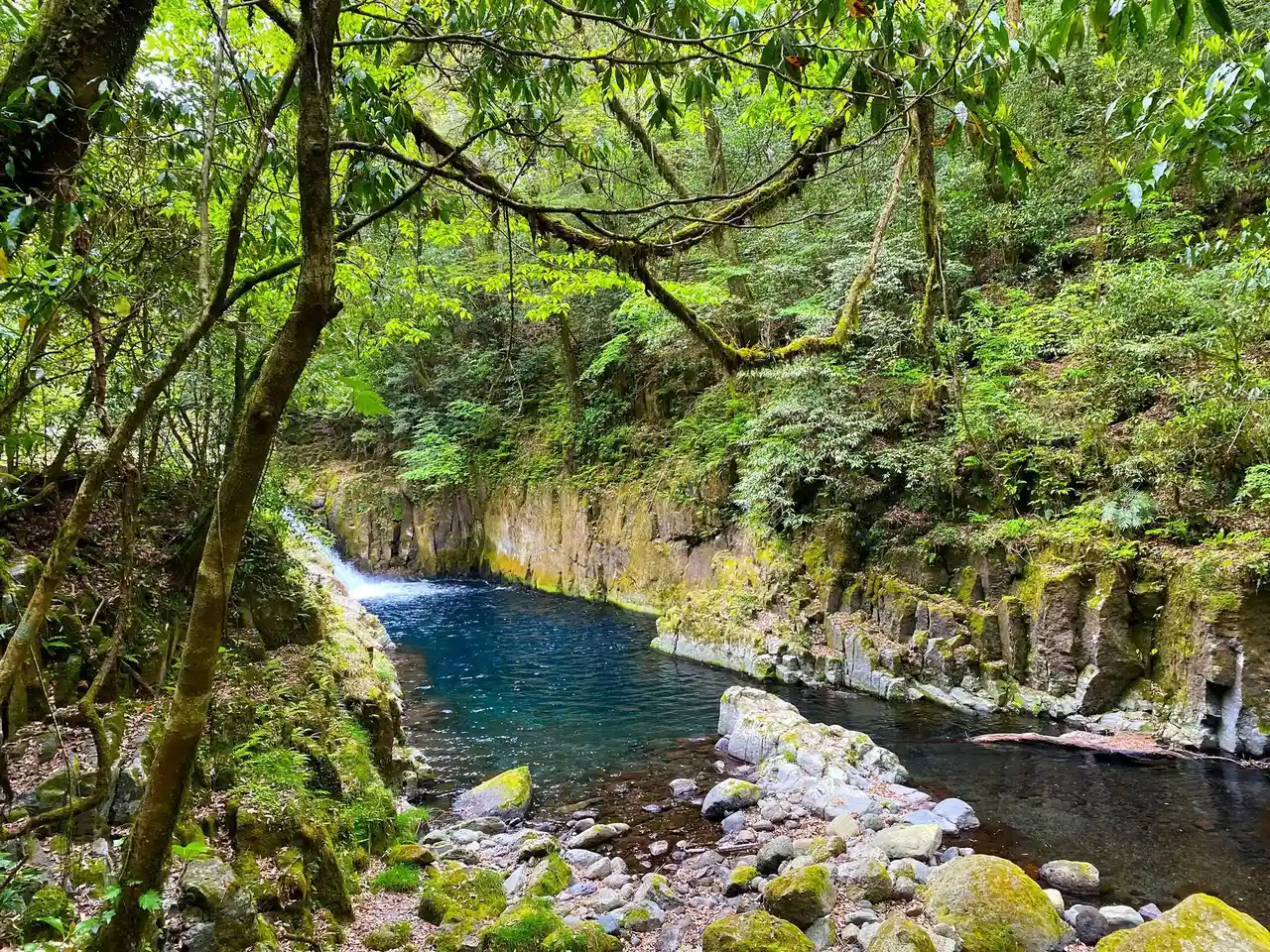
Photo: © Kumamoto Prefecture Tourist Federation.
Kikuchi Gorge is in Kikuchi City. It is the source of the Kikuchi River and was selected as one of the Ministry of the Environment's 100 Exquisite Waters under the name "Kikuchi Suigen." A walking trail with a series of waterfalls and pools runs through the forest, and it stays cool in the shade even in summer.
The rocks are wet and slippery, so wear comfortable walking shoes. Staff are on duty and collect the entry fee from April 1 to November 30, 8:30 to 17:00 (you can enter outside this period, but no staff are present). See the Kikuchi Gorge official website for details.
Getting around: train and car in Minamiaso, tram in Kumamoto City
Suizenji Jojuen in Kumamoto City can be reached by tram from Kumamoto Station or the city center. Shirakawa Suigen and Takamori Spring Tunnel Park in Minamiaso are along the Minamiaso Railway. From Kumamoto Station, take the JR Hohi Line and change to the Minamiaso Railway. Check the JR Kyushu and Minamiaso Railway timetables for the transfer station and times. Trains are infrequent, so it is safest to decide on your return train in advance.
Ikeyama Suigen, Ikenokawa Suigen and Kikuchi Gorge are far from stations and have few buses. To visit several of them, a rental car is the practical choice. Aso's volcanic and grassland scenery is covered in Mount Aso volcano and grasslands.