Ehime Festivals: Saijo Matsuri, Ushioni and Dogo Autumn Festival
This guide is translated from the Japanese edition. Read the Japanese edition
Ehime festival dates and highlights: Hojo Kashima in May, Uwajima Ushioni in July, Imabari Onmaku, and the Saijo, Dogo, Kikuma and Iyo-Mishima festivals in October.
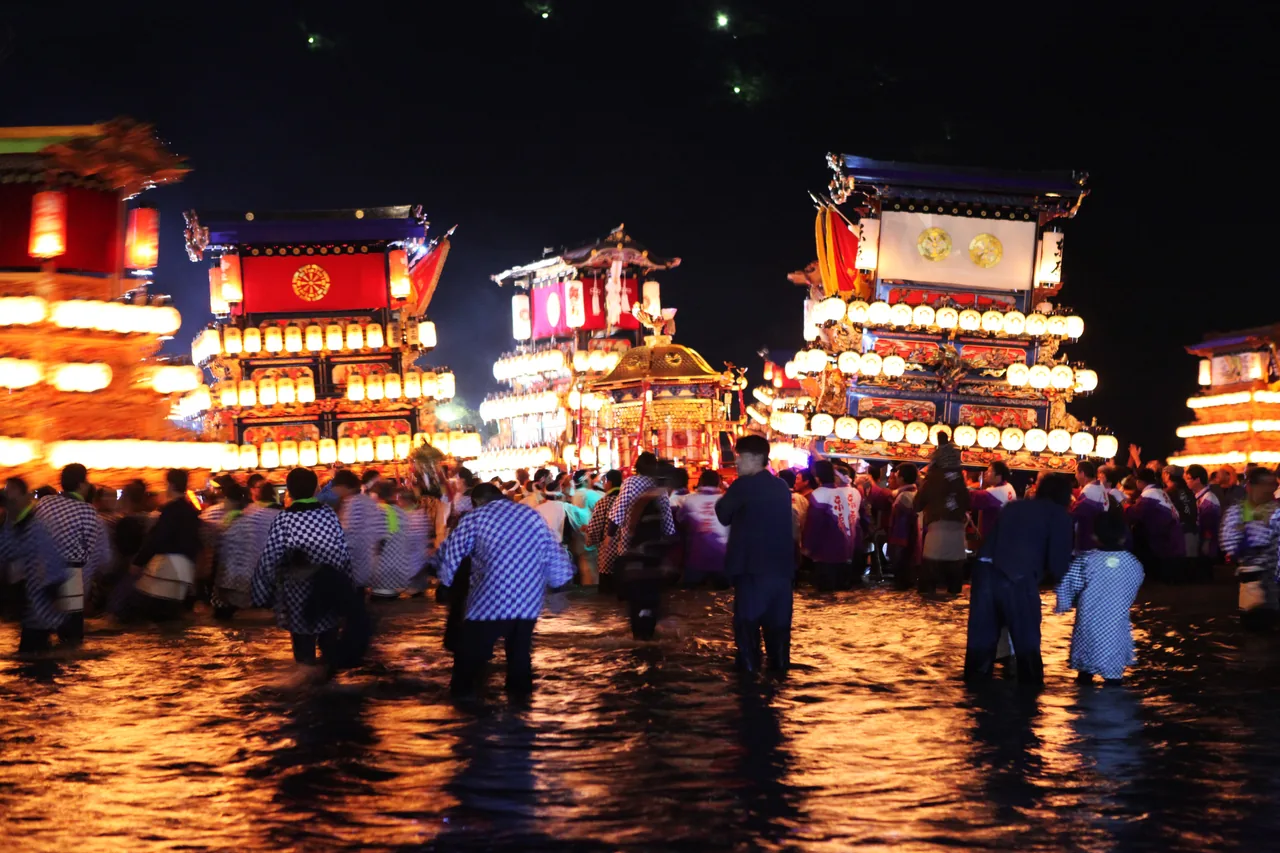
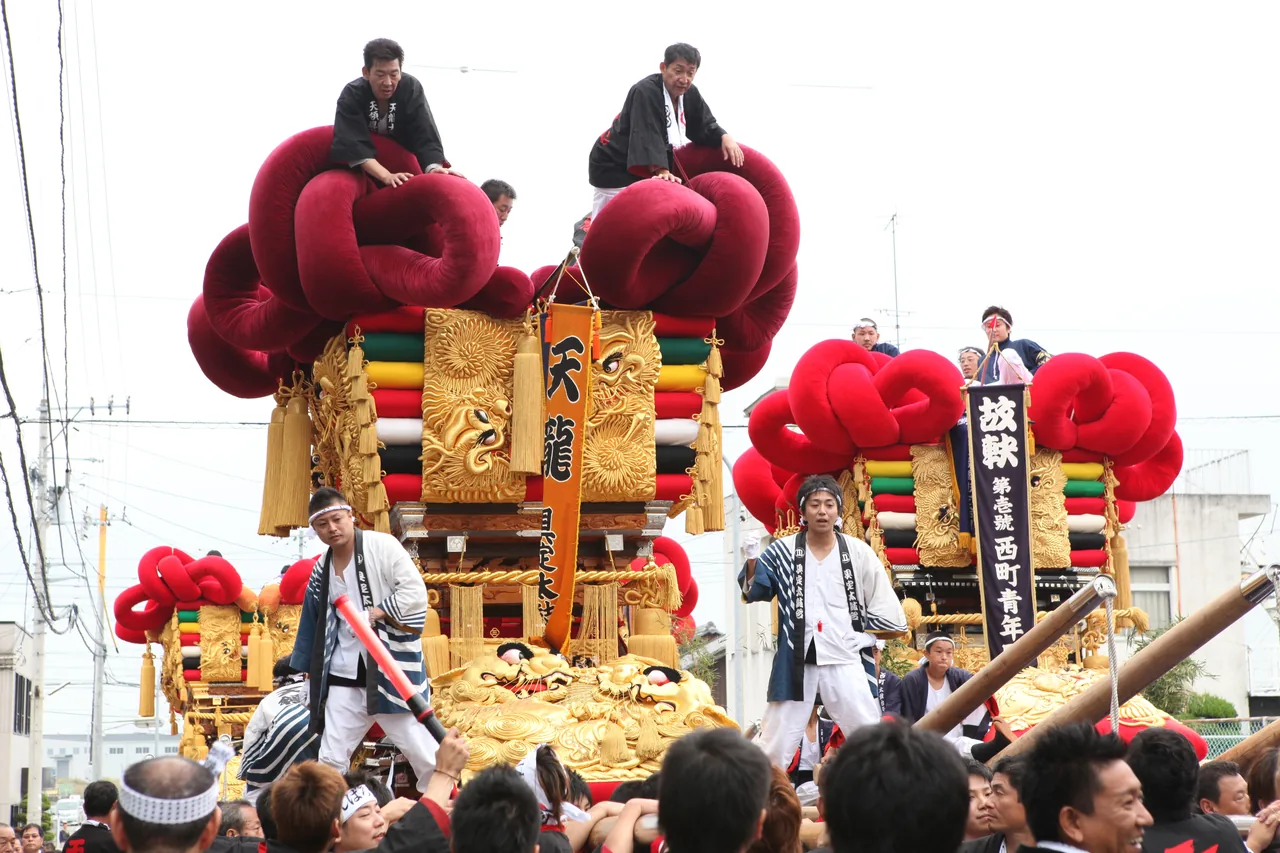
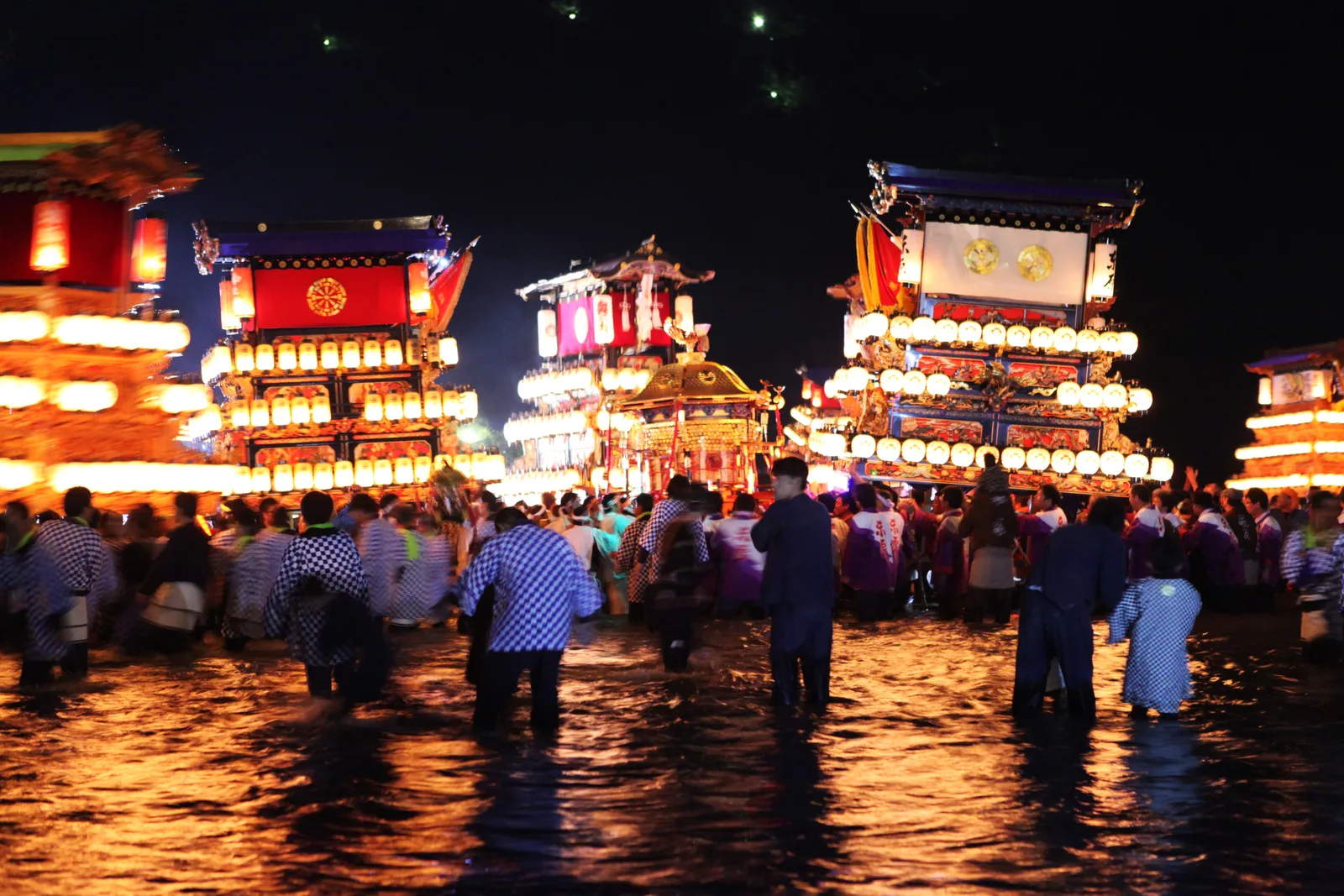
On the evening of October 16, danjiri floats glowing with lanterns roll down into the waters of the Kamo River. Ehime's festivals are concentrated in autumn, and in October danjiri, drum floats called taikodai and portable shrines (mikoshi) parade through towns all over the prefecture. Summer brings Uwajima's ushioni ox-demons, and May a festival on the sea at Hojo. Most festivals either have fixed dates or are held around the same time every year. If one might coincide with your trip, check the timing, the venue and how to get around on the day in advance.
When are Ehime's festivals?
The main festivals are usually held at the times below. Dates can change from year to year, so check the organizer's or the local government's information before you go.
| Usual timing | Festival | Location |
|---|---|---|
| Golden Week holidays in May | Hojo Kashima Festival | Hojo, Matsuyama |
| July 22–24 | Warei Grand Festival and Uwajima Ushioni Festival | Uwajima |
| Summer (until 2026) / October (from 2027) | Imabari Citizens' Festival "Onmaku" | Imabari |
| October 5–7 | Matsuyama Dogo Autumn Festival | Dogo, Matsuyama |
| October (main days 15–16) | Saijo Matsuri | Saijo |
| Around the third Sunday of October | Kikuma Festival (Otomouma horse run) | Kikuma, Imabari |
| October 13–15 / 20–23 | Kawanoe Autumn Festival / Iyo-Mishima Autumn Festival | Shikokuchuo |
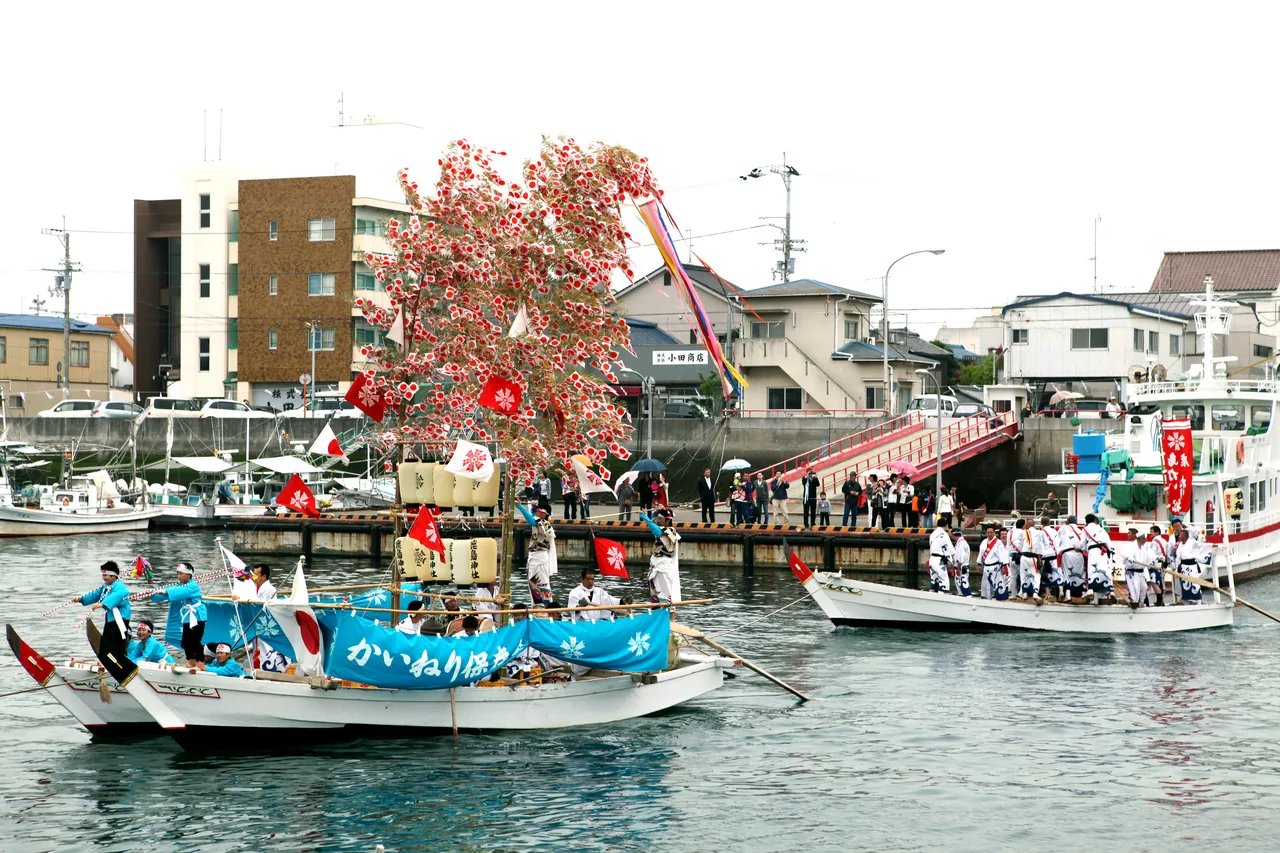
May: The kaineri boats of the Hojo Kashima Festival
The Hojo Kashima Festival takes place on Kashima, an island off Hojo in Matsuyama, over two days during the Golden Week holidays in early May. The first day is "Kashima no Kaineri," an Ehime Intangible Folk Cultural Property, in which decorated boats move across the water in front of the island. On the second day, a great sacred rope about 45 m long is replaced on the Meoto-iwa rocks offshore, with prayers for safety at sea and good harvests. Because these events take place on the sea, they are sometimes canceled or postponed due to weather and other reasons.
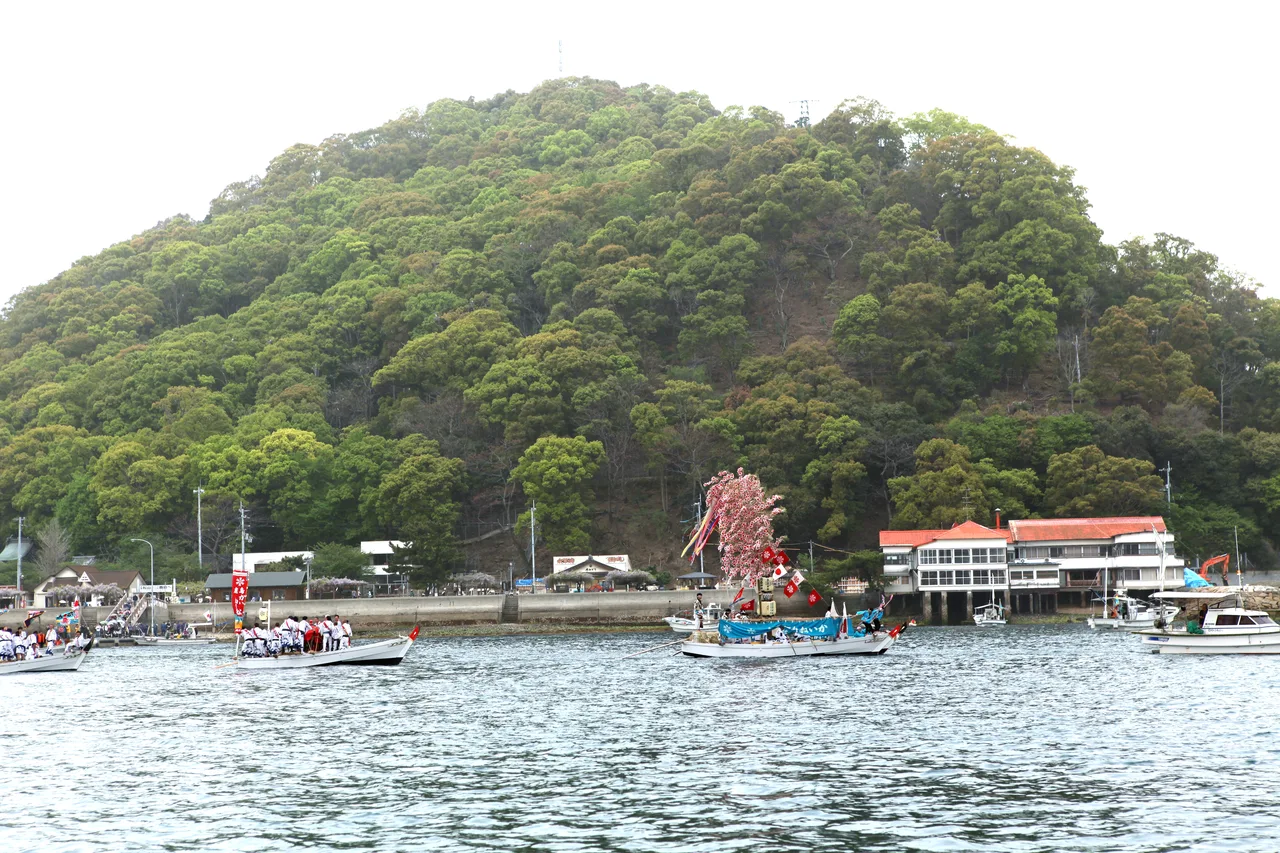
Photo: Ehime Prefectural Tourism & Local Products Association
The waiting room for the boat to Kashima is about a 10-minute walk from JR Iyo-Hojo Station, and the crossing takes about 3 minutes.
July and August: The Uwajima Ushioni Festival and other summer festivals
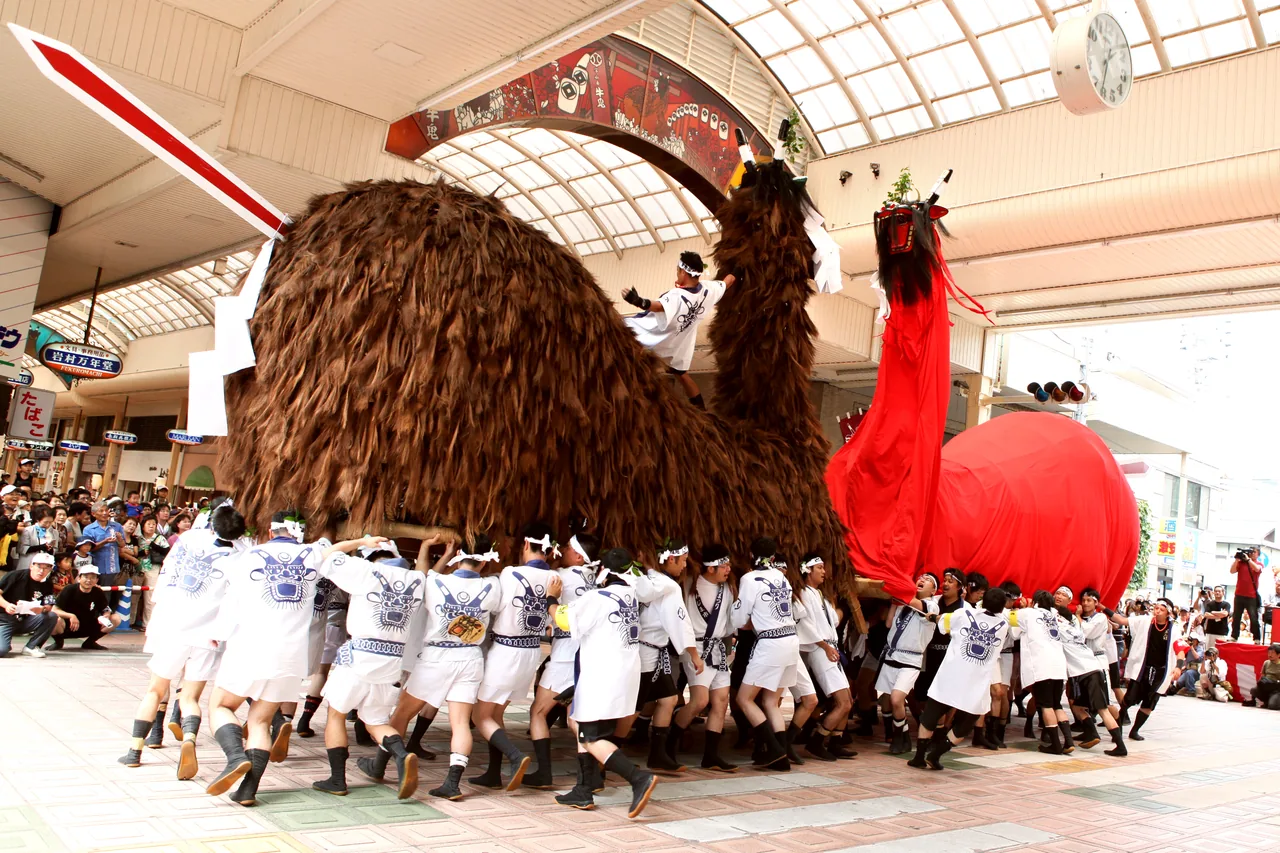
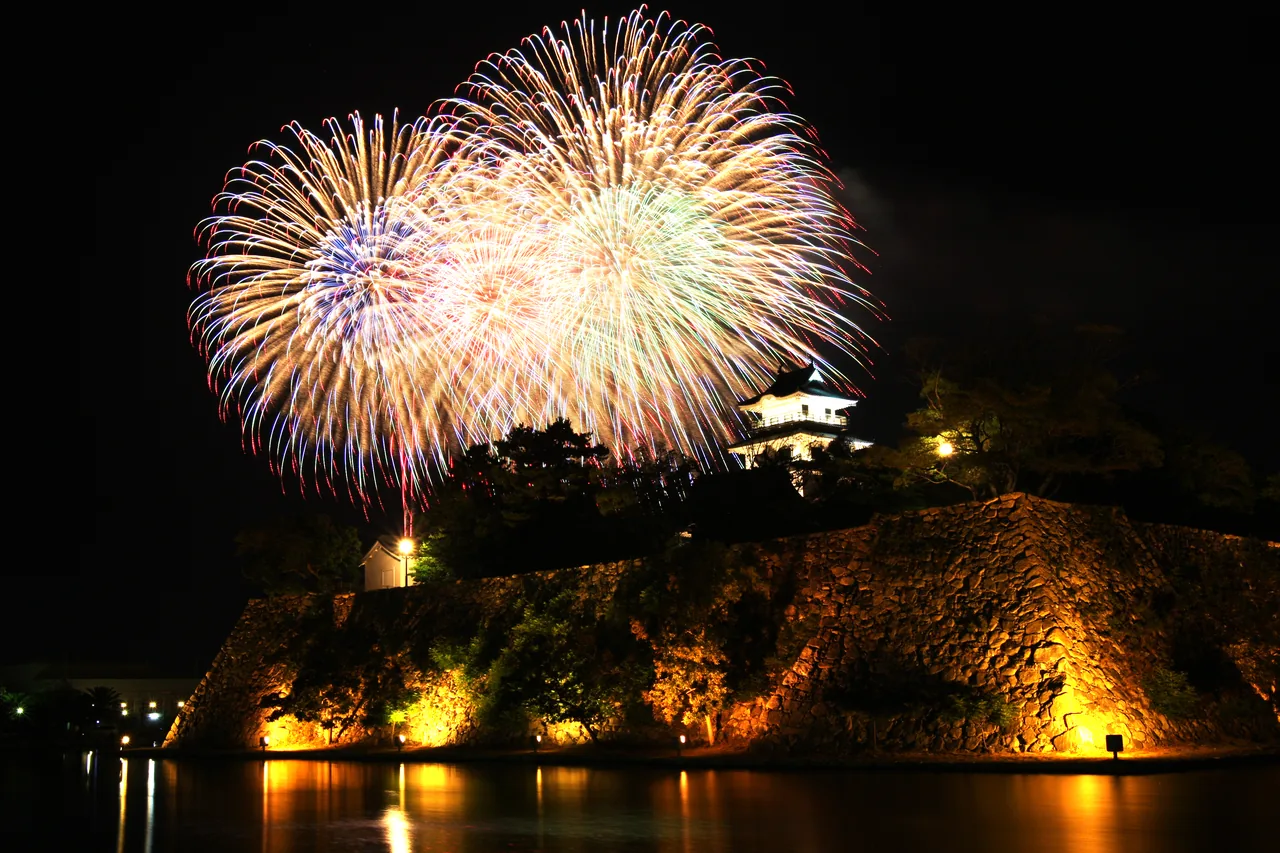
In Uwajima, the Warei Grand Festival and Uwajima Ushioni Festival is usually held from July 22 to 24. Huge ushioni with long necks and demon-like faces parade through town, and on the night of July 22, the first day of the Ushioni Matsuri, fireworks are launched over Uwajima Bay. On the last night comes the "hashirikomi," when young men plunge into the Sukagawa River in front of Warei Shrine and fight to seize the sacred paper offering on top of a bamboo pole set in the river. In past years, traffic was restricted in central Uwajima (around Ushioni Street, the shopping arcades and the parade route) on July 23 and 24 and near the fireworks launch site on July 22, and parking was banned throughout the city during the festival, so traveling by train to JR Uwajima Station is the easier choice.
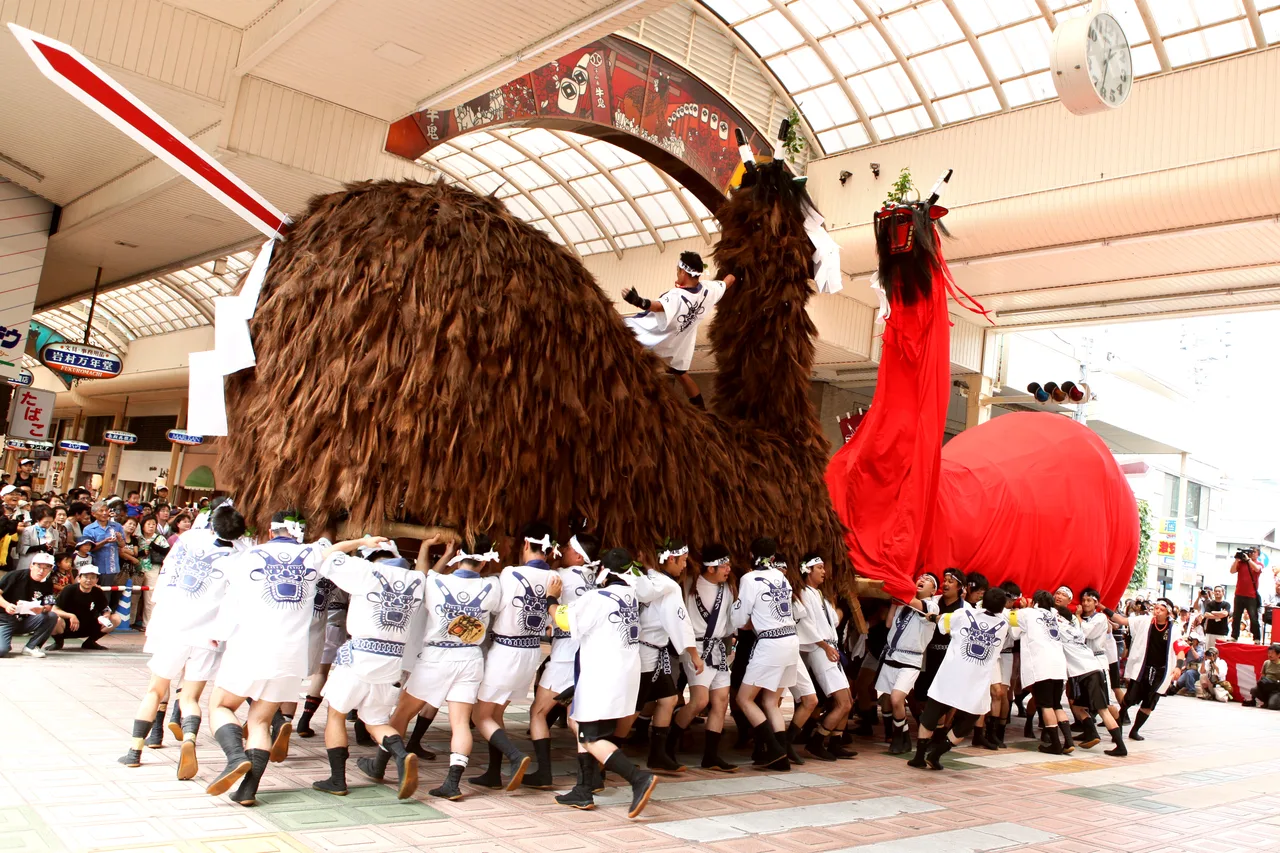
Photo: Ehime Prefectural Tourism & Local Products Association
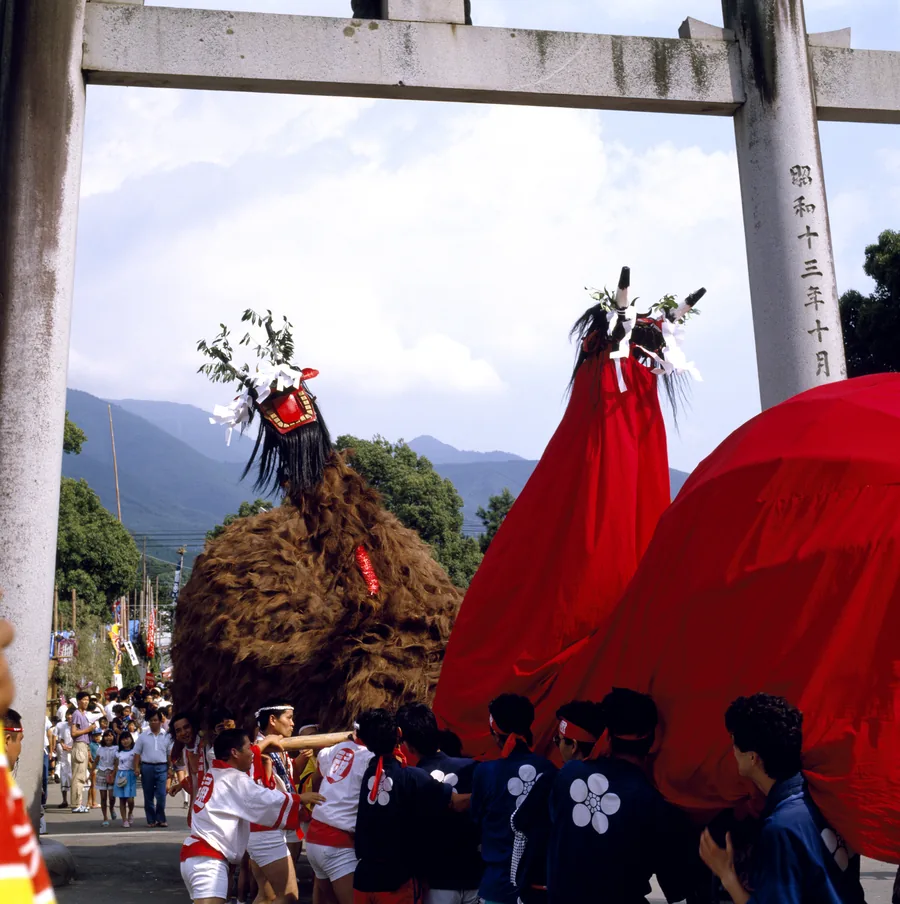
Photo: Ehime Prefectural Tourism & Local Products Association
The Imabari Citizens' Festival "Onmaku", held in central Imabari, fills the streets with dancing and "tsugi-jishi," a traditional performing art of the Imabari area, and ends with fireworks at night. It has been held in August until now, but out of concern for safety in extreme summer heat, it will move to autumn from its 30th edition in 2027 and is scheduled for October 2. Seats for the fireworks are ticketed, so check the official Onmaku website for details.
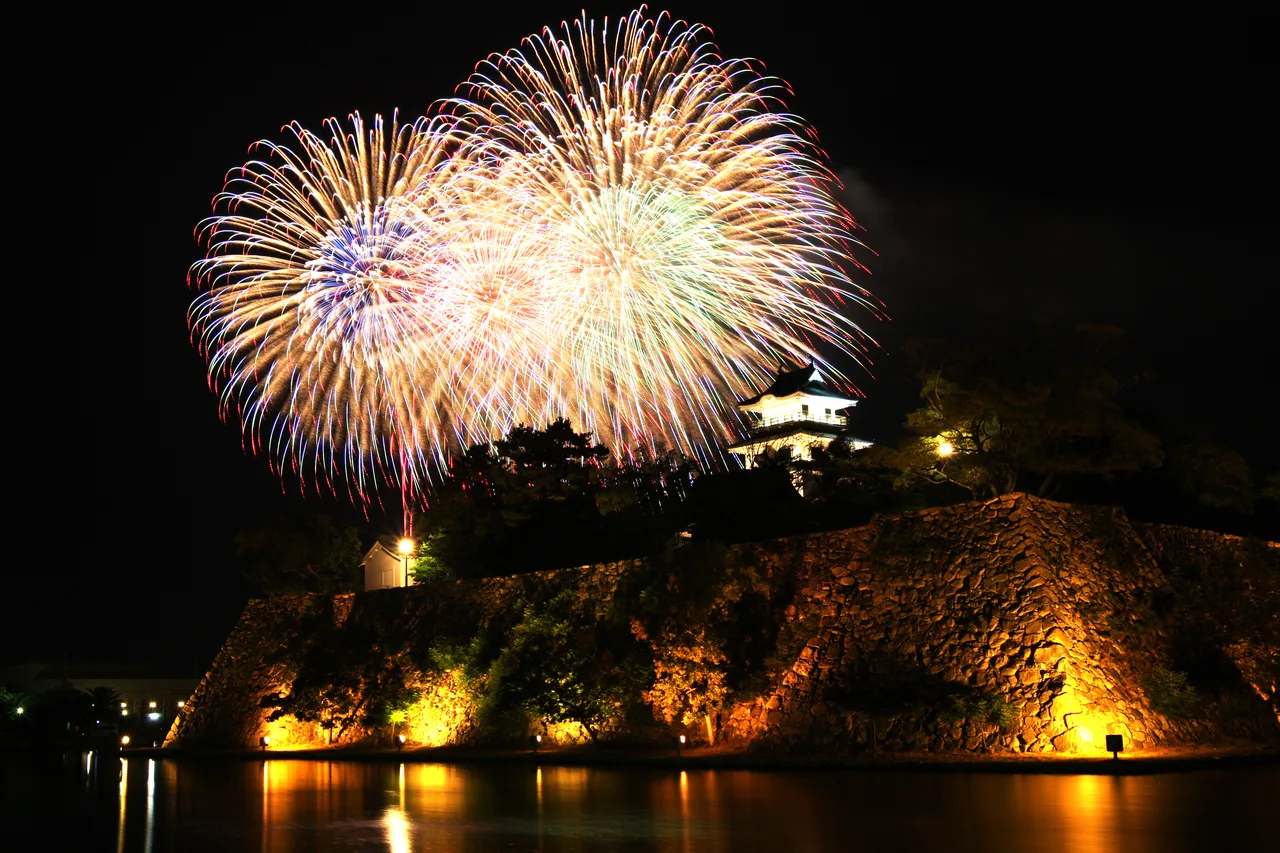
Photo: Ehime Prefectural Tourism & Local Products Association
Summer also brings the Mount Ishizuchi Oyamabiraki Grand Festival from July 1 to 10, Matsuyama's Mitsuhama Fireworks and Matsuyama Matsuri (Yakyuken Odori), and the Suigun Boat Race in Miyakubo, Imabari.
October: The Saijo Matsuri and the drum floats of eastern Ehime
The festival that represents autumn in eastern Ehime (Toyo) is the Saijo Matsuri in Saijo City. It is the collective name for the autumn festivals of four shrines: Kamo, Ishioka, Isono and Iizumi. Three of them are held on the same dates every year: Ishioka Shrine on October 14 and 15, Isono Shrine on the 15th and 16th, and Iizumi Shrine on the 16th and 17th. Kamo Shrine's festival falls on the two days before Sports Day in October.
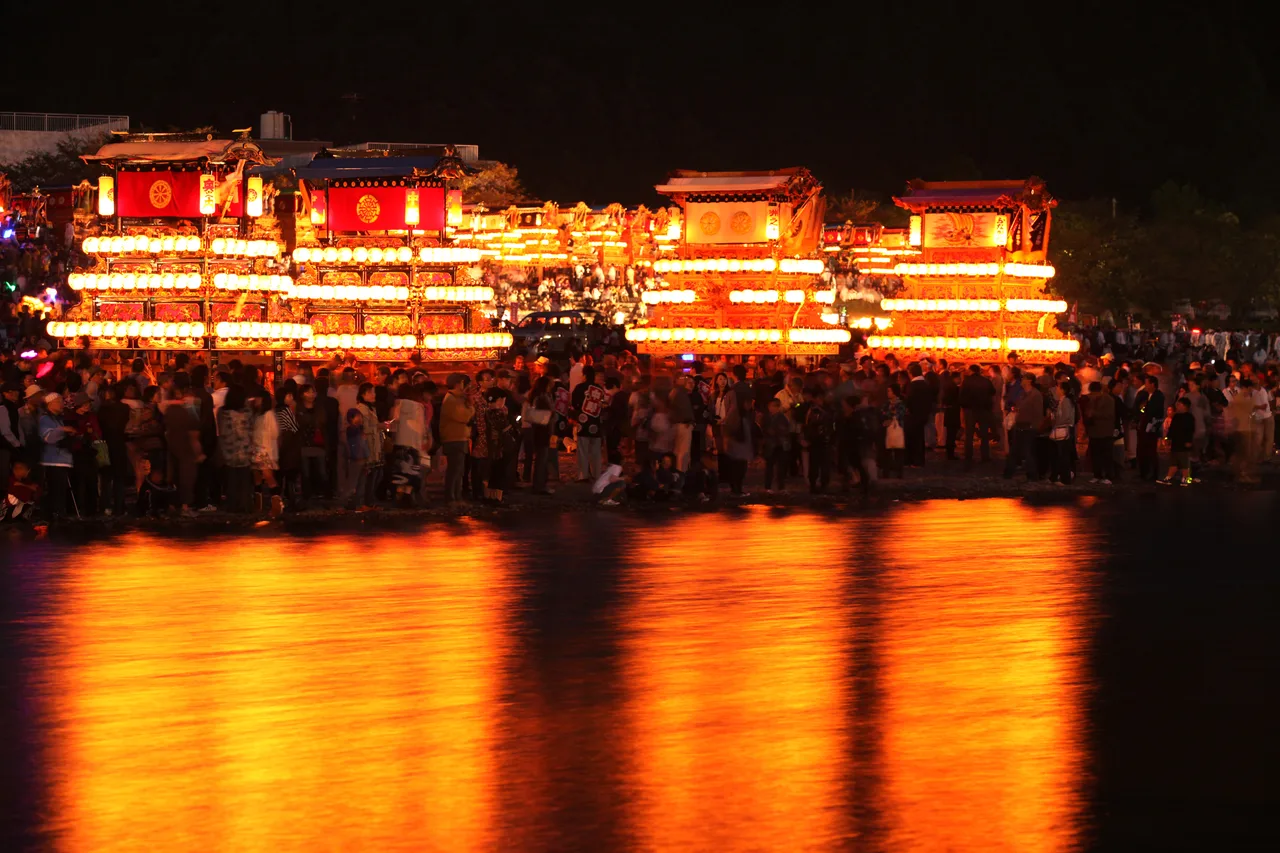
Photo: Ehime Prefectural Tourism & Local Products Association
At the central Isono Shrine festival, the danjiri set out from the shrine grounds before dawn on the 15th in the "miyadashi," and on the evening of the 16th, danjiri and a mikoshi enter the Kamo River near Isonohashi Bridge and Bujo Park in the "kawairi." The kawairi often runs later than scheduled, and the city is crowded throughout the festival. The kawairi site is about 1.5 km, or about a 20-minute walk, from JR Iyo-Saijo Station.
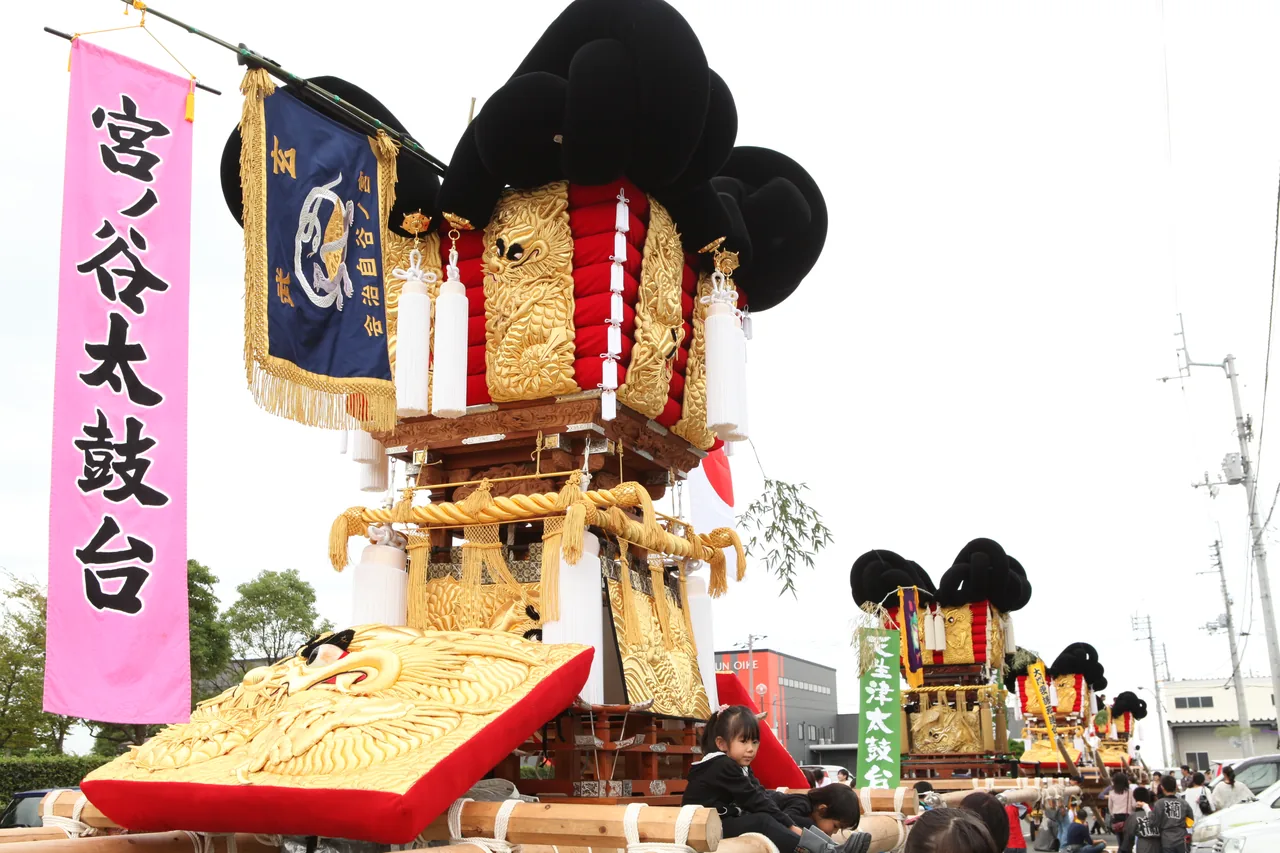
Farther east in Shikokuchuo City, the stars are taikodai drum floats rather than danjiri. At the Kawanoe Autumn Festival, usually October 13 to 15, taikodai weighing about 2 tonnes parade through town. At the Iyo-Mishima Autumn Festival, usually October 20 to 23, taikodai gather at Minato Kinen Park for the "toitsu-yose," where teams compete in lifting and showing off their floats.
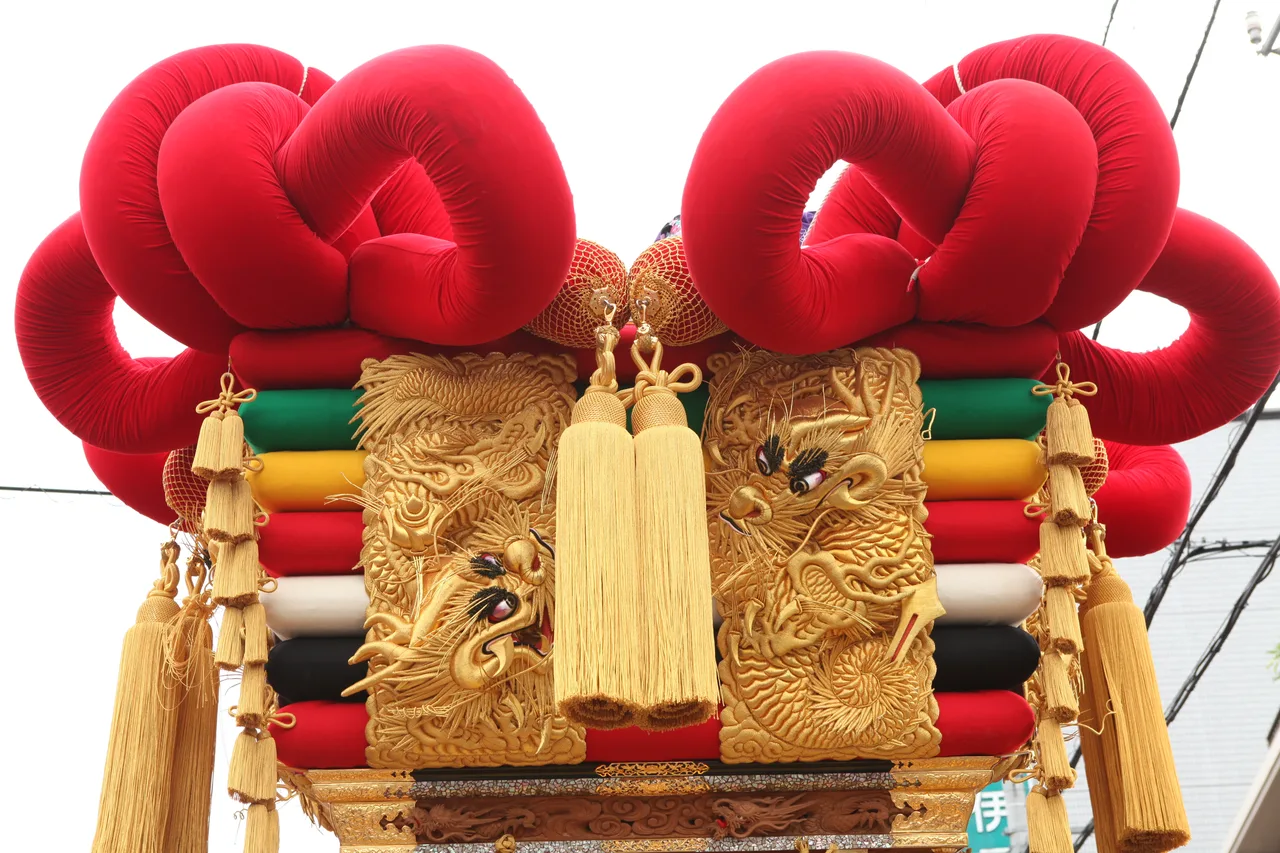
Photo: Ehime Prefectural Tourism & Local Products Association
In Niihama, Saijo's neighbor to the east, taikodai also parade through town at the Niihama Taiko Festival from October 15 to 18 in a typical year. Each float, weighing about 3 tonnes, is carried by about 150 bearers called kakifu. The highlight is the "kakikurabe," when the floats of each district compete by hoisting them high overhead.
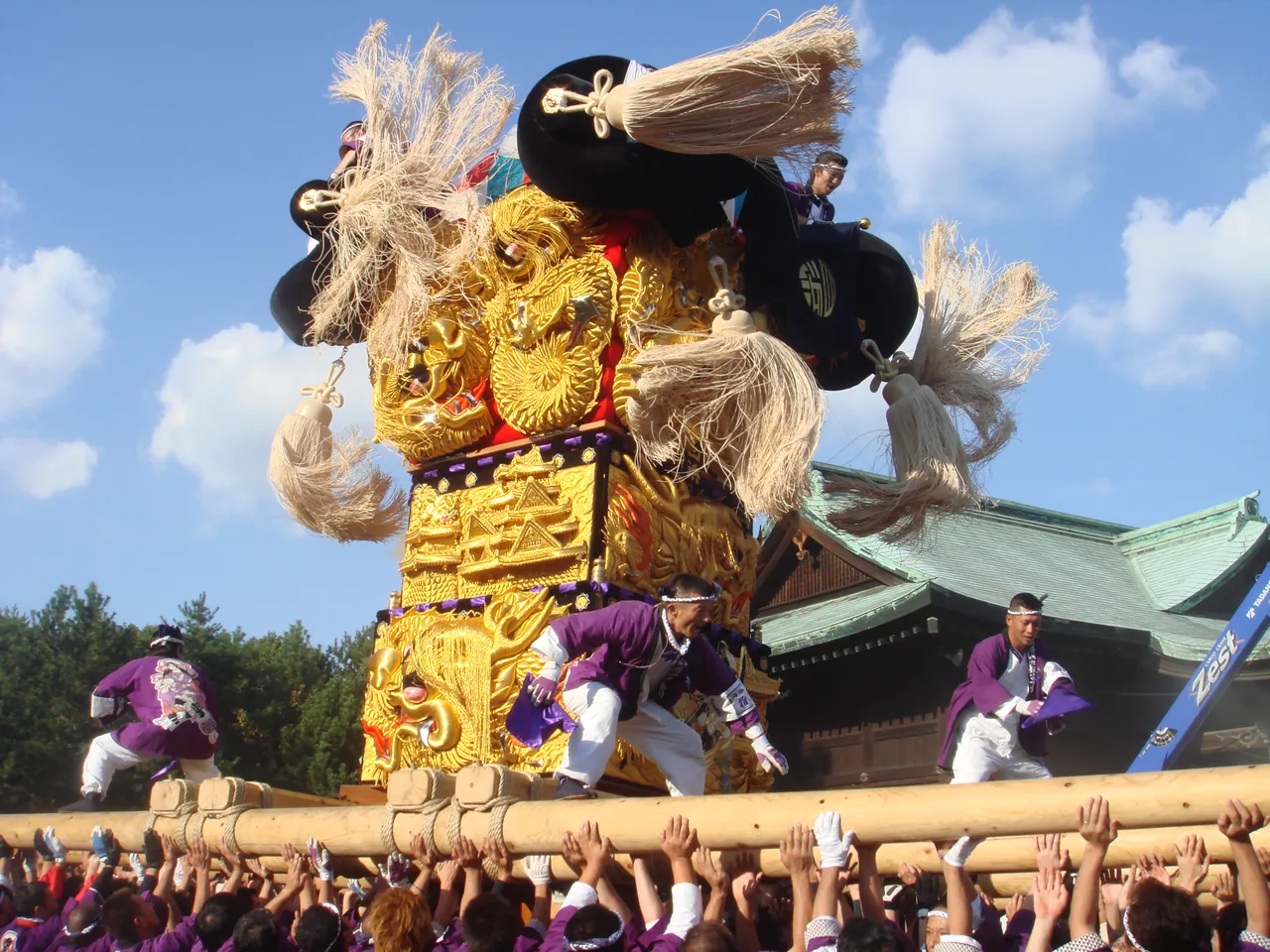
Photo: Ehime Prefectural Tourism & Local Products Association
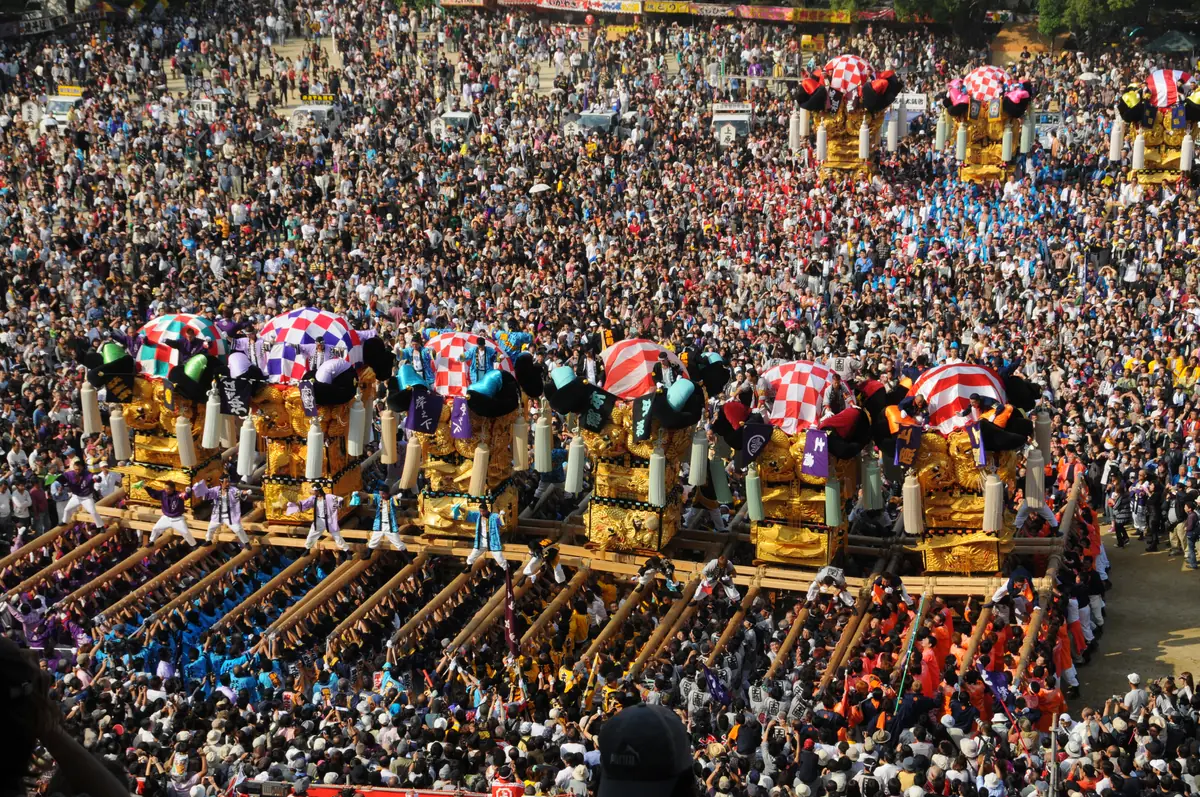
Photo: Ehime Prefectural Tourism & Local Products Association
October: Dogo's mikoshi clash and Kikuma's horse run
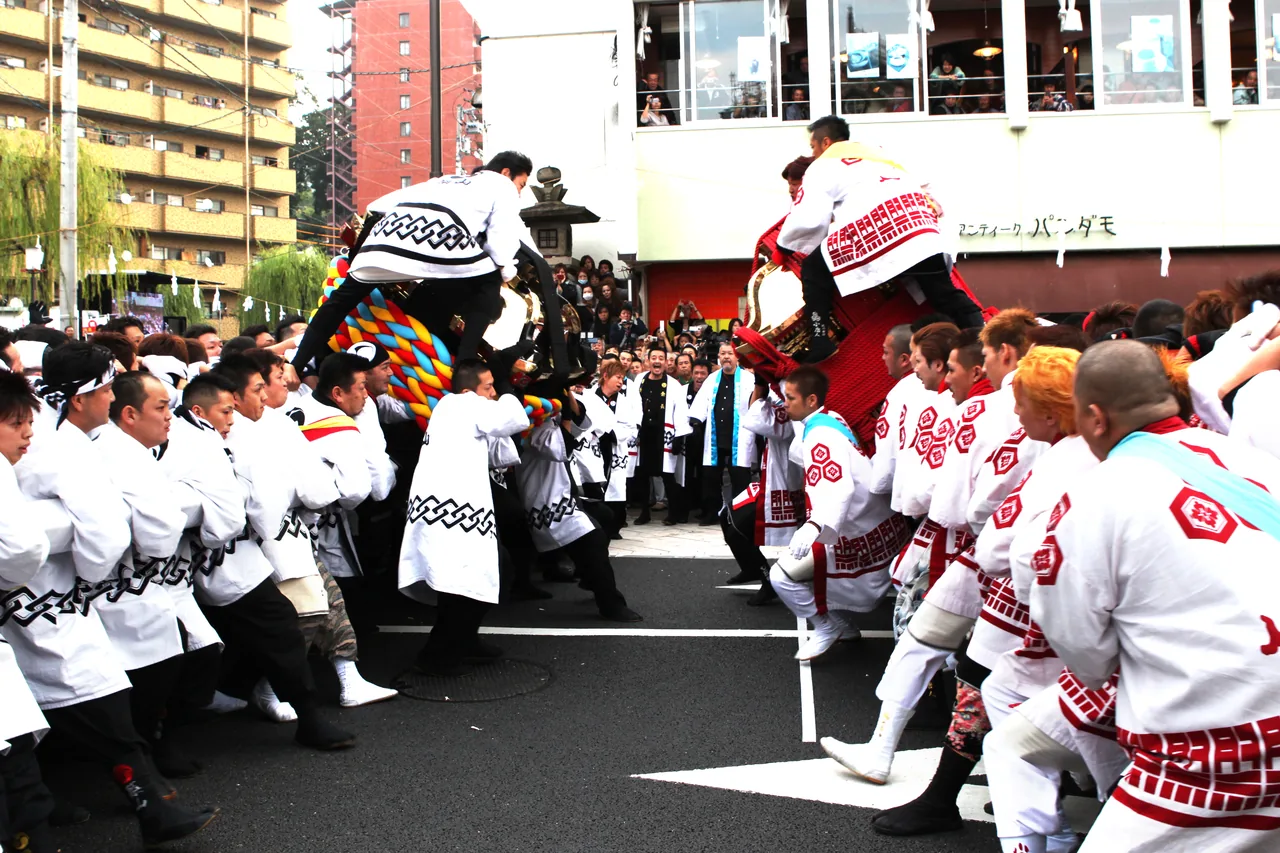
The Matsuyama Dogo Autumn Festival is held over three days from October 5 to 7 every year. Early on the morning of the last day, the great mikoshi clash twice each in front of Dogo Onsen Station in the "hachiawase," and the station square fills with spectators. The mikoshi come out from Isaniwa Shrine and Yu Shrine, and their return up the 135 stone steps of Isaniwa Shrine is another highlight. The clashes begin early in the morning, so staying overnight in Dogo makes it easier to get a close view.
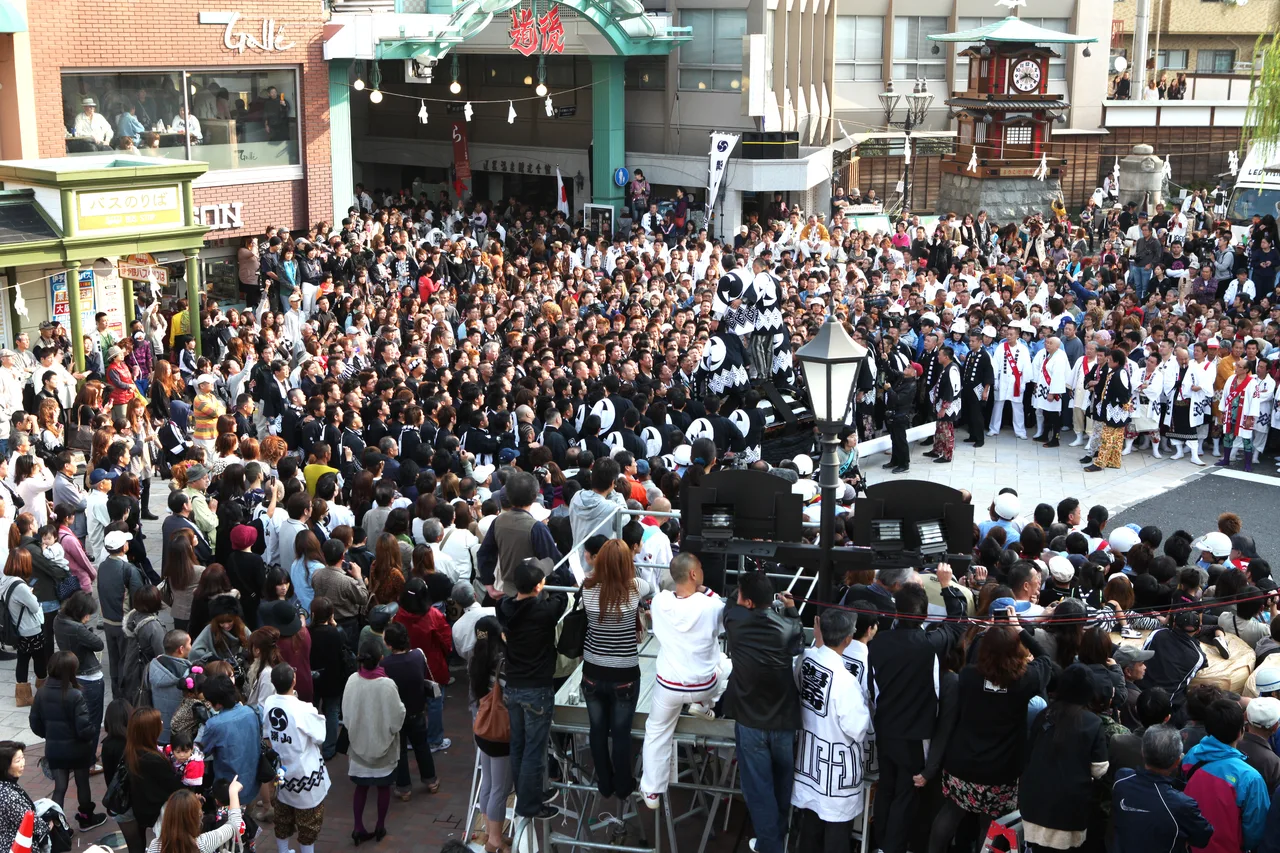
Photo: Ehime Prefectural Tourism & Local Products Association
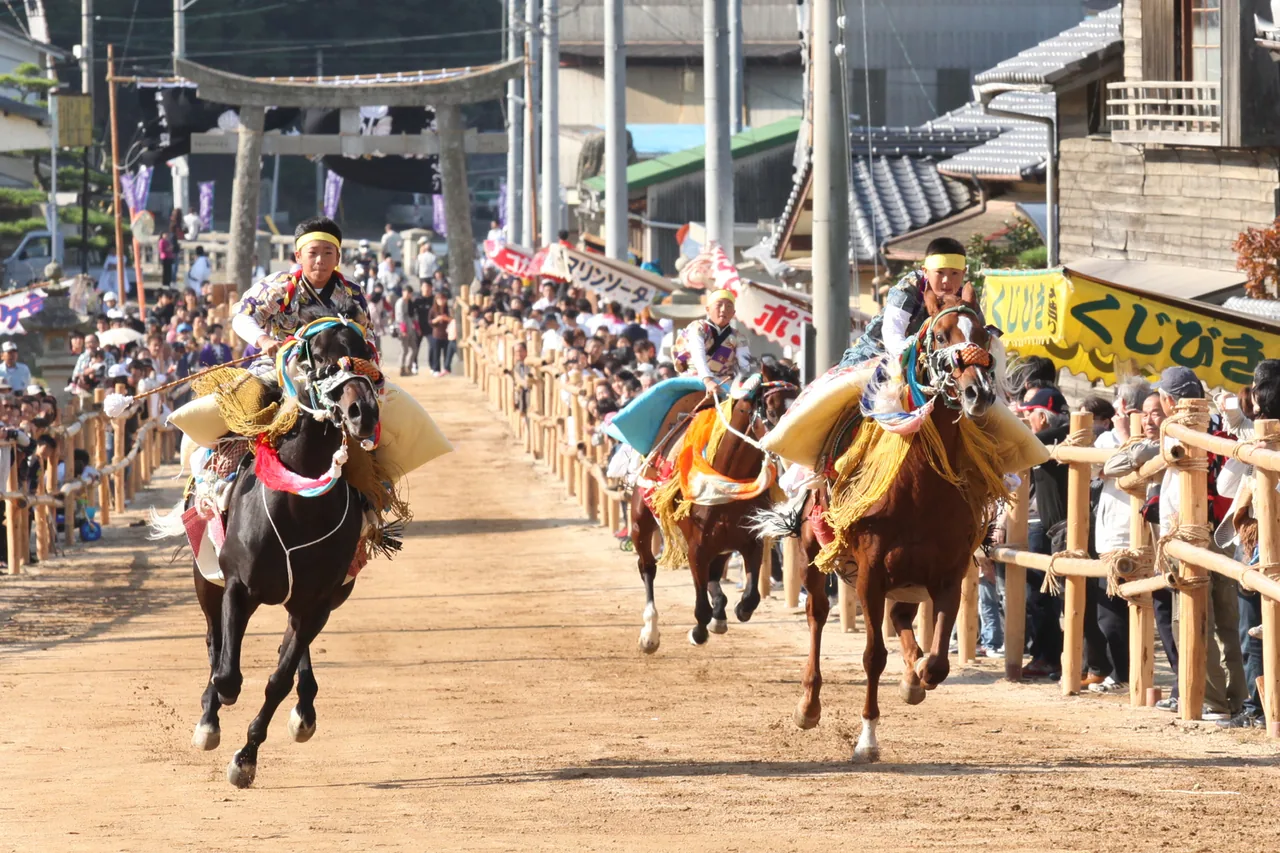
The Kikuma Festival in Kikuma, Imabari, is the autumn festival of Kamo Shrine, held around the third Sunday of October each year. The highlight is the "Otomouma no Hashirikomi," in which boys ride horses dressed in colorful decorations and gallop the length of the shrine's approach of about 300 m in one go. The Otomouma rite is designated an Intangible Folk Cultural Property of Ehime Prefecture. The horse run takes place in the morning.
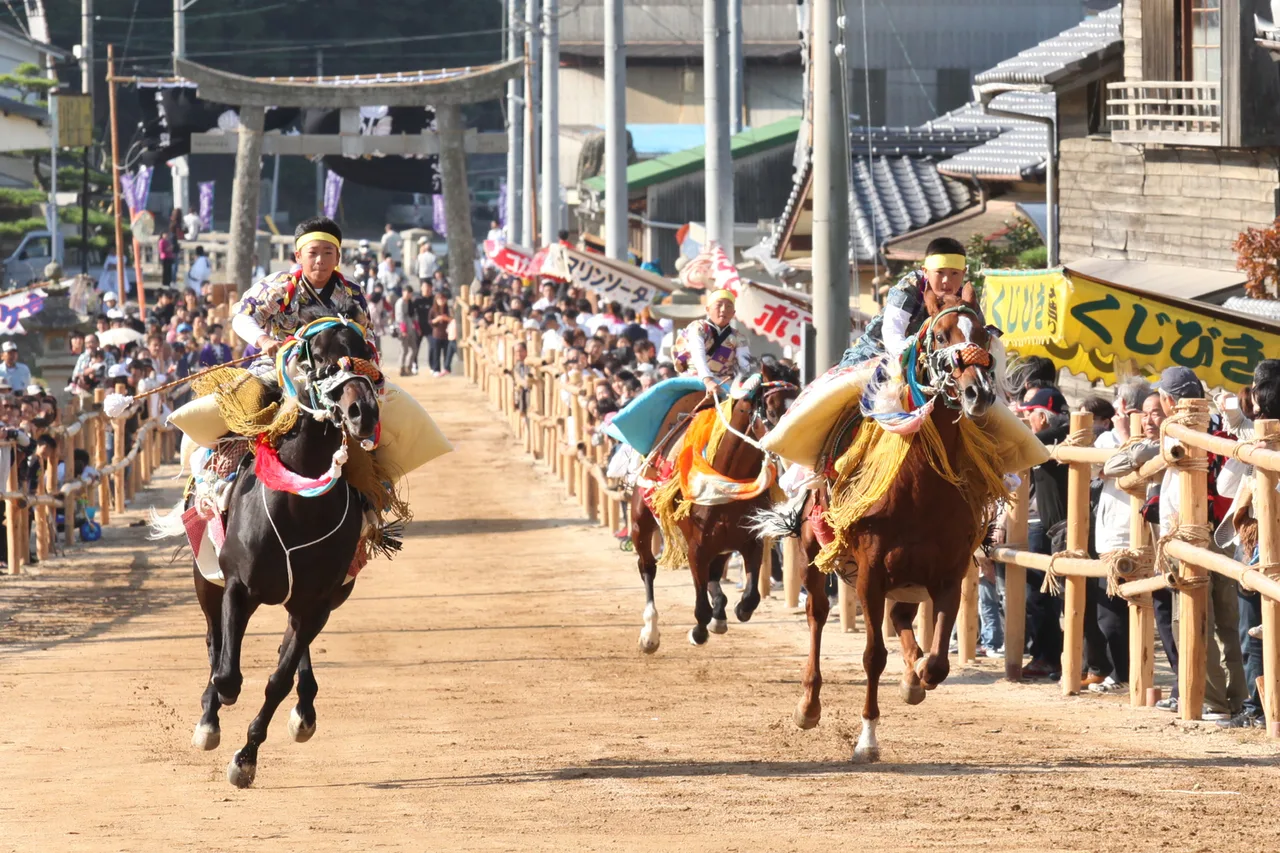
Photo: Ehime Prefectural Tourism & Local Products Association
Before you go on a festival day
On festival days there are traffic restrictions around the venues, and parking tends to run short. Choosing venues you can reach by train, streetcar or on foot saves stress on the way back. If you are booking accommodation around a festival, reserve early.
The Saijo Matsuri schedule and the kawairi site can be checked on Saijo City's Saijo Matsuri page. If you plan to explore Uwajima after the Ushioni Festival, see also our feature "Uwajima and Nanyo Guide."