Uwajima Things to Do: Castle, Terraces, Sotodomari, Cape Sada
This guide is translated from the Japanese edition. Read the Japanese edition
Uwajima and southern Ehime: Uwajima Castle, Tenshaen, Warei Shrine, the Yusu Mizugaura terraces, Nanrakuen, Sotodomari, Unomachi and Cape Sada by train and bus.
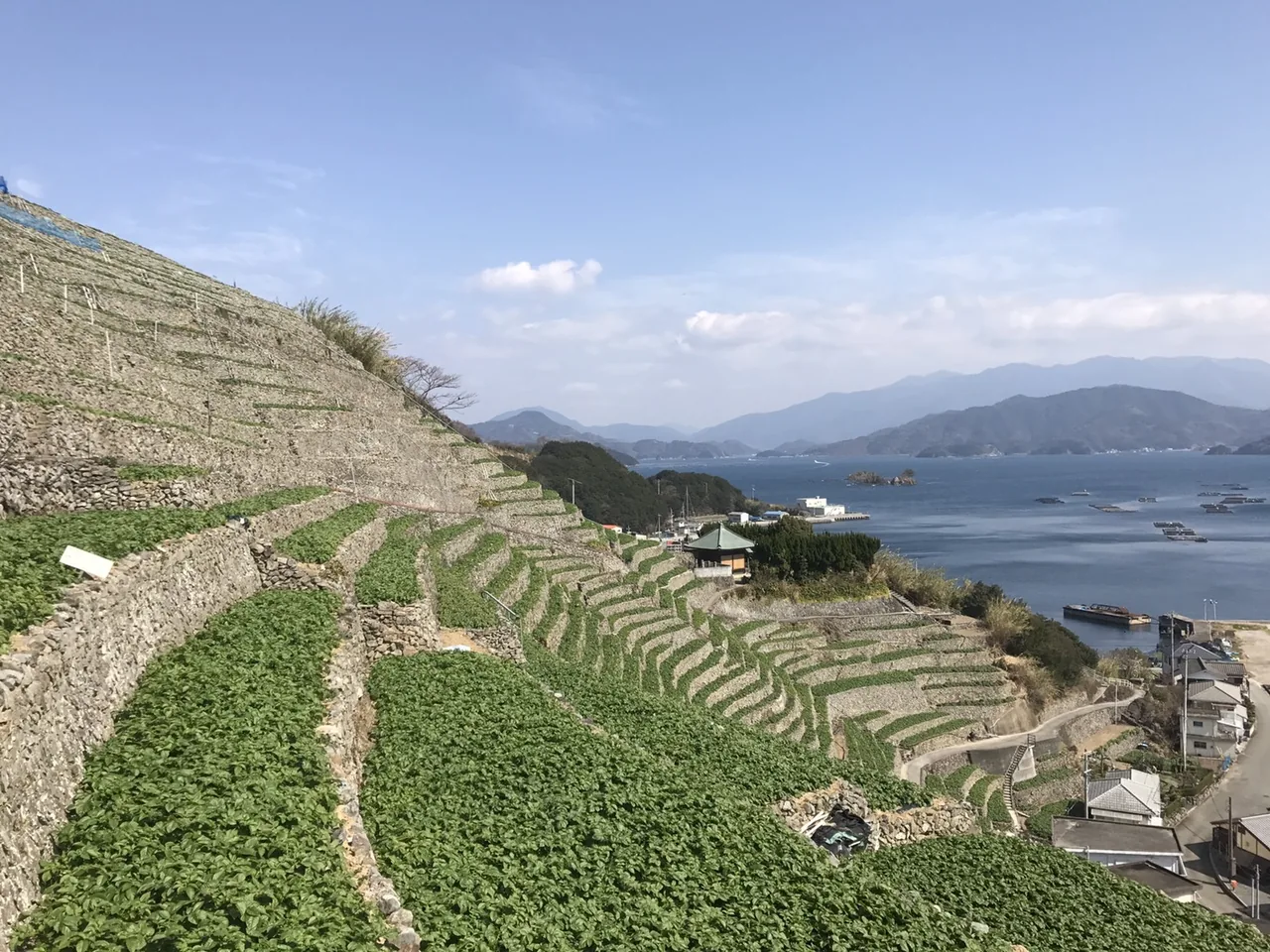
On a steep slope facing the Uwa Sea, fields walled with stacked stones rise like a staircase from the shore to the top of the hill. The southwest of Ehime Prefecture is called "Nanyo," a land of deeply indented coastline where the mountains drop straight into the sea. Uwajima, its main city, keeps the castle and garden of the Date clan; Ainan to the south has a fishing village enclosed by stone walls; and Ikata to the north has the cape at the westernmost tip of Shikoku. The sights are spread over a wide area. It is easier to plan if you base yourself in Uwajima and sort places into those you can reach by train and bus and those that take longer.
How do you get to Uwajima and around Nanyo?
From Matsuyama to Uwajima, take the Uwakai limited express on the JR Yosan Line. The trip takes around 1 hour 30 minutes, and some trains take 1 hour 20-odd minutes. It also stops at Unomachi Station (Seiyo City), about 60 minutes from Matsuyama Station by limited express.
From Uwajima Station you can walk to Uwajima Castle and Tenshaen Garden. For the Yusu Mizugaura terraces, Nanrakuen and Sotodomari in Ainan, use buses such as those of Uwajima Jidosha (Uwajima Bus); Sotodomari requires a transfer. Cape Sada, at Shikoku's western tip, is reached from Yawatahama rather than Uwajima. Covering everything in one day is not realistic, so split central Uwajima, the terraces and Ainan along the Uwa Sea, and Cape Sada into separate days.
Uwajima Castle: An original keep above Uwajima Bay
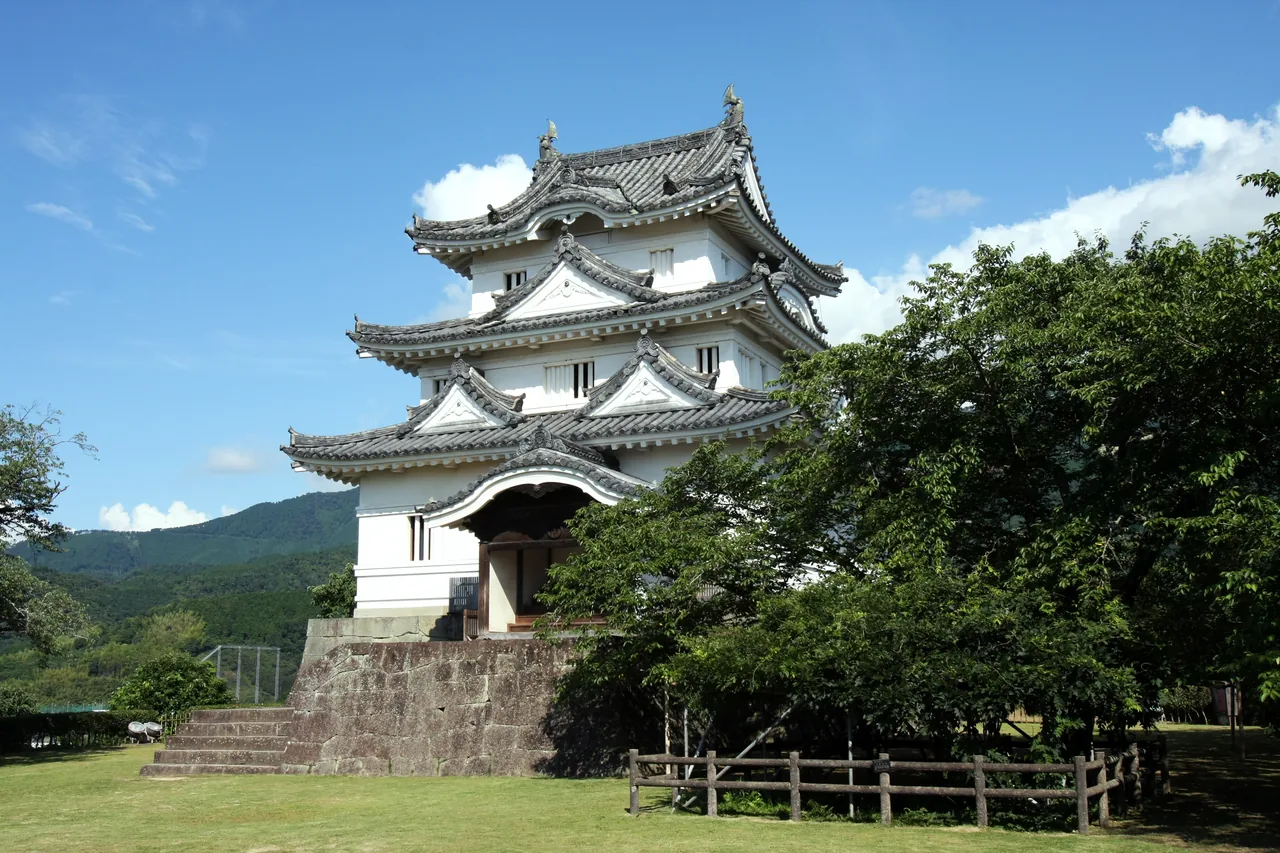
On top of Shiroyama hill in the middle of town stands the white keep of Uwajima Castle. Todo Takatora built the castle around 1601 (Keicho 6), and from 1615 (Genna 1) it was the seat of the Date clan. The present keep was rebuilt around 1666 (Kanbun 6) by Date Munetoshi, the second lord of the domain, and has three roofs and three floors, with its walls fully plastered. It is one of the twelve castle keeps in Japan that survive from the Edo period, and is a national Important Cultural Property, designated in 1934.
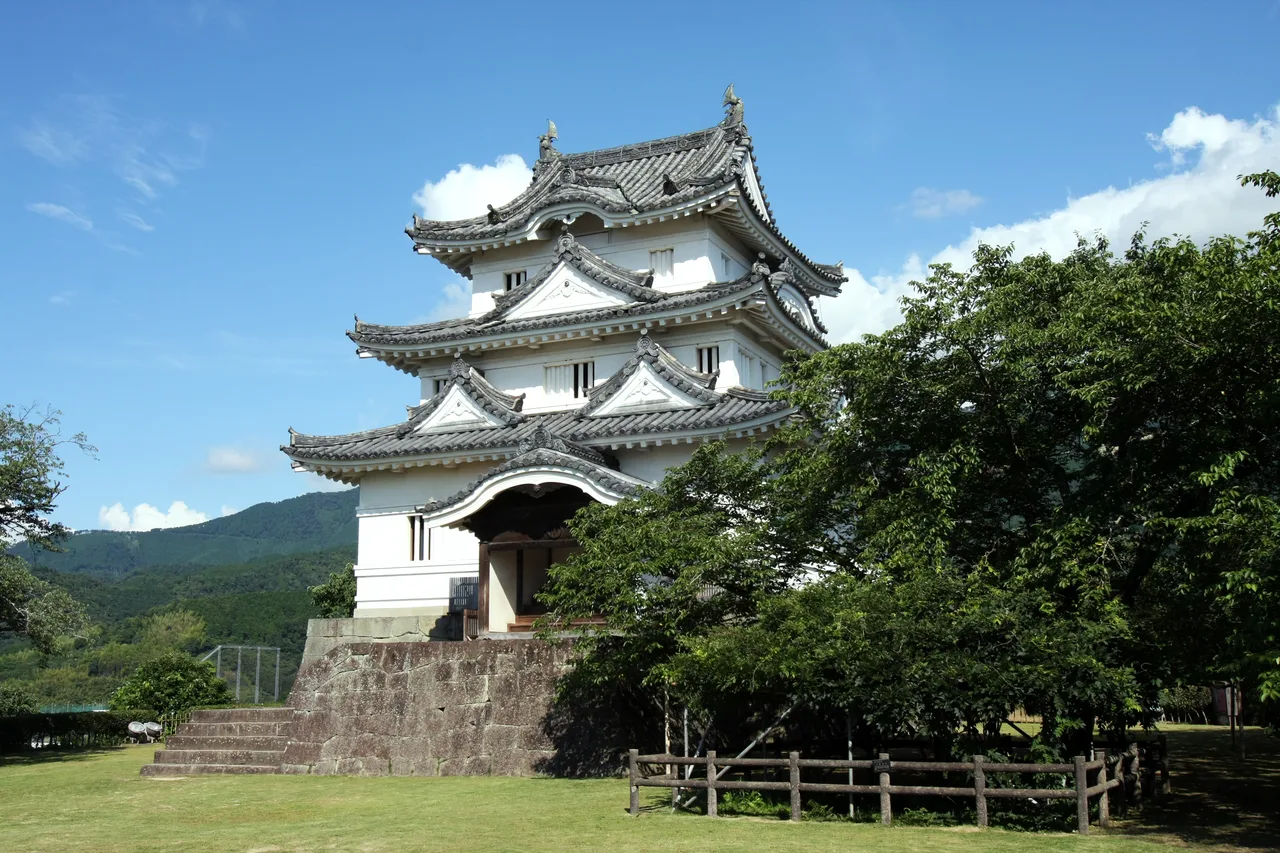
Photo: Ehime Prefectural Tourism & Local Products Association
It is about a 15-minute walk from JR Uwajima Station to the foot of Shiroyama. From there a mountain path and stone steps lead up to the keep, past stone walls wrapped in trees. From the main enclosure you can see over the town to Uwajima Bay and the mountains around it.
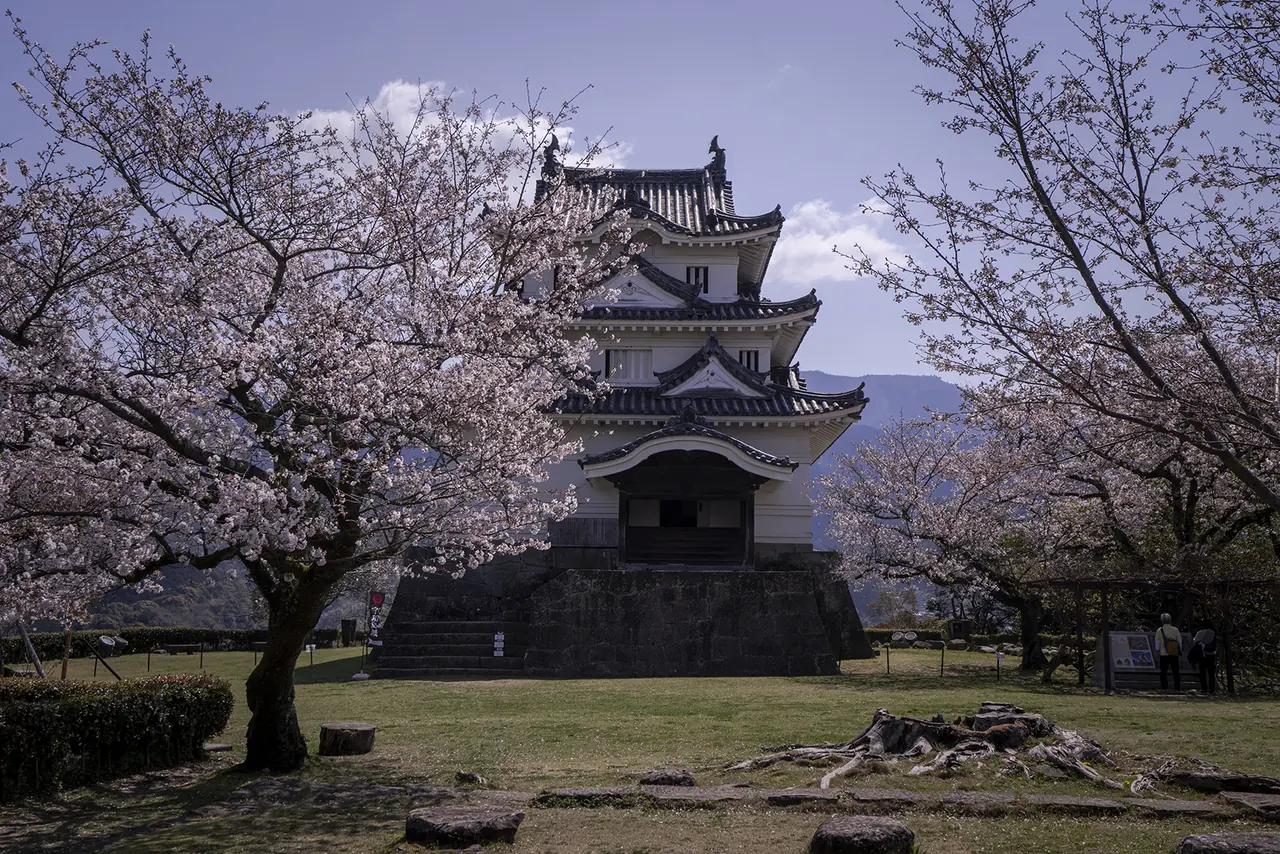
Photo: Ehime Prefectural Tourism & Local Products Association
Tenshaen Garden and Warei Shrine: A garden and shrine tied to the Date clan
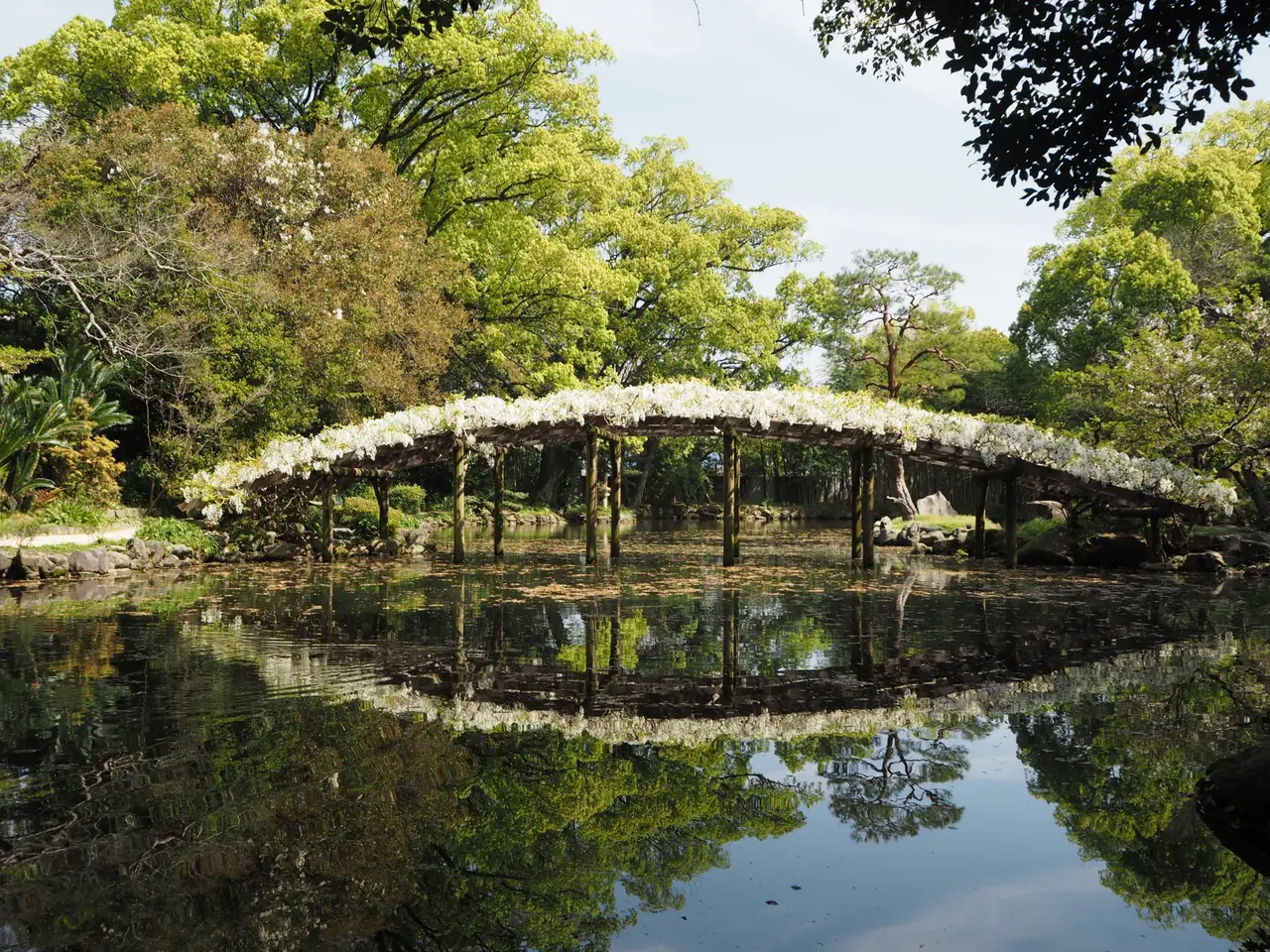
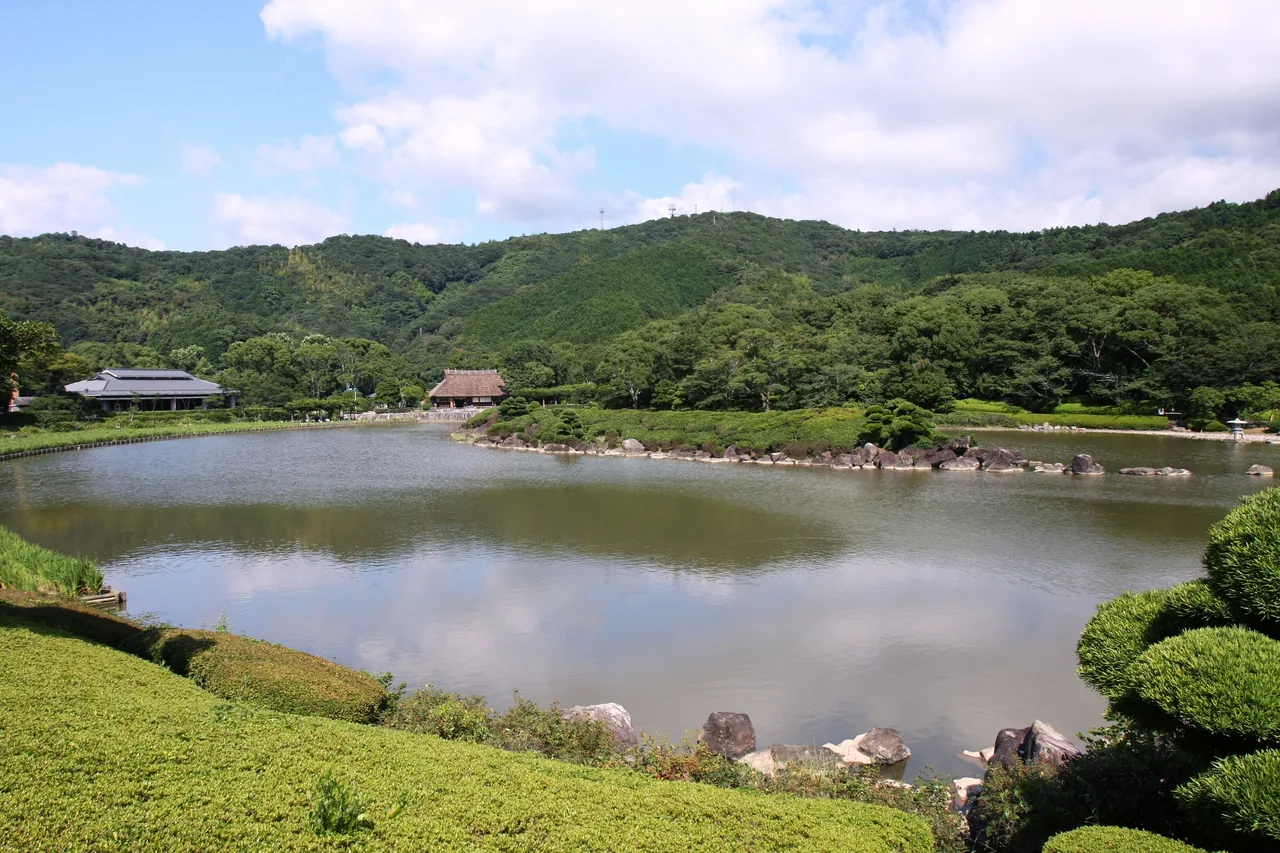
About 15 minutes on foot from the castle, Tenshaen Garden is a stroll garden around a pond, created by Date Munetada (Shunzan), the seventh lord, as his retirement residence. It is a national Place of Scenic Beauty. On the arched wisteria trellis over the pond bloom white wisteria known as "nobori-fuji." The wisteria is at its best during April, and from early to mid-June irises bloom around the pond. Bamboo is planted around the pond in reference to the Date family crest of sparrows and bamboo.
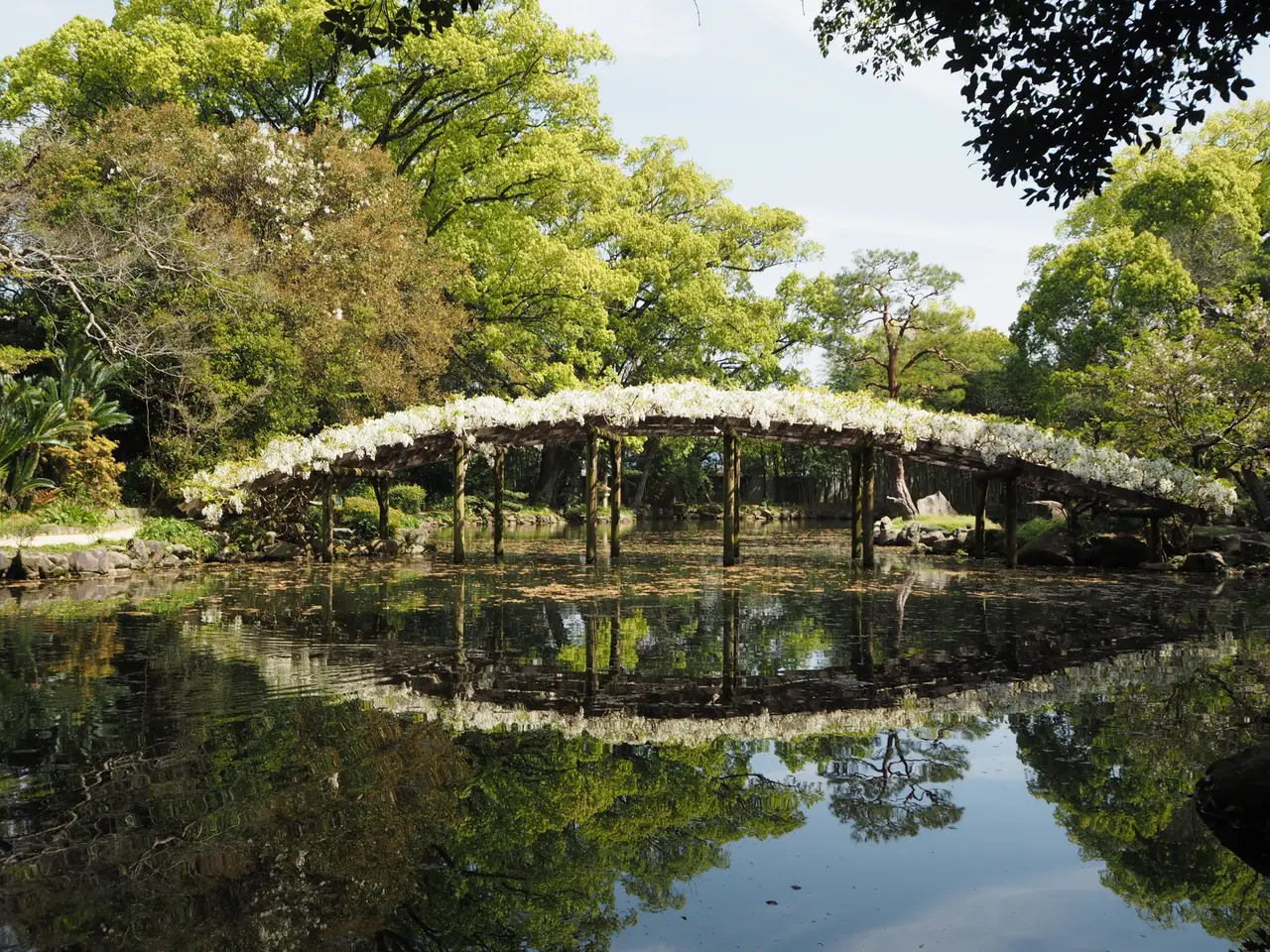
Photo: Ehime Prefectural Tourism & Local Products Association
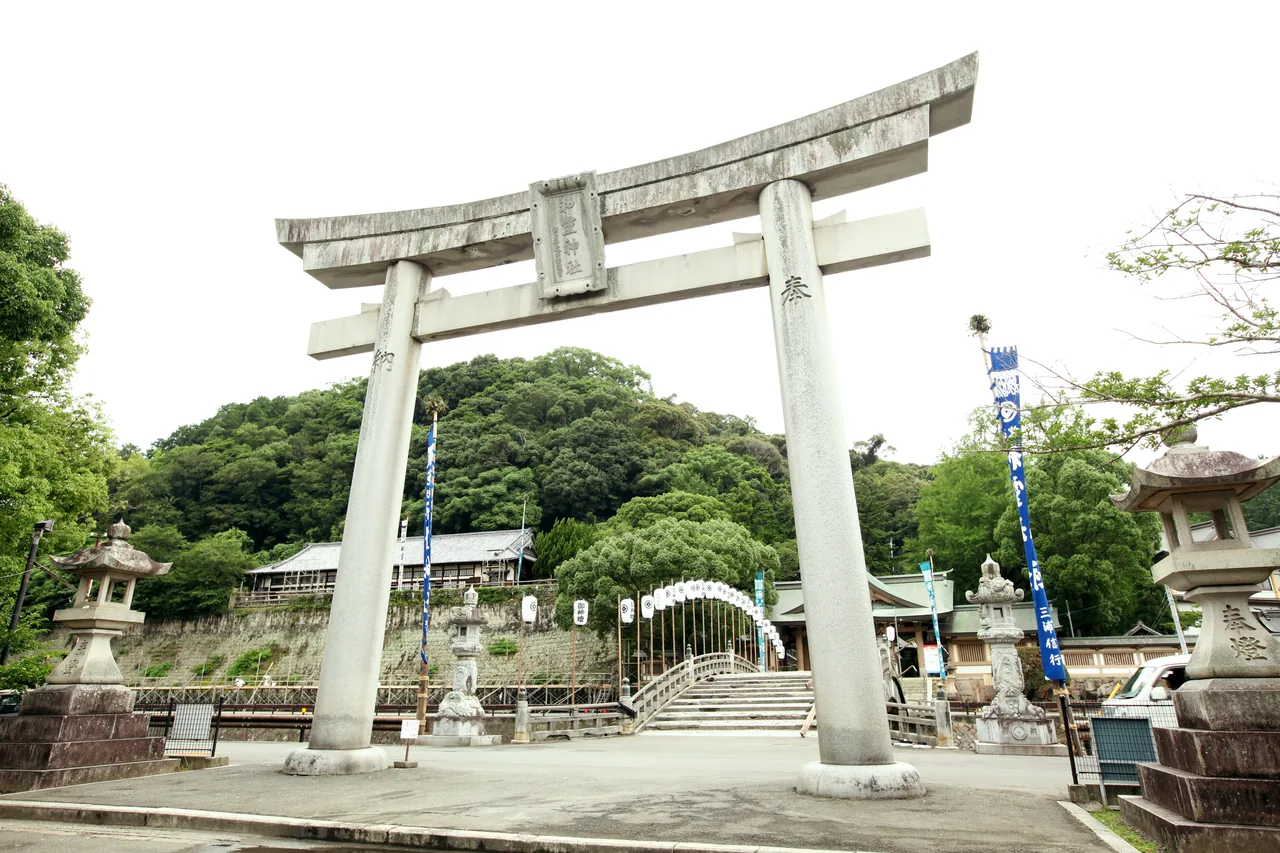
On the north side of town, Warei Shrine enshrines Yanbe Seibei Kinyori, a chief retainer of Date Hidemune, the first lord of the Uwajima Domain. It is revered as a god of fishing and other trades. A stone torii more than 12 m tall stands at the entrance, and the shrine forest is a city-designated natural monument. The Warei Grand Festival each July is held at the same time as the Uwajima Ushioni Festival.
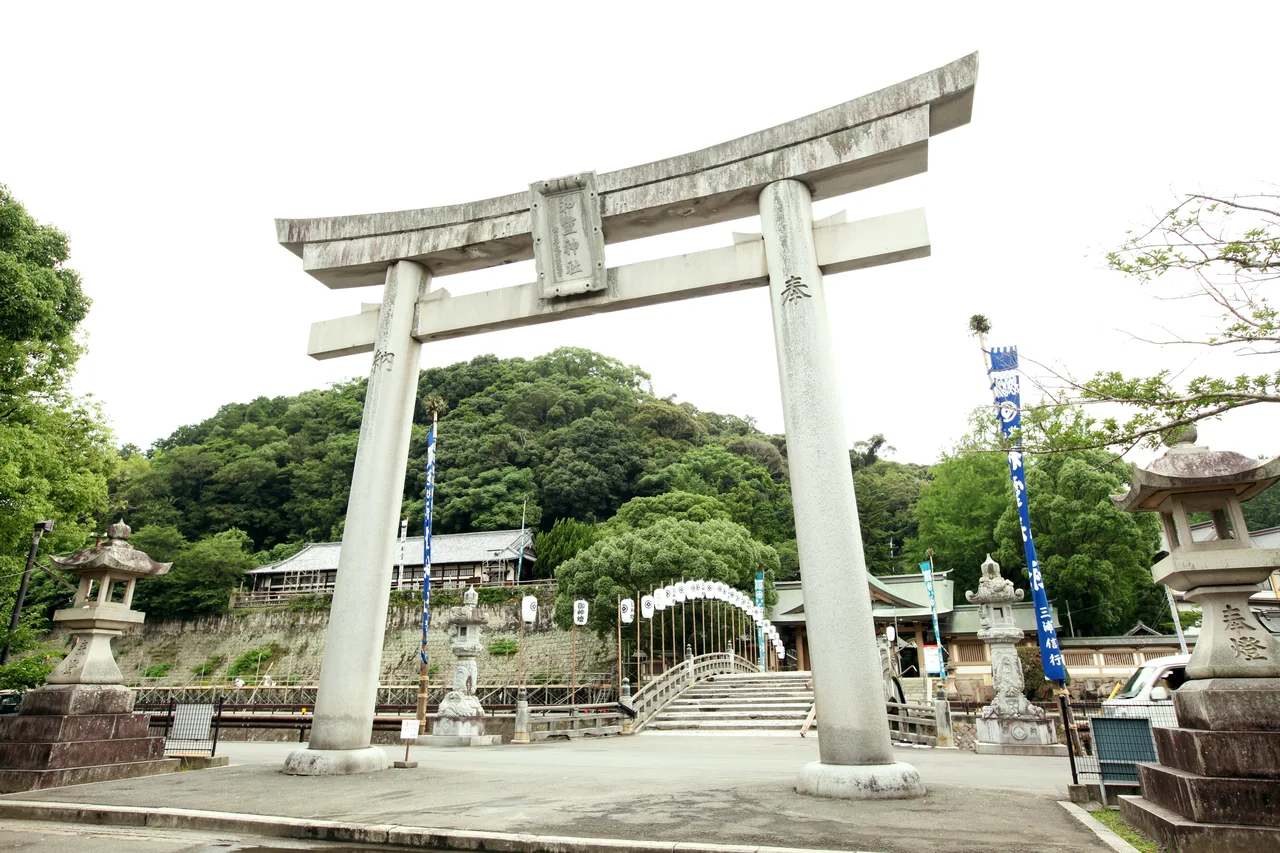
Photo: Ehime Prefectural Tourism & Local Products Association
Yusu Mizugaura terraced fields: Stone-walled fields from the sea to the hilltop
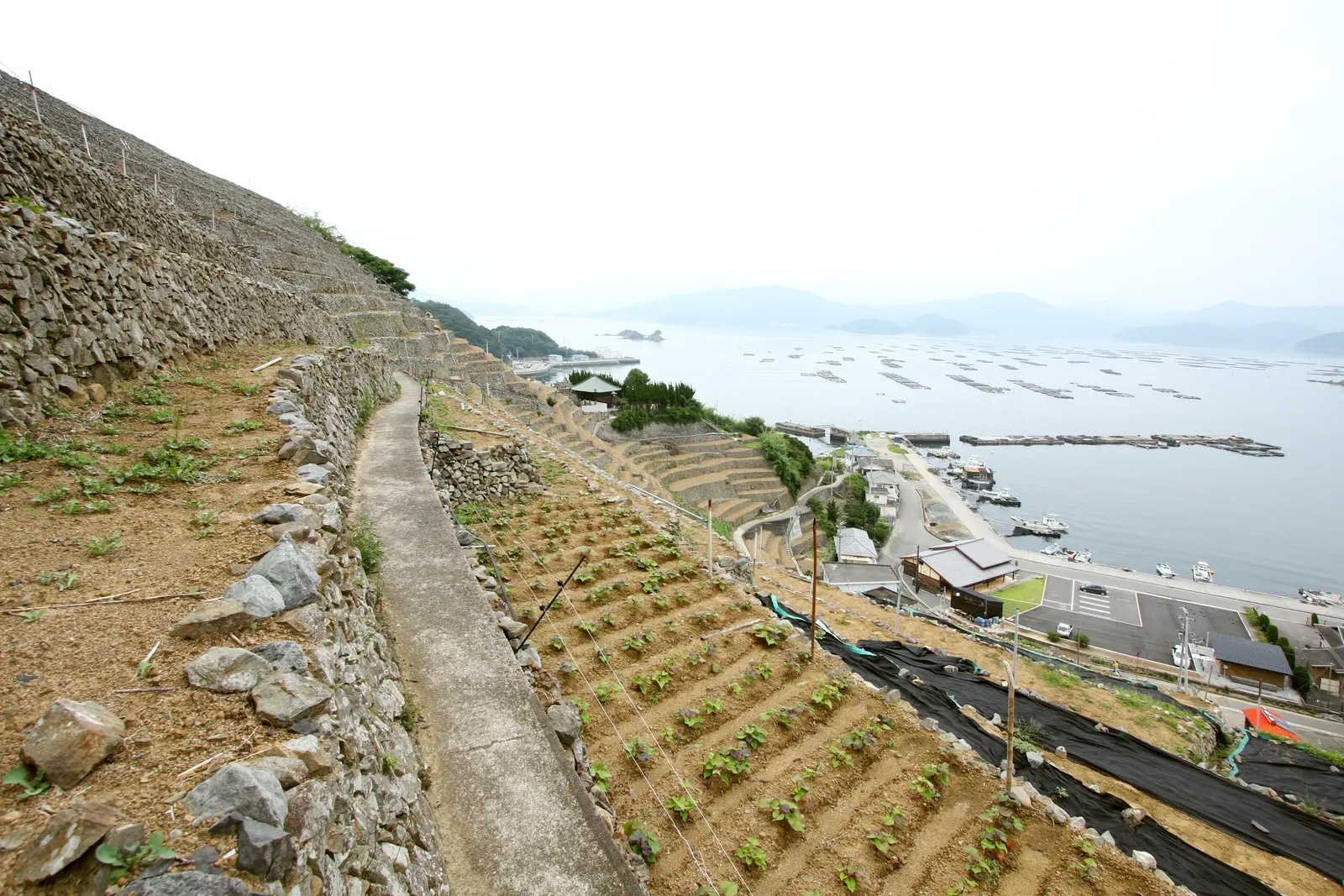
Head from central Uwajima along the Uwa Sea and you reach the Yusu Mizugaura terraced fields. Fields stacked on a steep slope with stone walls form the scene, which was selected as an Important Cultural Landscape in 2007. The main crop is potatoes, harvested in spring. As the leaves grow toward harvest, the whole slope turns green. The "Danbata Festival" is usually held in April.
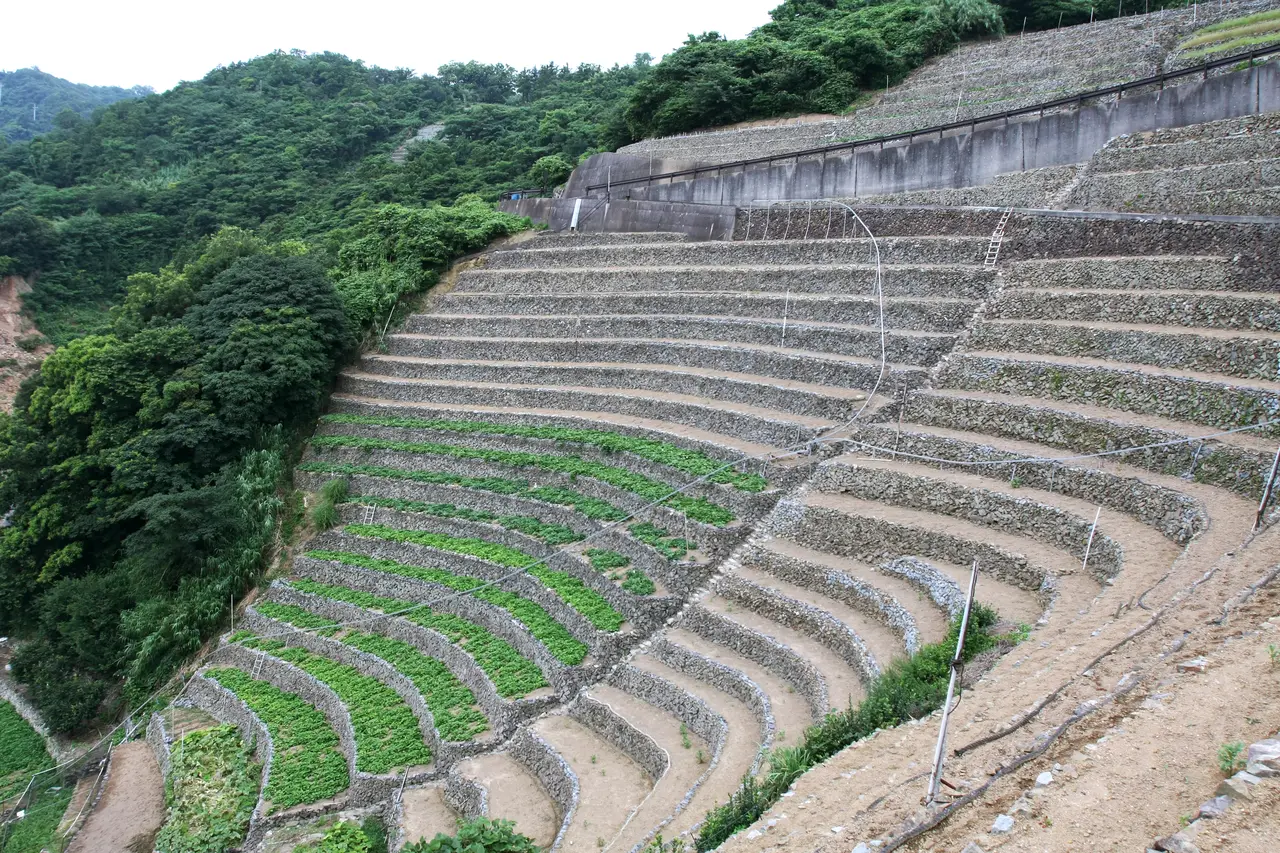
Photo: Ehime Prefectural Tourism & Local Products Association
Climb the narrow paths between the terraces to look down on the harbor and the Uwa Sea dotted with aquaculture rafts. The slope is steep, so comfortable shoes are best. The fields and landscape are cared for by a local nonprofit, the Danbata wo Mamoro Kai. From JR Uwajima Station, the Uwajima Jidosha Yusu-Komobuchi Line takes about 60 minutes; the terraces are about a 3-minute walk from the "Mizugaura" stop.
Nanrakuen and the stone-walled village of Sotodomari: South of Uwajima
In the hills of Tsushima, Uwajima City, Nanrakuen is a spacious Japanese garden covering about 15.3 ha. It is a stroll garden around a pond. Around May each year about 30,000 iris plants begin to bloom, and a boardwalk by the pond lets you walk among the flowers. From early to late February, a plum festival is held along "Ume no Ka Dori," lined with old red and white plum trees. From JR Uwajima Station, you can take an Uwajima Jidosha local bus; check the timetable first.
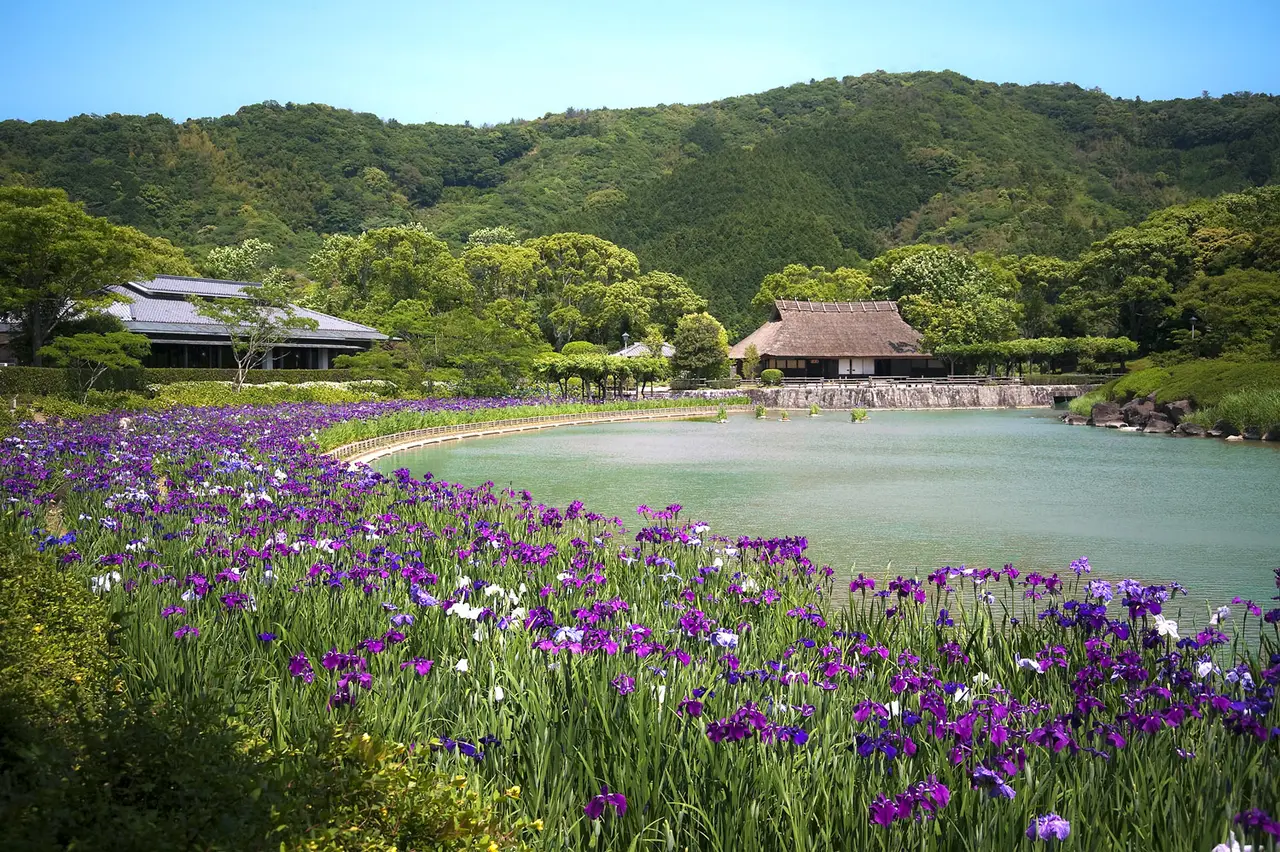
Photo: Ehime Prefectural Tourism & Local Products Association
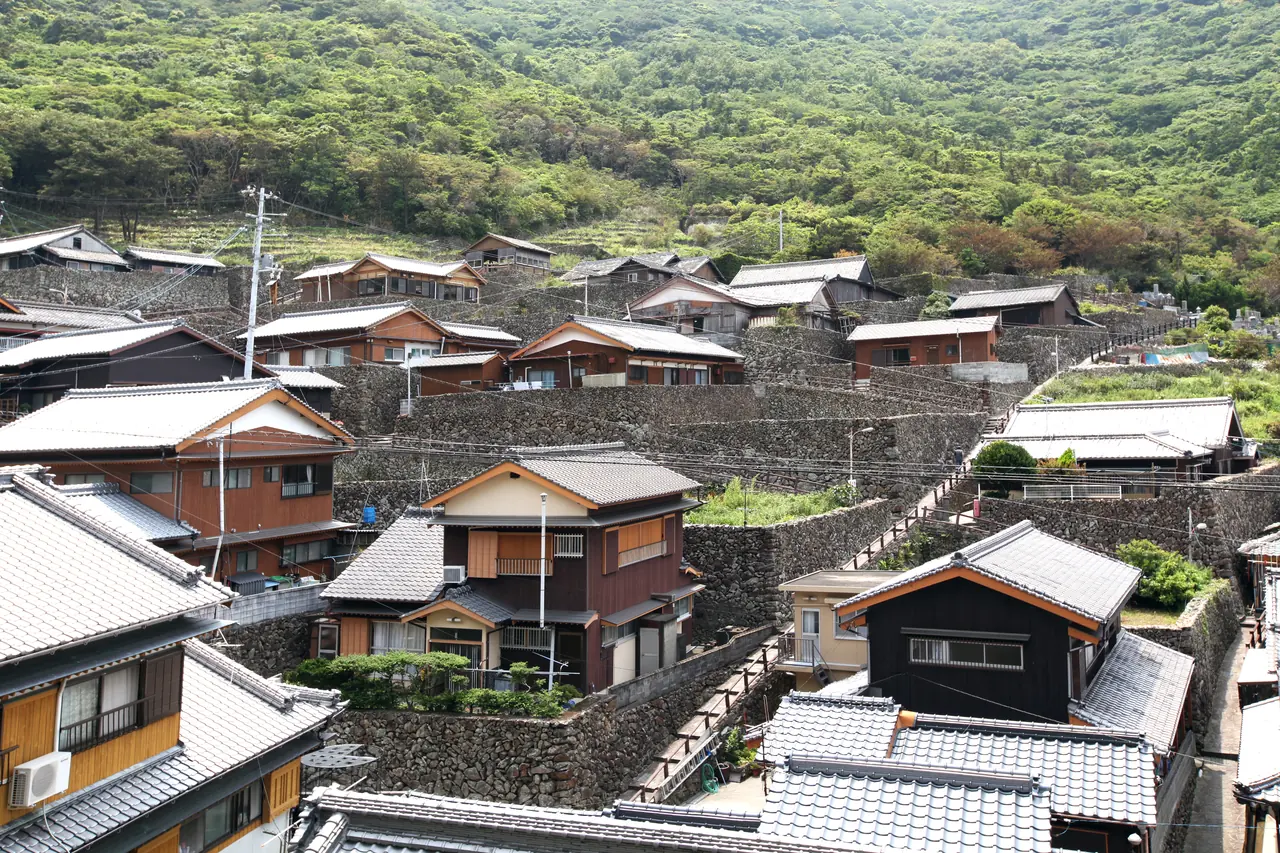
Farther south in Ainan is the stone-walled village of Sotodomari, a fishing village where tall stone walls reaching the eaves surround houses on a steep slope. The walls were built to protect daily life from typhoons, salt spray and the winter monsoon winds. Climb the stone steps between the walls and the inlet opens up beyond the tiled roofs; the walls also keep "遠見の窓," hollows used to watch the sea. People still live here, so walk quietly. Getting here from Uwajima Station means changing buses, so it helps to check the times in advance.
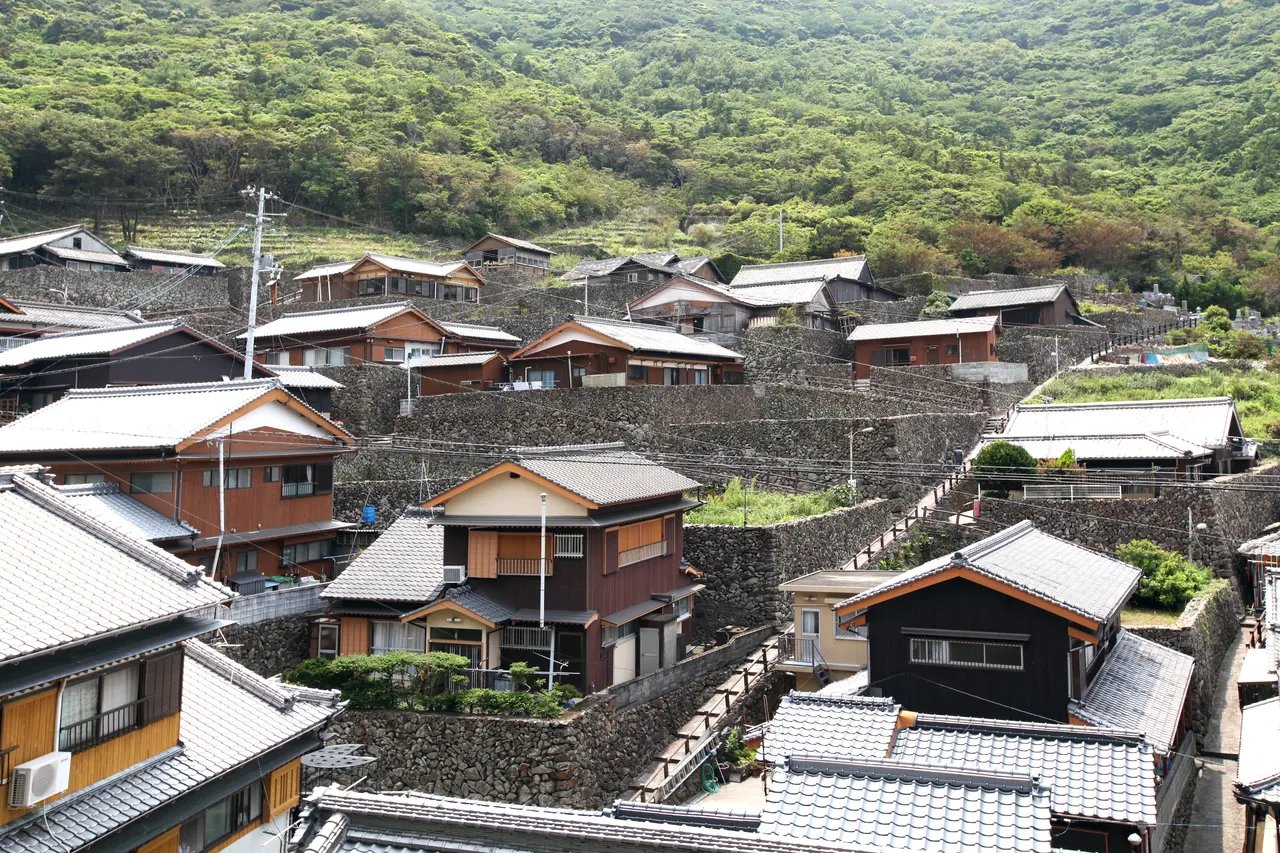
Photo: Ehime Prefectural Tourism & Local Products Association
The sea off Ainan Town includes the Uwakai Marine Park, part of Ashizuri-Uwakai National Park, where tropical fish gather around colonies of coral. From a port in Ainan, the Yumekaina and Gaiyana sightseeing boats let you look into the sea through windows in their sides. The trip around the marine park takes about 40 minutes, and no reservation is needed.
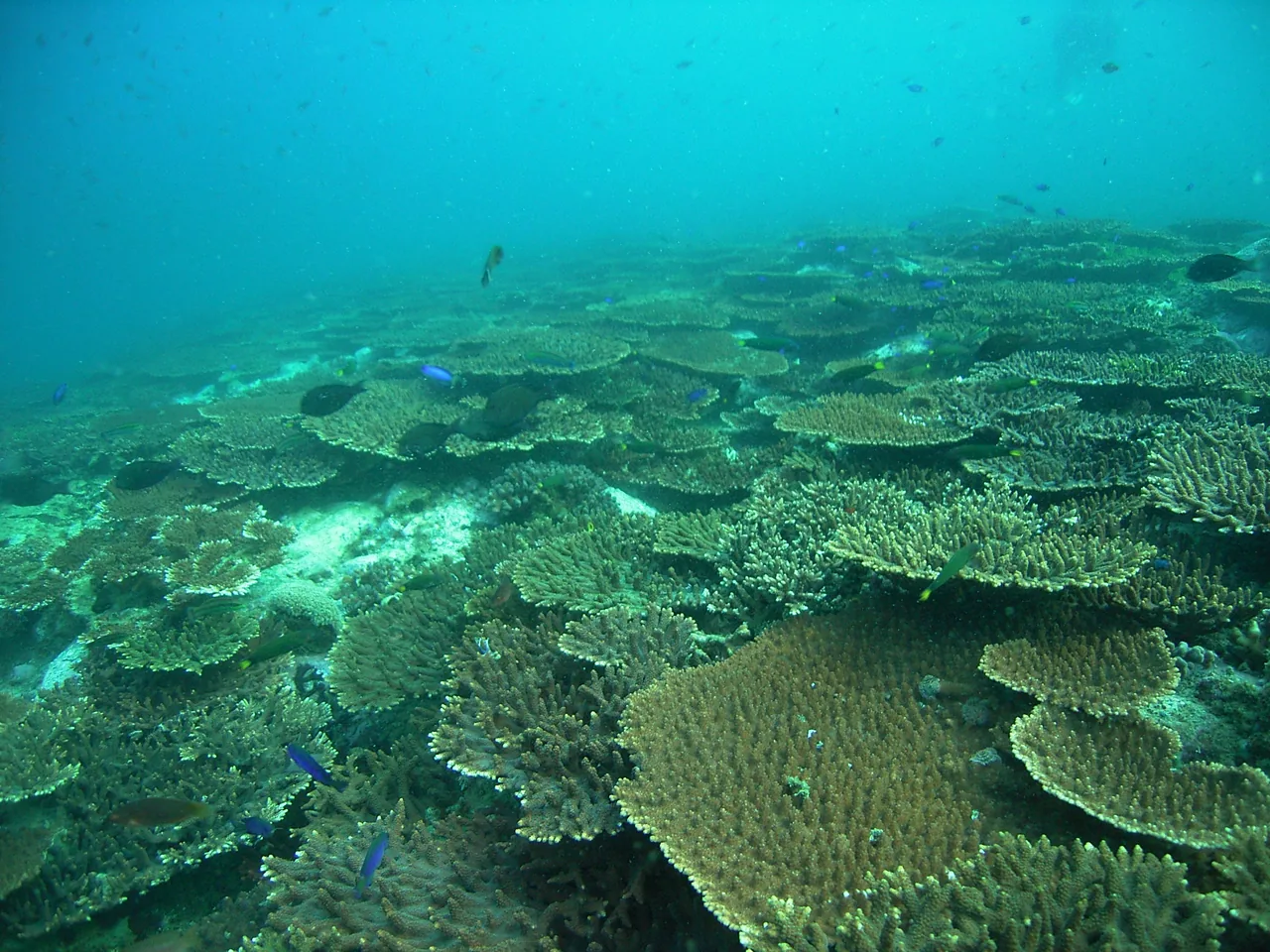
Photo: Ehime Prefectural Tourism & Local Products Association
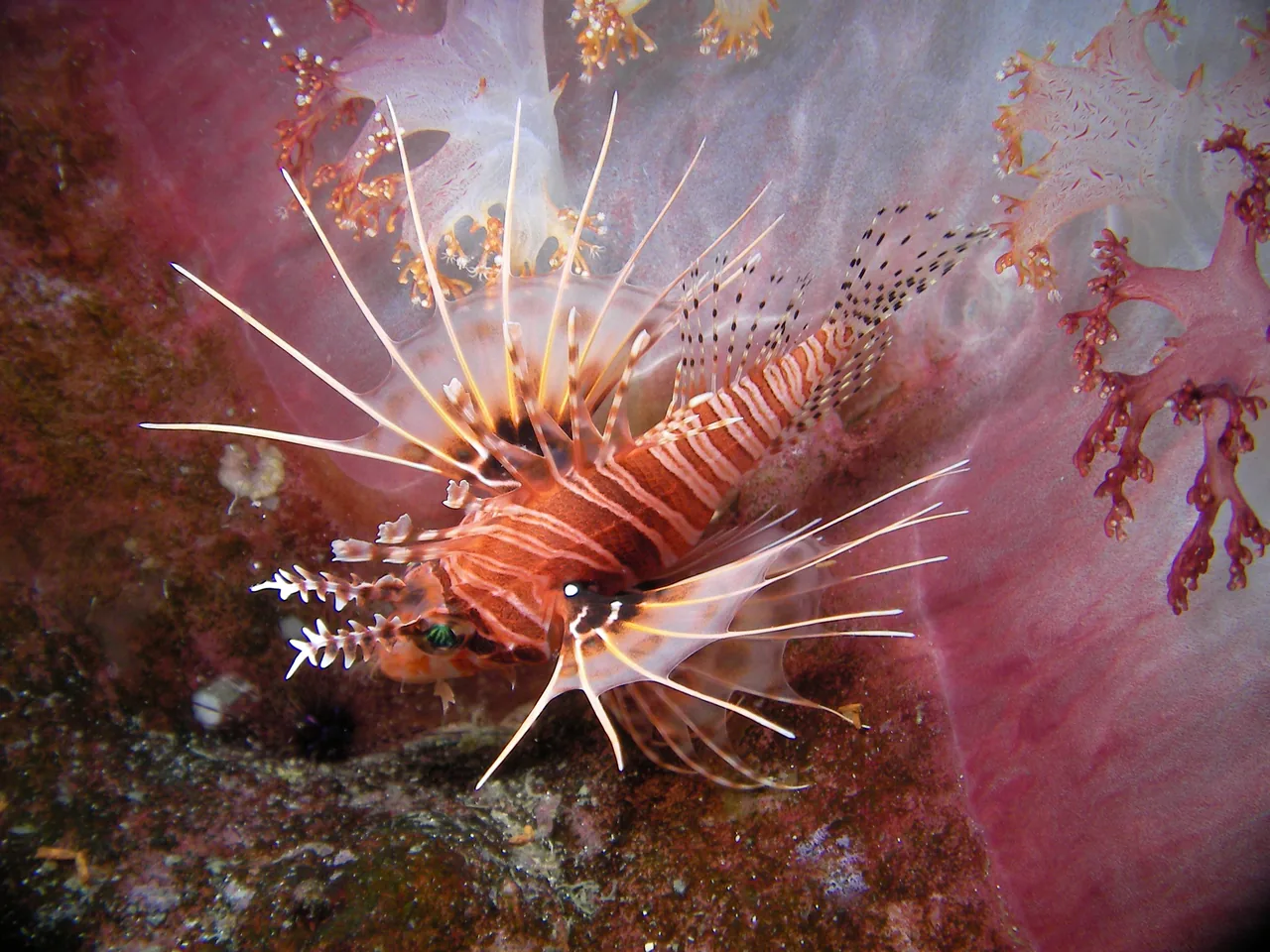
Photo: Ehime Prefectural Tourism & Local Products Association
The Shiden-Kai Exhibition Hall, also in Ainan, has been closed since September 1, 2026 for rebuilding. The new hall is scheduled to open around autumn 2027.
Unomachi and Cape Sada: North of Uwajima
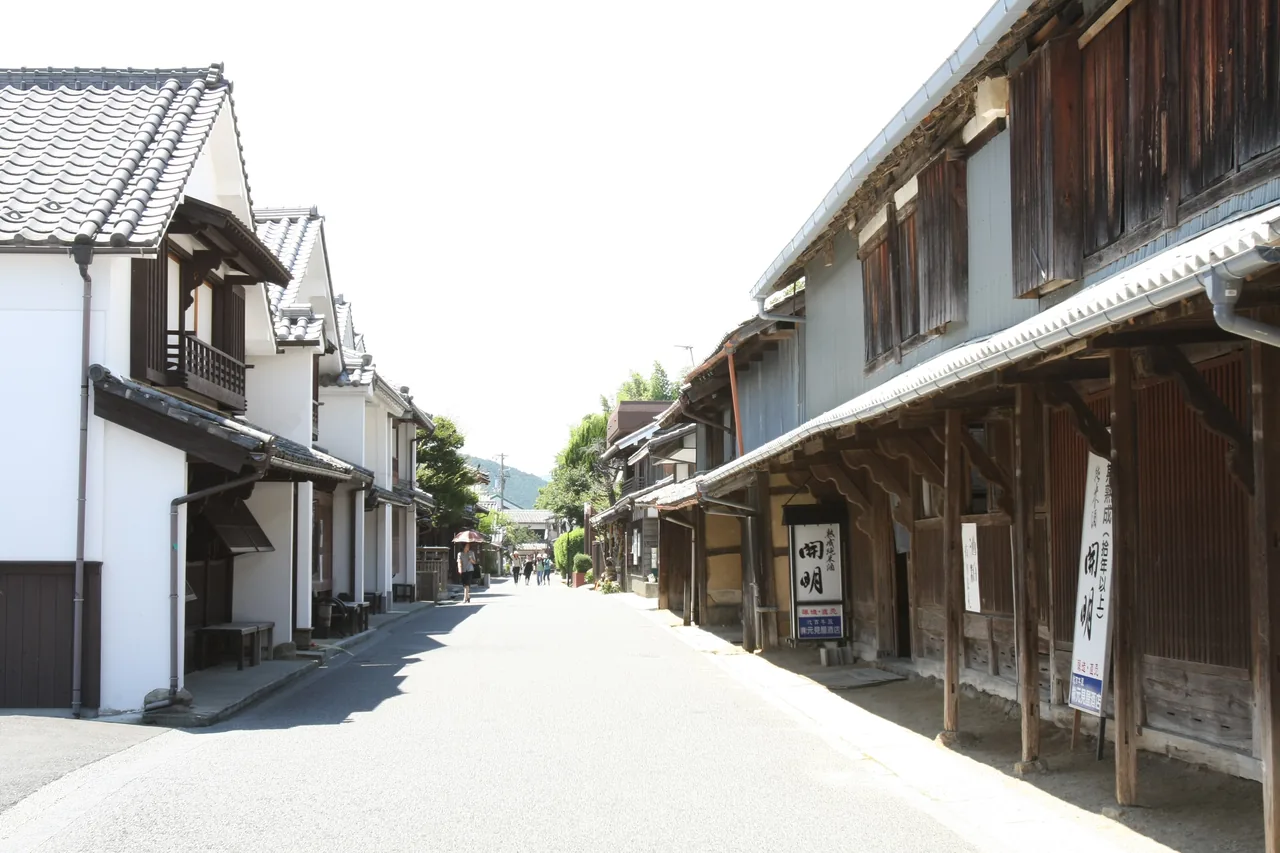
Next to Unomachi Station, where the limited express stops, is the Unomachi townscape. It began as the castle town of the Saionji clan and prospered as a post town on the Uwajima Kaido road, and buildings from the mid-Edo period to the early Showa period remain. It was selected as an Important Preservation District for Groups of Traditional Buildings in 2009. Among the white-walled, latticed townhouses are Western-style buildings such as the Meiji-era Kaimei School. The district covers about 4.9 ha and can be explored on foot from the station.
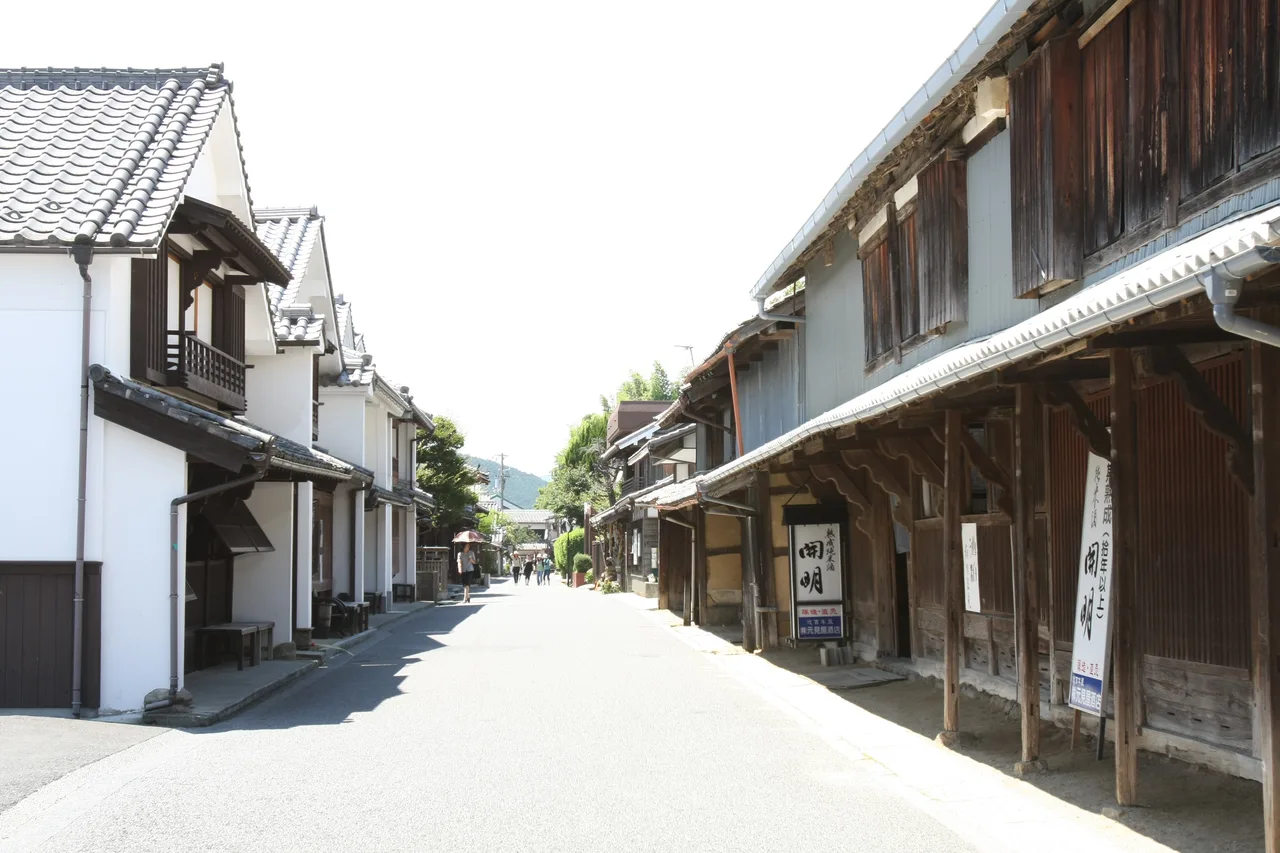
Photo: Ehime Prefectural Tourism & Local Products Association
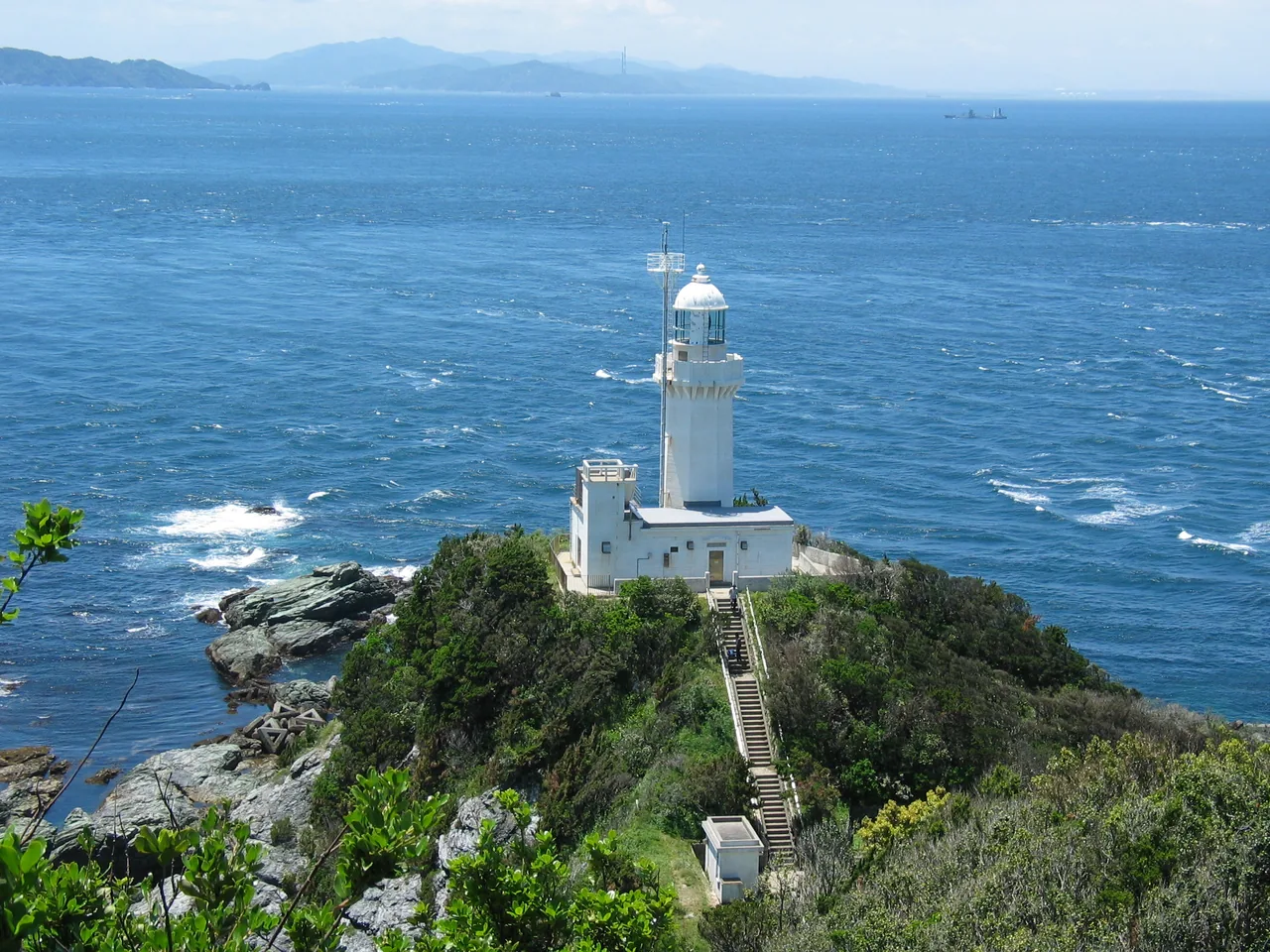
At the very tip of the Sadamisaki Peninsula, said to be the longest and narrowest peninsula in Japan, Cape Sada Lighthouse stands at the westernmost point of Shikoku. The area is part of Setonaikai National Park, and on clear days you can see Kyushu across the sea. The lighthouse is about a 20-minute walk along a trail from the parking lot. By car it is about 1 hour 50 minutes from Ozu IC on the Matsuyama Expressway. By public transport, an Iyotetsu Nanyo Bus bound for Misaki takes a little over an hour from JR Yawatahama Station to the last stop, and from there it is another 30 minutes or so by car.
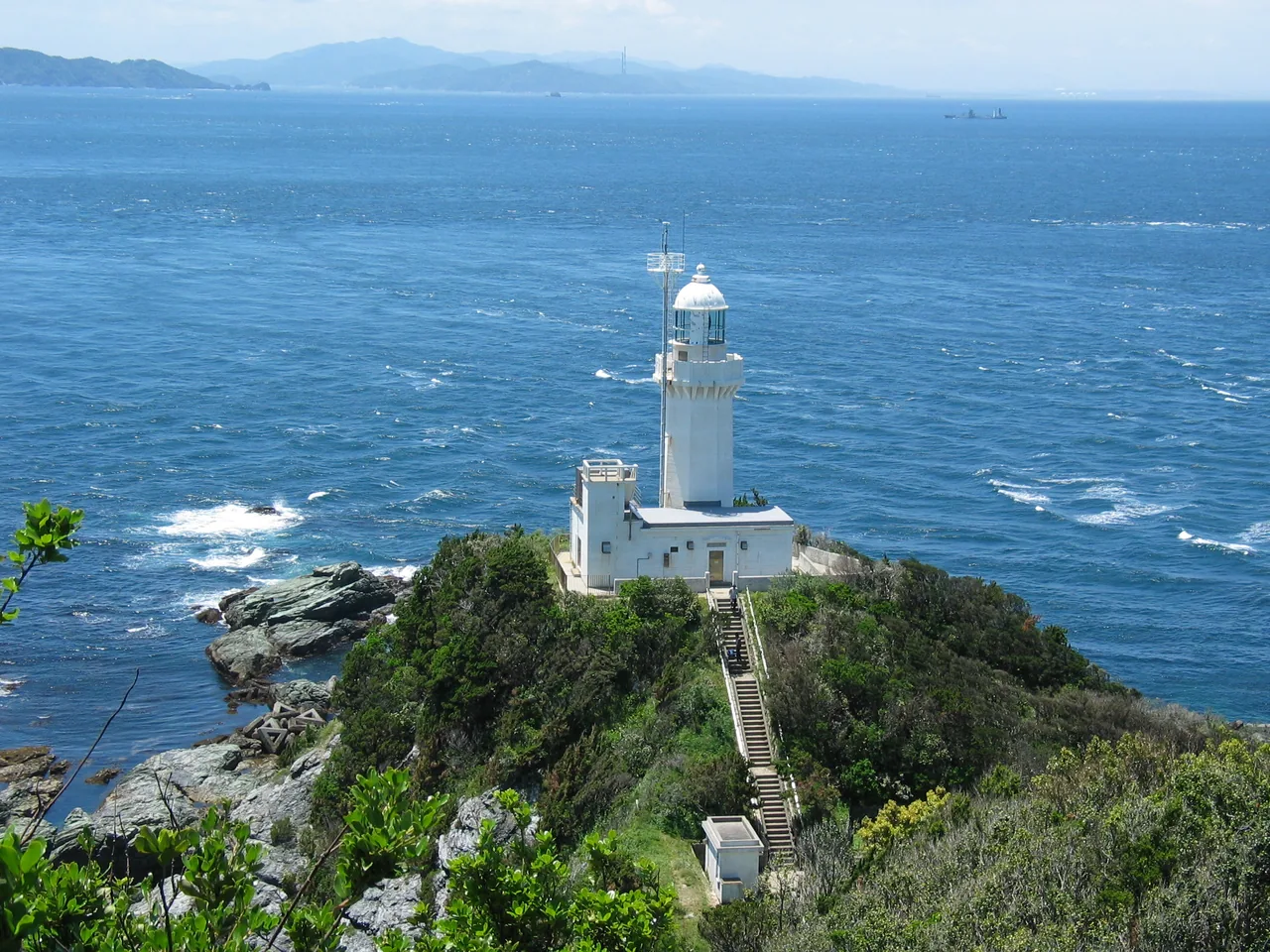
Photo: Ehime Prefectural Tourism & Local Products Association
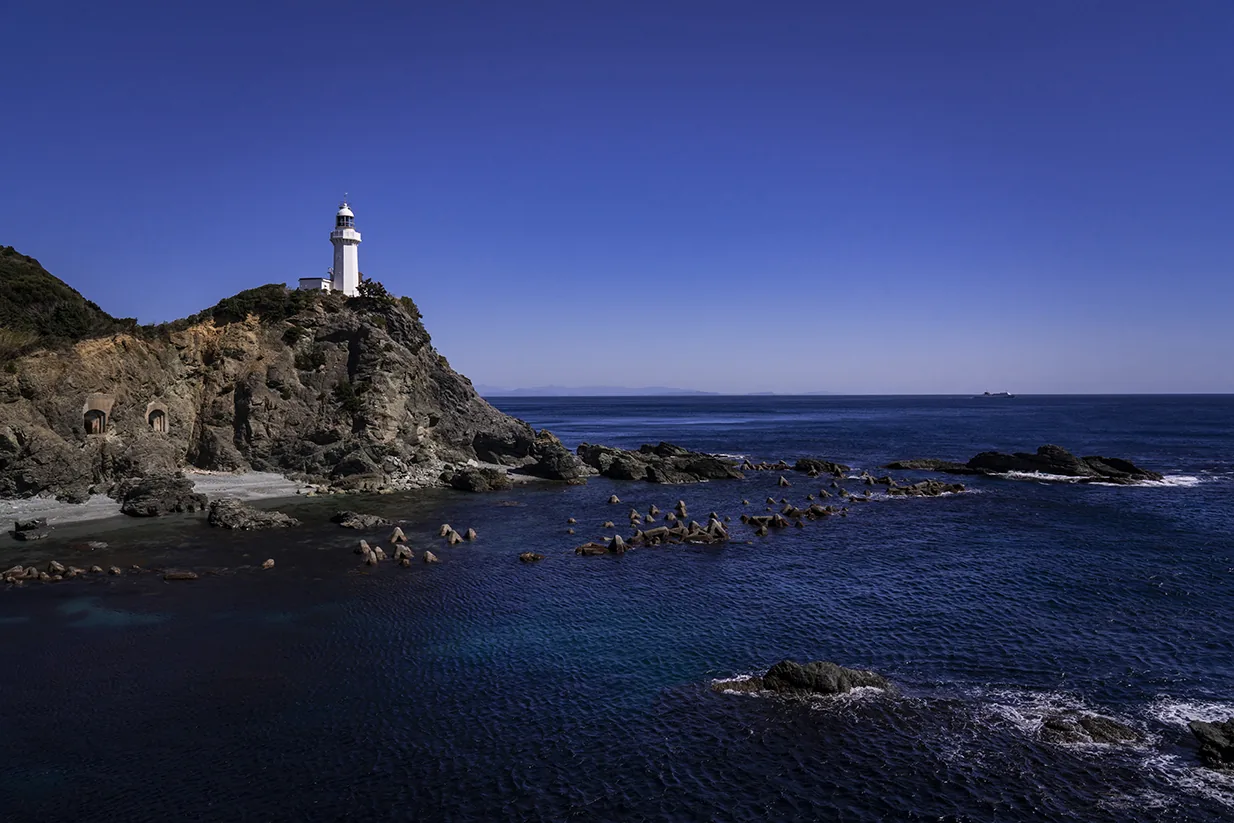
Photo: Ehime Prefectural Tourism & Local Products Association
Uwajima food, festivals and bullfighting
The dish to try in Uwajima is the local "Uwajima taimeshi": slices of raw sea bream coated in a sauce and raw egg, then eaten over rice. "Jakoten," made from small fish of the Uwa Sea ground whole with their bones and skin and then fried, is another Uwajima specialty. Both were chosen for the Ministry of Agriculture, Forestry and Fisheries' list of 100 local dishes of Japan.
In summer, Uwajima comes alive with the Warei Grand Festival and Uwajima Ushioni Festival, usually held from July 22 to 24. For other festivals in Ehime, see our feature "Ehime Festivals." At the Uwajima City Bullfighting Ring, regular tournaments in which bulls push against each other are held four times a year. Check the dates on the Uwajima City bullfighting ring page. Information on the castle is on Uwajima City's Uwajima Castle page.