Gunma Autumn Leaves: Mount Tanigawa, Fukiware Falls and More
This guide is translated from the Japanese edition. Read the Japanese edition
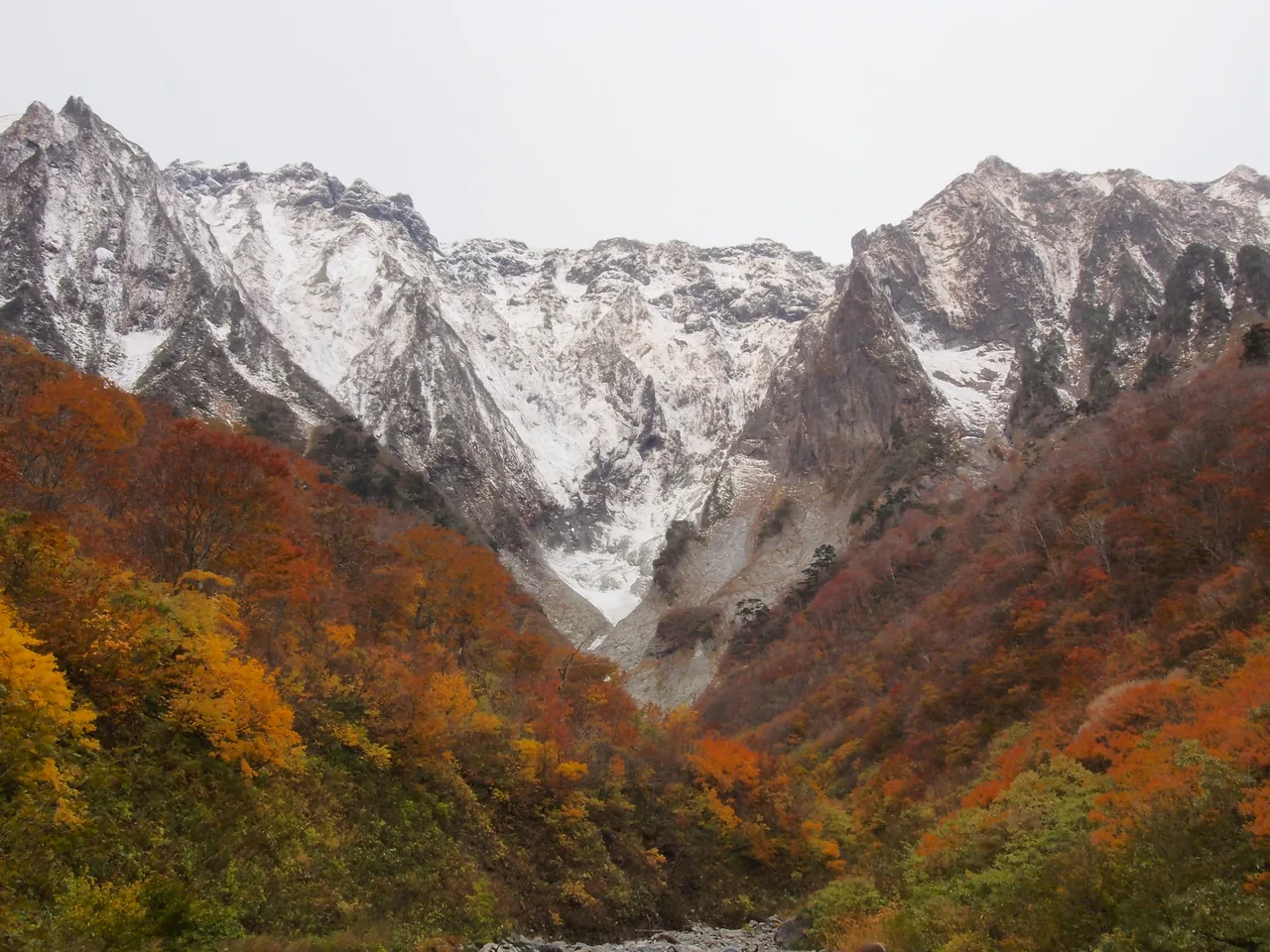
Gunma's autumn colours start high on Mount Tanigawa, then move down to Fukiware Falls, Suwa Gorge and Shima Onsen: when to go, access and onsen to pair them with.
Early in October, touches of red and yellow begin to appear high on the slopes of Mount Tanigawa. In Gunma the colours start in the high mountains and take about a month to work their way down to the gorges and hot-spring towns. Pick the right place for the time and you can find leaves at their best somewhere from early October to early November.
When do Gunma's autumn leaves peak?
Roughly, the high mountains and plateaus peak from early to late October, and the gorges and hot-spring towns lower down from late October to early November.
- Early to late October: Mount Tanigawa (Tenjindaira in early October, Ichinokura-sawa from mid October), Teriha Gorge (early to late October), Marunuma Kogen
- Late October to early November: Fukiware Falls, Oigami Onsen, Suwa Gorge, Shima Onsen, Lake Okushima
Timing shifts with each year's temperatures. Checking the autumn-colour reports from local tourism associations and facilities before you go is the surest way to catch them.
Mount Tanigawa: the ropeway and Ichinokura-sawa
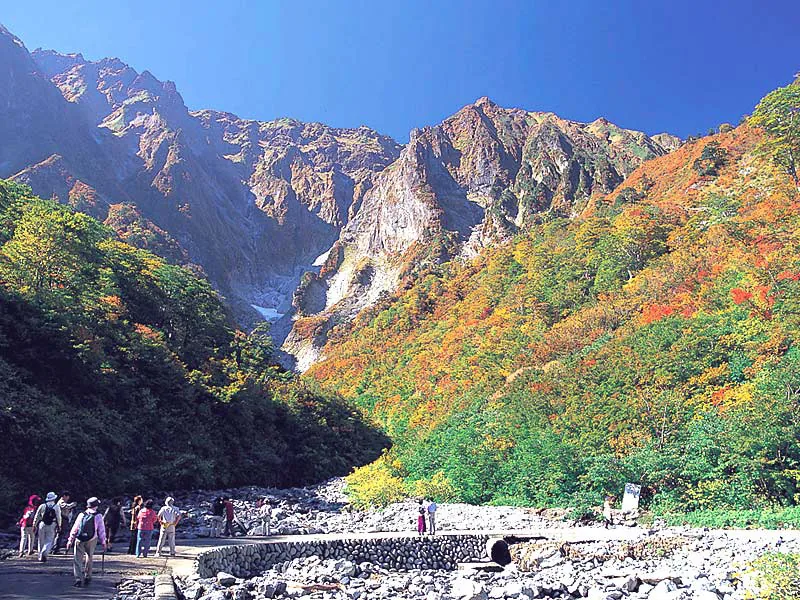
Mount Tanigawa is where Gunma's autumn begins. Take the Tanigawadake Joch (formerly Tanigawadake Ropeway) up to Tenjindaira and you can watch the slopes below the summit change colour right in front of you. In 2026 the autumn service ended on 15 November, and the ropeway runs again in winter from 5 December.
From the ropeway station it is about an hour's walk along a road closed to private cars to Ichinokura-sawa (the road closes in winter: in 2026 it closed on 4 November), where the slopes beneath the sheer rock walls turn red and yellow against the grey stone. Autumn is popular and the ropeway station gets crowded at weekends, so arrive early in the morning.
Teriha Gorge and Marunuma Kogen: colours along mountain roads
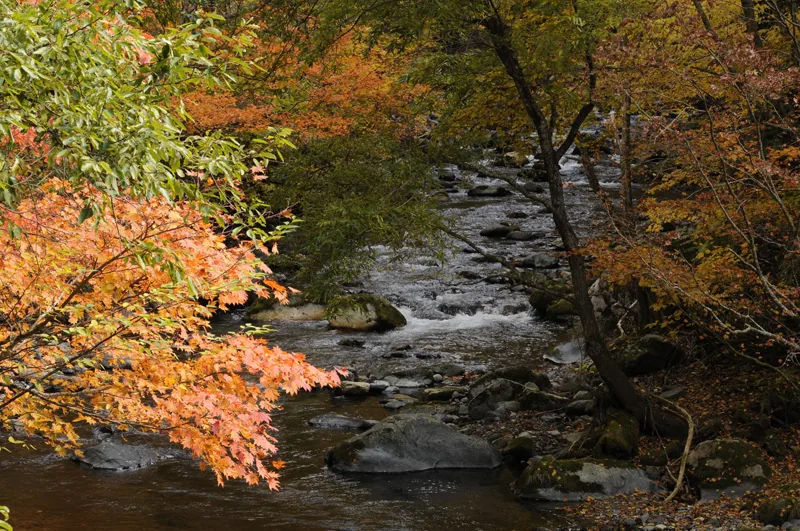
Teriha Gorge is a gorge along a prefectural road through the mountains of Oku-Tone, with eleven waterfalls large and small dotted along about 5 kilometres. Being high up, it colours earlier than the valleys below. There are almost no footpaths or car parks, so the usual way to see it is from the car as you drive. Prefectural Route 63, which runs through the gorge, closes for the winter: in 2026 it closed at 2 pm on 5 November and is due to reopen on 21 May 2027.
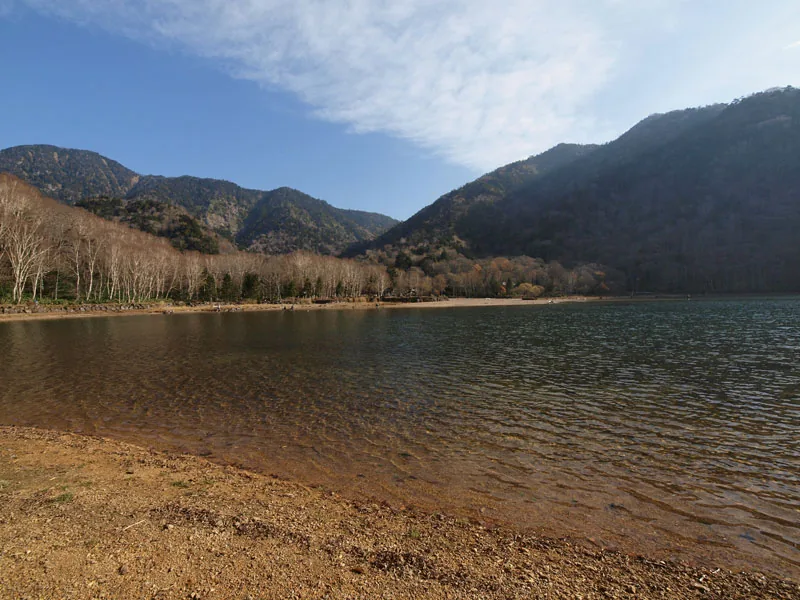
At Marunuma Kogen, at the foot of Mount Nikko-Shirane, the shores of Lake Marunuma, ringed by old-growth forest, turn colour and are reflected in the water. Both are places to visit by car, so take care on mountain roads and remember how early it gets dark.
Fukiware Falls and Oigami Onsen: a gorge and a hot spring
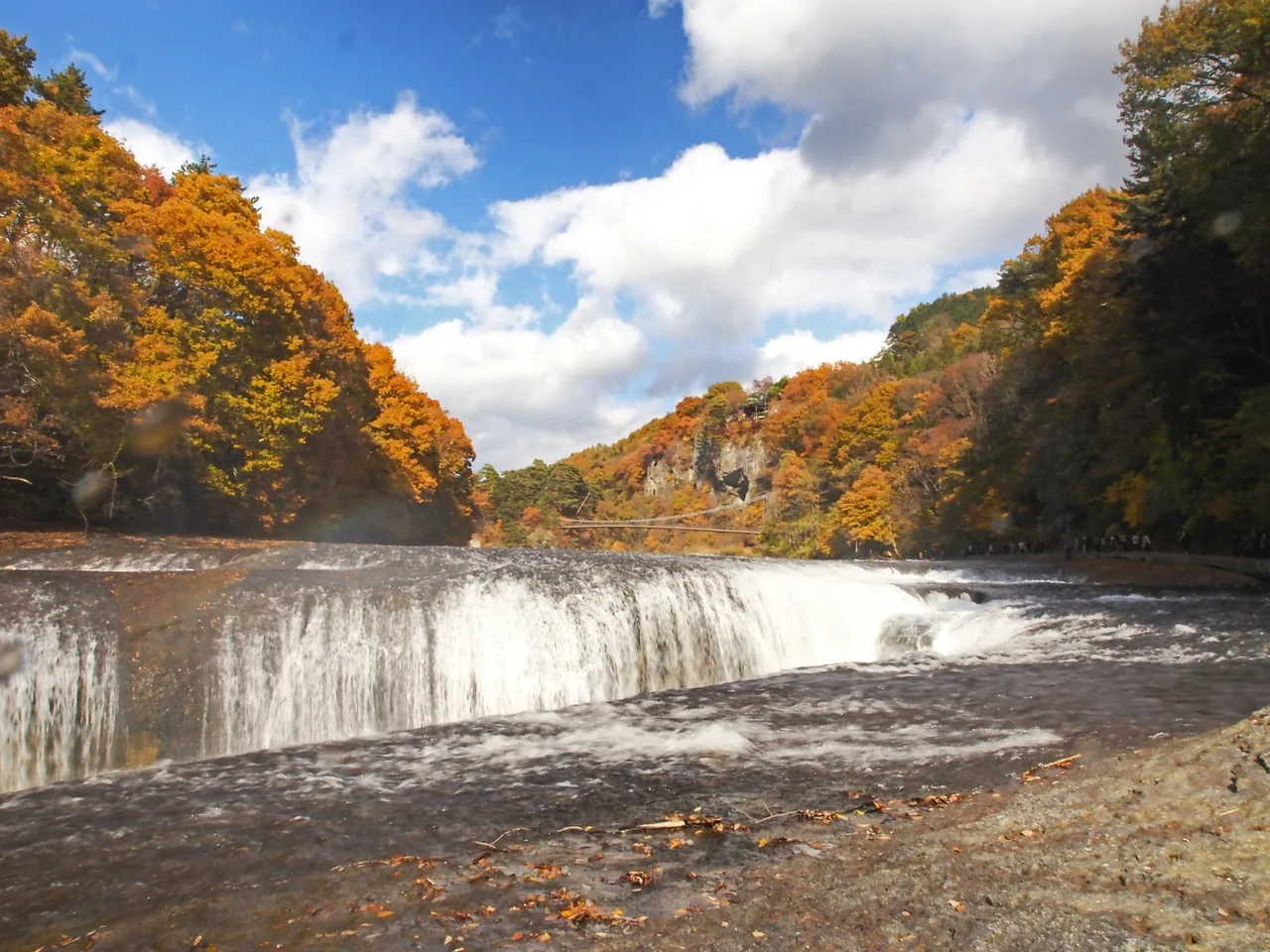
Photo: https://gunma-kanko.jp/
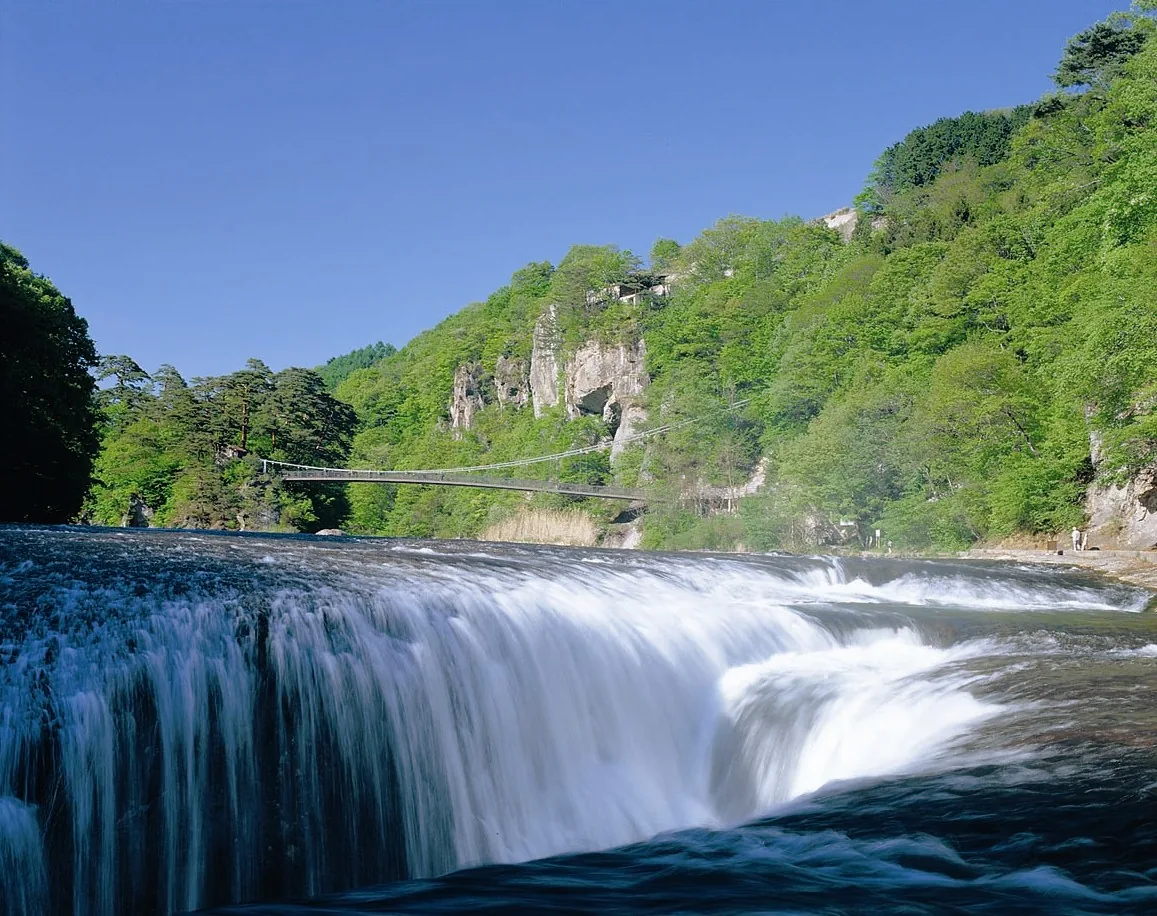
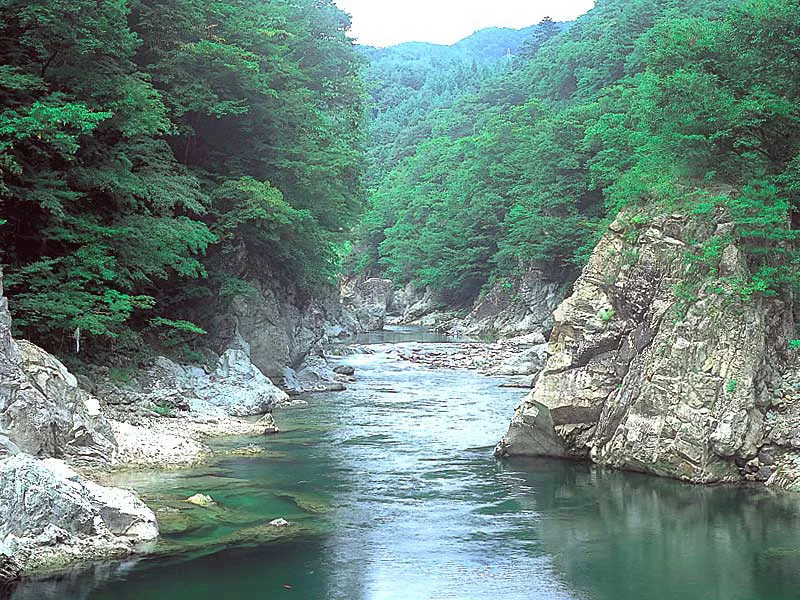
When the trees in the Katashina River gorge turn, Fukiware Falls, the "Niagara of the Orient", pairs white water with autumn colour. Walk the loop around the falls and you can look down into the gorge from the high ground on the far bank. Part of the trail on the mountain side has been closed since November 2026, so check the City of Numata's information for which paths are open.
Oigami Onsen, about ten minutes' drive from the falls, is a hot-spring town of inns along the Katashina valley. Stay there after seeing the falls and you can watch the colours of the gorge from your window.
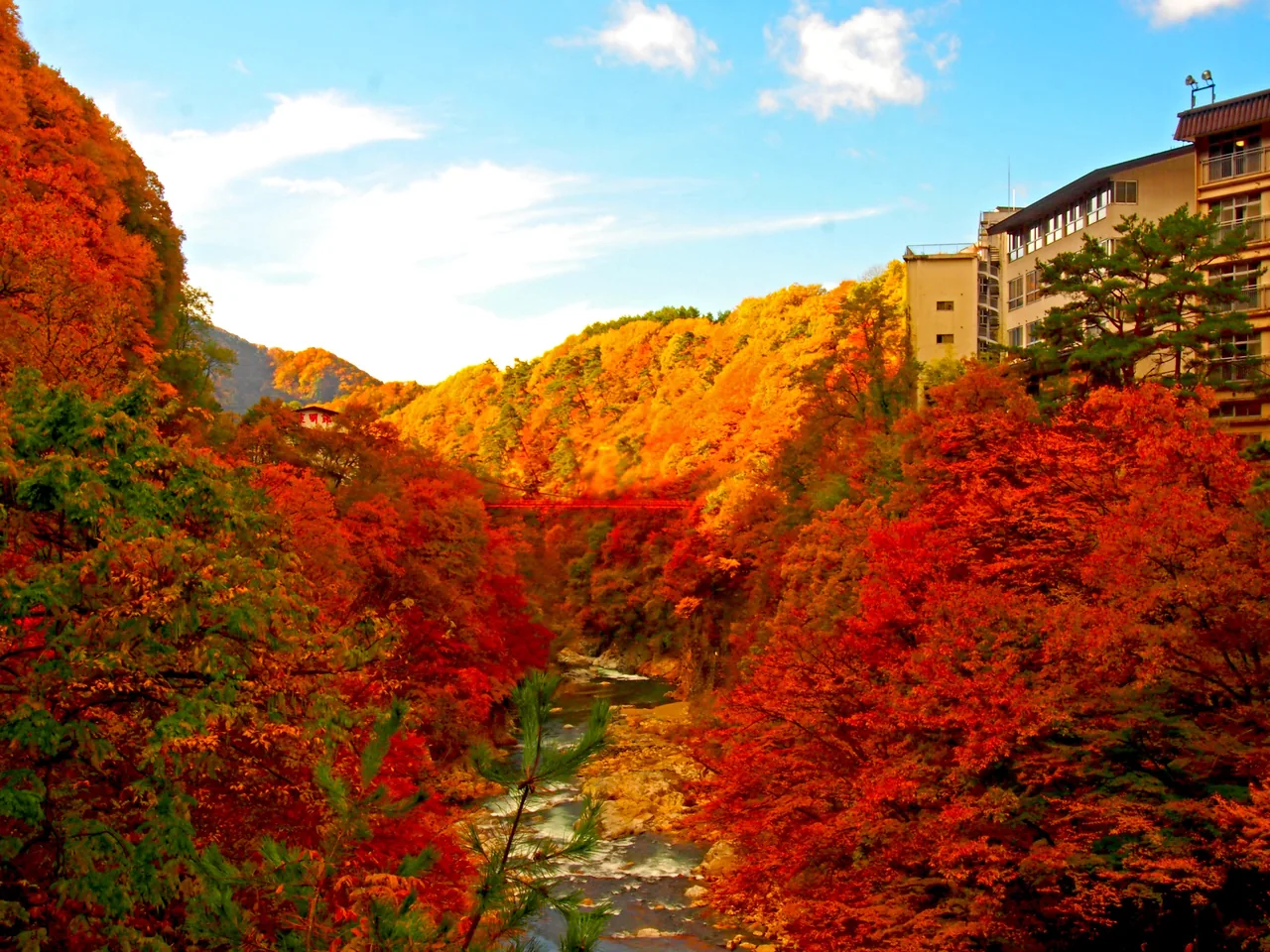
Suwa Gorge: a walk from Minakami Onsen
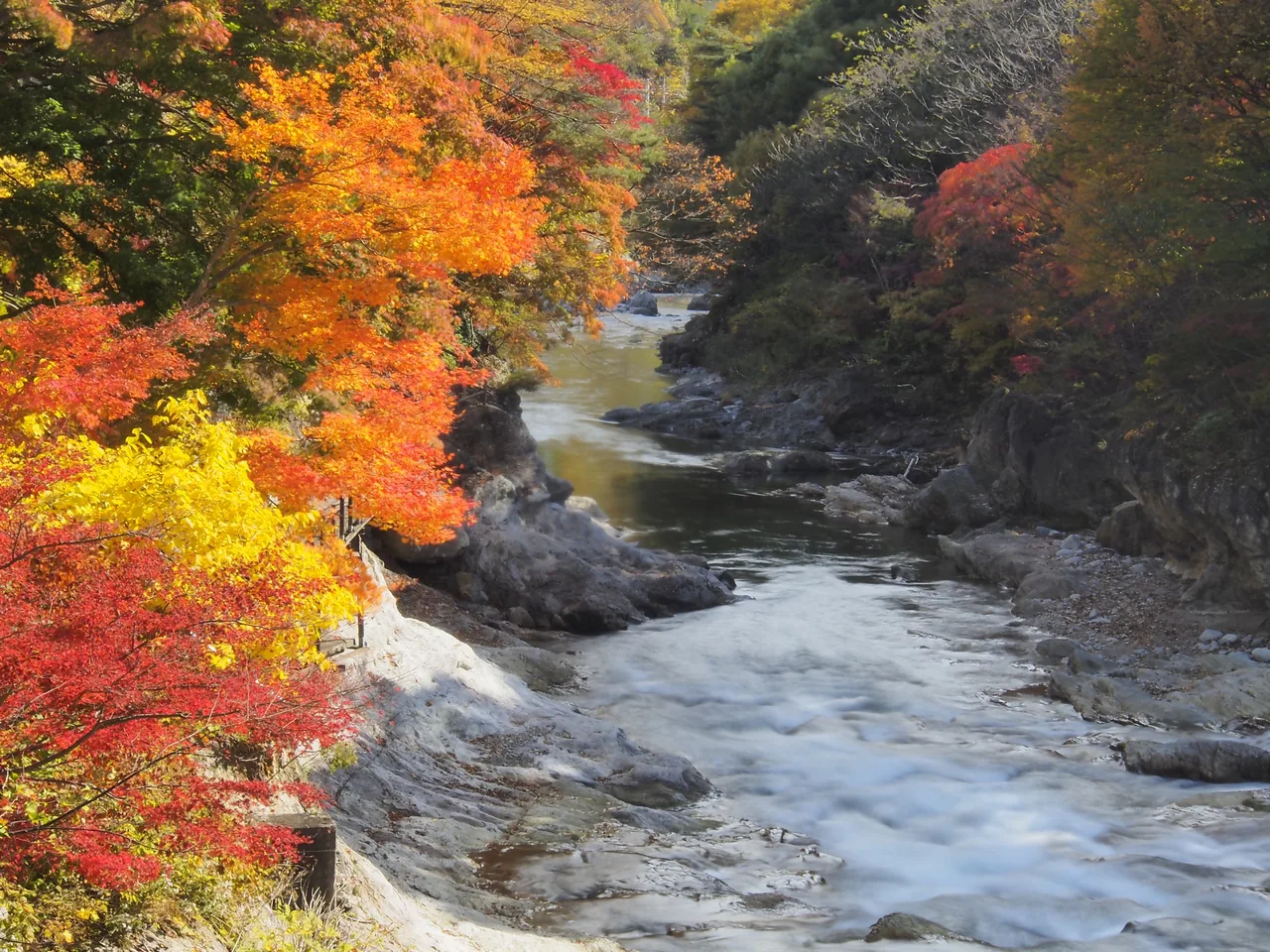
Photo: https://gunma-kanko.jp/
Suwa Gorge is where the Tone River runs between rocks downstream from Minakami Onsen. You can follow the riverside path on foot from JR Minakami Station. It usually peaks in early November. The colours here come about two weeks after Mount Tanigawa, so you can stagger visits to enjoy both.
Shima Onsen and Lake Okushima: blue water and red leaves
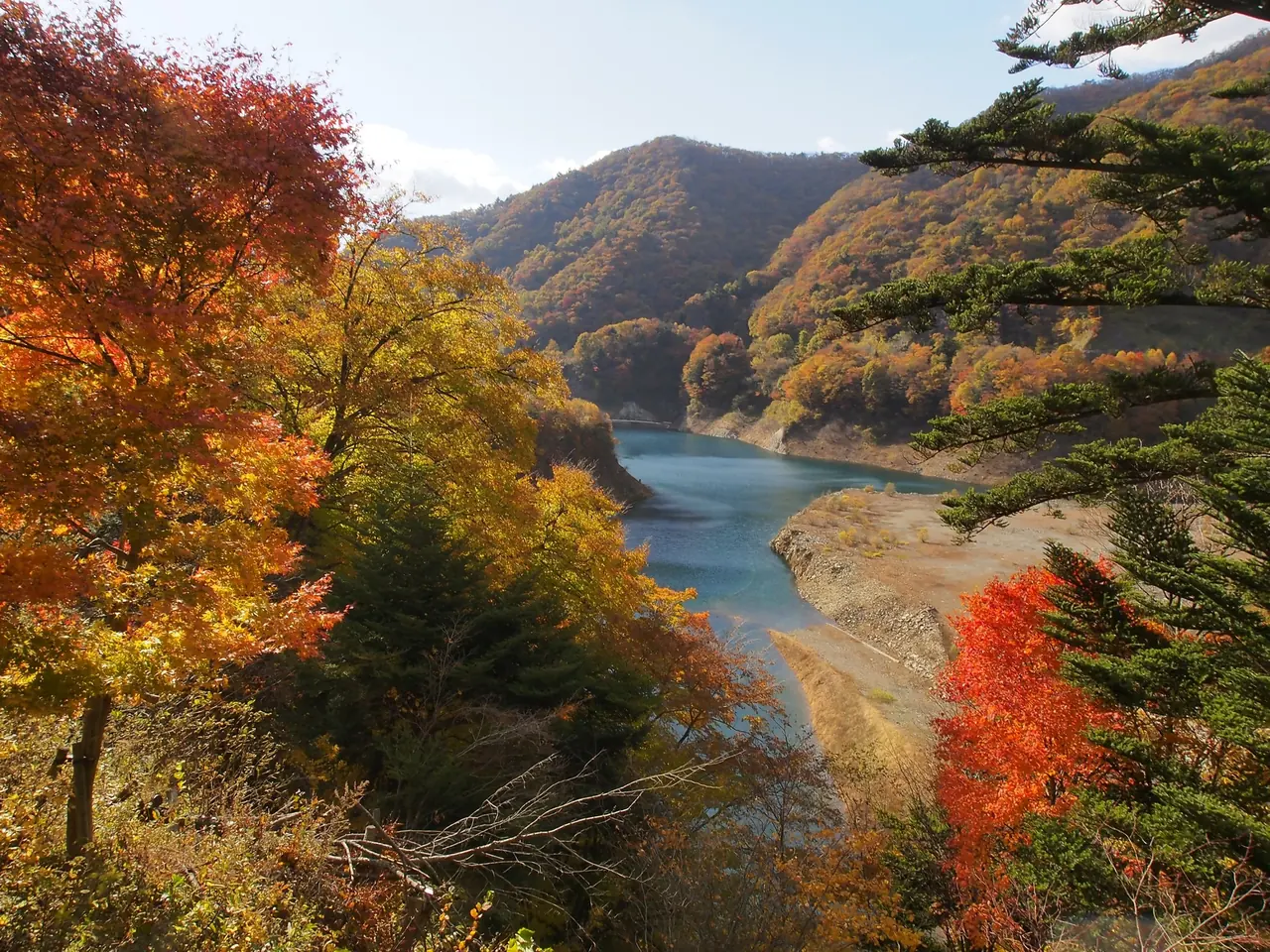
Photo: https://gunma-kanko.jp/
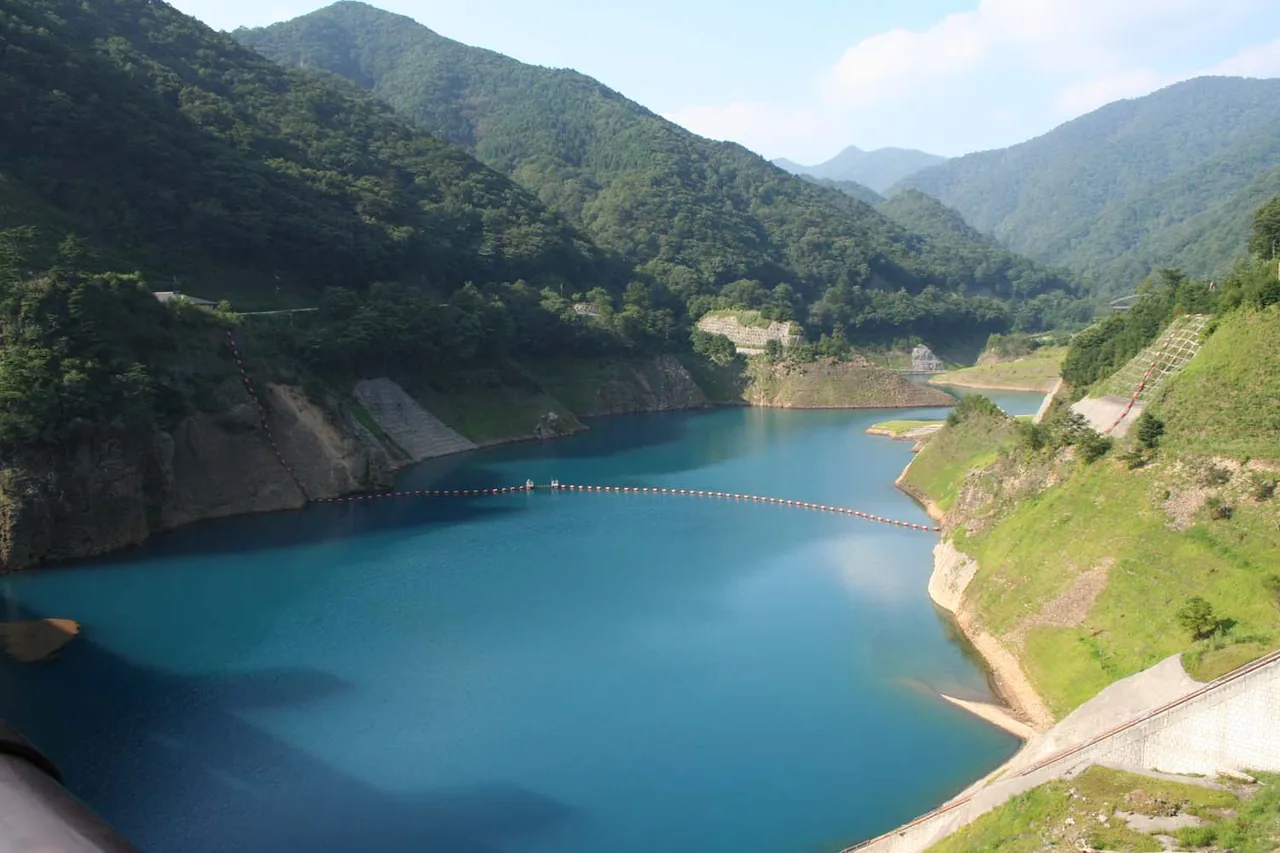
Above Shima Onsen lies Lake Okushima, known for its blue water, called "Shima Blue". In autumn the mountains around it change colour, setting red against blue.
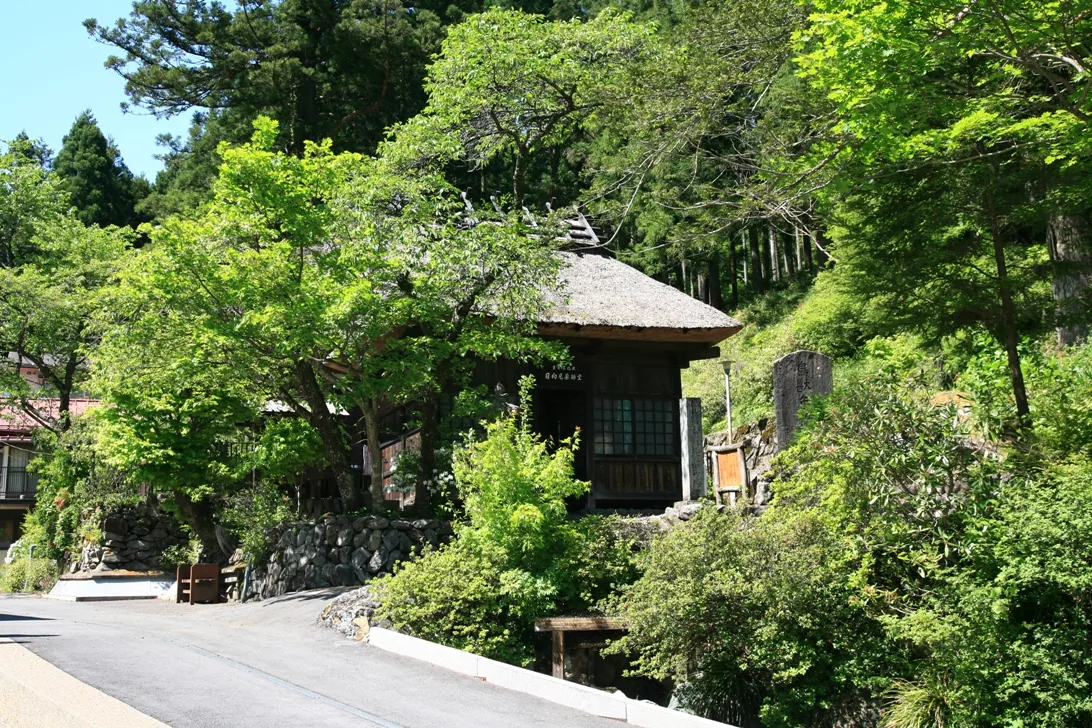
At Hinatami Yakushido Hall, at the far end of the hot-spring town, the maples around the old hall turn red. Stay in Shima Onsen, visit the hall in the morning and the lake around midday, and you can see both without rushing.
Tips for autumn-leaf trips
- Mountain roads and car parks get crowded at weekends. Setting off early in the morning makes traffic easier to avoid.
- Autumn days in the mountains are short and evenings turn cold quickly. Bring a jacket and come down before dark.
- From November, mountain roads such as those to Teriha Gorge and Marunuma may have snow or ice. Check winter closure dates too.
Our guide to choosing an onsen in Gunma covers the hot-spring towns, and you can find more places on the Gunma page.