
Hakata Dontaku Guide: Parade, Stages and Joining the Sou-odori
This guide is translated from the Japanese edition. Read the Japanese edition
Hakata Dontaku is held every May 3 and 4. The Meiji-dori parade, the performance stages, Hakata Matsubayashi, joining the Sou-odori dance, and road closures.
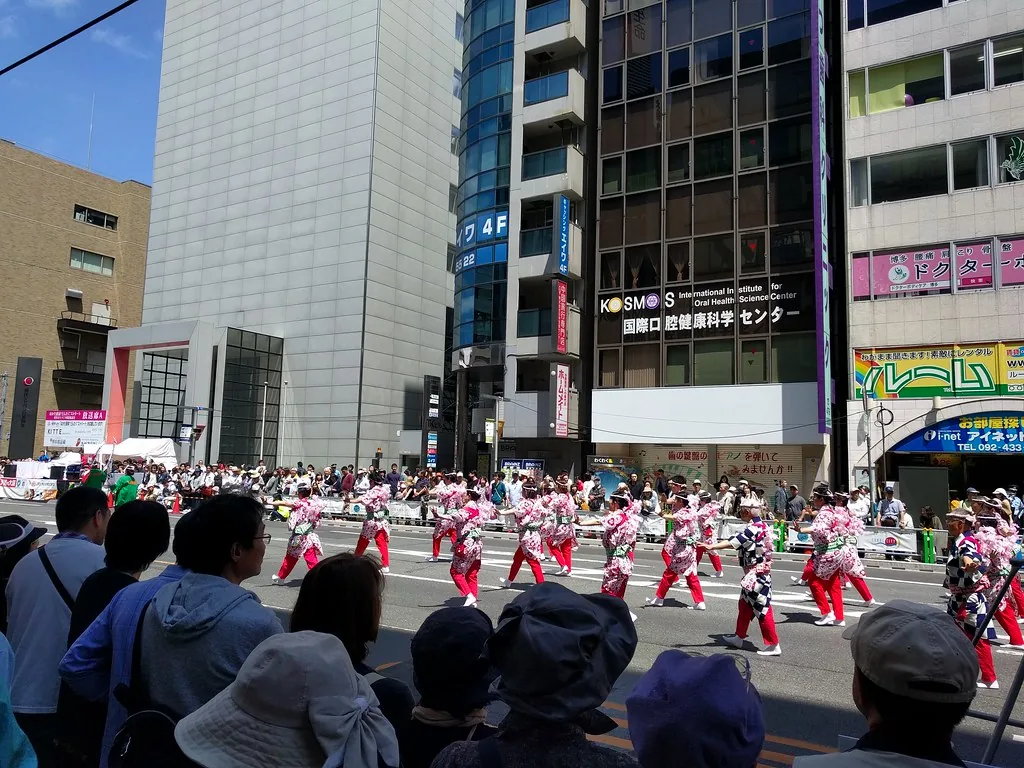
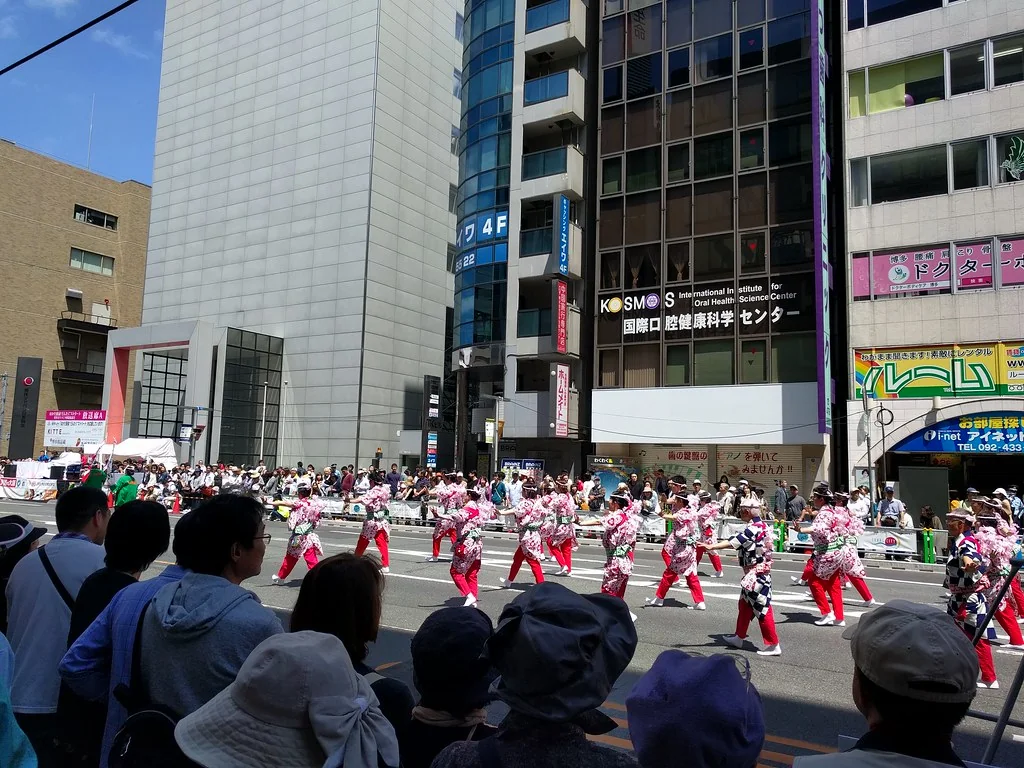
During the May holidays, the clack of rice paddles being knocked together comes up Meiji-dori toward Tenjin. Dancers in matching costumes and groups playing instruments file past one after another, and the crowds along the street clap along. The Hakata Dontaku Port Festival is a citizens' festival held in central Fukuoka every year on May 3 and 4. You can watch the parade from the sidewalk, go round the stages set up across town, or join the closing Sou-odori dance yourself.
What is Hakata Dontaku? A citizens' festival rooted in Matsubayashi
Dontaku grew out of Hakata Matsubayashi, said to have begun in 1179. It was originally a Little New Year custom of welcoming the deities who bring good fortune for the new year. It was halted for a time in the Meiji era, and after it resumed it came to be called "Hakata Dontaku." The word "dontaku" is said to come from Zondag, the Dutch word for a holiday.
In 1962 it became the Fukuoka Citizens' Festival, open to everyone in the city, and took on the form of today's Hakata Dontaku Port Festival. The festival's official site, "Mobile Dontaku," posts the parade order and the stage schedules.
- Hakata Dontaku Port Festival official website (Japanese)
- About Hakata Dontaku (Hakata Dontaku Port Festival, Japanese)
Why rice paddles?
The thing dancers and spectators hold in their hands is the shamoji, a rice paddle. According to the organizers, it all started long ago when Dontaku musicians passed in front of a merchant's house: the woman of the house, busy making dinner, joined in by beating the paddle she was holding. The light click of two paddles struck together is now the sound of Dontaku.
The Dontaku Parade on Meiji-dori
The main event is the Dontaku Parade. Groups from across Japan and abroad dance along about 1.3 km of Meiji-dori from Gofukumachi to Tenjin, each in costumes and performances of their own choosing. Some are dance groups, others play instruments, and every group is so different that you won't get bored standing in one spot.
The parade takes place in the afternoons of the 3rd and 4th. Start times and the order of groups are announced on the official website each year. The Tenjin end tends to get crowded, so for a more relaxed view, try the Gofukumachi end or a spot in between.
Going round the stages at Hakata Station and City Hall
Besides the parade, performance stages go up all over the city, with Dontaku groups taking turns to dance and play.
| Stage | Where |
|---|---|
| Omatsuri Hon-butai (main festival stage) | Fureai Hiroba plaza in front of Fukuoka City Hall, Tenjin |
| Hakata Station Hon-butai | The plaza in front of Hakata Station |
| Minato Hon-butai (port stage) | Bayside Place Hakata |
Stages also appear around the ward offices and elsewhere. If you arrive at Hakata Station, look in at the Hakata Station stage first, then take the subway to Tenjin for the parade and the main stage; that way you can see several stages without spending much time getting around. Check each stage's location and schedule in the stage guide on the official website.
Hakata Matsubayashi: the three gods of fortune go round town
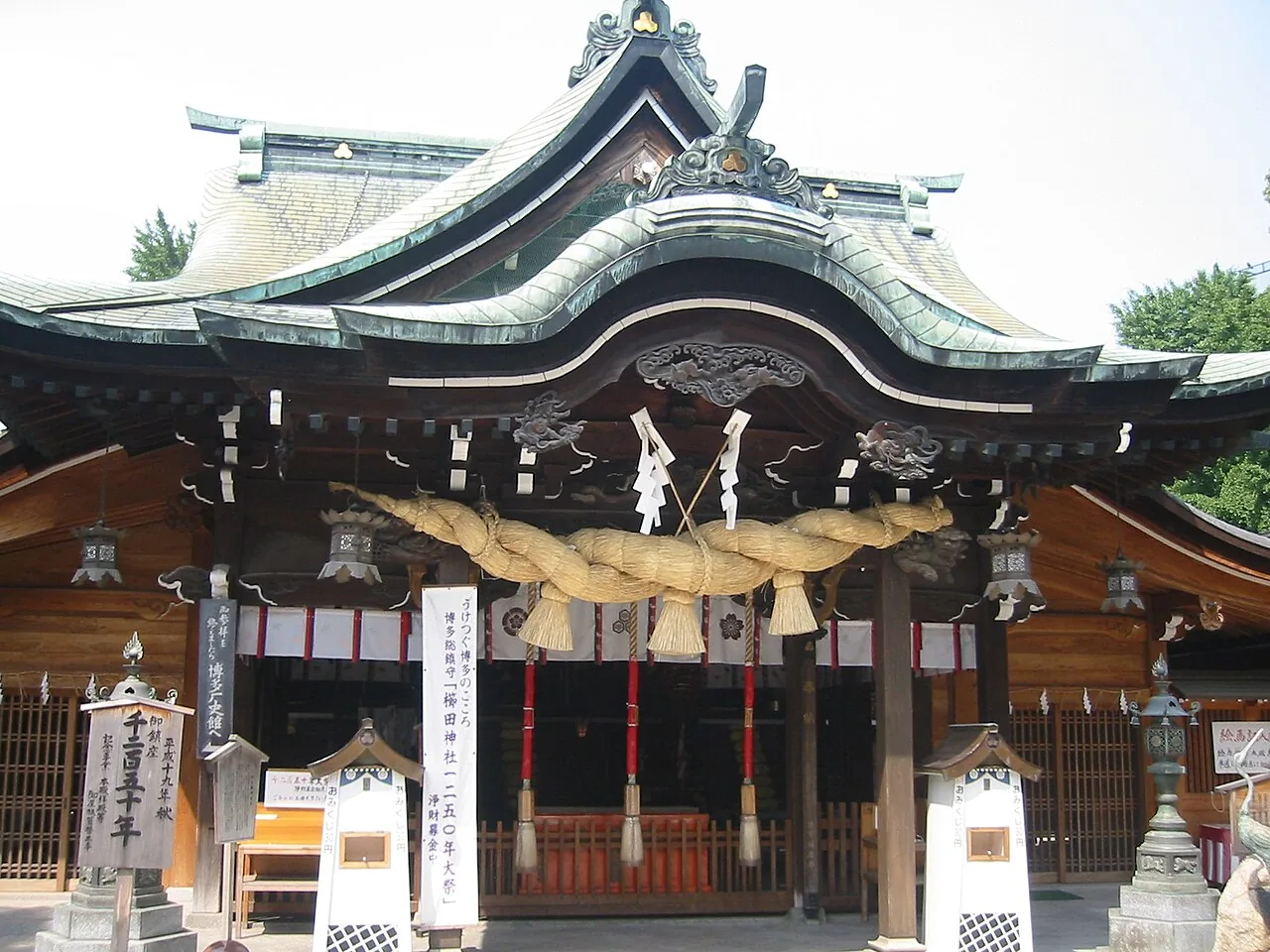
Hakata Matsubayashi, the root of Dontaku, also goes round town on May 3 and 4. The three gods of fortune, Fukujin, Ebisu and Daikoku, and a troupe of child dancers make their way through Hakata following old custom, blessing the town. It shows a much older side of the festival than the colorful parade. The official website sometimes posts where the three gods are.
Join the Sou-odori on the evening of the 4th
The festival closes with the Sou-odori, a mass dance on the evening of the 4th. In the plaza in front of the main stage and at other points such as Gofukumachi and Nakasu-Kawabata, Dontaku groups and spectators dance together. Anyone can jump in, and even if you don't know the steps, you'll soon be part of it by copying the people around you. Bring a pair of rice paddles and you'll fit right in.
Crowds and road closures
Over the two days of Dontaku, huge numbers of people pour into Tenjin and Hakata. It also falls during Golden Week, so book a place to stay as soon as your dates are fixed.
- Meiji-dori is closed to traffic during the parade, and bus routes and stops change. Between Tenjin and Gofukumachi, the subway Airport Line (Tenjin and Nakasu-Kawabata stations) and Hakozaki Line (Gofukumachi Station) are the reliable way to get around.
- May sunshine is stronger than you might expect, and long waits on the sidewalk are tiring. Bring a hat and something to drink.
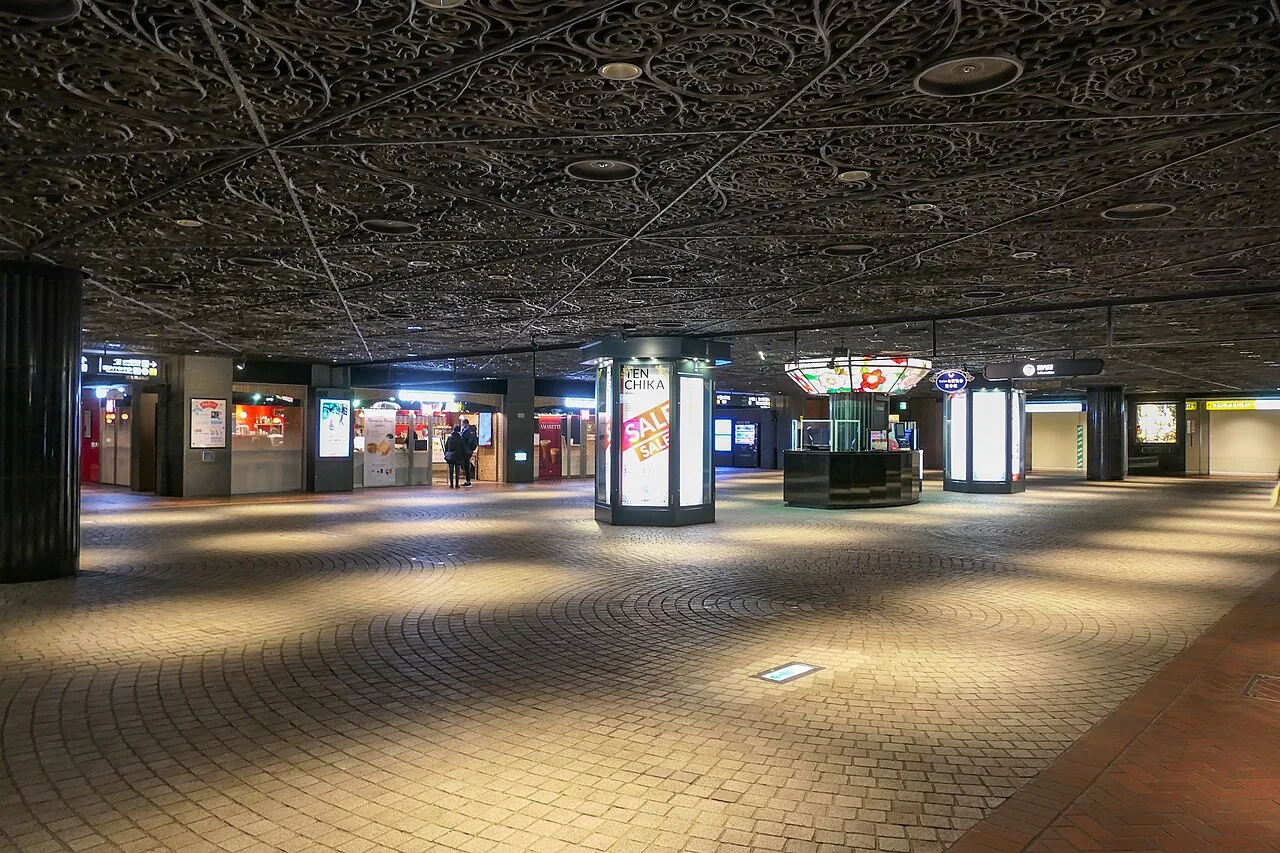
- Between events, you can rest or eat at Tenjin Underground Shopping Center, beneath Tenjin.
If you're visiting Fukuoka in July, don't miss Hakata's summer festival, the Hakata Gion Yamakasa. Tenjin's sights are on the Tenjin area page.
Places in this guide
Hotels nearbyPR
See prices and availability for hotels in Fukuoka and book on our partner Trip.com.
See hotels in Fukuoka on Trip.com