
Hakata Gion Yamakasa Guide: When and Where to Watch the Oiyama
This guide is translated from the Japanese edition. Read the Japanese edition
Hakata Gion Yamakasa runs July 1–15. The two kinds of float, the daily schedule, where to watch the dawn Oiyama, early trains, and street etiquette.
On July 15, the streets around Kushida Shrine start filling with people while it is still dark. At 4:59 a.m. the first float charges into the shrine grounds, and with the men in loincloths chanting "Oissa, oissa" and water flying from the crowd, Hakata wakes up all at once. The Hakata Gion Yamakasa runs through the streets of Hakata from July 1 to the early morning of the 15th. If you plan to see it, knowing what happens on which day makes a big difference to how you spend your time.
What is Hakata Gion Yamakasa? Kushida Shrine's festival since 1241
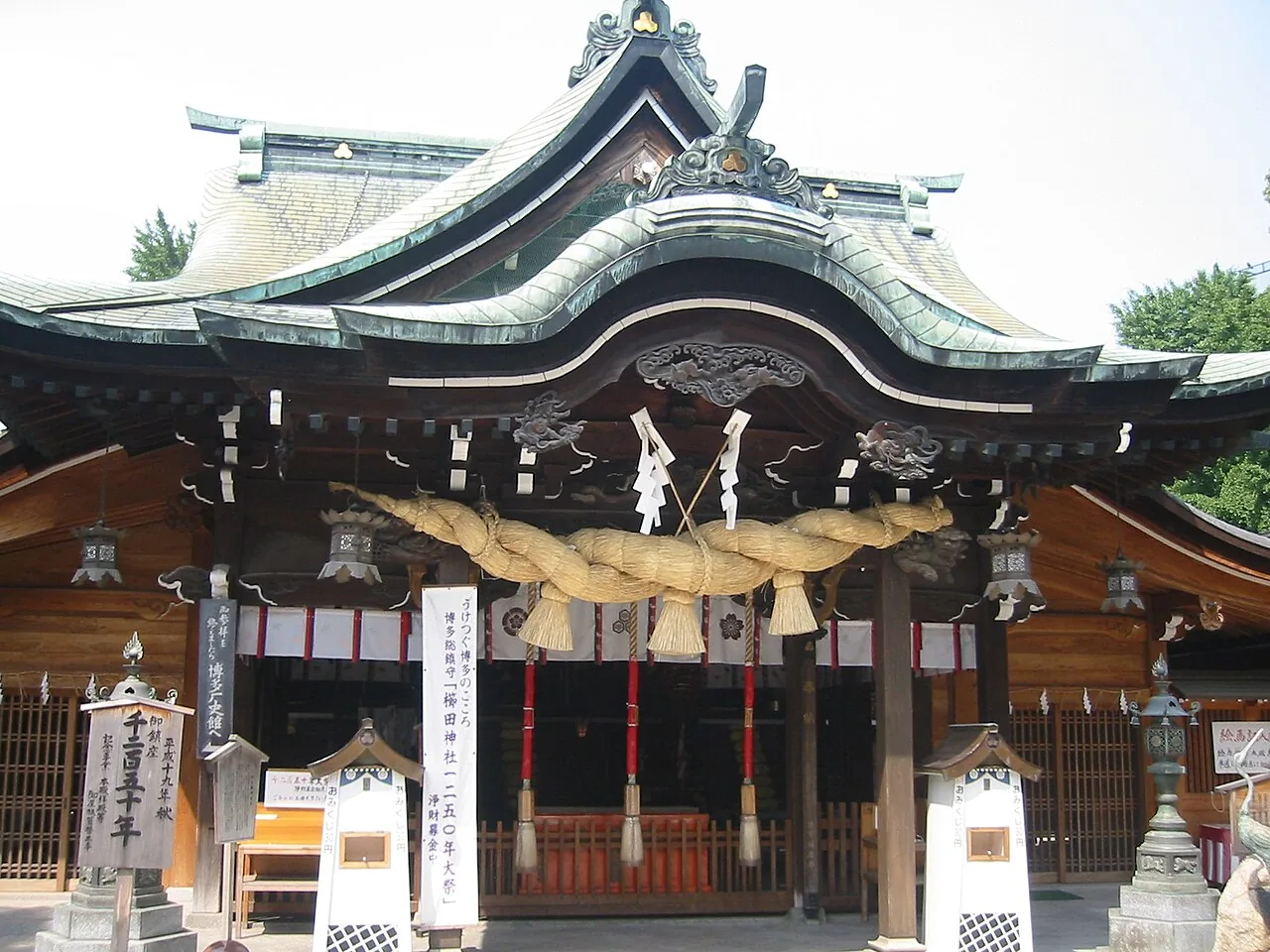
The Hakata Gion Yamakasa is dedicated to the Gion deity (Susanoo) at Kushida Shrine, the guardian shrine of Hakata, and is said to have begun in 1241. It is an Important Intangible Folk Cultural Property of Japan, and in 2016 it was inscribed on UNESCO's Intangible Cultural Heritage list as one of the "Yama, Hoko, Yatai" float festivals.
The festival is run by Hakata's traditional neighborhood groups, called nagare. Seven nagare, Nakasu, Nishi, Chiyo, Ebisu, Doi, Daikoku and Higashi, each put out a carried float.
Decorative floats and carried floats
There are two kinds of yamakasa.
| Type | What it is | Where to see it |
|---|---|---|
| Kazari yamakasa (decorative float) | A towering float with figures by Hakata doll makers showing scenes from history and legend, built to be looked at | Set up at a dozen or so spots around the city from July 1, where you can see them up close |
| Kaki yamakasa (carried float) | A float weighing about 1 ton, carried on men's shoulders as they run through the streets | Runs through town in the nagare runs from July 10 and in the Oiyama on the 15th |
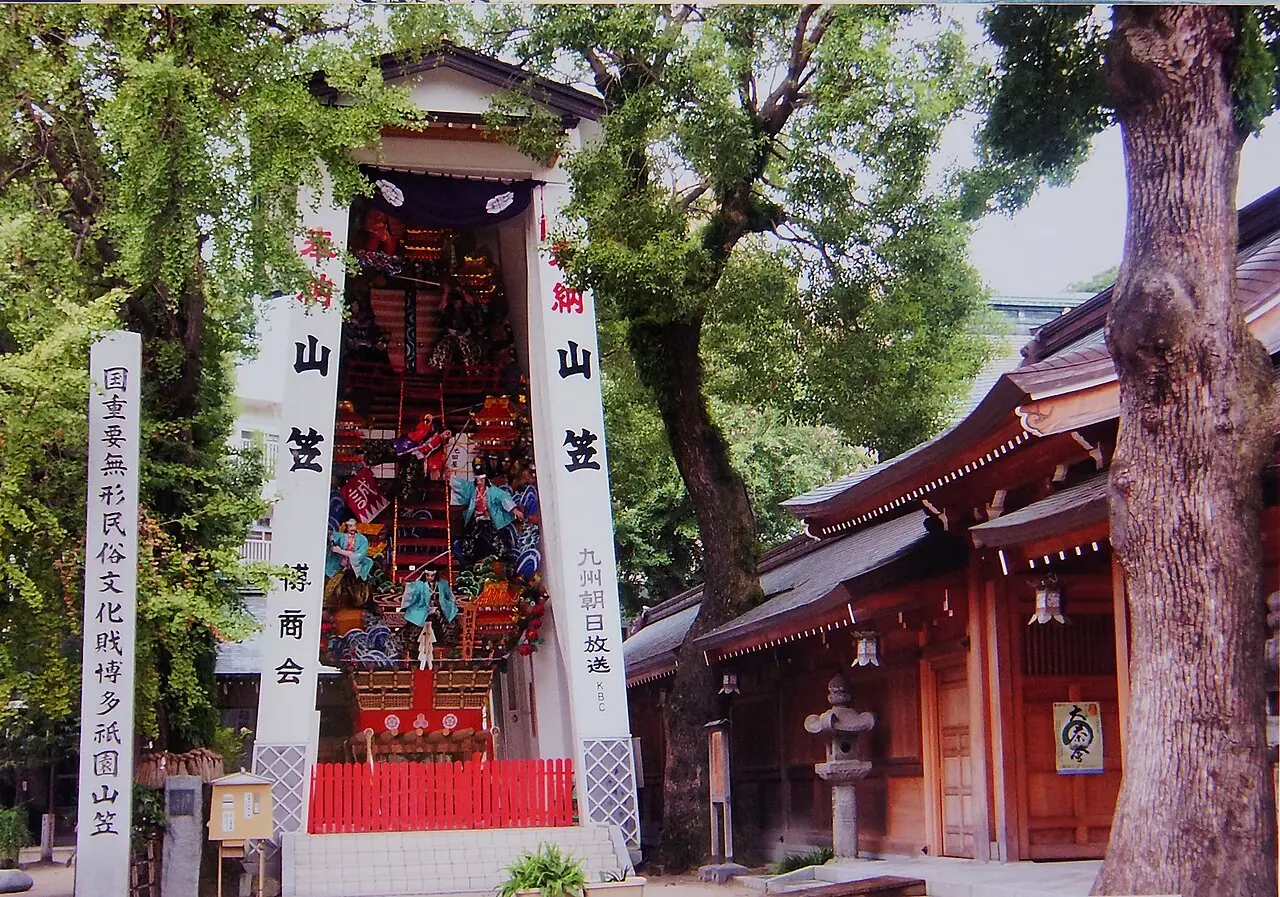
Until the Meiji era, tall floats were carried around town, but once overhead power lines went up, they are said to have split into decorative floats for display and carried floats for running. On a decorative float, the side facing Kushida Shrine is called the omote (front) and the other side the miokuri (back), and the two show different scenes. Walk around to see both.
The festival schedule, July 1–15
The dates are the same every year. Times can change, so check the official website for the year you visit.
| Date | Event | What happens |
|---|---|---|
| July 1 | Decorative floats unveiled | Decorative floats go on show around the city |
| July 10 | Nagare-kaki | The carried floats appear and run within their own nagare's district |
| July 11 | Asayama and Taryu-kaki | The early-morning Asayama run, then floats run outside their districts; the only day they run twice |
| July 12 | Oiyama Narashi | A rehearsal for the Oiyama, starting from Kushida Shrine in the afternoon |
| July 13 | Shudan Yamamise | The carried floats cross the Naka River and run from Gofukumachi to City Hall in Tenjin |
| July 14 | Nagare-kaki | The day before the Oiyama |
| July 15 | Oiyama | The first float enters Kushida Shrine at 4:59 a.m.; floats run a course of about 5 km |
If your time in Fukuoka is short, the daytime Oiyama Narashi on the 12th or the Shudan Yamamise on the 13th are easier to catch. In the Shudan Yamamise, the floats of Hakata's festival leave their usual districts and come all the way into Tenjin, which is handy if you are staying on the Tenjin side.
Watching the Oiyama: Kushida-iri and the streets
In the Oiyama on the 15th, the carried floats charge into Kushida Shrine one after another, starting with the first float, and circle the course in the grounds in what is called the Kushida-iri, before running out onto the streets. Paid stand seats are set up in the shrine grounds, but the way they are sold varies from year to year, so check with Kushida Shrine and the official website.
Without a stand seat, you can watch from the street along the course. Spots near Kushida Shrine fill up earliest, so if you don't mind missing the Kushida-iri itself, waiting further along the course gives you a calmer view of the floats as they run. The course map is on the official website.
On the day of the Oiyama, the subway runs special trains earlier than its usual first trains. In 2026, special trains ran from the 3 a.m. hour on the Airport, Hakozaki and Nanakuma lines. Whether they run, and their times, are announced each year in Fukuoka City Subway notices.
Watching from the street: what to keep in mind
- You may get wet: Spectators throw water, called kioi-mizu, at the float carriers. If you stand at the front, wear clothes you don't mind getting wet, and keep your camera or phone protected.
- Keep out of the floats' path: The carried floats move fast and swing wide when they turn. Follow staff and police instructions and stay off the road.
- Roads are closed: While the floats are running, roads on the course are closed and bus routes change. Taxis can't get close, so plan to move around by subway and on foot.
- Summer heat: July in Fukuoka is hot and humid, and daytime events mean long waits on your feet. Bring a drink and a hat.
Seeing yamakasa outside the festival
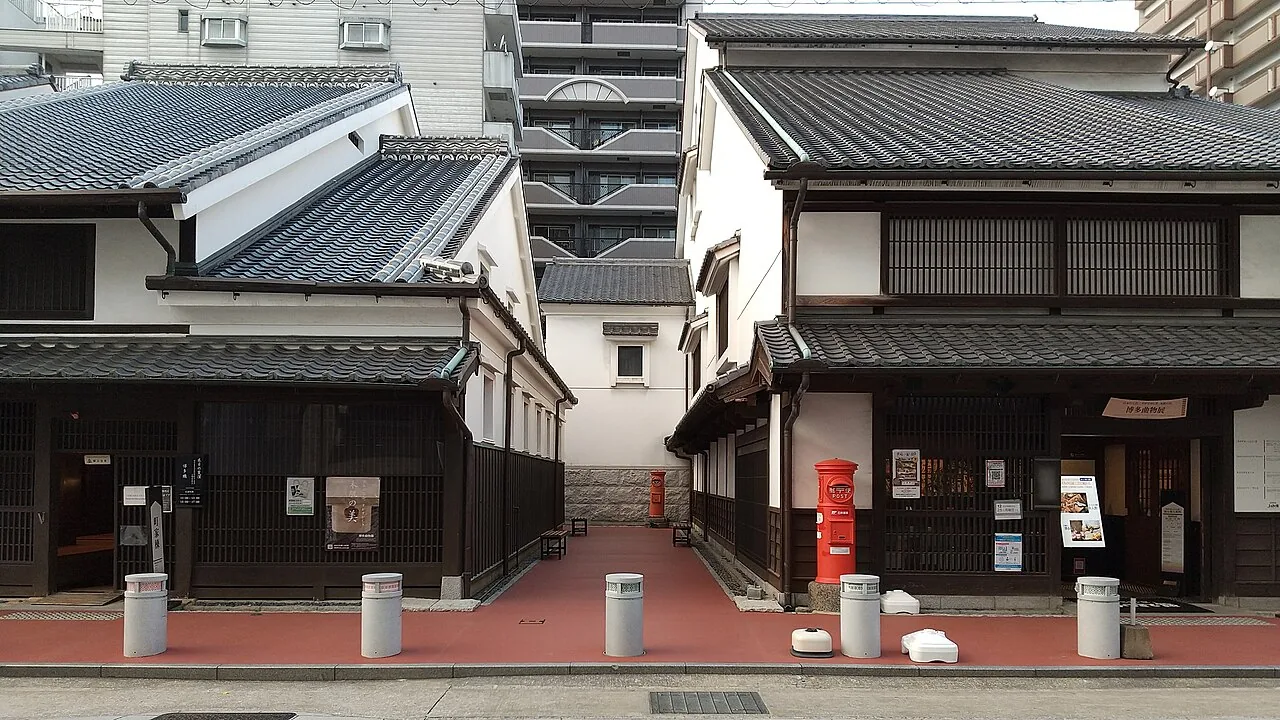
Even if you can't make it in July, you can see the size of a float for yourself. A decorative float stands in the grounds of Kushida Shrine almost all year, except in June. At the Hakata Machiya Folk Museum, in front of the shrine's main torii gate, you can get a feel for the town culture behind the festival along with Hakata's daily life and traditional crafts.
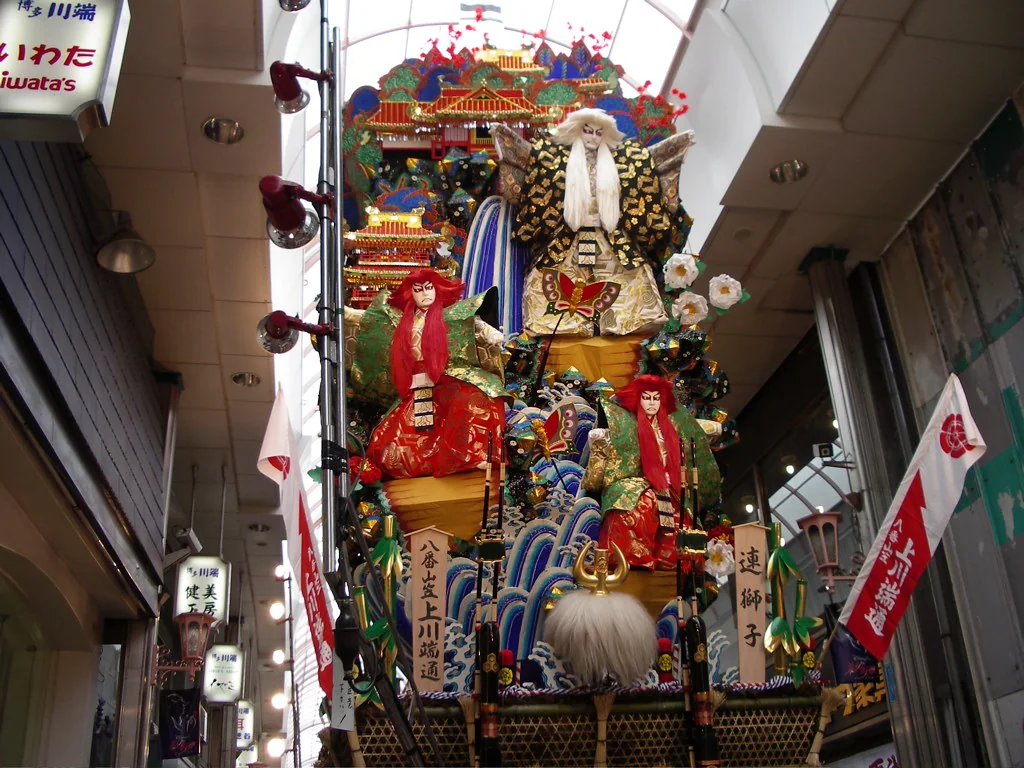
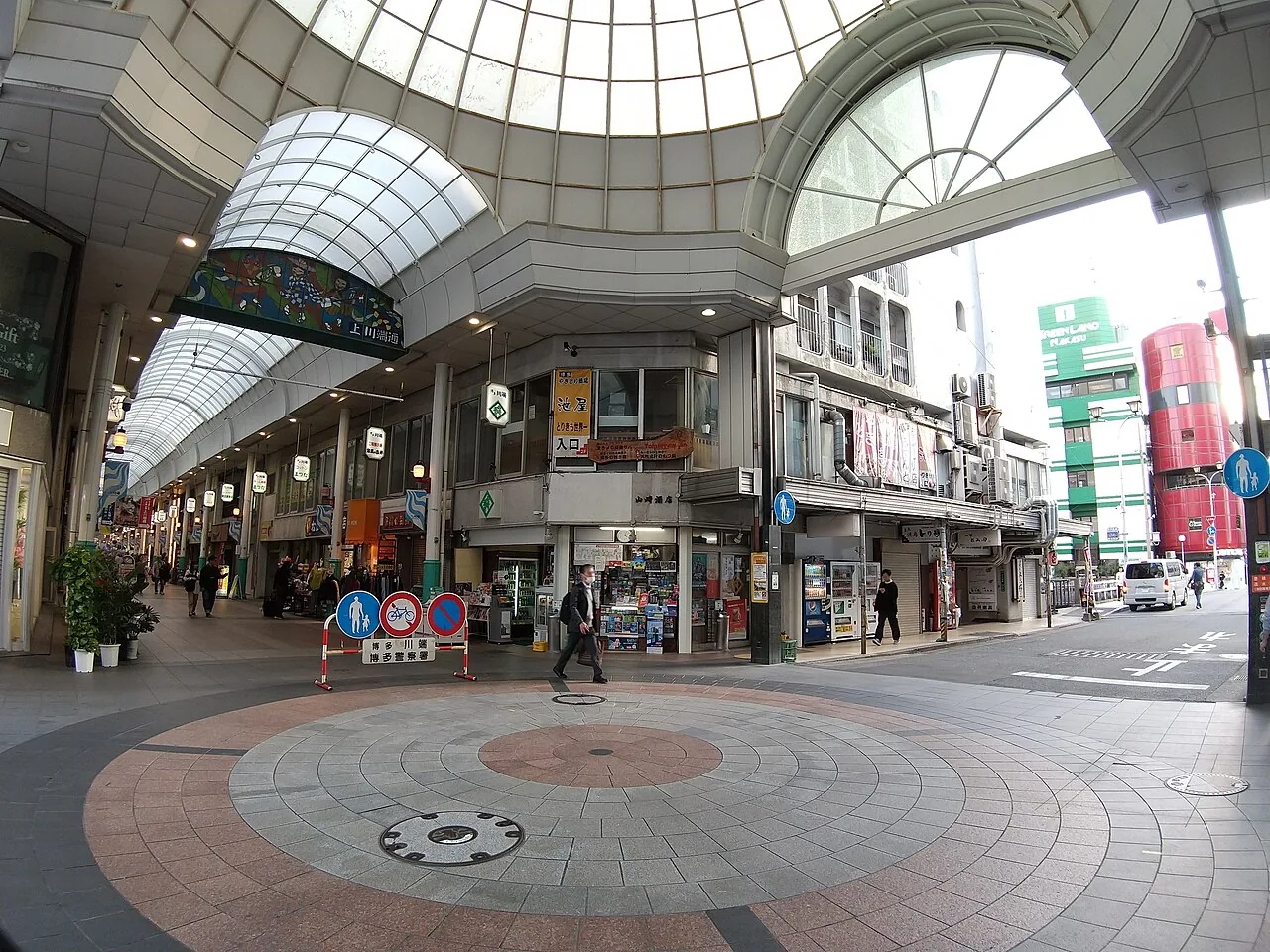
During the festival, also stop by Kawabata Shopping Street, which runs north from Kushida Shrine. The Kami-Kawabata-dori decorative float there is known as the "running decorative float," because it is actually carried in the Oiyama Narashi and the Oiyama. For walking around Nakasu and Kawabata, see the Nakasu and Canal City area page; for a first visit to Fukuoka, see Fukuoka for first-timers.
Places in this guide
Hotels nearbyPR
See prices and availability for hotels in Fukuoka and book on our partner Trip.com.
See hotels in Fukuoka on Trip.com