
Japan Cherry Blossom Season: Bloom Updates and Hanami Etiquette
This guide is translated from the Japanese edition. Read the Japanese edition
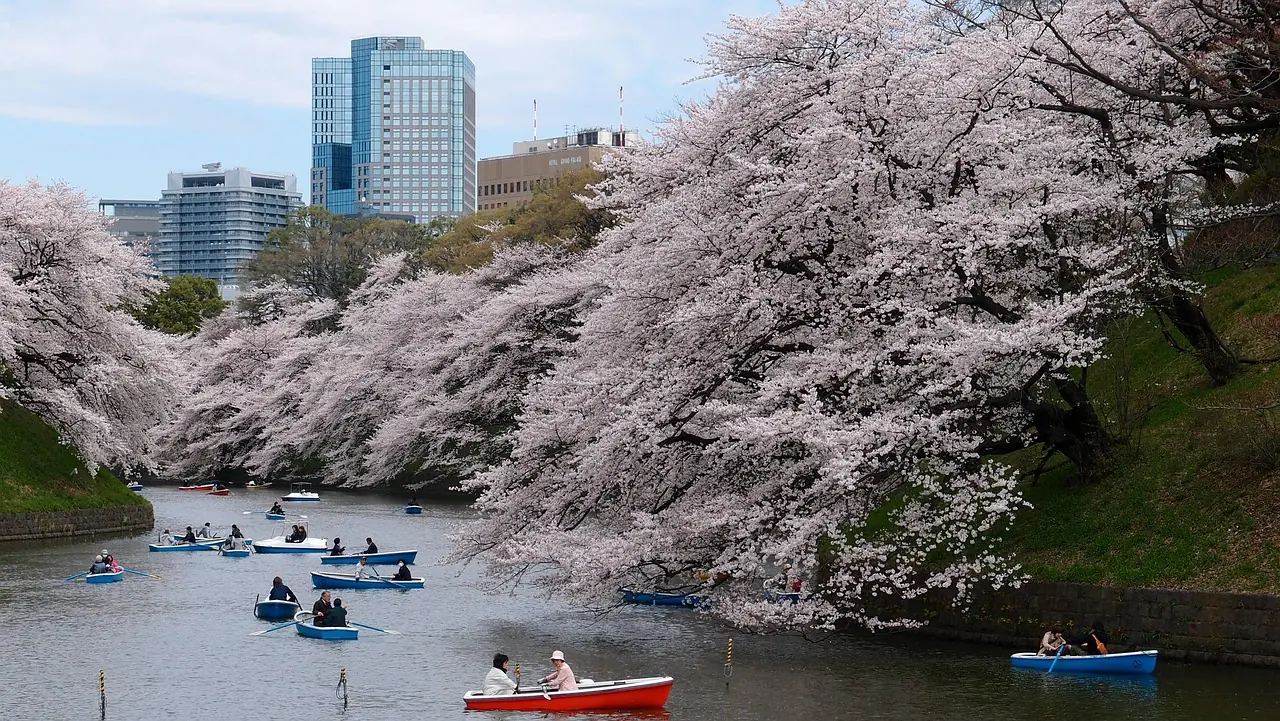
Japan's cherry blossom season shifts by region and by year. How to check official bloom updates, the hanami etiquette parks ask for, and how to handle the crowds.
If you're planning a spring trip to Japan, the thing to understand before booking flights is that the blossoms don't open on the same date every year. In any given year they open at very different times in the southern islands and in Hokkaido, and even within one city the timing moves with that year's temperatures. Once your dates are set, check the official bloom updates right before you leave. Once you're under the trees, follow the rules of that particular park. Those are the two things first-time visitors most often get wrong.
When do cherry blossoms bloom? It depends on region and year
Japan's cherry trees don't all bloom at once. The Japan Meteorological Agency (JMA) publishes the bloom dates recorded around the country: in the Nansei Islands, Hikan-zakura cherries open early, while Somei-yoshino cherries open first in Kyushu, Shikoku and across Honshu, then move north into Tohoku and finally Hokkaido. This northward progression is called the "cherry blossom front" (sakura zensen).
The peak also changes from year to year in the same place. Dates in guidebooks or in last year's photos are only past records.
Keep in mind, too, that the gap between first bloom and full bloom is short, and the petals start to fall soon after full bloom. If your travel dates are fixed, rather than pinning everything on one spot, list a few places in the same region that tend to bloom at slightly different times. That gives you a better chance of catching the flowers somewhere.
How to check first-bloom and full-bloom updates
"First bloom" (kaika) and "full bloom" (mankai) have fixed definitions at the JMA. Its observatories around the country carry out phenological observations, recording the first bloom date when a few flowers have opened on a designated sample tree, and the full bloom date when most of its flowers are open. Tokyo's sample tree stands at Yasukuni Shrine.
The variety observed is mainly Somei-yoshino. In parts of Hokkaido where Somei-yoshino is uncommon, the JMA observes Ezo-yamazakura, and in the Nansei Islands it observes Hikan-zakura.
The JMA no longer issues cherry blossom forecasts; it stopped because private weather companies now provide similar information nationwide. It helps to keep the two apart: forecasts come from private providers, while whether the trees have actually bloomed comes from the JMA and local official sources.
Once you know where you're going, the official pages of that city or park give the most concrete picture.
| What you want to know | Where to look | What it tells you |
|---|---|---|
| Whether each region has reached first or full bloom | JMA phenological observations | First and full bloom dates recorded by local observatories |
| How far along each Kyoto spot is | Kyoto City Official Travel Guide "Sakura dayori" | Bloom status by spot (updated during the season) |
| How far along Tokyo's metropolitan parks are | "Koen e Iko!" metropolitan park cherry blossom page | Bloom status by park and garden |
| How far along Osaka City's parks are | Osaka City "Kaika joho" (bloom information) | Flower bloom updates for parks in the city |
How often these pages are updated, and for how long, varies by site and by year. Checking them a few times in the days before you leave gives you a feel for how quickly the blossoms are progressing.
Basic hanami etiquette: saving spots, rubbish and the trees
Every park that hosts hanami has a manager, and each puts out notices for the cherry blossom season. The details vary from park to park, but some requests come up again and again.
- Don't leave a spot unattended to save it: Kyoto City asks people not to reserve spots in city parks. Kyoto Gyoen National Garden prohibits saving spots with blue tarps or sheets in ways that get in the way of viewing or walking. Yoyogi Park prohibits saving spots with ropes, pegs or notes, and says unattended sheets will be removed without notice.
- Take your rubbish home: Both Kyoto City's parks and Yoyogi Park ask visitors to take rubbish with them. Bins may be few, and temporary rubbish stations can close in the evening. Bringing a bag of your own makes things easier.
- Don't break branches or pick flowers: Osaka City lists picking flowers or fruit and breaking branches among the things prohibited in its parks. Pulling a low branch toward you for a photo can also damage the tree.
- Generally no tents or barbecues: Kyoto City asks people not to barbecue or pitch tents in its parks. Kyoto Gyoen also prohibits tents, tables and the use of fire.
- Be considerate of the people around you: Kyoto Gyoen prohibits making noise with karaoke or musical instruments. Some parks, such as Yoyogi Park, also ask visitors not to drop cigarette butts and to smoke only in designated areas.
Where you can and can't drink
Hanami often brings to mind people spreading out lunch boxes under the trees and drinking. But the rules on alcohol differ a lot between parks.
Shinjuku Gyoen in Tokyo, for example, bans bringing alcohol into the garden. Kyoto Gyoen also prohibits long periods of eating and drinking such as parties. Food rules, including whether you can spread out a picnic, also differ from park to park.
If you plan to drink or picnic, check the rules on the park's official website before you go. Even where it isn't banned, the basic expectation is not to drink so much that you get loud or block the paths.
Dealing with the crowds
On weekends around full bloom, crowds pour into popular parks and famous spots. You may not be able to avoid the crowds entirely, but how you move around makes a difference.
- Go by train or bus: Osaka City asks visitors to use public transport for hanami at Osaka Castle Park. The park's car parks are expected to be busy, and on-street parking nearby causes traffic jams. Yoyogi Park likewise recommends public transport, as its car parks have limited spaces and get crowded.
- Check how to get in: At paid gardens and parks with entry gates, the way you enter or the opening hours may change during cherry blossom season. Check the official website before you go, and leave plenty of time so you're not rushed.
- Check the crowd forecast: The "Kyoto Sightseeing Comfort Map" on Kyoto City's Kyoto Official Travel Guide shows predicted crowd levels for Kyoto as a whole and for the Arashiyama, Higashiyama and Fushimi areas.
- Watch your belongings: In a crowd, don't leave your bags unattended on your sheet. Yoyogi Park also asks visitors to take care of valuables and belongings.
If you'd rather avoid peak times, weekdays and early mornings are one option. In Kyoto, as in the autumn leaves season, getting around by train and on foot and limiting how many places you visit in a day makes walking easier. The same approach is described in How to Enjoy Kyoto's Autumn Leaves Without the Crowds. If you'll be walking around Ueno Park in Tokyo, the Asakusa and Ueno one-day walking route is also useful.
JMA bloom records and park pages for Kyoto, Tokyo and Osaka
Bloom status changes almost daily, and hanami rules are revised by park and by year. Check the official pages for where you're heading before you leave and again on the morning itself.
- Cherry blossom first and full bloom observations (JMA phenological observations)
- Cherry blossom bloom dates (JMA)
- Phenological observations FAQ (JMA)
- End of the JMA's cherry blossom forecasts (JMA)
- Cherry blossom facts from the Tokyo Regional Headquarters (JMA)
- Kyoto cherry blossom spots and bloom status, Sakura dayori (Kyoto City Official Travel Guide)
- Hanami in Kyoto City's parks and green spaces (Kyoto City)
- Notes for hanami visitors (Kyoto Gyoen, Ministry of the Environment)
- Flowers in season in spring (Koen e Iko!)
- To hanami visitors (Yoyogi Park, Koen e Iko!)
- Garden rules (Shinjuku Gyoen, Ministry of the Environment)
- Bloom information (Osaka City Parks and Greenery)
- Using the parks (Osaka City)
- Please use public transport for hanami at Osaka Castle Park (Osaka City)
For other places to visit in Kyoto beyond the cherry blossoms, browse Kyoto spots.