Kanazawa Chaya Districts: Higashi, Kazuemachi and Nishi Compared
This guide is translated from the Japanese edition. Read the Japanese edition
Kanazawa's three teahouse districts compared: Higashi Chaya, Kazuemachi and Nishi Chaya, nearest bus stops, the no eating-while-walking rule and a one-day route.
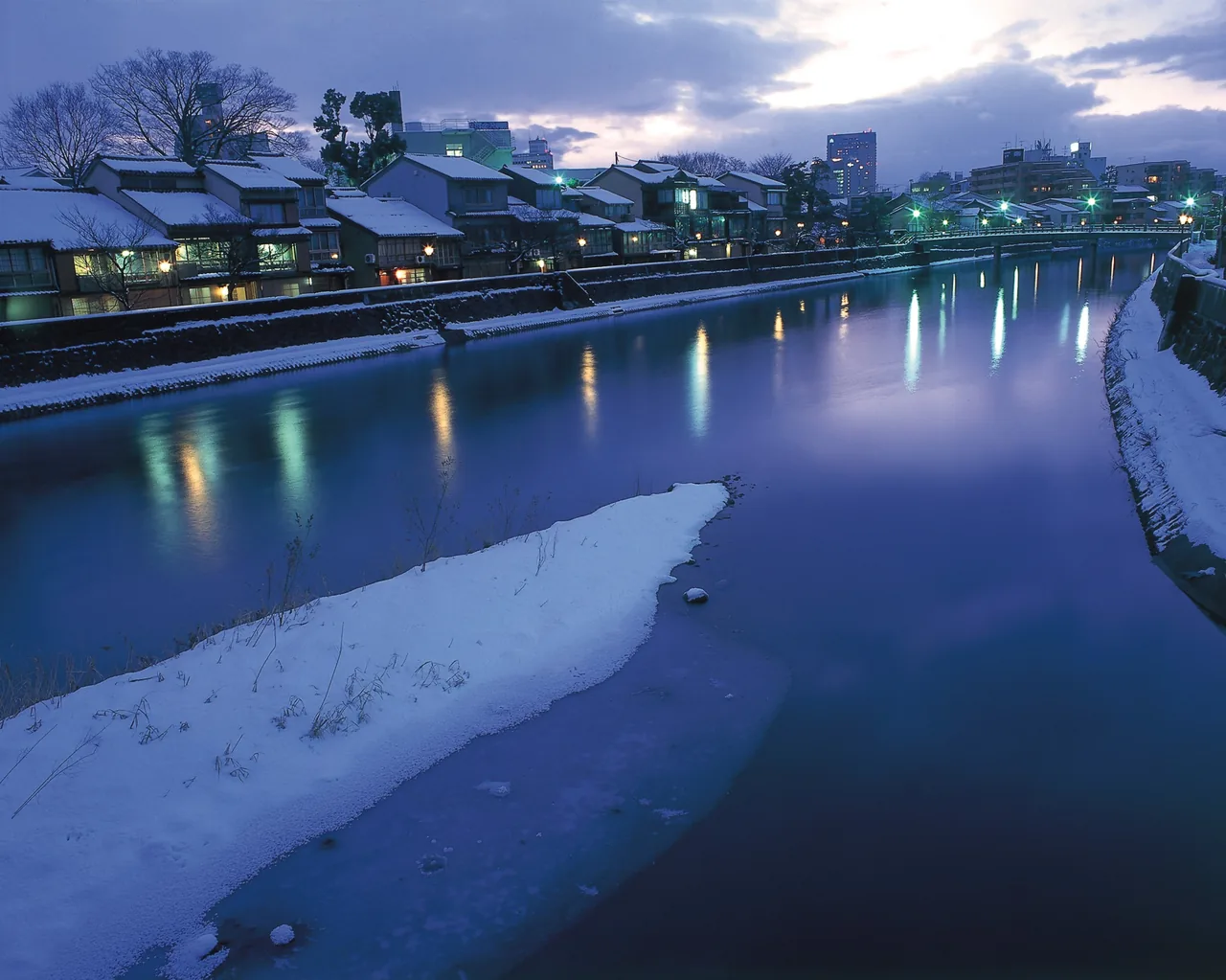
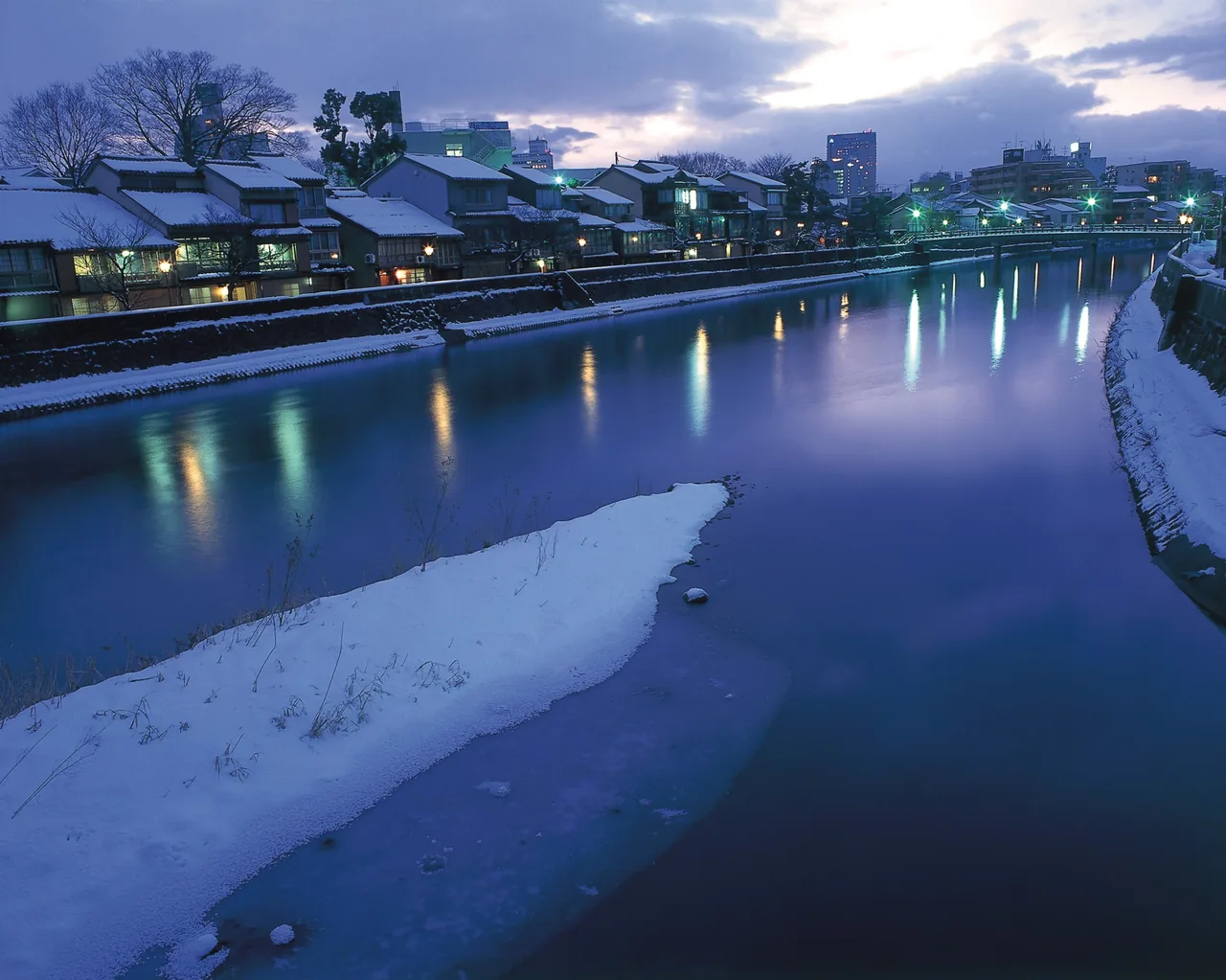
In the evening, the teahouse lights come on along the Asano River and stretch out in long reflections on the water. Kanazawa has three chaya (teahouse) districts where the streetscapes of Edo-period pleasure quarters survive. The Higashi Chaya District spreads along the east bank of the Asano River. On the opposite bank, the Kazuemachi Chaya District runs along the river. The Nishi Chaya District lies to the west as seen from Kanazawa Castle. All three are lined with wooden teahouses with lattice fronts, but each differs a little in setting and feel. By bus you can see all of them in a day along with Kanazawa Castle and Myoryuji Temple.
How do the three teahouse districts differ?
The Higashi Chaya District and the Nishi Chaya District were both licensed by the Kaga Domain in 1820. The Nishi Chaya District takes its name ("nishi" means west) from lying to the west as seen from Kanazawa Castle. The Higashi Chaya District was selected as a national Important Preservation District for Groups of Traditional Buildings in 2001, and the Kazuemachi Chaya District in 2008.
| District | Setting | Nearest bus stop | Time to walk around |
|---|---|---|---|
| Higashi Chaya District | East bank of the Asano River; teahouses on both sides of a stone-paved street | Hashiba-cho | About 30 minutes (about an hour if you visit a teahouse or stop at shops) |
| Kazuemachi Chaya District | Along the Asano River; a row of riverside teahouses and two slopes | Hashiba-cho | About 30 minutes |
| Nishi Chaya District | To the west of Kanazawa Castle; teahouses along a stone-paved street | Hirokoji | About 30 minutes |
The Higashi Chaya and Kazuemachi Chaya districts face each other across the Asano River, close enough to walk between. The Nishi Chaya District is farther away, so take a bus there.
Higashi Chaya District: a stone-paved street and Shima, an Important Cultural Property
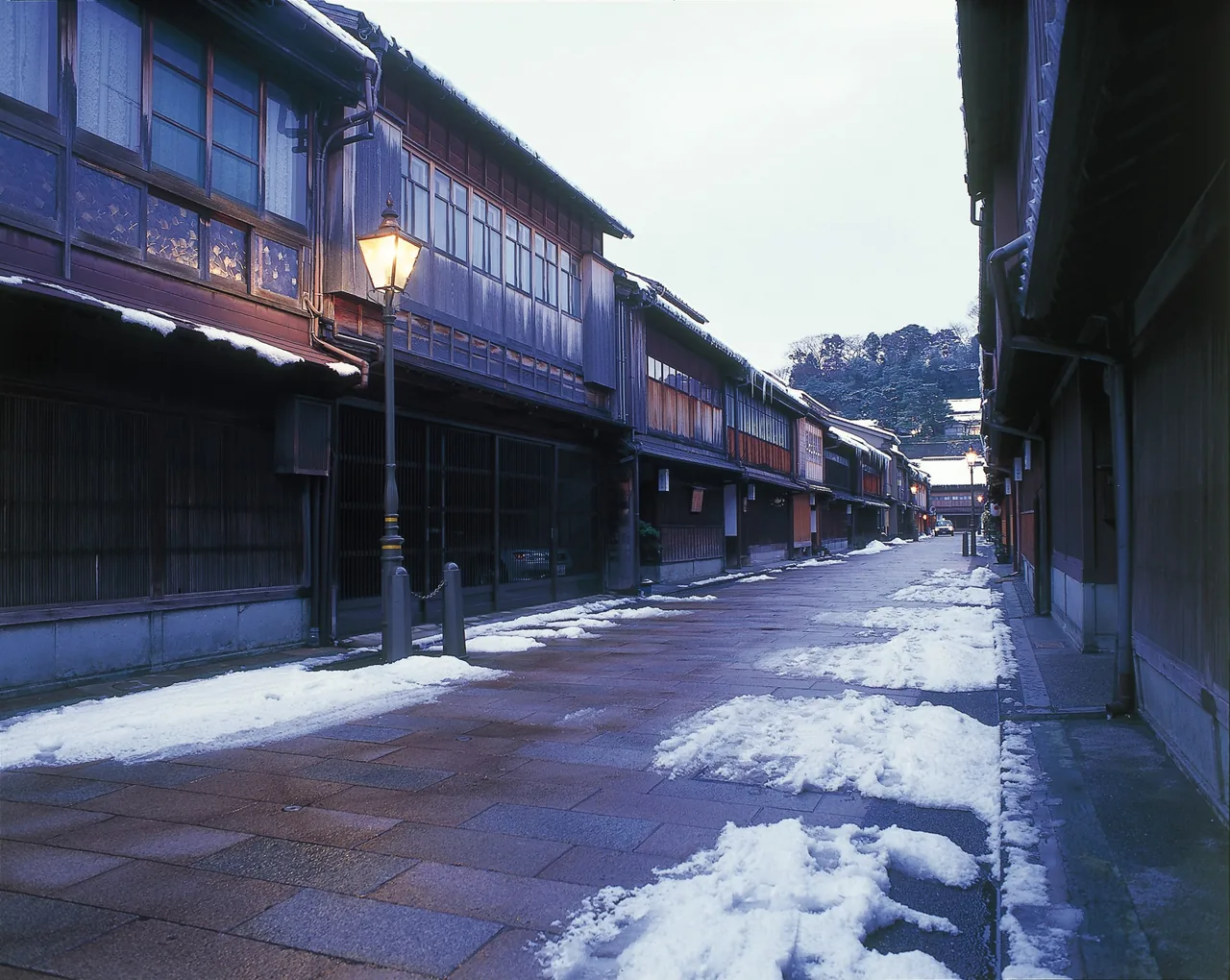
In the Higashi Chaya District, two-story teahouses with fine lattices across their fronts line both sides of a stone-paved street. It's busy with visitors during the day, but in the morning before the shops open there are few people about, and you can take in the rows of lattice doors at your own pace.
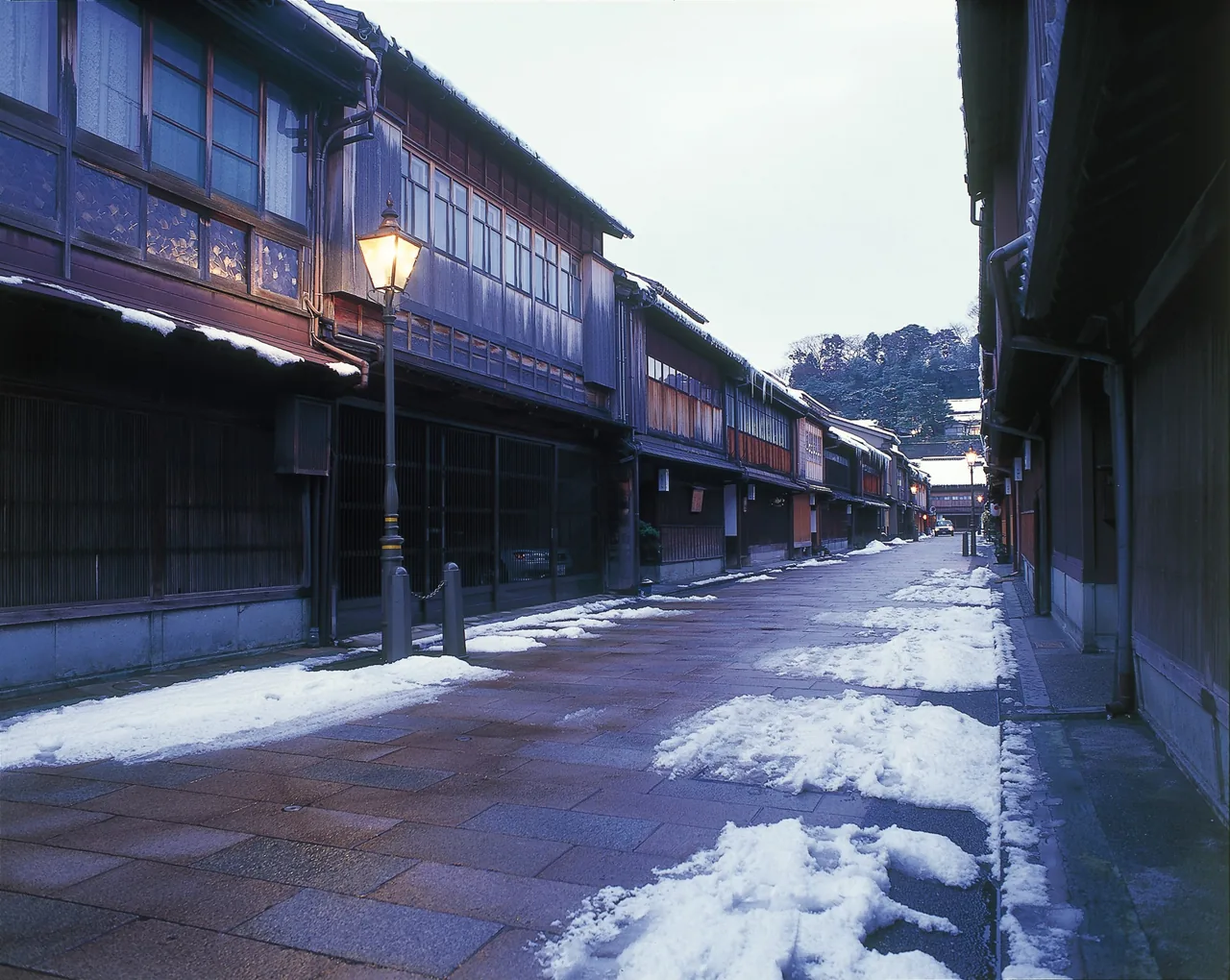
Photo: ©石川県観光連盟
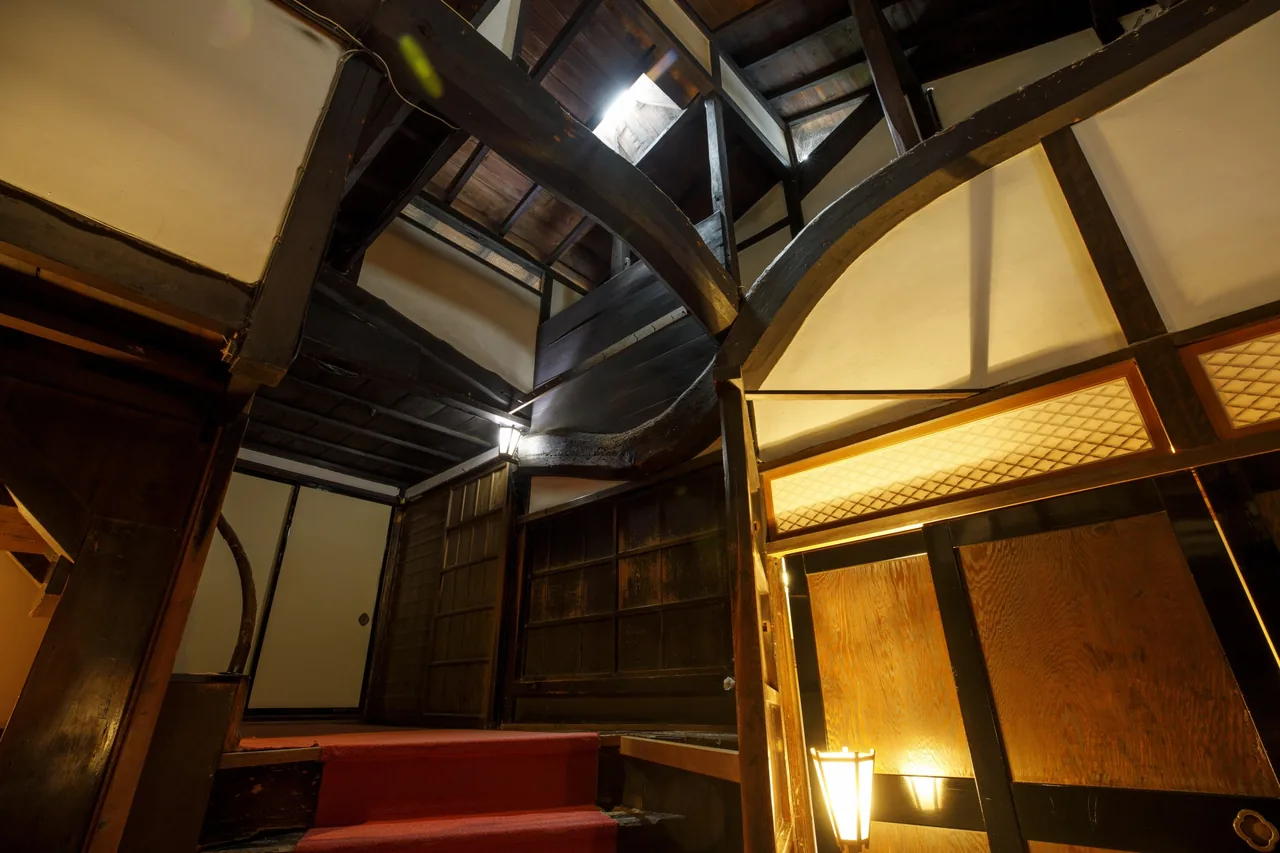
Shima, a teahouse on the main street built in 1820, is designated a national Important Cultural Property. Its interior is open to the public, so you can see how a teahouse is laid out up close. Check the Kanazawa City Tourism Association website and other sources for visiting hours and fees.
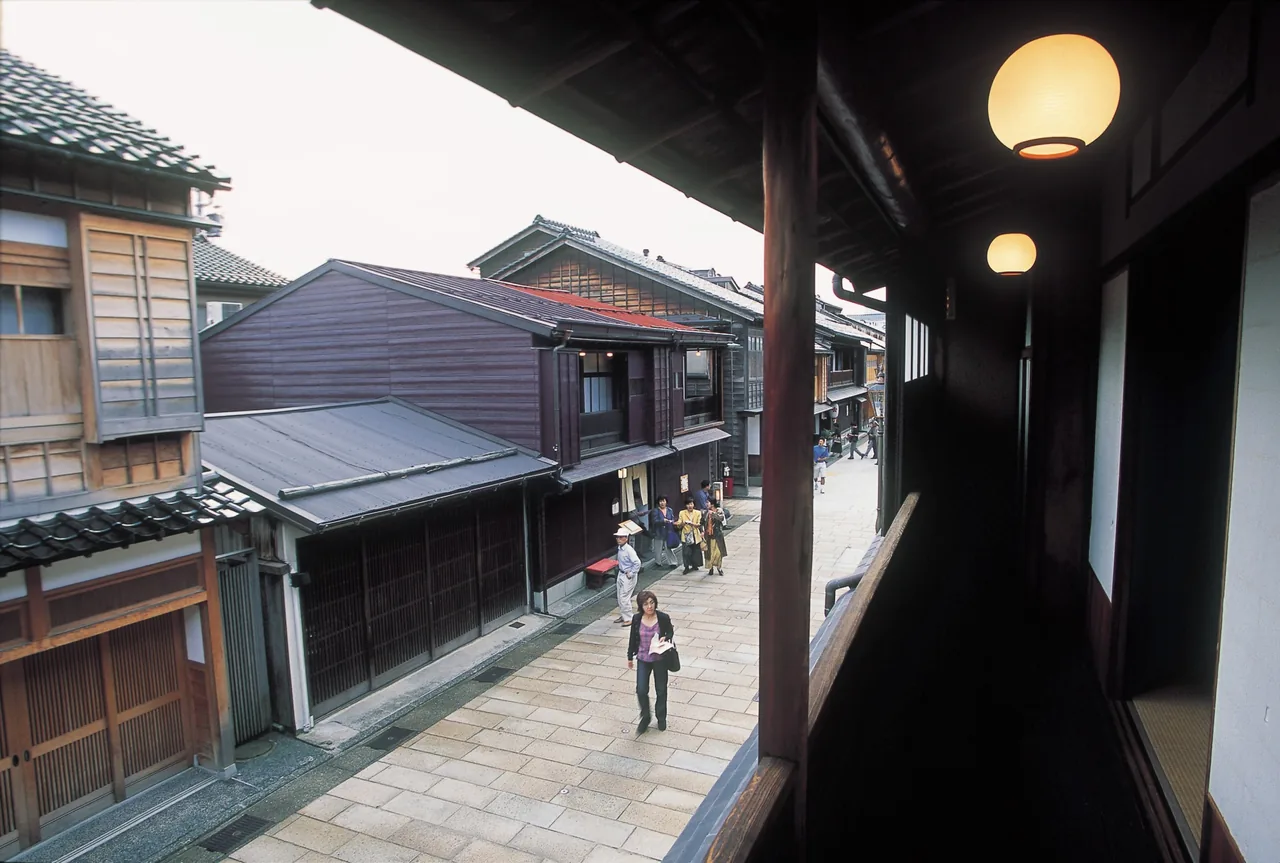
Photo: ©石川県観光連盟
After dark, the street lamps and the lights under the teahouse eaves shine on the paving stones. If you walk the street during the day, come back in the evening and the same street looks quite different.
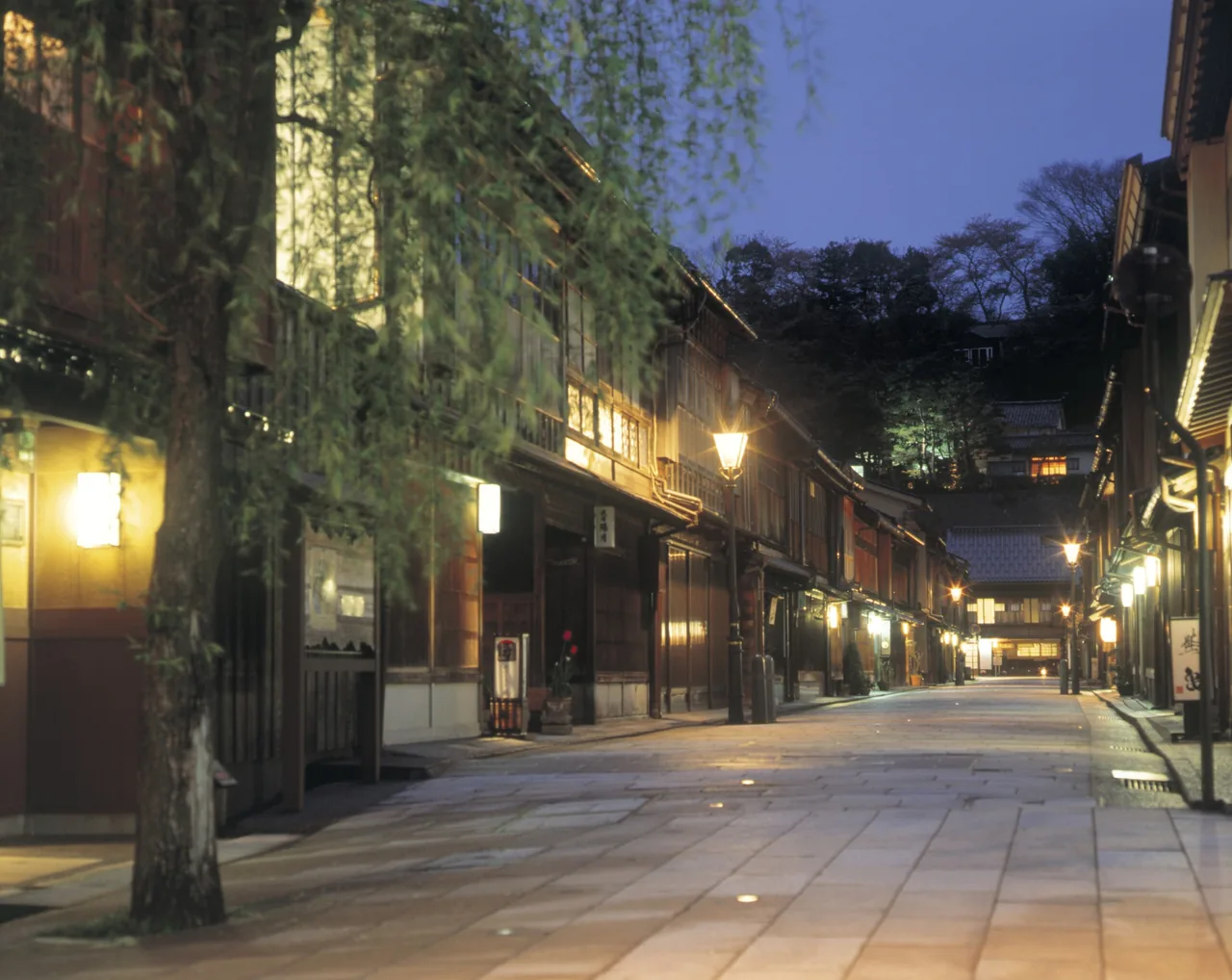
Photo: ©石川県観光連盟
Kazuemachi Chaya District: riverside teahouses and two slopes
Walk from the Higashi Chaya District toward Asano River Ohashi Bridge and cross the river to reach the Kazuemachi Chaya District. Its teahouses stand in a row along the Asano River, and from the opposite bank you can take in the whole townscape beyond the water. The photo at the top of this page shows Kazuemachi on a snowy evening.
One street back from the river are two slopes, Akari-zaka and Kuragari-zaka. They show the back side of the district, quite unlike the row of teahouses facing the river. The slopes are narrow and slippery in rain or snow, so watch your step. In spring, around Asano River Ohashi Bridge, you can see the riverside cherry blossoms together with the teahouses.
Nishi Chaya District and Myoryuji Temple (Ninja-dera)
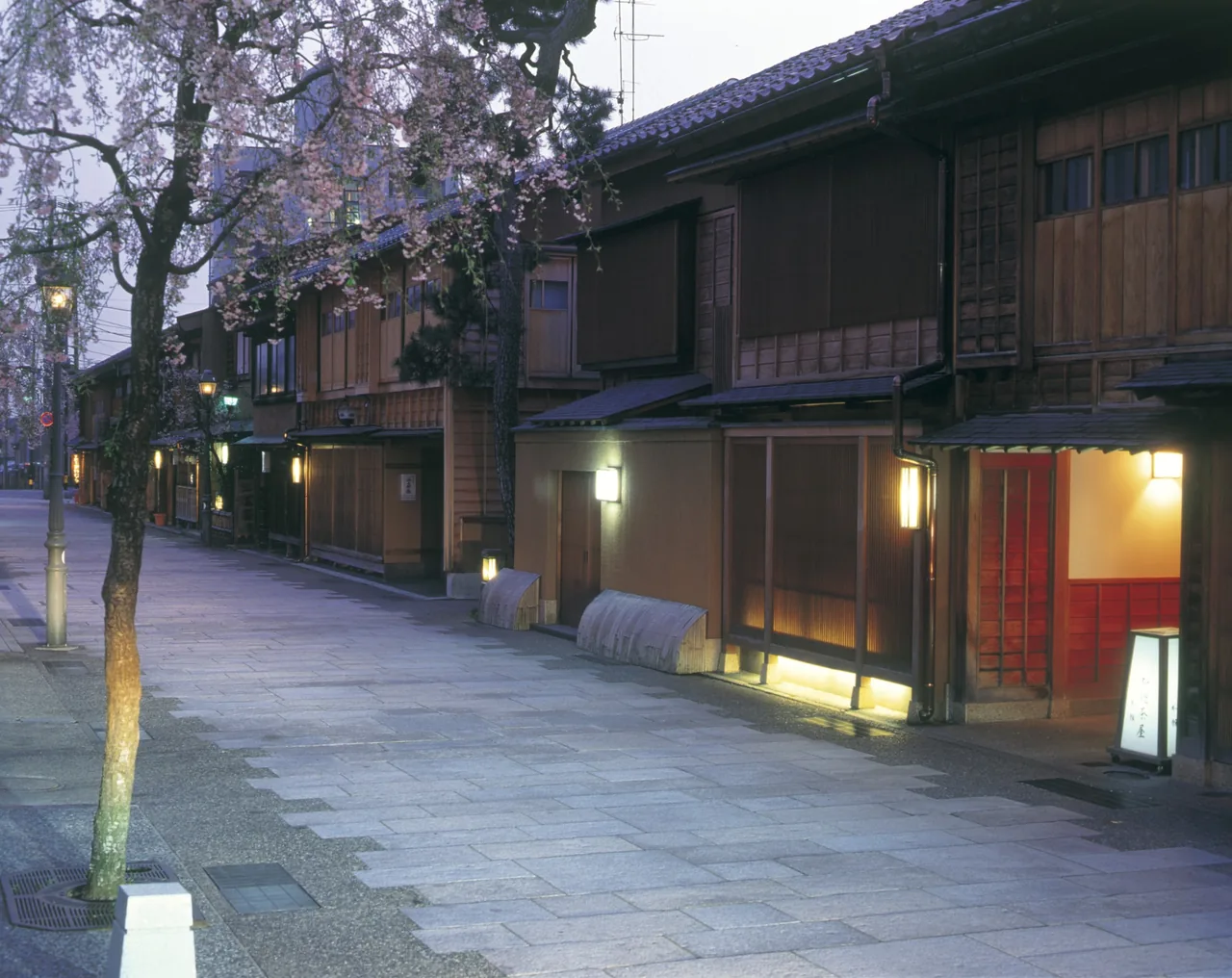
The Nishi Chaya District began in 1820, the same year as the Higashi Chaya District. Wooden teahouses with fine lattices line both sides of its stone-paved street. Even browsing the shops as you go, you can walk around it in about 30 minutes.
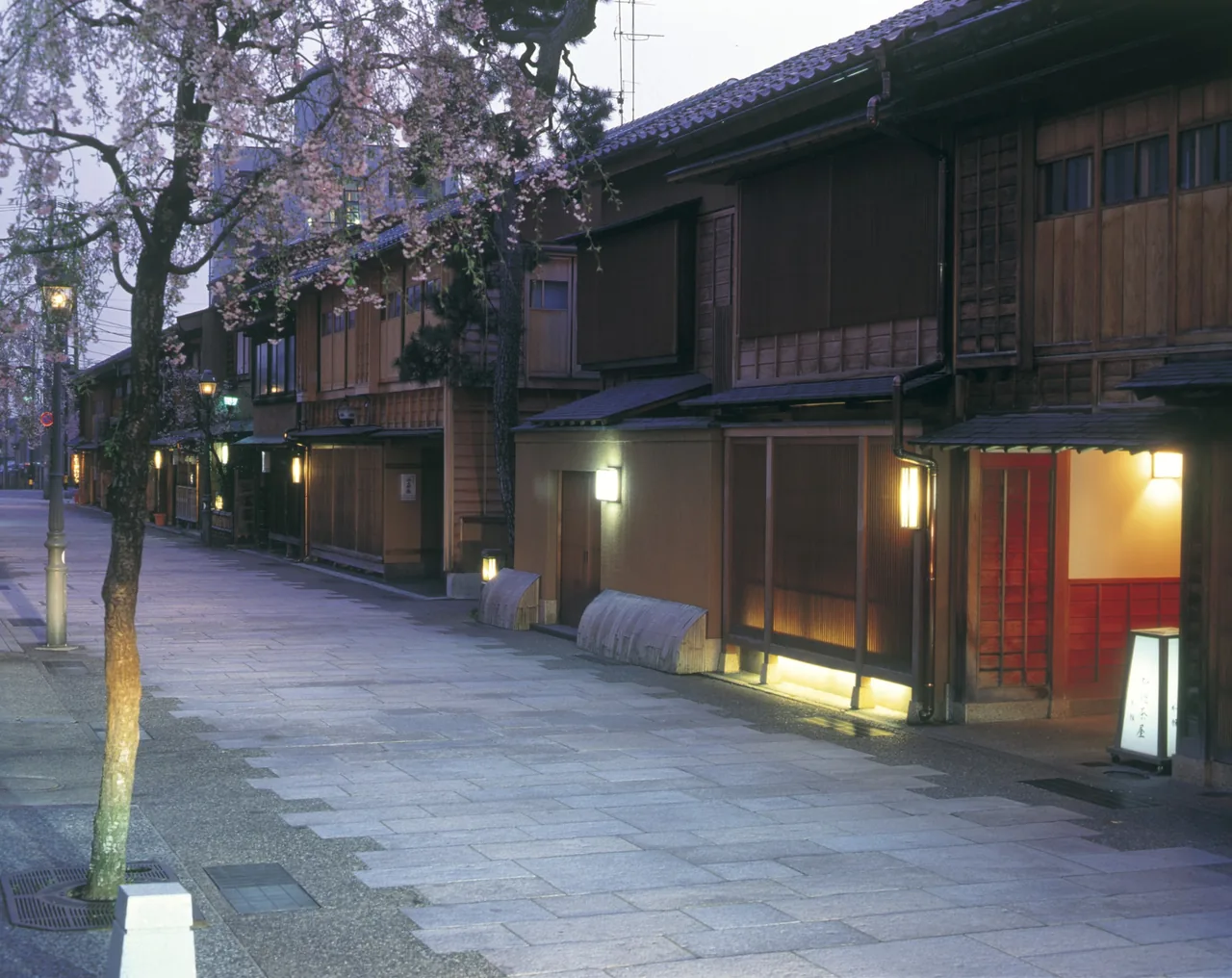
Photo: ©石川県観光連盟
Nearby is Myoryuji Temple, known as Ninja-dera. It was founded in 1643 on the orders of Maeda Toshitsune, the third lord of the Kaga Domain, and a guide leads you through its tricks, such as an offertory box that doubles as a pitfall and a hidden staircase that appears when floorboards are lifted. Visits are guided tours that must be booked in advance by phone. Fix your tour time first and walk the Nishi Chaya District before or after it, and you won't waste time waiting. The nearest bus stop for both is Hirokoji.
Rules for walking the teahouse districts
Keep the following in mind when walking the teahouse districts.
- Inside the preservation district of the Higashi Chaya District, eating and drinking while walking is prohibited. Eat what you buy inside the shop or on its premises.
- Some teahouses along the streets are still in business. Apart from buildings and shops open to visitors, don't open lattice doors or peer inside.
- Stopping in the middle of the street to take photos when it's crowded gets in other people's way. Step to the side to take your shots.
Seeing all three teahouse districts in a day
Combined with the sights around Kanazawa Castle Park and Kenrokuen, the three teahouse districts fit comfortably into one day. From Kanazawa Station, local buses such as the Kanazawa Loop Bus are convenient.
- Morning: Take a bus to Hashiba-cho. Walk the Higashi Chaya District while it's quiet, and visit Shima if it's open
- Late morning: Cross the Asano River to the Kazuemachi Chaya District and walk the riverside street and the slopes
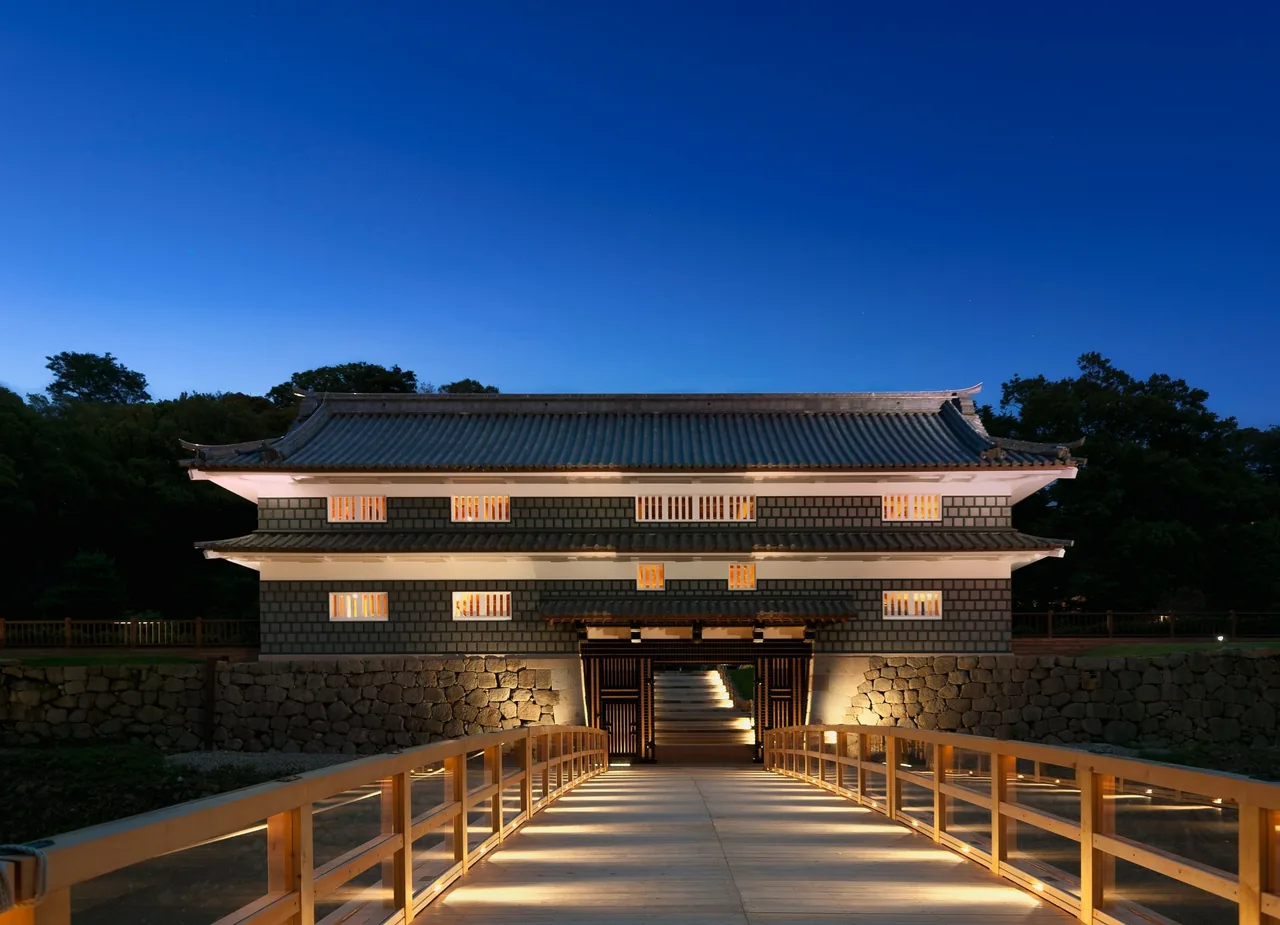
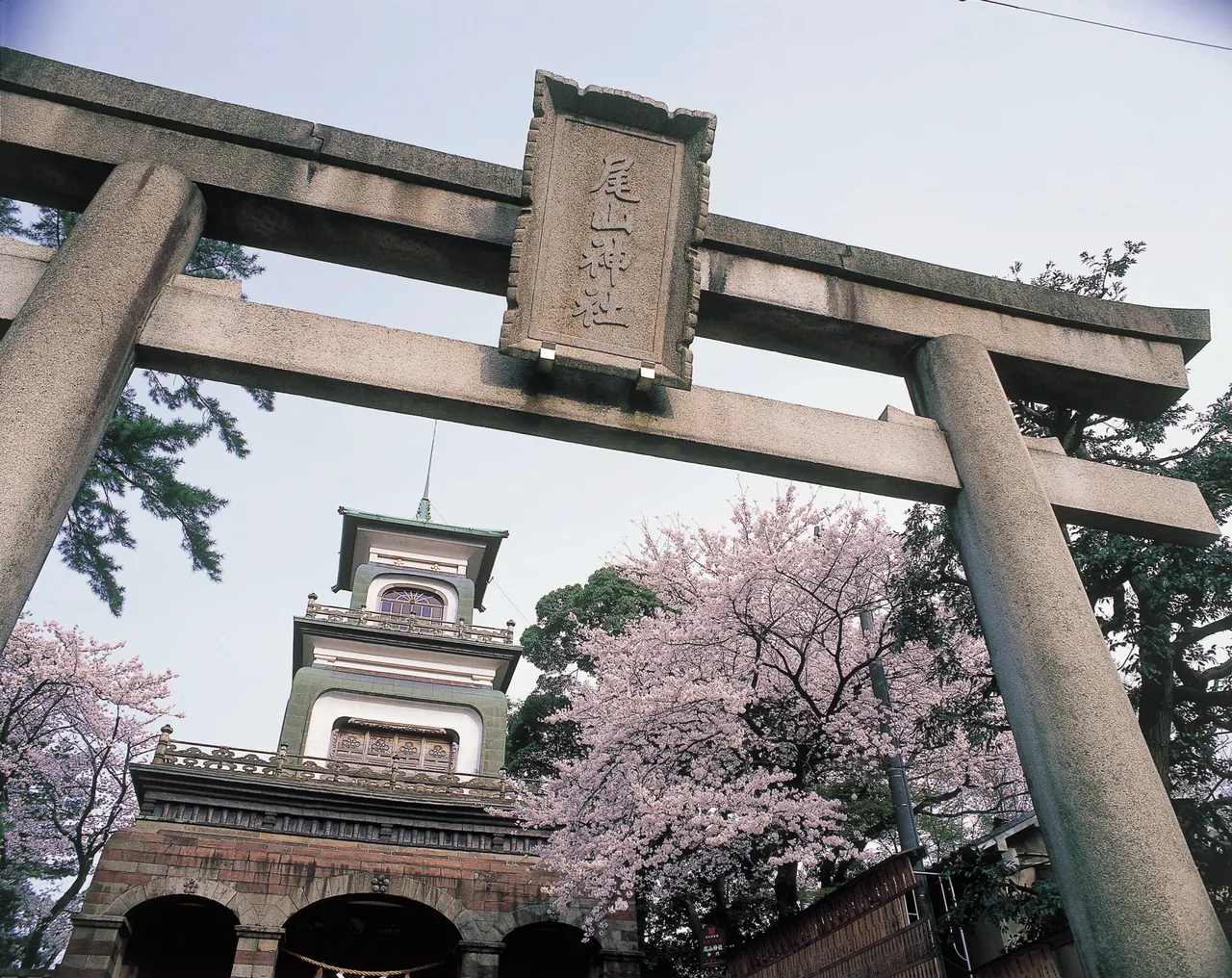
- Midday: Take a bus to Kenrokuen-shita/Kanazawa-jo. Walk around Kanazawa Castle Park, then head from the Nezumitamon Gate side to Oyama Shrine
- Afternoon: Take a bus to Hirokoji. Join your booked tour of Myoryuji Temple and walk the Nishi Chaya District
- Evening: If you have time, go back to the Higashi Chaya or Kazuemachi Chaya District to see the streets as the lights come on
Kanazawa Castle Park and Kenrokuen are right next to each other, so if you add Kenrokuen, allow about two hours for the castle and the garden. Check the Hokuriku Railroad website for bus routes and timetables. For sweets and wagashi around the teahouse districts, see our guide to Kanazawa wagashi.