Kanazawa Wagashi Guide: Seasonal Sweets and Street Food Rules
This guide is translated from the Japanese edition. Read the Japanese edition
Kanazawa wagashi: tea ceremony jonamagashi, wedding and New Year sweets, Doll Festival kinkato, rakugan souvenirs and where to eat in Higashi Chaya and Omicho Market.
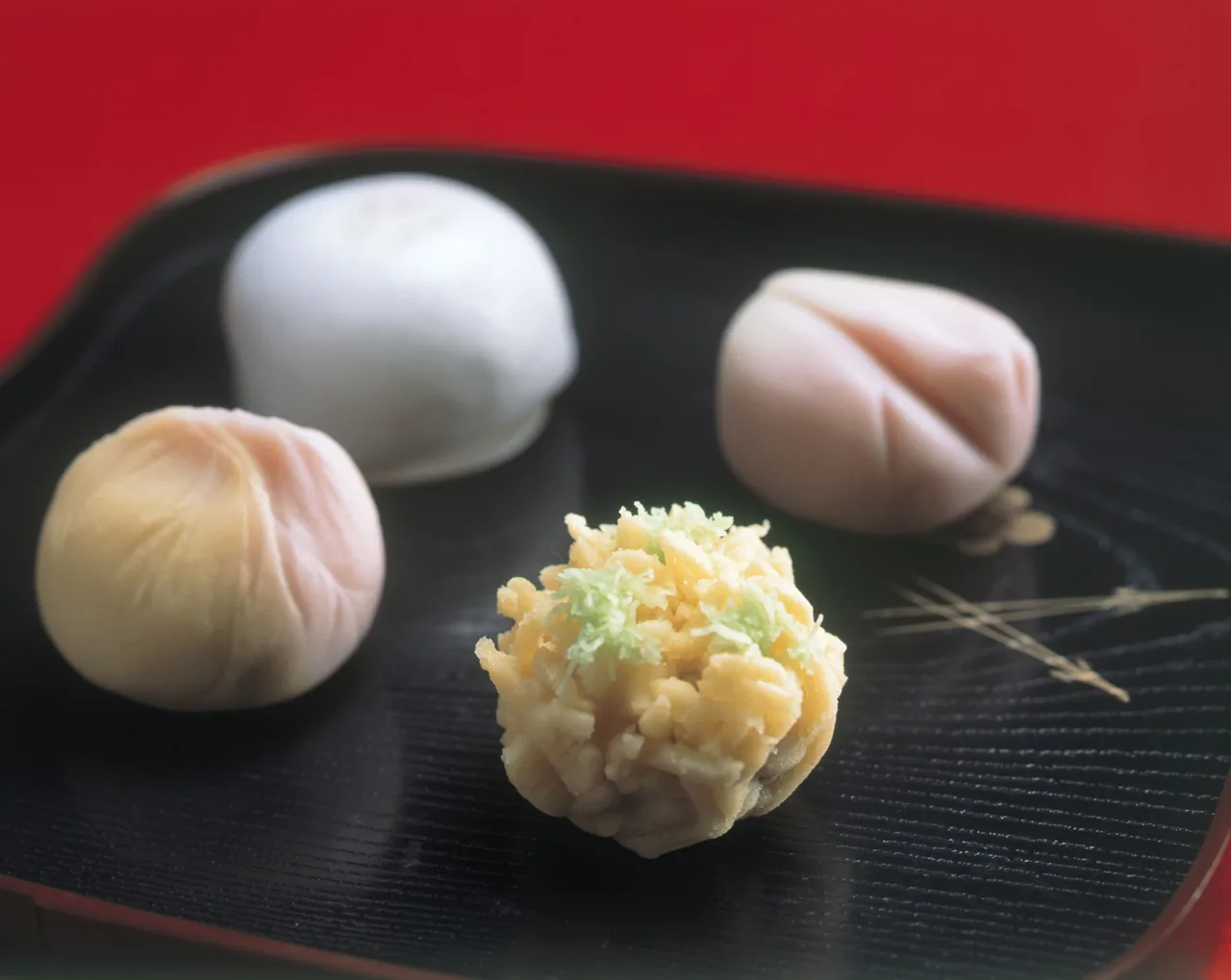
On a black tray sit pale pink and white sweets and a yellow one covered in fine crumbles. Kanazawa is known, along with Kyoto and Matsue, as one of Japan's great cities for wagashi (Japanese sweets). The tea ceremony has flourished here since the days of the Kaga Domain, and wagashi culture grew up with the sweets served at tea gatherings. The city still has many wagashi shops, and particular sweets appear in shop windows for each season and festival. If you're buying sweets in the teahouse districts or the market, it also helps to know the rules about where you can eat.
How the tea ceremony shaped Kanazawa's wagashi
In the Kaga Domain, Maeda Toshiie, the founder of the domain, studied tea under Sen no Rikyu, and the domain later welcomed Senso Soshitsu of the Urasenke school to Kanazawa. Jonamagashi and dry sweets are served at tea gatherings. This tea tradition continues in Kanazawa today, and enjoying wagashi is part of everyday life at home too.
According to the Kanazawa City Tourism Association, in the 2025 Family Income and Expenditure Survey by the Ministry of Internal Affairs and Communications, Kanazawa ranked first in Japan for annual household spending on "other fresh Japanese sweets" (fresh wagashi other than yokan and manju). It shows that wagashi are eaten not only on special occasions but as part of daily life.
Jonamagashi: tea ceremony sweets that reflect the seasons
Jonamagashi are fresh sweets shaped like seasonal flowers and scenery, and they are also served at tea gatherings. Cherry blossoms in spring, autumn leaves in fall: even at the same shop, the shapes and colors change with the season. They're also lovely with a cup of tea in your hotel room or during a break.
Fresh sweets don't keep, so the rule is to eat them the same day. Some shops require reservations for jonamagashi or make them to order. If you have a particular shop in mind, check how to buy in advance. If you'd like to make your own, you can also choose one of the wagashi-making experiences in our guide to Kanazawa craft experiences.
Sweets for special occasions: goshiki namagashi, fukuume and kinkato
Kanazawa has sweets prepared for weddings, the New Year, the Doll Festival and other occasions.
Goshiki namagashi are a set of five kinds of fresh sweets that have long been used for weddings and other celebrations. The five are said to represent the sun, moon, mountains, sea and village, together expressing the natural world. They spread as wedding sweets and had become common among ordinary people by the Meiji era. It is said that the steamer boxes holding the sweets were once placed in front of the house and handed out to neighbors after the ceremony. Today you can buy them at wagashi shops, and they are also given as gifts at celebrations.
Fukuume are red and white monaka (wafer cakes with bean paste) eaten at the New Year. Their plum-blossom shape is said to come from the plum-blossom crest of the Maeda family, lords of the Kaga Domain, and their surface is sprinkled with sugar. They appear in the city's wagashi shops as the year end approaches and are sold through the New Year season. The bean paste is fairly sweet, and both the wafer and the filling are made firmer than an ordinary monaka so they would keep until the New Year. Shapes and flavors vary a little from shop to shop, so comparing them is part of the fun.
Kinkato are sugar sweets offered on the tiered doll display for the Doll Festival (Hinamatsuri). Boiled-down sugar is poured into wooden molds, set and then colored, in shapes such as sea bream, peaches and other fruit. They are hollow inside, and some families break them up for cooking after the display. The name is also written with a different character for "ka" (金華糖).
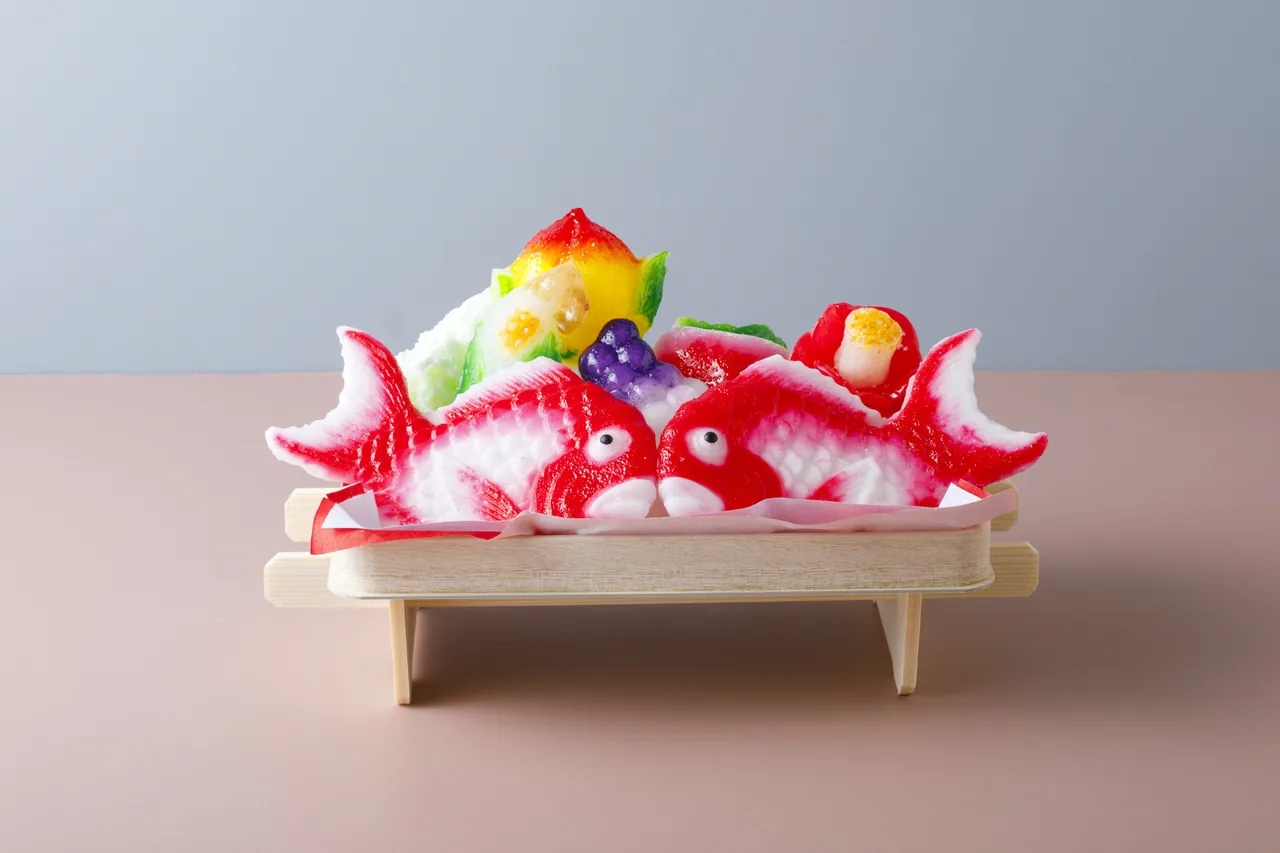
Photo: ©石川県観光連盟
Seasonal sweets are only around for a short time, so count yourself lucky if your trip coincides, and pick some up if you spot them in a shop.
For souvenirs, rakugan and other sweets that keep
For souvenirs, dry or baked sweets that keep are a better choice than fresh ones. Morihachi, which once made sweets for the Kaga Domain, is known for its rakugan called Choseiden. Rakugan is a dry sweet made by packing powder and sugar into wooden molds and tapping it out, and it is also served at tea gatherings.
There are also wagashi shops inside Kanazawa Station and its station building, so you can buy some before your train home. If you want to take fresh sweets as souvenirs, check the best-before date and how long you'll be carrying them with the shop before you choose.
Eating rules: Higashi Chaya District and Omicho Market
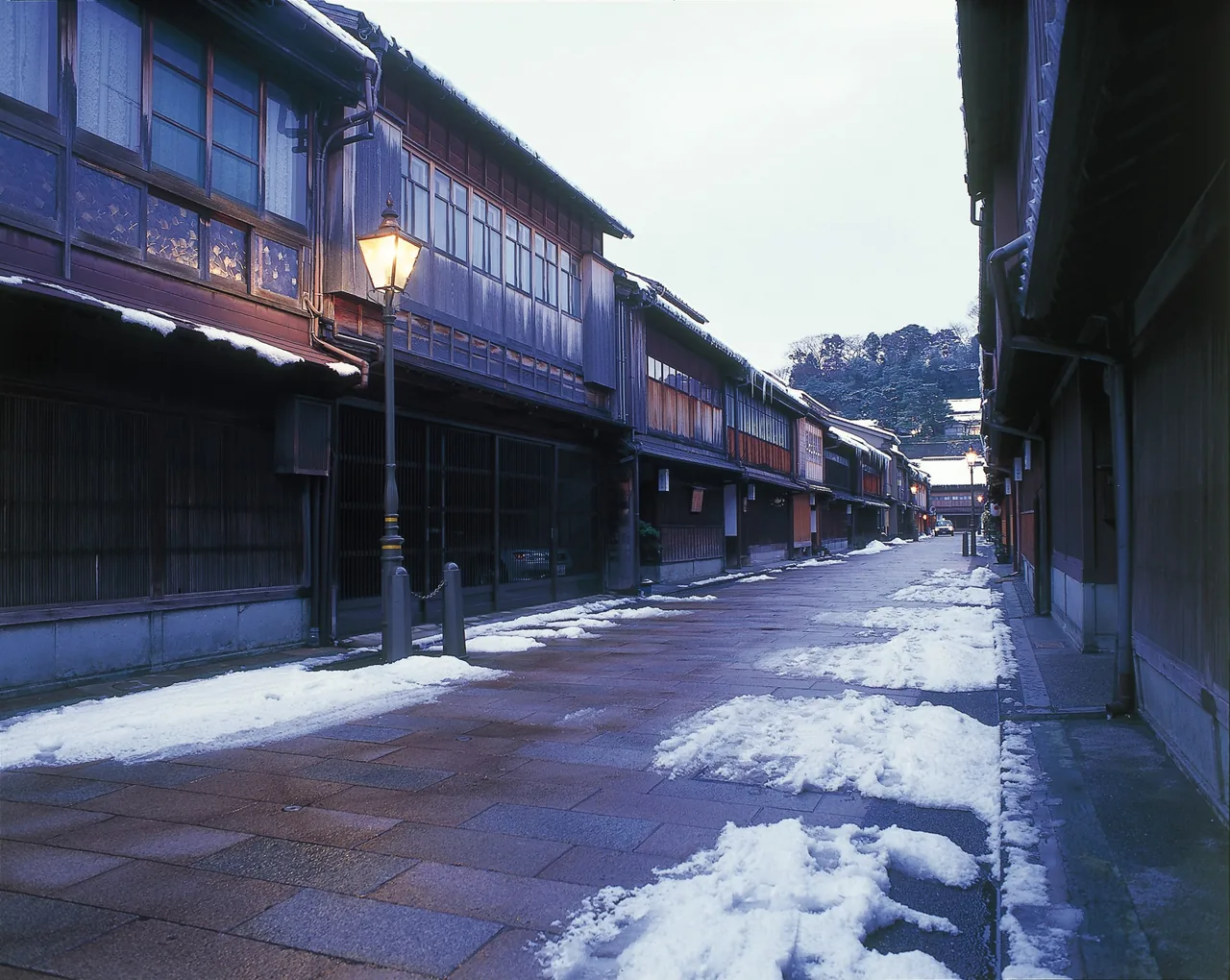
In the Higashi Chaya District, home to many wagashi shops and sweet cafés, eating and drinking while walking is prohibited inside the preservation district to protect the streetscape. Eat what you buy at the shop's eat-in space or on its premises. Some shops serve their gold-leaf-topped soft-serve ice cream to eat inside, too.
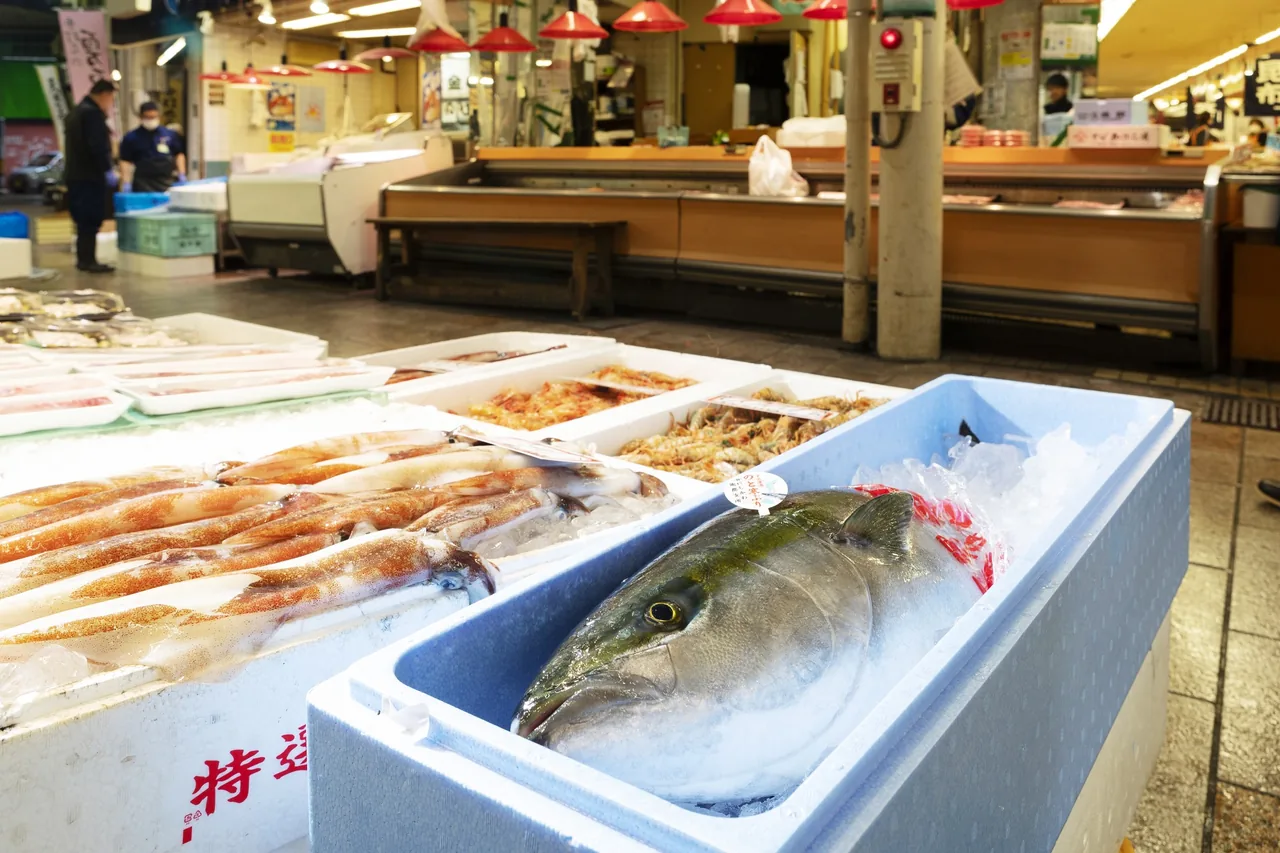
Omicho Market also prohibits eating and drinking while walking around the market. Eat what you buy at the stall or in a designated eating space. The aisles, lined with about 170 shops, get very crowded at some times of day, and eating at the stall or in the eating space keeps them clear.
If you're not sure where to eat, ask the shop staff before you buy.
Planning a wagashi walk
Omicho Market is about a 15-minute walk from Kanazawa Station. Go on from the market to the Higashi Chaya District and you can take in the market stalls and the teahouse district's wagashi shops and sweet cafés in a single day. For how to walk the teahouse districts, see our guide to Kanazawa's chaya districts. Before you go, check each shop's website or notices to see whether seasonal jonamagashi or festival sweets are on sale.