Kosaka, Akita: Korakukan Theater, Mine Office and Rail Park
This guide is translated from the Japanese edition. Read the Japanese edition
Kosaka, Akita's old mining town: the Meiji-era Korakukan theater, the Kosaka Mine Office's spiral staircase, a rail park at the old station and a local winery.
On the northeastern edge of Akita Prefecture, bordering Aomori, the town of Kosaka grew up alongside its mine. A white Western-style mine office, a Meiji-era playhouse and the station of the railway that carried the ore still stand within walking distance of each other. Follow the mine's history, sit on a floor cushion in the old theater, ride a rail bike along the tracks, and finish at the town's winery.
Kosaka Mine, Japan's Top Silver Producer, and Meiji Hyakunen-dori
Development of the Kosaka Mine began in 1816, and in 1901 (Meiji 34) it led Japan in silver production. From the Meiji into the Taisho era it was also the country's top mine by value of output, and as the mine prospered, Kosaka is said to have become the second-largest town in the prefecture after Akita City in the late Meiji period.
Buildings from that era are gathered and preserved along Meiji Hyakunen-dori ("Meiji Centennial Street"). Modern buildings tied to the mine, brick sidewalks and streetlights have been arranged to evoke the Meiji period. Both the Korakukan and the Kosaka Mine Office stand on this street, and you can walk between them.
Former Kosaka Mine Office: A White Western Building with a Spiral Staircase
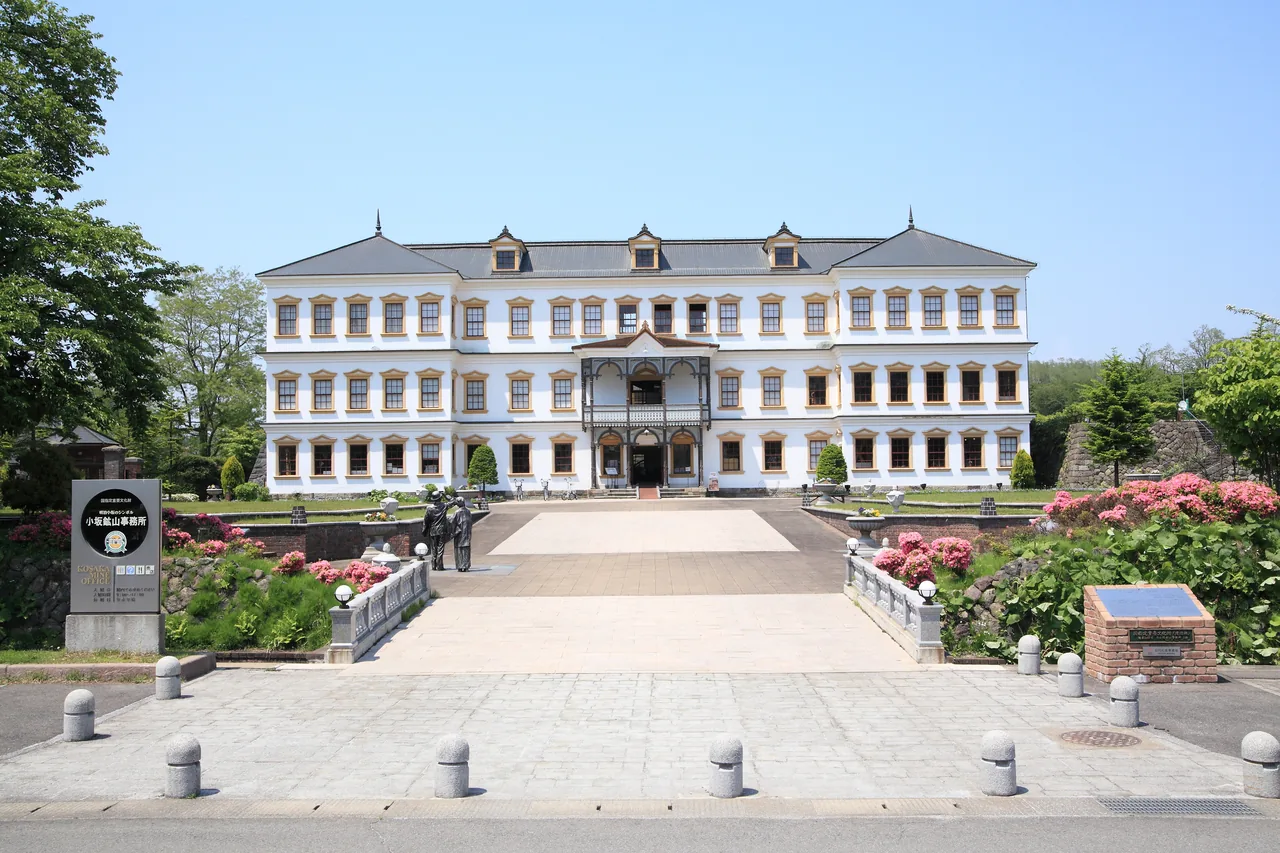
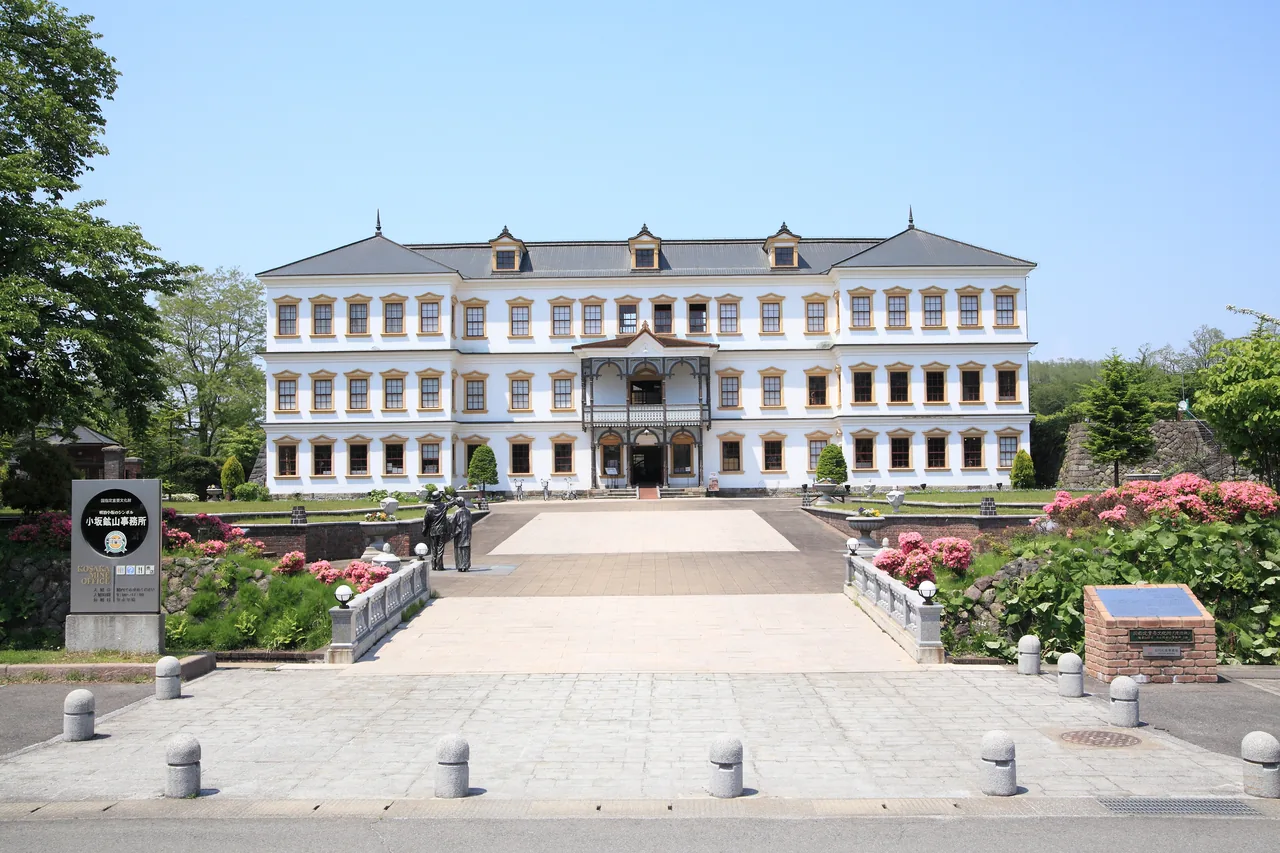
The Former Kosaka Mine Office is a three-story wooden Western-style building put up in 1905 (Meiji 38) as the mine's headquarters. Yellow window frames line its white walls, and a decorated balcony projects from the front. It was designated a national Important Cultural Property in 2002 and is now open to visitors.
The highlight is the wooden spiral staircase that rises from the entrance hall to the third floor. The handrail climbs in circles, and from below the curves appear to overlap layer upon layer.
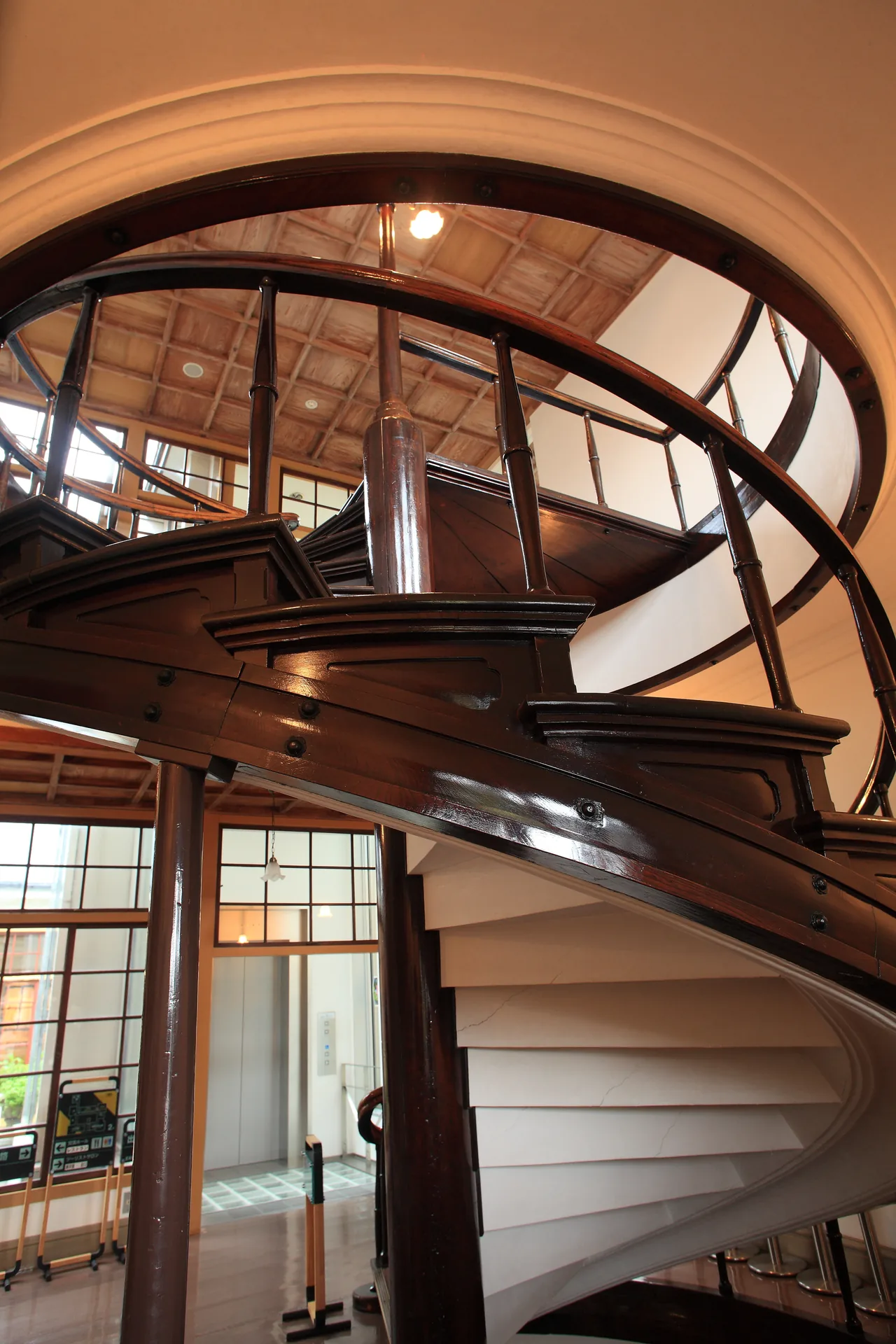
Photo: Akita Prefecture
Inside, there is also an exhibit that recreates with figures a Christmas held in Kosaka by Kurt Netto, a German mining engineer invited by the Meiji government who came to the Kosaka Mine in the early Meiji period. Kosaka is said to be "the birthplace of modern Christmas" in Japan, and a Christmas market is held here in winter.
Korakukan: Sitting on a Cushion in a Meiji-Era Playhouse
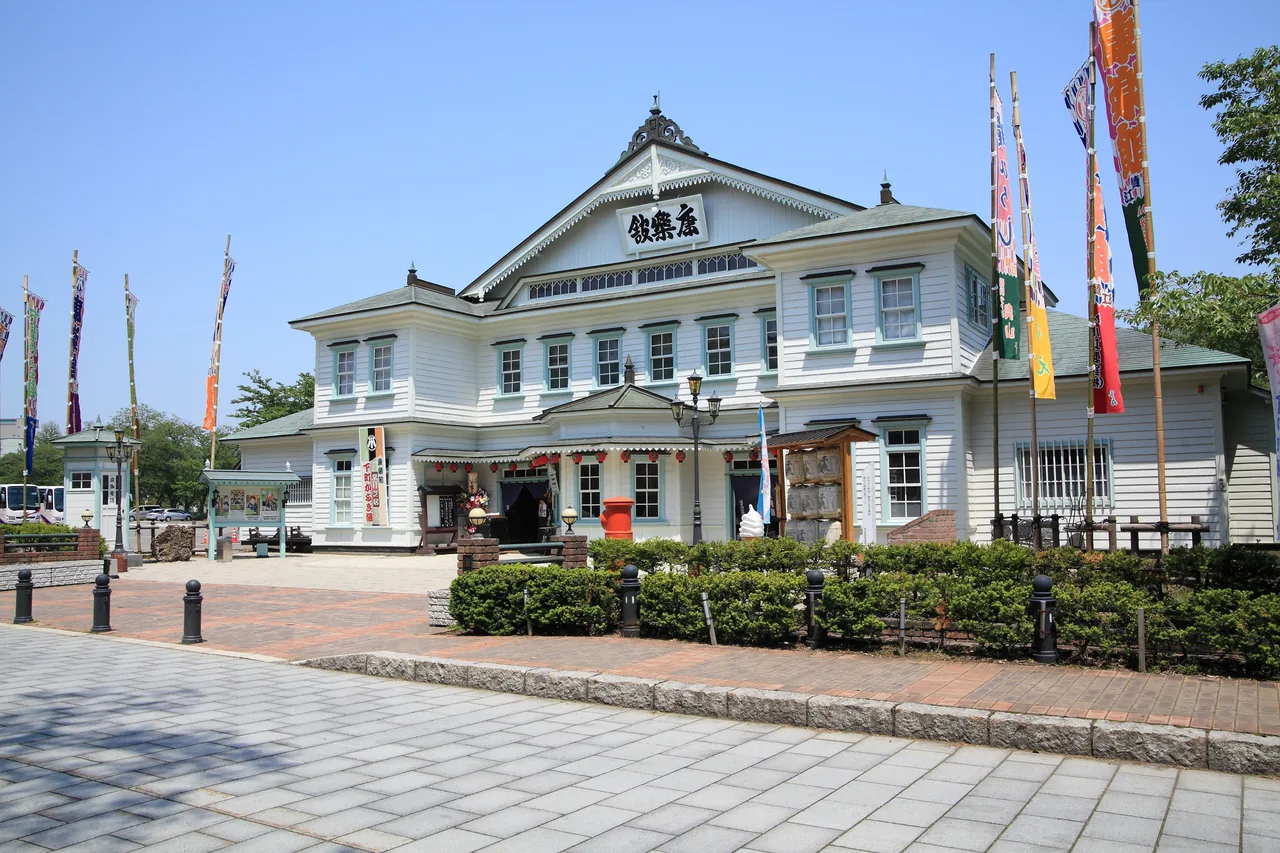
The Korakukan Theatre is a playhouse built in 1910 (Meiji 43) for the entertainment of the miners and their families. Outside it is Western-style with white clapboard; inside it is a Japanese theater with raised box seats, a hanamichi walkway and a revolving stage, and it is a national Important Cultural Property. It was also a playhouse whose lights were powered by electricity from the Kosaka Mine's own hydroelectric plant.
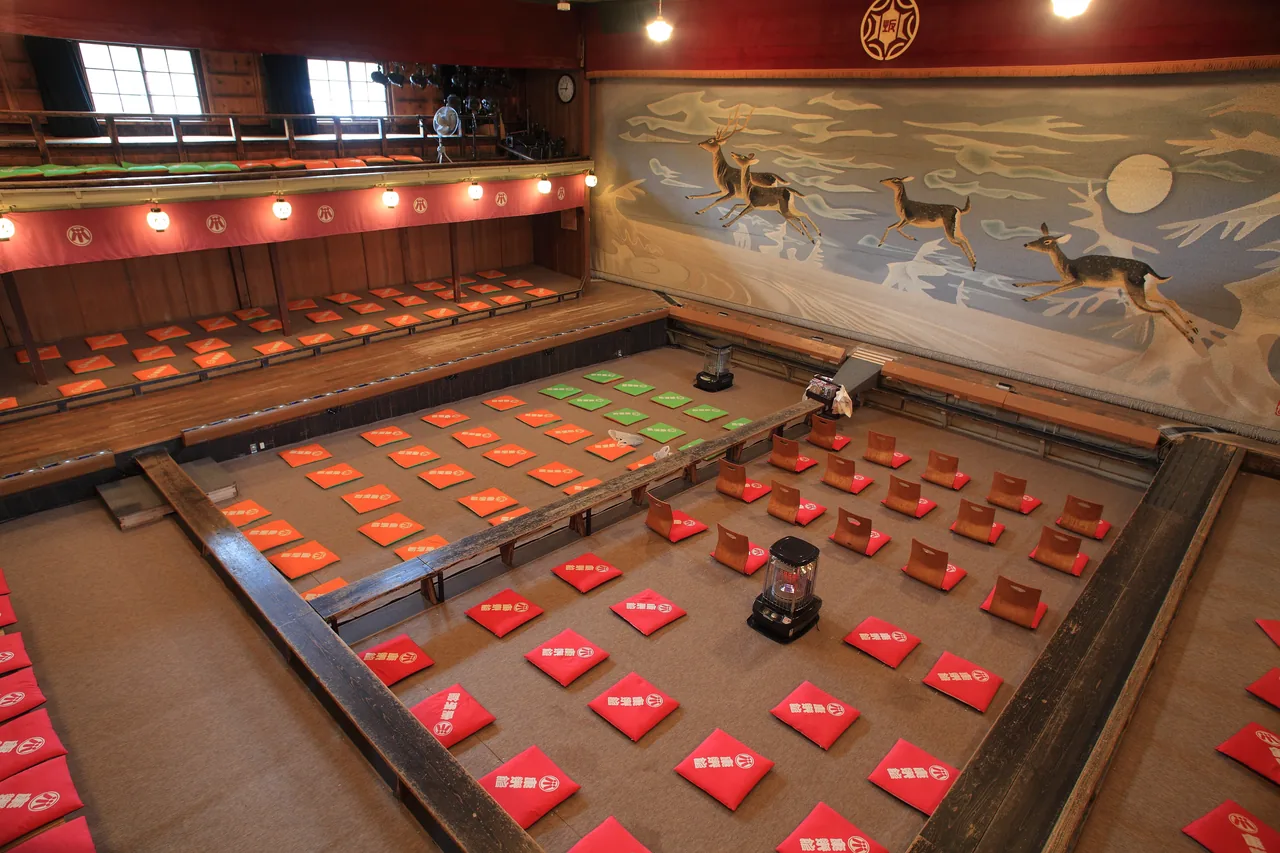
Photo: Akita Prefecture
It is still a working theater with regular performances, and it is also known for hosting Shochiku Grand Kabuki in summer. On days without special performances, guided tours take you backstage and into the dressing rooms. Down in the naraku below the stage, you can see how four people turn the 9.73 m revolving stage by pushing four wooden poles, and how two people work the suppon trapdoor by hand to lift actors up from under the hanamichi. On the dressing-room walls, graffiti left by actors who performed here in their youth still remains. Check the performance schedule and tour information on the website of the operator, Kosaka Machizukuri Co..
Kosaka Railroad Rail Park: Riding the Tracks of the Old Kosaka Station
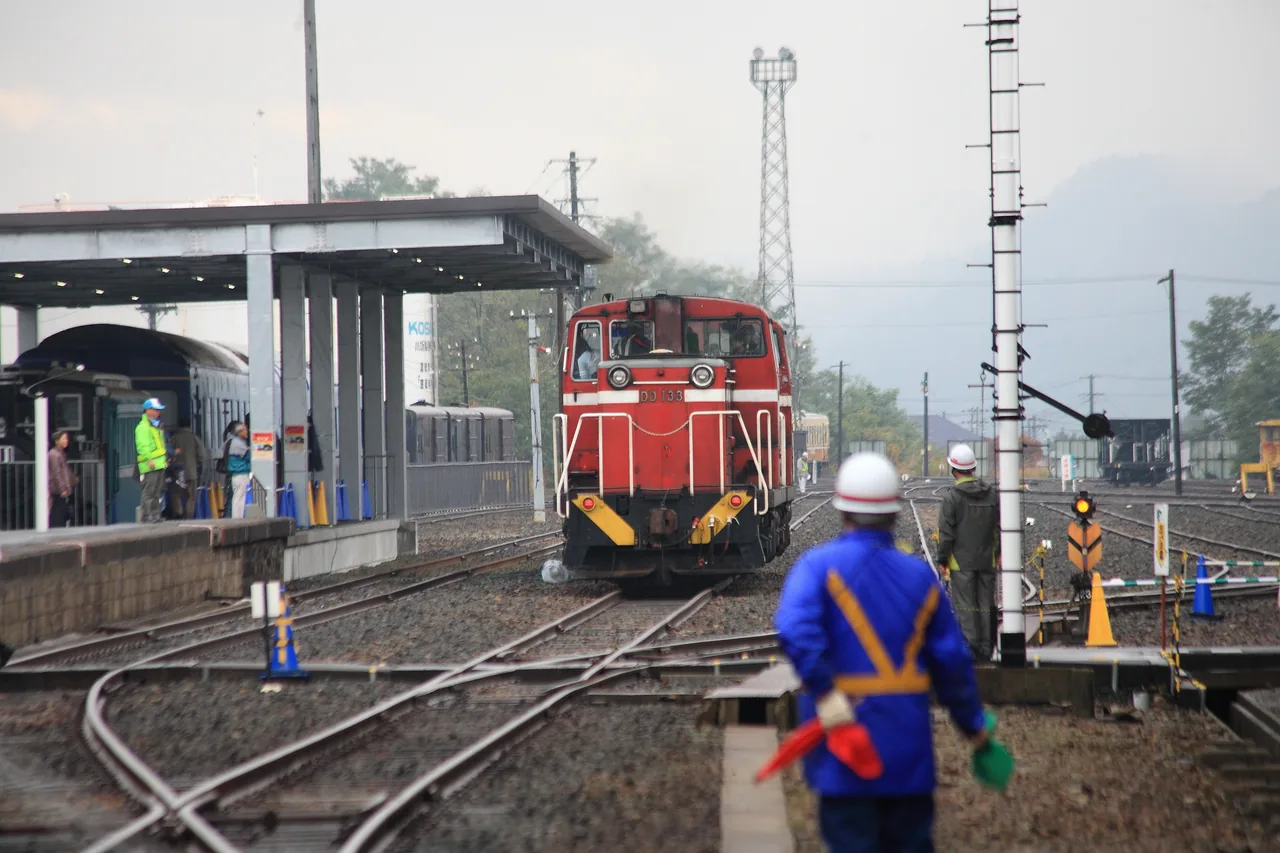
The Kosaka Railroad Rail Park makes use of the yard of the old Kosaka Station on the Kosaka Railway, which carried ore and freight. The station building, platform, tracks and locomotives remain as they were.
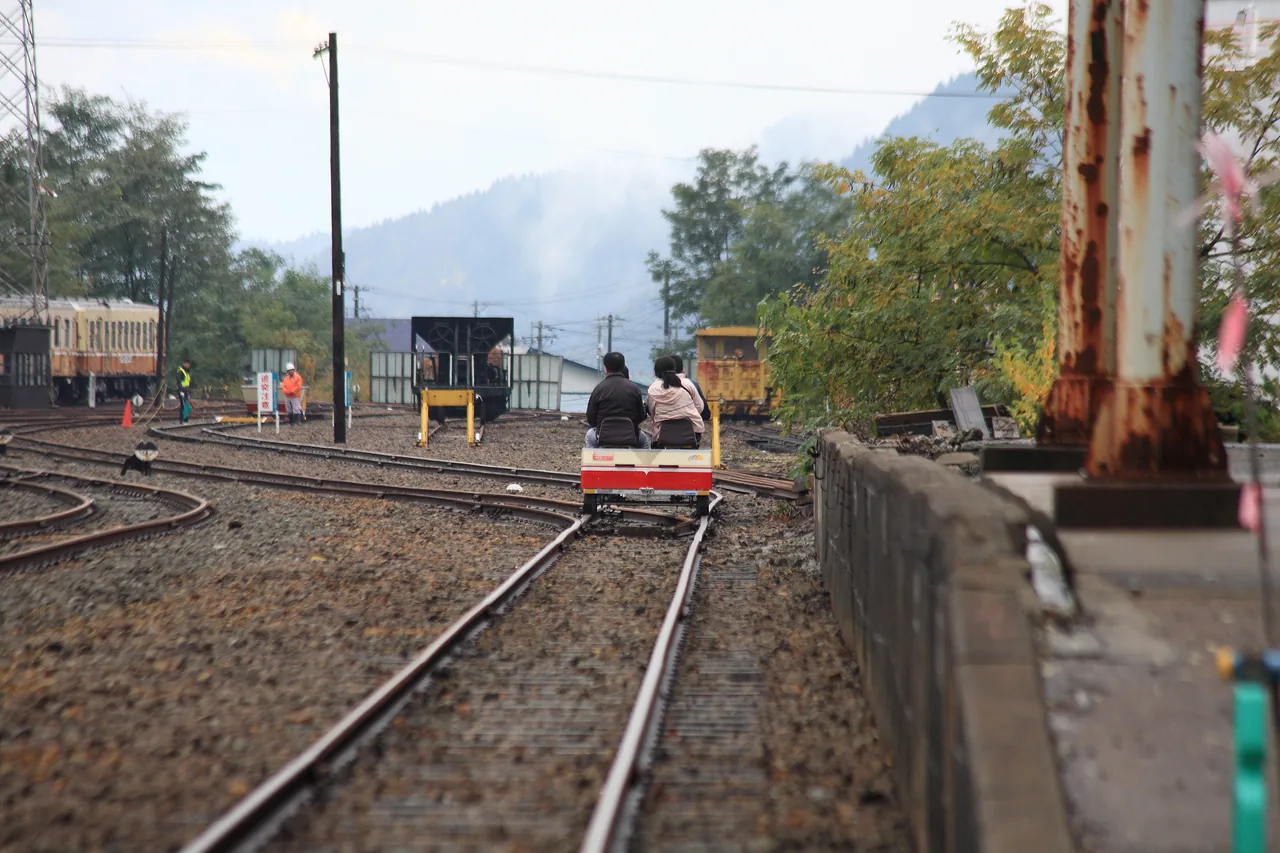
Photo: Akita Prefecture
You can pedal along the tracks on a rail bike or try driving a diesel locomotive, putting you on the operating side of a real railway. The locomotive-driving experience has conditions such as age limits. Carriages from the sleeper express Akebono have become accommodation, and you can stay in the berths with a reservation. The park closes for part of the winter, so check opening days and activities on the official website.
Kosaka Nanataki Winery: Wines from Wild-Grape Varieties
The mining town's newer specialty is the Kosaka Nanataki Winery, which opened in October 2017. It makes wine from local varieties related to the yamabudo (Japanese wild grape), and in spring 2022 a cellar door for tasting and shopping opened next to it. Tours of the winery and vineyards are by advance reservation.
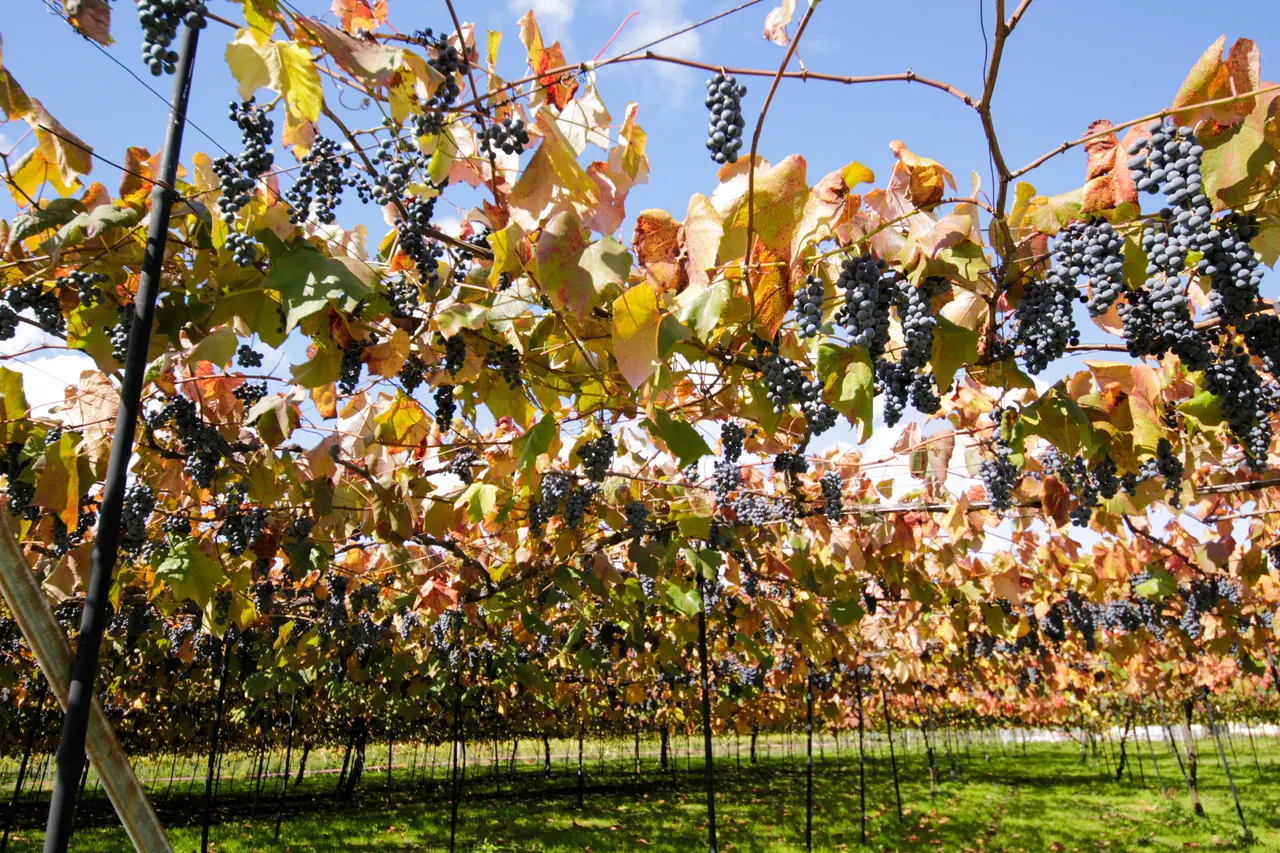
Photo: Akita Prefecture
The winery is away from the town center, about 15 minutes by car from Kosaka IC on the Tohoku Expressway. If you plan to drink, decide on a designated driver or take a taxi.
Getting There and Getting Around
For the Korakukan and the Kosaka Mine Office, take a Shuhoku Bus from Towada-Minami Station on the JR Hanawa Line or Odate Station on the JR Ou Line and get off at Korakukan-mae. For the Kosaka Railroad Rail Park, take a local bus from Towada-Minami Station, about 25 minutes. From Odate Station, take a local bus to Kosaka Shogakko-mae and walk about 2 minutes. By car it is about 3 minutes from Kosaka IC on the Tohoku Expressway.
Buses are not frequent, so check the times with Shuhoku Bus in advance. To see the mine office, the Korakukan and the rail park, allow about half a day so you can take your time. If you want to watch a performance at the Korakukan, plan around the show times. The rail park closes in winter, so spring to autumn is best if you want to see everything.
Next door to Kosaka, Kazuno City is home to the World Heritage Oyu Stone Circles. If you want to combine them, see our Akita Jomon sites feature.