
Kyoto City Bus and Subway Guide: How to Ride, Crowds, Day Passes
This guide is translated from the Japanese edition. Read the Japanese edition
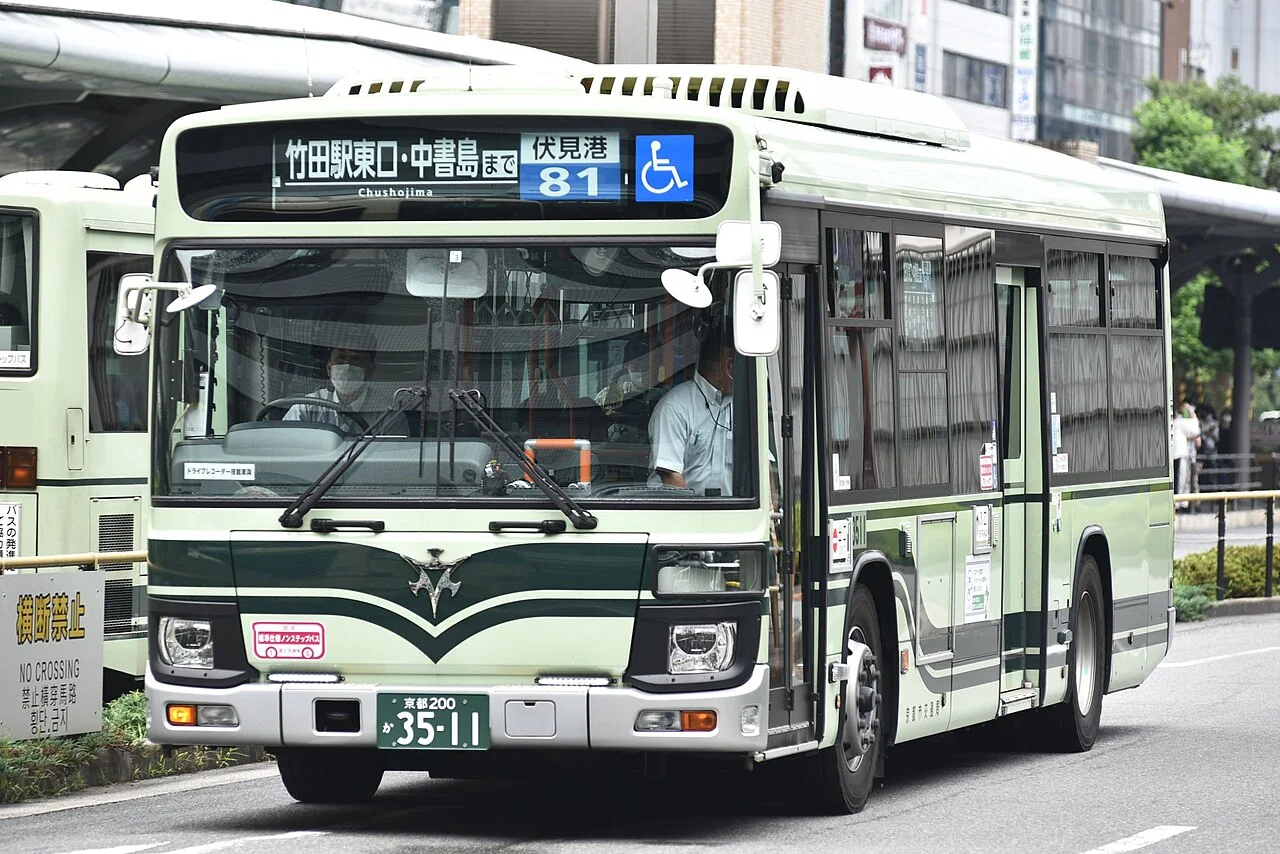
Kyoto city buses are boarded at the rear and paid for at the front as you get off. IC cards, the Karasuma and Tozai subway lines, the train-first route, and day passes.
Step out of the Karasuma Exit at Kyoto Station and the city bus terminal spreads out in front of you, with buses to different destinations leaving from each stop. Most of Kyoto's temples and shrines are some distance from a station, so city buses and the subway do most of the work of getting around. Kyoto's buses, though, work differently from those in other Japanese cities, and in peak sightseeing seasons they can be too full to board. Even the doors vary: most city buses are boarded at the rear and paid for on the way out, but the Sightseeing Limited Express buses linking Kyoto Station with Kiyomizu-dera, Gion and Ginkaku-ji are boarded at the front, and you pay as you get on.
Riding a city bus: board at the back, pay and exit at the front
According to the Kyoto City Transportation Bureau, city buses are driver-only, and on most routes you board through the rear door and get off through the front door. You pay the fare as you leave, at the fare box next to the driver.
- Board through the rear door. On buses with a numbered-ticket dispenser (seiriken buses), take a ticket if you are paying cash; if you are using an IC card, tap it on the reader by the door
- Press the stop button as your stop approaches
- Wait until the bus has fully stopped before getting up and moving to the front door
- Pay cash into the fare box, or tap your IC card on the reader, and get off
Inside the central "flat-fare zone," the fare is the same however far you ride. On routes that run beyond the zone, the fare depends on where you got on and off. Check it against your ticket number on the fare display inside the bus.
Pay with coins or a 1,000-yen bill, which you can change on board. 2,000-, 5,000- and 10,000-yen bills can't be used, so break them before you board.
Nationwide transit IC cards such as ICOCA, Suica, PASMO and PiTaPa all work. If you already carry a Suica from another city on your trip, just bring it along and you won't have to count out coins.
There are exceptions. The Sightseeing Limited Express buses, which link Kyoto Station with Kiyomizu-dera Temple, Gion and Ginkaku-ji Temple, are boarded at the front door, paid for on boarding and exited at the rear. Check the operating days and fare on the official website. A quick look at the signs on the bus and at the stop before you board will keep you from getting confused.
- How to ride a city bus (Kyoto City Transportation Bureau, Japanese)
- How to take the bus (Kyoto City Bus & Subway Information Guide, Japanese)
- Sightseeing Limited Express Bus (Kyoto City Bus & Subway Information Guide, Japanese)
Riding the subway: the north-south Karasuma Line and the east-west Tozai Line
The Kyoto Municipal Subway has just two lines, so it is easy to learn. The Karasuma Line runs north to south through the city via Kyoto Station, while the Tozai Line runs east to west past areas such as Nijojo-mae and Sanjo Keihan. Karasuma Line station numbers start with K, and Tozai Line numbers with T.
| Line | Direction | End stations | Good to know |
|---|---|---|---|
| Karasuma Line | North-south | Kokusaikaikan to Takeda | Stops include Kyoto, Shijo, Karasuma Oike, Imadegawa and Kitaoji. Some trains run through onto the Kintetsu Line as far as Kintetsu-Nara |
| Tozai Line | East-west | Rokujizo to Uzumasa Tenjingawa | Stops include Nijojo-mae, Sanjo Keihan and Keage. Keihan Keishin Line trains also run between Misasagi and Uzumasa Tenjingawa |
The two lines meet at Karasuma Oike Station, where you can change without leaving the ticket gates. Colored arrows on the floor mark the transfer routes.
Riding is the same as on other Japanese subways: with an IC card, simply tap the reader on the automatic gate. Tickets are sold at ticket machines. If your IC card balance is too low, the gate won't let you through, so top it up at a ticket machine.
- How to take the subway (Kyoto City Bus & Subway Information Guide, Japanese)
- Changing between the Karasuma and Tozai lines at Karasuma Oike Station (Kyoto City Bus & Subway Information Guide, Japanese)
Train first, short bus ride: the approach Kyoto City recommends
Search a route planner from Kyoto Station to a sightseeing spot and a single city bus often comes up as the fastest option. Even so, the Kyoto City Transportation Bureau recommends taking a train or the subway, which run to a predictable schedule, to a station near your destination and then switching to a bus. The shorter the bus leg, the less traffic and full buses affect you.
Here are some example combinations. Route numbers can change, so check which route and stop to use in the official route planner "Arukumachi Kyoto" before you set out.
| Destination | First, by train | Then by bus |
|---|---|---|
| Kinkaku-ji Temple | Karasuma Line to Kitaoji Station | City bus from Kitaoji Bus Terminal to "Kinkakuji-michi" |
| Kiyomizu-dera Temple | Karasuma Line to Kujo Station (one stop from Kyoto Station) | City bus from a stop near Kujo Station to "Gojo-zaka" (check the route in the official route planner) |
| Ginkaku-ji Temple | Karasuma Line to Imadegawa Station | City bus from a stop near Imadegawa Station toward Ginkaku-ji (check the route in the official route planner) |
Some areas, such as Arashiyama, can be explored on foot from a train station. For getting there, see our Arashiyama day trip guide.
At the bus stops in front of Kyoto Station and at stops near major sights, multilingual "Omotenashi Concierge" staff are on hand to help. If you're unsure which train and bus to combine, just ask them.
- To Kyoto's sights, train first, then bus: faster and more comfortable (Kyoto City Transportation Bureau, Japanese)
- Getting around by bus (Kyoto City Official Travel Guide, Japanese)
When and where city buses get crowded, and how to avoid it
According to Kyoto City's tourism site, city buses are at their busiest during the cherry blossom season in spring, the autumn leaf season, and the commuter rush hours. The Kyoto City Transportation Bureau runs extra services and other crowd measures for the spring and autumn sightseeing seasons and Golden Week.
The buses that fill up most easily are those running directly from Kyoto Station to popular sights such as Kinkaku-ji and Kiyomizu-dera. They run frequently, but they get crowded, and traffic can make them late or bunch several together.
- Travel by subway or train to somewhere near your destination, and keep the bus part short
- Avoid planning long bus rides during commuter hours
- Leave large luggage at your hotel, in a coin locker, or with a luggage storage or delivery service
On luggage, Kyoto City encourages "hands-free sightseeing." Suitcases take up space on the bus and slow down boarding and getting off. If you have luggage with you, consider the subway or other rail lines instead.
For more on the crowds in autumn, see Tips for enjoying Kyoto's autumn leaves without the crowds.
The Subway and Bus 1-Day Pass and other tickets
On days when you will hop on and off a lot, an unlimited-ride pass is an option. The Kyoto City Transportation Bureau offers three main passes. The old bus-only "Bus 1-Day Pass" is no longer sold.
| Pass | What it covers | Features |
|---|---|---|
| Subway and Bus 1-Day Pass | All Kyoto Municipal Subway lines, all city bus routes, and Kyoto Bus, Keihan Bus and JR Bus (some routes excluded) | A card for unlimited rides for one day. Covers almost the whole city with a single pass |
| Subway and Bus IC24H Ticket | Kyoto Municipal Subway, city buses, Kyoto Bus (some routes excluded) and JR Bus (flat-fare routes) | Used with an IC card. Rather than running by calendar day, it covers a set period from the date and time you choose. Keihan Bus is not included |
| Subway 1-Day Pass | All Kyoto Municipal Subway lines | Unlimited subway rides for one day |
Prices, where to buy, and the fine print on coverage can change, so check the official website before you use one. Some passes also get you discounts or other perks at sightseeing spots when you show them.
Kyoto City also plans to introduce a "resident priority fare" that would set different city bus fares for Kyoto residents and everyone else. Depending on when you travel, fares may have changed, so check the latest information before you set off.
- Value tickets and passes (Kyoto City Transportation Bureau, Japanese)
- Subway and Bus 1-Day Pass (Kyoto City Transportation Bureau, Japanese)
- Launch of the Subway and Bus IC 24H Ticket (Kyoto City Transportation Bureau, Japanese)
- Overview of the city bus resident priority fare (Kyoto City Transportation Bureau, Japanese)
Planning routes with Arukumachi Kyoto, and where to find timetables
The route planner recommended by the Kyoto City Transportation Bureau is "Arukumachi Kyoto." It comes as a smartphone app and a web version, and besides city buses and the subway it searches routes and arrival times for other bus and rail companies operating in Kyoto. For city buses it uses GPS data to predict arrivals, so you get a sense of how long you'll wait at the stop. It also shows walking directions to and from stations and bus stops on a map.
Timetables are available on "Hyper City Bus Dia" and the Kyoto Municipal Subway timetable. The Kyoto City Bus & Subway Information Guide is also available in English and other languages.
- Arukumachi Kyoto bus and rail route planner (Kyoto City Transportation Bureau, Japanese)
- Kyoto City Bus & Subway Information Guide (Kyoto City Transportation Bureau, Japanese)
- Hyper City Bus Dia timetables (Kyoto City Transportation Bureau, Japanese)
If you haven't settled on where to go yet, browse places to visit in Kyoto, check the nearest station or bus stop for each, and plan the order you'll visit them in.