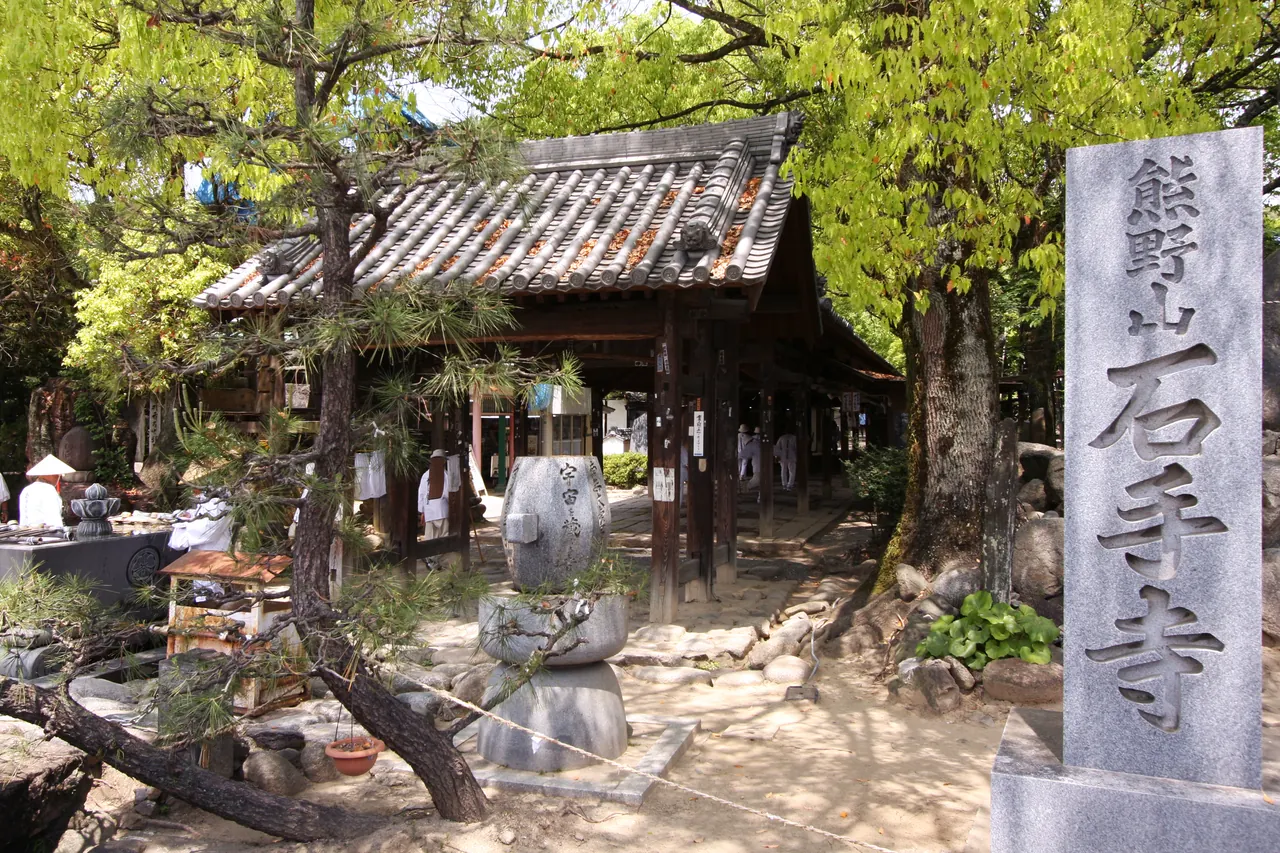
Matsuyama Things to Do: Matsuyama Castle, Dogo Onsen and the Tram
This guide is translated from the Japanese edition. Read the Japanese edition
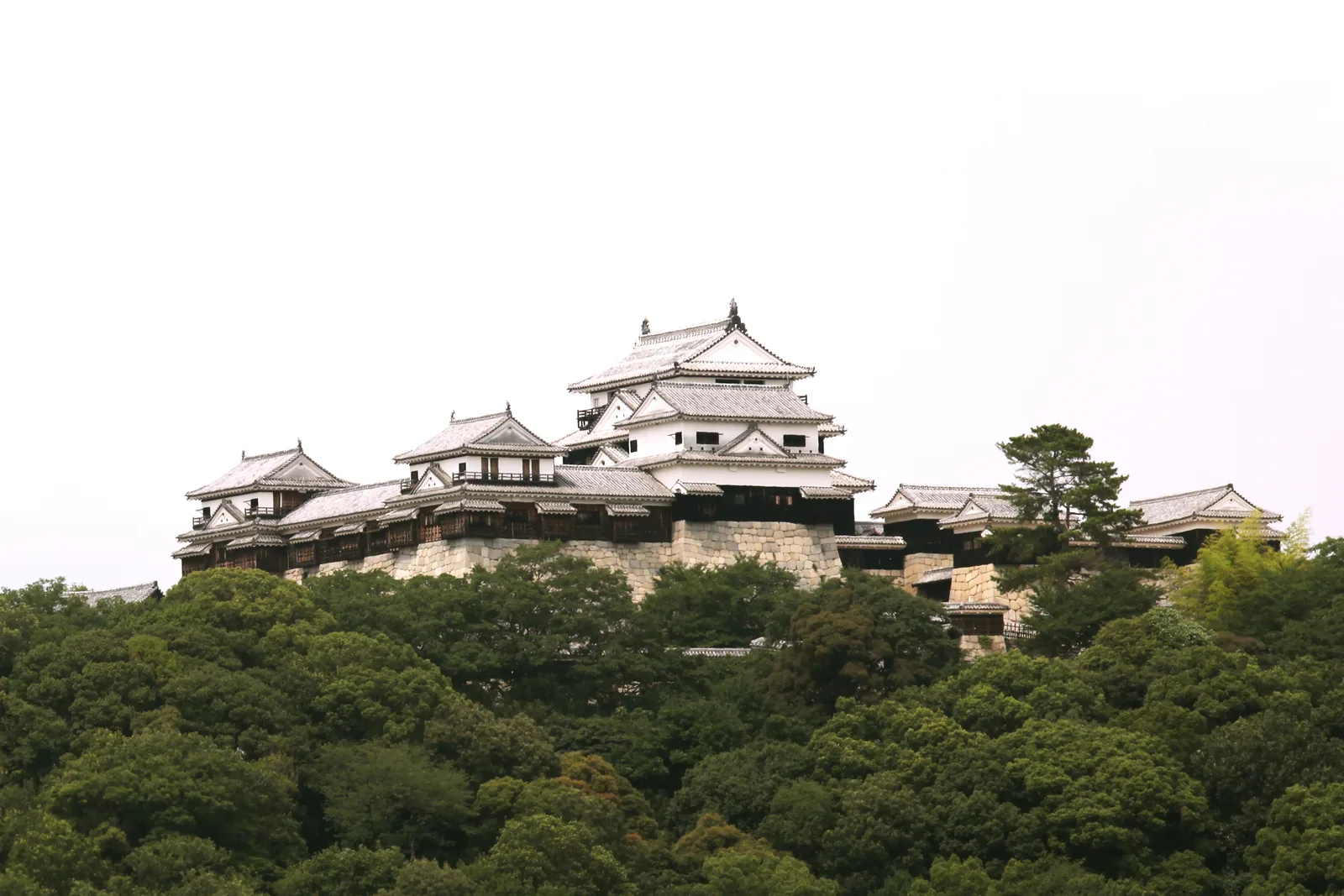
Matsuyama in Ehime: the ropeway up to Matsuyama Castle, Ninomaru Garden, Bansuiso, Dogo Onsen Honkan, Isaniwa Shrine, Dogo Park and a one-day plan by tram.
Ride a streetcar through central Matsuyama and a castle keep keeps appearing and disappearing on the hilltop beyond the buildings. Matsuyama, the capital of Ehime Prefecture, is a city where Matsuyama Castle, with a keep that survives from the Edo period, and the long-famous Dogo Onsen hot spring are both within easy reach by tram.
Getting around Matsuyama: the tram links the castle and the hot spring
Iyotetsu's city trams are the easiest way to get around. The nearest stop for Matsuyama Castle is Okaido, and the terminus, Dogo Onsen Station, is the entrance to the hot spring town. From JR Matsuyama Ekimae to Dogo Onsen Station takes about 25 minutes by tram.
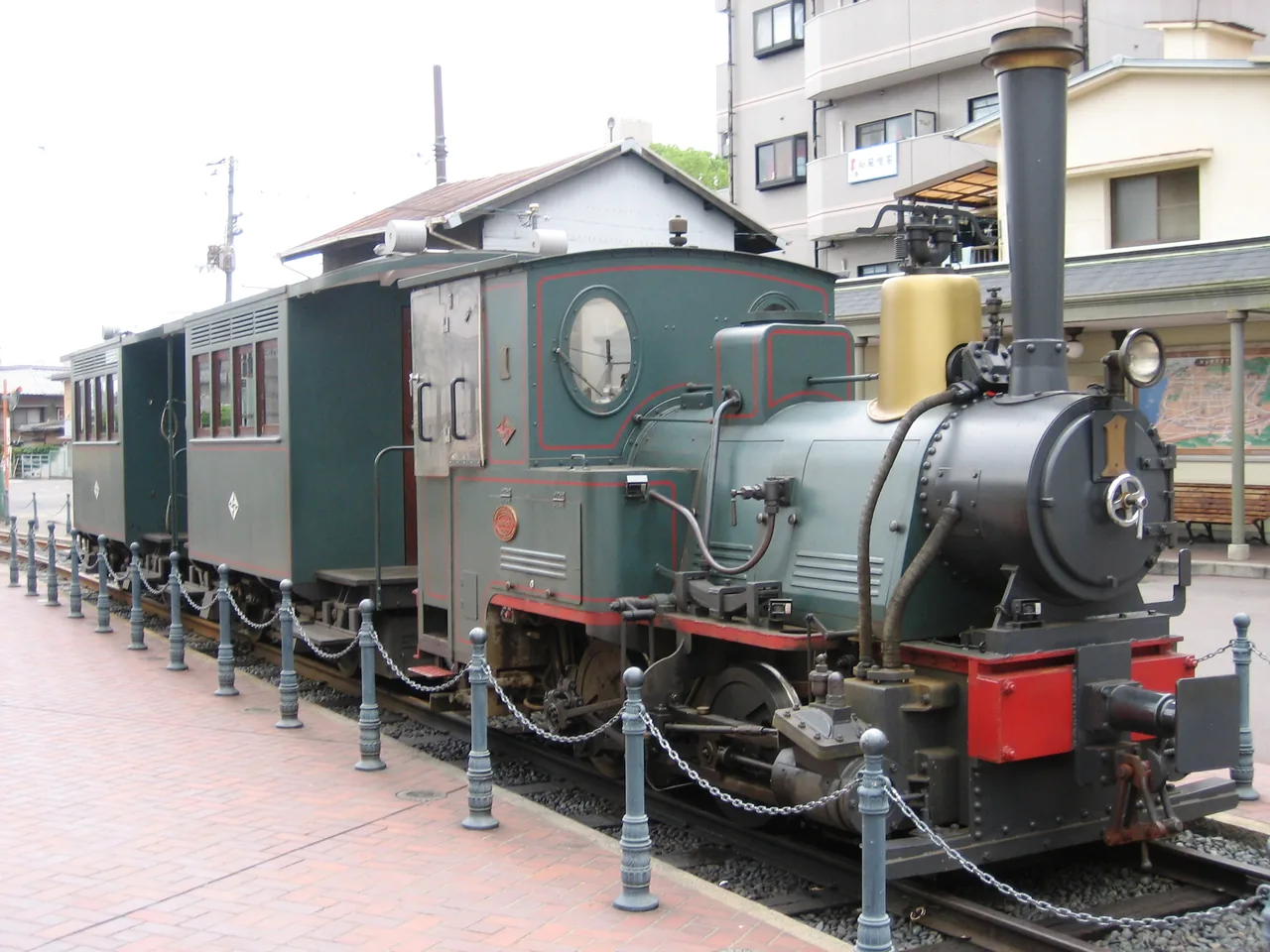
The Botchan Train runs only on Saturdays, Sundays and national holidays. Iyotetsu rebuilt the steam train that once ran through Matsuyama as a sightseeing train. It now runs on a diesel engine while recreating the steam and the whistle. You can get on and off at five stops: Dogo Onsen Station, Okaido, Matsuyama-shi Station, JR Matsuyama Ekimae and Komachi. The number of trips is also limited, and seats can't be reserved, so check the timetable on Iyotetsu's website.
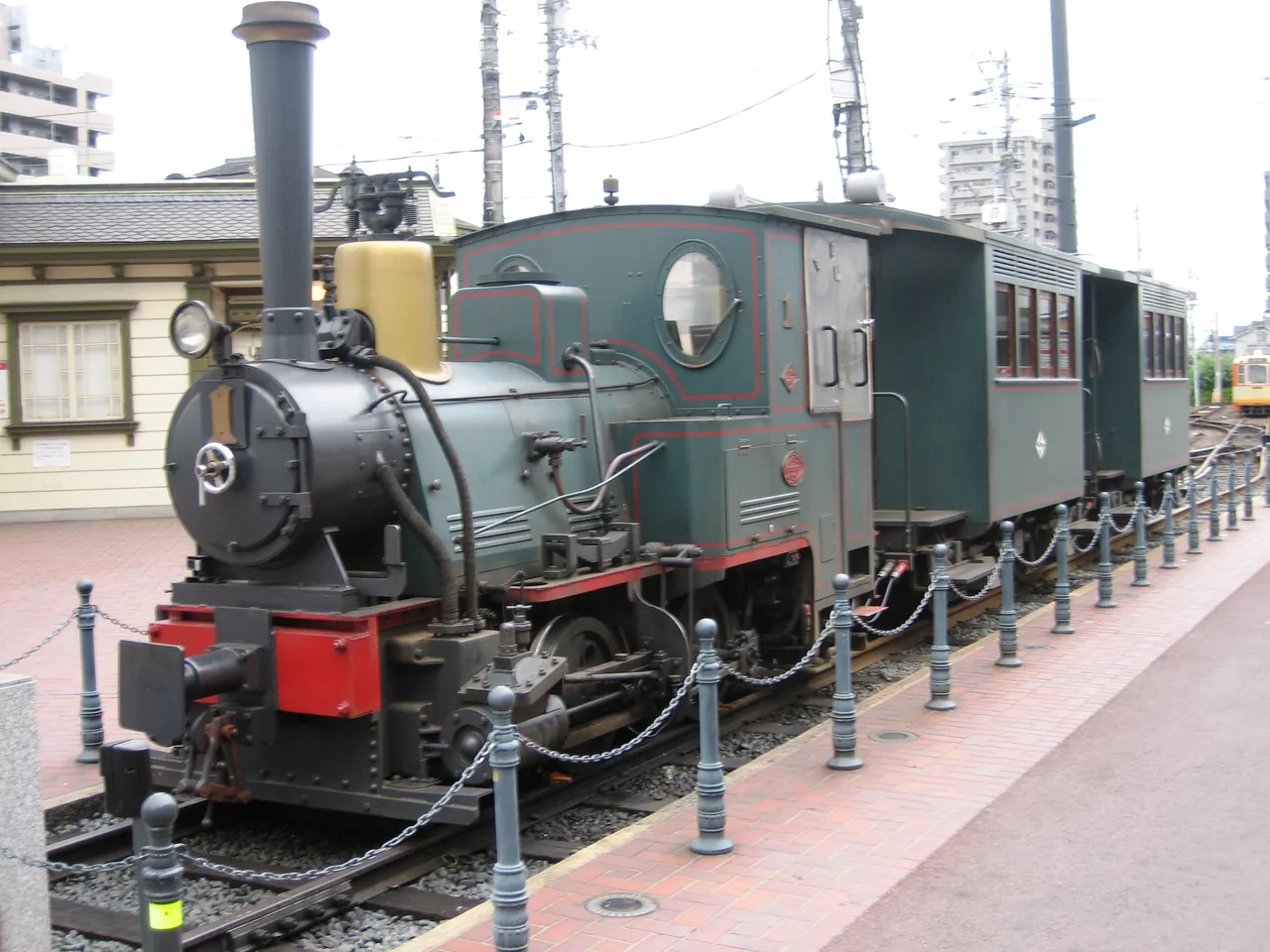
Photo: Ehime Prefectural Tourism & Local Products Association
Matsuyama Castle: the ropeway up to the hilltop citadel
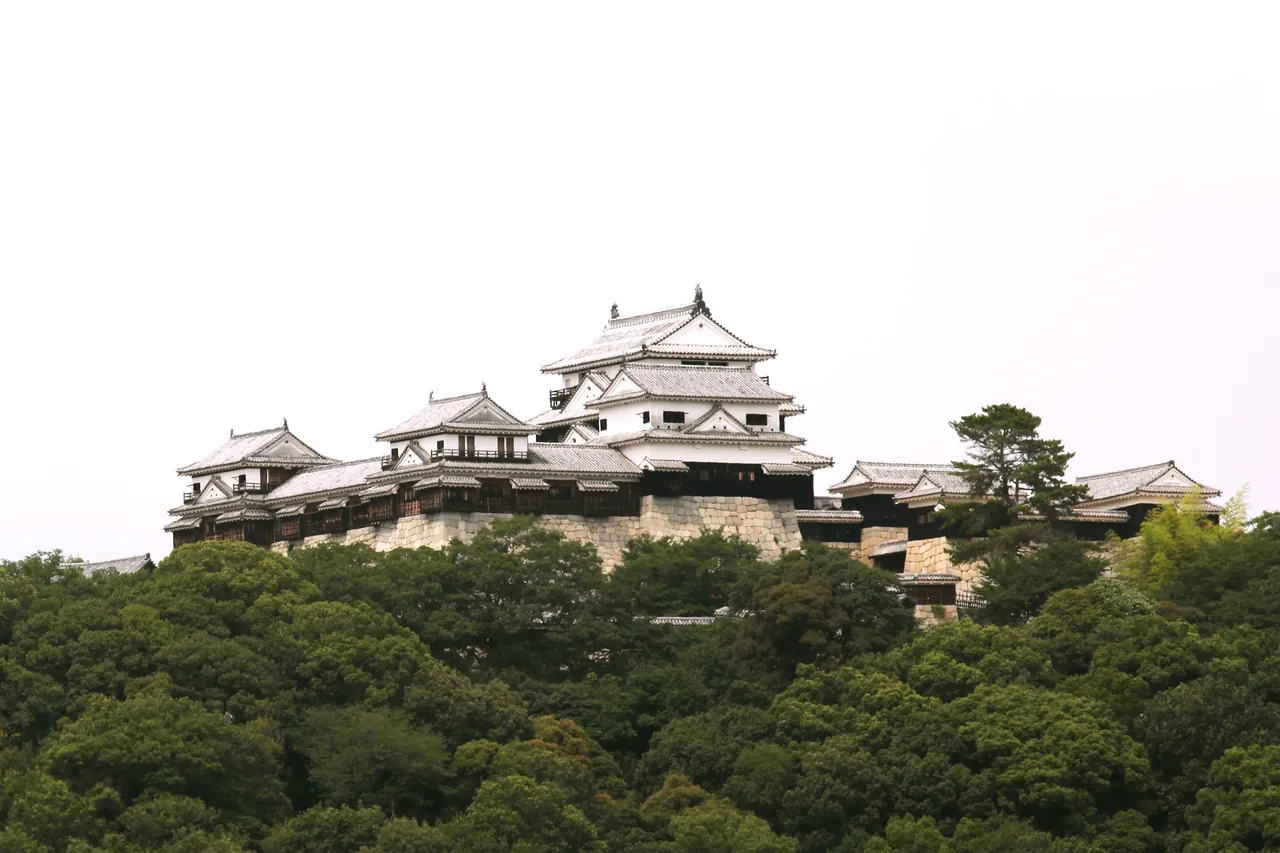
Matsuyama Castle has its main citadel (honmaru) on top of Mt. Katsuyama, 132 m high. Kato Yoshiaki began building it in 1602. It is one of only 12 castles in Japan whose keeps were built before the end of the Edo period, and 21 structures in the citadel, including the keep, are Important Cultural Properties. The present keep was rebuilt at the end of the Edo period after the earlier one burned down when it was struck by lightning.
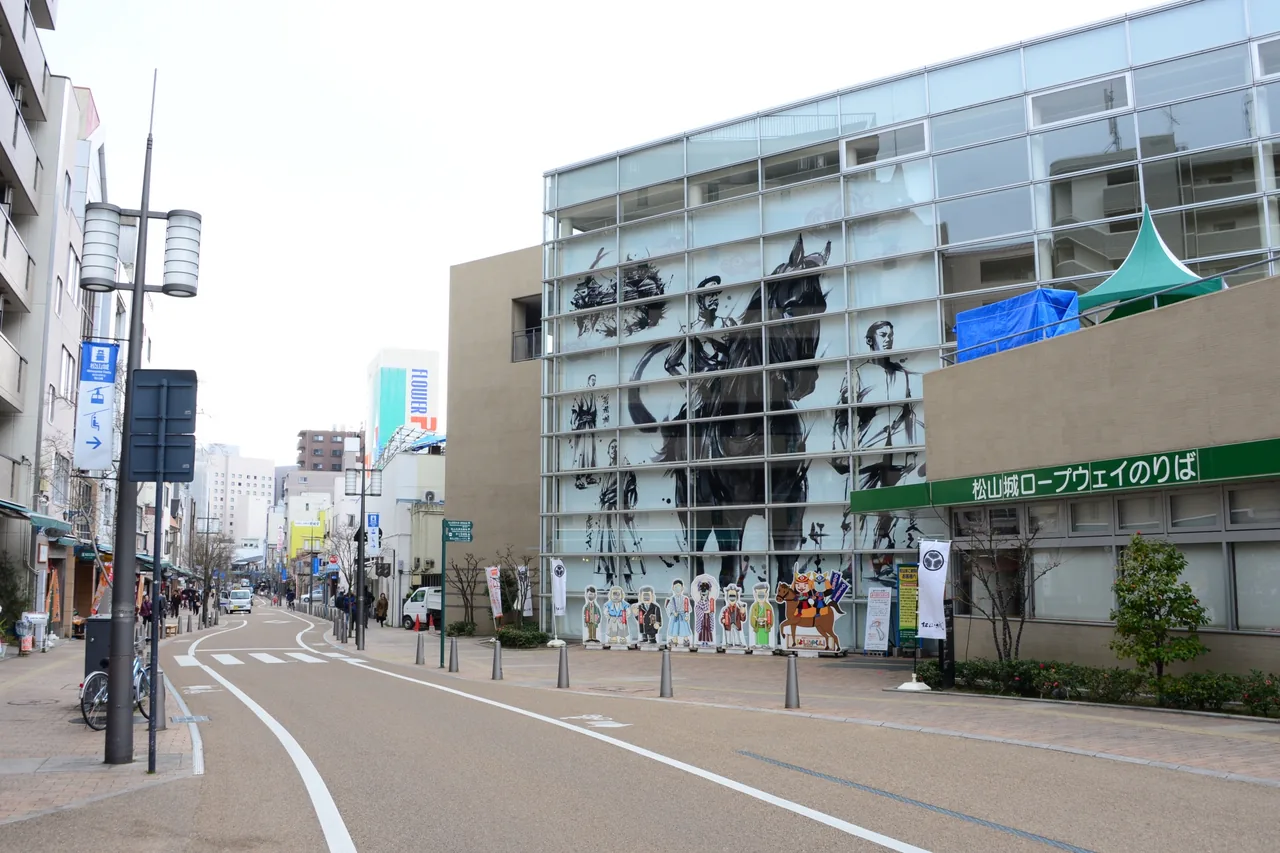
To get up the hill, take the ropeway or chairlift from Shinonome-guchi, about a 5-minute walk from Okaido stop. The station faces the Ropeway Shopping Street. Both the ropeway and the single-seat chairlift go to Chojaganaru, partway up the hill, and from there you walk up to the citadel.
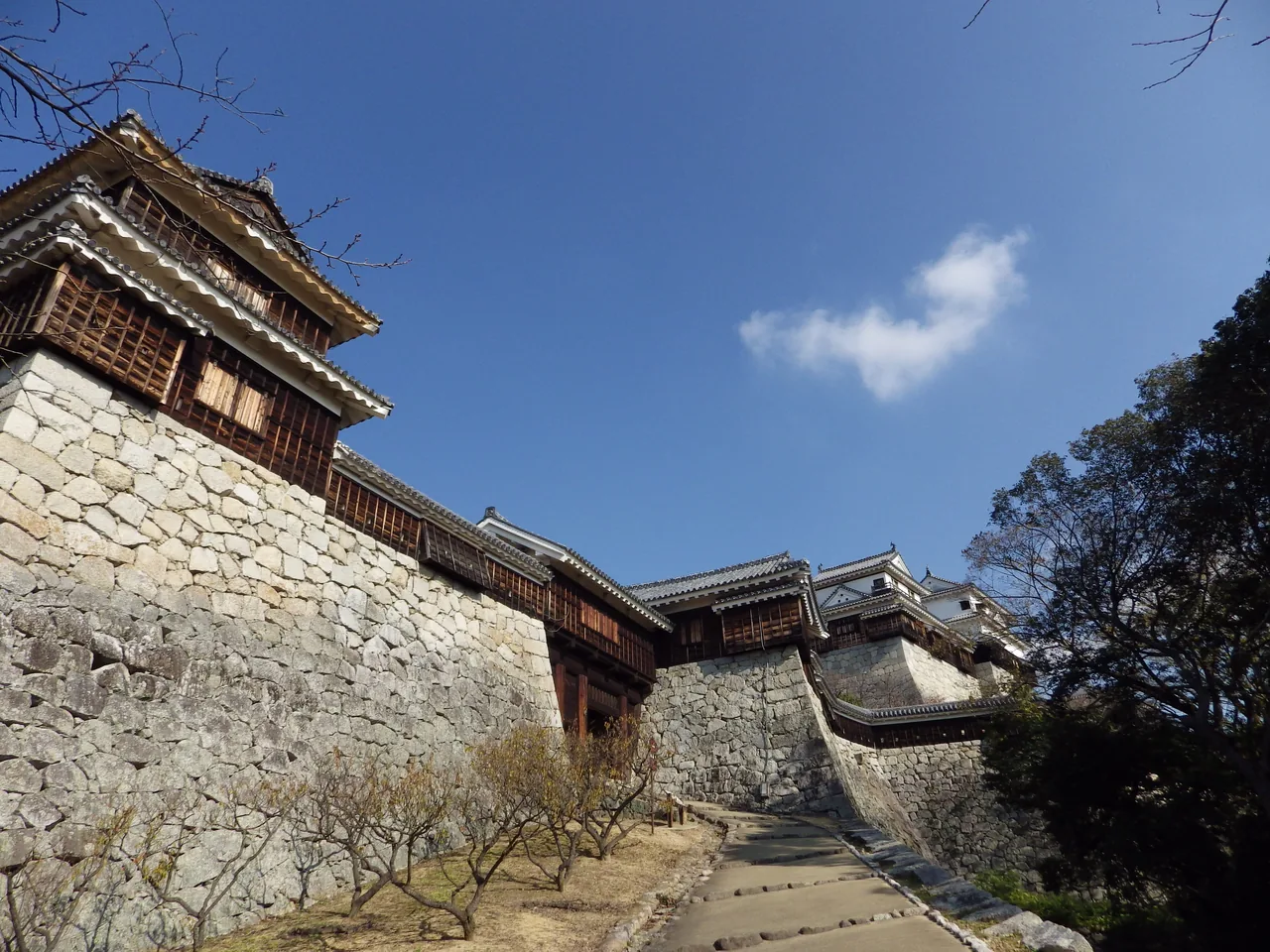
Photo: Ehime Prefectural Tourism & Local Products Association
The path from Chojaganaru to the citadel climbs along high stone walls. Turrets and gates appear one after another on top of the walls, and you pass many of the Important Cultural Property buildings on the way to the keep. From the open ground of the citadel you can look out over the city and the mountains beyond.
At the foot of the castle: Ninomaru Garden, Bansuiso and the Saka no Ue no Kumo Museum
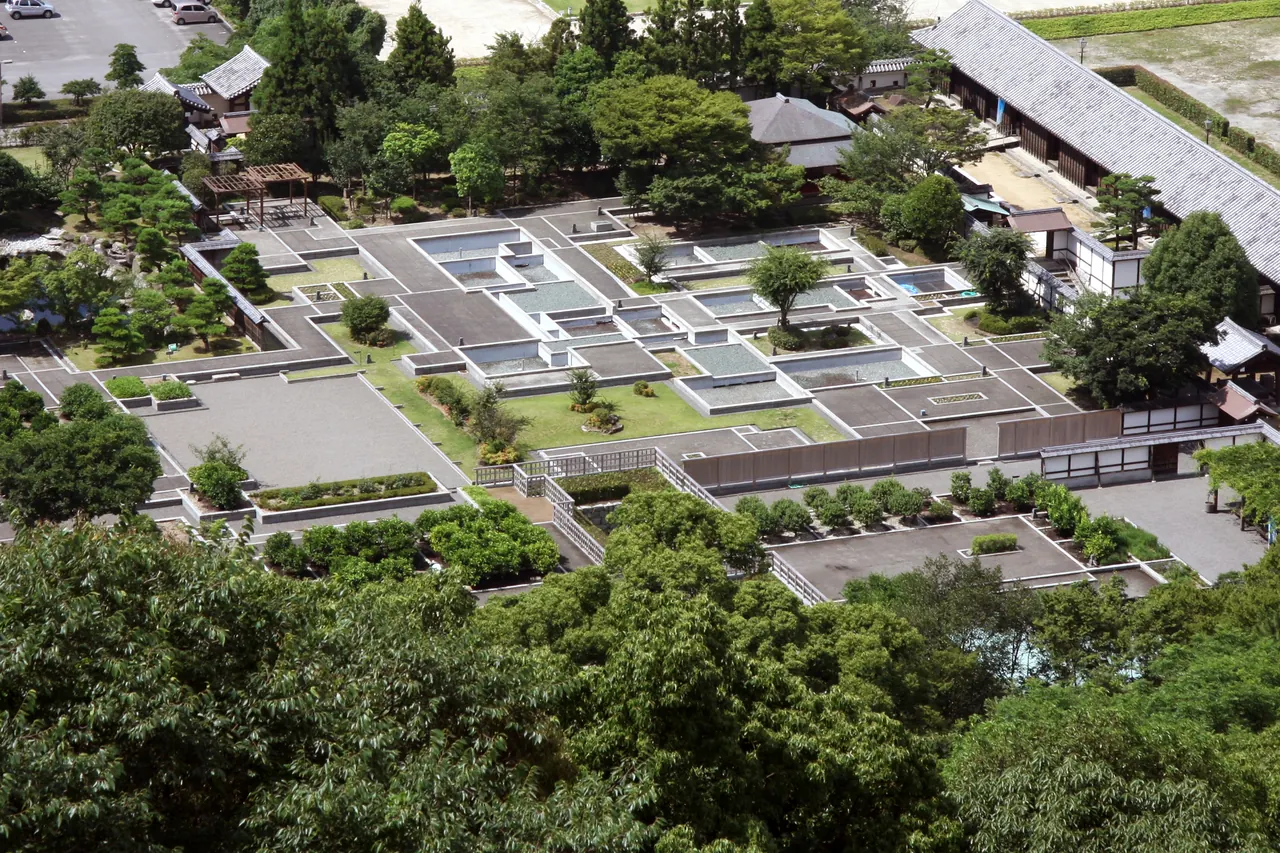
At the foot of Mt. Katsuyama, the site of the castle's Ninomaru (second bailey) has been laid out as the Ninomaru Historic Garden. It shows the floor plans of the old rooms: citrus trees and flowers mark the outer palace on the north side, and water, gravel and lawn mark the inner palace in the southwest. A large well found during excavation, 18 m east to west, 13 m north to south and 9 m deep, is shown just as it was dug out, and you can look down into it. The garden is in front of the start of the Kuromon-guchi trail up to the citadel.
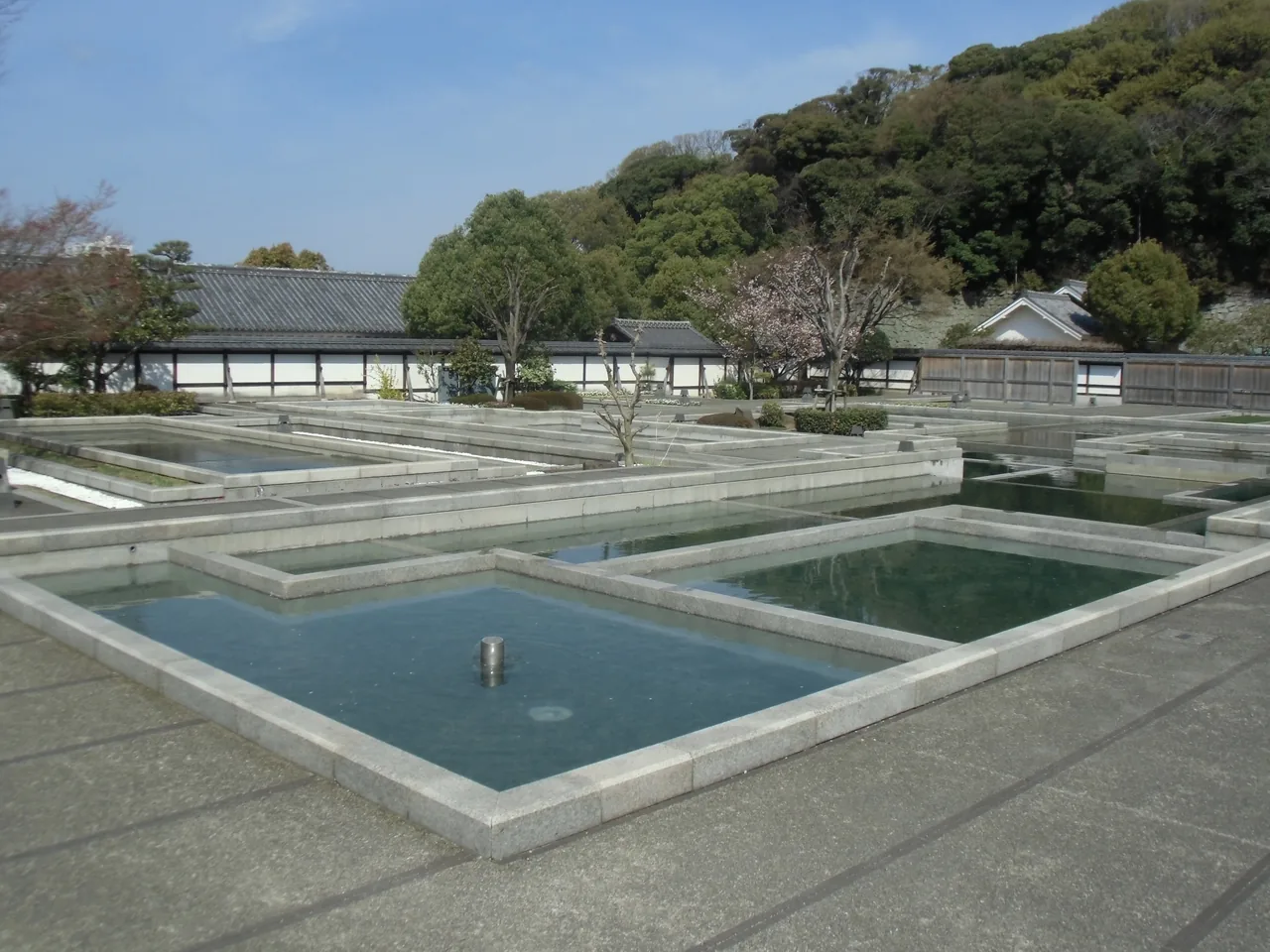
Photo: Ehime Prefectural Tourism & Local Products Association
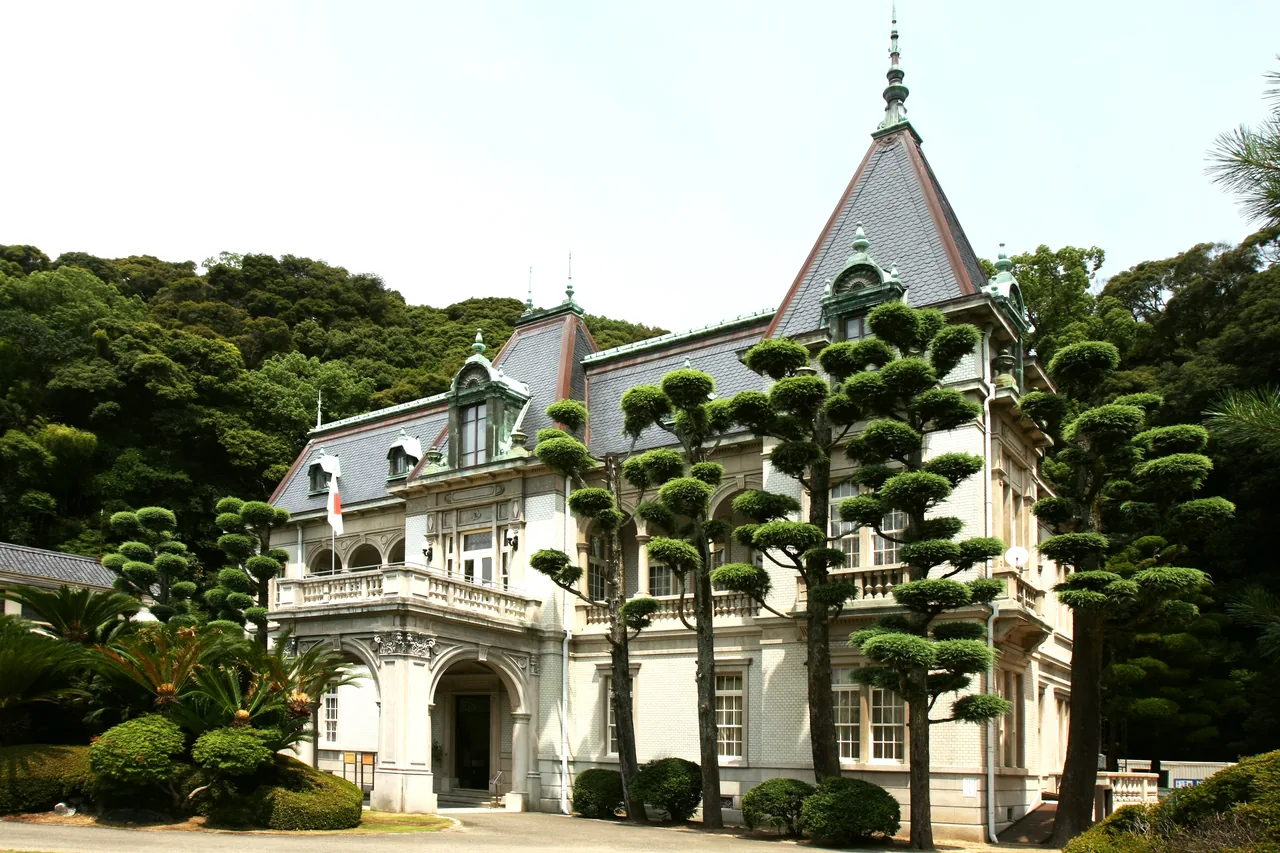
In Ichibancho, near Okaido, Bansuiso stands with a forest behind it. This French-style mansion was built in 1922 as a villa by Count Hisamatsu Sadakoto, a descendant of the former lords of Matsuyama. Sadakoto had lived in France for many years as an army attaché, and his taste shows in the building. It was designed by Kigo Shichiro, and the main building and caretaker's house were designated Important Cultural Properties in 2011.
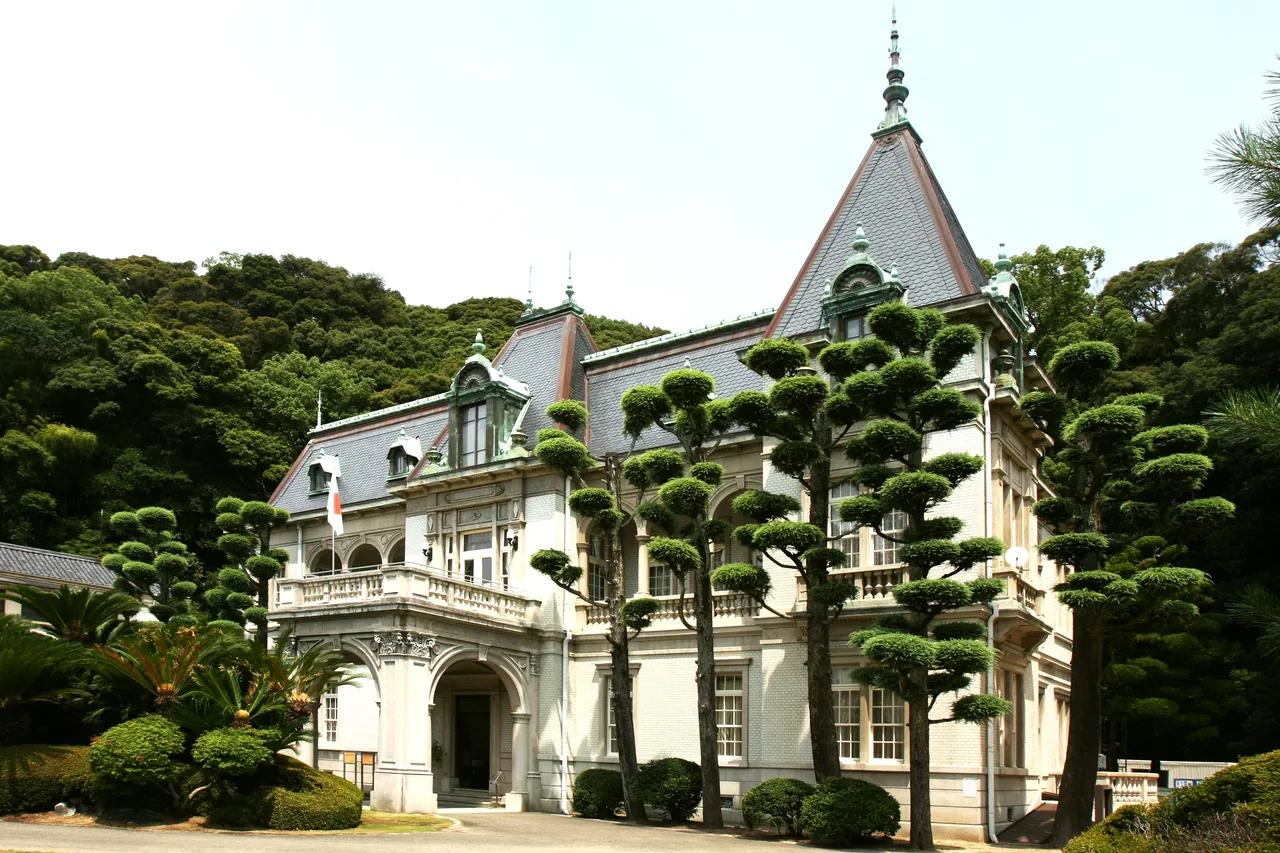
Photo: Ehime Prefectural Tourism & Local Products Association
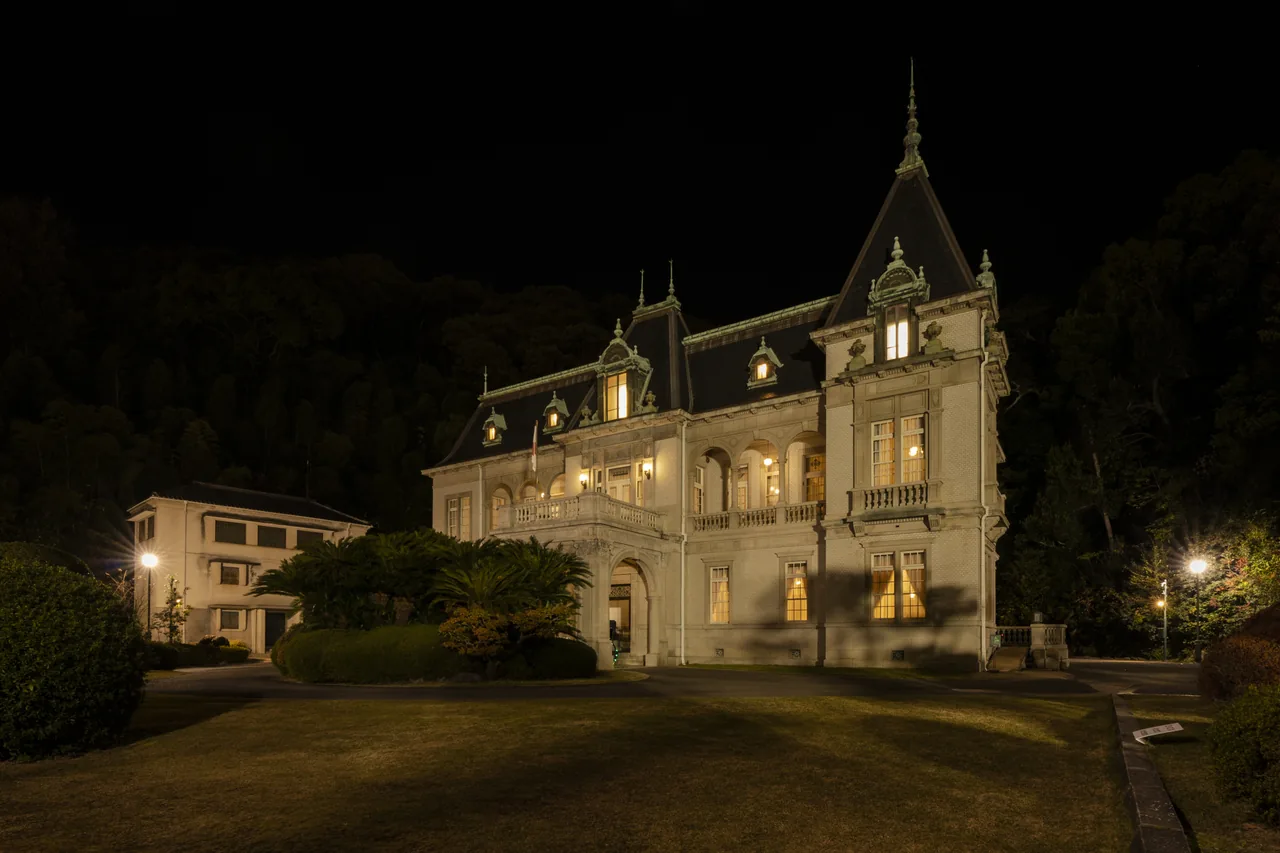
Photo: Ehime Prefectural Tourism & Local Products Association
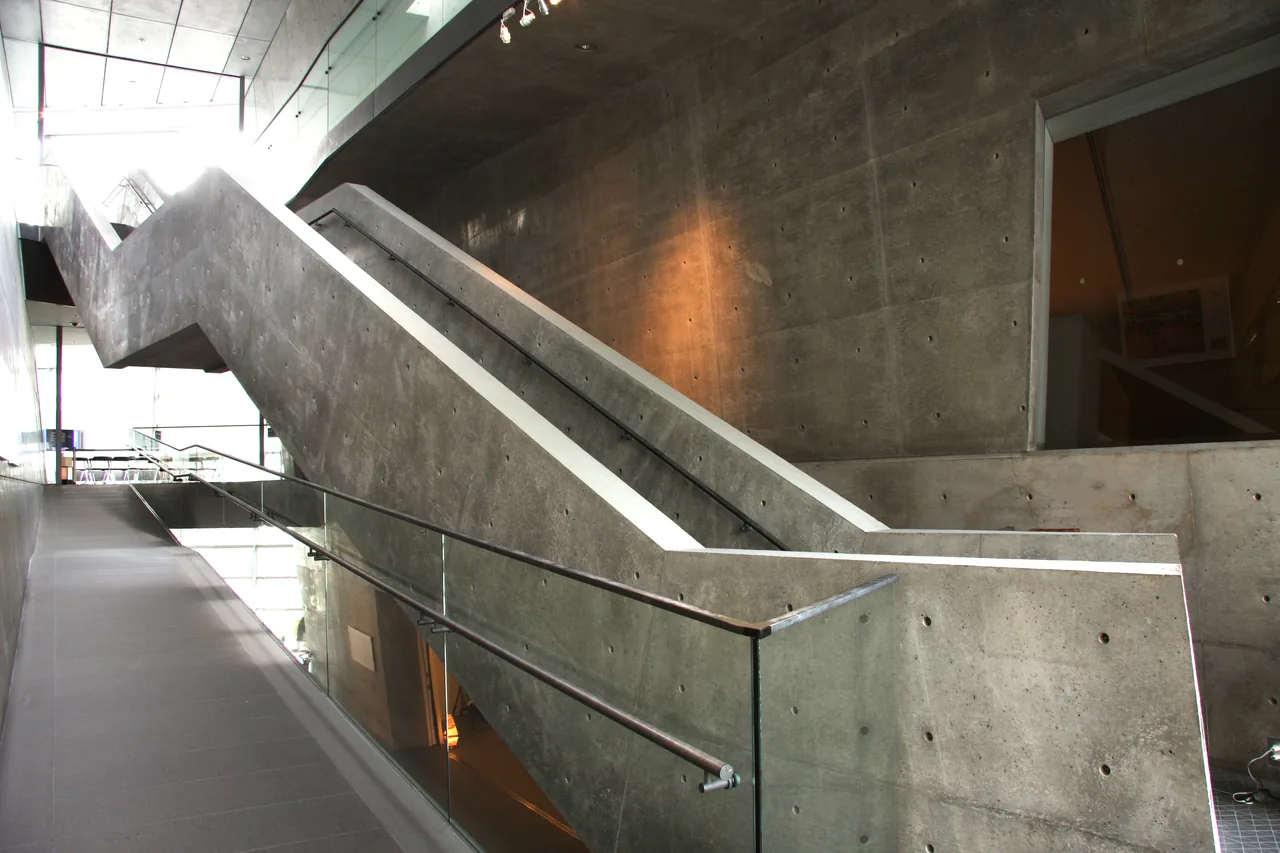
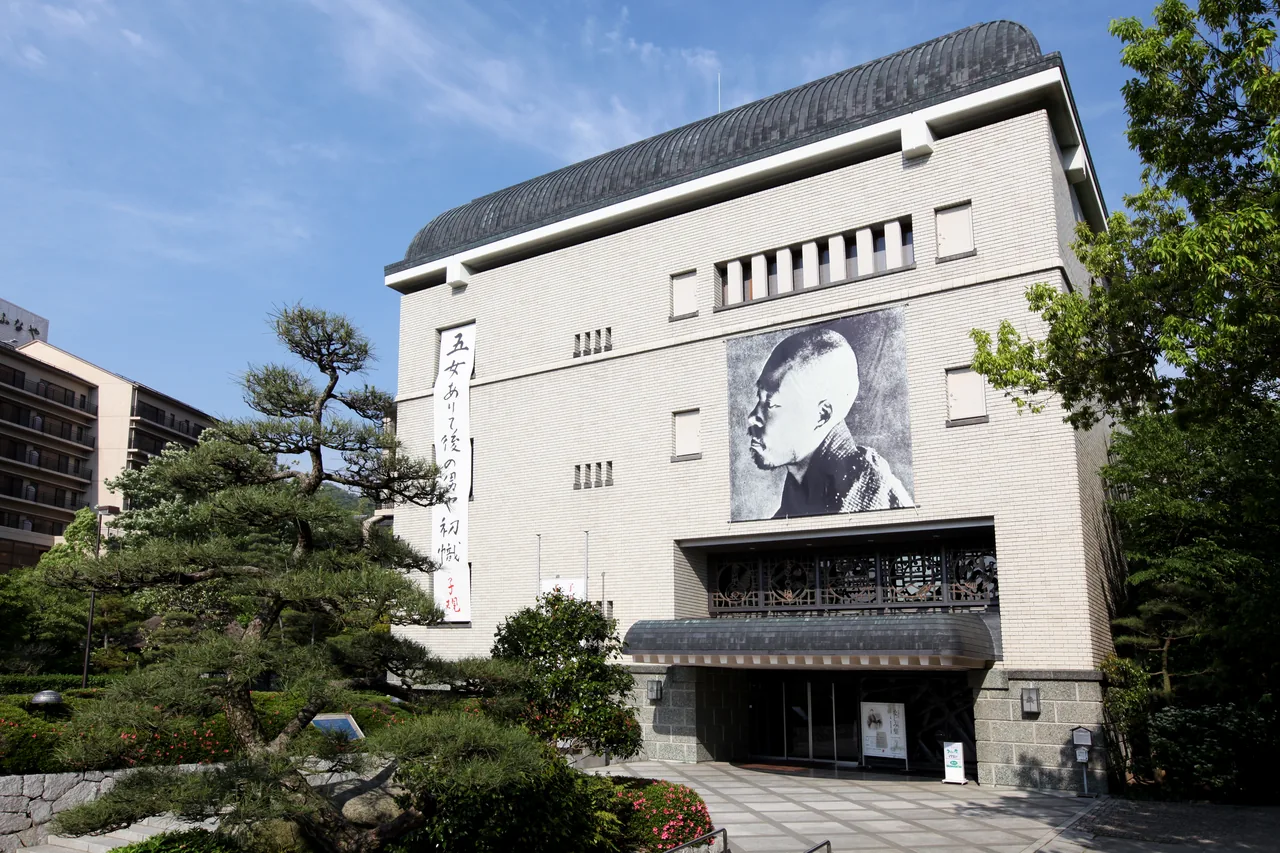
The Saka no Ue no Kumo Museum, in the same block of Ichibancho 3-chome, is devoted to the novel "Saka no Ue no Kumo" (Clouds Above the Hill) and opened in 2007. The building, designed by Tadao Ando, links its floors with ramps, so you see the exhibits as you walk up. It traces the lives of Masaoka Shiki, who came from Matsuyama, and the brothers Akiyama Yoshifuru and Saneyuki, all characters in the novel. The wall along the ramp from the third to the fourth floor displays all 1,296 installments of the novel as it ran in a newspaper. It is about 2 minutes on foot from Okaido stop.
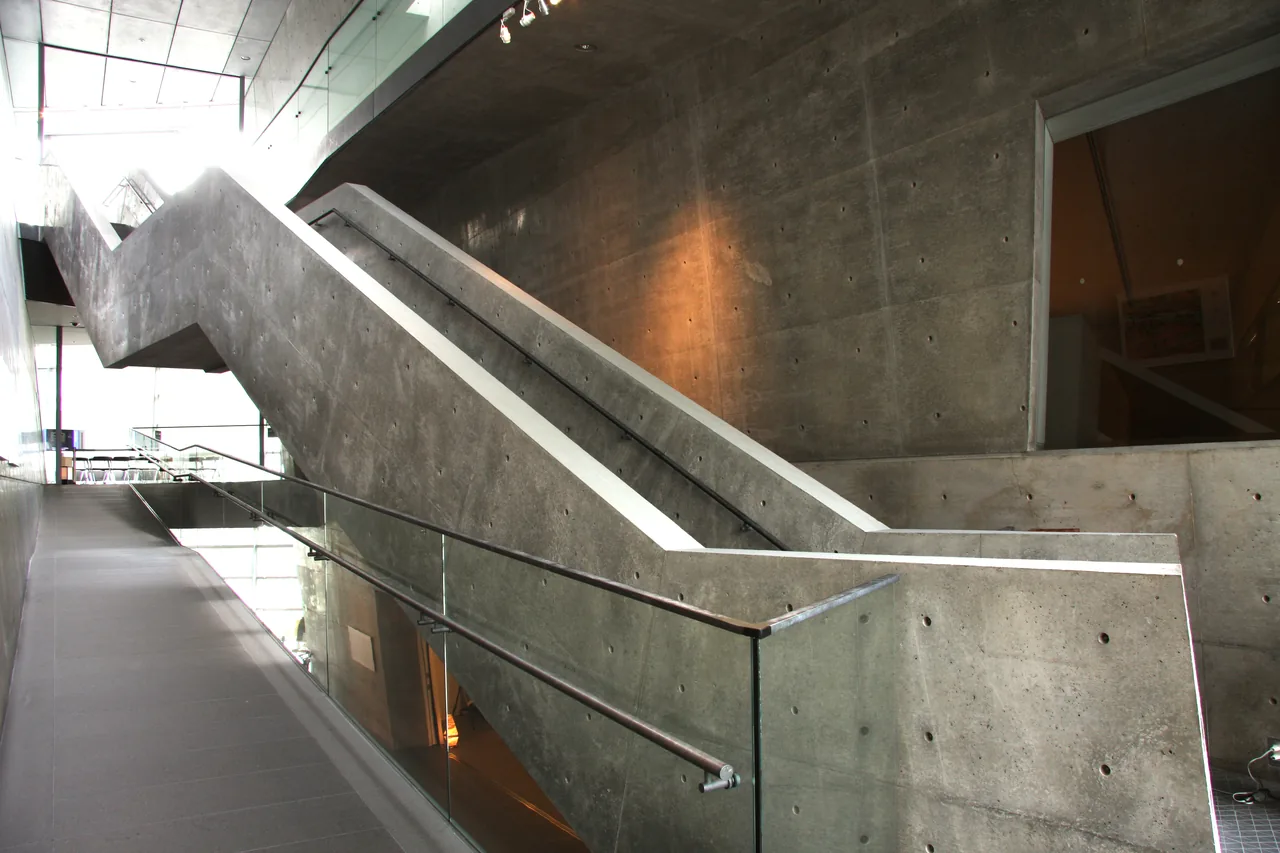
Photo: Ehime Prefectural Tourism & Local Products Association
Dogo Onsen Honkan: bathing in an Important Cultural Property
Dogo Onsen appears in the Nihon Shoki, one of Japan's oldest chronicles, and is among the oldest hot springs in the country. The town has three public bathhouses: Dogo Onsen Honkan, Asuka-no-Yu, which opened in 2017, and Tsubaki-no-Yu.
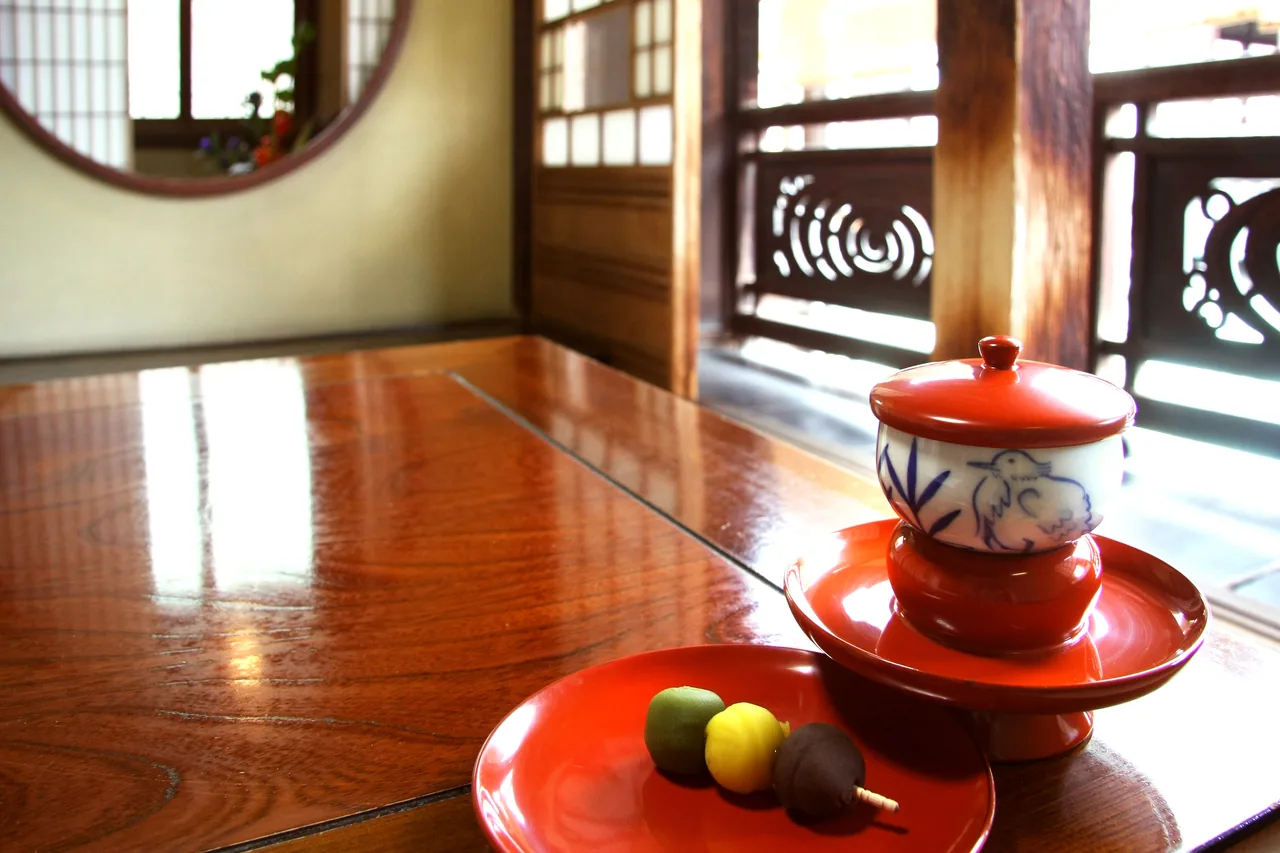
At its center, Dogo Onsen Honkan is a wooden public bathhouse rebuilt in 1894 and designated an Important Cultural Property. It has two baths, Tama-no-Yu and Kami-no-Yu. If you choose a course that includes a rest room, you are served tea and a sweet in the second-floor seating after your bath. Conservation work was carried out from 2019 while the bathhouse stayed open, and on July 11, 2024, the whole building reopened. Check bathing courses and prices on the Dogo Onsen website.
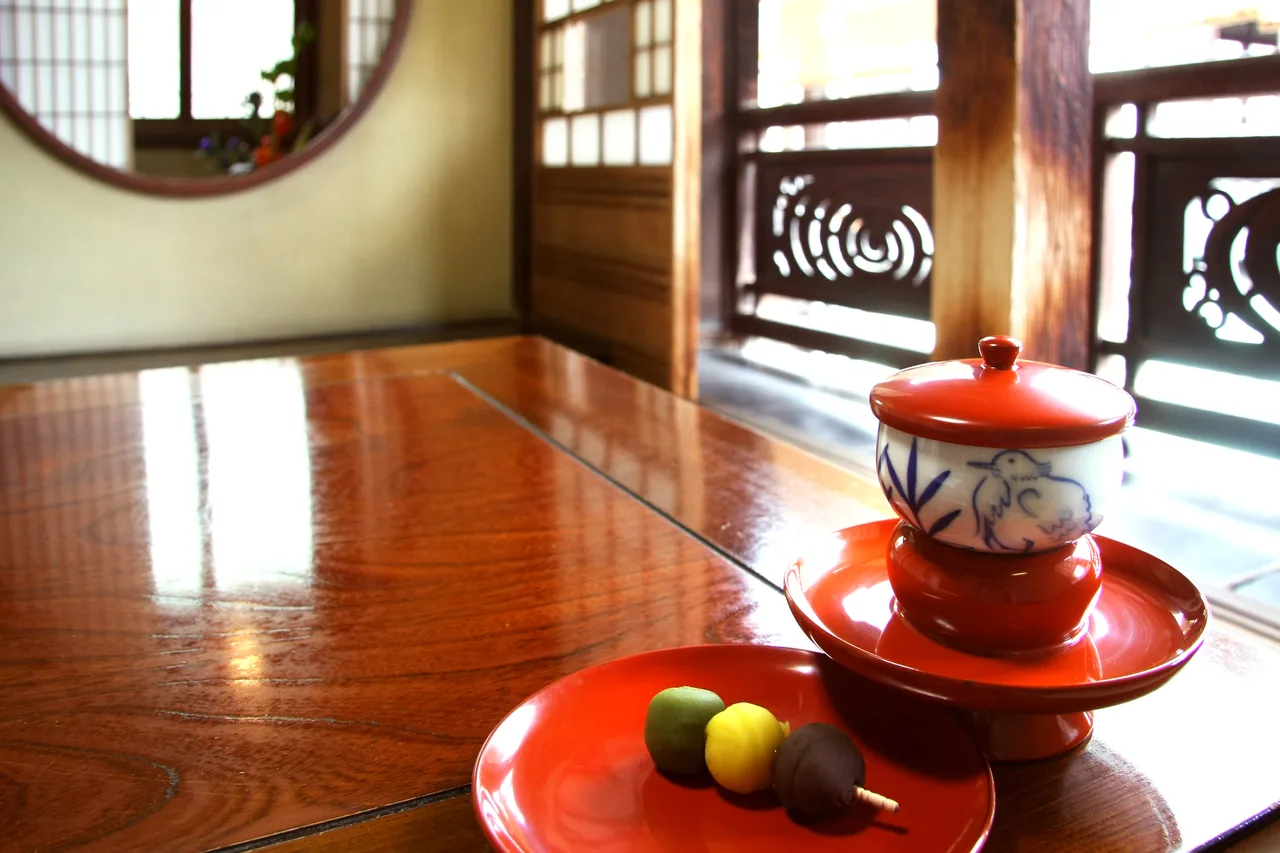
Photo: Ehime Prefectural Tourism & Local Products Association
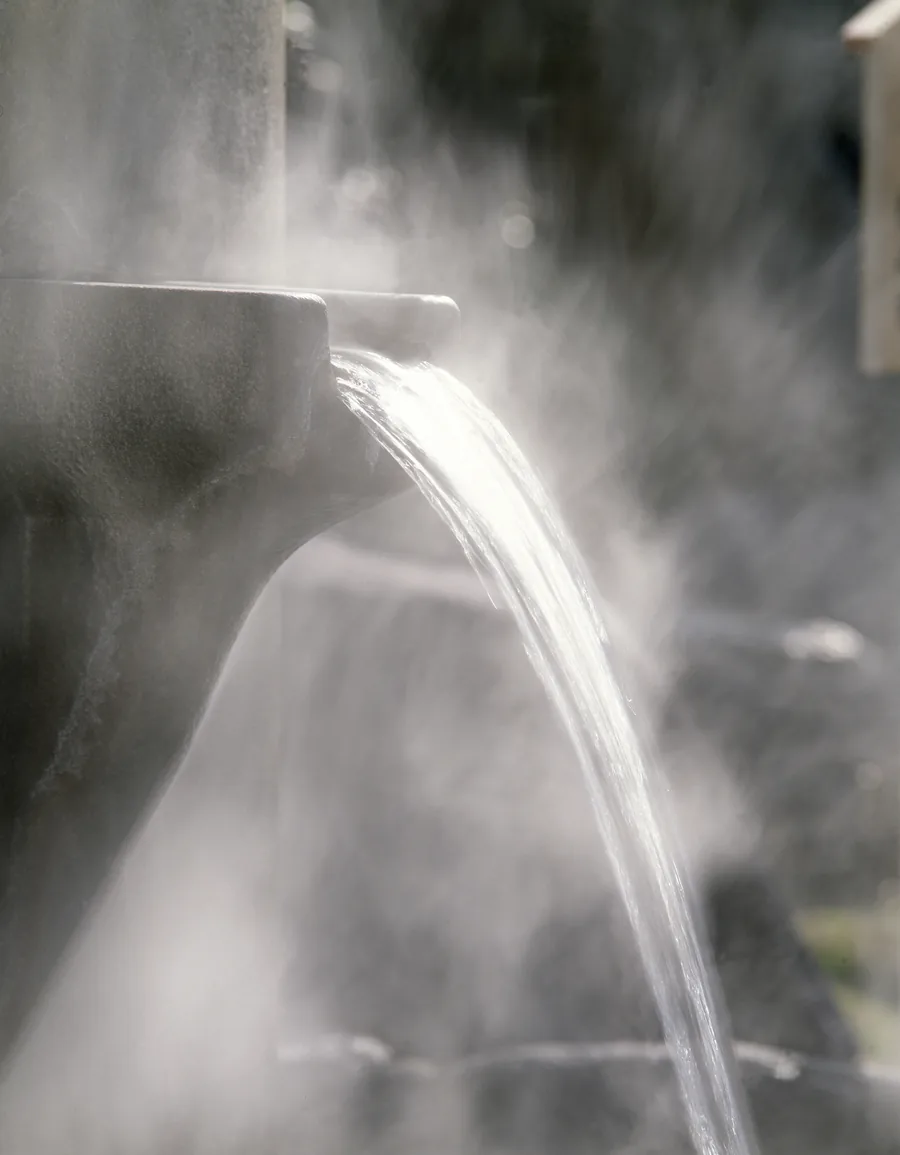
Photo: Ehime Prefectural Tourism & Local Products Association
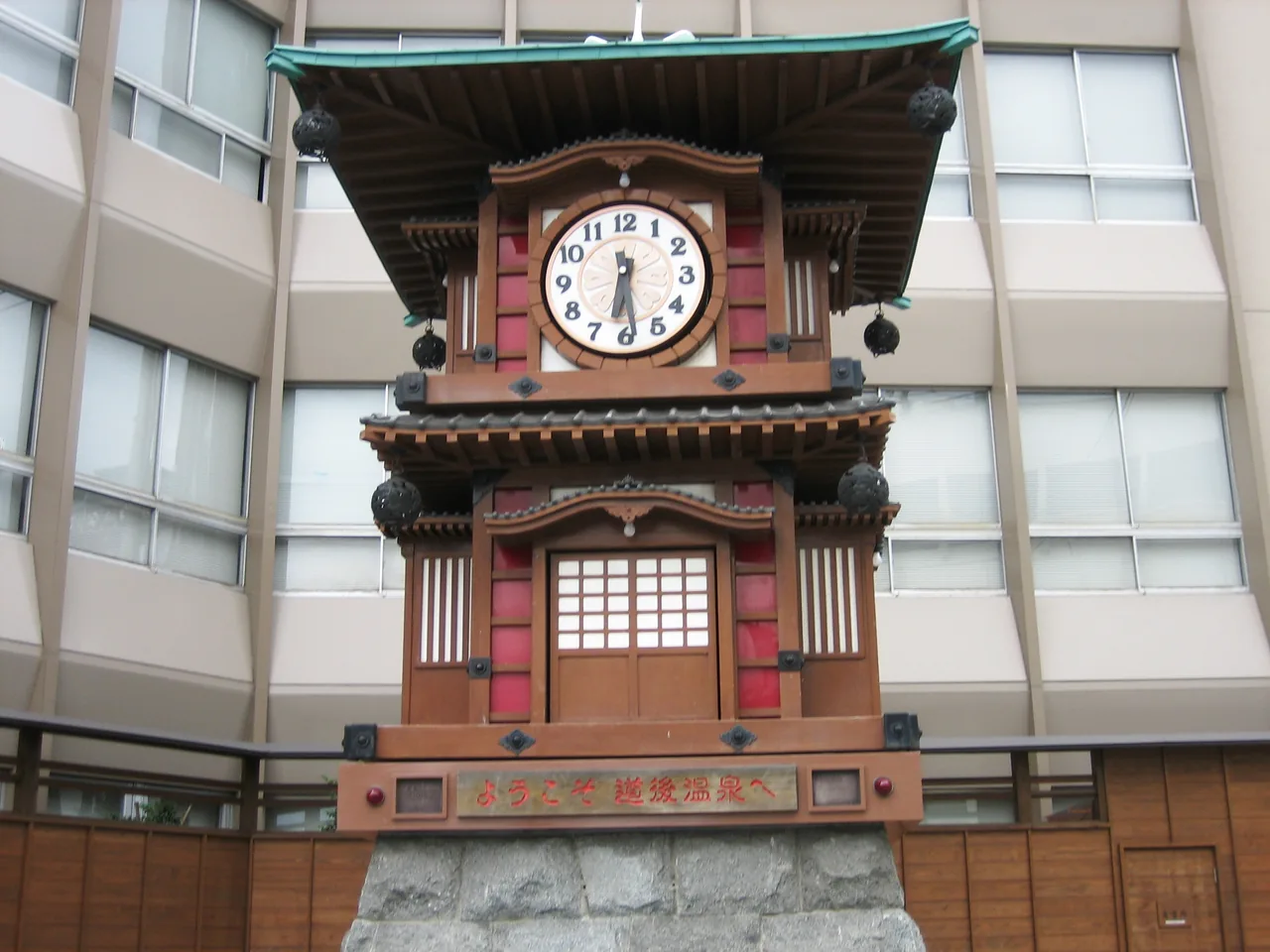
From Dogo Onsen Station you walk to the Honkan through the Dogo Shopping Street. In Hojoen square near the station stands the Botchan Karakuri Clock, made in 1994 to mark the Honkan's 100th anniversary. Modeled on the Honkan's Shinrokaku turret, it rises up with music at set times, and characters from the novel "Botchan" appear. The times it performs change with the season.
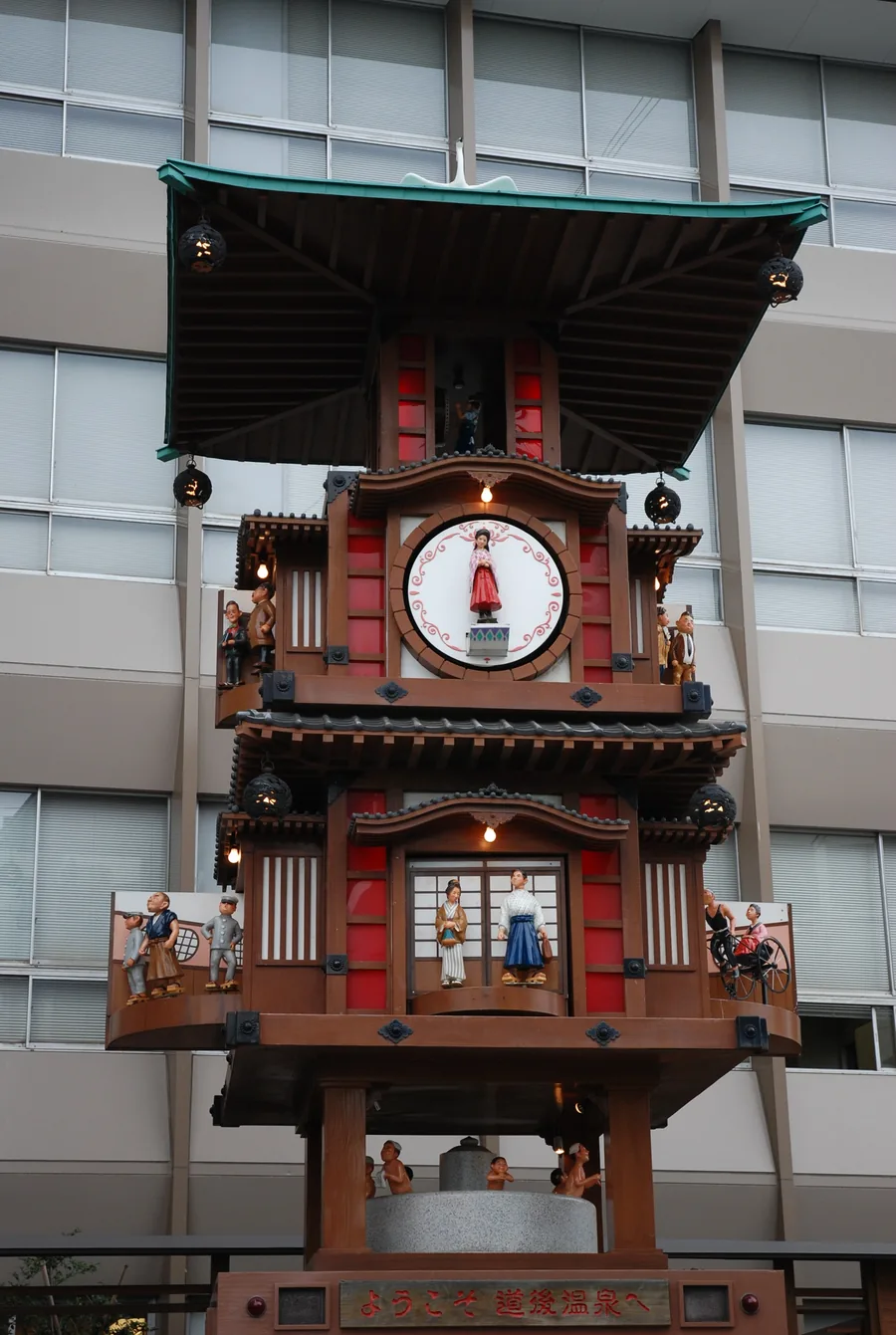
Photo: Ehime Prefectural Tourism & Local Products Association
Natsume Soseki, author of "Botchan," came to Matsuyama in 1895 to teach English at a middle school. That school is said to be the setting of the novel. Next to the clock is a footbath where the water flows from an old bath boiler used at the Honkan from 1891 to 1954.
Around Dogo Onsen Station: Isaniwa Shrine, Dogo Park and the Shiki Memorial Museum
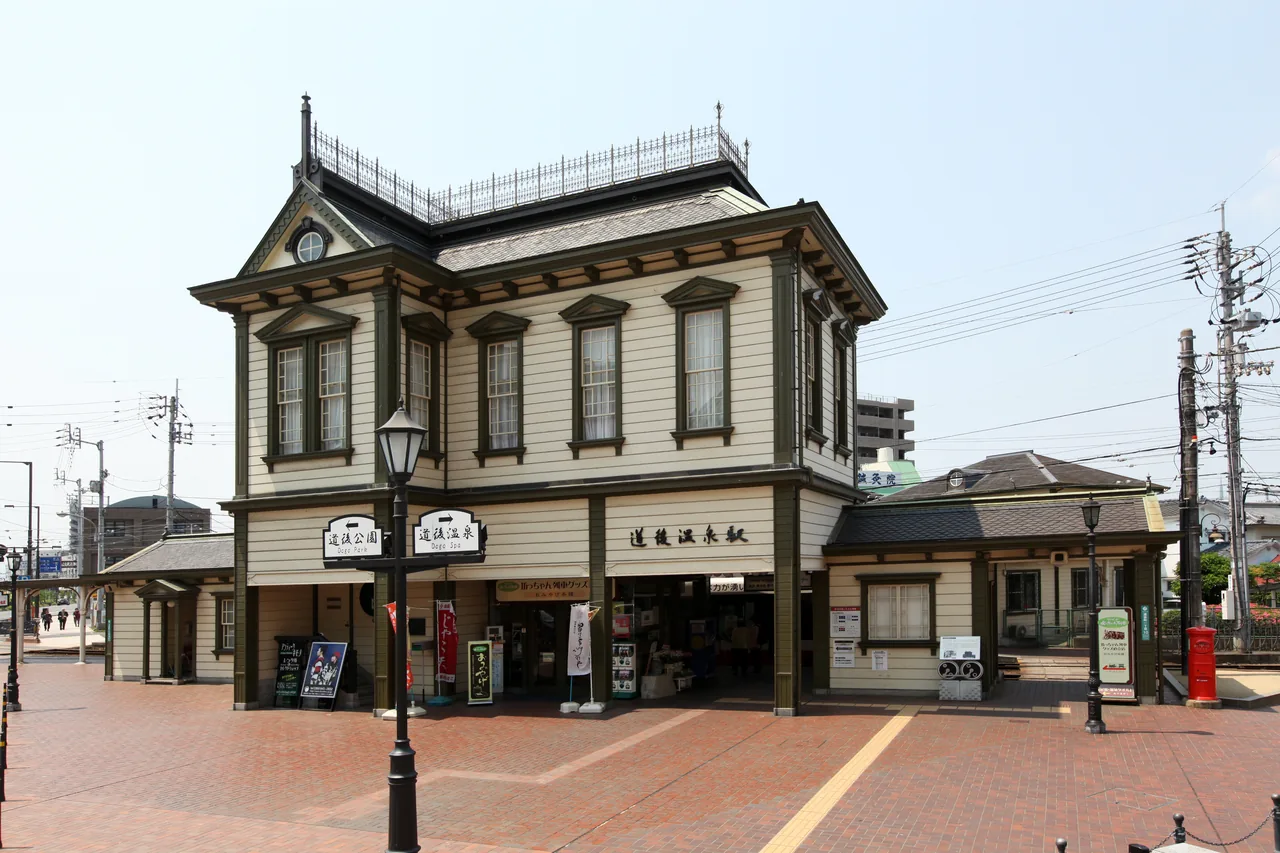
Dogo Onsen Station, the end of the tram line, is a Western-style station building that keeps the feel of the Meiji era. The Botchan Train also starts and ends here.
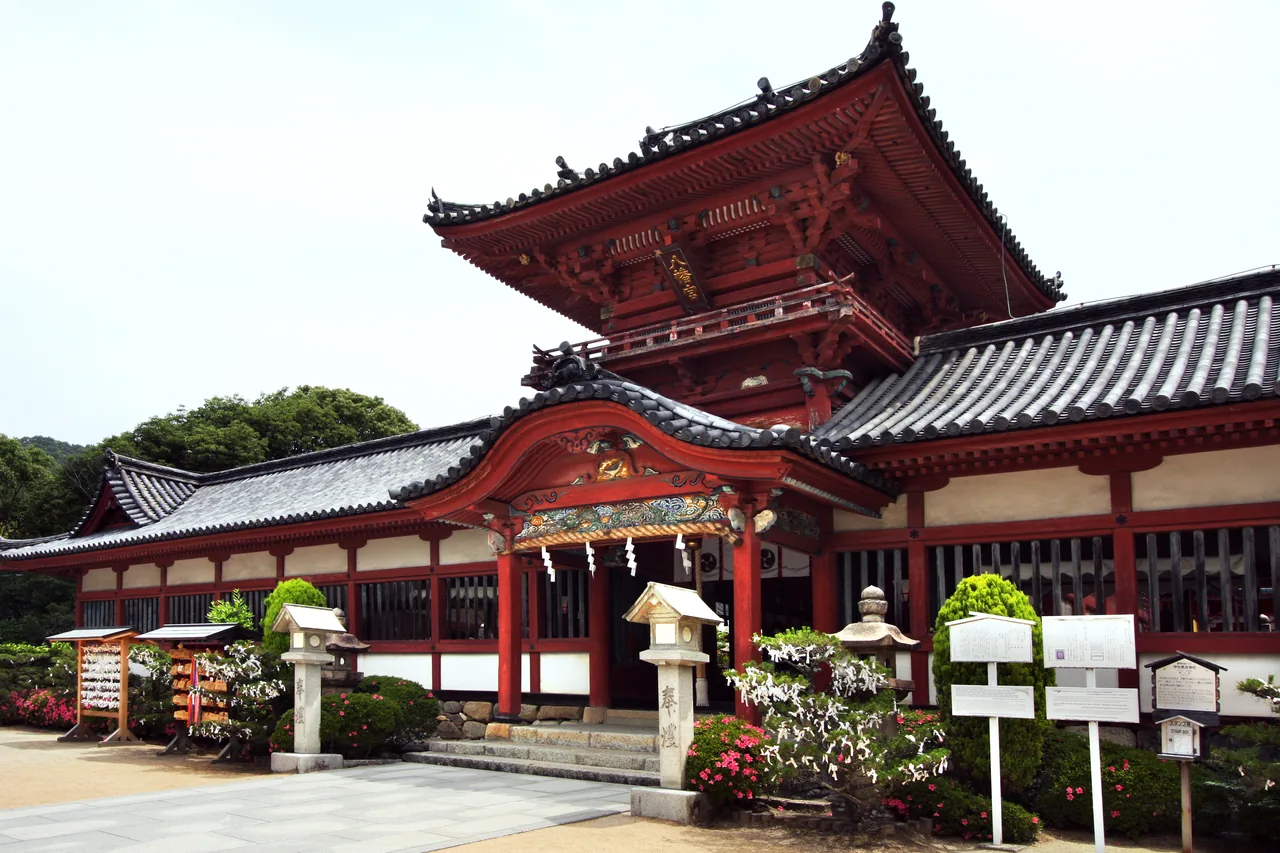
Within walking distance of the station, Isaniwa Shrine sits at the top of 135 stone steps, its vermilion buildings lined up along the slope. The present buildings were rebuilt over three years from 1664 by Matsudaira Sadanaga, the third lord of the Matsuyama domain, and the main hall, gate, corridor and others are Important Cultural Properties. Turn around at the top and the streets of Dogo run straight out beyond the steps.
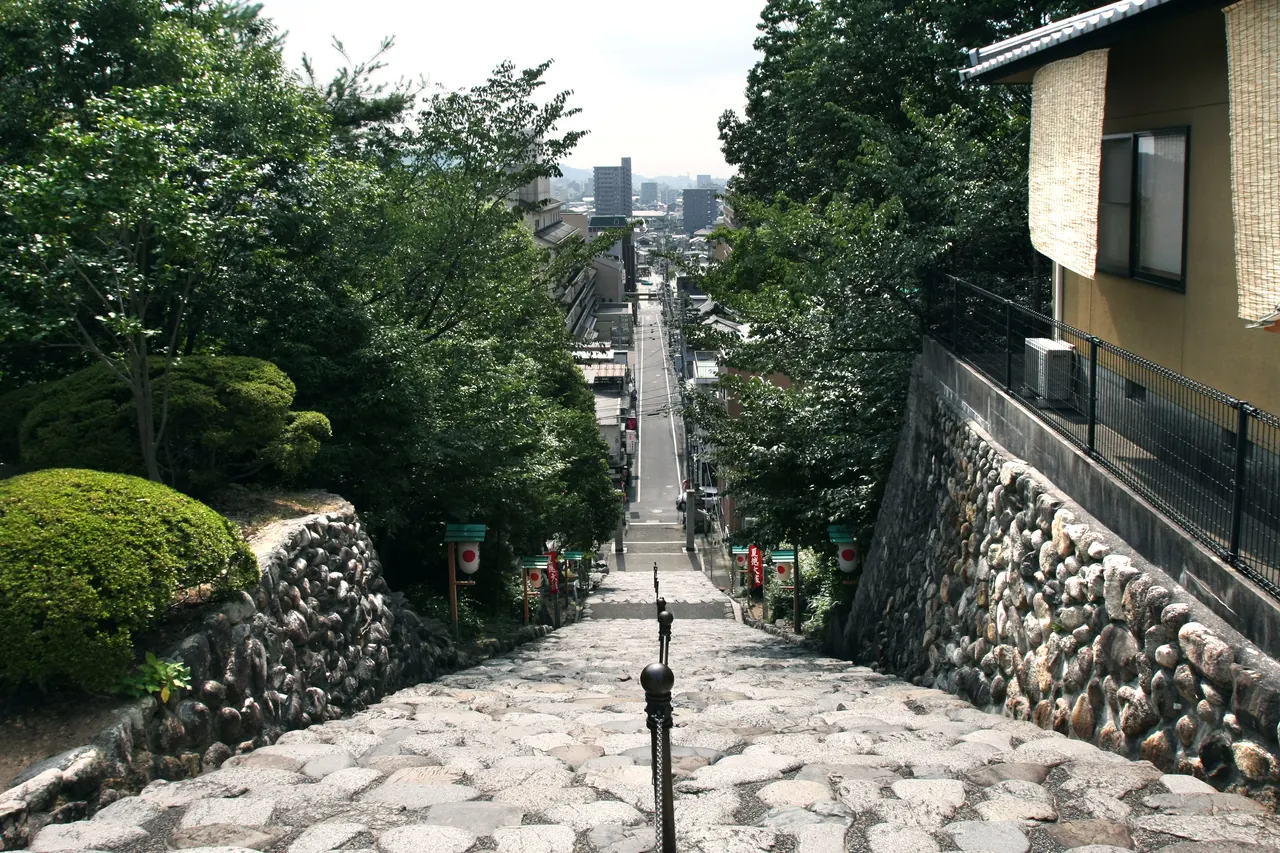
Photo: Ehime Prefectural Tourism & Local Products Association
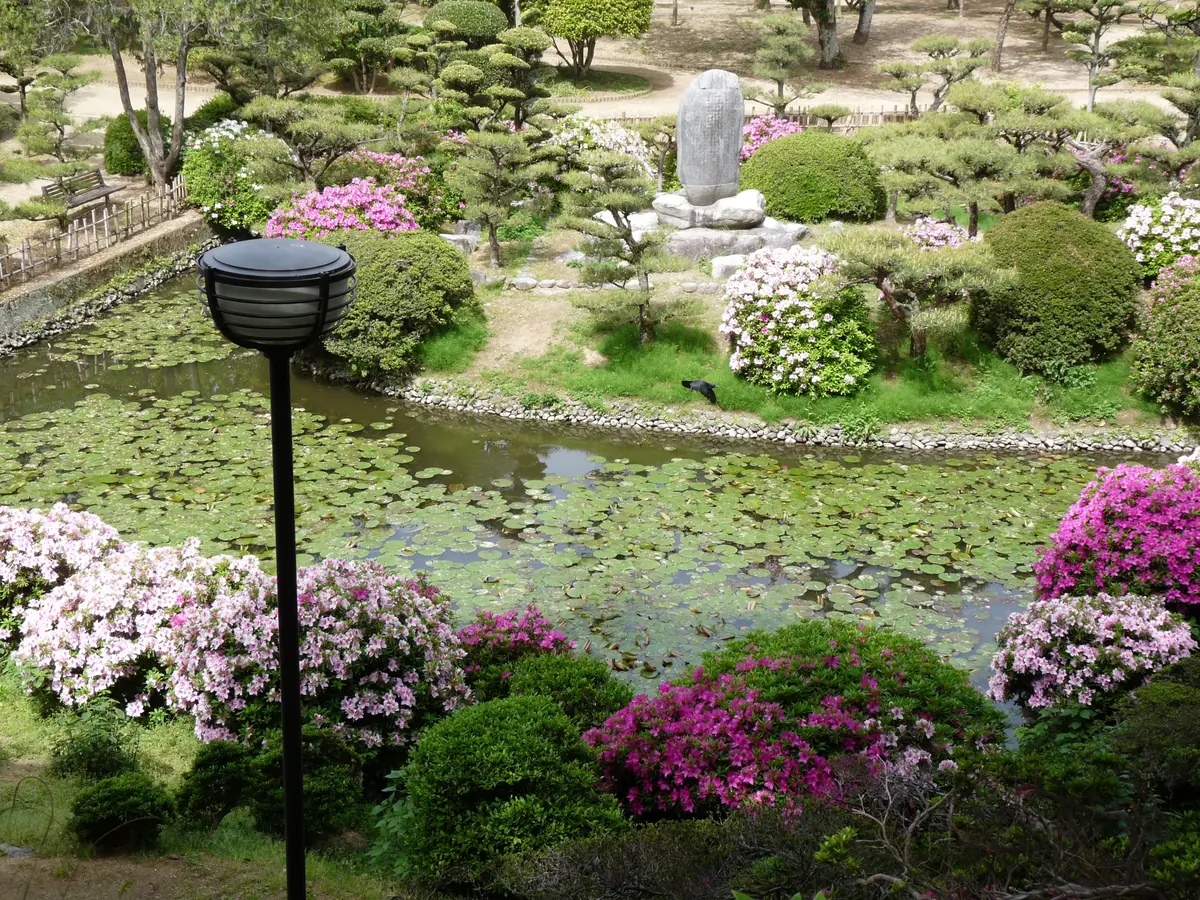
Dogo Park, worth combining with Isaniwa Shrine, is laid out on the site of Yuzuki Castle, the seat of the Kono clan who were military governors of Iyo in medieval times, and is a National Historic Site. It has samurai houses reconstructed from excavation findings and the Yuzuki Castle Museum, and the lookout on the hill gives views over the Matsuyama Plain. By tram, it is right by Dogo Koen stop.
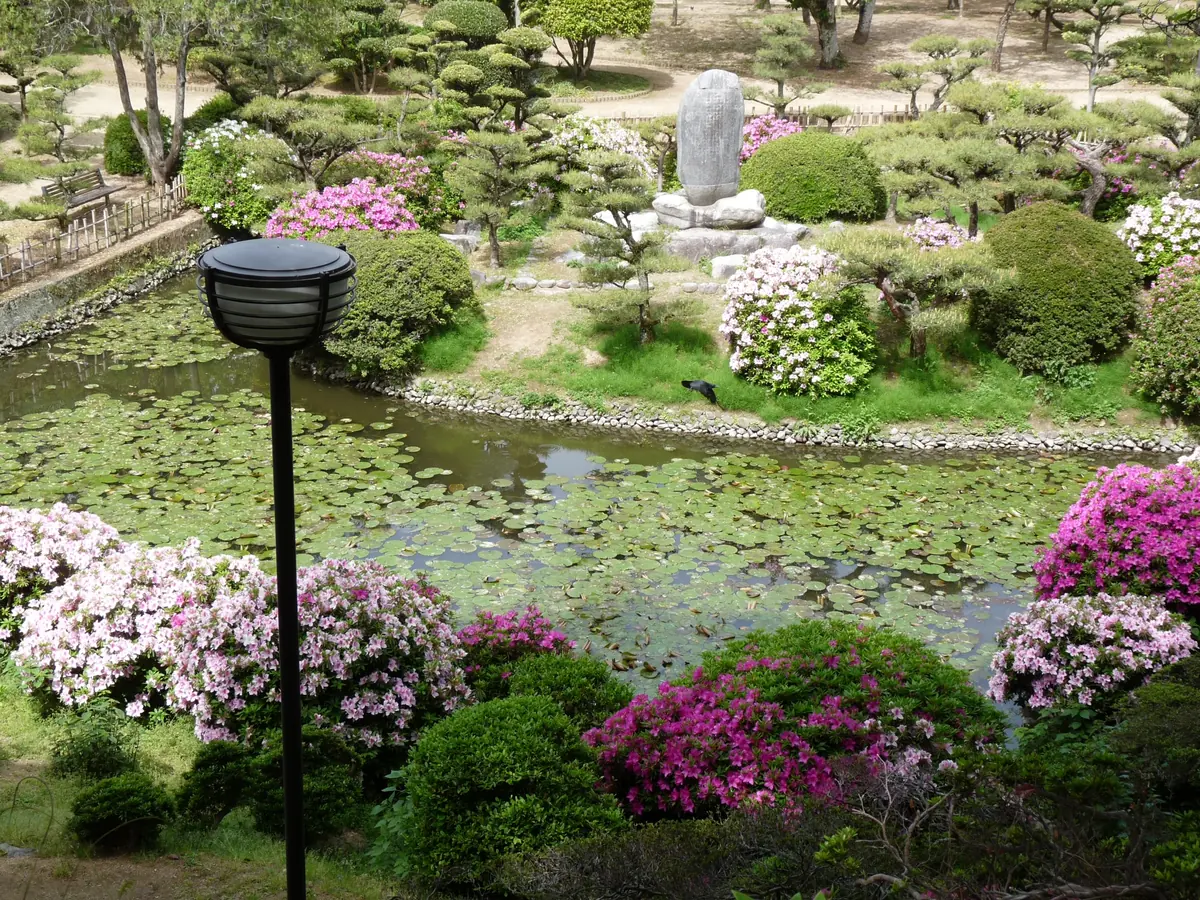
Photo: Ehime Prefectural Tourism & Local Products Association
Inside the park is the Shiki Memorial Museum, which traces the life of Masaoka Shiki, the haiku poet from Matsuyama. In 1895, while Soseki was in Matsuyama, Shiki stayed with him at his lodgings for 52 days. The permanent galleries were renewed in July 2024, with videos and quizzes on Shiki and Matsuyama's literature. It is about a 5-minute walk from Dogo Onsen Station.
About 1 km from Dogo Onsen is Ishite-ji Temple, Temple 51 of the Shikoku Pilgrimage, with its Niomon gate, a National Treasure.
Seeing the castle and the hot spring in one day
The castle in the morning and the hot spring in the evening is the most efficient order.
- Get off at Okaido and take the ropeway or chairlift up from Shinonome-guchi. Explore the citadel and keep
- Walk down the Kuromon-guchi trail to Ninomaru Historic Garden, then stop by Bansuiso and the Saka no Ue no Kumo Museum
- Take the tram from Okaido to Dogo Onsen Station and walk around Isaniwa Shrine and Dogo Park
- In the evening, have a bath at Dogo Onsen Honkan
If you want to ride the Botchan Train, plan the move in step 3 around that day's timetable. Check Matsuyama Castle's opening hours and admission on the castle's website. If you want to go farther, the old towns of Ozu and Uchiko are about 25 to 40 minutes from Matsuyama by limited express.