Murakami, Niigata: Salmon Town, Sasagawa Nagare and Senami Onsen
This guide is translated from the Japanese edition. Read the Japanese edition
Murakami, Niigata, 50 minutes by limited express: the Iyoboya Kaikan salmon museum, machiya lanes, the Sasagawa Nagare coast and boat, and sunsets at Senami Onsen.
In December, salted salmon hang in rows from the eaves of Murakami's machiya townhouses and from the beams of its shops. Murakami, near the northern end of Niigata Prefecture, is an old castle town that has lived alongside the salmon returning up the Miomote River, which runs through it. Walk the salmon museum and the machiya streets, head north to the rock-studded Sasagawa Nagare coast, then wait for the sunset at Senami Onsen by the sea. A day trip from Niigata City is possible, but a night at the onsen lets you take it slowly.
Getting from Niigata to Murakami and Sasagawa Nagare
From Niigata Station to Murakami Station, the JR Uetsu Line limited express Inaho takes about 50 minutes. The sights in town are within walking distance of Murakami Station; the city's tourism association says they lie within about 2 km of the station.
The nearest station to Sasagawa Nagare is Kuwagawa, further north along the Uetsu Line from Murakami. The Inaho doesn't stop at Kuwagawa, so change at Murakami to a local or other train. Services are limited, so check the JR East timetable in advance. If you want to stop again and again along the coast, a car gives you much more freedom. The Kairi sightseeing train also runs on the Uetsu Line, and north of Murakami its windows look out on the Sasagawa Nagare coast. For Niigata's tourist trains, see the Niigata scenic trains guide.
Learning about Miomote River salmon at Iyoboya Kaikan
"Iyoboya" is the Murakami word for salmon. Iyoboya Kaikan opened in 1987 as Japan's first salmon museum. It's about 20 minutes on foot from Murakami Station, and you can also take a local bus or community bus.
Any account of salmon in Murakami has to include Aoto Buheiji, a samurai of the Murakami domain in the Edo period. Noticing that salmon return to the river where they were born, he is known for creating the Tanegawa, a branch of the Miomote River where salmon could spawn, and he is said to have been the first in the world to succeed in boosting salmon numbers through natural spawning and hatching. The museum has a corner dedicated to him.
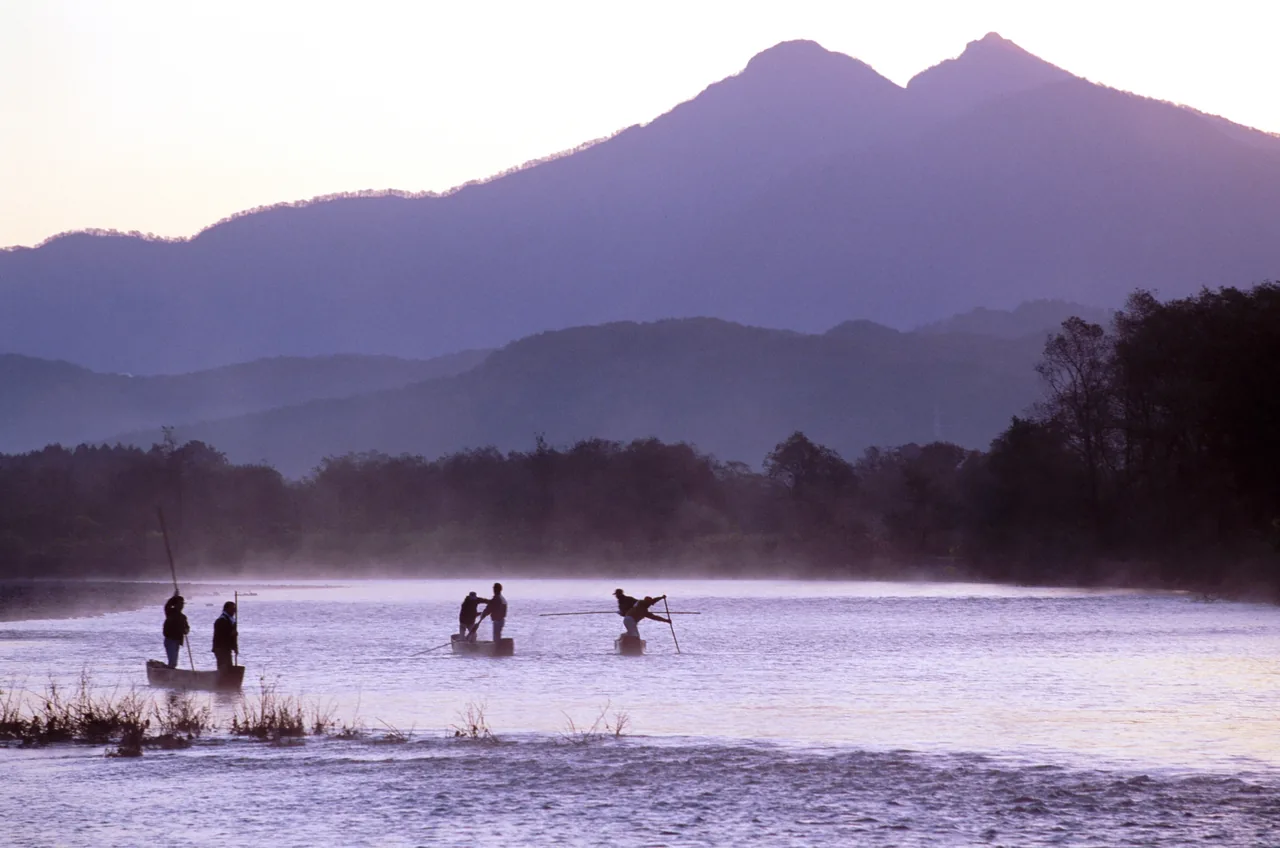
The highlight is the underground observation room. Through the glass you can look into the water of the Tanegawa, and from around October to December, when the salmon run upriver, you can see them up close.
Salted salmon and the machiya townscape
Murakami is said to have more than 100 salmon dishes. The best known is shiobiki-zake, salted salmon: salmon from the Miomote River are gutted, rubbed with salt, then desalted and hung under the eaves for several weeks to dry. They're hung head down so as not to suggest a hanging, and the belly is left partly joined, a cut called tomebara, to avoid any hint of seppuku. These samurai-town customs are still followed today.
In December, the "Echigo Murakami Salmon Shiobiki Kaido" sees salted salmon hung from machiya eaves, and the fish swaying in the cold wind against the old townhouses have become a sight of winter.
Some seasonal events let you see inside the machiya. "Machiya no Ningyo-sama Meguri" (doll displays) in early spring and the autumn "Machiya Byobu Matsuri" (folding screens) are run by the Murakami Machiya Merchants' Association, a group of local shopkeepers; homes that people still live in open their interiors to show Edo-period hina dolls and folding screens. Check the Murakami City Tourism Association for each year's dates.
The lane running from Komachi to Teramachi is the "Kurobei-dori" (Anzen-koji), lined with black wooden fences. It used to have ordinary concrete-block walls, until the "1,000 yen per black fence board" campaign spread, funded by residents' donations, and about 460 m of black fencing went up. The machiya and the black-fence lanes are homes where people still live, so don't peer into the properties or linger at the doorways.
The Sasagawa Nagare coast and sightseeing boat
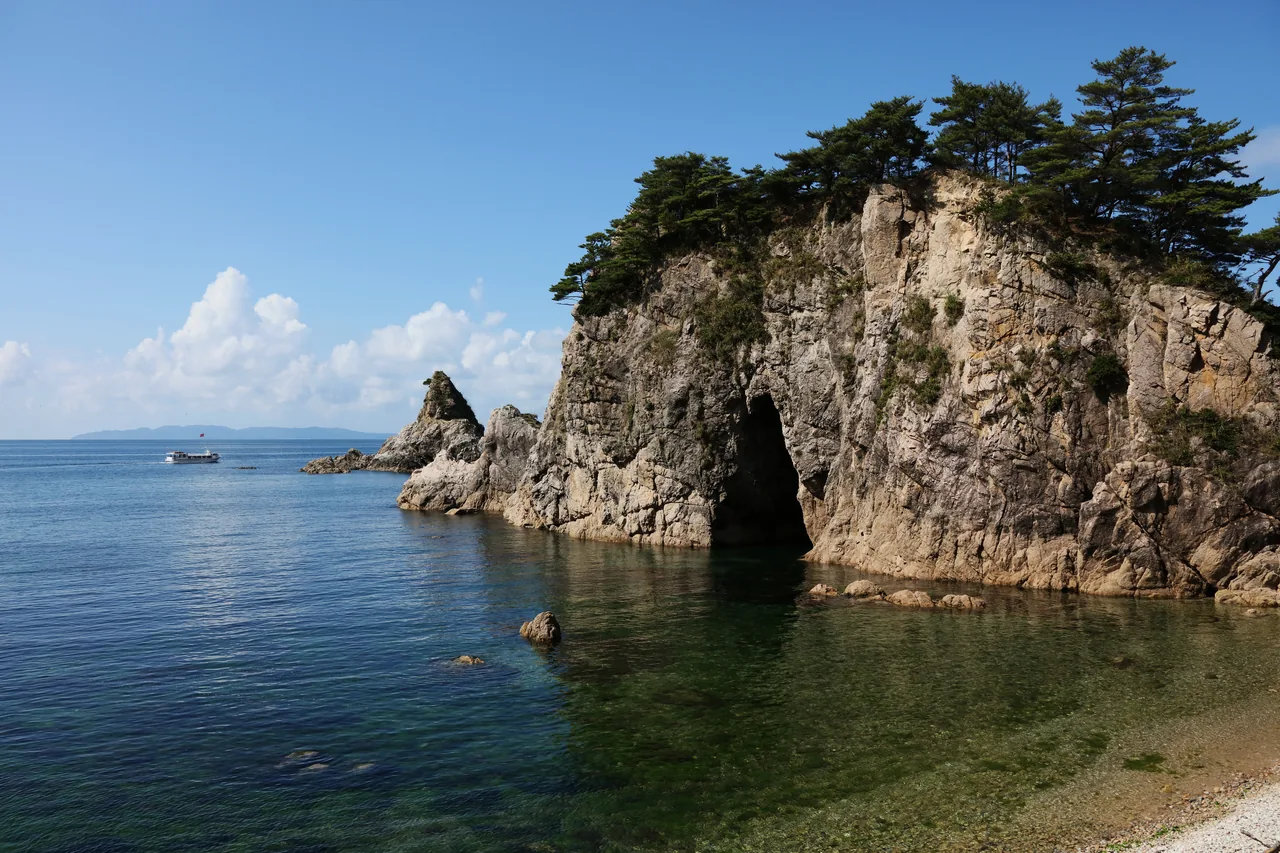
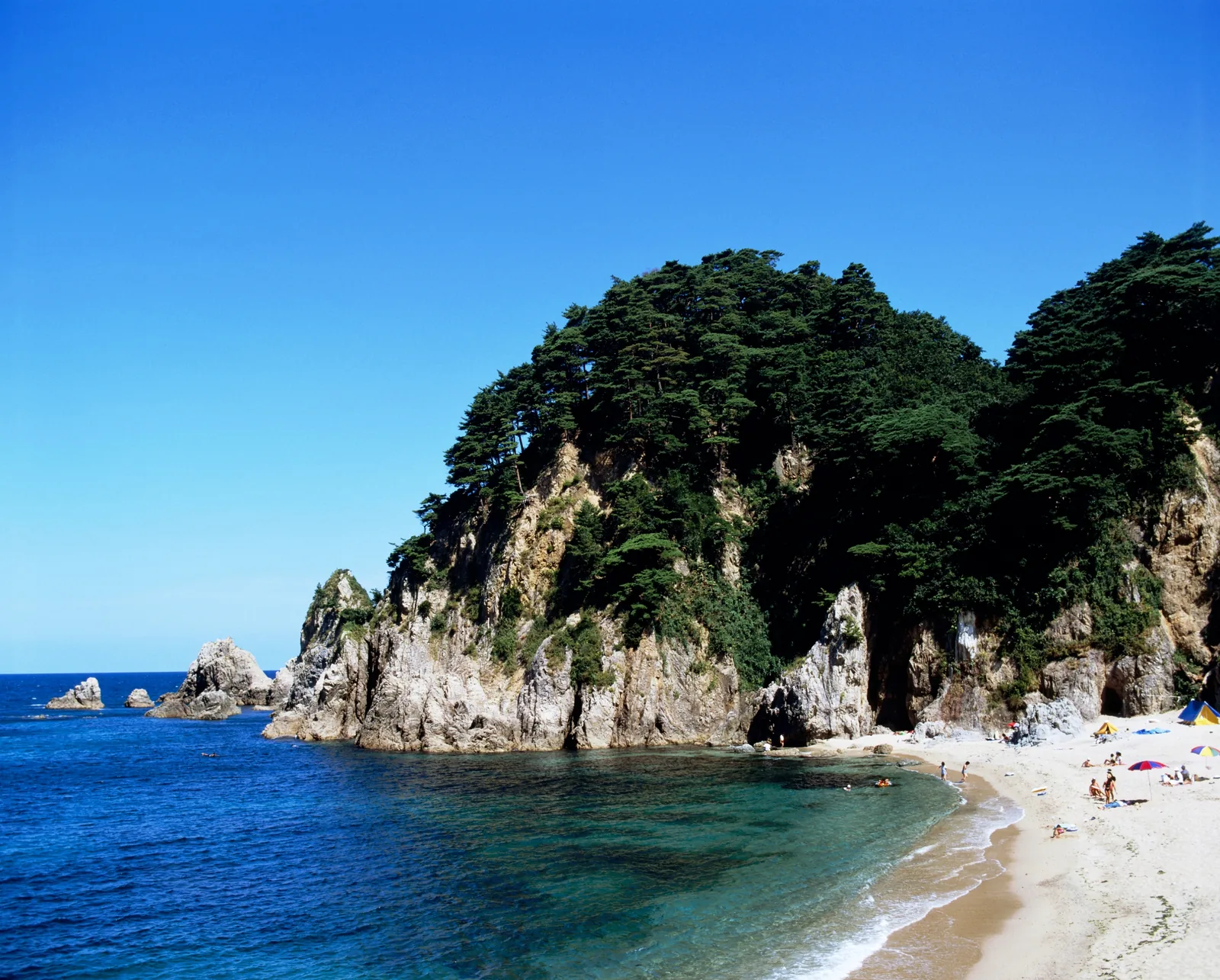
Sasagawa Nagare, stretching for about 11 km along the Sea of Japan in the north of Murakami City, is a national Place of Scenic Beauty and Natural Monument. The name comes from the way the tide surges between the rocks, named after Sasagawa, the village at its center. Strange rocks and caves line the clear water, and Megane-iwa ("Spectacles Rock") is the best known.
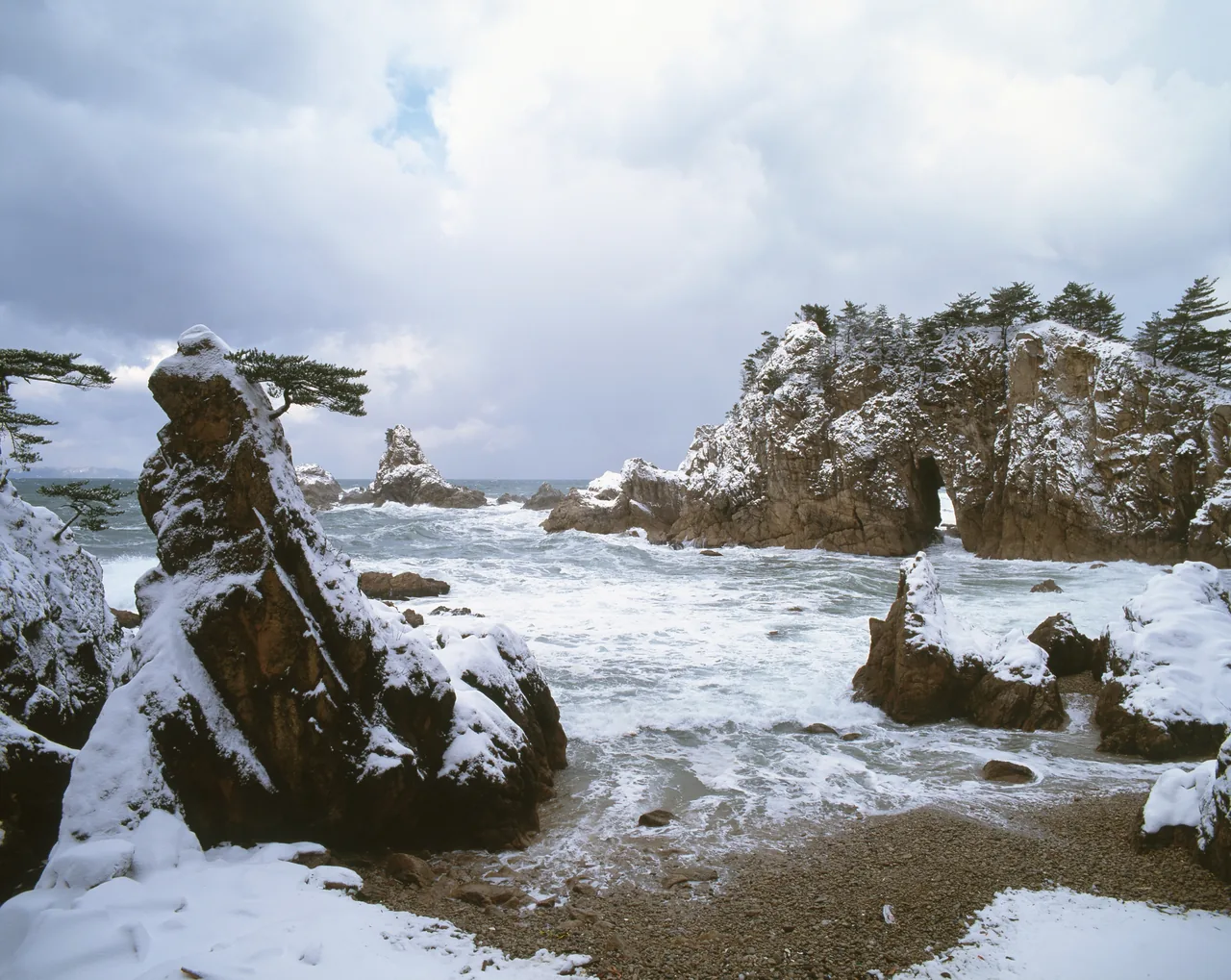
To look up at the rocks from the water, take the Sasagawa Nagare Kanko Kisen sightseeing boat from Kuwagawa harbor. The trip takes about 40 minutes, and you can feed the gulls that gather around the boat. It doesn't run in winter, and even in season it's cancelled in strong wind or high waves, so check on the day. Near Kuwagawa Station is the Michi-no-Eki Sasagawa Nagare roadside station, a good spot for a break with a view of the sea.
Watching the sun set over the Sea of Japan at Senami Onsen
West of Murakami Station, facing the Sea of Japan, Senami Onsen began in 1904, when hot water gushed out during a test drilling for oil. Its flow is one of the most plentiful in the prefecture, and the big pleasure here is watching the sun sink into the Sea of Japan from the baths of the seaside inns. You can get there by bus from Murakami Station.
Sunset times vary a lot through the year, and in winter the sun goes down early in the evening. If you plan to watch from the shore, look up that day's sunset time and arrive early.
A day trip, or a night at Senami Onsen?
On a day trip, see Iyoboya Kaikan and the machiya in town in the morning, then head to Kuwagawa by train or car in the afternoon for the boat. With the limited trains to Kuwagawa, though, the day can feel rushed.
With a night at Senami Onsen, walk the town on day one, get into the hot spring in the evening and watch the sunset. Spend day two on the Sasagawa Nagare coast and boat, and you can enjoy both at an easy pace. From autumn, when the salmon return to the river, to December, when salted salmon line the eaves, is when Murakami feels most like itself.
For sightseeing information on Murakami, see the Murakami City Tourism Association; for Sasagawa Nagare, see the Murakami City official website.