Niigata Cherry Blossoms: Takada Castle Night Sakura and More
This guide is translated from the Japanese edition. Read the Japanese edition
Niigata cherry blossoms: the night sakura of Takada Castle Site Park in Joetsu, Shibata Castle, cherries and rapeseed at Kamizekigata Park, and how to get there.
In snowy Niigata, cherry blossoms mark the end of a long winter. In April, the trees lining the moats of Takada Castle Site Park in Joetsu glow under paper lanterns, while on the outskirts of Niigata City yellow rapeseed spreads beneath the blossoms. Niigata's sakura come in two main flavors: night blossoms along castle moats, and cherry trees with rapeseed in the countryside.
When do the cherry blossoms bloom in Niigata?
On the plain, cherry trees bloom once April arrives, and April is also hanami season at Takada Castle Site Park in Joetsu. In 2026 the Takada Castle Site Park Cherry Blossom Festival ran from April 3 to April 19. In the mountains and on Sado's higher ground the trees bloom later than on the plain, so a single trip can take in blossoms at different stages.
Bloom dates move with each year's temperatures. When you pick your dates, check the bloom reports from local tourism associations and parks shortly before you go.
Takada Castle Site Park: night sakura counted among Japan's top three
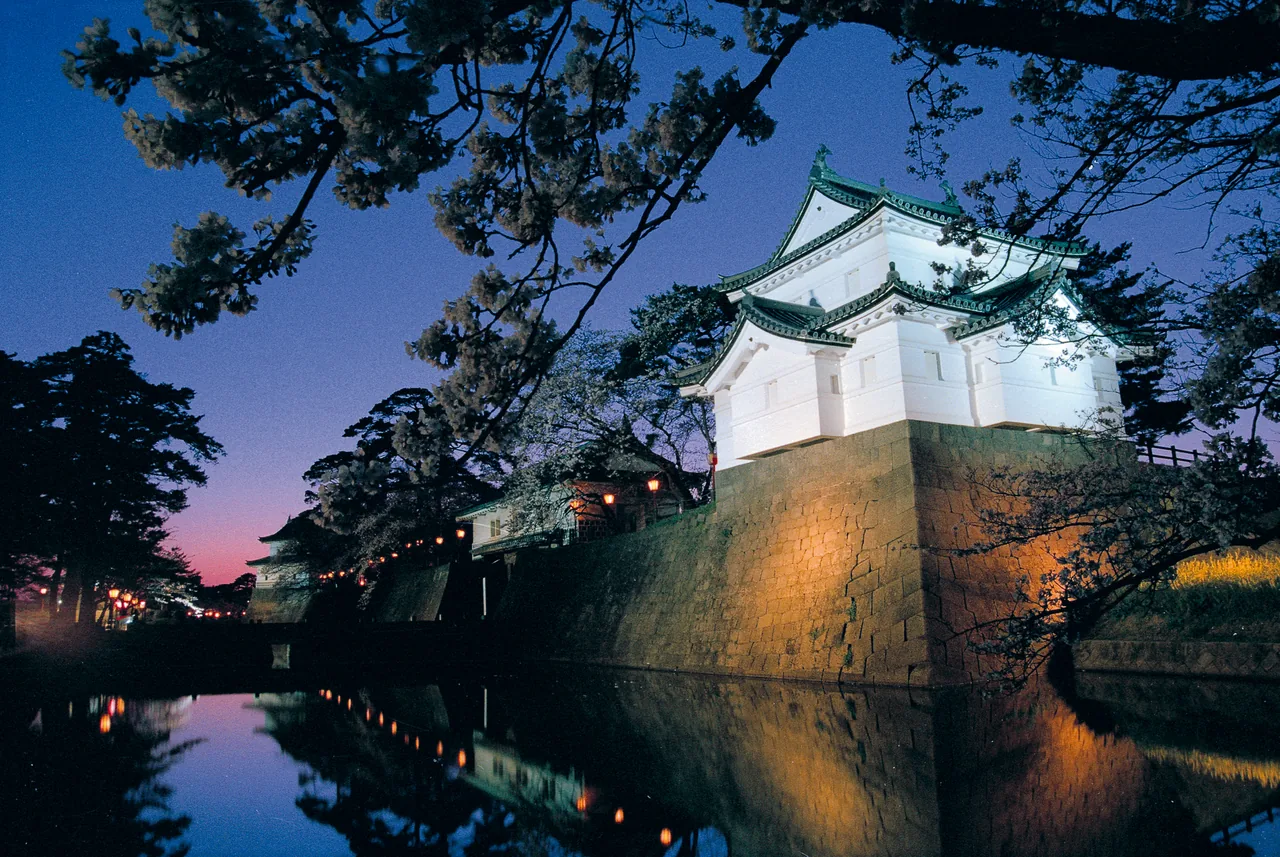
Takada Castle Site Park (Joetsu City) is a park on the grounds of the former Takada Castle. According to Joetsu City's tourism materials, the park and its surroundings have about 4,000 cherry trees, and Takada's night cherry blossoms are counted among the "three great night cherry blossom views of Japan."
During the spring festival, about 3,000 bonbori lanterns are lit, and the blossoms and the three-tiered turret are reflected in the moat. In 2026 the illumination ran from 6 p.m. to 9 p.m., extended to 10 p.m. at peak bloom. Food stalls line the paths and the crowds stay late into the night.
The nearest station is Takada on the Echigo TOKImeki Railway, and the park is walkable from there. If you arrive by Hokuriku Shinkansen at Joetsumyoko Station, change to the local line for Takada. Evenings get especially busy during the festival, so walk around once while it is light to get your bearings, then come back for the night blossoms from late afternoon.
Shibata Castle: blossoms against turrets and moat
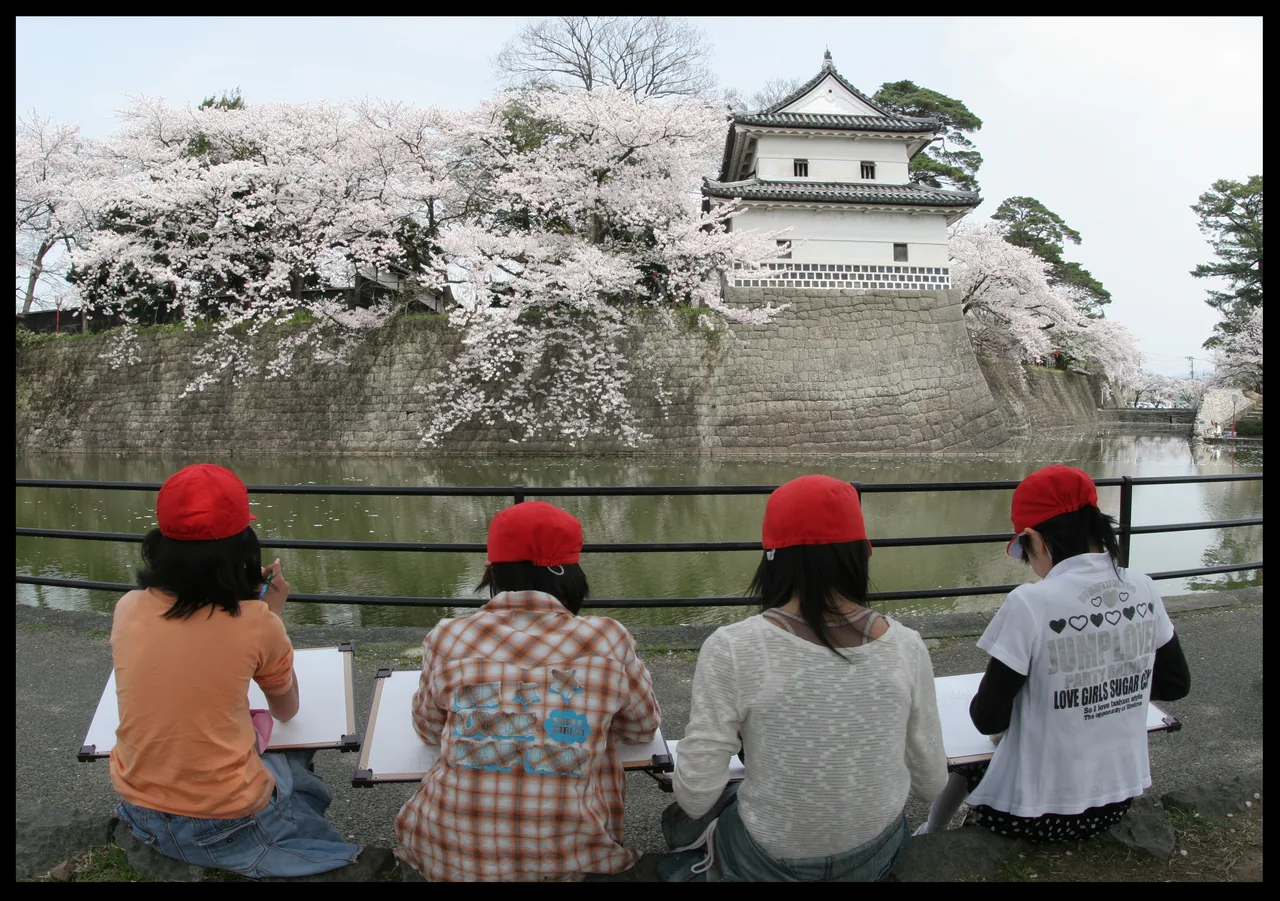
Shibata Castle (Shibata City) is known for its three-story turret topped with three shachihoko (mythical fish) on the roof. Cherry trees line the moat of the castle park, so you see the blossoms together with the white namako-patterned walls of the turrets and the stone walls. It is within walking distance of JR Shibata Station and works well as a day trip from Niigata Station.
Kamizekigata Park and Maki: cherry trees and rapeseed together
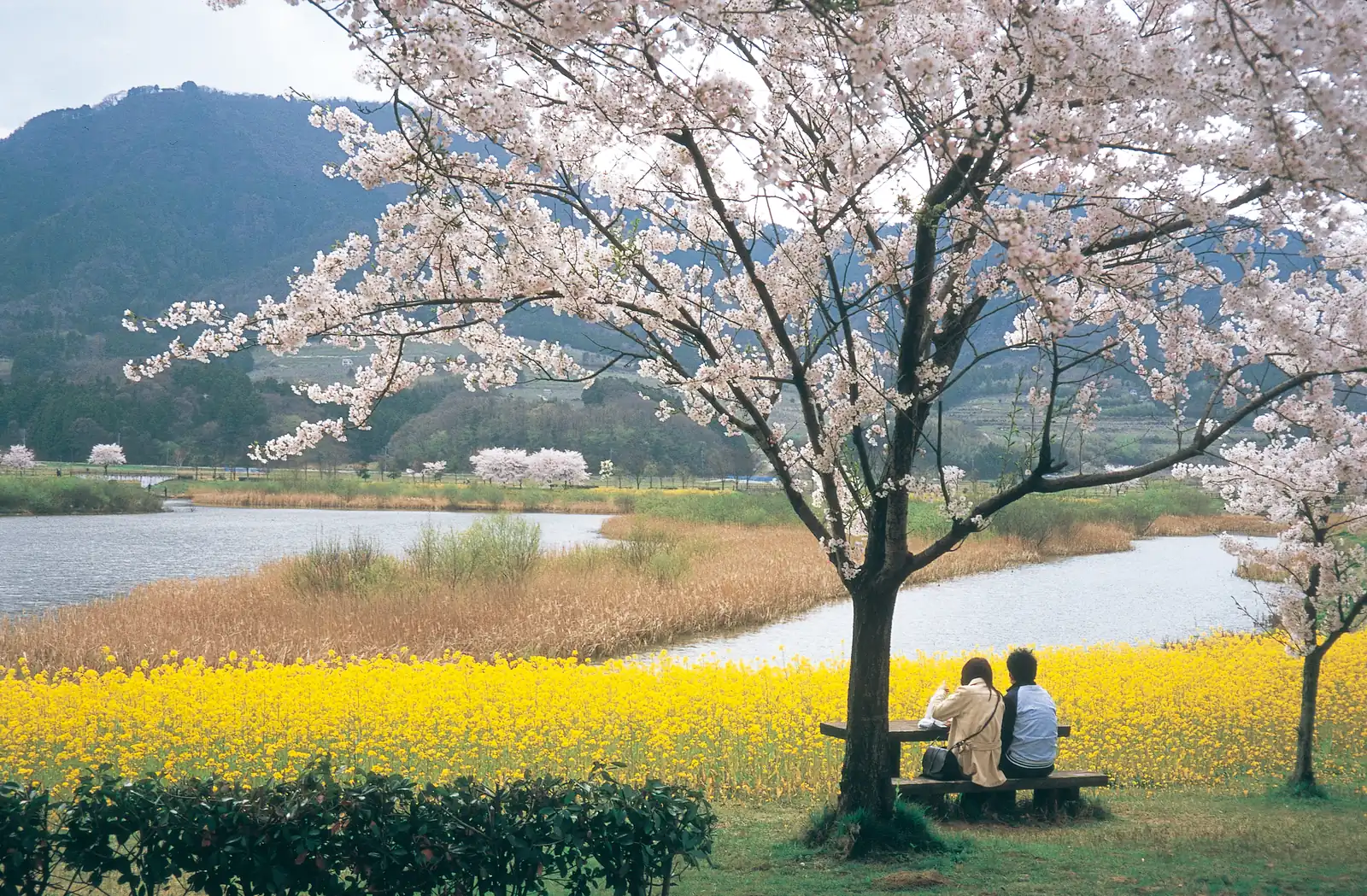
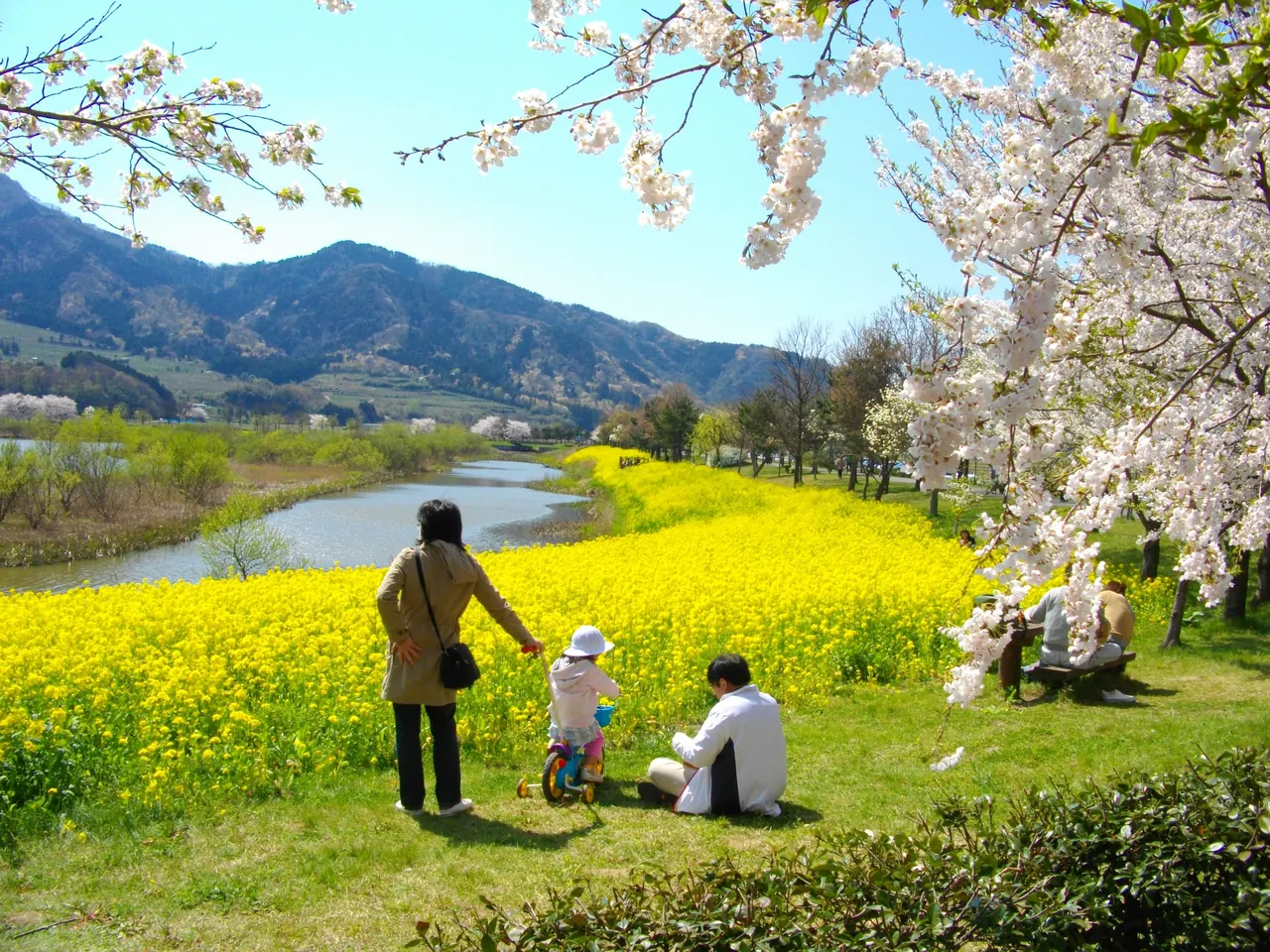
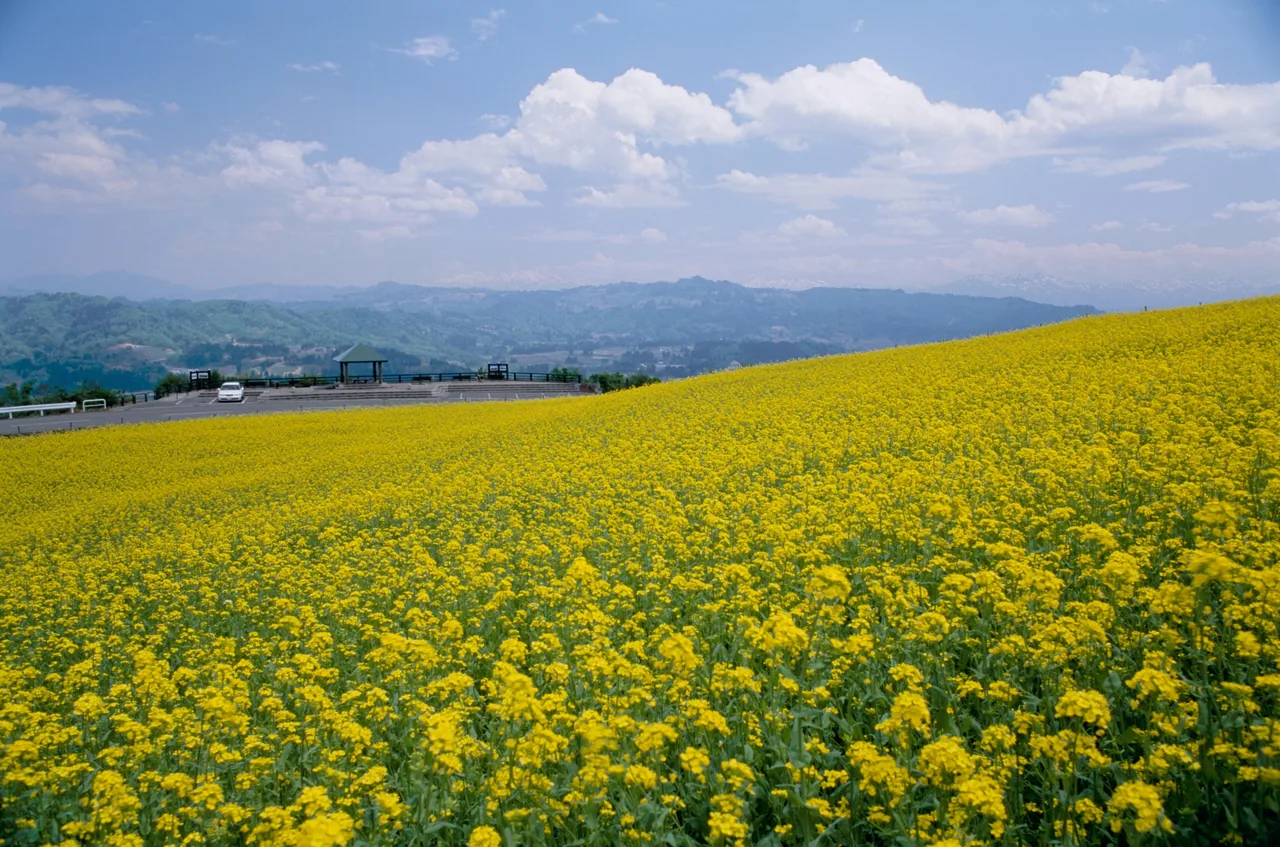
Kamizekigata Park in Nishikan Ward, Niigata City, sits at the foot of Mt. Kakuda. According to facility information supervised by Niigata City, it has about 450 cherry trees, mostly Somei-yoshino. In spring rapeseed blooms beneath the cherries, with Mt. Kakuda rising beyond the pink and yellow. A walking path of about 2 km loops around the lagoon, and admission is free.
The nearest station is Maki on the JR Echigo Line; from there take a bus or taxi. The farmland around Maki has other places where cherries and rapeseed bloom together, and touring the spring countryside by car or bicycle is a pleasure.
More spots around Niigata City: Junsai-ike, Gosen, Kashiwazaki
- Junsai-ike Pond (Kita Ward, Niigata City): cherry trees line the pond's edge, and you can enjoy them on a waterside stroll.
- Gosen City: a quiet spring scene where a local train runs past the cherry trees.
- Akasakayama Park (Kashiwazaki City): a local park on a hill of red pines, with Somei-yoshino as well as double-flowered and weeping cherries.
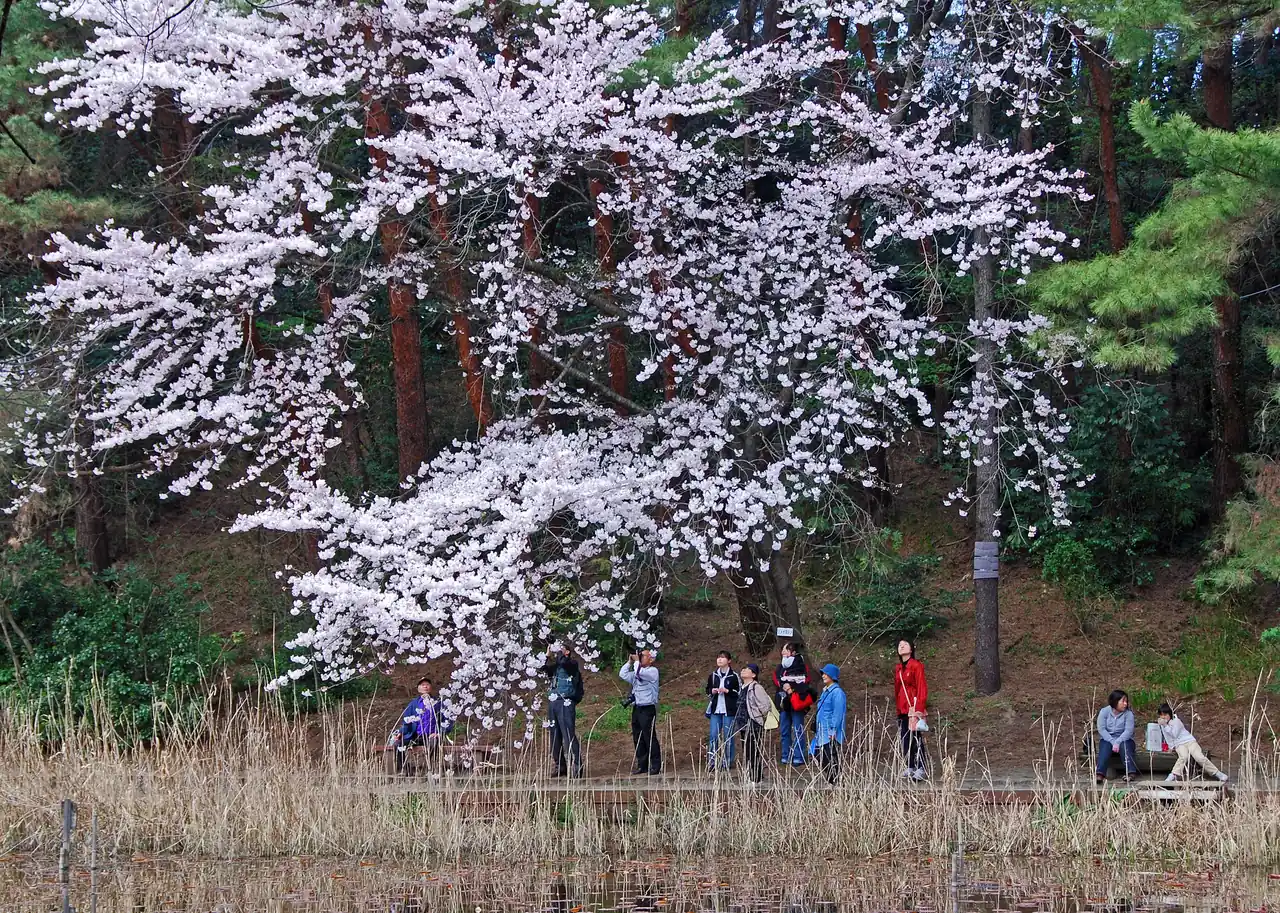
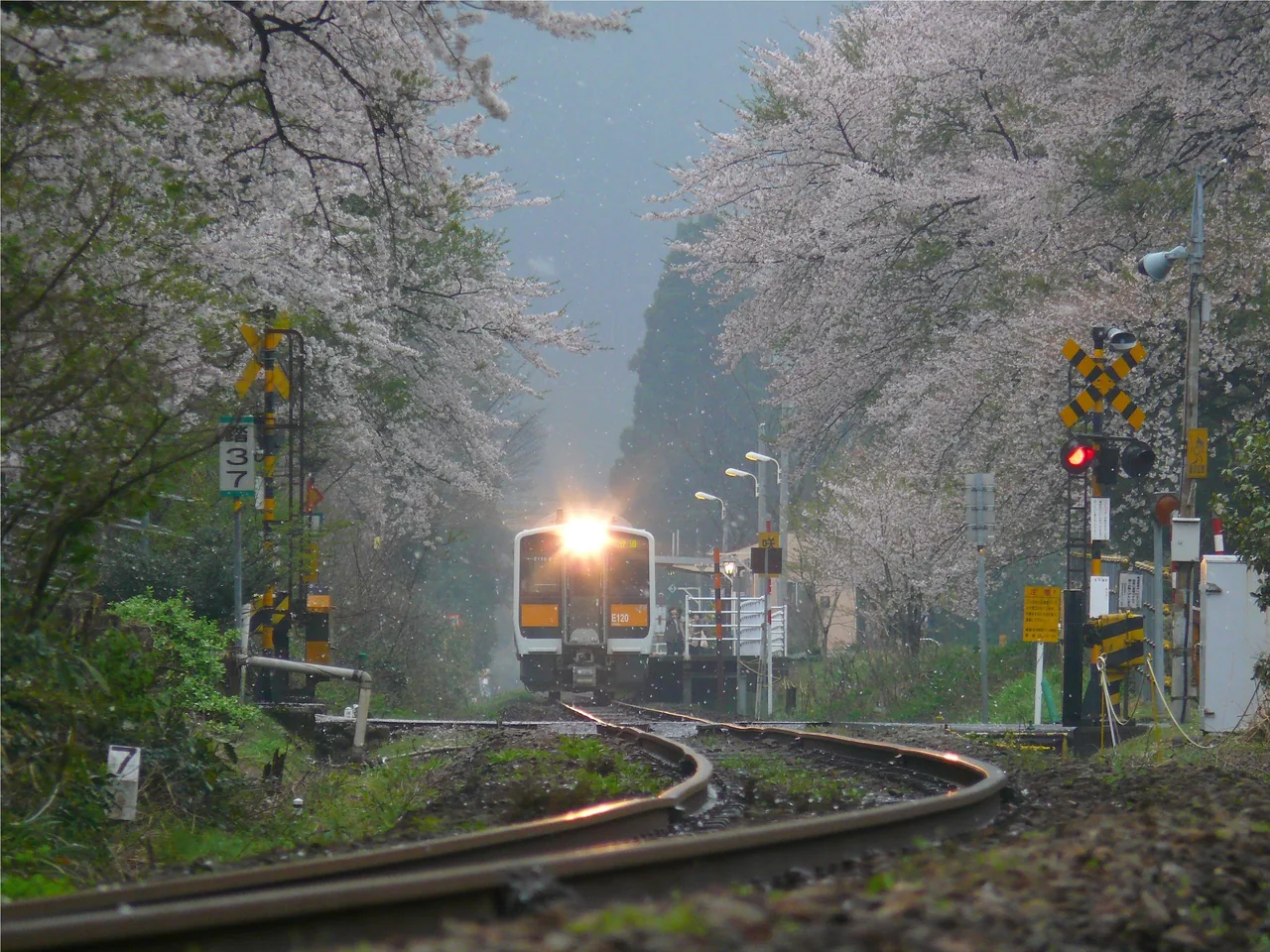
These are all places where locals go for hanami, and weekday afternoons are relatively calm.
Rapeseed on Mt. Yamamoto and Sado's mountain cherry
Mt. Yamamoto in Ojiya City turns yellow with rapeseed flowers on top in spring. It is a hilltop overlooking the plain of the Shinano River, and some visitors time their trip to catch it alongside the cherry blossoms.
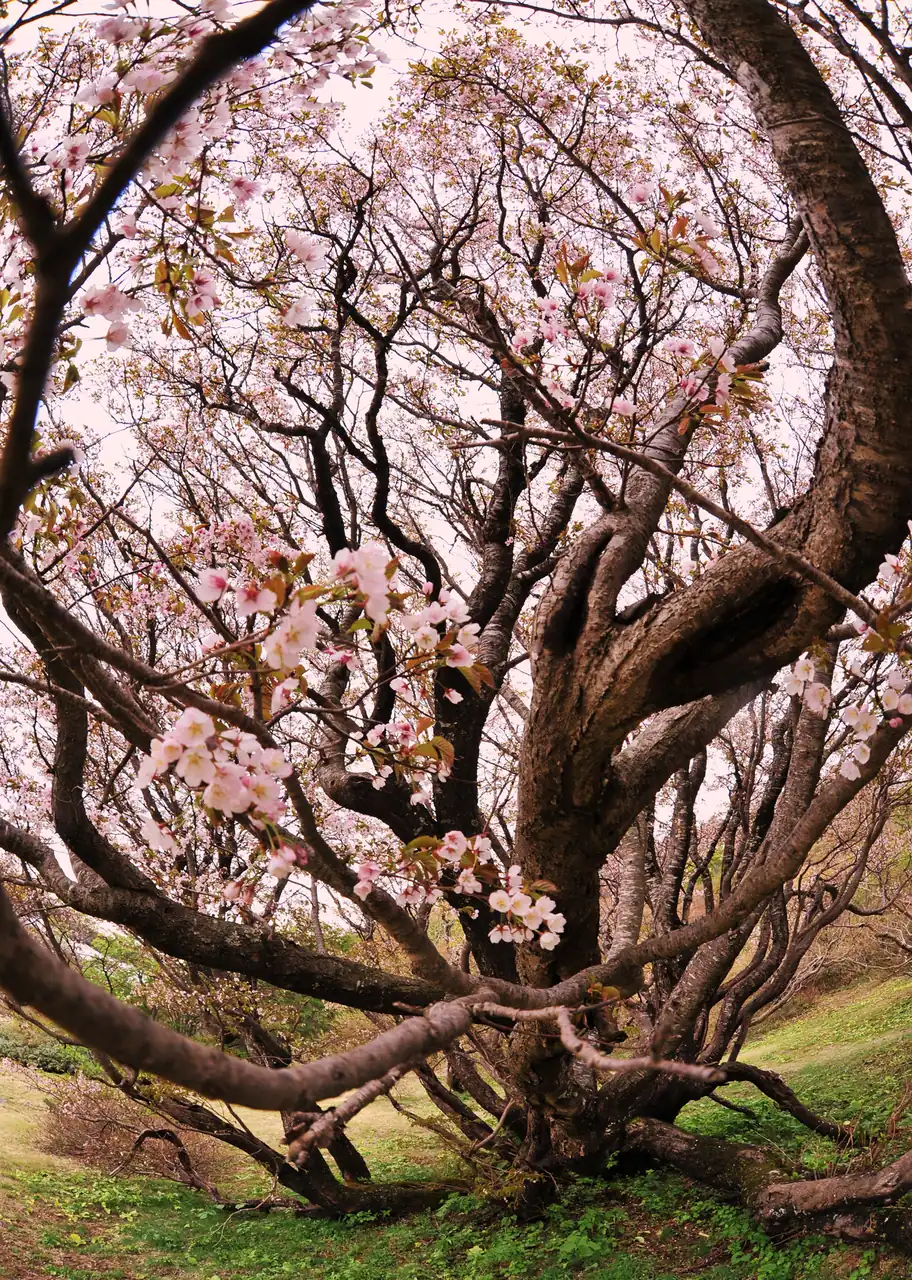
On Sado, near Hakuuntai high in the Osado mountains, stands a wild mountain cherry called Senryu-zakura. Being up in the mountains it blooms later than the lowlands, so if you are traveling around Sado you can still enjoy it after the cherries below have finished. Ferries to Sado can be cancelled in bad weather, so leave some slack in your schedule.
Getting ready for night viewing and hanami
April in Niigata can be warm in the daytime but turn cold after sunset. For evening hanami like Takada's moat-side night blossoms, bring an extra layer. Spring weather is changeable, and a folding umbrella saves you from rearranging your plans.
The basic hanami rules are the same anywhere in Japan: claiming spots in the park, taking your rubbish home, not touching the branches. If this is your first hanami in Japan, look through Japan cherry blossom season and hanami etiquette and you will fit right in with the locals.
Planning a spring trip in Niigata
Takada in Joetsu and the area around Niigata City (Shibata, Kamizekigata, Junsai-ike, Gosen) are far apart, and covering both in one day is a rush. Base yourself on the Hokuriku Shinkansen for Takada and on Niigata Station on the Joetsu Shinkansen for the Niigata City area, and split them over separate days.
In autumn, the leaves in Niigata start turning in the mountains. The main spots are covered in Niigata's best autumn leaves spots.