Niyodo Blue Guide: Nikobuchi, Yasui and Nakatsu Gorges, Bridges
This guide is translated from the Japanese edition. Read the Japanese edition
Where to see Niyodo Blue in Kochi: Nikobuchi and the Yasui and Nakatsu gorges at their best light, submersible bridges, the UFO Line and getting around without a car.
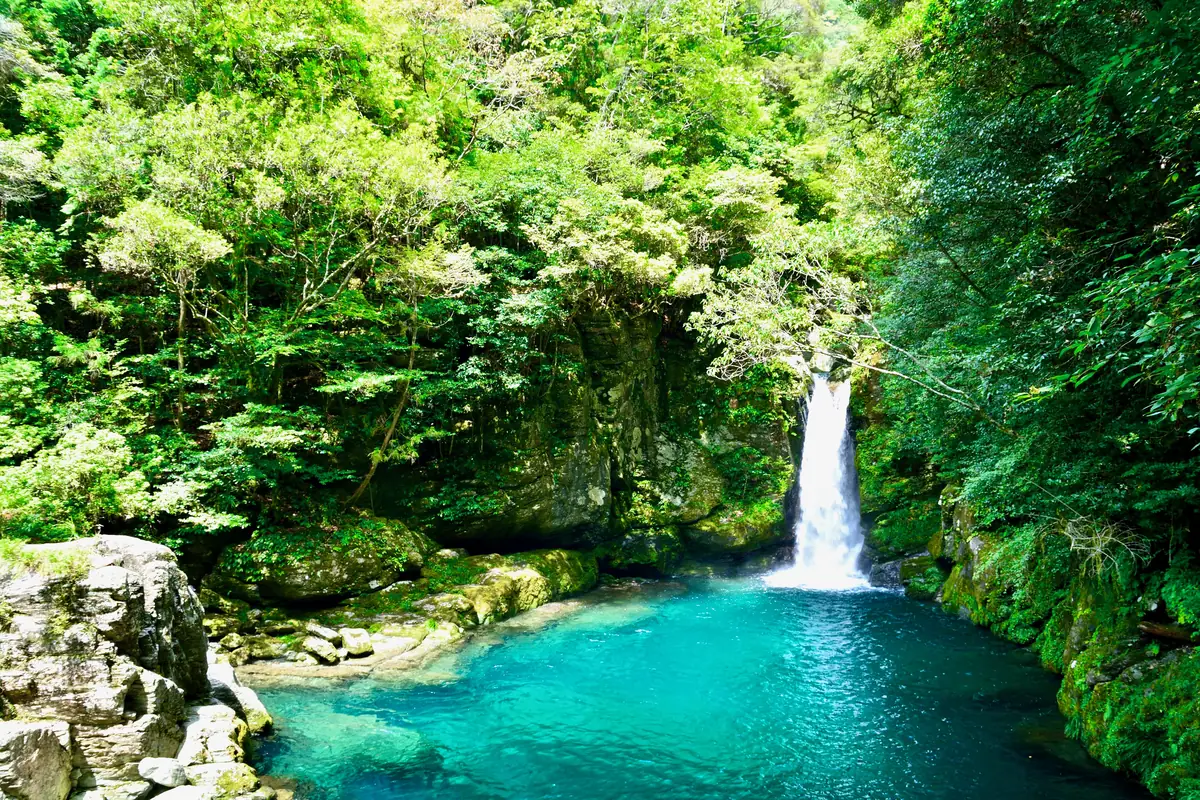
When sunlight slips through the trees, the water in the plunge pool starts to glow blue. On the Niyodo River in central Kochi Prefecture and its tributaries, this clear blue water has a name: Niyodo Blue. The places to see it are scattered through the mountains, the roads are narrow, and the color shifts with the weather and the time of day. On a sunny day, what decides the blue is whether you can be at the pools around midday, when the sun shines straight in.
What is Niyodo Blue?
According to the town of Niyodogawa, the name Niyodo Blue was coined by photographer Nobuyuki Takahashi, who has spent years photographing the river. In the national water-quality survey of Class A rivers that the Ministry of Land, Infrastructure, Transport and Tourism compiles each year, the Niyodo has been named a river with the best water quality many times, including two years running in the 2024 and 2025 surveys.
Whether the water looks blue depends on the light. The color changes with the weather, the angle of the sun and the amount of water, even at the same spot, so the best plan is to time your visit for when the sun is out and shining in. The Niyodo Blue Tourism Council, set up by six towns and villages along the river, publishes information on the sights and how to get around.
Nikobuchi: bluest around midday
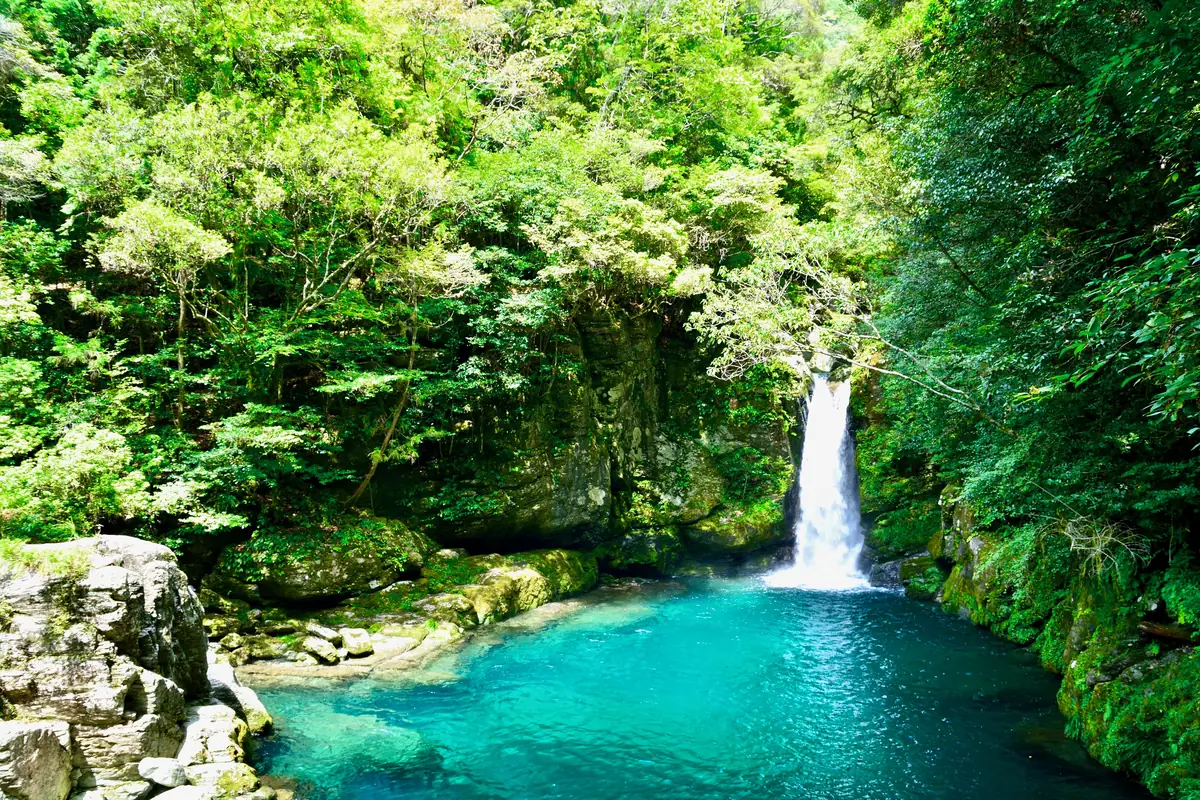
Nikobuchi is a plunge pool surrounded by green trees in the mountains of Ino. It is the first name that comes up when people talk about Niyodo Blue.
According to the Niyodo Blue Tourism Council, sunlight reaches the whole pool around midday, which is when the blue is easiest to see. That is also when the crowds arrive, so if you would rather see it quietly, consider going outside the late-morning to early-afternoon window.
Local legend says a giant serpent, an incarnation of the water god, lives here, and the pool is still treated as sacred. Swimming, entering the water, and eating or drinking are not allowed. There are steps down to the pool, but the path is steep in places and the rocks are slippery with moss and water, so wear sturdy shoes. It is about 60 minutes by car from Ino IC on the Kochi Expressway. There are five parking areas nearby, with temporary spaces when they are full.
Yasui Gorge: Suisho-buchi and Hiryu Falls
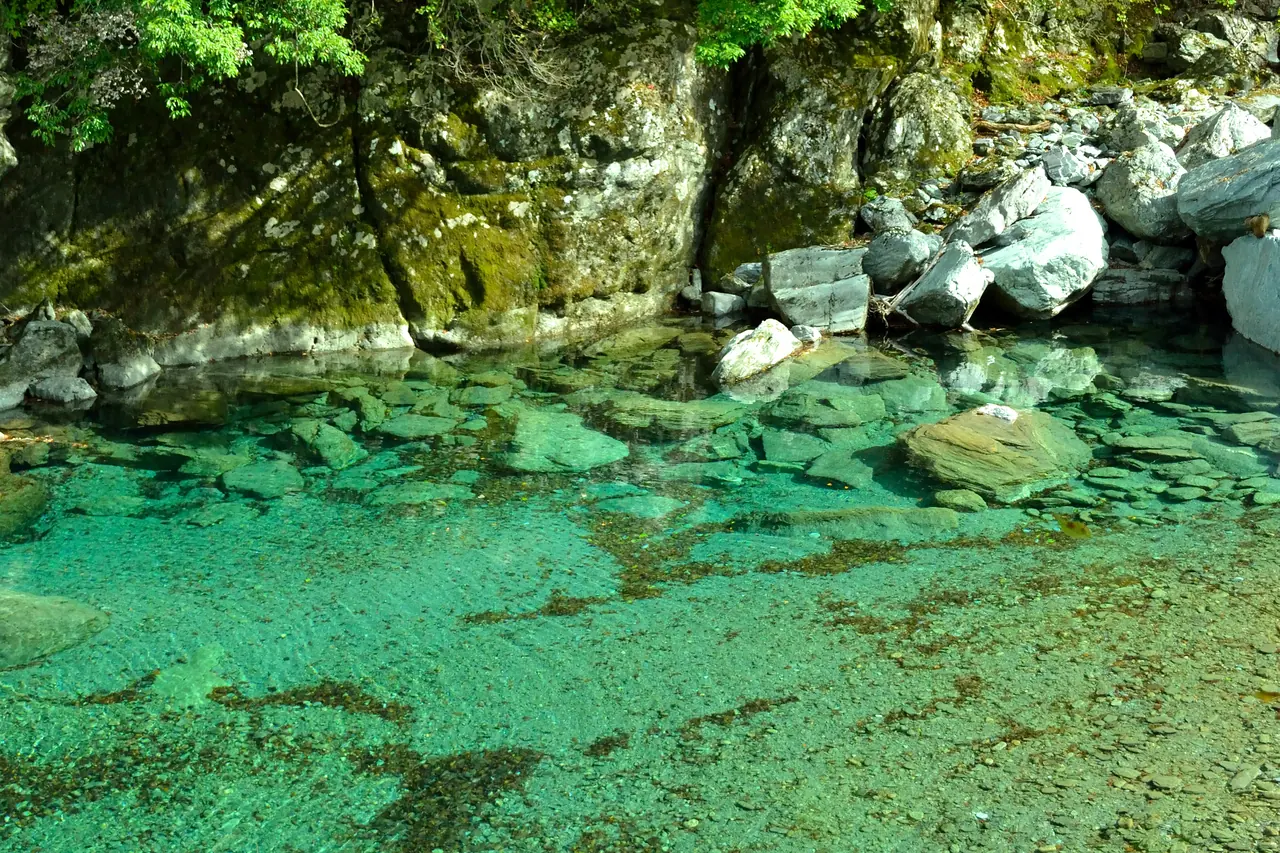
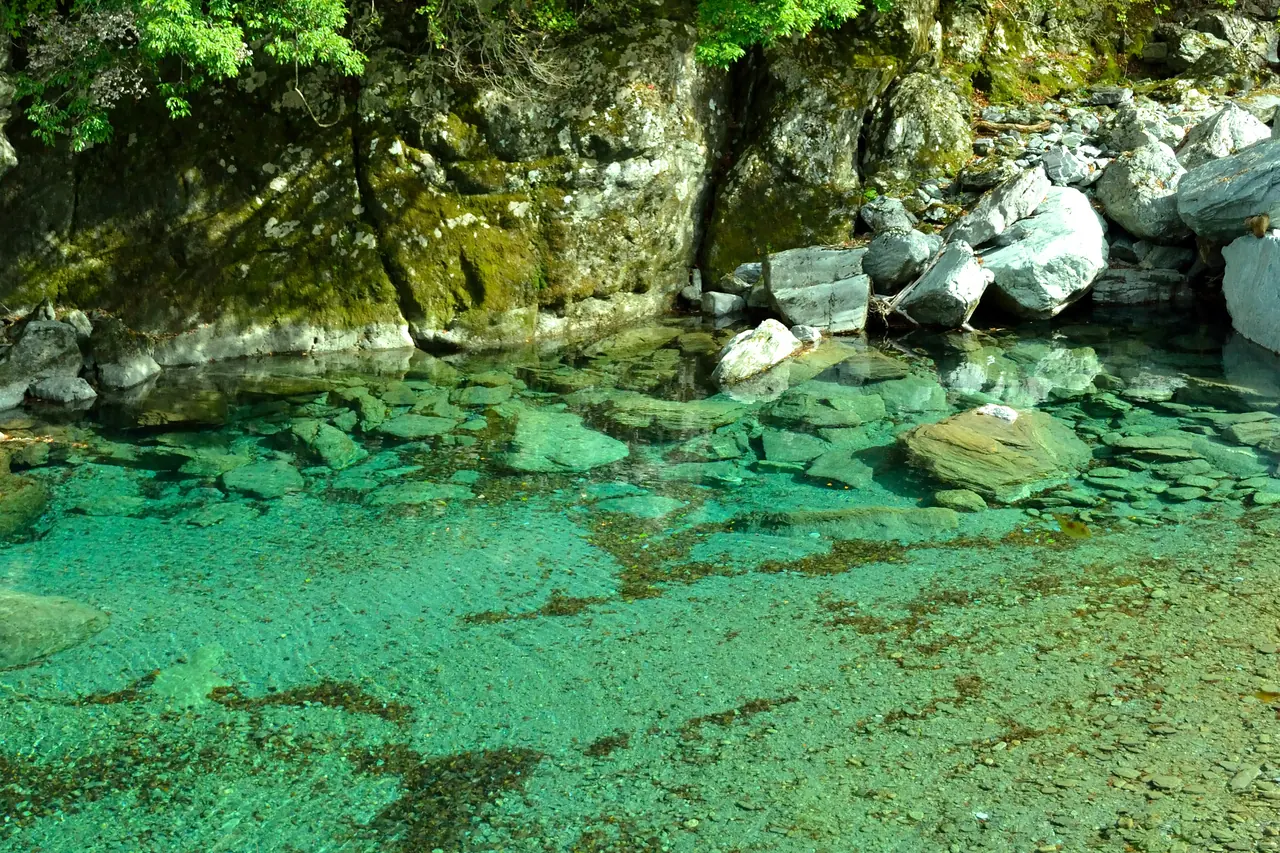
Deep in the mountains of Niyodogawa, Yasui Gorge is a valley of blue-green water so clear you can see the stones on the riverbed, lined with pale rock.
画像提供:(公財)高知県観光コンベンション協会
Along the walking path is Suisho-buchi, a pool known for especially clear water. From Otomegawara, a walk of about ten minutes takes you to Hiryu Falls. Autumn colors arrive around November, and the gorge gets very crowded on November weekends and holidays.
It is about 1 hour 5 minutes by car from Ino IC. Prefectural Route 362 on the way in is a single-lane mountain road for about 8 km, so if you are not used to mountain driving, a taxi is an option. Local buses go only as far as Kariyamaguchi, short of the gorge.
Nakatsu Gorge: walking to Uryu Falls
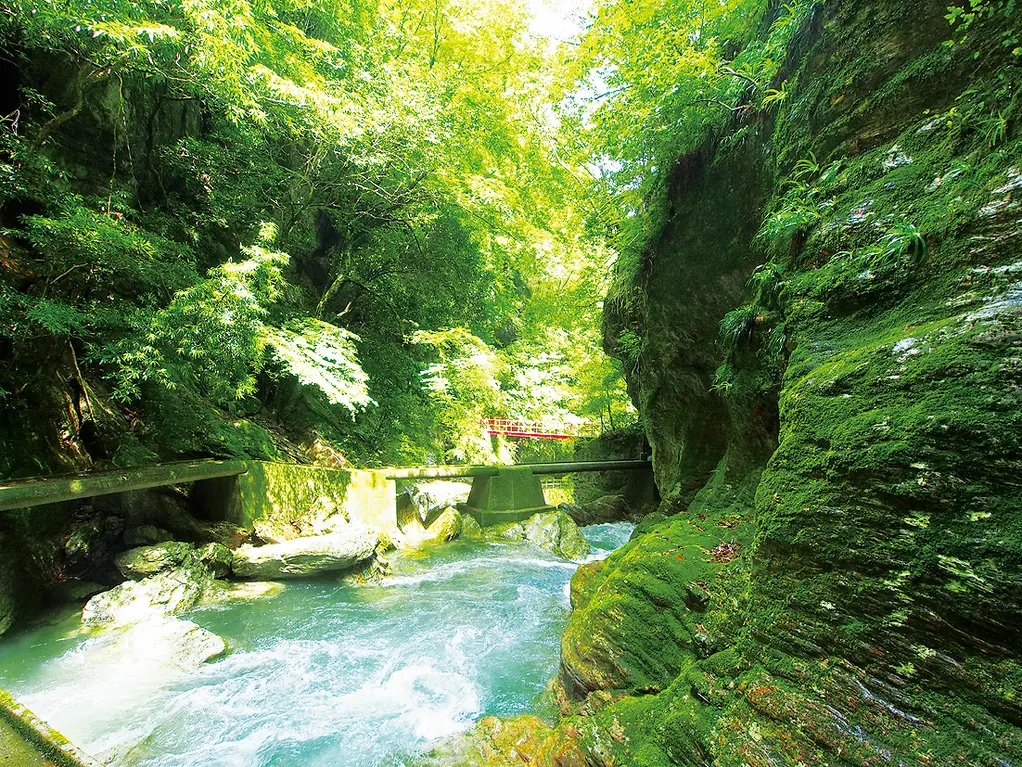
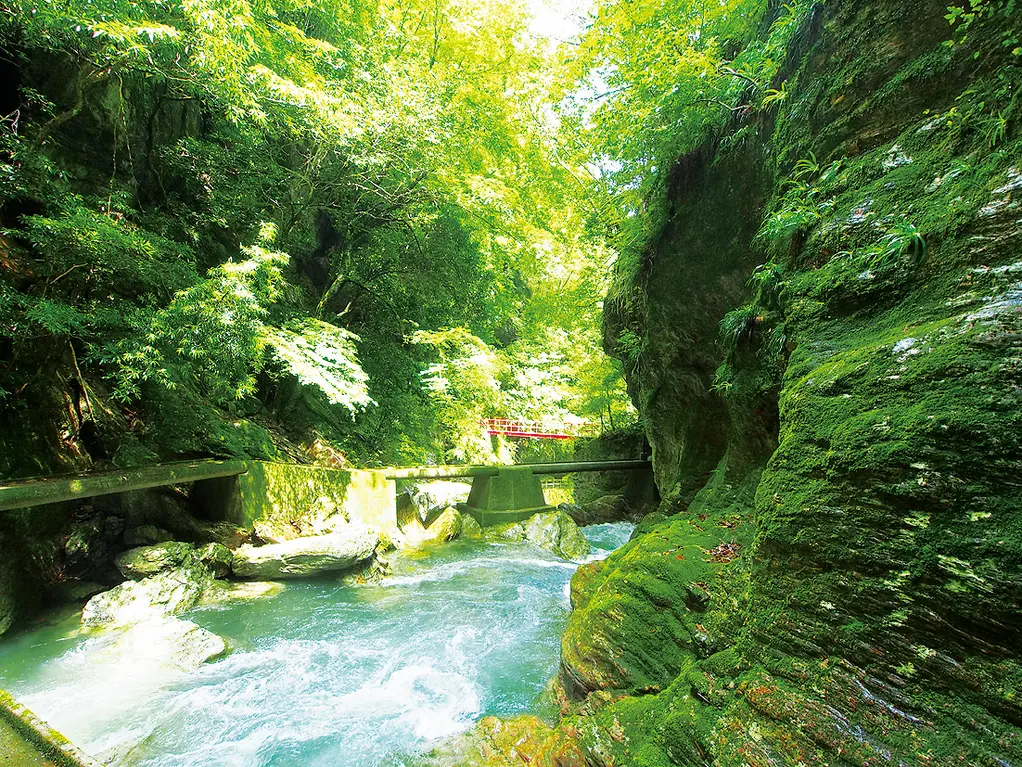
Nakatsu Gorge is a prefectural natural park where clear water runs between moss-covered rock walls.
画像提供:(公財)高知県観光コンベンション協会
At the end of a walking path of about 1.3 km is Uryu Falls, which drops 20 meters. Stone statues of the Seven Lucky Gods are placed along the way, and spotting them is part of the fun. Ryugu-buchi, a pool above the falls, is at its best for autumn leaves around November. At the entrance is the hot-spring facility Nakatsu Keikoku Yunomori, handy after the walk.
Of the three spots, this is the easiest to reach by public transport. Take a bus from JR Sakawa Station to the Nanokawa stop, then walk about 700 m along the road. By car it is about an hour from Ino IC.
Submersible bridges on the Niyodo: Nagoya and Asao
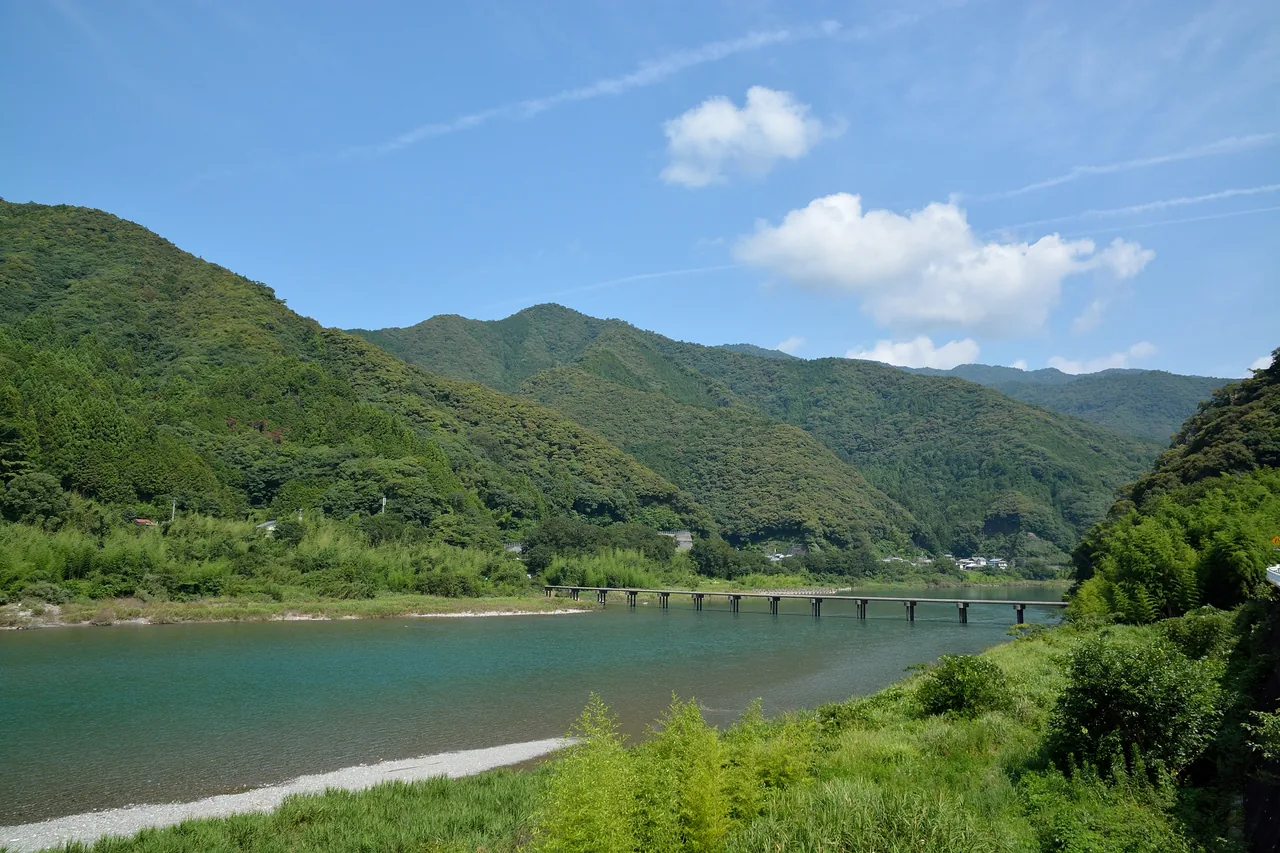
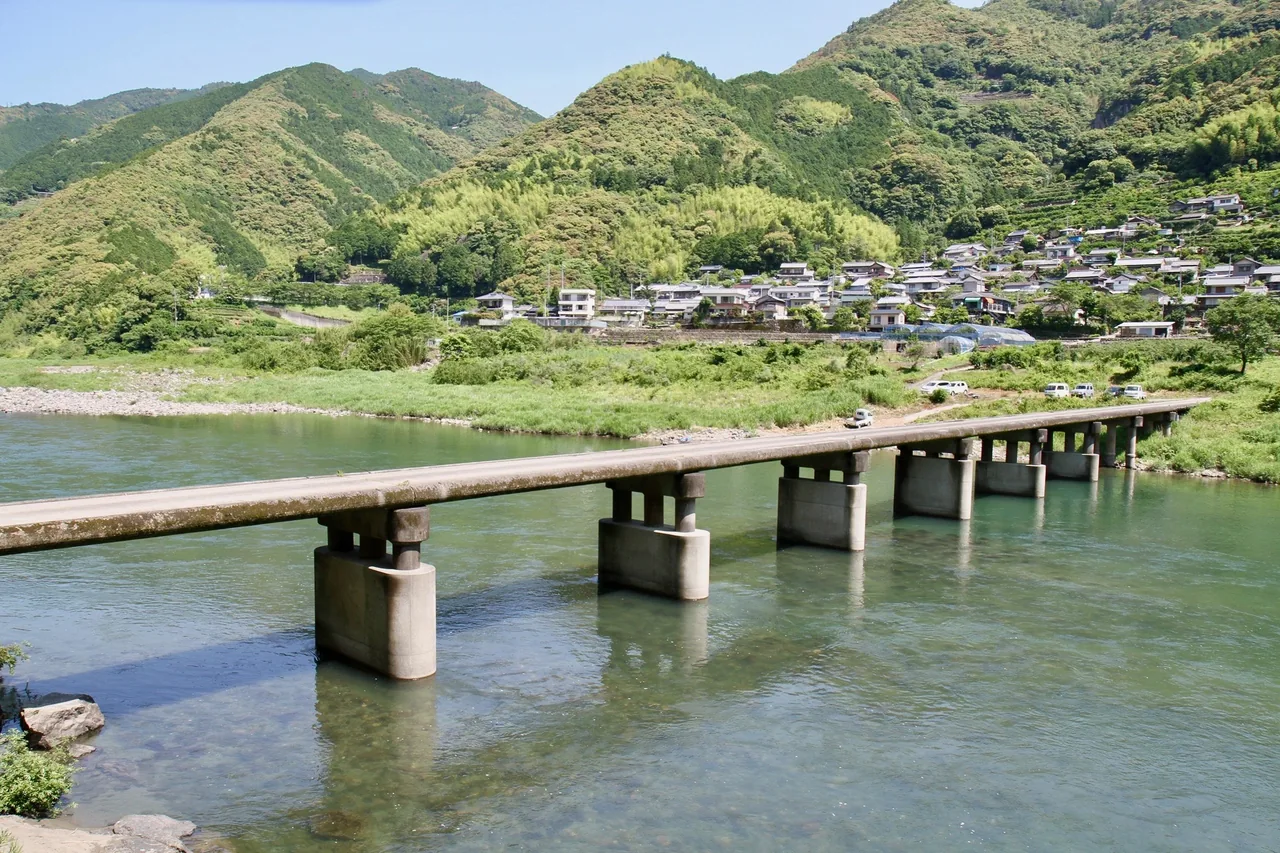
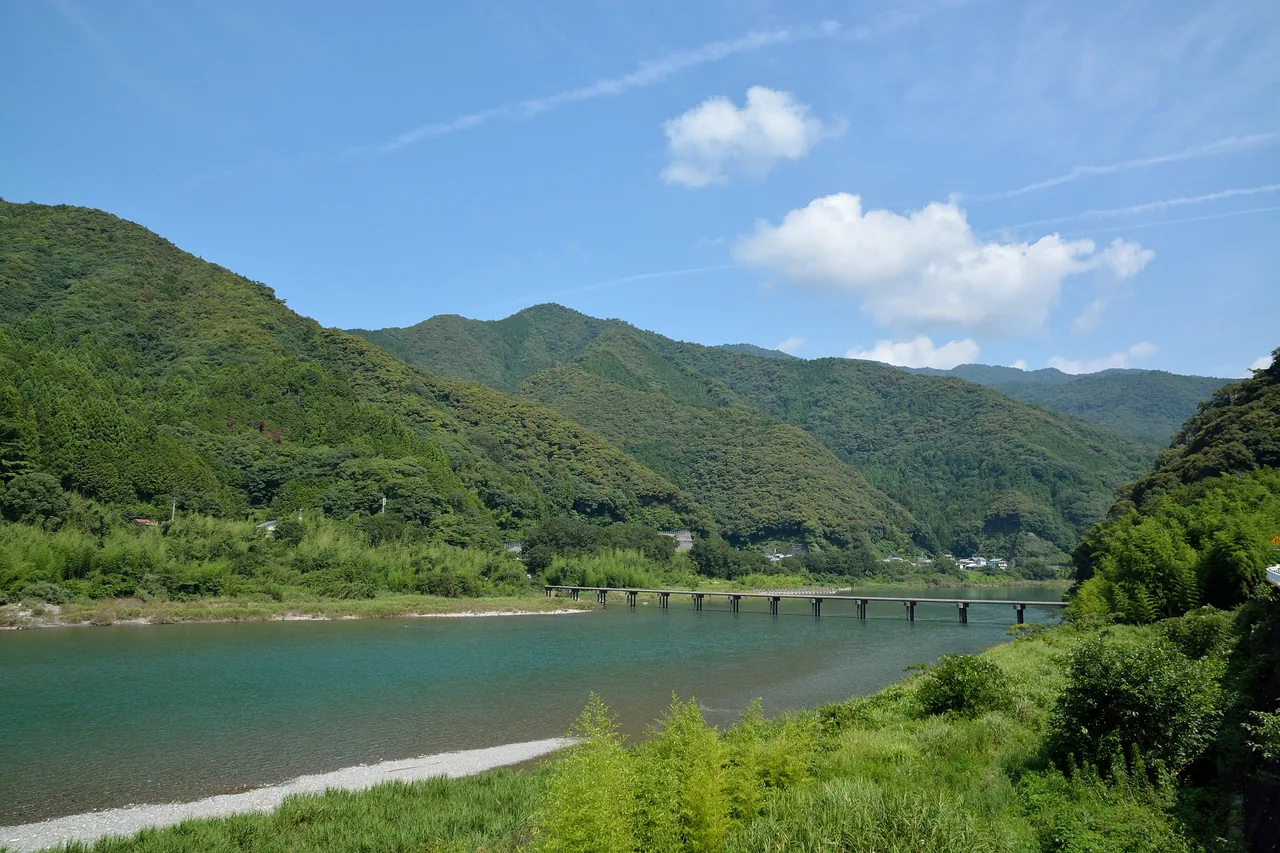
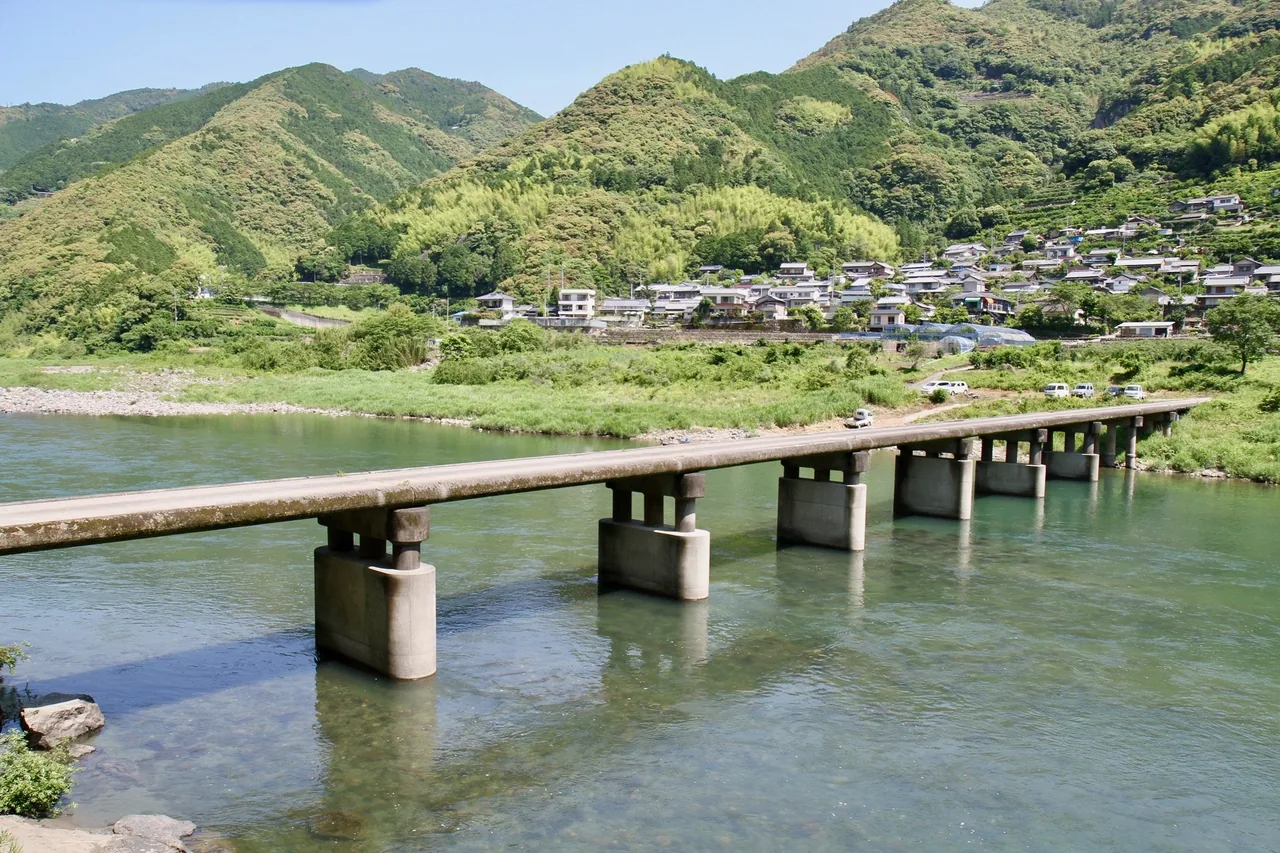
The Niyodo River also has chinkabashi: low bridges without railings, built to go underwater when the river floods.
Nagoya Chinkabashi is the farthest downstream of the Niyodo's submersible bridges and is 191 meters long. At about 15 minutes by car from Ino IC, it is the easiest of the sights in this guide to reach.
画像提供:(公財)高知県観光コンベンション協会
Asao Chinkabashi in the town of Ochi is about 121 meters long and served as the model for a setting in the animated film Belle (Ryu to Sobakasu no Hime). Ochi Town asks drivers to use the parking area near the bridge entrance (Miyanomae Park is a waiting area for tour buses). Car navigation can route you onto narrow roads, so check the directions on Ochi Town's page.
画像提供:(公財)高知県観光コンベンション協会
Both bridges are everyday roads that cars still use. If a car comes while you are crossing, step into a passing bay, and keep photo stops on the bridge short.
UFO Line: a ridge road facing Mt. Ishizuchi
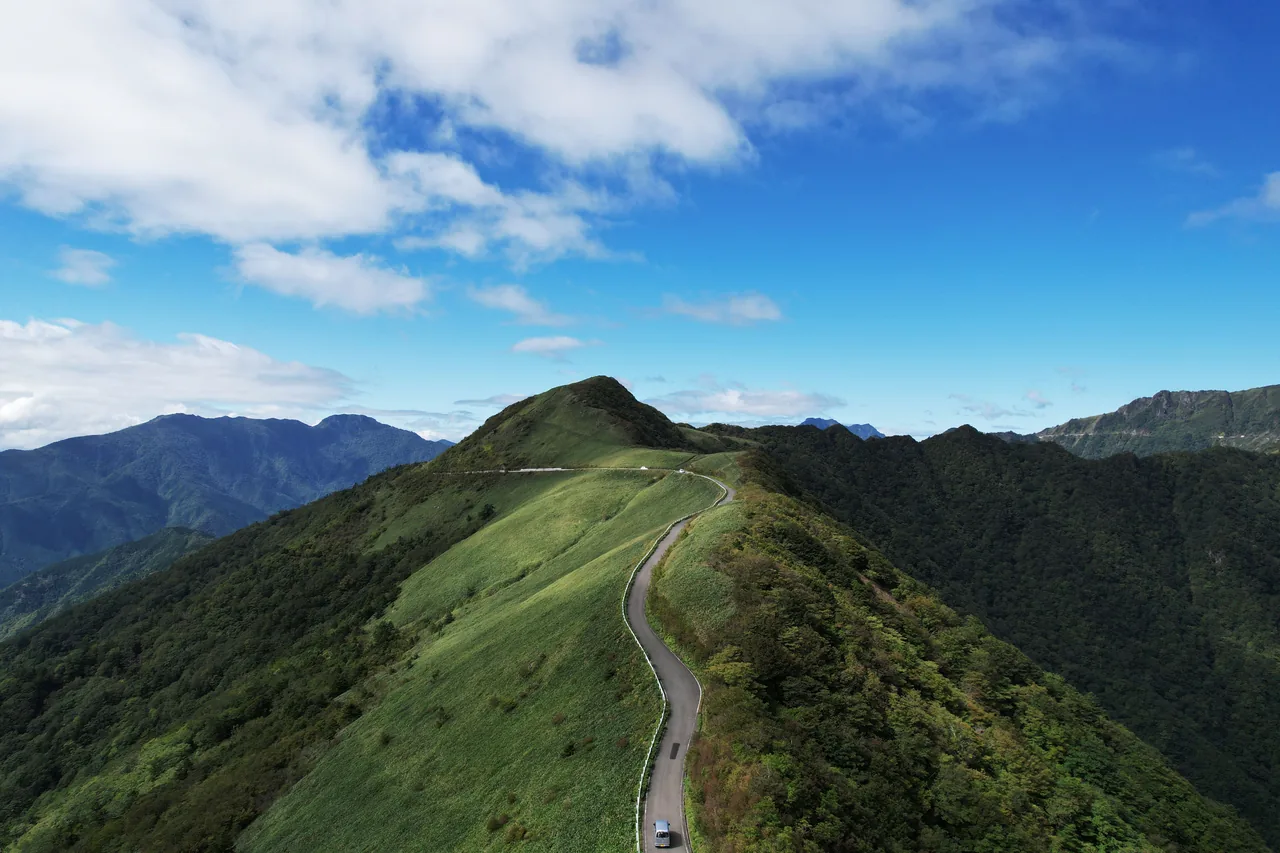
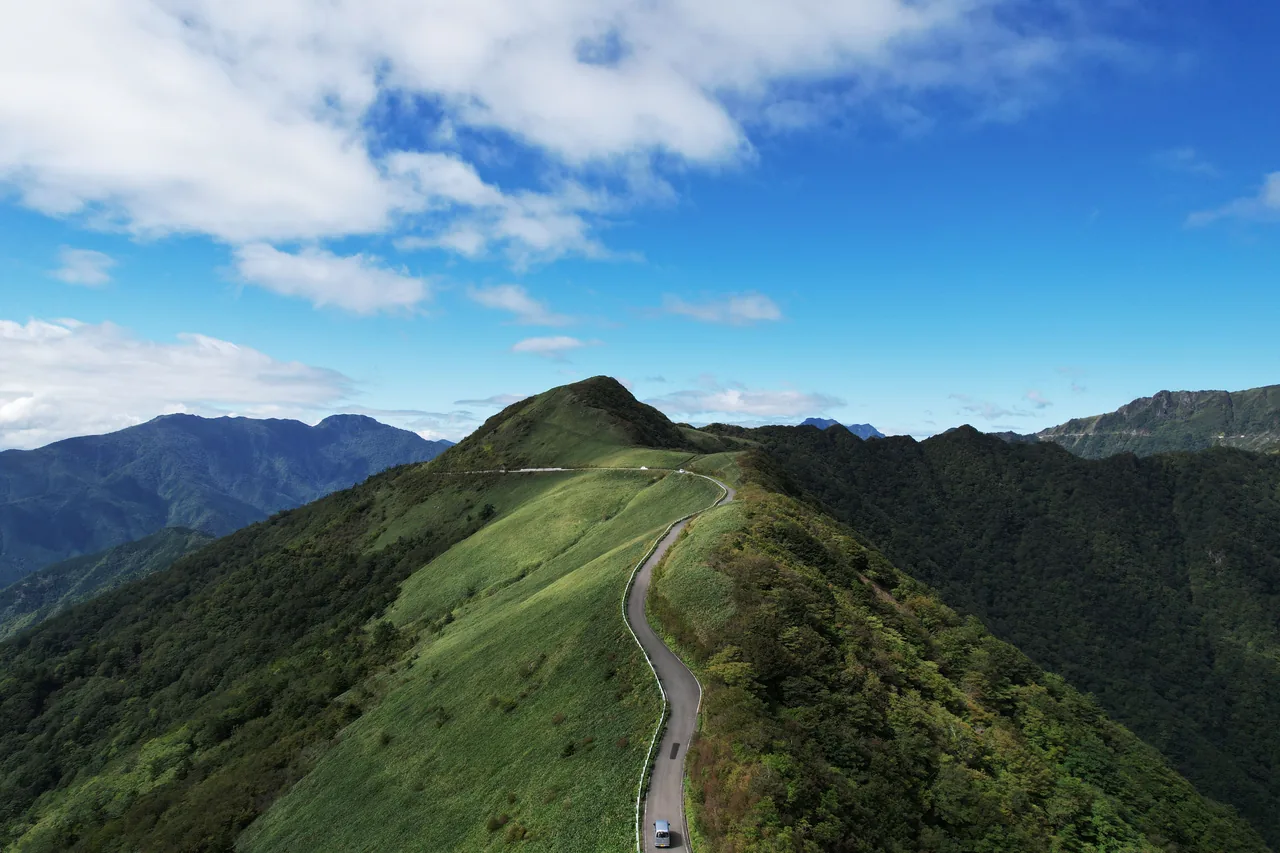
Leave the river and head up into the mountains. The UFO Line (Kamegamori Road) in Ino is a road of about 27 km that follows a ridge at 1,300 to 1,700 meters, with Mt. Ishizuchi, the highest peak in western Japan, straight ahead.
画像提供:(公財)高知県観光コンベンション協会
It is paved all the way but only one lane wide, and gets busy during Golden Week and the autumn foliage season. It is normally closed for winter from late November to early April, and the closing and opening dates vary from year to year. It takes about 1 hour 30 minutes from Ino IC and can only be reached by car, so check the Ino Town Tourism Association notices to confirm the road is open before you set out.
Ino-cho Paper Museum: see and make Tosa washi
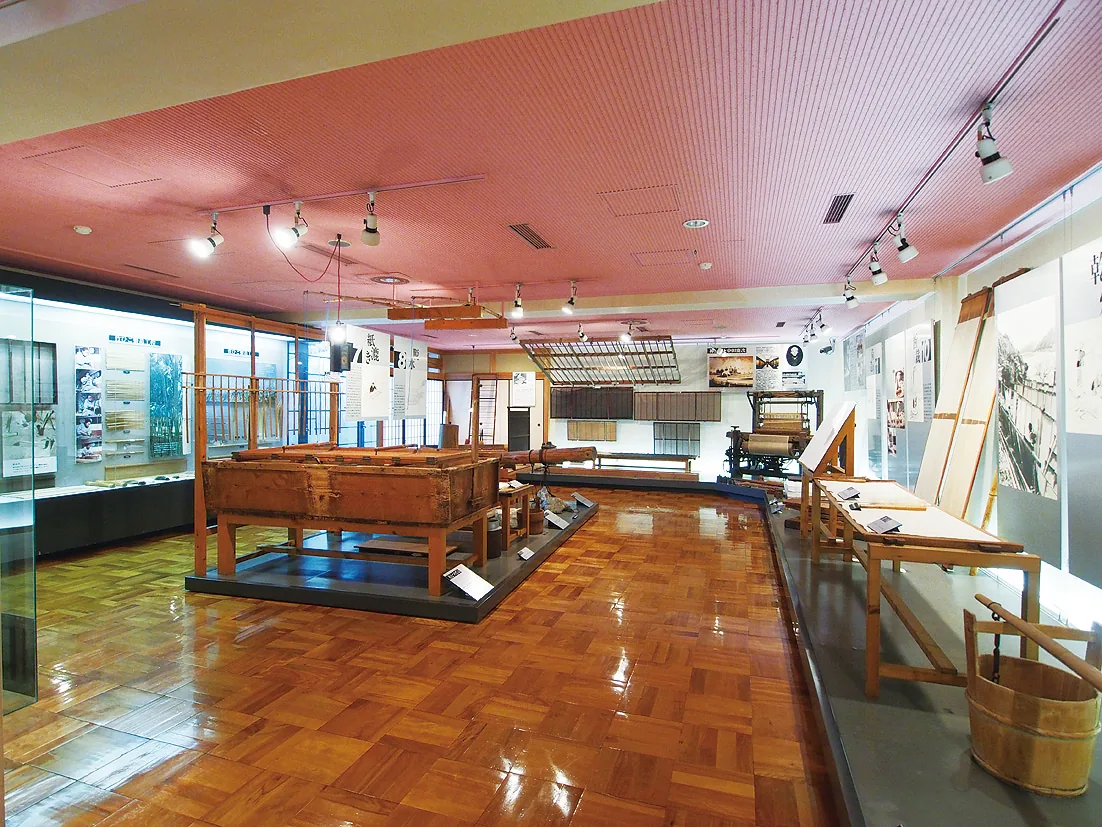
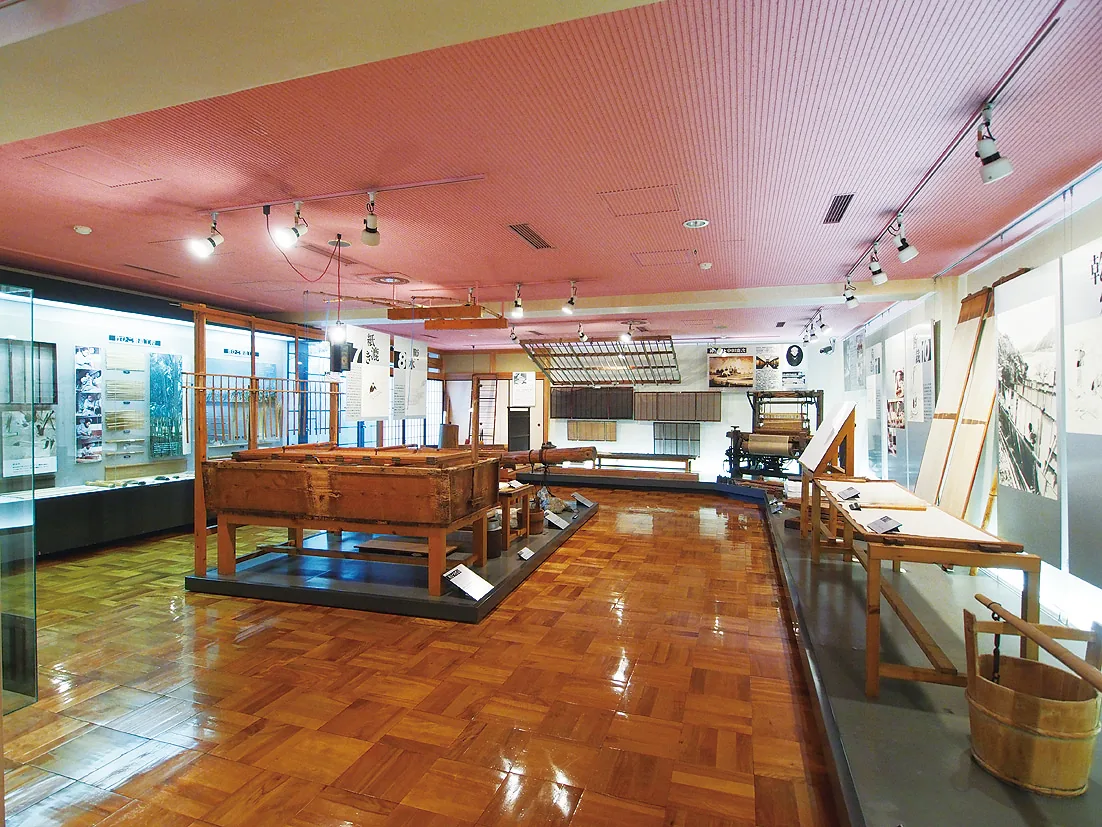
Ino, on the lower Niyodo, is where Tosa washi paper is made. The Ino-cho Paper Museum displays papermaking tools and shows how washi is produced. You can also try making paper yourself and take home a decorative card or postcard.
画像提供:(公財)高知県観光コンベンション協会
It is about a 10-minute walk from Ino Station on the JR Dosan Line, and also about 10 minutes on foot from Ino, the last stop on the Tosaden tram, so it is easy to visit without a car. Note, however, that the museum is temporarily closed for renovation from November 16, 2026 to March 31, 2027; during the closure, the shop and the papermaking workshop are also closed. Check the museum's official site for the latest information.
Getting around without a car
Nikobuchi and Yasui Gorge are hard to reach by public transport. If you are not driving, consider these options.
- Sightseeing taxi: the Niyodo Blue Tourism Council lists sightseeing taxi plans that visit Nikobuchi, Nagoya Chinkabashi and other spots.
- Bus to Nakatsu Gorge: take the bus from JR Sakawa Station to Nanokawa and you can walk to Nakatsu Gorge and Yunomori.
- Train or tram to Ino: from central Kochi, take the tram or JR to Ino and walk to the paper museum.
Even by car, Nikobuchi, Yasui Gorge and Nakatsu Gorge are each about an hour from Ino IC. Rather than trying to see everything in one day, pick two or three, and you will have time to wait for the light at its bluest.
The Shimanto River in western Kochi also has submersible bridges. If you plan to visit both, see our guide to the Shimanto River's submersible bridges.