Omagari Fireworks Guide: Seats, Getting There and Hanabi-um
This guide is translated from the Japanese edition. Read the Japanese edition
Omagari fireworks guide: daytime and night shows, what judges look for, seats and tickets, the walk from Omagari Station, finding a room, and Hanabi-um.
On the last Saturday of August in Omagari, Daisen City, Akita Prefecture, fireworks begin rising over the Omono River banks while the sky is still light. The National Fireworks Competition, known as the Omagari Fireworks, is a contest in which pyrotechnicians from all over Japan launch their own work, and the audience watches the quality of each shell. Because the event is so popular, there is a lot to sort out in advance: seat tickets, getting from the station, the crowds on the way home and a place to stay.
What Kind of Event Is the Omagari Fireworks?
It began in 1910 as the "Ou Six Prefectures Fireworks Fair," held as entertainment for the festival of Suwa Shrine. It was renamed the "National Fireworks Competition" (Zenkoku Enka Kyogi Taikai) in 1915 and, after a break during the war, restarted in 1946 under its present name, Zenkoku Hanabi Kyogi Taikai. The 2026 edition was the 98th, and the top prize is the Prime Minister's Award.
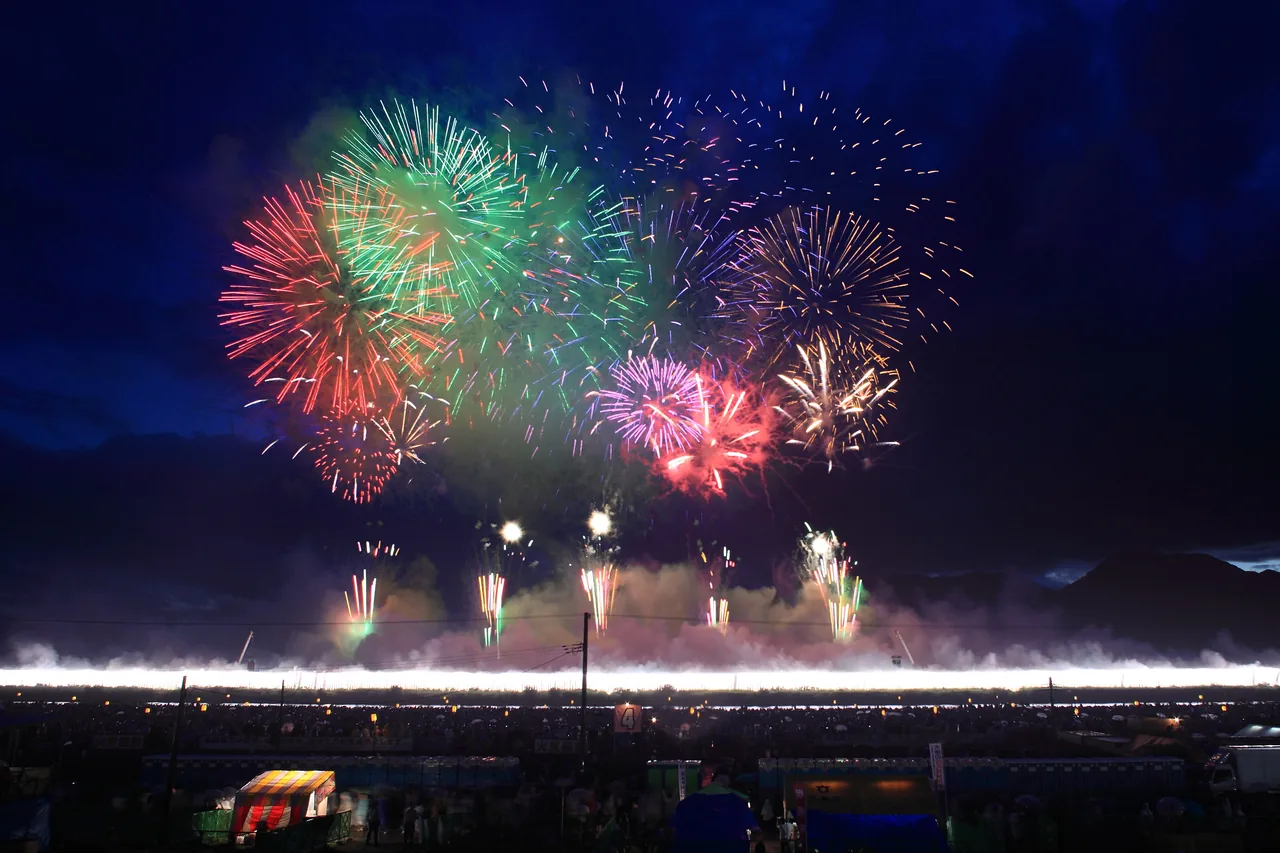
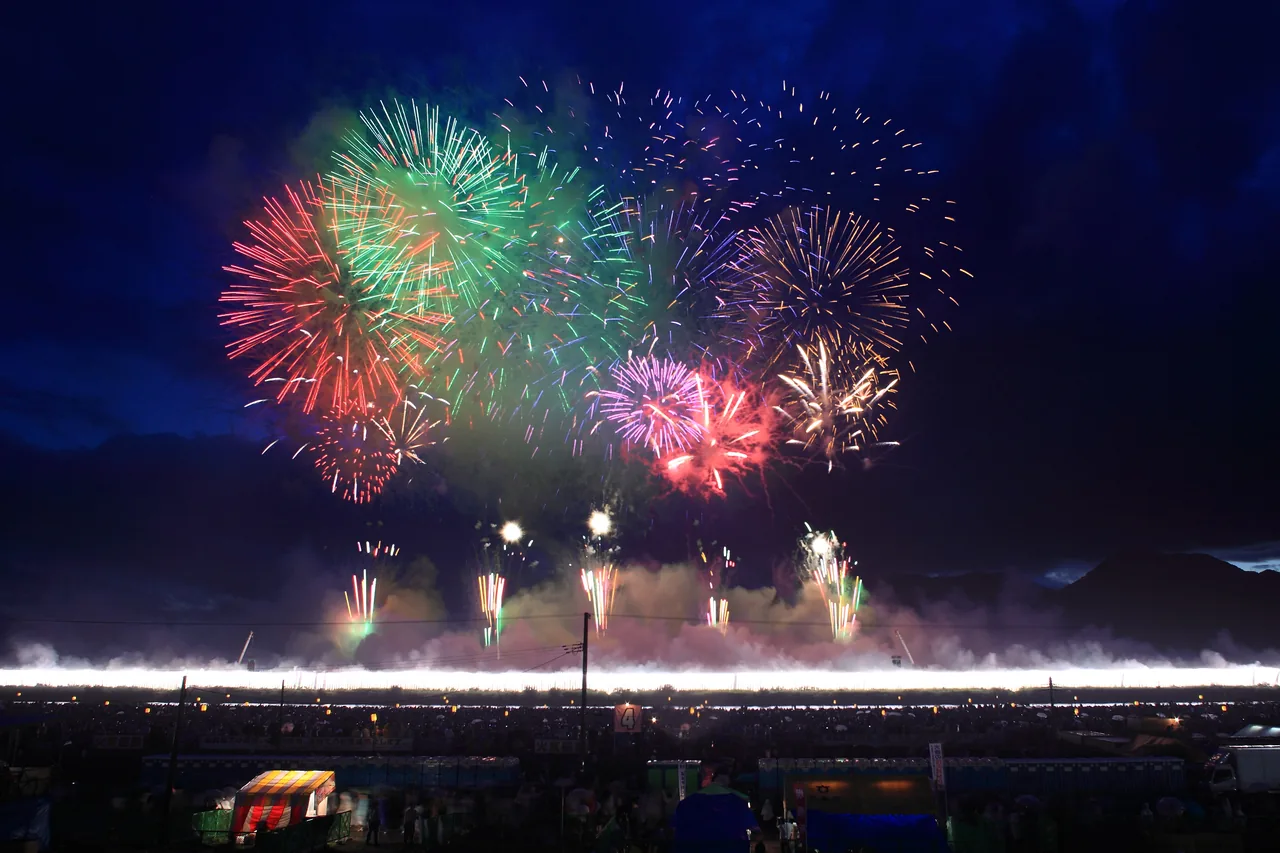
The venue is the "Omagari no Hanabi" Park on the banks of the Omono River in Omagari, Daisen City, and the event is usually held on the last Saturday of August. What sets it apart is that besides the night fireworks, the "daytime fireworks" launched in early evening while it is still light have been a competition category since 1978. In 2026, the daytime fireworks started around 5 p.m. and the night fireworks around 7 p.m. Dates and schedules are announced on the official website.
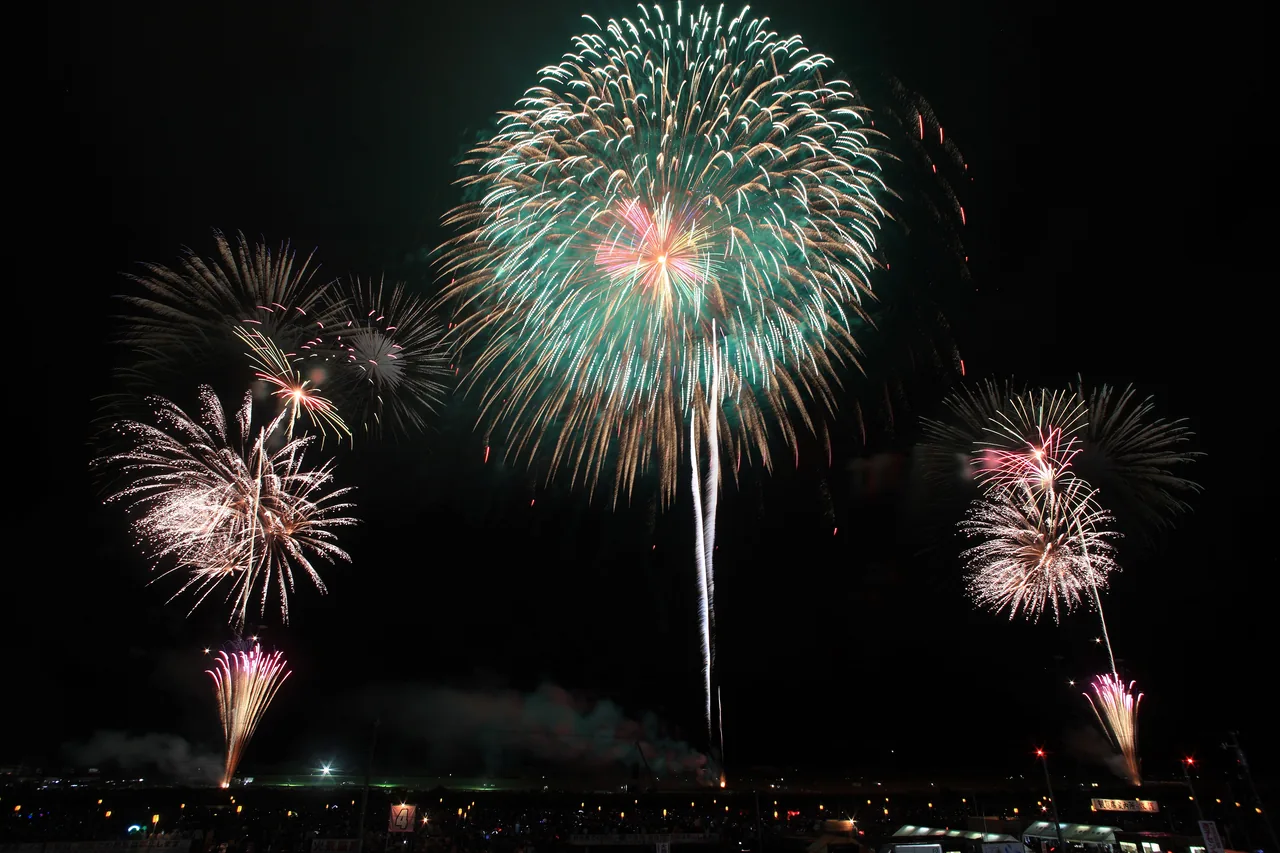
Photo: Akita Prefecture
What to Look For in the Competition Fireworks
In the competition, pyrotechnicians are judged on each shell in front of the judges and the audience. Useful clues when watching are whether a shell opens into a perfect circle and whether its points of light go out together as they fade. Hanabi-um, a fireworks museum in central Omagari, explains these ways of watching fireworks with diagrams.
Some displays use the whole riverbank from end to end, launching all at once. Gold fireworks filling the sky above with green ones opening low beneath them is a sight made possible by the wide banks of the Omono River. The seating faces the river, so the view changes a little from block to block.
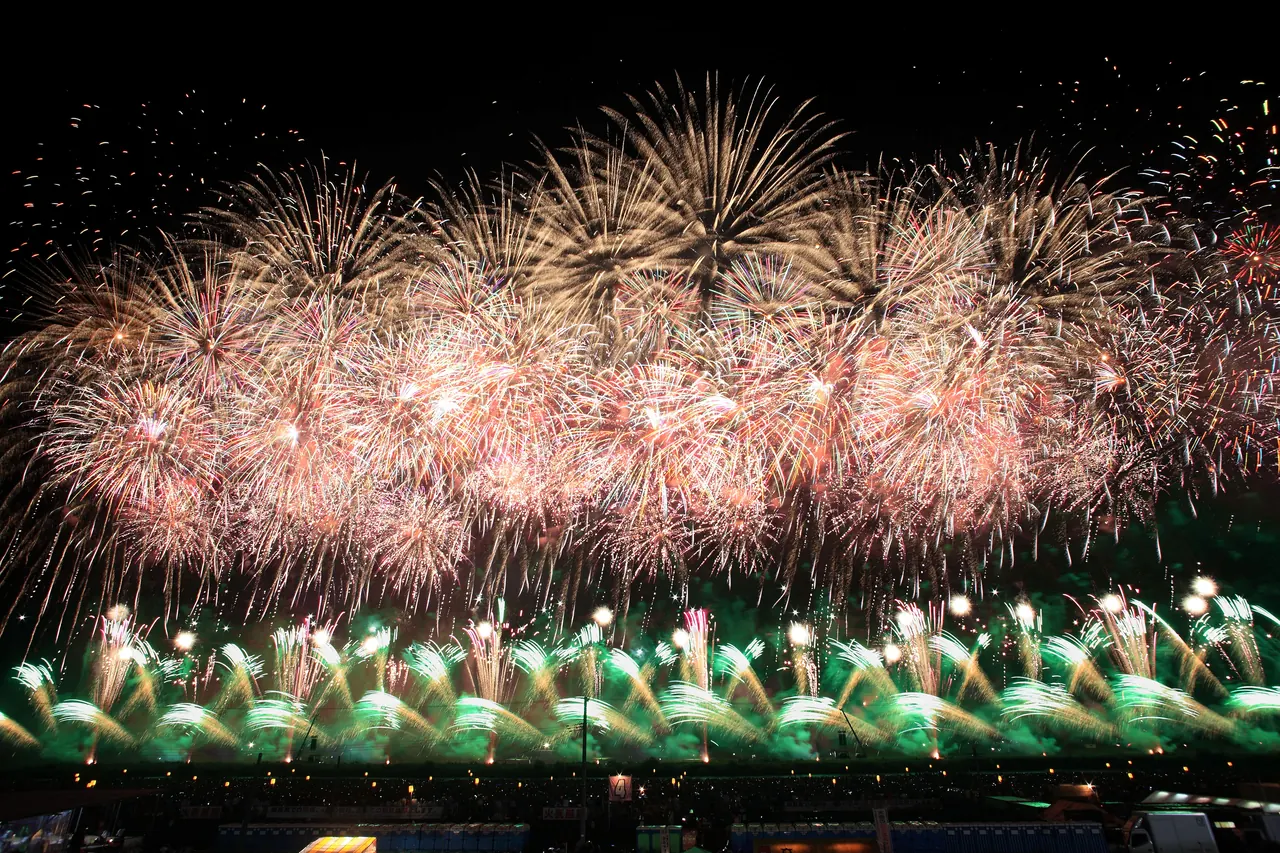
Photo: Akita Prefecture
Seats and How to Buy Tickets
Seating is paid. Seat types and when and how tickets go on sale are announced on the official website. Some seat types can sell out early, so once you decide to go, check the sales information early.
The seating is divided into numbered blocks, and Daisen City's "Omagari no Hanabi" portal site shows the nearest entrance and a recommended route for each block printed on your ticket. In the evening seating you will also see crowds waving colorful glow sticks.
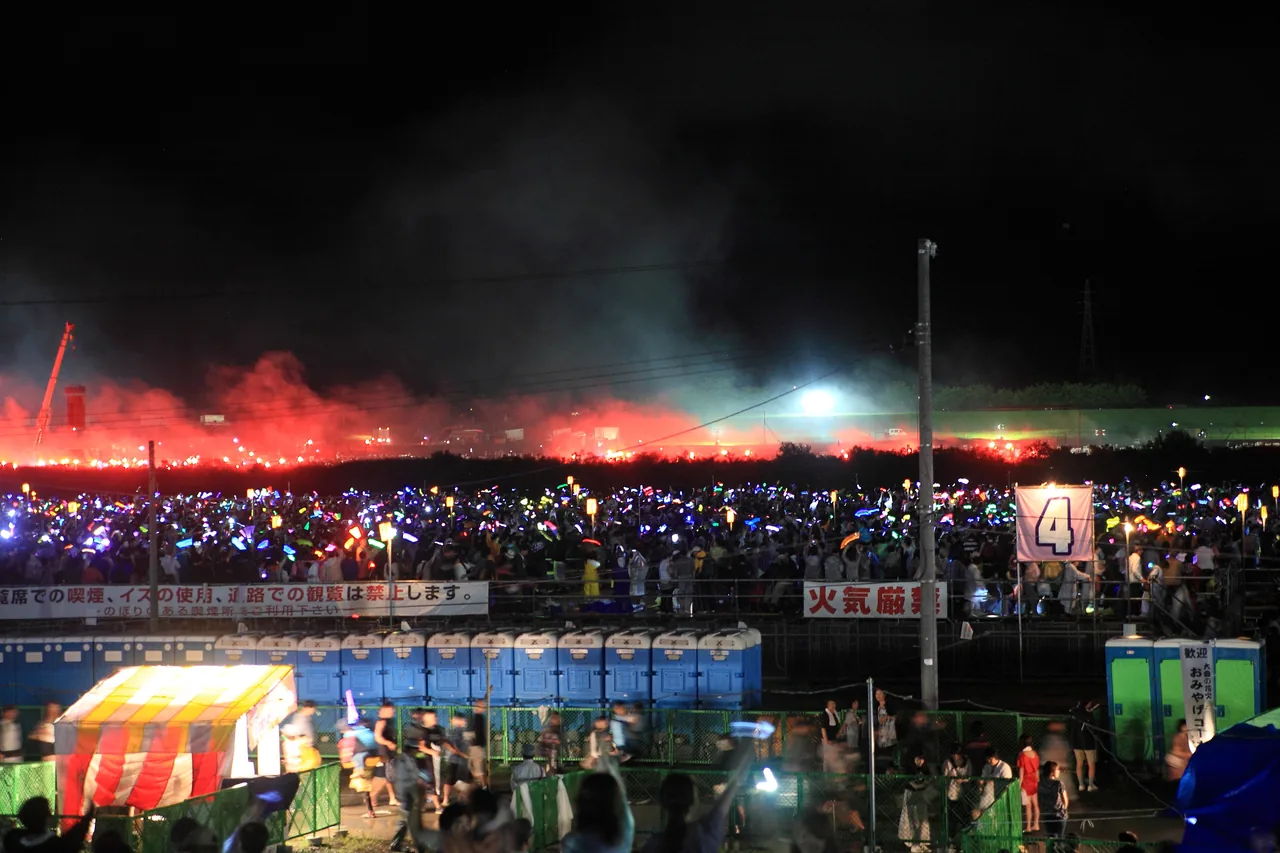
Photo: Akita Prefecture
From Omagari Station to the Venue, and the Crowds Afterwards
The nearest station is JR Omagari Station. It is about 2 km, or around a 30-minute walk, from the station to the center of the venue. For pedestrian safety, no shuttle buses run. On the day, roads are closed over a wide area around the venue, and the organizers advise against coming by car. If you drive, the recommended approach is to park at a nearby station and take the train to Omagari Station.
Extra trains run to and from Omagari Station on the day, but after the event the station and roads are packed with people. Check the time of your train home and leave plenty of time. You will spend a long stretch on the riverbank, from the early-evening daytime fireworks until night, so bring drinks and a hat for the heat. For the latest access information, see Daisen City's "Omagari no Hanabi" portal.
Finding a Place to Stay
On competition day, Omagari's hotels and inns are not enough, and Daisen City runs an "event homestay" program in which residents host visitors in their homes to make up the shortfall. The city portal lists accommodation in the Omagari area, but you need to contact each one directly about vacancies. For accommodation outside the city, it points to contacts such as the tourist information centers of Akita City and Semboku City. Once the date is announced, start looking for a room early.
Preview Fireworks at Hanabi-um
About a 10-minute walk from JR Omagari Station, Hanabi-um (Fireworks Traditional Culture Heritage Museum) presents the history and craft of fireworks. The 3rd floor has the fireworks archive room, and the 4th floor has an observation exhibition hall and the "Hanabi Theater," so even on non-event days you can learn through exhibits and films about shell sizes, how fireworks are made and the history of the competition. Full-size shell models and panels showing how high each size of shell opens tell you, for example, that a No. 10 shell (shakudama) rises to about 300 m before bursting.
The parking lot cannot be used on the day of the Omagari Fireworks or the spring and autumn fireworks events. Besides the summer competition, Omagari also holds fireworks events in spring and autumn; check the official website for dates.
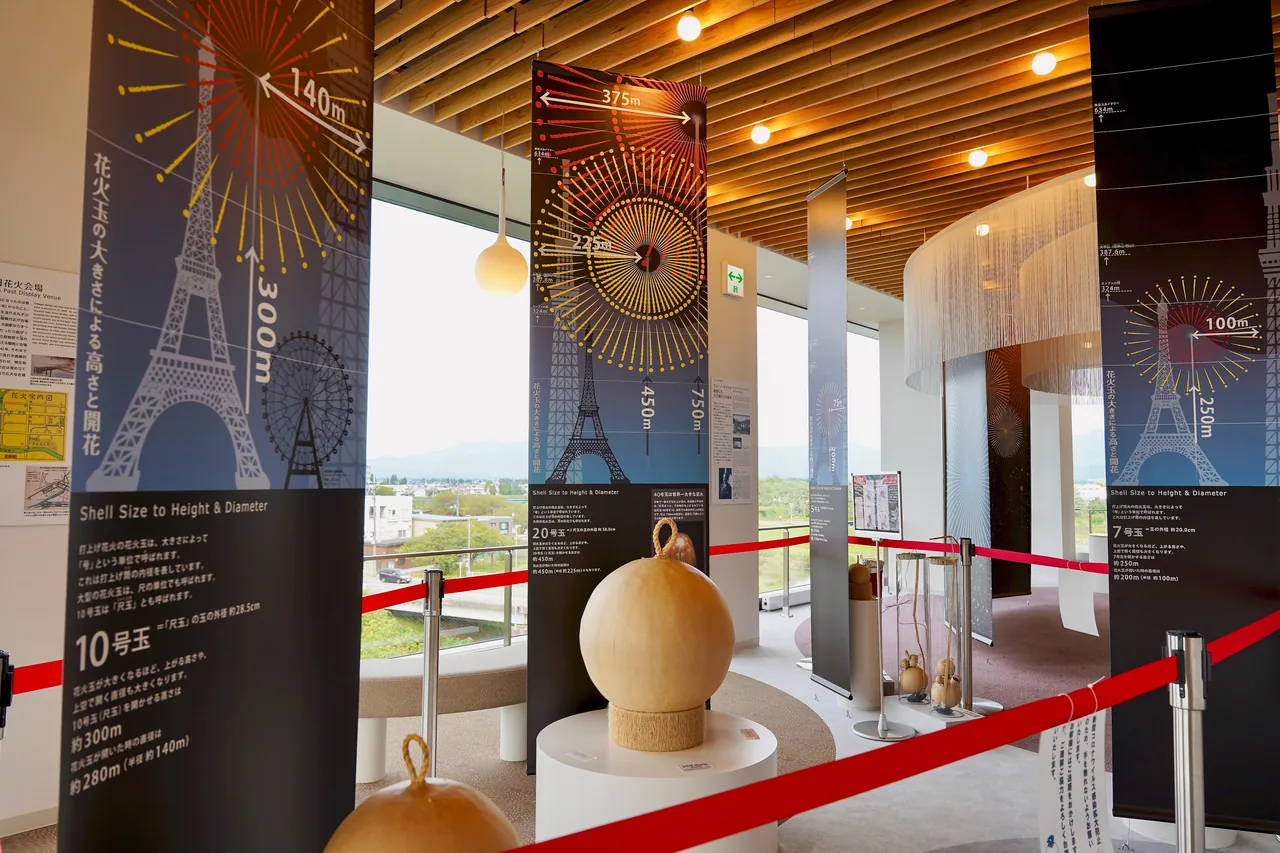
Photo: Akita Prefecture
Yokote's Sparkler Festival in July
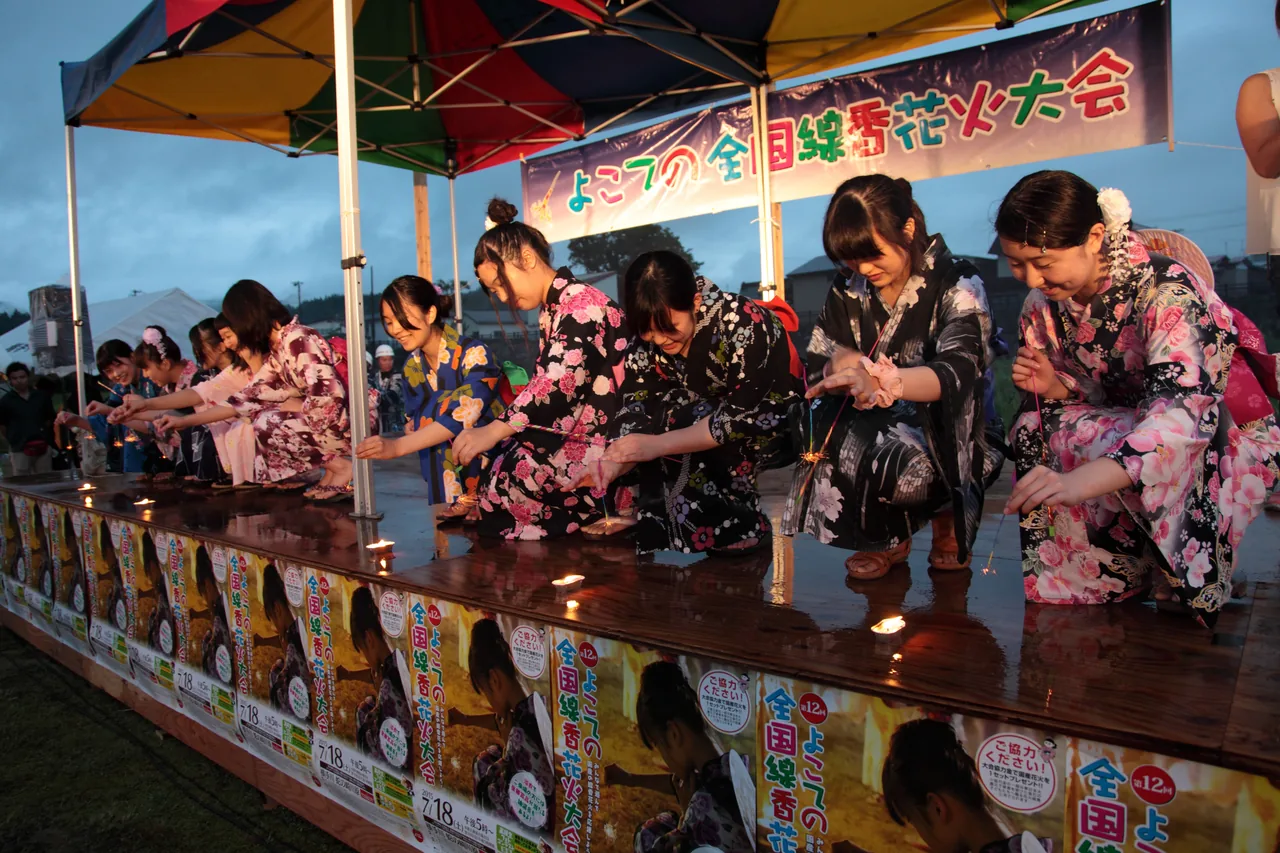
In nearby Yokote City, the "Yokote National Senko Hanabi Festival," starring senko hanabi (traditional Japanese sparklers), is held every July. The venue is Janosaki Kawara on the banks of the Yokote River, about a 15-minute walk from JR Yokote Station. There is a "long-lasting contest" to see whose glowing ball of fire lasts longest before dropping, and the evening ends with aerial fireworks. The 23rd edition was held on July 18, 2026. Only handheld fireworks may be brought into the venue.
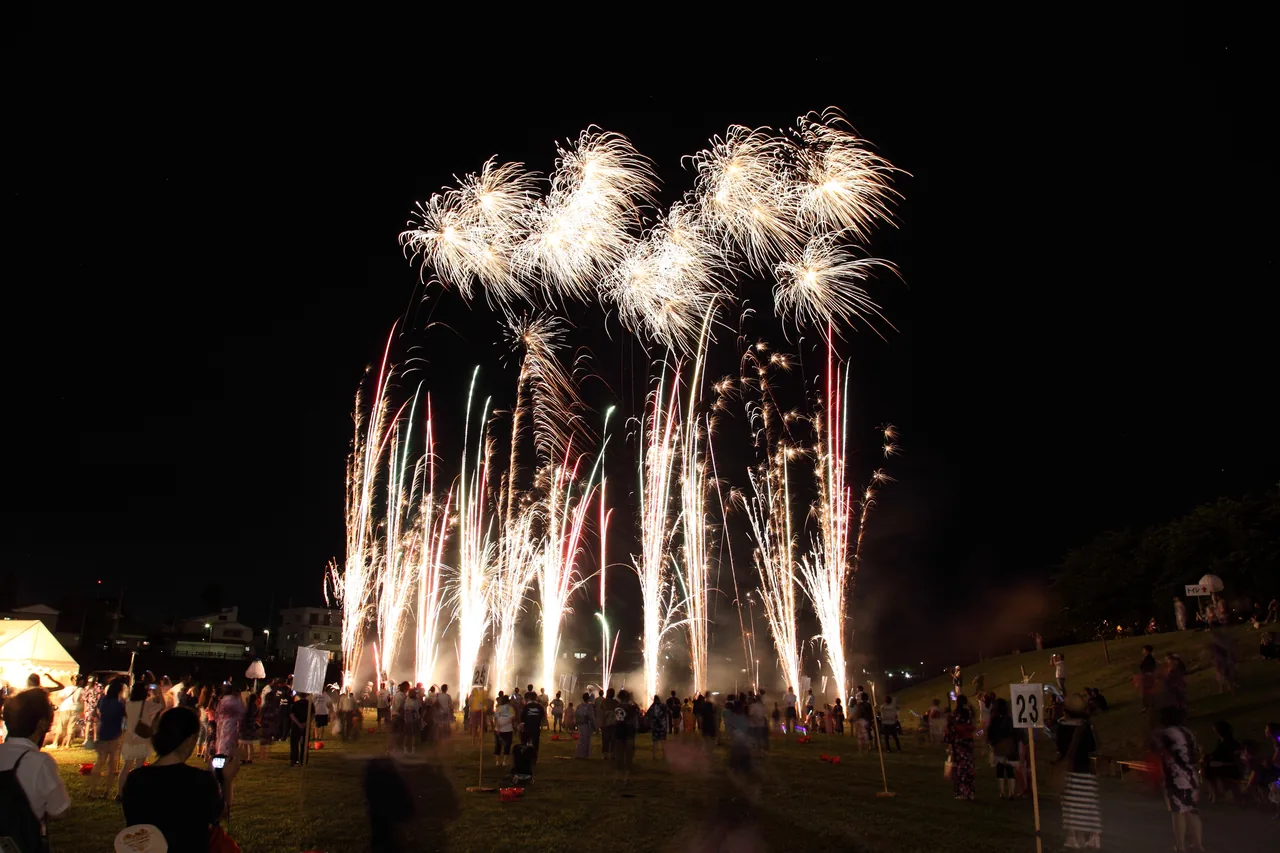
Photo: Akita Prefecture
In August, Akita also has the Kanto Festival and bon dances alongside the Omagari Fireworks. When planning your dates, see Akita's summer festivals as well.