
Osaka Cherry Blossom Spots: Osaka Castle, Japan Mint, Okawa River
This guide is translated from the Japanese edition. Read the Japanese edition
Osaka cherry blossom spots from Osaka Castle's Nishinomaru Garden to the Japan Mint promenade, the Okawa River and Nakanoshima: peak times, bloom news and Mint booking.
At the end of March, climb up to the banks of the Okawa River from Temmabashi Station and you'll find rows of Somei-yoshino cherry trees running along both sides of the water. What sets Osaka's cherry blossoms apart is that you can see them with a castle and a river. Start with the Somei-yoshino at Osaka Castle Park, walk along the Okawa, then catch the double-flowered cherries at the Japan Mint in April: by moving between spots, you can stretch the season a little. One catch: in recent years, the Mint's cherry blossom promenade has only admitted people who booked in advance. Before fixing your itinerary, check both the bloom timing and whether booking is required.
When do cherry blossoms bloom in Osaka?
The Osaka Regional Headquarters of the Japan Meteorological Agency (JMA) observes when Osaka's cherry trees start flowering and reach full bloom. Osaka's cherry trees usually start flowering in late March and reach full bloom in early April, but the actual dates shift from year to year. When planning, check the JMA's cherry blossom flowering status page for that year's observed flowering and full-bloom dates.
- At Osaka Castle Park and along the Okawa River, where Somei-yoshino dominate, late March to early April is the usual peak.
- The Japan Mint's cherry blossom promenade is mostly double-flowered cherries and usually opens for about a week in early to mid-April. Even after the Somei-yoshino have peaked, there are still flowers to see.
Rather than relying on any single article's forecast, check these official sources.
- Cherry blossom flowering status (Japan Meteorological Agency, Japanese)
- Phenological observations (JMA Osaka Regional Headquarters, Japanese)
- Flowering information (City of Osaka Parks and Greenery, Japanese)
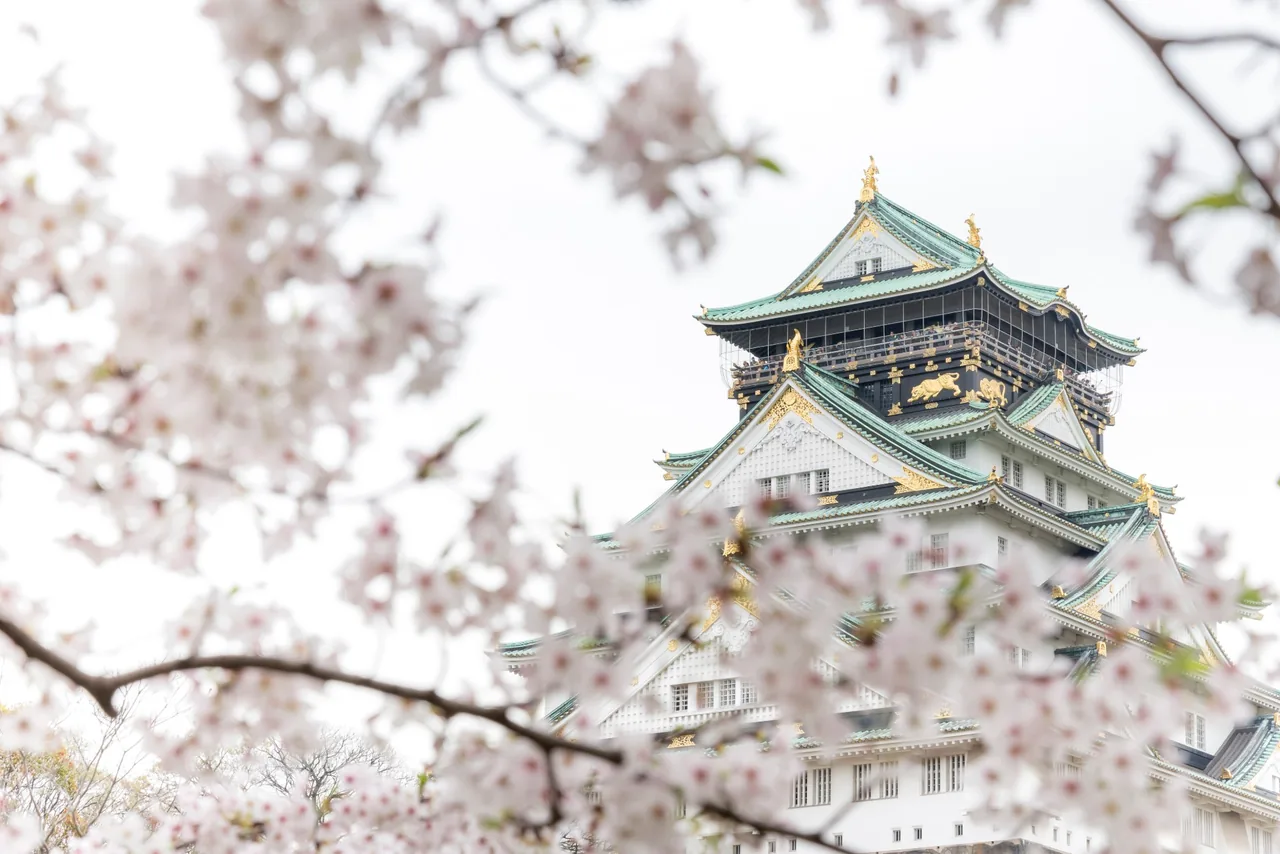
Osaka Castle Park and Nishinomaru Garden: cherry blossoms with the main tower
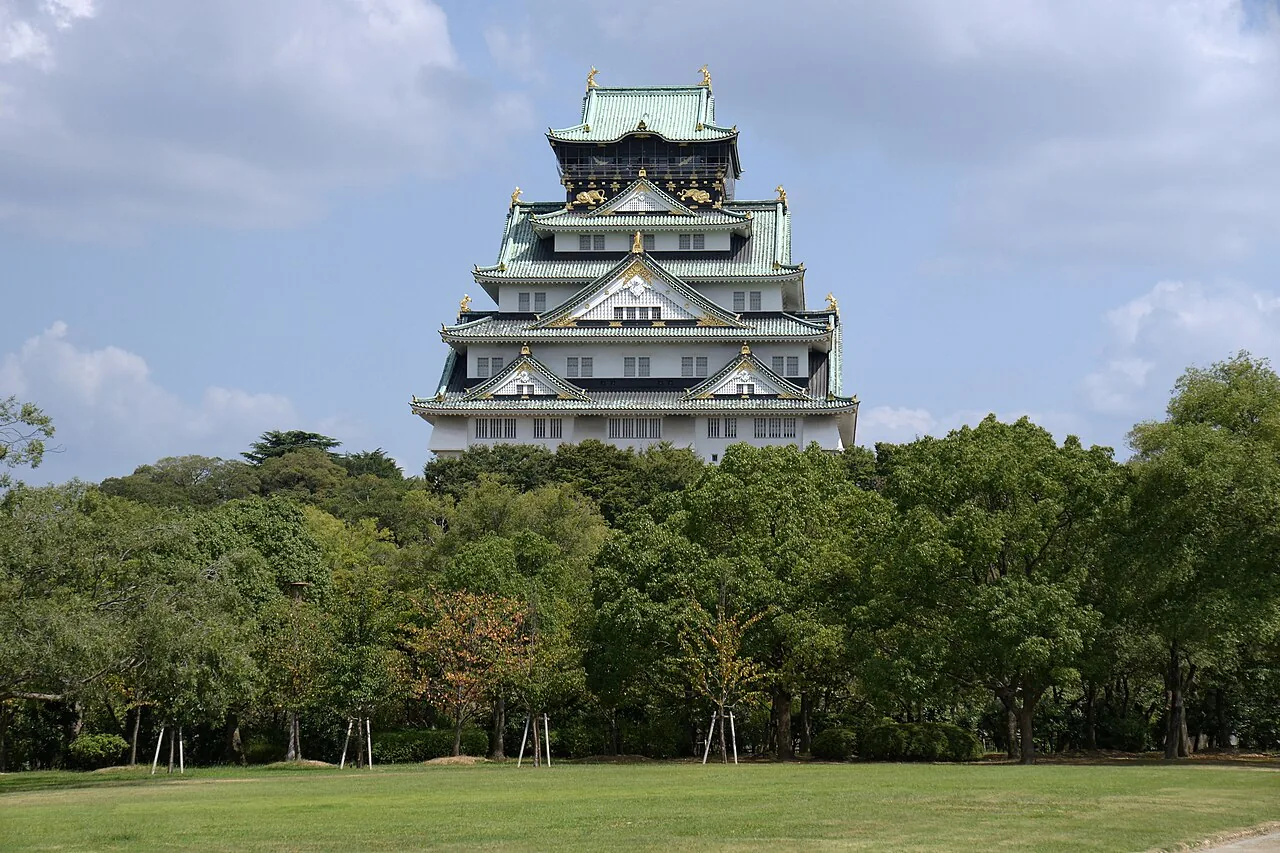
Osaka Castle Park, planted with many cherry trees, is one of the city's signature hanami spots. Within it, Nishinomaru Garden, west of the main tower, is a broad lawn garden with about 300 cherry trees, where you can look up at the tower over the blossoms.
Nishinomaru Garden charges admission. During cherry blossom season it holds an evening cherry blossom opening called the Kan-ō Nighter (literally "cherry-viewing night game"), usually from late March to early April, when the garden stays open after dark and the trees are lit up. Admission during the period is around 350 yen for high school students and older, but dates, prices and hours are set each year, so check the official announcement.
If you're combining the garden with the main tower, see our Osaka Castle Park walking guide for which entrance to use and how to route your visit.
- Osaka Castle cherry blossoms (Osaka Castle Park official website, Japanese)
- Osaka Castle Spring Festival (Osaka Castle Park official website, Japanese)
The Japan Mint's cherry blossom promenade: advance booking and one-way route
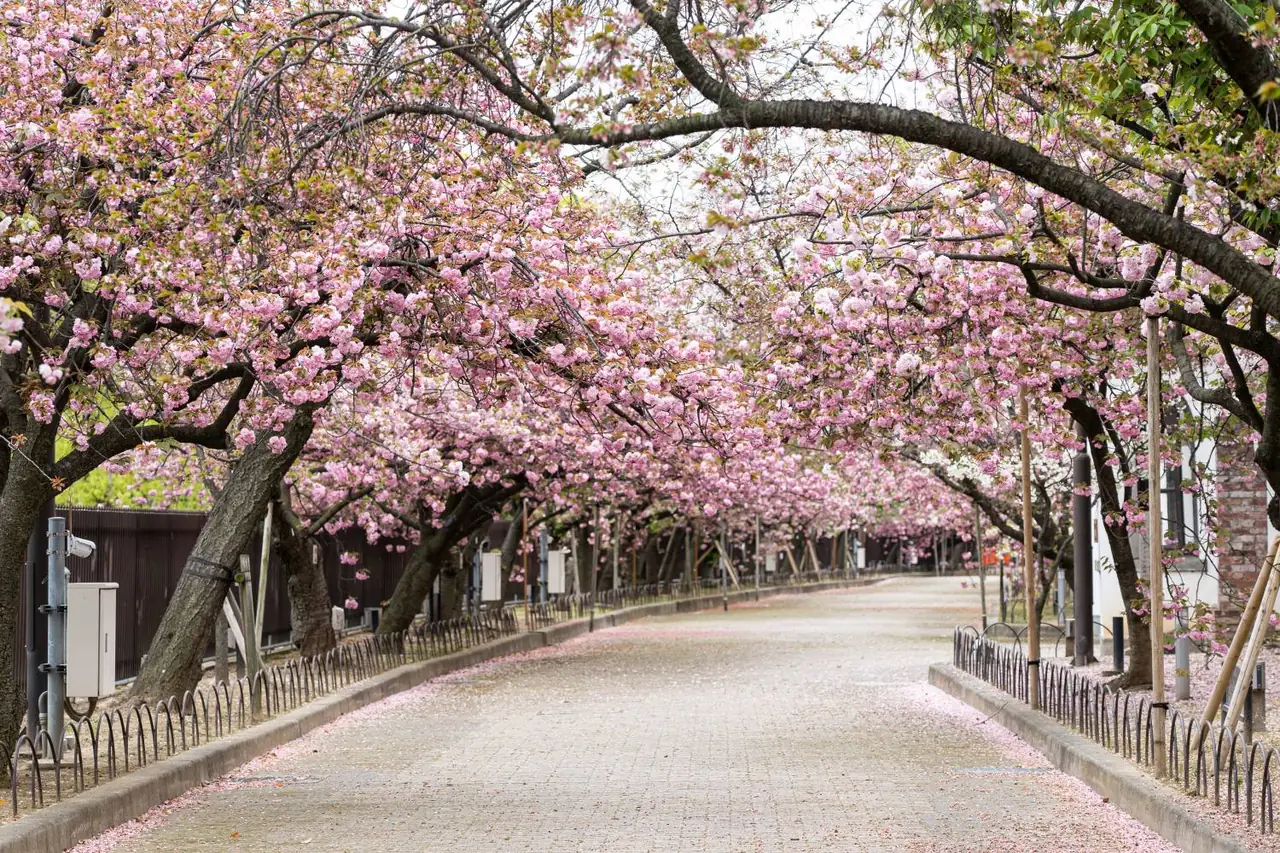
One of Osaka's longest-running spring traditions is the Japan Mint's "Sakura no Torinuke" cherry blossom promenade. For about a week each April, the Mint opens a roughly 560-meter path through its grounds along the old Yodo River (the Okawa), an area that is normally closed to the public. It is usually held in early to mid-April.
The path is lined with about 140 varieties of cherry trees. Most are double-flowered cherries (sato-zakura), and each variety has a name tag, so part of the fun is checking names as you go.
The most important thing to know: in recent years (2023–2026), entry required advance online booking, and people without a booking could not enter. You choose an entry time slot when booking, and each slot has a cap. The next year's dates and booking method are usually announced around March on the Mint's official website. Once your travel dates are set, watch for the announcement and check how to apply.
- The path runs one way, from the South Gate (Temmabashi side) to the North Gate (Sakuranomiya Bridge side); you cannot walk it in reverse.
- Eating and drinking are not allowed on the grounds. Pets are not allowed (except assistance dogs for people with disabilities).
- There is no parking. Use public transportation.
The South Gate entrance is about a 15-minute walk from Temmabashi Station (Osaka Metro Tanimachi Line and Keihan Main Line) and Osakajo-kitazume Station (JR Tozai Line). From the North Gate exit, it's about 15 minutes on foot to each of Sakuranomiya Station (JR Osaka Loop Line), Osakatemmangu Station (JR Tozai Line), Minami-morimachi Station (Osaka Metro Tanimachi Line) and Kyobashi Station (JR and Keihan). The entrance and exit are far apart, so pick your station for the trip home based on the exit side.
- Cherry blossom promenade (Japan Mint, Japanese)
- Cherry blossom promenade Q&A (Japan Mint, Japanese)
- Cherry blossom promenade data (Japan Mint, Japanese)
Kema-Sakuranomiya Park: a riverside walk under the cherry trees
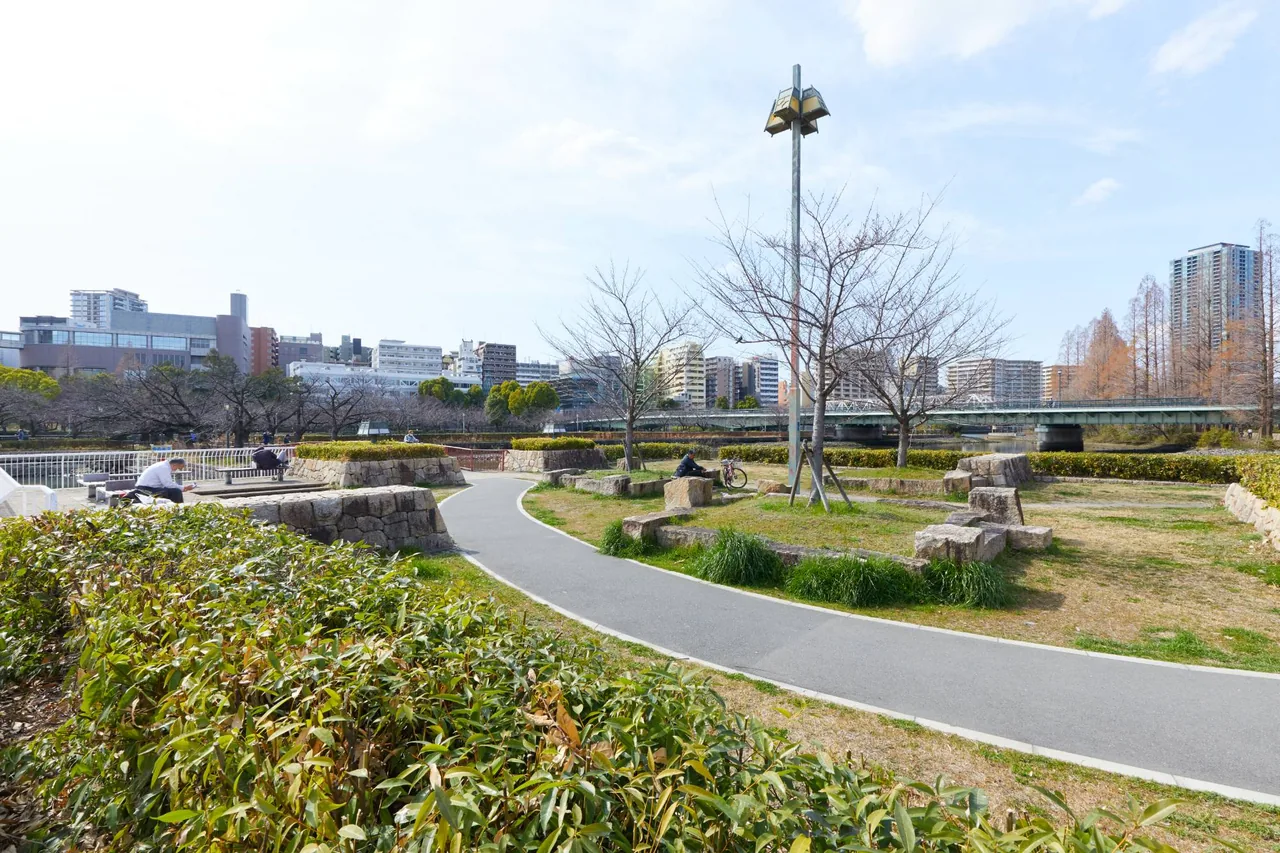
Kema-Sakuranomiya Park stretches about 4 km along the riverbanks of the Okawa (the old Yodo River), from the Kema weir upstream to Temmabashi downstream. Rows of cherry trees, mostly Somei-yoshino, line the river, and the park fills with hanami crowds in spring.
There's no booking and no admission fee, and you can start walking wherever you like. Sakuranomiya Station on the JR Osaka Loop Line, Temmabashi Station and Osakajo-kitazume Station on the JR Tozai Line are all nearby. Walking the whole length takes a while; the stretch between Sakuranomiya and Temmabashi stations is easier to fit into a travel day. If you time it with the Mint's promenade, in some years you can see both Somei-yoshino and double-flowered cherries along the same river.
Nakanoshima Park: cherry trees and modern architecture on a river island
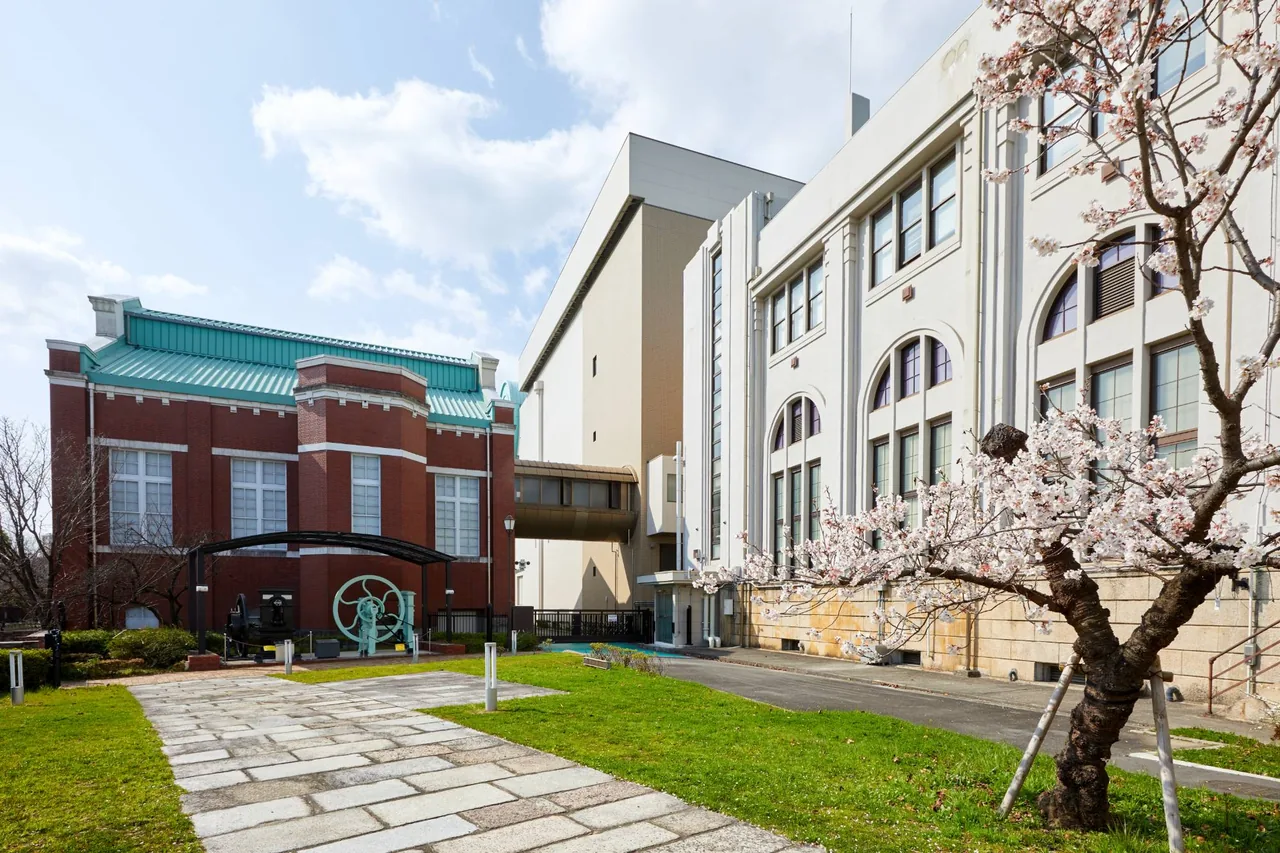
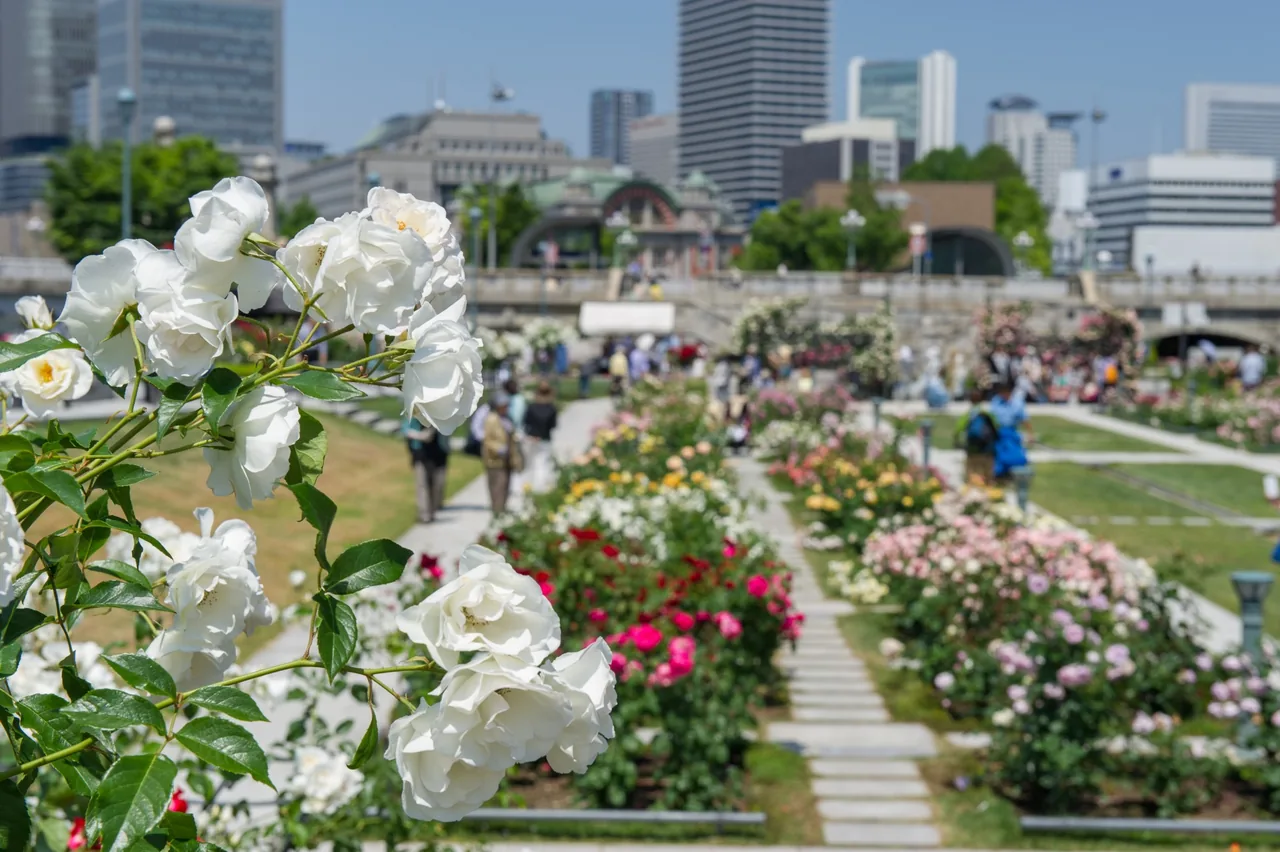
Downstream from Temmabashi, the Okawa splits into the Dojima and Tosabori rivers, and the long, narrow island between them is Nakanoshima. Nakanoshima Park has cherry trees too, and you can stroll with views of the river and modern buildings such as Osaka City Central Public Hall. Osaka Castle Park and the Okawa are the main hanami spots, so Nakanoshima works best as the end point of a walk downstream from Temmabashi.
The rose garden in Nakanoshima Park is at its best around mid-May in spring and around mid-October in autumn. For Nakanoshima's buildings and museums and the Kitahama riverside, see our Nakanoshima and Kitahama guide.
Avoiding the crowds: preparation and manners
On cherry blossom weekends, every spot gets busy. The City of Osaka asks people to come to Osaka Castle Park by train or bus for hanami, because the parking lots fill up and cars parked on nearby streets cause traffic jams.
- Go on a weekday: Weekends and holidays are busier everywhere. If your schedule allows, visit on a weekday.
- Book the Mint first: Build your itinerary around your promenade day, and in years when booking is required, secure a time slot soon after it opens.
- Wear comfortable shoes: Osaka Castle Park has slopes and stone steps, and the Okawa riverside involves long walks.
- Check how to handle trash: Take your trash home or leave it only where the park says you can.
For hanami manners, such as saving spots, trash and not breaking branches, and for how to check bloom forecasts, see Japan's cherry blossom season and hanami etiquette.
A one-day route linking the cherry blossom spots
Osaka Castle Park, the Okawa riverside and the Japan Mint can be linked on foot. Here's an example for a day during the Mint's promenade period.
- Morning: Enter Osaka Castle Park from JR Osakajokoen or Morinomiya Station and see the main tower and cherry trees at Nishinomaru Garden
- Midday: Head out of the north side of the park to the Okawa and take in the riverside trees around Temmabashi
- Afternoon: At your booked time, enter the Mint through the South Gate and walk through to the North Gate (Sakuranomiya Bridge side)
- Late afternoon: Walk along the Kema-Sakuranomiya Park trees to JR Sakuranomiya Station
Outside the promenade period, skip step 3 and walk along the river from Temmabashi to Sakuranomiya Station. Nakanoshima lies downstream from Temmabashi, so it fits more easily into a walk on another day.
Find more places to visit in Osaka in our Osaka spot listings.
Places in this guide
Hotels nearbyPR
See prices and availability for hotels in Osaka and book on our partner Trip.com.
See hotels in Osaka on Trip.com