
Osaka First Time: Umeda or Namba, Getting Around and a 3-Day Plan
This guide is translated from the Japanese edition. Read the Japanese edition
First time in Osaka? Umeda (Kita) or Namba (Minami): where to stay, the Midosuji and Loop lines, IC cards and contactless fares, and a 3-day plan.
Step off the shinkansen at Shin-Osaka, board the Midosuji subway line, and Umeda is three stops away; Namba is another four stops south. Osakans call the area around Umeda and Osaka Station "Kita" (north) and the area around Namba and Shinsaibashi "Minami" (south). On a first trip to Osaka, the first decision is which of these two districts to stay in. Either way, the Midosuji Line links them directly, but your choice changes how you reach the airport and which trains you take to Kyoto, Nara and Kobe.
Kita (Umeda) and Minami (Namba): what's the difference?
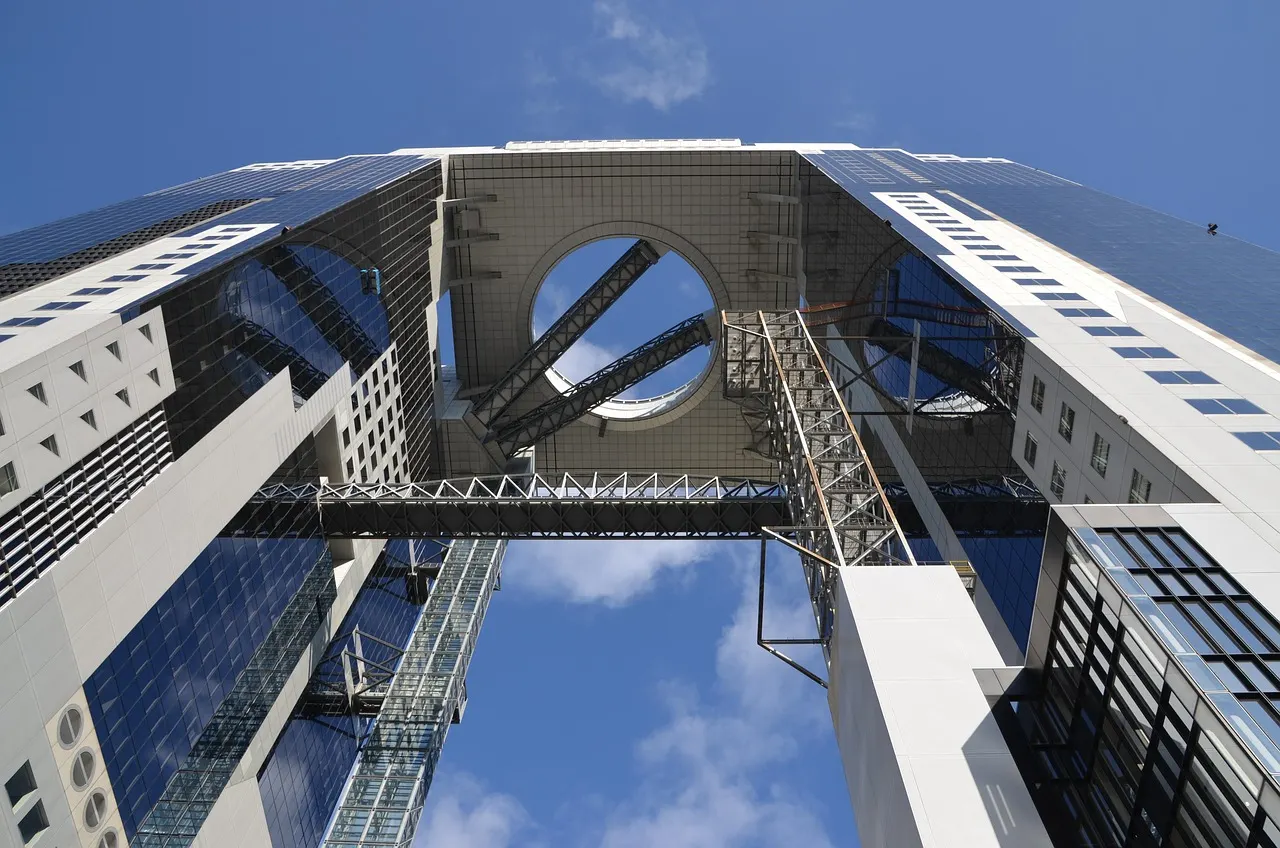
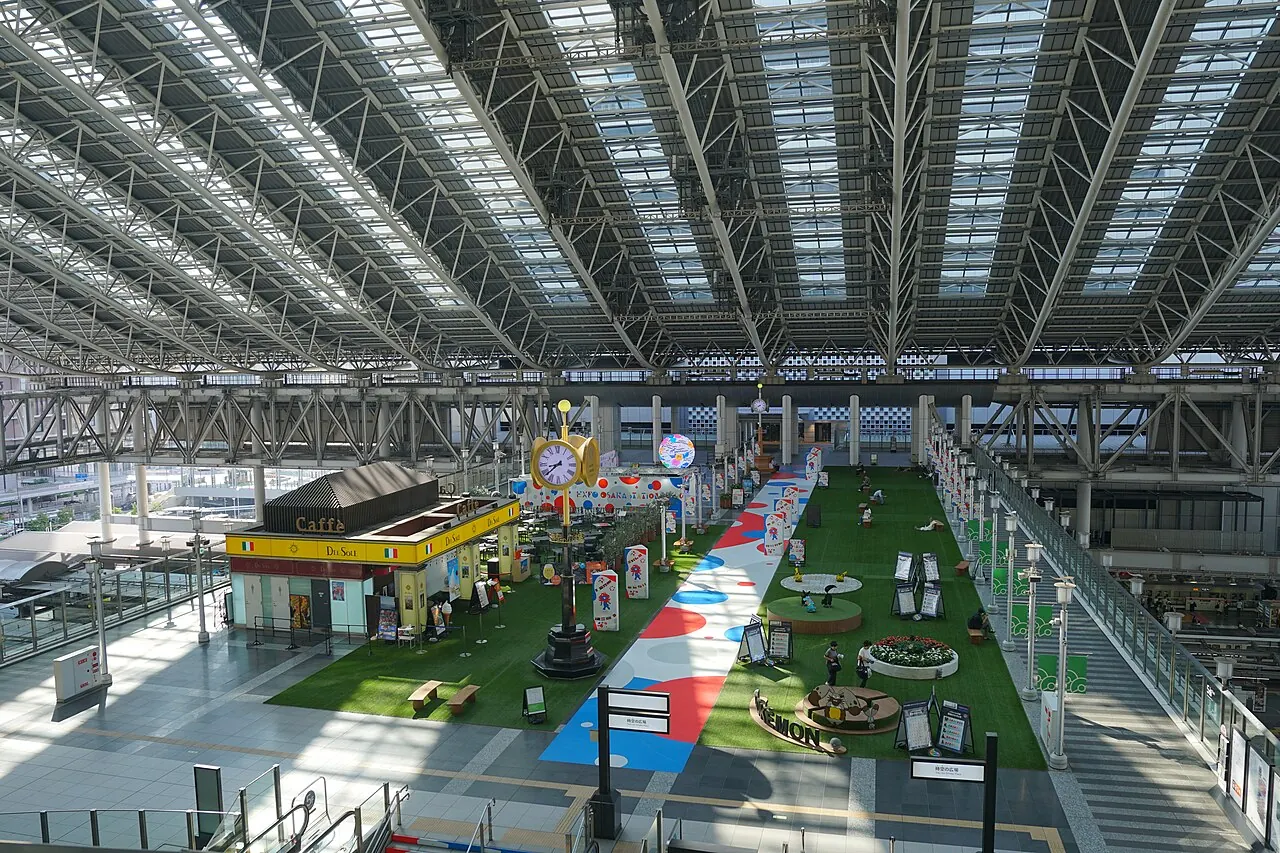
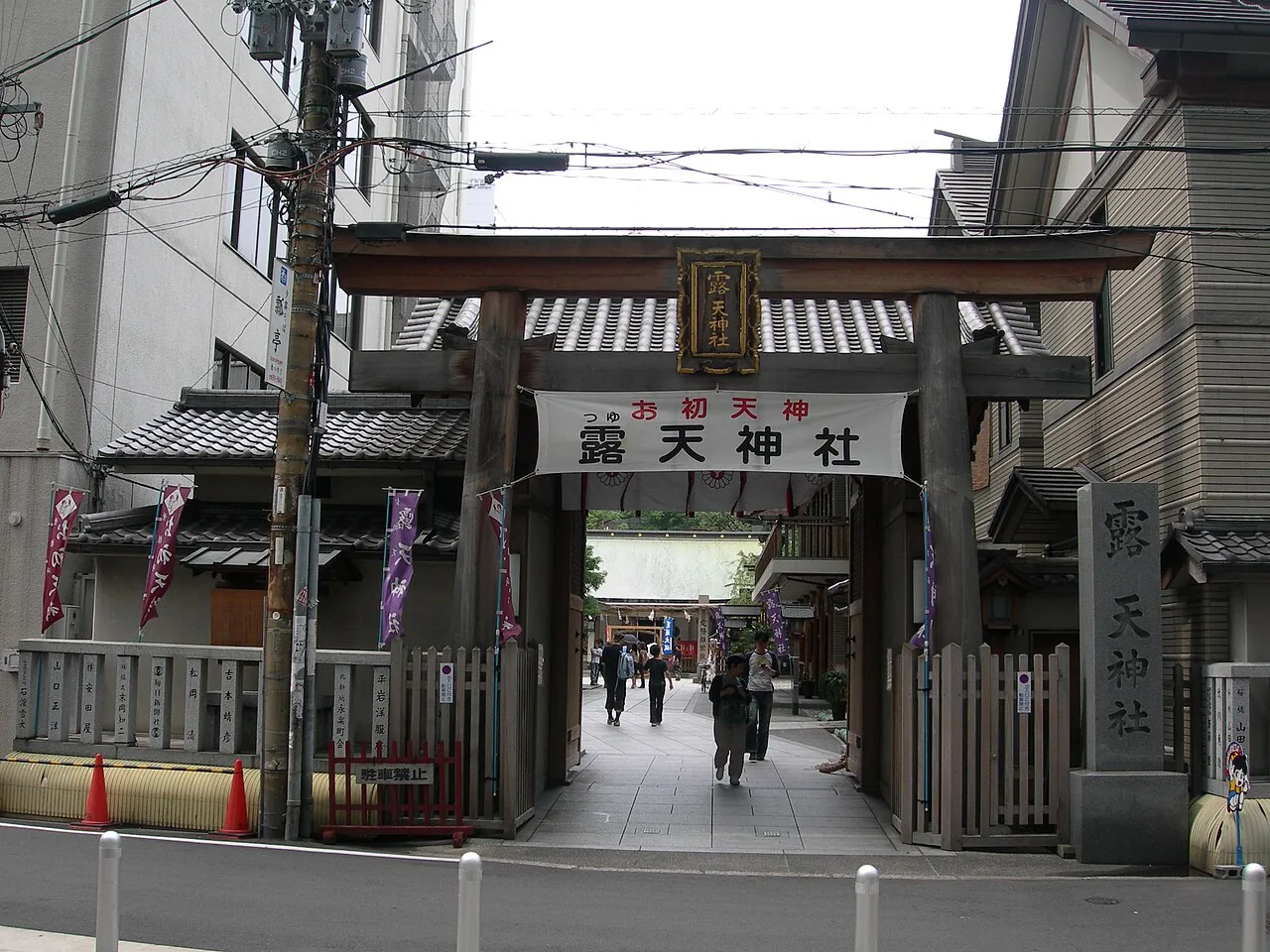
Kita centers on Umeda, where JR Osaka Station, the Hankyu and Hanshin Osaka-umeda stations and the subway's Umeda Station all come together. Department stores and shopping buildings connect straight into the stations, and underground malls spread out below. The sights sit close to the stations: Toki no Hiroba, the plaza on top of Osaka Station; the Umeda Sky Building Floating Garden Observatory at the top of a skyscraper; and Ohatsu Tenjin, a shrine tucked among office blocks.
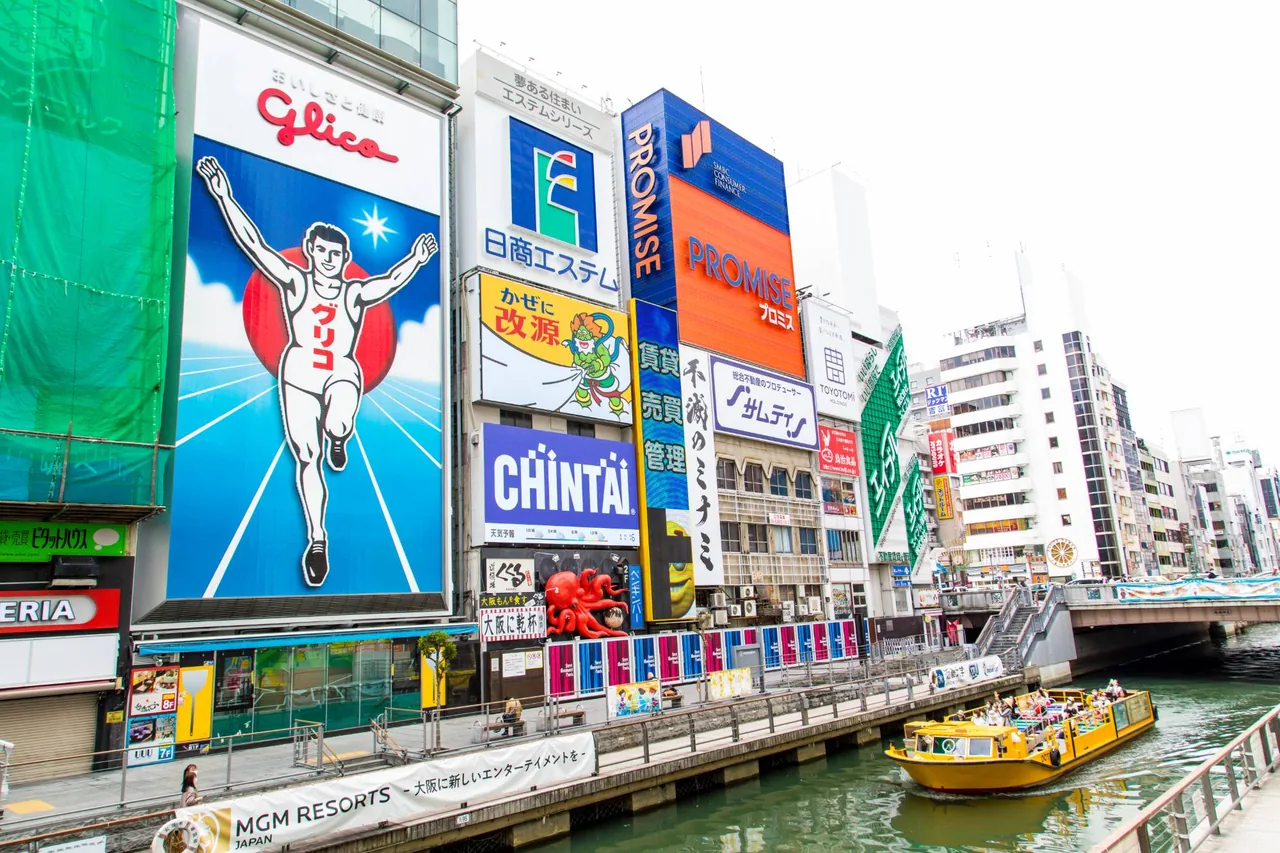
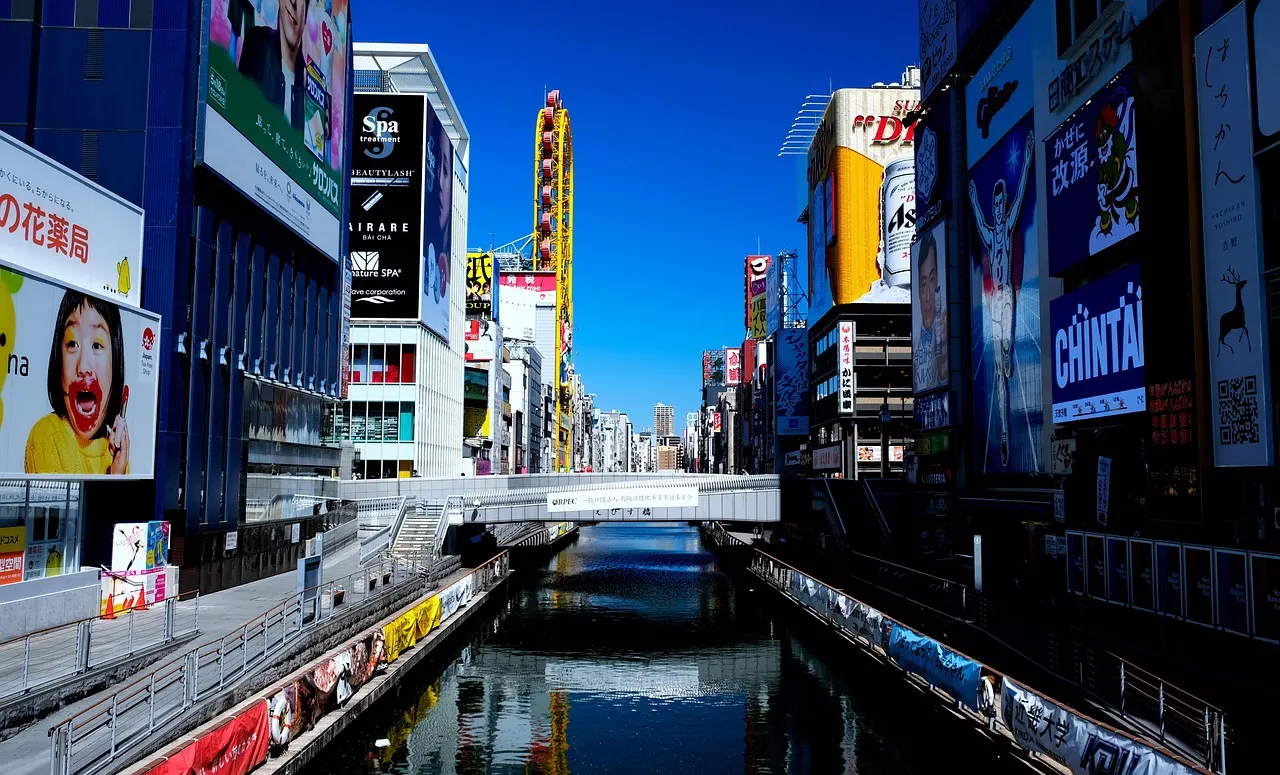
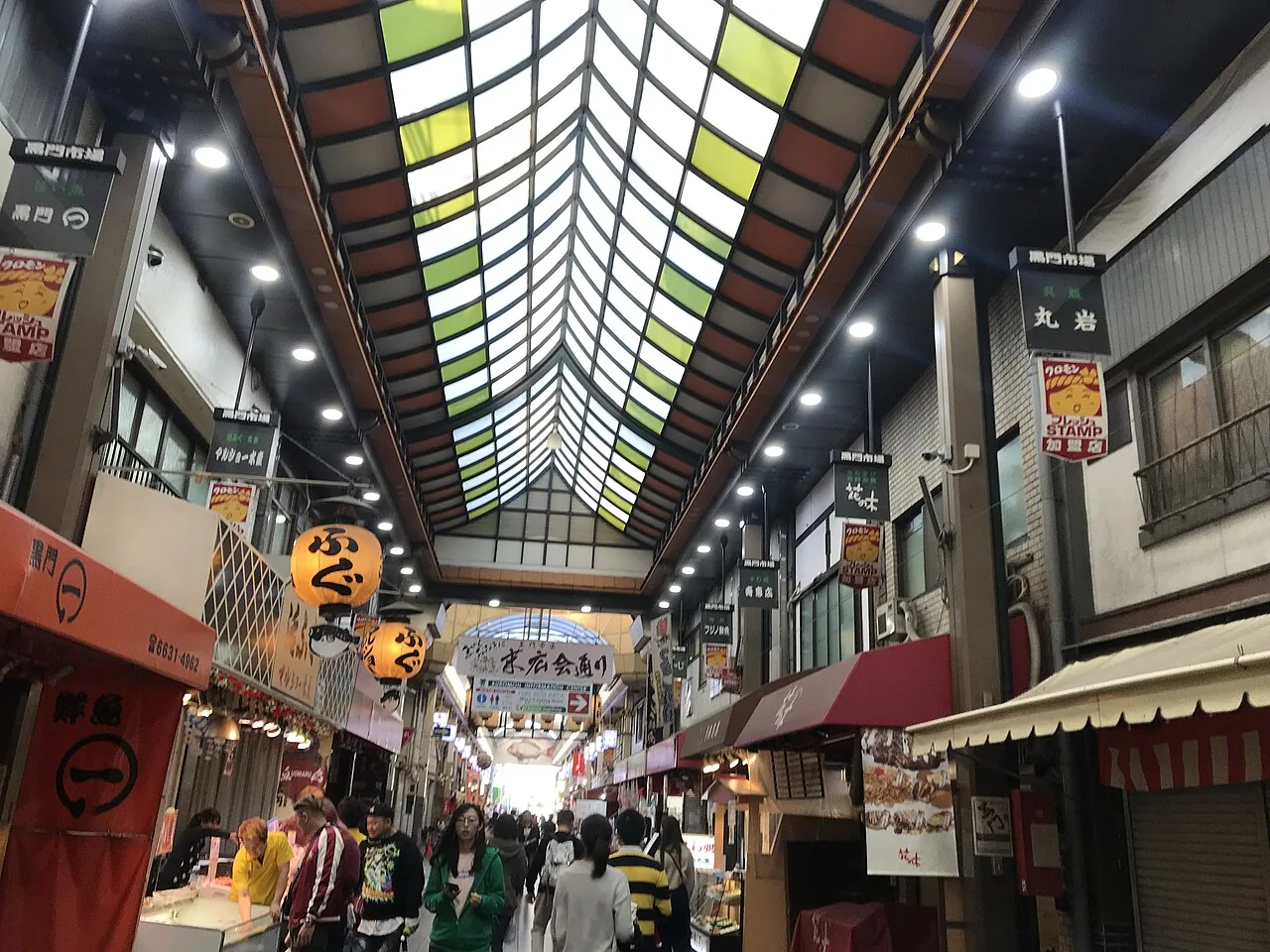
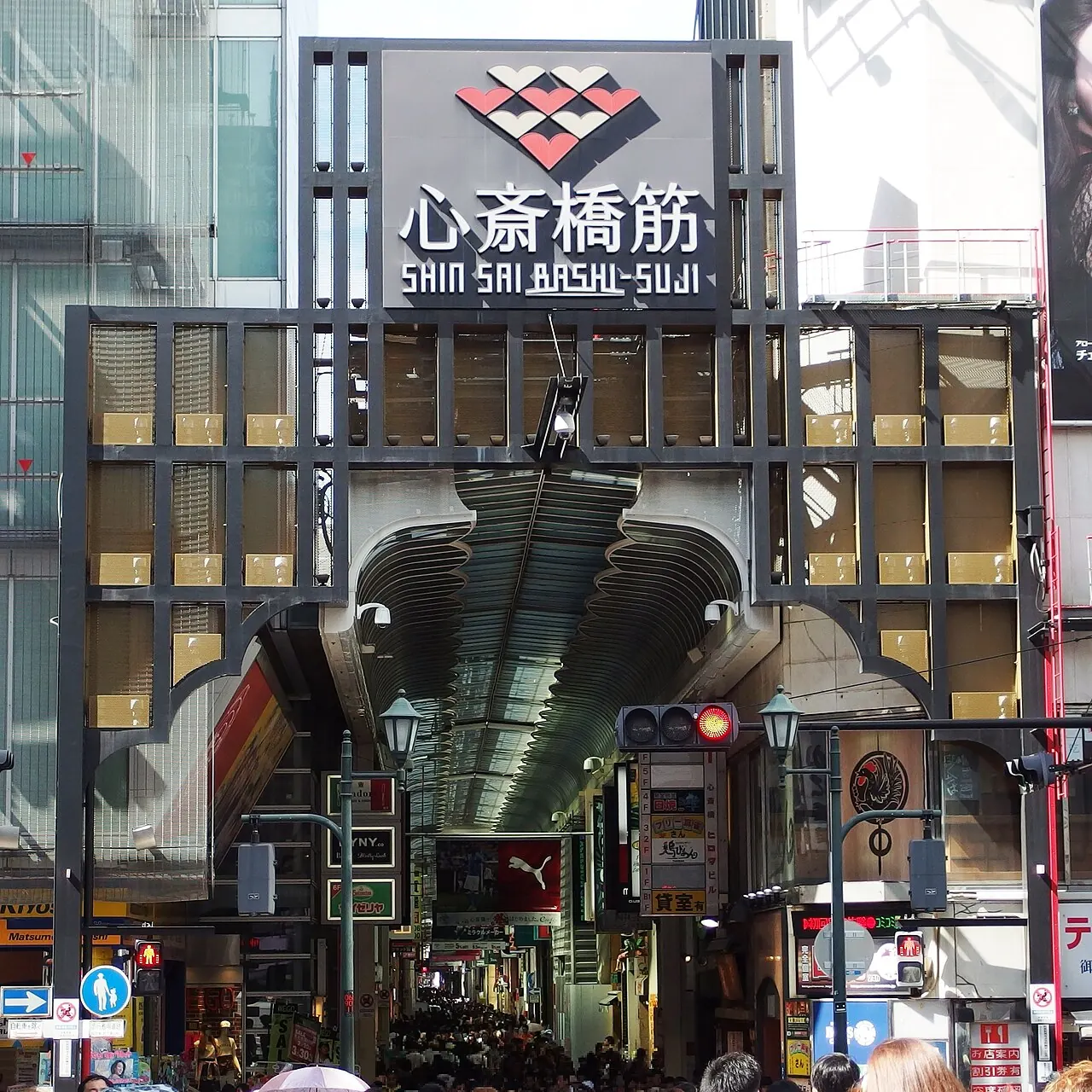
Minami is the entertainment district where Namba and Shinsaibashi face each other across the Dotonbori canal. Here you'll find Dotonbori with its giant signboards, the covered Shinsaibashi-suji shopping street, and, a walk to the east in Nippombashi, Kuromon Market. Takoyaki and okonomiyaki shops stay open late into the night.
For the sights and how to walk each area, see the Umeda and Namba, Dotonbori and Shinsaibashi area pages.
Umeda or Namba: where should you stay?
What decides it is your airport and where you plan to go on day trips.
| Where you stay | Easy to reach | Best for |
|---|---|---|
| Umeda (Kita) | Shin-Osaka Station (one stop on JR), Kyoto (JR, Hankyu), Kobe (JR, Hankyu, Hanshin), Himeji (JR Special Rapid), USJ (JR) | Travelers arriving by shinkansen, and anyone taking day trips to Kyoto, Kobe or Himeji |
| Namba (Minami) | Kansai Airport (Nankai), Nara (Kintetsu), Kobe-Sannomiya (Hanshin Namba Line) | Travelers using Kansai Airport, heading to Nara, or planning to eat their way through the night |
Umeda's strength is that trains from JR Osaka Station run to Shin-Osaka, Kyoto, Kobe and Himeji without a change. From Hankyu's Osaka-umeda Station, limited express trains also run straight through to Kyoto-kawaramachi.
From Nankai's Namba Station, the rapi:t limited express heads for Kansai Airport, and from Kintetsu's Osaka-Namba Station some trains run to Kintetsu-Nara without a change. Since you can walk back from Dotonbori, there's no need to watch the clock for the last train after dinner, which is another point in Namba's favor.
For routes from the airports and Shin-Osaka to each area, see our guide to getting from Kansai Airport, Shin-Osaka and Itami into the city.
The Midosuji Line and the Osaka Loop Line: two lines cover most of it
Learn two lines, the Osaka Metro Midosuji Line and the JR Osaka Loop Line, and you can reach most of the city's sights.
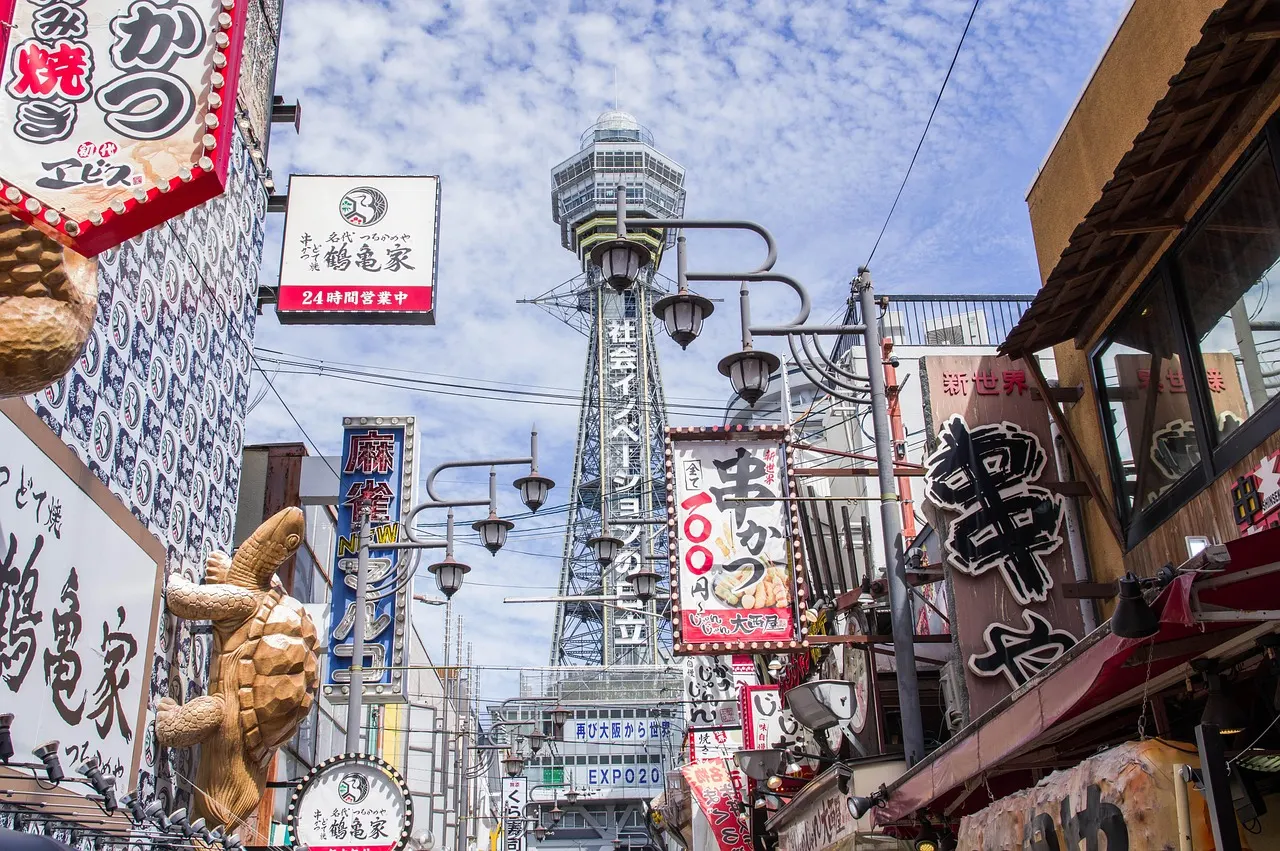
The Midosuji Line is the subway that runs north–south through the heart of Osaka. From the north, it stops at Shin-Osaka, Umeda, Yodoyabashi, Hommachi, Shinsaibashi, Namba, Daikokucho, Dobutsuen-mae and Tennoji. Umeda and Namba are four stops apart, and two stops south of Namba, Dobutsuen-mae Station puts you in Shinsekai, home of Tsutenkaku Tower.
The Osaka Loop Line is a JR line that circles central Osaka from Osaka Station, with 19 stations on a loop of about 40 minutes. It passes Osakajokoen and Morinomiya, the stations for Osaka Castle; Tennoji; Shin-Imamiya, near Shinsekai; and Nishikujo, where you change to the JR Yumesaki Line for USJ. Note, though, that the Loop Line has no station in Namba. From Namba to Osaka Castle, the subway is quicker.
Station names in Umeda can be confusing: JR's is "Osaka," Hankyu's and Hanshin's are "Osaka-umeda," and on the subway it's "Umeda" on the Midosuji Line, "Higashi-Umeda" on the Tanimachi Line and "Nishi-Umeda" on the Yotsubashi Line. Check the station name for your line first and you're less likely to get lost in the underground passages.
IC cards, contactless payment and the one-day pass
There are two ways to ride without buying a ticket each time.
- IC transit cards: JR West's ICOCA and the other cards in the nationwide interoperable network, such as Suica, work on both JR and the subway.
- Contactless credit cards: Since October 2024, every Osaka Metro station accepts contactless payment at the gates. No registration is needed; just tap a compatible card or phone on the dedicated reader on the ticket gate. Keep in mind that children are charged the adult fare this way.
If you'll ride the subway many times in one day, Osaka Metro also sells the Enjoy Eco Card, a one-day pass. It covers unlimited rides on the subway and Osaka City Bus, and the price differs between weekdays and weekends/holidays. It isn't valid on JR or private railways, so decide based on whether that day's destinations are along subway lines.
- Contactless payment (Osaka Metro)
- Using IC cards other than PiTaPa (Osaka Metro)
- Enjoy Eco Card one-day pass (Osaka Metro)
A 3-day plan
Kita on day one, Minami and Shinsekai on day two, somewhere farther afield on day three. This combination covers Osaka's main sights without doubling back.
Day 1: Osaka Castle to Umeda
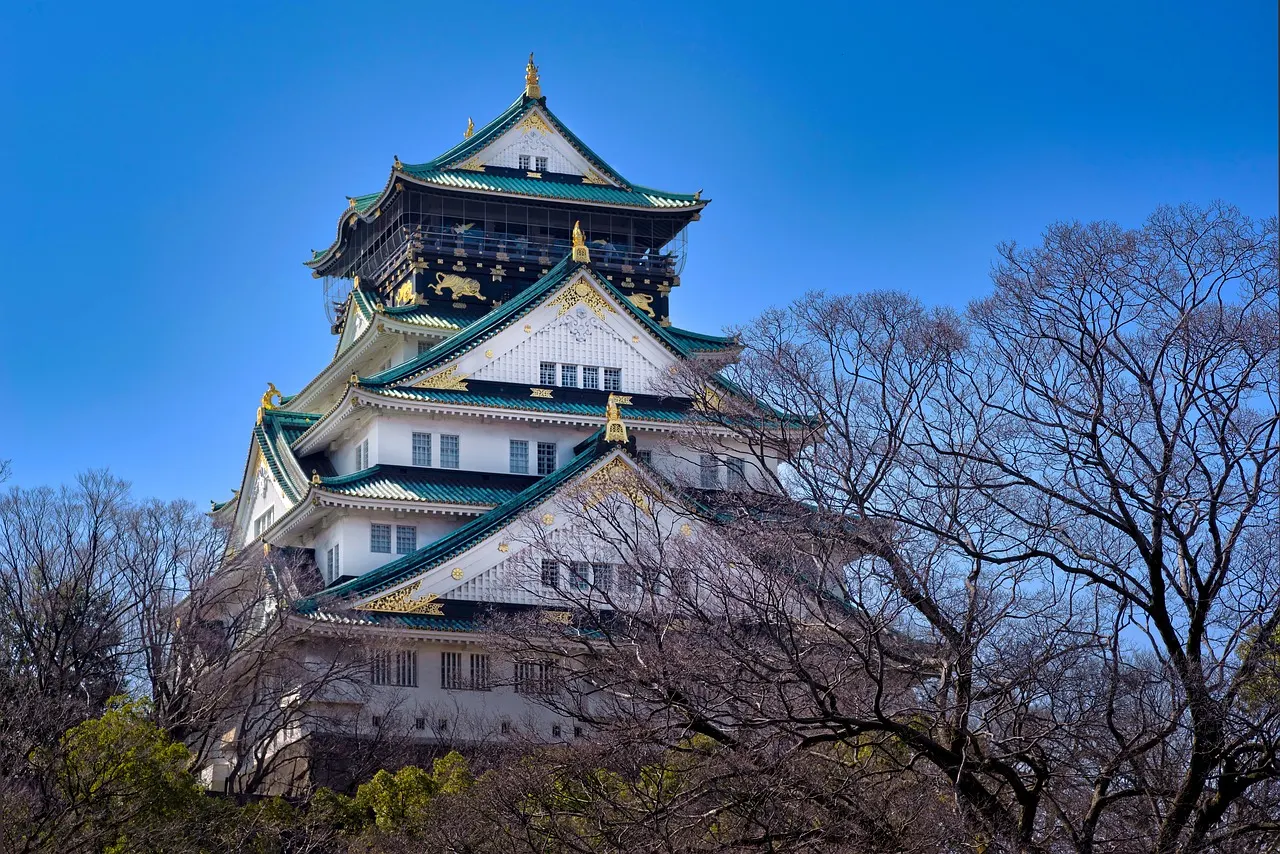
In the morning, take the Osaka Loop Line to Osakajokoen Station and walk to Osaka Castle Main Tower. The park is large and your route depends on which gate you enter, so decide on an entrance with our Osaka Castle Park walking guide. In the afternoon, head to Umeda and go up the Umeda Sky Building observatory a little before sunset to see the city in daylight and then lit up at night. Our Osaka Castle to Umeda day course lays out this route with rough timings.
Day 2: Kuromon Market and Dotonbori, then Shinsekai
Go to Kuromon Market in the morning, when the stalls are all open. Snack on seafood as you walk west, then have takoyaki or okonomiyaki in Dotonbori. For choosing shops and paying, see our Dotonbori and Kuromon Market street food guide; for the walking order, the Kuromon Market to Dotonbori half-day food course.
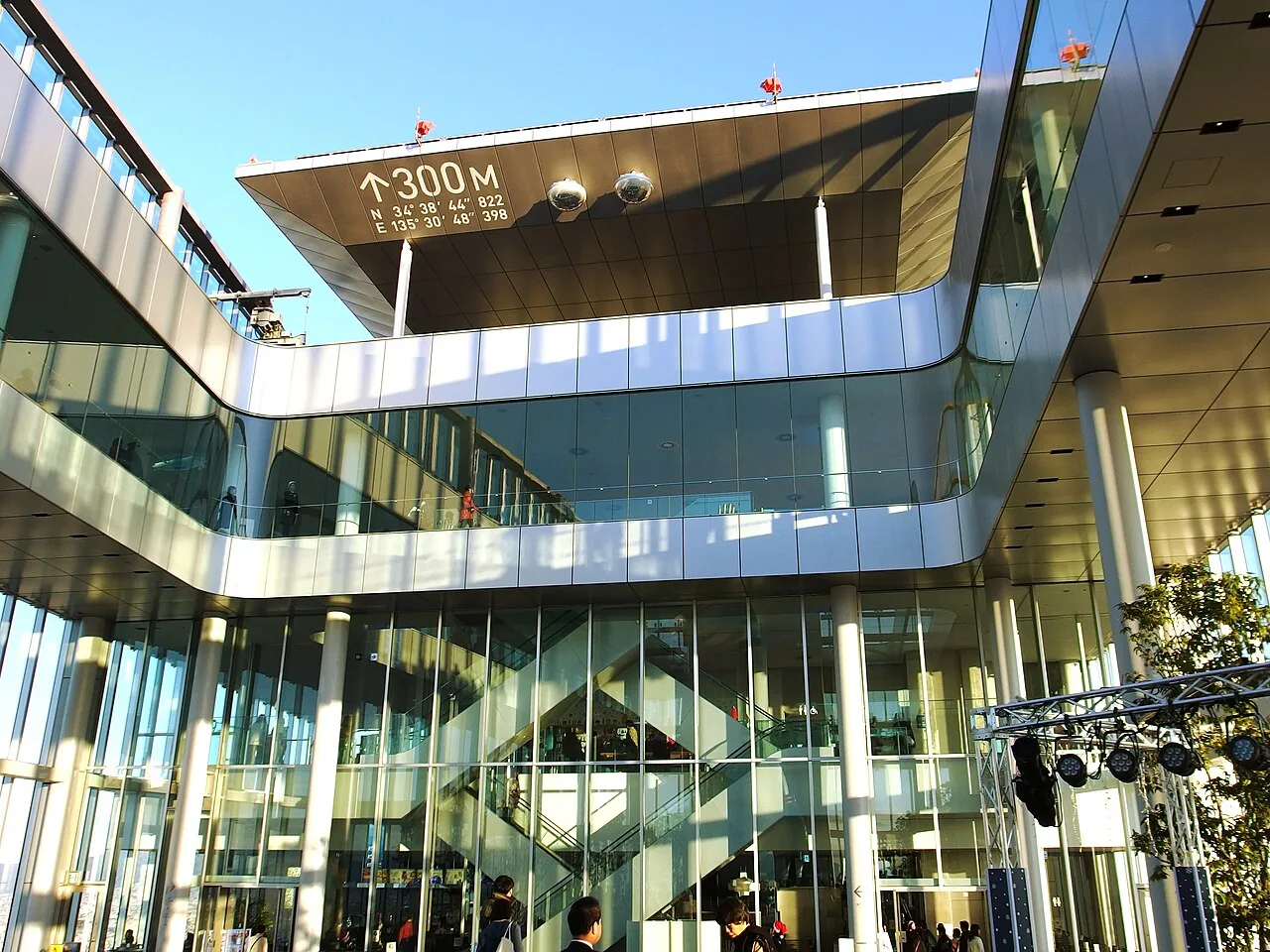
In the afternoon, take the Midosuji Line to Dobutsuen-mae and walk around Tsutenkaku Tower and Shinsekai's shopping streets. Toward evening, take in the view from Harukas 300 in Tennoji, then head back to Shinsekai for a kushikatsu dinner. Our Shinsekai kushikatsu guide explains how to eat it, and the Shinsekai and Tennoji half-day course shows how to spend the afternoon.
Day 3: USJ or a day trip
If you're going to Universal Studios Japan, sort out tickets and the official app beforehand. If you'd rather keep exploring on foot, the day trips in the next section are good options too.
For another half day in the city, near Umeda there's the Osaka Tenmangu and Tenjinbashisuji walk and the Nakanoshima and Kitahama half-day course; in Tennoji, try the Uemachi temples half-day course.
Day trips: Nara, Kobe and Himeji
With Osaka as your base, nearby cities are easy day trips. These articles cover how to get there and how to get around.
- Nara day trip from Osaka: the deer of Nara Park, Todai-ji Temple and Kasuga Taisha Shrine. If you're staying in Namba, Kintetsu is the easy choice.
- Kobe day trip: the Kitano foreign residences, Nankinmachi and the harbor at night. From Umeda, three lines run there: JR, Hankyu and Hanshin.
- Himeji Castle day trip: the JR Special Rapid from Osaka Station reaches Himeji Station without a change.
For an overview of the city and its main areas, see the Osaka basics guide (Osaka Convention & Tourism Bureau). To find places on a map, browse the list of places in Osaka.
Places in this guide
Hotels nearbyPR
See prices and availability for hotels in Osaka and book on our partner Trip.com.
See hotels in Osaka on Trip.com