
JR Tadami Line Guide: Riding Fukushima's Scenic Rural Railway
This guide is translated from the Japanese edition. Read the Japanese edition
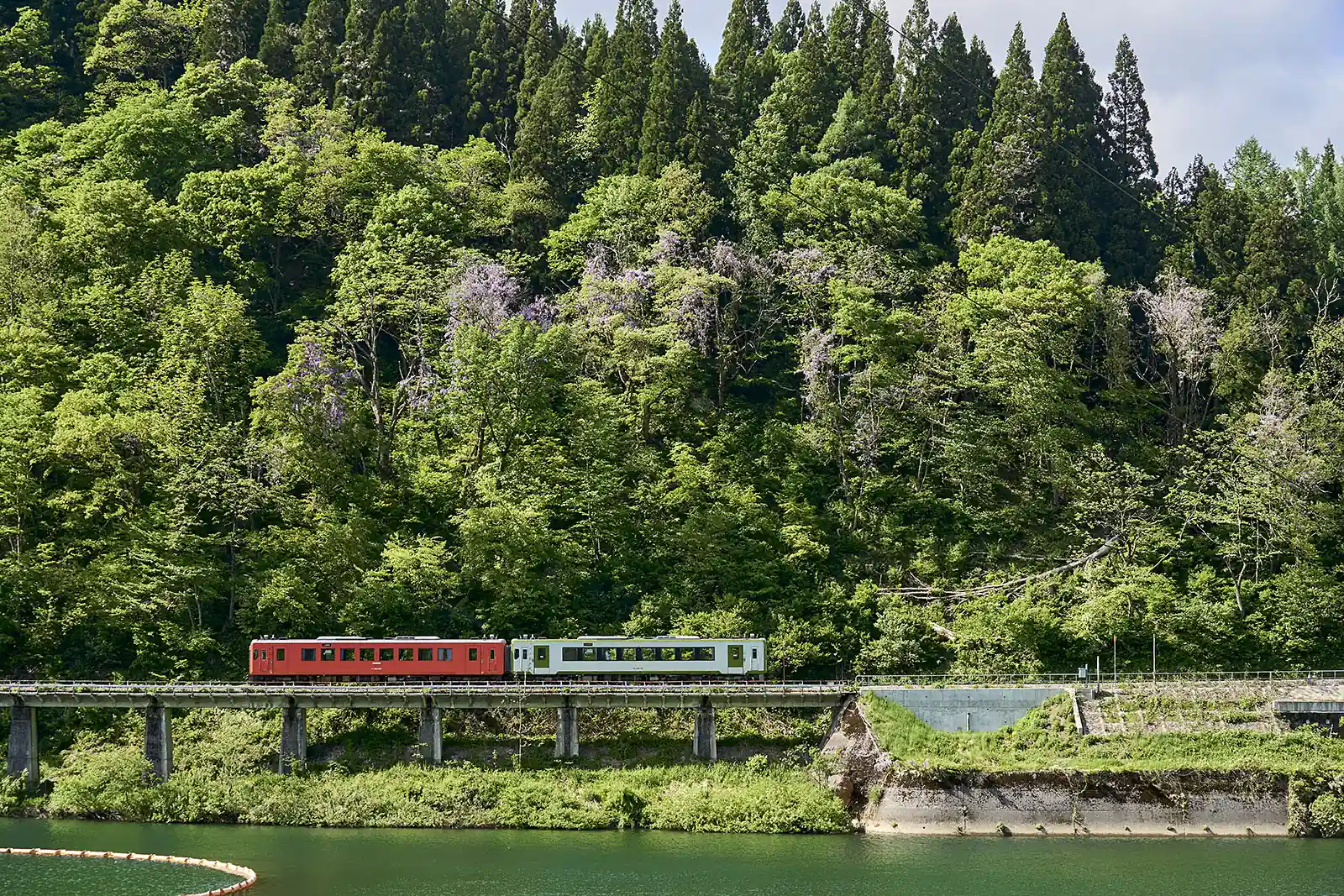
Riding the JR Tadami Line from Aizu-Wakamatsu: planning around few trains on the Aizu-Kawaguchi–Tadami section, the First Tadami River Bridge viewpoint and winter tips.
Leaving Aizu-Wakamatsu Station, the train crosses the rice fields of the Aizu Basin and then follows the Tadami River into the mountains. The JR Tadami Line is a rural railway that crosses the river again and again on iron bridges, running past dam lakes and small villages. Many people come just for the views from the window, but trains are very infrequent, and if you improvise you can end up stuck partway along the line. Before you ride, get three things straight: how to plan around the timetable, how to reach the viewpoint over the famous bridge, and what each season brings.
What is the Tadami Line? From Aizu-Wakamatsu to Koide in Niigata
The Tadami Line runs 135.2 km between Aizu-Wakamatsu Station in Fukushima Prefecture and Koide Station in Niigata Prefecture. On the Fukushima side it leaves the Aizu Basin and passes through the mountain towns and villages known as Oku-Aizu, following the Tadami River to Tadami Station. Beyond Tadami it crosses the prefectural border into Niigata.
The line was badly damaged in the Niigata-Fukushima heavy rains of July 2011, when bridges were washed away. The worst-hit section, between Aizu-Kawaguchi and Tadami, had no trains for about 11 years, and replacement buses ran instead. After reconstruction, the whole line reopened on October 1, 2022.
The Aizu-Kawaguchi to Tadami section was restored under a "vertical separation" arrangement: Fukushima Prefecture owns the track, stations and other facilities, and JR East runs the trains. For passengers, it is the same JR train as on the rest of the line, with no change needed.
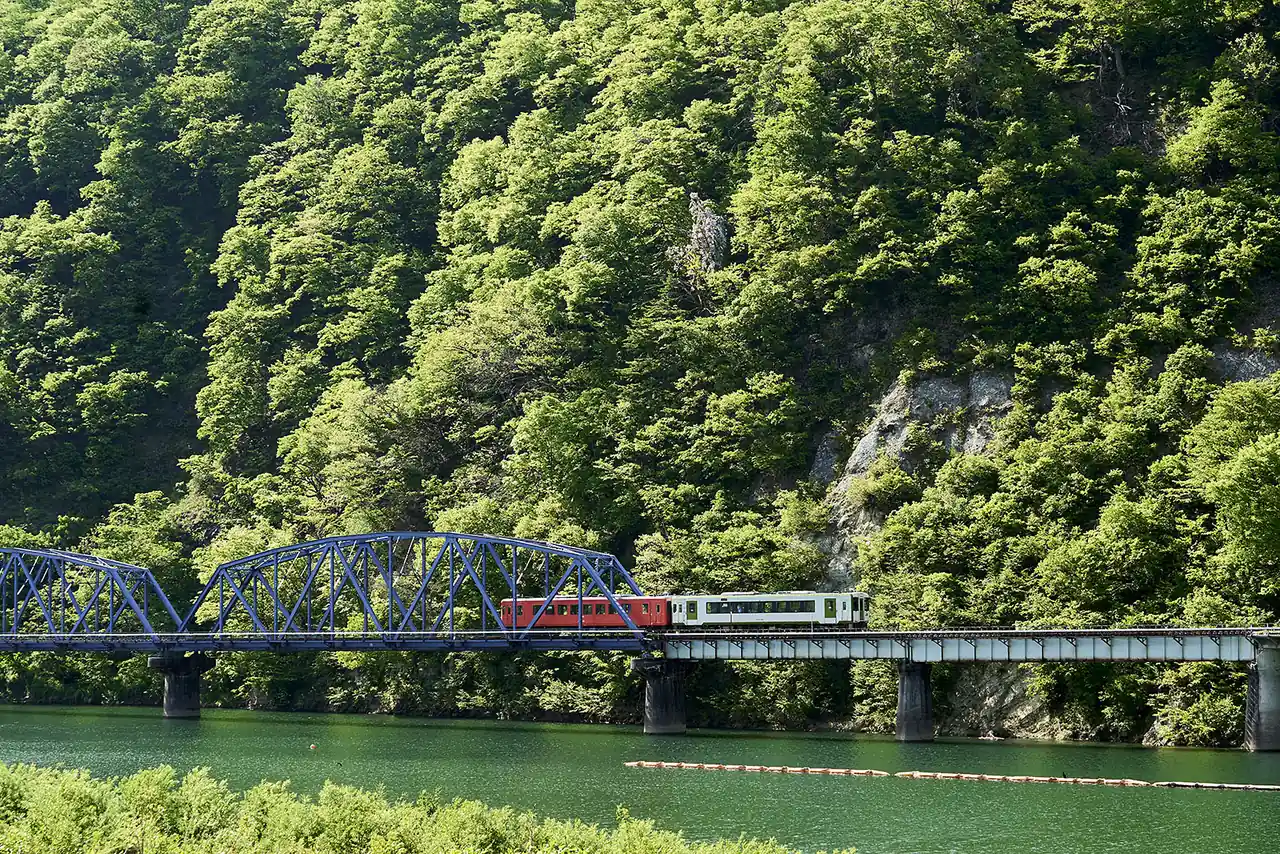
Photo: Ⓒ福島県観光物産交流協会
How many trains a day? Decide this before you go
Frequency is the thing to watch most on the Tadami Line. Trains are especially few between Aizu-Kawaguchi and Tadami, so check the JR East timetable before you go. On the other sections too, you cannot simply hop on whatever train comes next, as you would on a city line.
On some sections, missing one train means waiting several hours for the next. Settle the following before you set out and you will avoid trouble along the way.
- The train you will take, and the time of the train back (or onward). Check that day's timetable on the JR East website
- Which station you will get off at and how long you can stay. Work out how many hours there are until the next train before you get off
- Where you will sleep that night. If you ride the whole line, decide whether to stay on the Aizu-Wakamatsu side or the Koide side
- Food and drink. At small mountain stations there is no guarantee of anywhere to buy them nearby
In heavy rain or heavy snow, trains may be delayed or suspended. Checking JR East's service information the day before and on the morning of your trip gives peace of mind.
First Tadami River Bridge: the viewpoint by Michi-no-Eki Oze Kaido Mishimajuku
The view you see in so many Tadami Line photos, a train crossing an arch bridge over the Tadami River, is the First Tadami River Bridge in Mishima Town. To reach the viewpoints overlooking the bridge, climb the walking trail beside the roadside station Michi-no-Eki Oze Kaido Mishimajuku for about 15 minutes. It is a mountain path, so wear comfortable shoes. In winter, snow means you can only go as far as the first viewpoint.
By train, the nearest station is Aizu-Miyashita, about 3.5 km, or roughly a 45-minute walk, from the roadside station. Rental bicycles at Aizu-Miyashita Station are another option. By car, it is about 20 minutes from Aizubange IC on the Ban-etsu Expressway.
Because trains are so infrequent, chances to see one crossing the bridge are limited. If you want to see it, look up roughly when a train passes in the timetable, then add the time needed to climb the trail and arrive at the roadside station accordingly.
The Second Tadami River Bridge can also be seen near Aizu-Nishikata Station, the next station along.
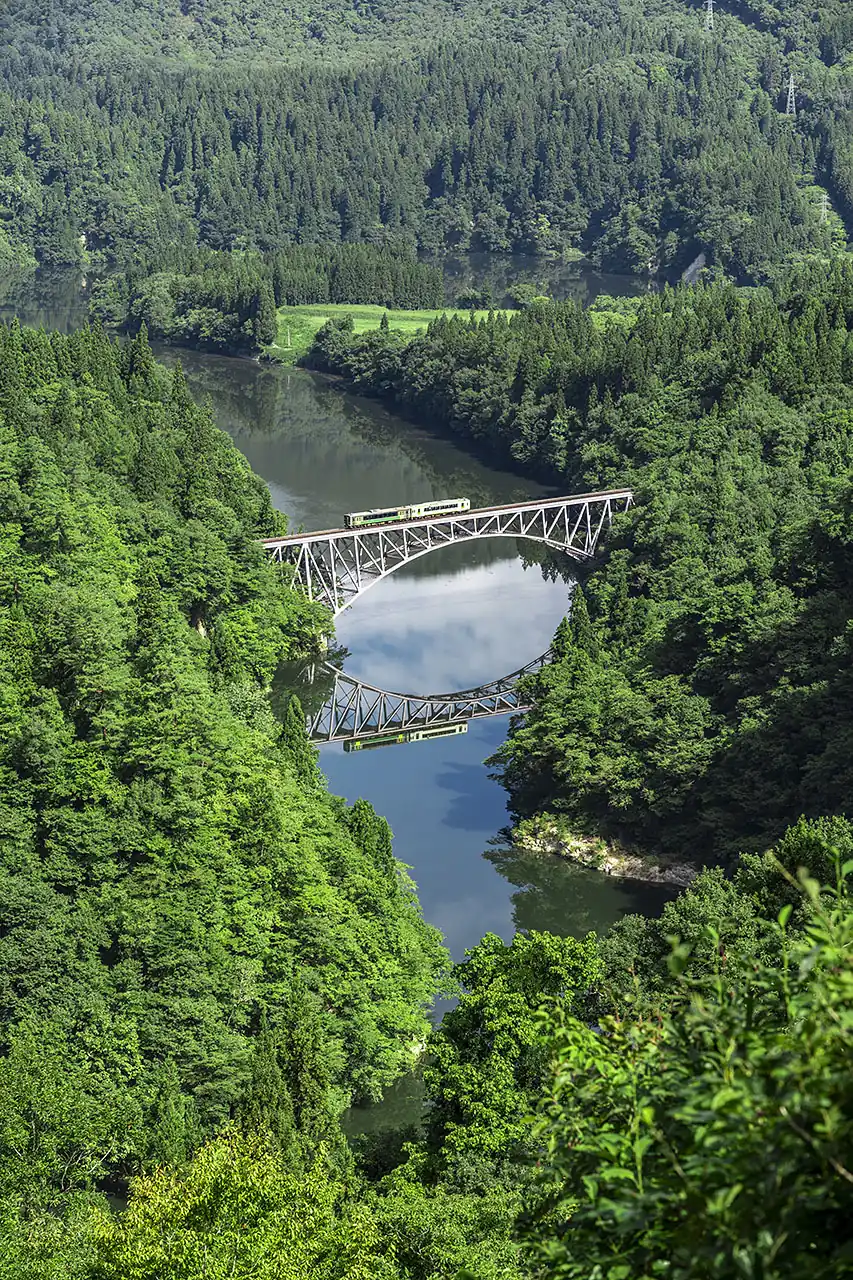
Photo: Ⓒ福島県観光物産交流協会
Stations along the way: Aizu-Yanaizu, Aizu-Nakagawa and Aizu-Kawaguchi
Riding from Aizu-Wakamatsu, the train passes Aizu-Yanaizu Station in Yanaizu Town and Aizu-Miyashita Station in Mishima Town, then continues to Aizu-Nakagawa and Aizu-Kawaguchi stations in Kaneyama Town.
Aizu-Kawaguchi Station is the start of the Aizu-Kawaguchi to Tadami section that reopened in 2022. From here to Tadami is the stretch that saw no trains for 11 years. Near Aizu-Kawaguchi is the Eighth Tadami River Bridge, another crossing of the Tadami River.
If you plan to get off at a station along the way, check before boarding how long you would wait there for the next train. At small stations, there are few places to spend the time while you wait.
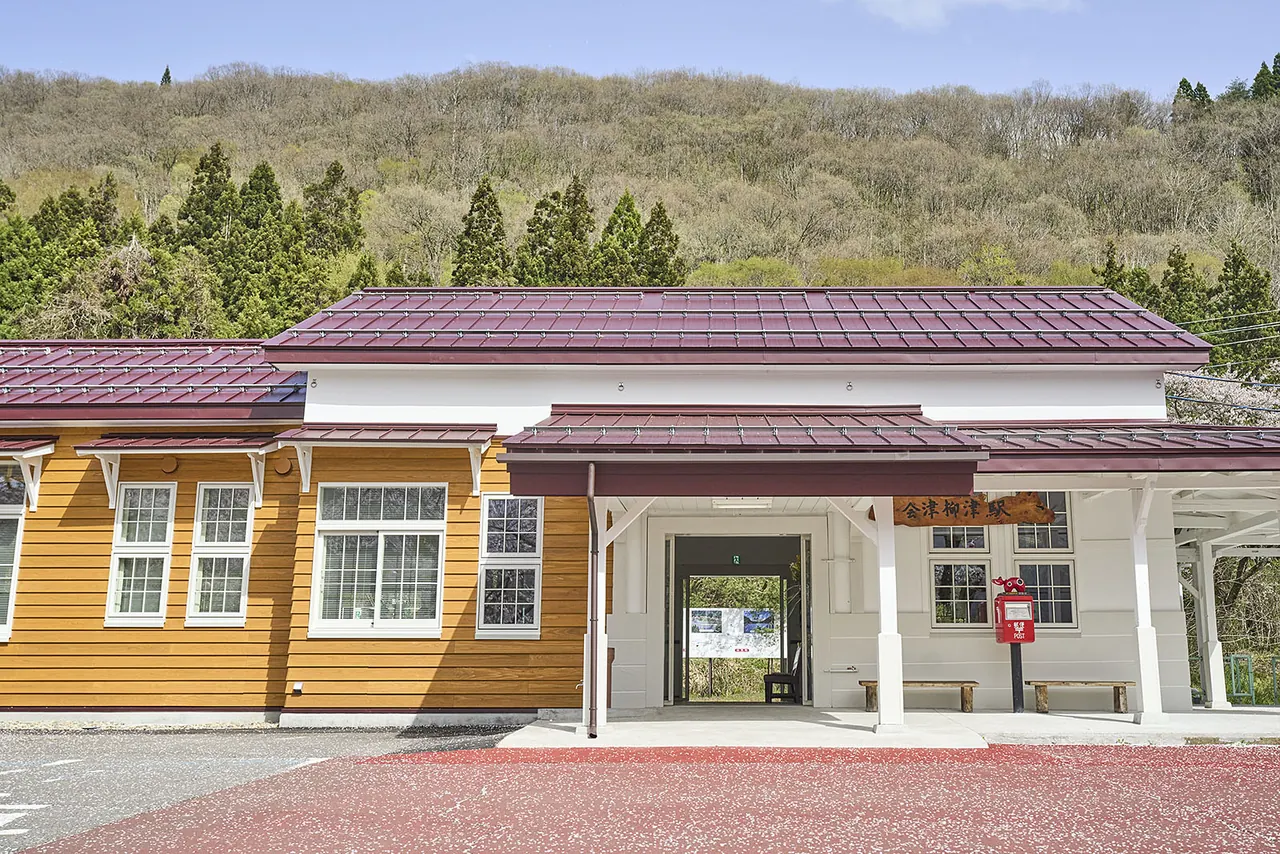
Photo: Ⓒ福島県観光物産交流協会
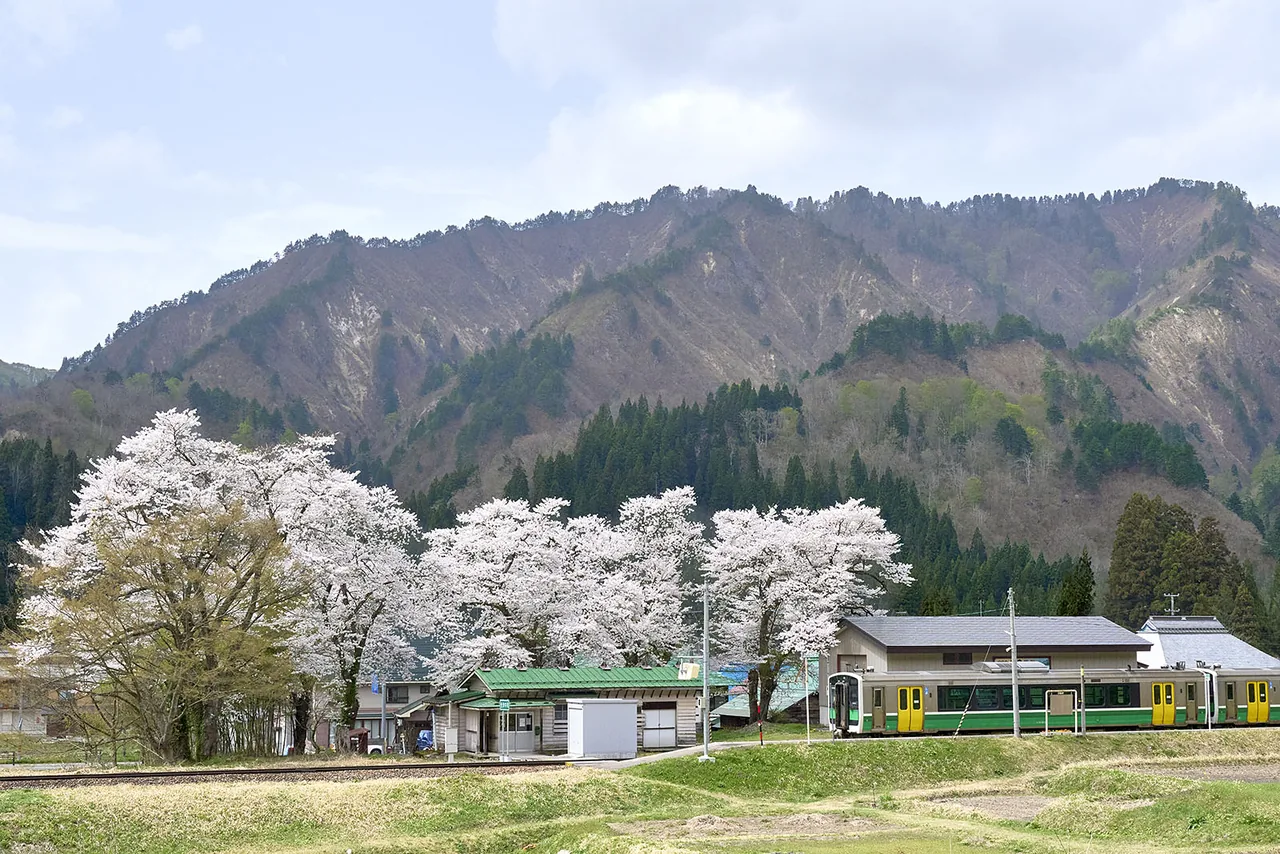
Photo: Ⓒ福島県観光物産交流協会
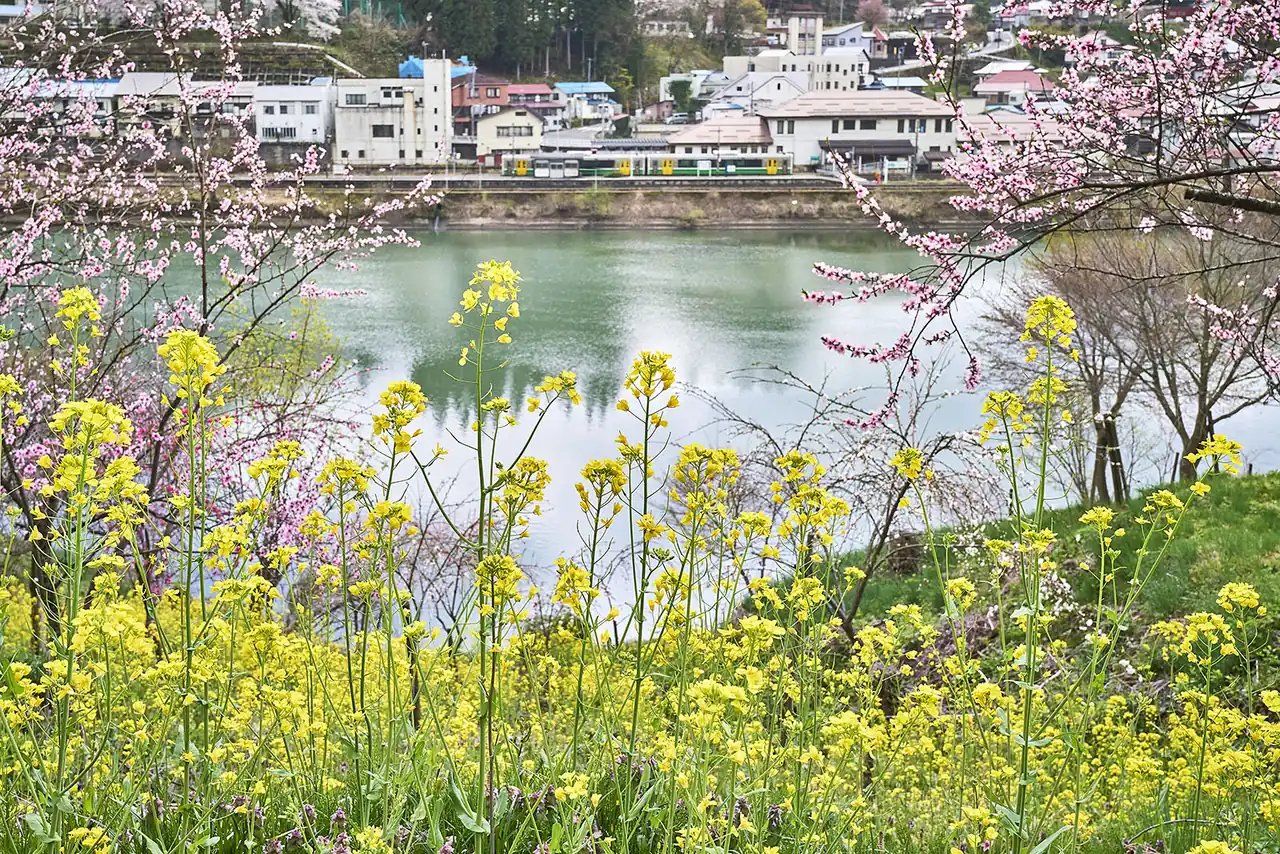
Photo: Ⓒ福島県観光物産交流協会
Autumn leaves and the Tadami Line in winter
Autumn colors along the Tadami River usually peak from late October to mid-November. When the riverside trees turn, you can see the bridges and the foliage together, both from the train window and from the First Tadami River Bridge viewpoint. The viewpoint trail is still a mountain path in the foliage season, so watch your footing.
Winter in Oku-Aizu brings heavy snow, and the viewpoint trail is open only as far as the first viewpoint. On snowy days trains may run late or be suspended, so leave plenty of slack in connections and plans for the return trip.
Getting around: ride the whole line, or combine it with a car
From the Fukushima side, the line starts at Aizu-Wakamatsu Station. From Tokyo, the usual route is the Tohoku Shinkansen to Koriyama Station, then the JR Ban-etsu West Line to Aizu-Wakamatsu. Koide Station, the terminus on the Niigata side, is on the JR Joetsu Line.
There are broadly two ways to do it.
| Approach | Suits | Things to watch |
|---|---|---|
| Ride the whole line by train | People who want the views from the window, or to travel through from Fukushima to Niigata | With so few trains, riding the full line takes up most of the day on board. Book where you will stay first |
| Drive, and ride only part of the line | People who want to see the trains from outside, such as at the First Tadami River Bridge | Avoid it if you are not used to driving in snow. For the viewpoint, park at the roadside station and walk |
If you drive, the Tadami Line follows the Tadami River, so it is easy to find spots along the riverside roads to watch bridges and trains. You can rent a car in Aizu-Wakamatsu and head to Mishima Town via Aizubange IC. That said, if you are not used to mountain roads in winter, sticking to the train in the snowy season is the sensible choice.
Fukushima Prefecture's page About the JR Tadami Line (Japanese) covers the line and the area along it. Check service status on JR East's train information page for the Tohoku area and timetables on JR East's official website. For sights in Aizu-Wakamatsu, the town where the line begins, see the Aizu-Wakamatsu page.