Aizu-Wakamatsu in One Day: Tsuruga-jo, Oyakuen and Iimoriyama
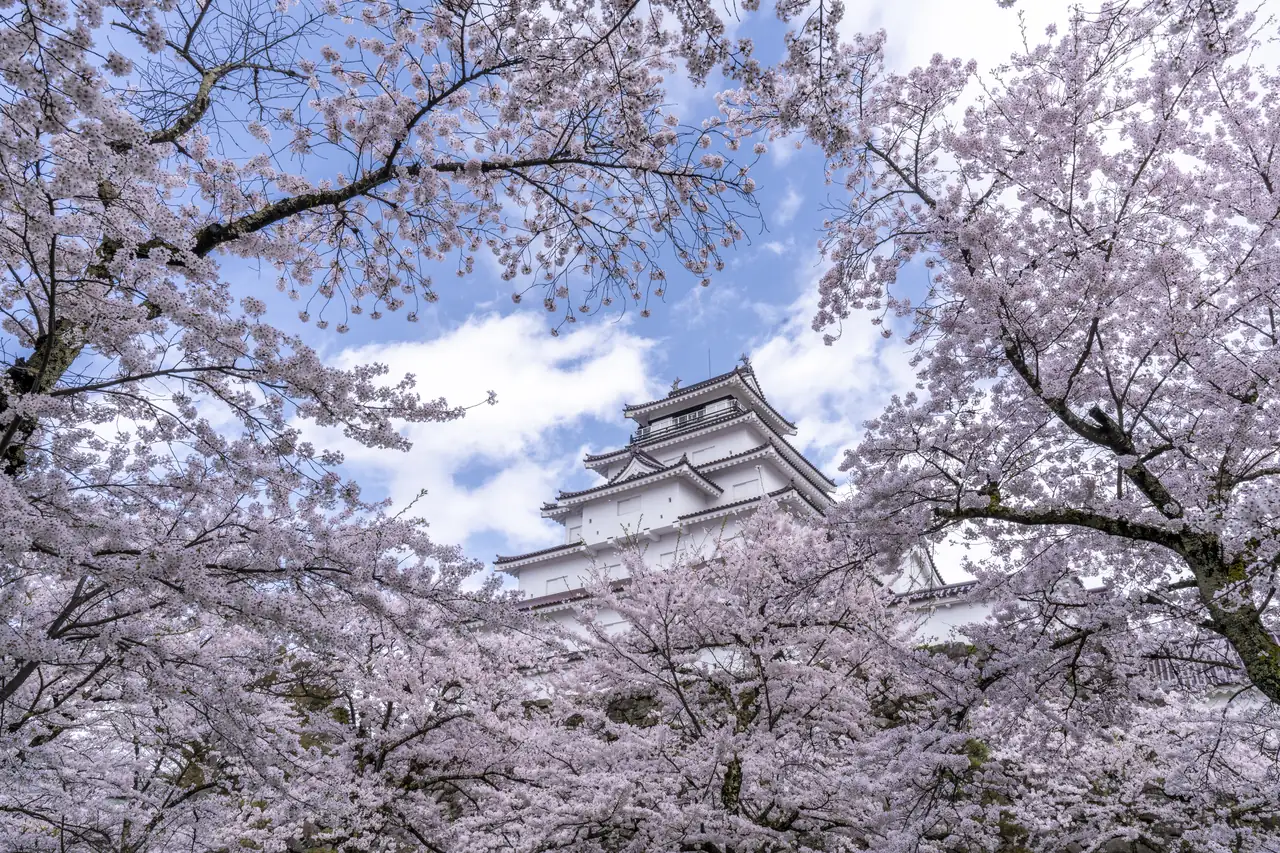
- Tsuruga-jo Castle (Wakamatsu Castle)
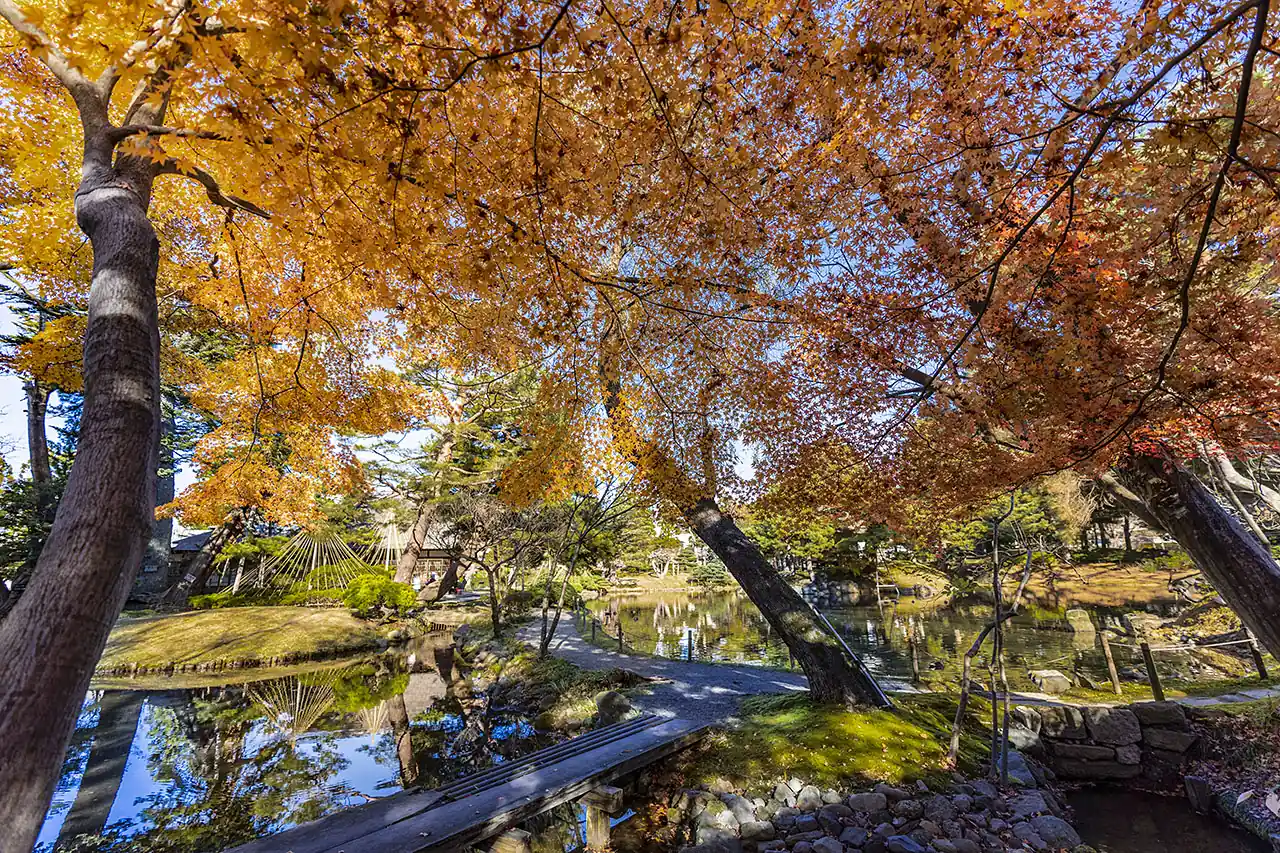
- Oyakuen Garden (Aizu Matsudaira Clan Garden)
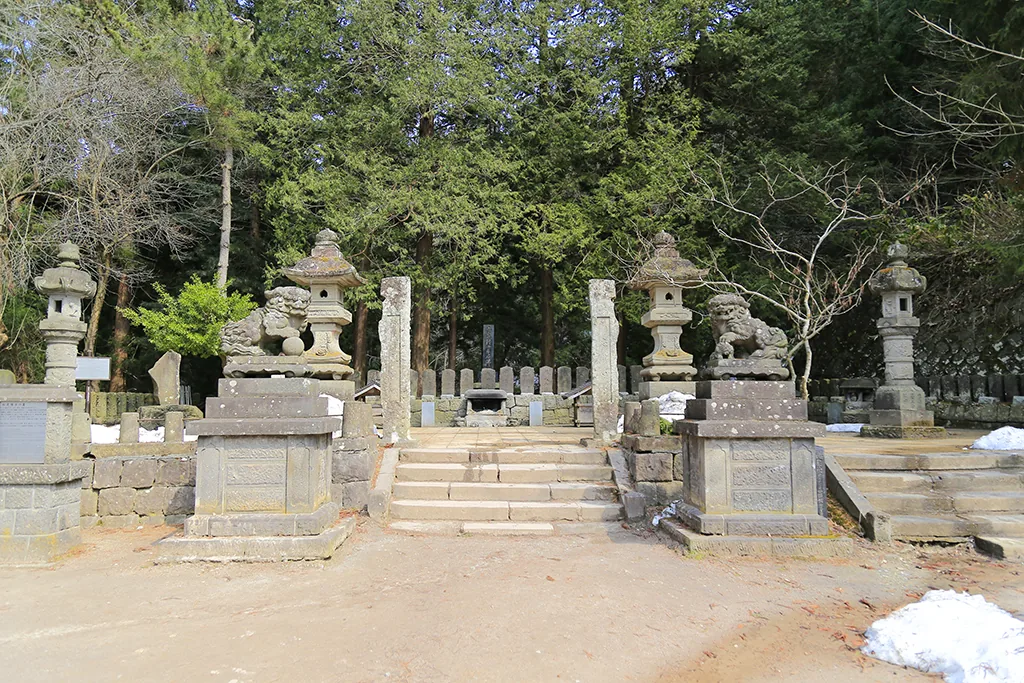
- Mt. Iimoriyama (Byakkotai Graves)
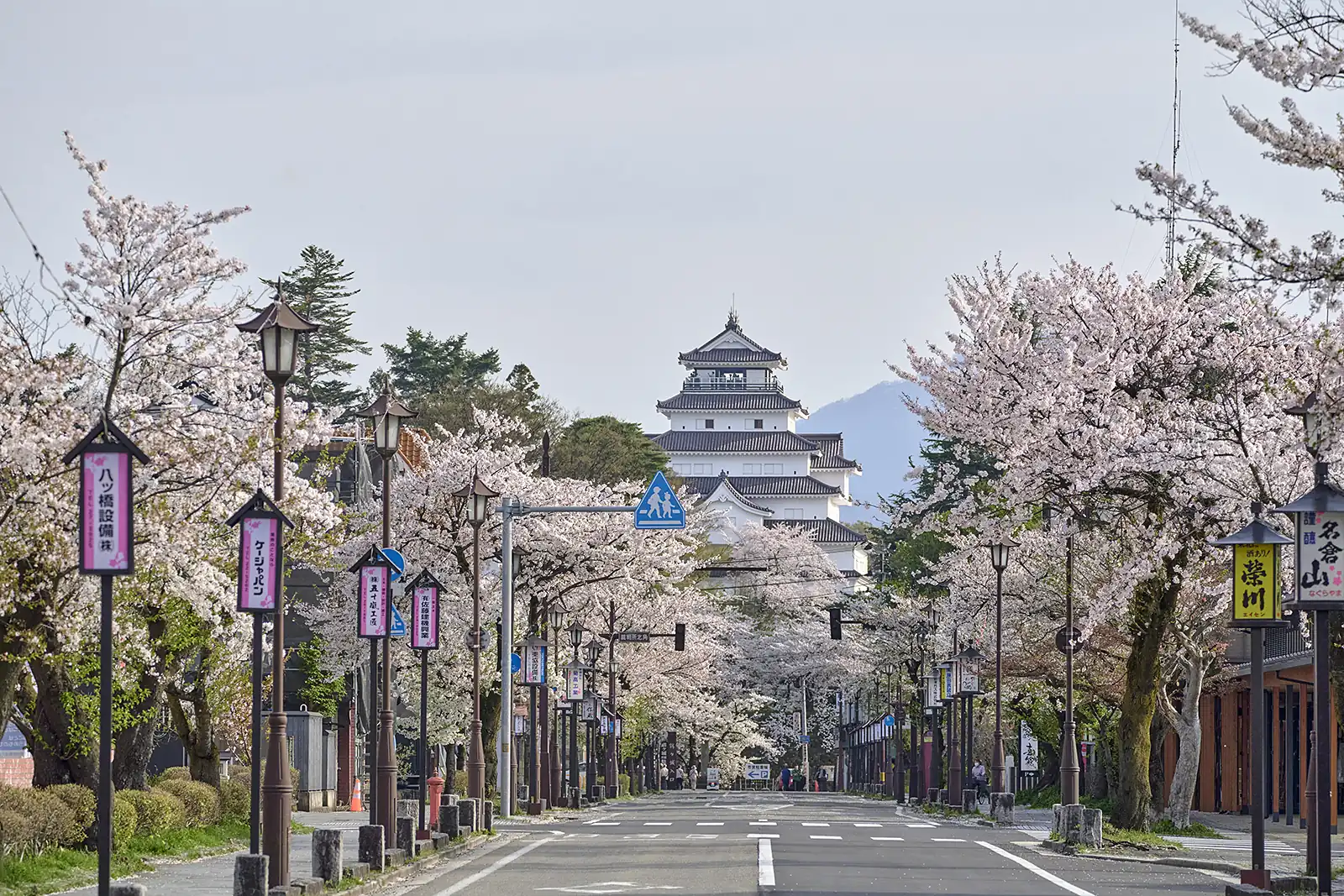
- Nanokamachi-dori

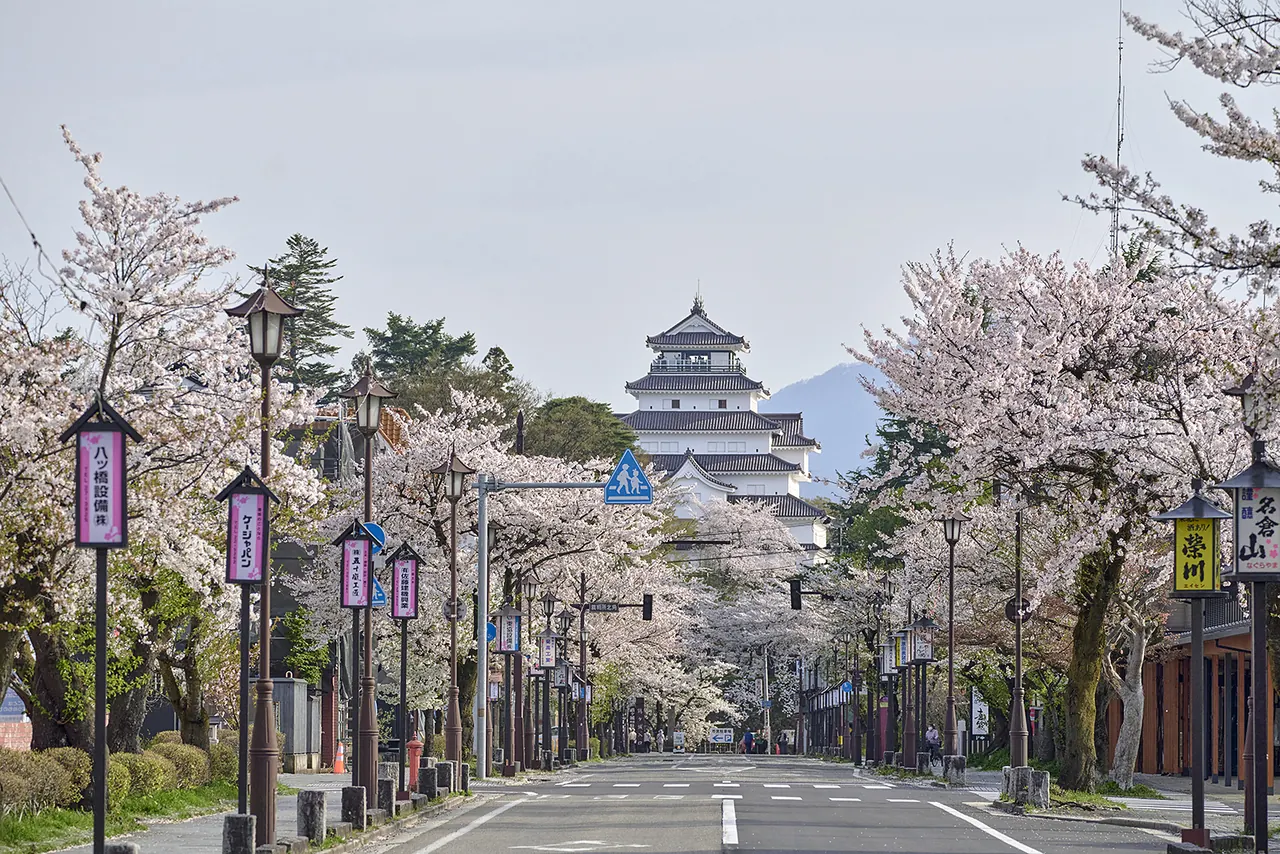
Photo: Ⓒ福島県観光物産交流協会
Areas of Fukushima
Aizu-Wakamatsu sightseeing: red-tiled Tsuruga-jo Castle, the Byakkotai graves on Iimoriyama, the Oyakuen garden, two seasonal festivals and the town loop buses.
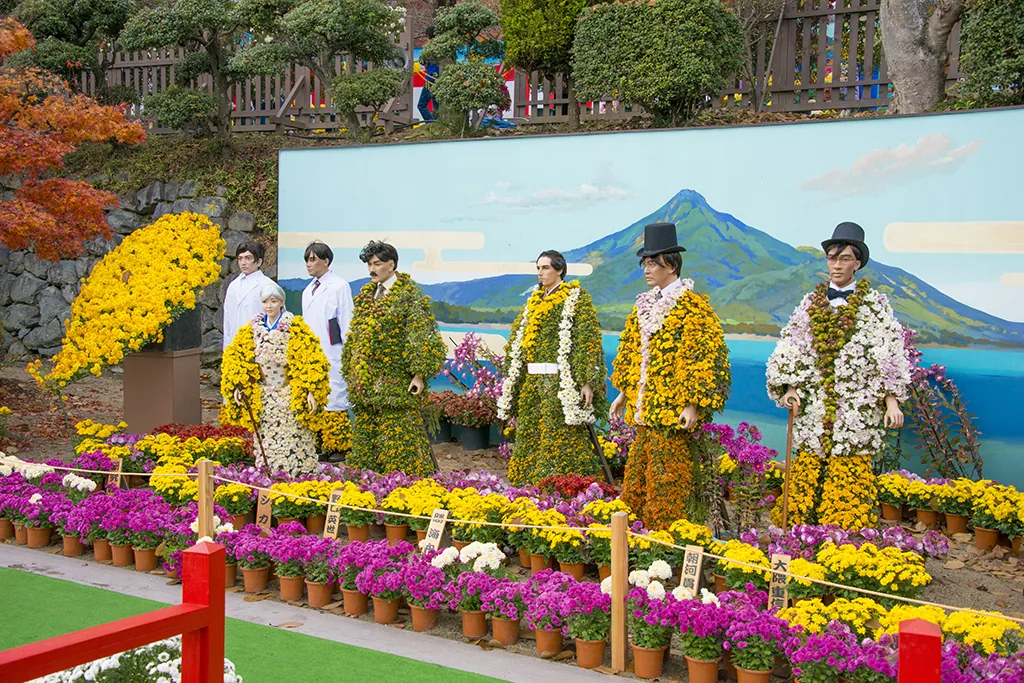 Oct 10 – Nov 23Nihonmatsu Chrysanthemum Doll Festival (Nihonmatsu no Kiku Ningyo)
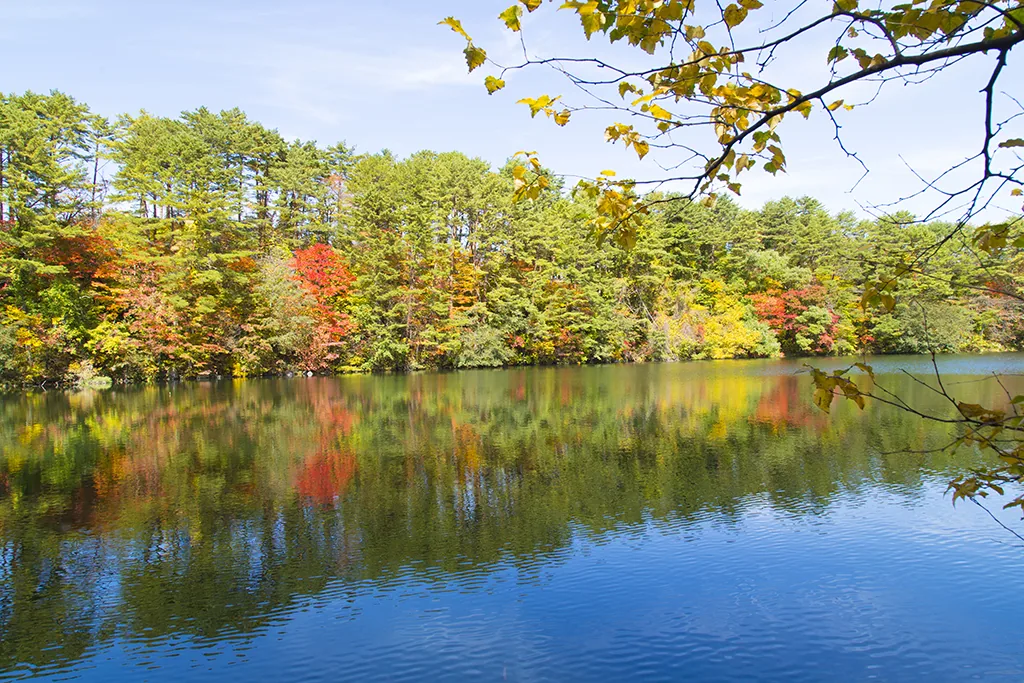 GuidesFukushima Autumn Leaves: Bandai-Azuma Skyline and Goshikinuma
This page is translated from the Japanese edition. Read the Japanese edition
Ride the town loop bus from Aizu-Wakamatsu Station for about 20 minutes, get off at Tsurugajo Iriguchi, and a keep with red roof tiles appears beyond the moat and stone walls. Aizu-Wakamatsu grew up as the castle town of the Aizu domain in the Edo period. In the Boshin War at the end of the shogunate, Tsuruga-jo Castle was besieged, and on Iimoriyama, the hill overlooking the town, the teenage soldiers of the Byakkotai (White Tiger Force) took their own lives.
The town's main sights are three: Tsuruga-jo Castle, Iimoriyama and Oyakuen, the lords' garden, all reachable by the loop buses. There is a reason to come in every season: cherry blossoms at the castle in spring, the Aizu Festival in September, and the snow-covered keep and the candle festival in February.
The castle stands in the middle of town, and its grounds are a National Historic Site ("Wakamatsu Castle Site"). The present keep was rebuilt in 1965, and in 2011 its roof was re-laid with red tiles like those of the late Edo period. It is the only keep in Japan with red tiles. Inside is a local history museum covering Aizu and the castle.
The grounds also hold the Rinkaku tea house, and a combined ticket covers the keep, Rinkaku and Oyakuen. In spring you can look up at the keep through the cherry trees along the avenue north of the castle. See Tsuruga-jo Castle (Wakamatsu Castle).
A low hill about 2 km east of the town center, where the Byakkotai members who died in the Boshin War are buried. In 1868, after losing the battle of Tonokuchihara, 20 of them withdrew to this hill and, looking toward the castle town, took their own lives. The graves of the nineteen stand halfway up, along with Sazae-do, a National Important Cultural Property. Souvenir shops line the foot of the approach, and by a pond at the bottom is the tunnel of the Tonokuchi-zeki irrigation channel. You climb stone steps to the graves, so wear comfortable shoes. See Iimoriyama (Byakkotai graves).
A daimyo garden handed down in the Matsudaira family, the lords of Aizu, and designated a National Place of Scenic Beauty as the "Aizu Matsudaira Garden." It is a stroll garden around a pond shaped like the character for "heart," with the Rakuju-tei tea house on the island. The name comes from the medicinal herbs the domain grew to protect its people from epidemics, and about 400 kinds of medicinal plants still grow here. In late autumn, pines tied with ropes against the snow (yukizuri) become part of the scenery. See Oyakuen (Aizu Matsudaira Garden).
The Aizu Festival runs for three days every September; on the second day about 600 people hold a departure ceremony at the castle and then parade through town in the Aizu Hanko Gyoretsu (Aizu lords' procession). The Aizu Painted Candle Festival (Yukihotaru) in February lines the snowy castle grounds and Oyakuen with candlelight. The 2025 festival was canceled because of heavy snow, so check the organizer's announcements for the next dates and whether it will go ahead before you go.
In Aizu, "katsudon" usually means sauce katsudon: rice topped with shredded cabbage and a cutlet coated in sauce, rather than one simmered with egg. Many diners in town serve it. Classic souvenirs are the okiagari-koboshi, a small papier-mache doll that rights itself when knocked over, and the akabeko, a red cow with a nodding head. At the Toka-ichi New Year market on January 10 every year, stalls selling good-luck charms line the streets. For local food see Fukushima Food; for folk toys see Fukushima Folk Toys.
For a single day, a comfortable order is Iimoriyama by loop bus in the morning, the museum in the castle keep at midday, and a rest in the Oyakuen garden in the afternoon. For a route that follows Aizu history in order, see A History Walk in Aizu-Wakamatsu.
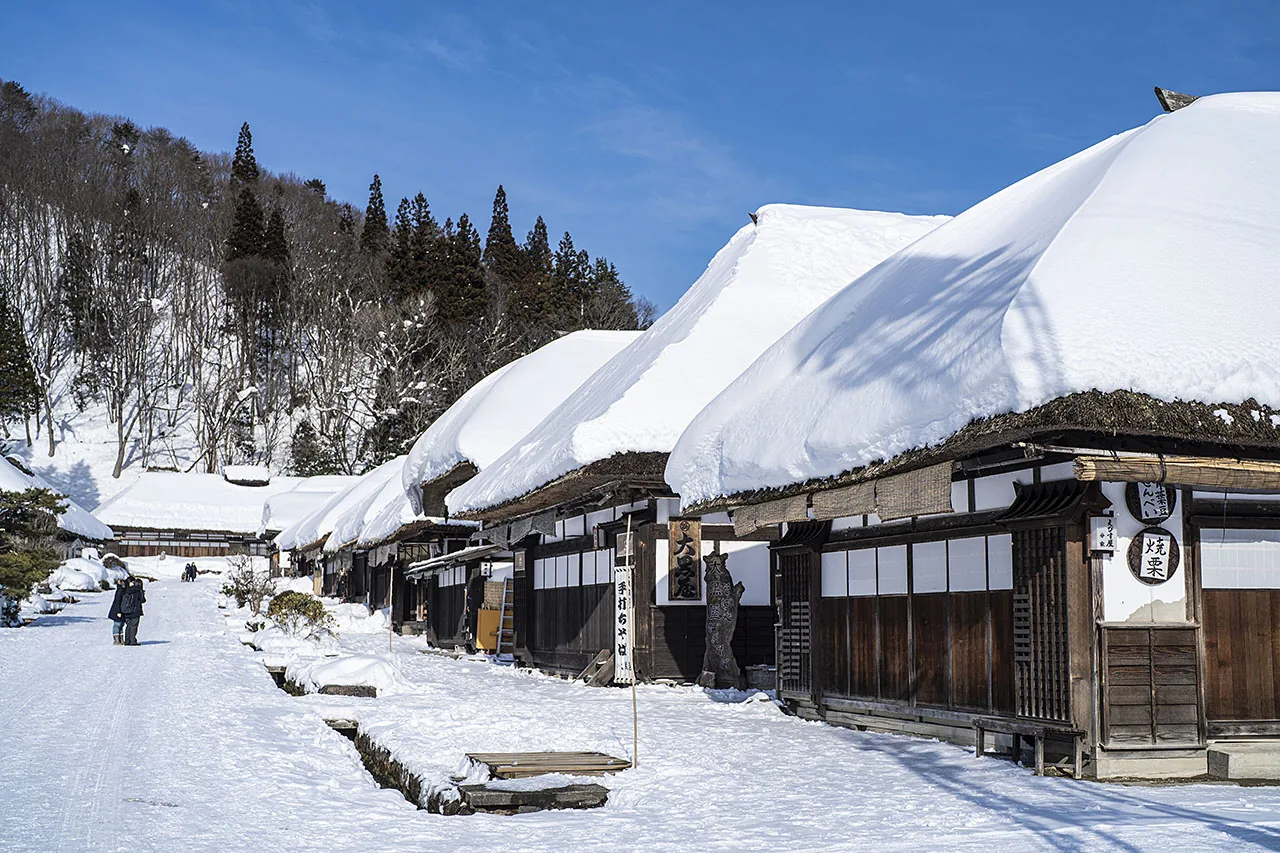
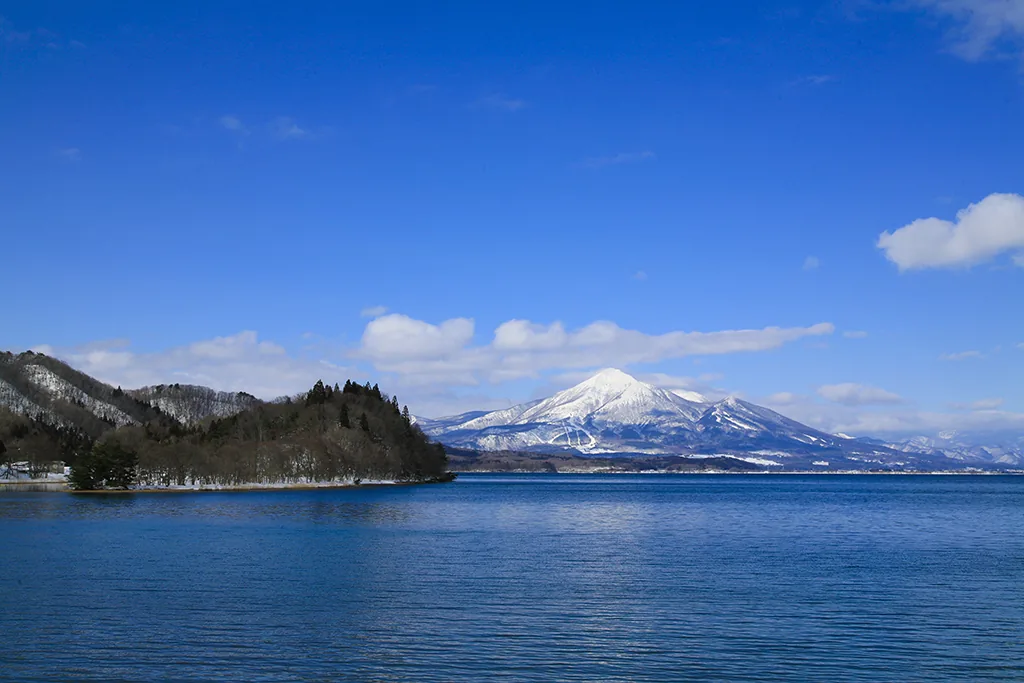
Aizu-Wakamatsu is also a base for the towns around it. North on the Ban-etsu West Line is Kitakata, back east is Inawashiro, and south on the Aizu Railway is Ouchi-juku & Yunokami. The JR Tadami Line along the Tadami River also starts here (Riding the JR Tadami Line).
Restaurant information: Powered by ホットペッパー グルメ Webサービス