Ouchi-juku and the Thatched Villages of Minami-Aizu, Fukushima
This guide is translated from the Japanese edition. Read the Japanese edition
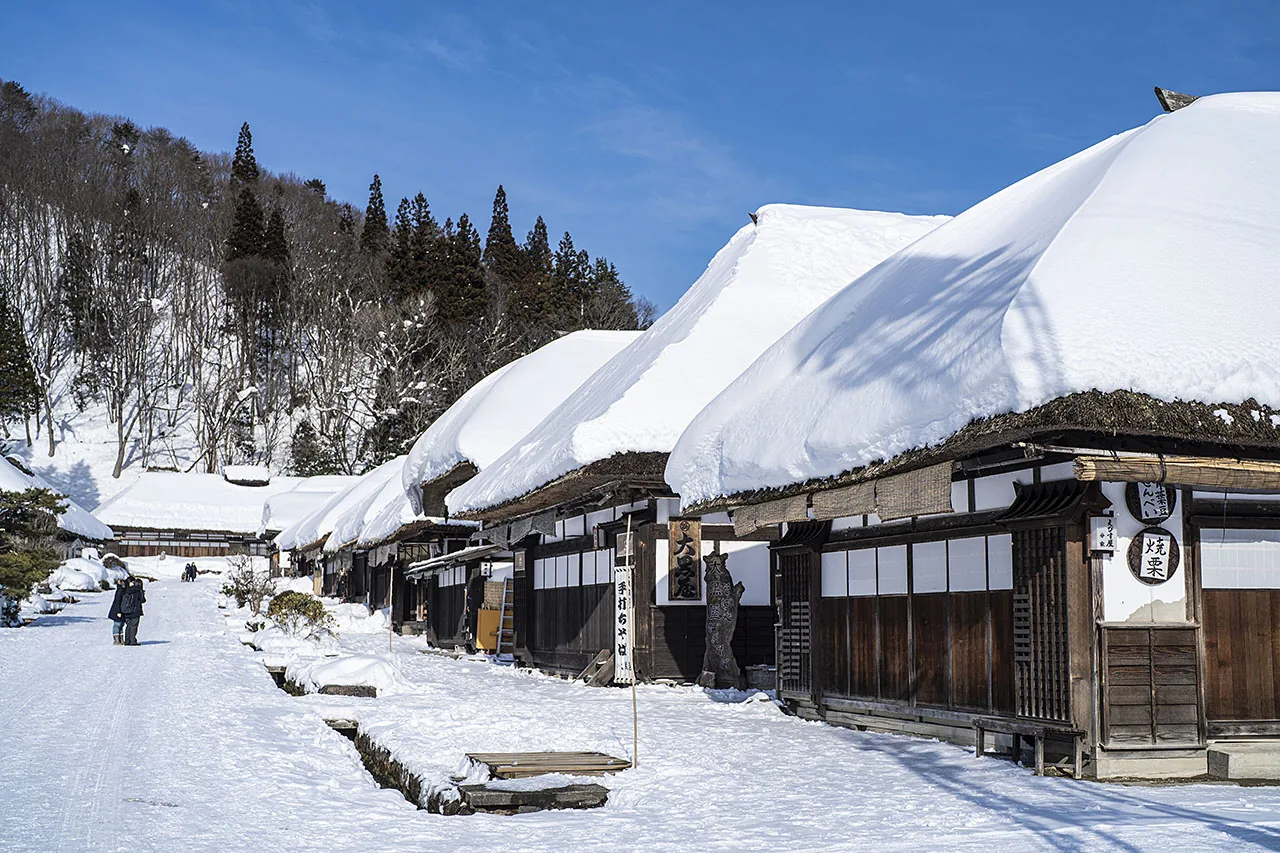
Ouchi-juku post town, the thatched Yunokami-Onsen Station, Maezawa's farmhouses and the Hinoemata kabuki stage: four thatched places in Minami-Aizu and how to reach them.
Head south from Aizu-Wakamatsu on the Aizu Railway and thatched roofs start appearing outside the train window. Minami-Aizu, in the southwest of Fukushima Prefecture, is a snowy region ringed by mountains, and thatched houses are still part of everyday life here. A post town, a thatched station, a mountain hamlet of L-shaped farmhouses, and a thatched stage where villagers perform kabuki: all four can be reached by combining the Aizu Railway, buses and a car.
Ouchi-juku: a post town of thatched houses on an old highway
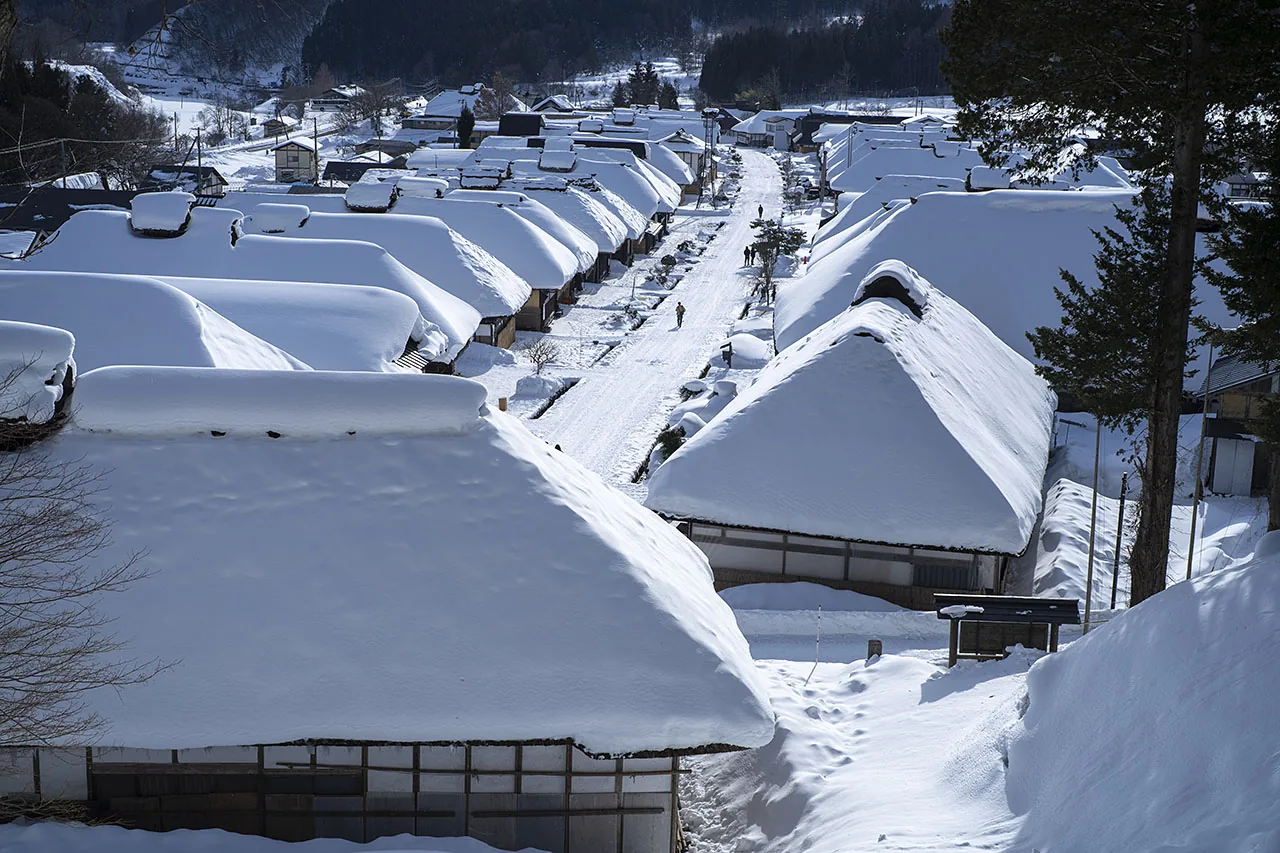
Ouchi-juku is a post town in the mountains of Shimogo. In the Edo period it was a stop on the highway linking the Aizu castle town with Imaichi in Shimotsuke (today's Tochigi Prefecture), known as the Nanzan-dori and also as the Aizu-Nishi Kaido or Shimotsuke Kaido, used by travelers and people carrying goods.
Both sides of the old road are lined with thatched, hip-roofed houses built between the end of the Edo period and the Meiji era. In 1981 Ouchi-juku was selected as a nationally designated Important Preservation District for Groups of Traditional Buildings. Residents keep to an agreement not to sell, rent out or tear down their houses, and they hand down thatching skills to preserve the townscape.
People still live here, and some houses run restaurants or souvenir shops from their front rooms. There's also a spot where you can look down on the post town and see the line of thatched roofs from above. In winter snow piles up on the roofs, turning them into a row of white.
If you want to photograph inside a house or shopfront, ask the shopkeeper or resident first. Allow an hour to an hour and a half just to walk around, or two hours if you're also having a meal.
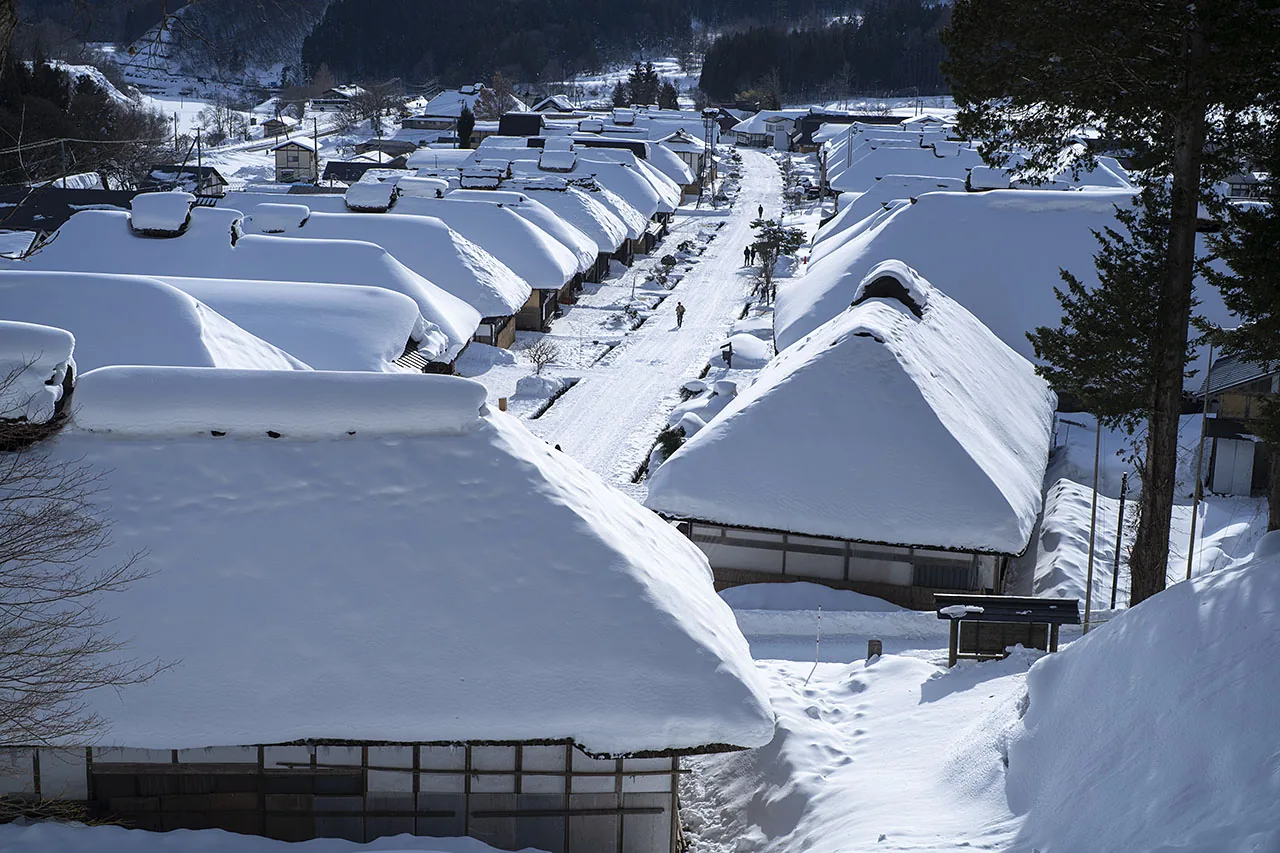
Photo: Ⓒ福島県観光物産交流協会
Yunokami-Onsen Station: a thatched station building and a footbath
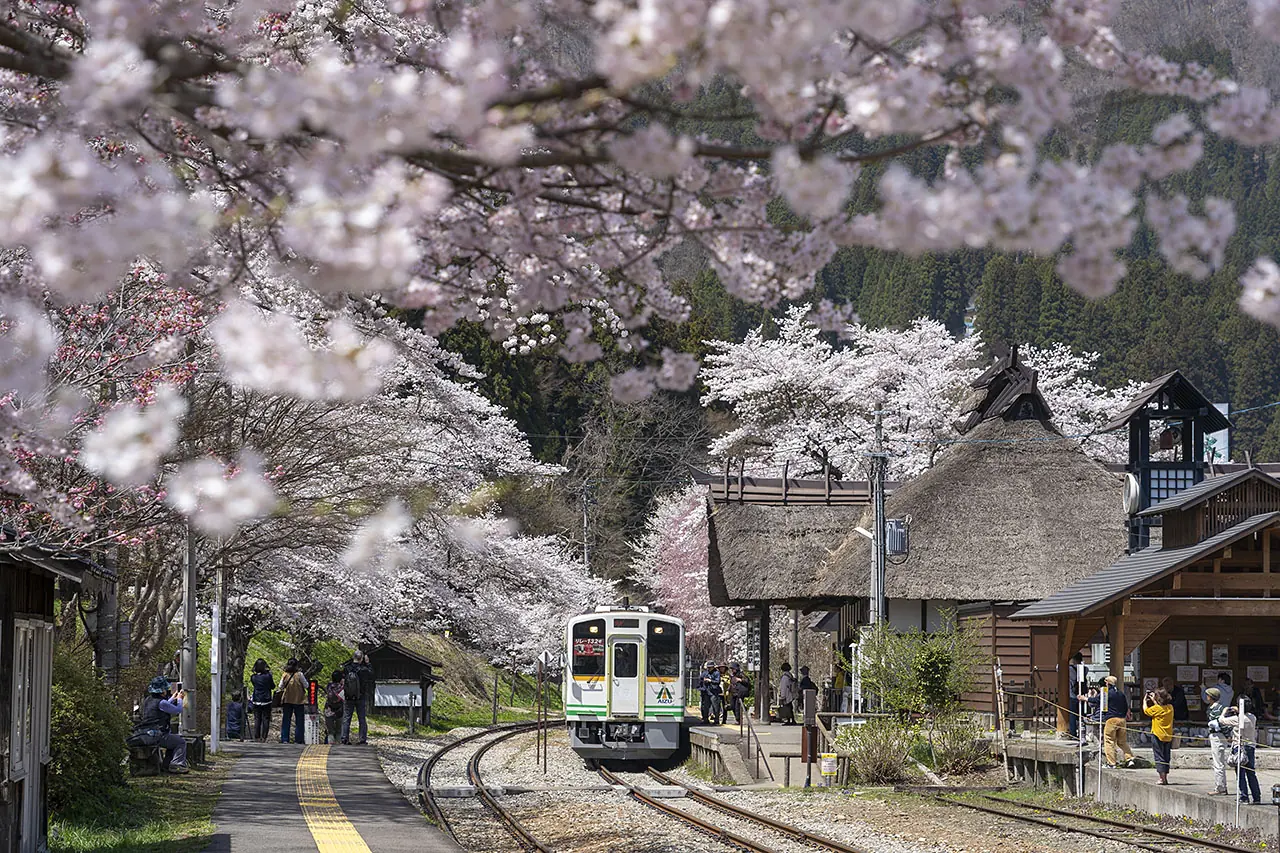
The nearest station to Ouchi-juku is Yunokami-Onsen Station on the Aizu Railway. Its station building has a thatched roof to match the houses of Ouchi-juku, and when a train pulls in you can see the carriages lined up beside the thatched building. In spring the cherry trees around the station bloom, so you can take in the station, the blossoms and the train in one view.
There's a footbath next to the station where you can warm your feet while waiting for a train or bus. As the name suggests, the area around the station is the Yunokami Onsen hot spring resort, a good place to stay when visiting Ouchi-juku.
Ouchi-juku is about 6 km from the station, too far to walk, so take the retro-style bus that runs from the station to Ouchi-juku, or a taxi. Check the bus's operating days and times in the official information from the Aizu Railway or Shimogo Town.
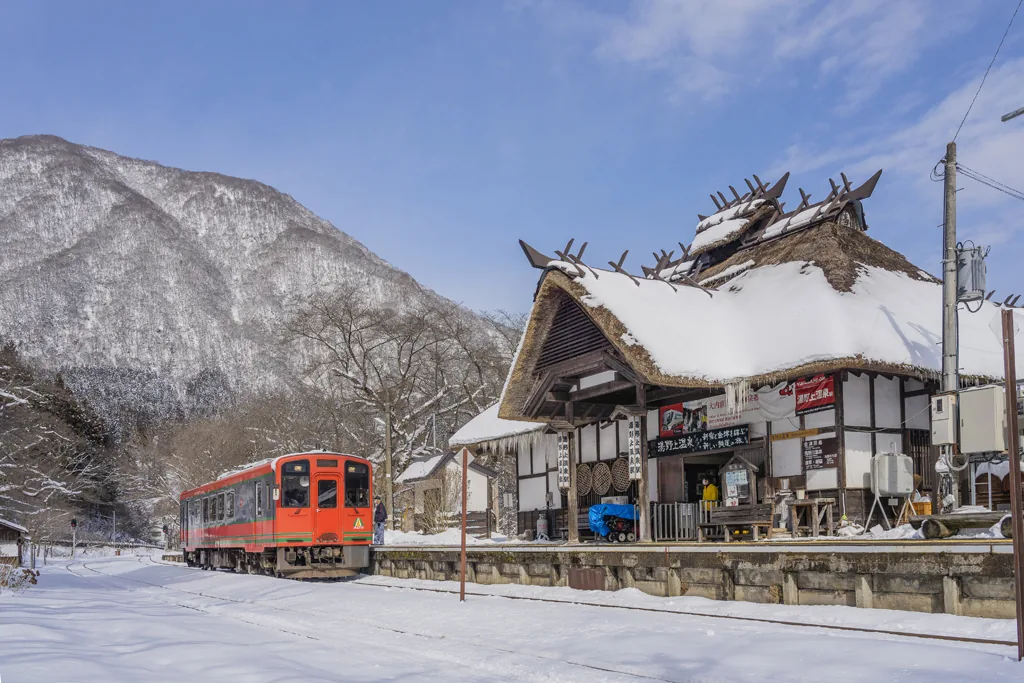
Photo: Ⓒ福島県観光物産交流協会
Maezawa Magariya Village: rebuilt by the same carpenters after a Meiji-era fire
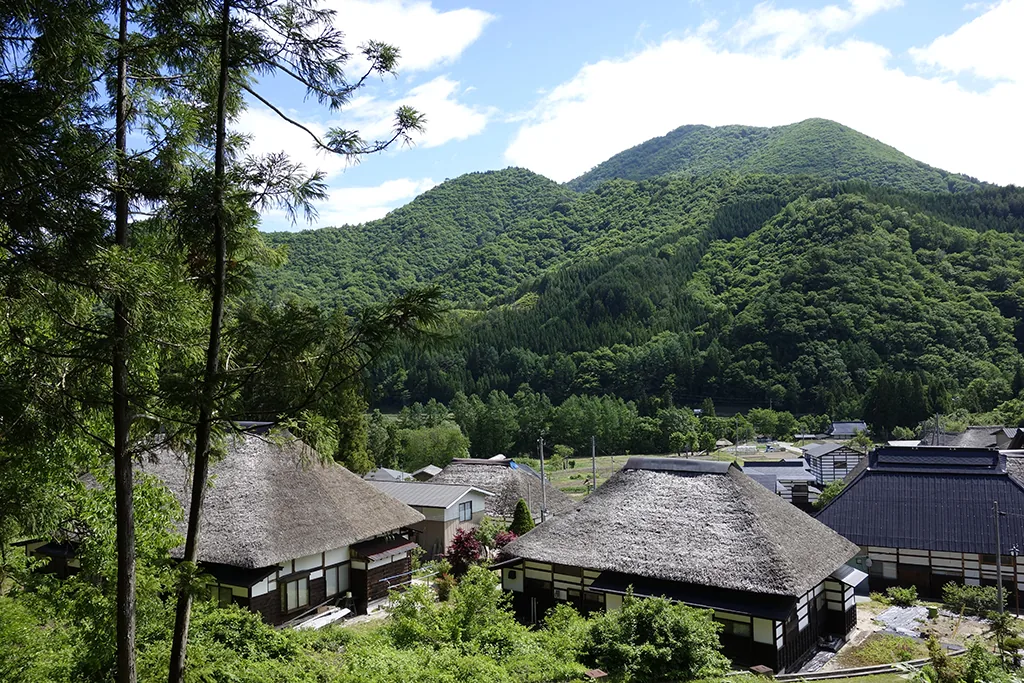
Further south from Ouchi-juku, in the Tateiwa district of Minami-Aizu Town, lies the Maezawa Magariya Village. A magariya is a thatched farmhouse with the stable joined to the main house in an L shape, a style called chumon-zukuri found in snowy regions. A passage runs along the stable into the main house, with the entrance on the gable end (the side where you see the roof's triangle).
In 1907 (Meiji 40), a great fire burned down every house in Maezawa. The same group of carpenters then rebuilt them all at once, which is why the houses share the same shape and the village looks so unified. Traditional houses, including 13 magariya, remain, and in 2011 the village was selected as a nationally designated Important Preservation District for Groups of Traditional Buildings.
In the village there's a museum set up in a real magariya, where you can see how farming families once lived, from the room with its sunken hearth (irori) to the earthen-floored doma and the wooden-floored rooms. It's a small hamlet surrounded by mountains: rather than a street of shops like Ouchi-juku, the draw here is the quiet mountain scenery. The museum and other facilities close in winter, so plan to visit between spring and autumn. Check the open season with official sources such as the Maezawa Landscape Preservation Society.
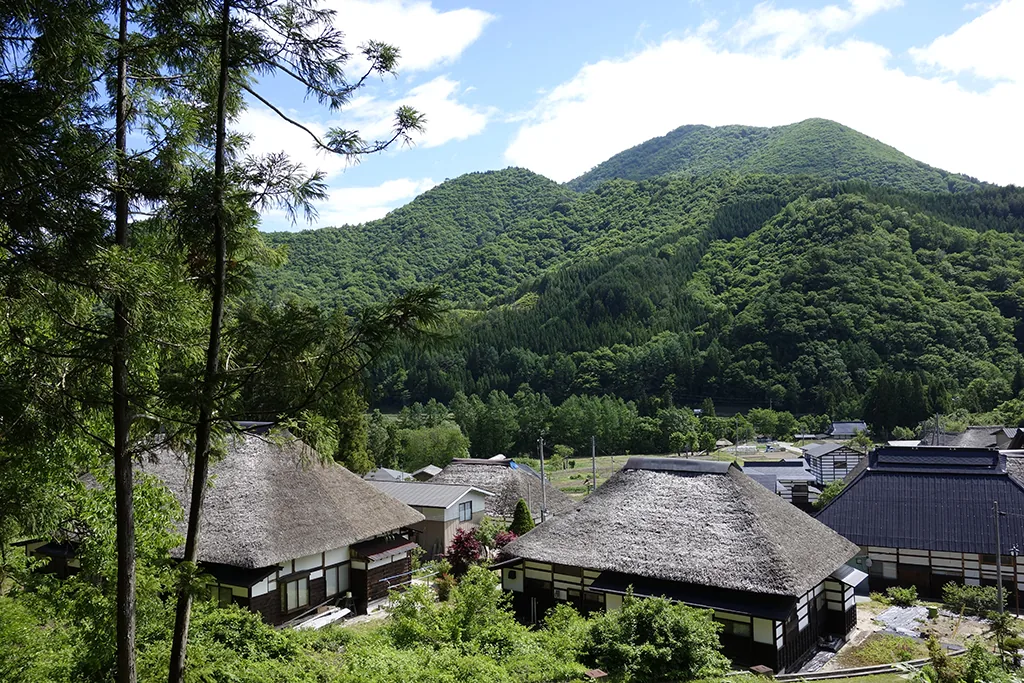
Photo: Ⓒ福島県観光物産交流協会
The Hinoemata Stage: kabuki by villagers on a thatched stage
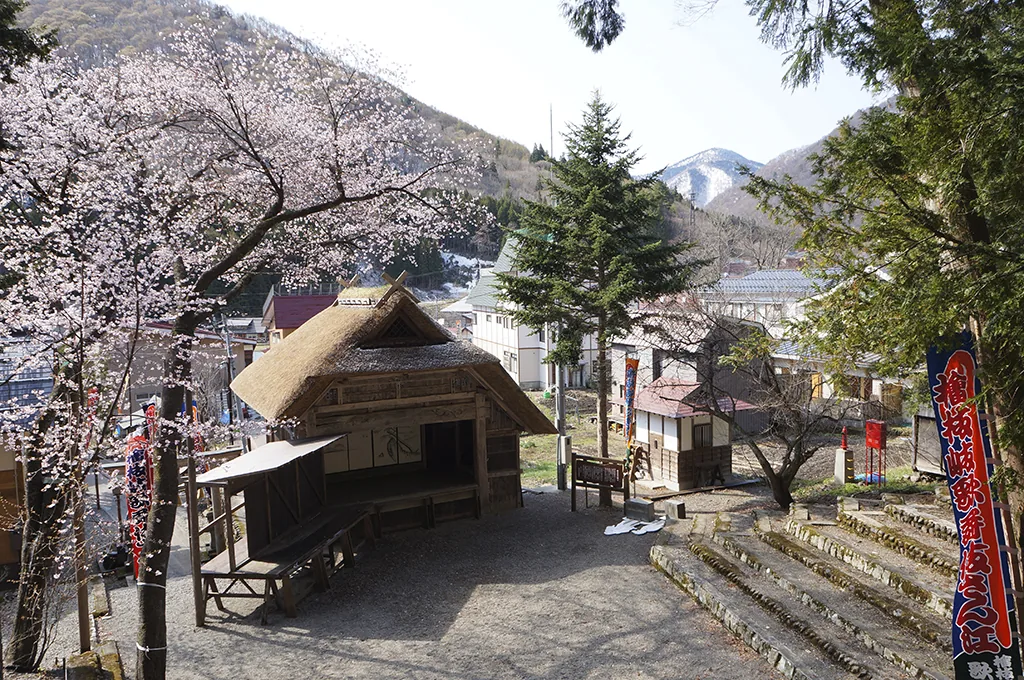
Deep in the mountains of Minami-Aizu, Hinoemata Village is a gateway to Oze, and it has a kabuki stage with a thatched roof. The Hinoemata Stage stands in the grounds of the village's guardian shrine, Chinju Shrine, and is a nationally designated Important Tangible Folk Cultural Property. The present stage was rebuilt in the Meiji era after a fire.
This is where Hinoemata Kabuki is performed. It's a rural kabuki tradition handed down by the Chibanoya Hanakoma-za troupe, made up entirely of villagers, from the actors to the backstage crew, and it is designated an Important Intangible Folk Cultural Property of Fukushima Prefecture.
There are three performances a year: offerings to the gods held with shrine festivals, usually in May and August, and the "Kabuki no Yube" (Kabuki Evening) in September. Not only the September performance but also those in May and August are held at night; in 2026 the May and August shows began at 7 p.m. The Oze-Hinoemata Onsen Tourism Association announces exact dates and how to attend about a month beforehand.
Hinoemata is a remote mountain village, so instead of a day trip, it's easier to stay at the village's hot springs and watch the kabuki in the evening.
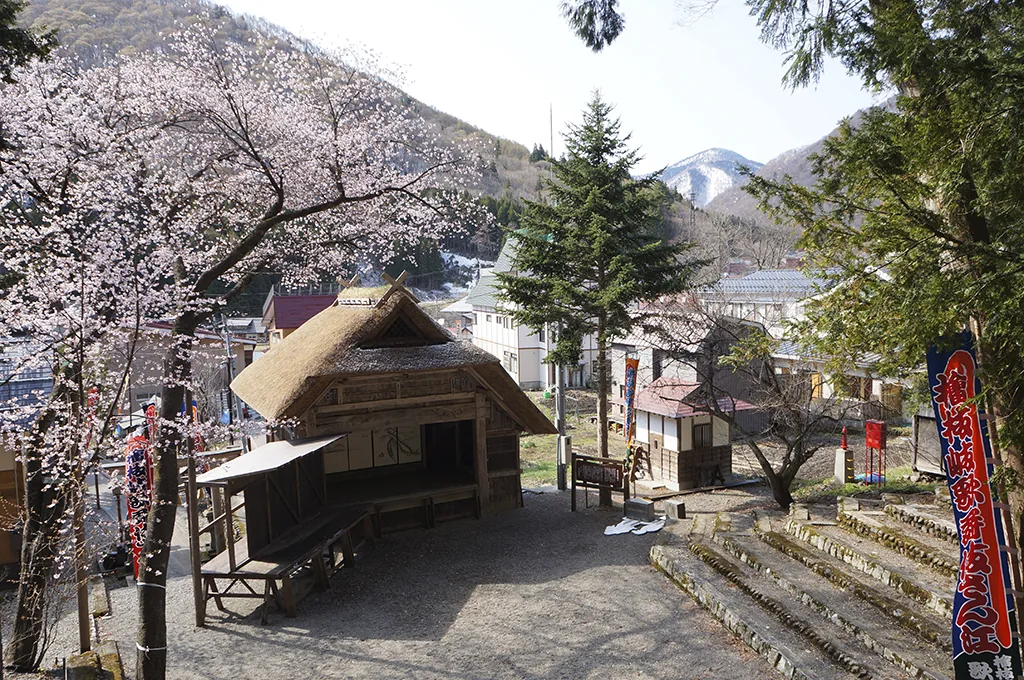
Photo: Ⓒ福島県観光物産交流協会
Getting around: Aizu Railway, buses and driving
The sights of Minami-Aizu are spread along the long north–south Aizu Railway and the bus routes beyond it.
| Destination | Train and bus | Car |
|---|---|---|
| Ouchi-juku | Aizu Railway to Yunokami-Onsen Station, then bus or taxi for about 6 km | South from Aizu-Wakamatsu (snowy roads in winter) |
| Maezawa Magariya Village | Aizu Railway to Aizu-Kogen-Ozeguchi Station, then Aizu Bus for about 40 minutes (get off at Maezawa-mukai) | About 90 minutes from Nishinasuno-Shiobara IC on the Tohoku Expressway |
| Hinoemata Stage | Aizu Bus from Aizu-Kogen-Ozeguchi Station, about 1 hour | Further into the mountains from Maezawa |
By train. The Aizu Railway runs from Nishi-Wakamatsu Station in Aizu-Wakamatsu to Aizu-Kogen-Ozeguchi Station in Minami-Aizu, and some trains run through from Aizu-Wakamatsu Station. Beyond Aizu-Kogen-Ozeguchi the line connects with the Yagan Railway and Tobu Railway, and from Asakusa in Tokyo the Tobu Railway's Revaty Aizu limited express runs to Aizu-Tajima Station in Minami-Aizu with no change. Coming in from Tokyo and leaving via Aizu-Wakamatsu (or the reverse) gives you a one-way route without retracing your steps. Trains and buses are infrequent, so check connections on the Aizu Railway and Aizu Bus websites before you go.
By car. With a car you can cover Maezawa and Hinoemata in one day. From around December to March the roads are snowy and winter tires are a must. If you're not used to snow driving, it's more realistic to stick to Ouchi-juku and Yunokami-Onsen Station by train and bus in winter.
On a two-day trip, take the Aizu Railway from Aizu-Wakamatsu to Yunokami-Onsen Station on day one, walk around Ouchi-juku and stay at Yunokami Onsen. On day two, ride the Aizu Railway south to Aizu-Kogen-Ozeguchi Station and take the bus to Maezawa. If you can time it with a kabuki performance, carry on to Hinoemata and stay the night.
For the area around Ouchi-juku and Yunokami-Onsen Station, see Ouchi-juku & Yunokami; for Maezawa, Minamiaizu (Maezawa); and for Hinoemata, Hinoemata. For the history of the Aizu-Wakamatsu castle town, see our feature on Aizu-Wakamatsu's history.