
Hinoemata
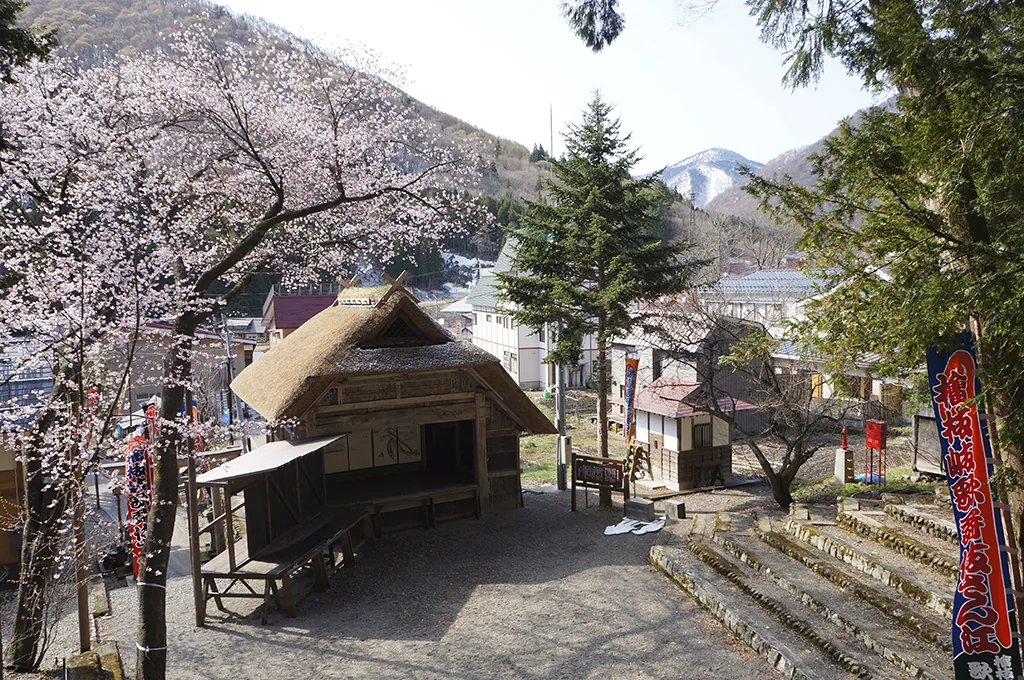
Photo: Ⓒ福島県観光物産交流協会
Areas of Fukushima
Hinoemata
Hinoemata, gateway to Oze: when and how to watch the village kabuki staged three times a year, tachi-soba and other mountain dishes, and buses from Aizu-Tajima.
 Oct 10 – Nov 23Nihonmatsu Chrysanthemum Doll Festival (Nihonmatsu no Kiku Ningyo)
 GuidesFukushima Autumn Leaves: Bandai-Azuma Skyline and Goshikinuma
Find on the map
This page is translated from the Japanese edition. Read the Japanese edition
What is the area like?
Deep in the mountains of Minamiaizu, at the gateway to Oze, lies the village of Hinoemata. Too high for rice farming, the village has kept dishes made from buckwheat, wild vegetables, mushrooms and char, along with kabuki performed by the villagers themselves. In the grounds of the village's guardian shrine stands the "Hinoemata Stage," a National Important Tangible Folk Cultural Property.
Main sights
Hinoemata Kabuki
According to tradition, in the mid-Edo period villagers who went on a pilgrimage to Ise saw kabuki on their travels, brought it home and began performing it by imitation. It is a Prefectural Important Intangible Folk Cultural Property, performed by the Chibanoya Hanakoma-za troupe made up of villagers.
There are three performances a year: offerings at the Atago shrine festival on May 12 and the guardian shrine festival on August 18, and "Kabuki no Yube" (An Evening of Kabuki) on a Saturday in early September. The audience sits outdoors, without a roof, on seating built of stacked stones on the slope up to the shrine; in 2026 the May and August performances began at 7 p.m. Nights in the mountain village are cool even in summer, so bring a jacket and insect repellent.
You can see the stage from outside on days without a performance, and the Kabuki museum "Chibanoya" in the village displays costumes and records. See Hinoemata Kabuki (Village Kabuki).
Food and shopping
Hinoemata has a local cuisine called "yamodo ryori." The best known dish is "tachi-soba," made only from buckwheat flour with no binder and cut with a kitchen knife the way you would cut cloth. "Hatto," buckwheat flour kneaded with glutinous rice and eaten with perilla seeds, is another village dish, and some inns serve yamodo cuisine for dinner. See Fukushima Food.
Getting there
- By bus: From Aizu-Tajima Station on the Aizu Railway, take Aizu Bus's Hinoemata Line (toward Ozenuma-yama Pass). There are only a few buses a day, so check the timetable of the Oze-Hinoemata Onsen tourism association.
Getting around the area
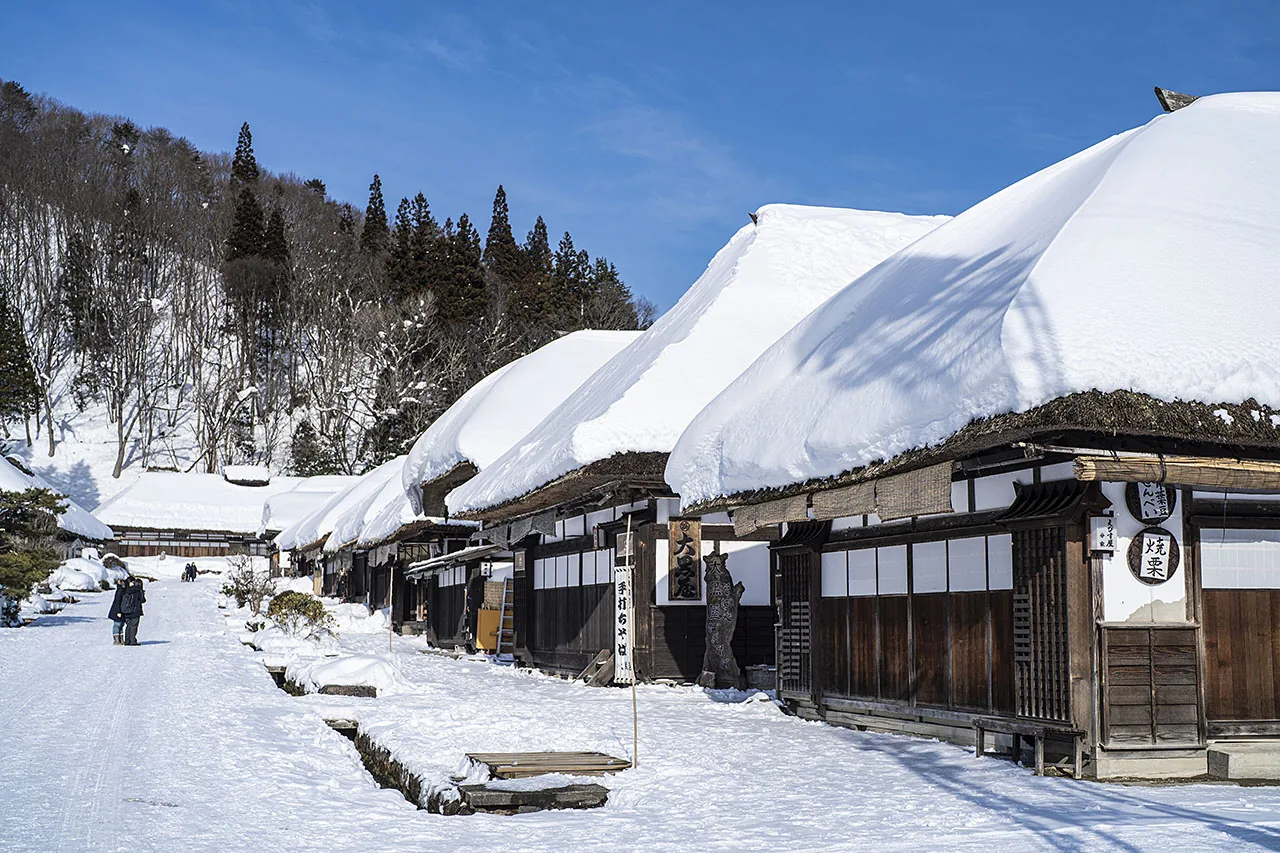
Buses are few and kabuki is performed at night, so staying at the village hot springs is more practical than a day trip. You can also stop at the magariya farmhouses of Minamiaizu (Maezawa) on the way into the mountains. To see Minamiaizu's thatched villages together, see Ouchi-juku and the Thatched Villages of Minamiaizu.
Fukushima guides
See all
More areas of Fukushima
- Aizu-Wakamatsu
- Kitakata
- Nishiaizu
- Inawashiro
- Ura-Bandai
- Ouchi-juku & Yunokami
- Minamiaizu (Maezawa)
- Fukushima City & Hanamiyama
- Iizaka Onsen
- Takayu & Azuma
- Nihonmatsu
- Dake Onsen & Mt. Adatara
- Koriyama
- Bandai-Atami Onsen
- Miharu
- Abukuma Cave
- Sukagawa
- Shirakawa
- Kashi Highlands
- Tanagura
- Soma & Matsukawaura
- Minamisoma (Odaka)
- Tomioka & Yonomori
- Natsui River Gorge
- Iwaki (Uchigo & Yumoto)
- Onahama & Misaki Park